Module 1 Unit 2 Going to school(单元测试·基础卷)英语牛津上海版三起五年级上册
2025-11-24
|
3份
|
12页
|
92人阅读
|
5人下载
内容正文:
Unit 2 Going to school(单元测试·基础卷)—牛津上海版三起 五年级上册
参考解析
听力部分(30分)
一、听录音,选择你所听到的单词。每个单词读两遍。(每题1分,共5分)
1.B 2.A 3.C 4.B 5.C
【解析】1.walk 2.hour 3.Ms 4.stop 5.take
二、听录音,选出正确的答语。每个句子读两遍。(每题1分,共5分)
1.A 2.B 3.A 4.C 5.B
【解析】1. How do you come to school?
2.Which bus do you take?
3.What does Miss Goo do?
4.Does Alice come to school by car?
5.Where does she live?
三、听录音,选出你所听到的句子。每个句子读两遍。(每题2分,共10分)
1.B 2.A 3.C 4.B 5. C
【解析】1.How do you come to school?
2.I live near school.
3.She gets off the train at 7:30.
4.I walk to the stop.
5.My father goes to work by underground.
四、听录音,写出正确的单词,完成句子。每个句子读两遍。(每空2分,共10分)
1.After 2.by 3. take 4. from 5.walks
【详解】1. After an hour, I get to the school.
2. My brother goes to school by bike.
3. Can I take a bus to the library?
4. Is it far from here?
5. He often walks to work.
笔试部分(70分)
五、选出每组单词中不同类的一项。(每题1分,共5分)
1.答案:C
解析:A“bike(自行车)”、B“bus(公共汽车)” 是交通工具名词;C“by(通过;乘)” 是介词,词性不同,选 C。
2.答案:A
解析:B“Ms(女士)”、C“Mr(先生)” 是称谓名词;A“I(我)” 是人称代词,词性不同,选 A。
3.答案:B
解析:A“walk(步行)”、C“work(工作)” 是动词;B“car(汽车)” 是名词,词性不同,选 B。
4.答案:C
解析:A“station(车站)”、B“stop(站点)” 是地点名词;C“far(远的)” 是形容词,词性不同,选 C。
5.答案:B
解析:A“after(在…… 之后)”、C“from(从……)” 是介词;B“hour(小时)” 是名词,词性不同,选 B。
六、单项选择题。(每题1分,共10分)
1.答案:A
解析:答语 “By Shenzhou - 18(乘神舟十八号)” 是交通方式,用 “How(怎样)” 提问,选 A。
2.答案:C
解析:“at + 街道名称” 表示 “在…… 街道”,是固定用法,选 C。
3.答案:A
解析:“live near school(住得离学校近)”,步行上学符合逻辑,“on foot(步行)”,选 A。
4.答案:C
解析:答语 “very far(非常远)”,“far from(离…… 远)” 是固定短语,选 C。
5.答案:A
解析:“on foot(步行)” 是固定表达;“by bus(乘公共汽车)”,中间不加 “the”;无 “by foot” 说法,选 A。
6.答案:B
解析:Sally 是第三人称单数,谓语动词用 “goes”;“by car(乘汽车)” 是固定搭配,选 B。
7.答案:A
解析:Ben 是第三人称单数,谓语动词 “walk” 用第三人称单数形式 “walks”;“like doing sth.(喜欢做某事)”,“ride” 的 - ing 形式是 “riding”,选 A。
8.答案:C
解析:“by plane(乘飞机)” 是介词短语表交通方式;A、B 是动词短语,句中已有谓语动词 “go”,需介词短语,选 C。
9.答案:C
解析:答语 “on foot(步行)” 是交通方式,用 “How(怎样)” 提问,选 C。
10.答案:A
解析:“sometimes(有时)” 符合 “常骑车,偶尔步行” 语境;“really(真正地)”、“do(做)” 语义不符,选 A。
七、【新考法】请你为下列同学选择最合适的出行方式。(每题2分,共10分)
1.答案:by bus
解析:“lives far from school(住得离学校远)”,乘公共汽车上学合理,填 “by bus”。
2.答案:ship
解析:去海岛需乘船,“by ship(乘船)”,填 “ship”。
3.答案:plane
解析:深圳到上海,飞机速度快,“by plane(乘飞机)”,填 “plane”。
4.答案:ride a bike
解析:“green way(绿色出行方式)”,骑车符合,填 “ride a bike”。
5.答案:on foot
解析:“lives near school(住得离学校近)”,步行上学合理,填 “on foot”。
八、连词成句,注意大小写和标点符号。(每题1分,共5分)
1.答案:Joe and I walk to school together.
解析:按 “人称 + 动作 + 地点 + 方式” 连词成句,主语 “Joe and I”,谓语 “walk”,“to school” 表地点,“together” 表方式。
2.答案:How do you come to school?
解析:特殊疑问句,“How(怎样)” 开头,后接一般疑问句 “do you come to school”。
3.答案:I live near my school.
解析:陈述句,主语 “I”,谓语 “live”,“near my school” 表地点。
4.答案:After 10 minutes, she gets off at Museum Bus Stop.
解析:“After 10 minutes(10 分钟后)” 放句首,主语 “she”,“gets off(下车)”,“at Museum Bus Stop(在博物馆公交站)” 表地点。
5.答案:Does Lucy come to school by car?
解析:一般疑问句,助动词 “Does” 开头,主语 “Lucy”,谓语 “come”,“to school” 表地点,“by car” 表方式。
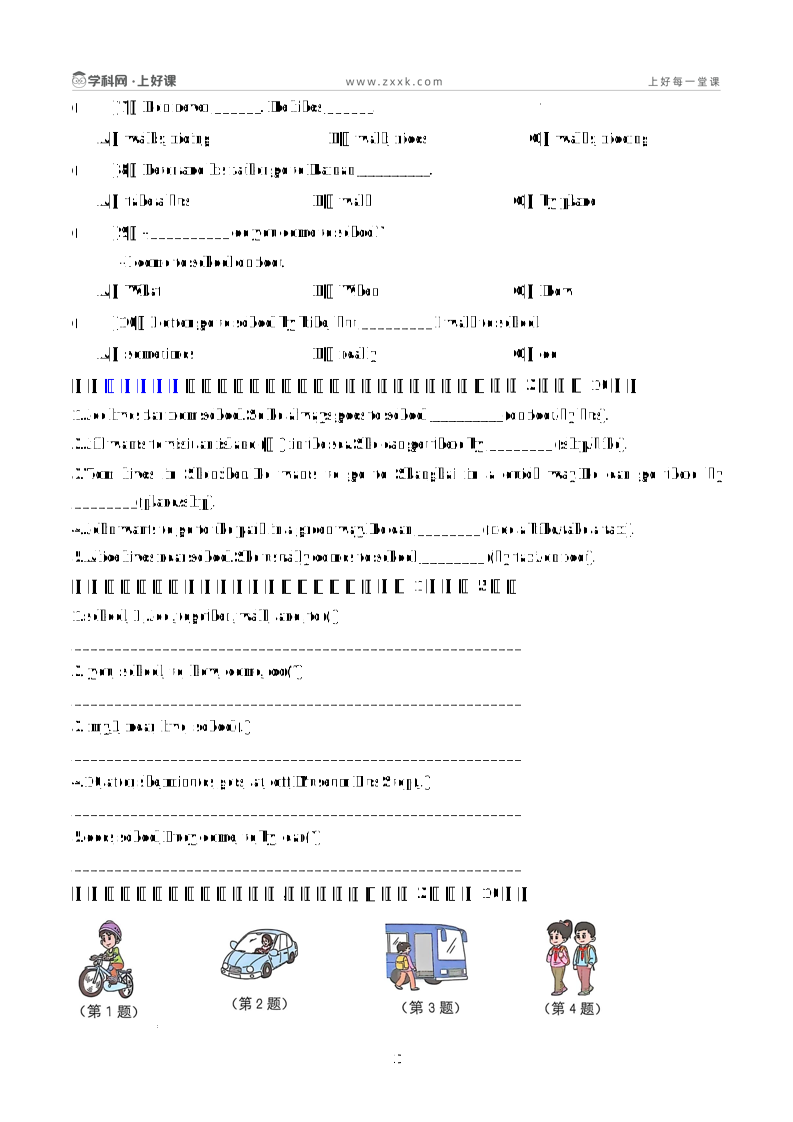
9、 根据图片提示或实际情况,回答问题。(每题2分,共10分)
1.答案:He comes to school by bike.
解析:图 1 是骑自行车,主语 “Mike” 是男性,用 “He”,“by bike(骑自行车)”,动词 “come” 用第三人称单数 “comes”。
2.答案:Yes, she does.
解析:图 2 是开车,答 “Yes, she does.”.
3.答案:She goes to the park by bus.
解析:图 3 是坐公共汽车,主语 “Lily” 是女性,用 “She”,“by bus(乘公共汽车)”,动词 “go” 用第三人称单数 “goes”。
4.答案:They come to school on foot.
解析:图 4 是步行,主语 “they”,“on foot(步行)”,动词 “come” 用原形。
5.答案:示例:I come to school on foot.
解析:根据自身实际上学方式回答,如步行、骑车等,用第一人称表述。
十、用所给的选项填空,将对话补充完整。(每题1分,共5分)
1.答案:C
解析:Joe 说乘公共汽车上学,接着解释 “住得离学校远”,“I live far from our school.” 符合语境,选 C。
2.答案:A
解析:Alice 说步行上学,接着解释 “住得离学校近”,“I live near school.” 符合语境,选 A。
3.答案:E
解析:Kitty 说和 Alice 一起步行上学,“I come to school on foot too.” 符合语境,选 E。
4.答案:B
解析:Jill 接着询问 Peter 上学方式,“What about you, Peter?” 符合语境,选 B。
5.答案:D
解析:Peter 回答上学方式,“I come to school by bus.” 符合语境,选 D。
十一、【新情境】阅读对话,判断下列句子正(T)误(F)。(每题2分,共10分)
1.答案:T
解析:文中 Mike 说 “I go to school by car.” ,与表述一致,正确。
2.答案:F
解析:Joe 说 “using a car is bad for our planet(开车对地球有害)” ,并非 “good(有益)”,错误。
3.答案:T
解析:Joe 说 “You can go to school by bike(你可以骑自行车上学)” ,与表述一致,正确。
4.答案:F
解析:Mike 说 “I will start going to school on foot(我将开始步行上学)” ,并非 “by bus(乘公共汽车)”,错误。
5.答案:T
解析:Joe 说 “That’s a great idea(那是个好主意)” ,认可步行上学,与表述一致,正确。
十二、【学科融合】你知道五年级的学生都怎么去学校吗?阅读图表和短文,选择最佳的选项。(每题2分,共10分)
1.答案:B
解析:图表中各出行方式人数:bike(5) + bus(65) + car(50) + on foot(80) + motor scooter(10) = 210,选 B。
2.答案:C
解析:“on foot(步行)” 人数 80,是最多的,选 C。
3.答案:C
解析:“by car(乘汽车)” 人数 50,“by motor scooter(乘小型摩托车)” 人数 10,50>10,选 C。
4.答案:B
解析:文中提到 “Children under 12 years old are not allowed to ride a bike on the road in Shenzhen(深圳 12 岁以下儿童不允许在路上骑自行车)” ,Peter 11 岁,不能骑车上学,选 B。
5.答案:C
解析:“helmets” 意为 “头盔”,骑小型摩托车需戴头盔保障安全,选 C。
十三、调查一下班上同学都是怎样来上学的,不少于五句。(每题5分,共5分)
In our class, students have various ways to come to school. Lily lives close to school, so she walks to school every day. Tom takes the school bus as his home is a bit far. Lucy goes to school by underground for it’s convenient. Jack rides a bike to school, which he thinks is good exercise. Some students who live far away come by bus. (围绕 “同学上学方式”,用参考短语,不少于 5 句,合理描述即可 )
学科网(北京)股份有限公司
$$听力考试正式开始。听录音,选择你所听到的单词,每个单词读两遍。One walk. walk. Two . hour. hour. Three MS. ms. Four stop. stop. Five, take. take. Listen to the next question. 听录音,选出正确的答语,每个句子读两遍。One, how do you come to school? How do you come to school? Two, which bus do you take? Which bus do you take? Three、what does missile do? What does miss school do? Four. does Alice come to school by car? Does Alice come to school by car? Five, where does he live? Where does SHE live? Listen to the next question. 听录音,选出你所听到的句子,每个句子读两遍。One, how do you come to school? How do you come to school? Two, I live near school. I live near school. Three SHE gets off the train at seven thirty. SHE gets off the train . at seven thirty. Four. I walk to the stop. I walk to the stop. Five, my father goes to work by underground. My father goes to work by underground. Listen to the next question录音。写出正确的单词完成句子,每个句子读两遍。One, after an hour, I get to the school. After an hour, I get to the school. Two, my brother goes to school by bike. My brother goes to school by bike. Three, can I take us to the library? Can I take a bus to the library? Or is IT far . from here? Is IT far from here? Five, he often walks to work. He often walks to work. 听力部分到此结束。
Unit 2 Going to school(单元测试·基础卷)
牛津上海版三起五年级上册
(考试时间:60分钟 满分:100分)
题号
一
二
三
四
五
六
七
八
九
十
十一
十二
十三
总分
得分
听力部分(30分)
一、听录音,选择你所听到的单词。每个单词读两遍。(每题1分,共5分)
( ) 1. A.work B.walk C.wake
( ) 2. A.hour B.hall C.have
( ) 3. A.Mr B.Miss C.Ms
( ) 4. A.top B.stop C.stopping
( ) 5. A.make B.lake C.take
二、听录音,选出正确的答语。每个句子读两遍。(每题1分,共5分)
( ) 1. A.On foot. B.Near the park. C.My sister.
( ) 2. A.By bus. B.No. 12 bus. C.Half an hour.
( ) 3. A.She is a teacher. B.She works at a school. C.She goes to work by bike.
( ) 4. A.Yes, she can. B.Yes, he does. C.Yes, she does.
( ) 5.A.I live near school. B.She lives on Green Street. C.She likes walking.
三、听录音,选出你所听到的句子。每个句子读两遍。(每题2分,共10分)
( ) 1. A.How do you go to school? B.How do you come to school?
C.How do you get to school?
( ) 2. A.I live near school. B.I live next to school.
C.I live behind school.
( ) 3. A.She gets on the bus at 7:30. B.She gets off the bus at 7:30.
C.She gets off the train at 7:30.
( ) 4. A.I walk to the station. B.I walk to the stop.
C.I walk to the school.
( ) 5. A.My father goes to work buy bus. B.My mother goes to work by bus.
C.My father goes to work by underground.
四、听录音,写出正确的单词,完成句子。每个句子读两遍。(每空2分,共10分)
1. an hour, I get to the school.
2. My brother goes to school bike.
3. Can I a bus to the library?
4. Is it far here?
5. He often to work.
笔试部分(70分)
五、选出每组单词中不同类的一项。(每题1分,共5分)
( )1.A.bike B.bus C.by
( )2.A.I B.Ms C.Mr
( )3.A.walk B.car C.work
( )4.A.station B.stop C.far
( )5.A.after B.hour C.from
六、单项选择题。(每题1分,共10分)
( )1.【航天知识】-________did Ye Guangfu go to the CSS(China Space Station)(中国空间站)?
-By Shenzhou -18.
A.How B.What C.Where
( )2.You can turn right _____ Spring Street.
A.on B.in C.at
( )3.I live near my school. I go to school _______.
A.on foot B.by car C.by underground
( )4.-Do you live ______ your school?
-Yes, very far. I get up early and take a bus.
A.far B.near C.far from
( )5.I come to school ______.
A.on foot B.by the bus C.by foot
( )6.Sally ______ to work ______ car.
A.goes; on B.goes; by C.go; by
( )7.Ben never ______. He likes ______.
A.walks; riding B.walk; rides C.walks; rideing
( )8.Peter and his father go to Hainan _________.
A.take a bus B.walk C.by plane
( )9.-__________ do you come to school?
-I come to school on foot.
A.What B.When C.How
( )10.I often go to school by bike, but _________ I walk to school.
A.sometimes B.really C.do
七、【新考法】请你为下列同学选择最合适的出行方式。(每题2分,共10分)
1.Joe lives far from school.So he always goes to school _________(on foot/by bus).
2.Jill wants to visit an island (岛) in the sea.She can get there by ________ (ship/bike).
3.Tom lives in Shenzhen.He wants to go to Shanghai in a quick way.He can go there by ________(plane/ship).
4.John wants to go to the park in a green way.He can ________ (ride a bike/take a taxi).
5.Alice lives near school.She usually comes to school ________ (by taxi/on foot).
八、连词成句,注意大小写和标点符号。(每题1分,共5分)
1.school, I ,Joe ,together ,walk, and ,to (.)
________________________________________________________
2. you, school, to, how, come, do(?)
________________________________________________________
3. my,I, near, live, school(.)
________________________________________________________
4.10,after,she,minutes,gets, at, off,Museum Bus Stop(,.)
________________________________________________________
5.does,school,Lucy,come, to,by, car(?)
________________________________________________________
9、 根据图片提示或实际情况,回答问题。(每题2分,共10分)
1. How does Mike come to school?
____________________________________________
2. Does your mother go to work by car?
____________________________________________
3. How does Lily go to the park?
____________________________________________
4. How do they come to school?
____________________________________________
5. How do you come to school?
____________________________________________
十、用所给的选项填空,将对话补充完整。(每题1分,共5分)
Jill: How do you come to school, Joe?
Joe: I come to school by bus. 1
Jill: How do you come to school, Alice?
Alice: I come to school on foot. 2
Jill: How do you come to school, Kitty?
Kitty: 3 Alice and I walk to school together.
Jill: 4 How do you come to school?
Peter: 5
A.I live near school.
B.What about you, Peter?
C.I live far from our school.
D.I come to school by bus.
E.I come to school on foot too.
十一、【新情境】阅读对话,判断下列句子正(T)误(F)。(每题2分,共10分)
Helping Our Planet (星球)
Two students are talking about how they go to school.
Joe: Mike, how do you go to school?
Mike: I go to school by car.
Joe: Did you know that using a car is bad for our planet?
Mike: No! I didn’t know that. What can I do to help the planet?
Joe: You can go to school by bike.
Mike: What about going to school on foot?
Joe: Yes! Going to school on foot is good for our planet. It is also good exercise!
Mike: Okay, I will start going to school on foot. Let’s see if we can get more students from our class to go to school on foot.
Joe: That’s a great idea! We will be helping our planet!
1.Mike goes to school by car. ( )
2.Joe says that using a car is good for the planet. ( )
3.Joe says that Mike can go to school by bike. ( )
4.Mike says he will start going to school by bus. ( )
5.Joe thinks that going to school on foot is a great idea. ( )
十二、【学科融合】你知道五年级的学生都怎么去学校吗?阅读图表和短文,选择最佳的选项。(每题2分,共10分)
There are many students in Grade 5 in Happy Primary School. Do you know how they go to school every day? Some go to school by car. Some walk to school with their friends. Some go to school by motor scooter(小型摩托车) or by bus. When their parents take them to school by motor scooter, they should wear their helmets, Children under 12 years old are not allowed(允许) to ride a bike on the road in Shenzhen. So only a few students ride bikes to school.
( )1. How many students are there in Grade 5?
A.205. B.210. C.215.
( )2. Most students go to school
A. by bus B. by car C. on foot
( )3. Students going to school by car are more than (比……) those_______ every day.
A. on foot B. by bus C.by motor scooter
( )4. Peter is an eleven-year-old boy in Grade 5. Can he go to school by bike?
A. Yes, he can. B.No, he can't. C. We don't know.
( )5. What does the word “helmets” mean?
A. 帽子 B. 外套 C.头盔
十三、调查一下班上同学都是怎样来上学的,不少于五句。(每题5分,共5分)
参考短语:on foot / by bus/ by school bus/ by underground…
______________________________________________________________________________________________________________________________________________________________________________________________________________________________________________________________________________________________________________________________________________________________________________________________________________________________________________________________________________________________________
学科网(北京)股份有限公司1
学科网(北京)股份有限公司
$$
资源预览图

1

2
3
所属专辑


相关资源
示范课
由于学科网是一个信息分享及获取的平台,不确保部分用户上传资料的 来源及知识产权归属。如您发现相关资料侵犯您的合法权益,请联系学科网,我们核实后将及时进行处理。