Unit 6 Trees-B Friends of trees (Speaking)教学设计 2024-2025学年沪教版(五四学制)英语七年级下册
2025-08-31
|
5页
|
61人阅读
|
0人下载
普通
资源信息
| 学段 | 初中 |
|---|---|
| 学科 | 英语 |
| 教材版本 | 初中英语沪教版(五四学制)七年级下册 |
| 年级 | 七年级 |
| 章节 | B Friends of trees (Speaking) |
| 类型 | 教案-教学设计 |
| 知识点 | - |
| 使用场景 | 同步教学-新授课 |
| 学年 | 2025-2026 |
| 地区(省份) | 全国 |
| 地区(市) | - |
| 地区(区县) | - |
| 文件格式 | DOCX |
| 文件大小 | 54 KB |
| 发布时间 | 2025-08-31 |
| 更新时间 | 2025-08-31 |
| 作者 | 匿名 |
| 品牌系列 | - |
| 审核时间 | 2025-08-31 |
| 下载链接 | https://m.zxxk.com/soft/53695878.html |
| 价格 | 0.50储值(1储值=1元) |
| 来源 | 学科网 |
内容正文:
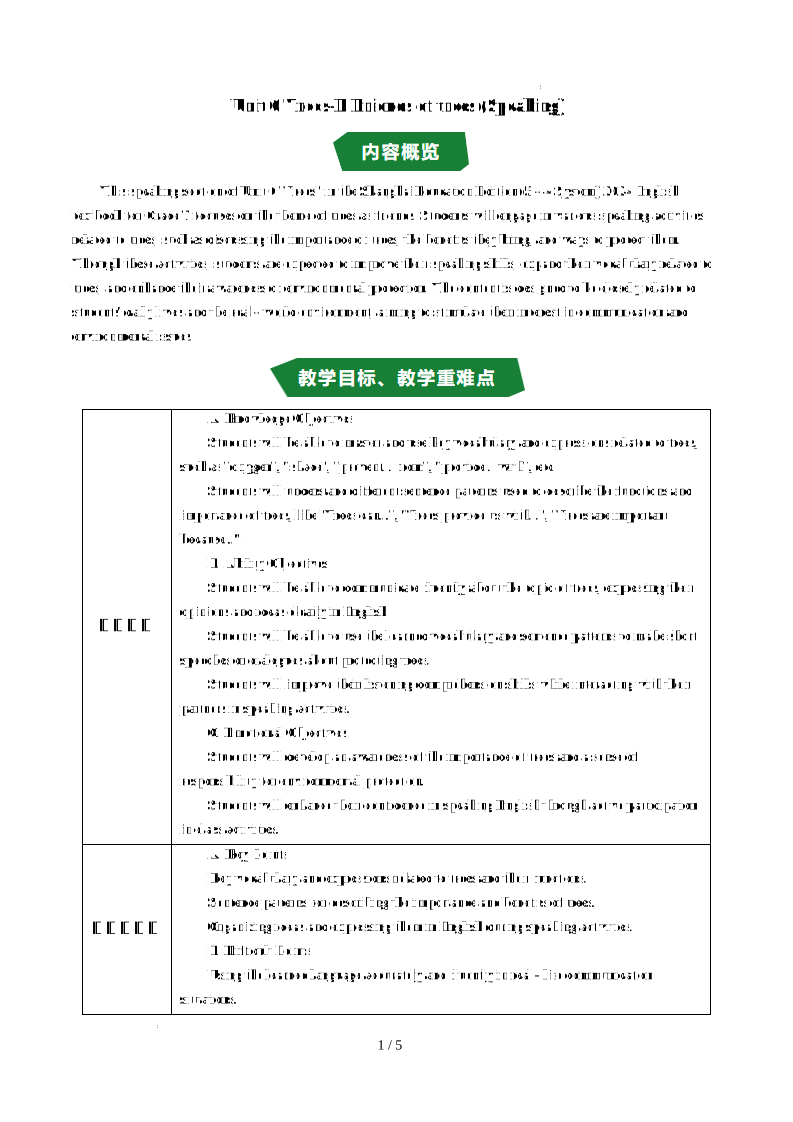
Unit 6 Trees-B Friends of trees (Speaking)
This speaking section of Unit 6 "Trees" in the Shanghai Education Edition (5 - 4 System) 2024 English textbook for Grade 7 focuses on the theme of trees as friends. Students will engage in various speaking activities related to trees, such as discussing the importance of trees, the benefits they bring, and ways to protect them. Through these activities, students are expected to improve their speaking skills, expand their vocabulary related to trees, and enhance their awareness of environmental protection. The content is designed to be closely related to students' daily lives and the real - world environment, aiming to stimulate their interest in communication and environmental issues.
教学目标
A. Knowledge Objectives
Students will be able to master and use key vocabulary and expressions related to trees, such as "oxygen", "shade", "prevent... from", "provide... with", etc.
Students will understand different sentence patterns used to describe the functions and importance of trees, like "Trees can...", "Trees provide us with...", "Trees are important because...".
B. Ability Objectives
Students will be able to communicate fluently about the topic of trees, expressing their opinions and ideas clearly in English.
Students will be able to use the learned vocabulary and sentence patterns to make short speeches or dialogues about protecting trees.
Students will improve their listening comprehension skills while interacting with their partners in speaking activities.
C. Emotional Objectives
Students will develop an awareness of the importance of trees and a sense of responsibility for environmental protection.
Students will enhance their confidence in speaking English through active participation in class activities.
教学重难点
A. Key Points
Key vocabulary and expressions related to trees and their functions.
Sentence patterns for describing the importance and benefits of trees.
Organizing ideas and expressing them in English during speaking activities.
B. Difficult Points
Using the learned language accurately and fluently in real - life communication situations.
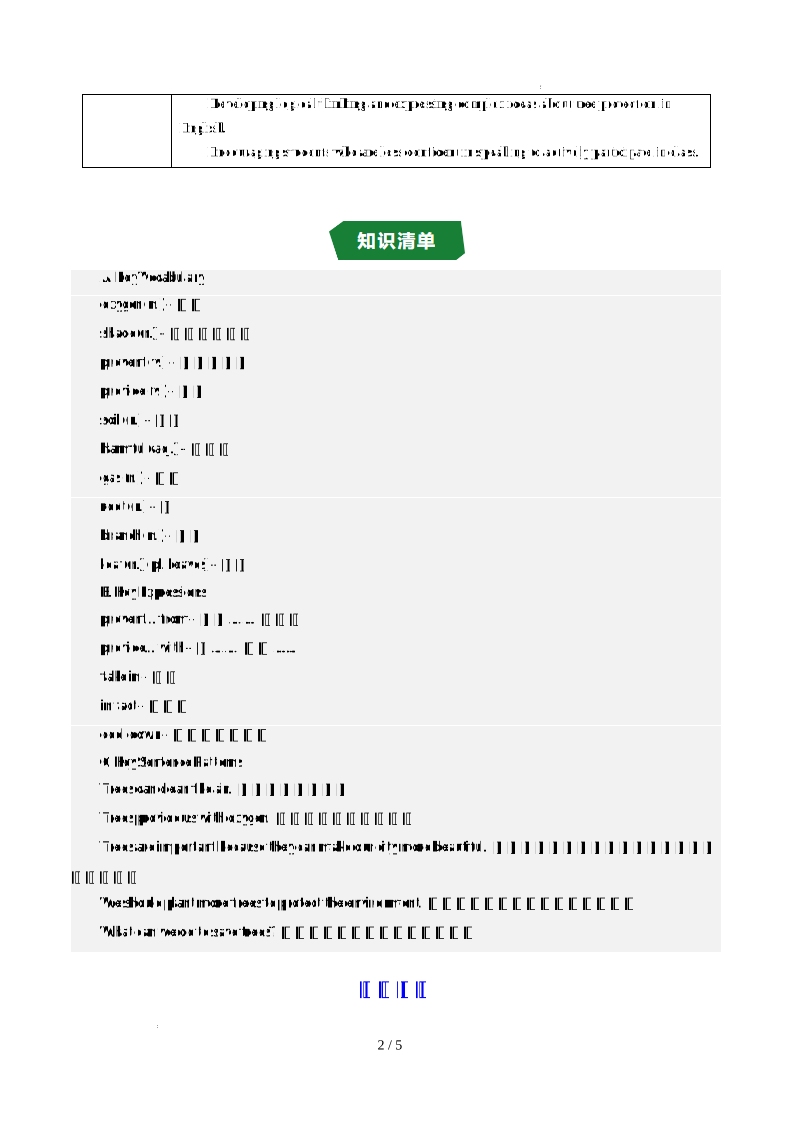
Developing logical thinking and expressing complex ideas about tree protection in English.
Encouraging students who are less confident in speaking to actively participate in class.
A. Key Vocabulary
oxygen (n.) - 氧气
shade (n.) - 树荫;阴凉处
prevent (v.) - 阻止;预防
provide (v.) - 提供
soil (n.) - 土壤
harmful (adj.) - 有害的
gas (n.) - 气体
root (n.) - 根
branch (n.) - 树枝
leaf (n.) (pl. leaves) - 树叶
B. Key Expressions
prevent... from - 阻止…… 做某事
provide... with - 为…… 提供……
take in - 吸收
in fact - 事实上
cool down - 使冷却;使平静
C. Key Sentence Patterns
Trees can clean the air. 树木能净化空气。
Trees provide us with oxygen. 树木为我们提供氧气。
Trees are important because they can make our city more beautiful. 树木很重要,因为它们能让我们的城市更美丽。
We should plant more trees to protect the environment. 我们应该种更多的树来保护环境。
What can we do to save trees? 我们能做些什么来拯救树木呢?
教学过程
A. Warming - up (5 minutes)
Greet the students as usual.
Show some pictures of beautiful forests, big trees, and various tree - related scenes on the PPT. Then ask students some simple questions, such as "What can you see in the pictures?", "Do you like trees? Why or why not?". Encourage students to share their answers in English. This activity aims to quickly attract students' attention, arouse their interest in the topic of trees, and activate their prior knowledge related to trees.
B. Presentation (10 minutes)
Vocabulary Teaching
Present the new words and expressions on the PPT one by one. Explain the meaning, pronunciation, and usage of each word or expression. For example, when teaching "prevent... from", show some sentences like "Trees can prevent the wind from blowing the soil away." and explain the structure and its meaning. Let students read the words and expressions after the teacher several times to practice pronunciation.
Use pictures or short videos to help students better understand the meaning of some abstract words. For instance, show a picture of a tree root to help students understand the word "root".
Sentence Pattern Teaching
Write some key sentence patterns on the blackboard or show them on the PPT. Explain the grammar and usage of each sentence pattern. Let students practice making sentences using these patterns. For example, give students some prompts like "Trees, clean, air" and ask them to make sentences like "Trees can clean the air."
Divide students into pairs. Each pair takes turns to make sentences using the learned patterns, and the partner checks if the sentences are correct. This activity can help students master the new vocabulary and sentence patterns quickly.
C. Practice (15 minutes)
Pair Work
Give each pair of students a set of topic cards. The cards may have topics such as "The Importance of Trees", "The Benefits of Trees to Animals", "How Trees Protect the Environment", etc.
Students are required to have a conversation based on the topic on their cards. They should use the learned vocabulary and sentence patterns in their conversation. Walk around the classroom to monitor students' conversations, provide necessary guidance and help, and correct their mistakes in time.
After a few minutes, ask several pairs of students to come to the front of the class and present their conversations to the whole class. Other students listen carefully and can ask questions or give comments after the presentation.
Group Discussion
Divide the class into several groups of four or five students. Assign each group a more complex topic, such as "What Actions Can We Take to Protect Trees in Our Daily Life?"
Each group starts a discussion. Encourage students to brainstorm ideas, list them down, and then organize their ideas into a short presentation. During the discussion, remind students to use English as much as possible and try to use the learned language knowledge.
Select one or two representatives from each group to give a short presentation about their group's discussion results. The whole class listens and can have a further discussion or add more ideas. This group discussion activity can train students' cooperation ability and their ability to express complex ideas in English.
D. Production (10 minutes)
Speech Activity
Set a task for students to make a short speech about "Trees - Our Best Friends". Students can prepare their speeches individually. They need to include the importance of trees, the benefits they bring, and some suggestions on how to protect trees in their speeches.
Give students a few minutes to prepare. Then, ask several students to come to the front of the class and deliver their speeches. After each speech, the teacher and other students can give positive feedback and suggestions for improvement. This activity can comprehensively test students' speaking ability, logical thinking ability, and their understanding of the topic.
Role - play Activity
Prepare some role - play cards with different roles, such as a forest ranger, a factory owner, a student environmentalist, and a government official. Divide students into groups according to the number of roles.
Each group assigns roles to its members. The situation is that there is a plan to cut down a large area of forest for a factory project, and the different roles need to have a discussion to find a solution. Students should play their roles and express their opinions and positions in English.
After the role - play, each group can summarize the process and results of their discussion. This role - play activity can make the learning atmosphere more vivid and interesting, and also help students better understand different perspectives on environmental protection issues.
E. Summary and Homework (5 minutes)
Summary
Summarize the key vocabulary, expressions, and sentence patterns learned in this class with the students. Review the main points of the importance of trees and ways to protect them.
Ask students to share what they have learned and what they think is the most important in this class.
Homework
Ask students to write a short passage about "How to Protect Trees" at home. They should use at least five new words and three sentence patterns learned in this class.
Encourage students to go outside and observe the trees around them, and try to introduce a tree they like to their family members in English.
教学反思
In this class, the use of pictures, group work, and role - play activities can effectively arouse students' interest in learning and their enthusiasm for participation. However, in the future, more real - life cases and data can be introduced to make the content more vivid and persuasive.
During the speaking practice, some students still have problems with grammar accuracy and fluency. In the following classes, more targeted training on sentence construction and oral expression can be carried out, such as having more sentence - making competitions or short - story - telling activities.
The group discussion and speech activities can well train students' logical thinking and cooperation ability. But for some students who are less confident in speaking, more encouragement and individual guidance are needed. In future teaching, more opportunities can be provided for these students to express themselves in a relatively relaxed environment.
The connection between knowledge teaching and emotional education in this class is relatively close. Students have a deeper understanding of the importance of trees and environmental protection. In the future, more extracurricular activities related to environmental protection can be organized to further enhance students' awareness of environmental protection.
2 / 37
学科网(北京)股份有限公司
学科网(北京)股份有限公司
$$
资源预览图
1
2
相关资源
由于学科网是一个信息分享及获取的平台,不确保部分用户上传资料的 来源及知识产权归属。如您发现相关资料侵犯您的合法权益,请联系学科网,我们核实后将及时进行处理。