Unit 4 Space Exploration Discovering Useful Structures 课件-2024-2025学年高中英语人教版必修第三册
2025-08-28
|
28页
|
1480人阅读
|
8人下载
普通
资源信息
| 学段 | 高中 |
|---|---|
| 学科 | 英语 |
| 教材版本 | 高中英语人教版必修第三册 |
| 年级 | 高一 |
| 章节 | Discovering Useful Structures |
| 类型 | 课件 |
| 知识点 | - |
| 使用场景 | 同步教学-新授课 |
| 学年 | 2025-2026 |
| 地区(省份) | 全国 |
| 地区(市) | - |
| 地区(区县) | - |
| 文件格式 | PPTX |
| 文件大小 | 1.00 MB |
| 发布时间 | 2025-08-28 |
| 更新时间 | 2025-08-28 |
| 作者 | 海洋微风 |
| 品牌系列 | - |
| 审核时间 | 2025-08-28 |
| 下载链接 | https://m.zxxk.com/soft/53647225.html |
| 价格 | 1.50储值(1储值=1元) |
| 来源 | 学科网 |
内容正文:
Unit 4
SPACE EXPLORATION
Discovering Useful Structures
1
To learn the grammar: the use of infinitives as attributes and adverbials.
To make sentences using infinitives.
To describe space facts and efforts to explore space.
Exercise
Exercise
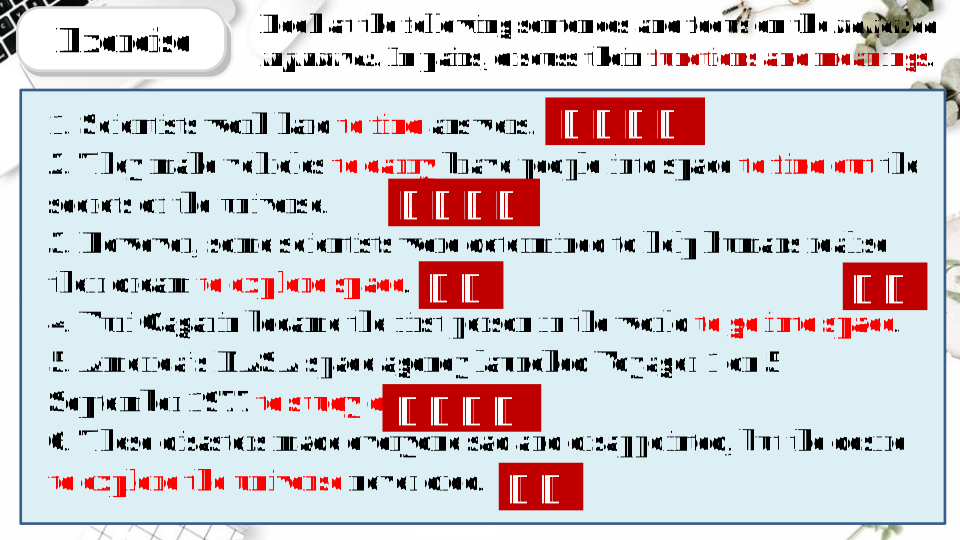
Look at the following sentences and focus on the italicised infinitives. In pairs, discuss their functions and meanings.
1. Scientists work hard to find answers.
2. They make vehicles to carry brave people into space to find out the secrets of the universe.
3. However, some scientists were determined to help humans realise their dream to explore space.
4. Yuri Gagarin became the first person in the world to go into space.
5. America’s NASA space agency launched Voyager 1 on 5 September 1977 to study deep space.
6. These disasters made everyone sad and disappointed, but the desire to explore the universe never died.
目的状语
目的状语
定语
定语
目的状语
定语
Exercise
Exercise
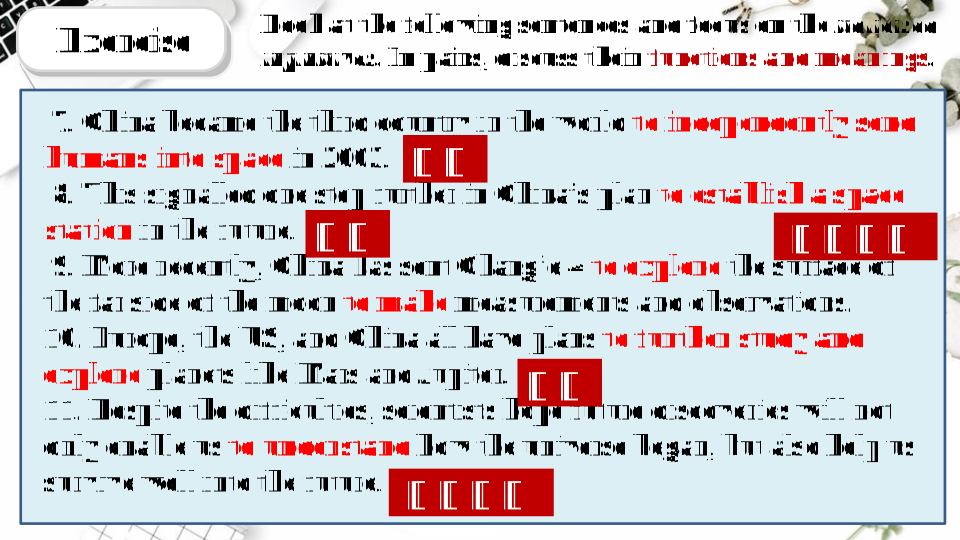
Look at the following sentences and focus on the italicised infinitives. In pairs, discuss their functions and meanings.
7. China became the third country in the world to independently send humans into space in 2003.
8. This signalled one step further in China’s plan to establish a space station in the future.
9. More recently, China has sent Chang’e 4 to explore the surface of the far side of the moon to make measurements and observations.
10. Europe, the US, and China all have plans to further study and explore planets like Mars and Jupiter.
11. Despite the difficulties, scientists hope future discoveries will not only enable us to understand how the universe began, but also help us survive well into the future.
定语
定语
目的状语
定语
目的状语
Exercise
Look at the following sentences and focus on the italicised infinitives. In pairs, discuss their functions and meanings.
1. I trained for a long time to fly airplanes as a fighter pilot.
2. As we all know, an astronaut needs to be healthy and calm in order to work in space.
3. First of all, you must be intelligent enough to get a related college degree.
4. Some scientists were determined to help humans realise their dream to explore space.
5. On 12 April 1961, Yuri Gagarin became the first person in the world to go into space.
状语
状语
状语
定语
定语
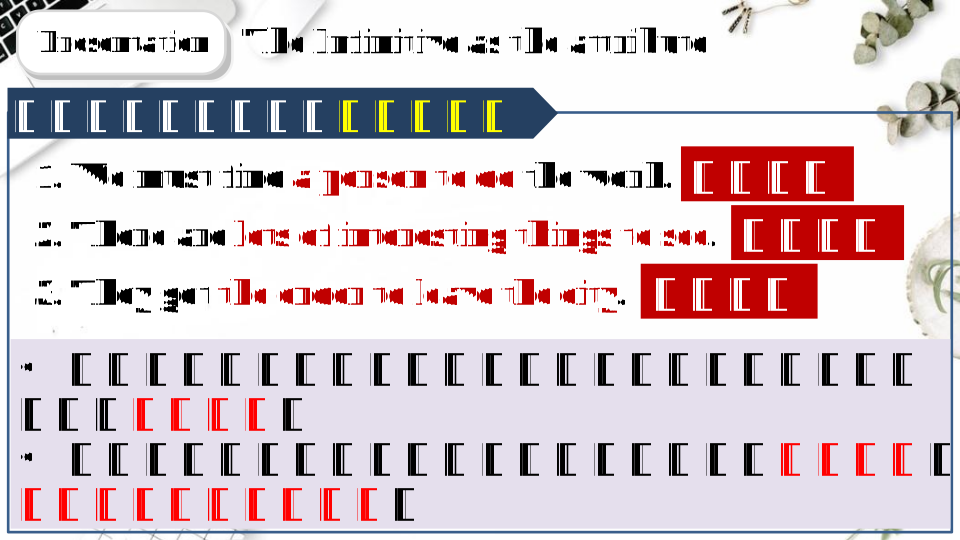
The Infinitive as the attribute
Presentation
1. We must find a person to do the work.
2. There are lots of interesting things to see.
3. They got the order to leave the city.
动词不定式作定语通常放在名词、代词或不定代词的后面作后置定语。
动词不定式作定语一般与所修饰的名词构成主谓关系、动宾关系、或同位关系。
主谓关系
动宾关系
同位关系
一、不定式作定语的位置和关系
The Infinitive as the attribute
Presentation
1. She is the first graduate to get an offer in the big company.
2. He is the only one to survive the accident.
3. He is the right person to do the job.
当名词被序数词或 the only, the next, the last, the right修饰,且该名词是作定语的非谓语动词的执行者时,用不定式主动形式作定语。
二、不定式作定语(名词被特定词修饰)
The Infinitive as the attribute
Presentation
有些名词常跟不定式作定语,如:wish, decision, chance, promise, plan, time, attempt, effort, ability, eagerness等。
三、不定式作定语与特定名词连用
1. In the past, women had no chance to go to school.
2. He made an attempt to be admitted to the big company.
3. A good teacher must have the ability to make himself
understood.
4. I must keep the promise to pay on time.
5. His eagerness to get back home was quite obvious.
The Infinitive as the attribute
Presentation
作定语的动词不定式如果是不及物动词或者不定式所修饰的名词或代词是不定式动作的地点、工具等,不定式后面须有相应的介词。
四、不定式加介词作定语
1. Give me a pen to write with.
2. He is looking for a room to live in.
3. There is nothing to worry about.
4. Here is a piece of paper for you to write on.
The Infinitive as the attribute
Presentation
拓展与补充
在一些固定句型中,动词不定式作定语用主动形式表被动意义,如 have / get / give / show sth to do。
在此类句型中,不定式与前面的名词构成动宾关系,和句中另一个名词或代词构成主谓关系。
①I do a lot of things. ② I drink something. ③You take the right path.
1. I have a lot of things to do tomorrow.
2. Please give me something to drink.
3. He will show you the right path to take.
The Infinitive as the attribute
Presentation
1. Do you have any clothes to wash?
2. Kids, do you have any clothes to be washed?
3. I can’t go out this afternoon, because I have many
materials to type.
4. The boss told me that he had many materials to be typed.
当不定式与前面的名词构成动宾关系,且和句中的主语构成逻辑上的主谓关系时,用主动形式表被动意义;若没有逻辑上的主谓关系且不确定逻辑主语是谁时,仍用被动语态。
试比较1、2句和3、4句的区别是什么?
The Infinitive as the attribute: summary
Presentation
主动语态 被动语态
一般式 to do to be done
进行式 to be doing
完成式 to have done to have been done
完成进行式 to have been doing
动词不定式的时态和语态
The Infinitive as the attribute: exercise
Presentation
1. The airport ______________ (complete) next year will help promote tourism in this area. (2013 四川改)
2. We are having a meeting in half an hour. The decision _________ (make) at the meeting will influence the future of our company. (2012 重庆)
3. Volunteering gives you a chance _________ (change) lives, including your own. (2013 北京)
4. The students are looking forward to having an opportunity _________ (explore) society of real-life experience. (2013 上海)
5. I have a lot of readings __________ (complete) before the end of this term. (2010 山东)
to be completed
to be made
to change
to explore
to complete
The Infinitive as the attribute: exercise
Presentation
6. The play ______________ (produce) next month aims mainly to reflect the local culture. (2009 安徽)
7. The ability _________ (express) an idea is as important as the idea itself. (2011 湖南)
8. It’s important for the figures ____________ (update) regularly. (2011 北京)
9. Birds’ singing is sometimes a warning to other birds ______ (stay) away. (2012 北京)
10. It’s standard practice for a company like this one _________ (employ) a security officer. (2014 山东)
to be produced
to express
to stay
to be updated
to employ
The Infinitive as the adverbial
Presentation
1. To make friends easily, you need to be very kind.
2. They went there to save people who were injured.
3. More TV programmes were produced to raise people’s concern over food safety.
4. To / In order to catch the first bus, he got up early.
5. The bus stopped so as to pick up passengers.
不定式作目的状语,可用in order to / so as to 代替,有时为了突出强调目的,还可将这个词组置于句首,但so as to一般不用于句首。
The Infinitive as the adverbial
Presentation
1. He woke up to find everybody gone.
2. He arrived at the train station, only to find the train had already left.
3. She is too tired to do the job.
4. He is old enough to go to school.
5. Will you be so kind as to open the window?
不定式作结果状语,表示出乎意料的结果;有时也可用only to, too ... to, enough to, so ... as to 来表示结果状语。
The Infinitive as the adverbial
Presentation
1. I am so excited to be here!
2. I am more than delighted to be with you!
3. She is proud to have won the first place.
4. He is glad to be invited to the meeting.
不定式作原因状语,常用于“主语 + be + 形容词 + to do”结构中,此类形容词多是glad, excited, disappointed, shocked等表示喜怒哀乐的形容词。
The Infinitive as the adverbial: exercise
Presentation
________ (make) it easier to get in touch with us, you’d better keep this card at hand. (2016 北京改)
2. Anxiously, she took the dress out of the package and tried it on, only _______ (find) it didn’t fit. (2014 天津改)
3. Group activities will be organised after class _________ (help) children develop team spirit. (2014 重庆改)
To make
to find
to help
高考链接
目的状语
结果状语
原因状语
The Infinitive as the adverbial: exercise
Presentation
4. George returned after the war, only __________ (tell) that his wife had left him. (2012 山东)
5. This machine is very easy _________ (operate). Anybody can learn to use it in a few minutes. (2012 辽宁)
6. We were astonished _______ (find) the temple still in its original condition. (2010 辽宁)
to be told
to operate
to find
高考链接
结果状语
原因状语
原因状语
The Infinitive as the attribute and adverbial: exercise
Presentation
Hello, my dear friends! I am greatly honoured ________(share) the event with you. The theme of the activity is ______________ (introduce) Chinese traditional culture. During this month, there will be various activities for you ____________ (experience) the rich and colourful Chinese culture. You will have a chance __________ (make) paper-cutting or ____________ (appreciate) Chinese arts.
There will be some lectures for you _________ (attend), _______ is beneficial to your understanding about China. ________ (learn) more about China, don’t hesitate _________ (contact) us and be the first ________ (sign) up for the activity.
to share
to introduce
to experience
to make
to appreciate
to attend
which
To learn
to contact
to sign
语篇演练
The Infinitive as the attribute and adverbial: exercise
Presentation
语篇演练
Sending people to other planets or even beyond the solar system is not an easy goal _________ (achieve). One of the problems is that the trip would take a very long time. For example, _________ (use) current technology, it would take over two years _________ (get) to the closest planet, Mars, and back. Although light is the fastest thing _________(know) in the universe, it could take more than four years to reach the nearest star system.
to achieve
using
to get
known
The Infinitive as the attribute and adverbial: exercise
Presentation
语篇演练
Will scientists figure out a way _________(store) sufficient food and water for the long journey? Is it possible to travel faster than light? No one knows the answers yet. However, space scientists never give up. They are experimenting with growing crops in space so as _________(help) astronauts get enough food on longer journeys through space.
to store
to help
Grammar
The language points
1. In space, astronauts collect all dirty water so as to recycle it for later use.
so as to (do sth.) :in order to 为了,以便
eg I always keep fruit in the fridge so as to keep insects off it.
我总是把水果放在冰箱里,以防虫子。
recycle vt. to put used objects or materials through a special process so that they can be used again
再利用,回收利用
eg We take all our bottles to be recycled. (翻译)
我们把我们所有的瓶子都回收利用。
2. Astronauts’ bones and muscles can get very weak in space due to the lack of gravity…
lack n. when there is not enough of something, or none of it
缺乏;短缺
vt. to not have something that you need, or not have
enough of it 没有;缺乏
eg Her only problem is lack of confidence.
Alex’s real problem is that he lacks confidence. (翻译)
她唯一的问题是缺乏自信。
Alex的真正问题是他缺乏信心。
Grammar
The language points
3. Astronauts have to use tape to stick everything down while working in space because everything would float off otherwise.
otherwise adv. used when saying what bad thing will happen if
something is not done 否则,要不然
eg Put your coat on, otherwise you’ll get cold. (翻译)
穿上外套,不然你会感冒的。
Grammar
The language points
Grammar
The language points
4. Sending people to other planets or even beyond the solar system…
beyond prep. further away in the distance (than something)
在更远处;超出
eg In the distance, beyond the river, was a small town. (翻译)
在河对岸的远处有一座小镇。
5. …the current technology…
current adj. happening or existing now
现在的,当前的
eg The current situation is very different to that in 1990.
当前的形势与1990年截然不同。
Grammar
The language points
6. Will scientists figure out a way to store sufficient food and water for the long journey?
figure out: to think about a problem or situation until you
find the answer or understand what has happened
弄懂;弄清楚;弄明白
eg Can you figure out how to do it? (翻译)
你能想出怎么做吗?
sufficient adj. as much as is needed for a particular purpose
足够的;充足的
eg We need sufficient time to deal with the problem.(翻译)
我们需要足够的时间来处理这个问题。
Do the exercises on Page 80-81.
$$
资源预览图

1

2
3
4

5
6
相关资源
由于学科网是一个信息分享及获取的平台,不确保部分用户上传资料的 来源及知识产权归属。如您发现相关资料侵犯您的合法权益,请联系学科网,我们核实后将及时进行处理。