Unit 5【刷语法】一般将来时(重点语法提升练)-2025-2026学年七年级英语上册单元模块满分必刷题(外研版2024)
2025-08-27
|
2份
|
20页
|
232人阅读
|
26人下载

资源信息
| 学段 | 初中 |
|---|---|
| 学科 | 英语 |
| 教材版本 | 初中英语外研版七年级上册 |
| 年级 | 七年级 |
| 章节 | Unit 5 The power of plants |
| 类型 | 题集-专项训练 |
| 知识点 | - |
| 使用场景 | 同步教学-单元练习 |
| 学年 | 2025-2026 |
| 地区(省份) | 全国 |
| 地区(市) | - |
| 地区(区县) | - |
| 文件格式 | ZIP |
| 文件大小 | 92 KB |
| 发布时间 | 2025-08-27 |
| 更新时间 | 2025-08-27 |
| 作者 | Easy English初高中英语精品 |
| 品牌系列 | - |
| 审核时间 | 2025-08-27 |
| 下载链接 | https://m.zxxk.com/soft/53641479.html |
| 价格 | 3.00储值(1储值=1元) |
| 来源 | 学科网 |
内容正文:
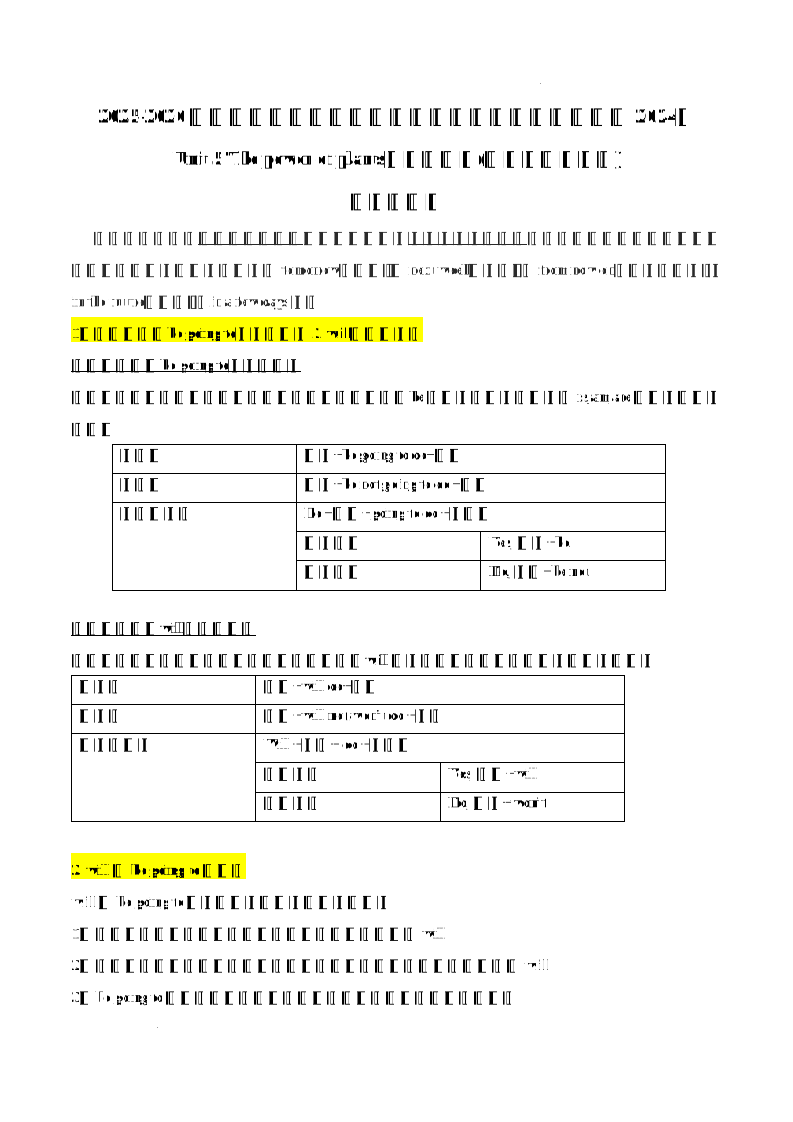
2025-2026学年七年级英语上册单元模块满分必刷题(外研版2024)
Unit 5 The power of plants【刷语法】(重点语法提升练)
一般将来时
一般将来时表示将来某一时刻的动作或状态,或将来某一段时间内经常的动作或状态。常与一些表示将来的时间状语连用,如: tomorrow(明天), next week(下周), from now on(从现在开始);in the future(将来),in a few days等。
1、基本结构:be going to+动词原形 2. will+动词原形
一般将来时:be going to+动词原形
意为自己打算做某事、计划做某事或者有意做某事,be 动词随主语不同可变为is,am,are.它的句式变化如下:
肯定句
主语+be going to do+其他
否定句
主语+be not going to do +其他
一般疑问句
Be +主语+going to do +其他?
肯定回答
Yes, 主语+be.
否定回答
No, 主语+be not.
一般将来时:will+动词原形
用于描述未来的事情或表达对将来的预测等,will没有人称和数的变化,它的句式变化为:
肯定句
主语+will do+其他
否定句
主语+will not/won’t do +其他
一般疑问句
Will +主语+ do +其他?
肯定回答
Yes, 主语+will.
否定回答
No, 主语+won’t.
2. will 和be going to 的区别
will 和be going to一般可以互用,但有时有区别:
1) 含时间和条件状语从句,如果主句是将来时,多用will.
2) 如果不是以人的意愿为转移,将来肯定会发生的动作和状态,多用will
3) be going to根据迹象推测,有可能发生的事情或计划要做的事情。
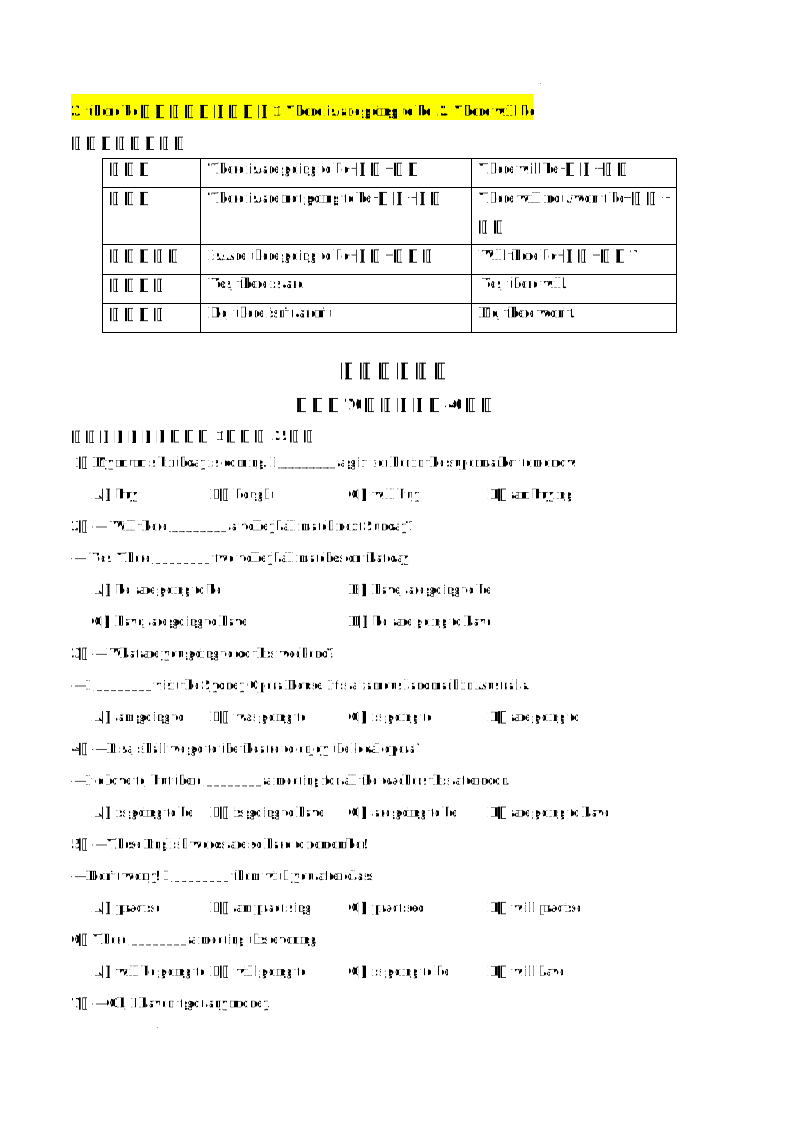
3. there be 句型的一般将来式:1.There is/are going to be 2. There will be
它的句式变化为:
肯定句
There is/are going to be+主语+其他
There will be+主语+其他
否定句
There is/are not going to be+主语+其他
There will not /won’t be+主语+其他
一般疑问句
Is/Are there going to be+主语+其他?
Will there be+主语+其他?
肯定回答
Yes, there is/are.
Yes, there will.
否定回答
No, there isn’t/aren’t.
No, there won’t.
语法过关小测
满分:70分,时间:40分钟
一、单项选择(每小题1分,共25分)
1.My mum’s birthday is coming. I ________ a gift for her in the supermarket tomorrow.
A.buy B.bought C.will buy D.am buying
【答案】C
【详解】句意:我妈妈的生日快到了。我明天要在超市给她买礼物。
考查动词时态。根据题干中的时间状语“tomorrow”可知,动作发生在将来,需用将来时态。选项C“will buy”是一般将来时的标准结构,表示将来要发生的动作。故选C。
2.— Will there ________ a volleyball match next Sunday?
— Yes. There ________ two volleyball matches on that day.
A.be; are going to be B.have; are going to be
C.have; are going to have D.be; are going to have
【答案】A
【详解】句意:——下周日会有排球比赛吗?——是的。在那天将会有两场排球比赛。
考查there be的一般将来时结构。there be句型中的一般将来时可用there will be或there is/are going to be表示;又根据题中“two volleyball matches”可知用there are going to be。故选A。
3.—What are you going to do this weekend?
—I ________ visit the Sydney Opera House. It’s a famous landmark in Australia.
A.am going to B.was going to C.is going to D.are going to
【答案】A
【详解】句意:——这个周末你打算做什么?——我打算参观悉尼歌剧院。它是澳大利亚的一个著名地标。
考查一般将来时和主谓一致。根据“What are you going to do this weekend?”可知,此处询问对方这个周末的打算,应使用一般将来时,其结构为“be going to+动词原形”,主语为“I”,be动词应用am。故选A。
4.—Lisa, shall we go to the theatre to enjoy the local opera?
—I’d love to, but there ________ a meeting for all the teachers this afternoon.
A.is going to be B.is going to have C.are going to be D.are going to have
【答案】A
【详解】句意:——丽莎,我们去看本地戏剧吧?——我很想去,但今天下午所有老师要开会。
考查there be句型。此处是“there be”句型表示“存在”,其将来时为“there is going to be”(单数)或“there are going to be”(复数)。选项B和D中的“have”不能与“there”搭配,排除。主语“a meeting”是单数,故用“is going to be”。故选A。
5.—These English words are so hard to remember!
—Don’t worry! I ________ them with you after class.
A.practise B.am practising C.practised D.will practise
【答案】D
【详解】句意:——这些英语单词太难记住了!——别担心!下课后我会和你一起练习。
考查一般将来时。practise练习,一般现在时;am practising正在练习,现在进行时;practised练习,一般过去时;will practise将会练习,一般将来时。根据“after class”可知,下课后是以后的时间,用一般将来时。故选D。
6.There ________ a meeting this evening.
A.will be going to B.will going to C.is going to be D.will have
【答案】C
【详解】句意:今晚将有一个会议。
考查there be句型的一般将来时。根据“There ... a meeting this evening”可知,句子是there be句型的将来时,其结构为there will be或there is going to be。故选C。
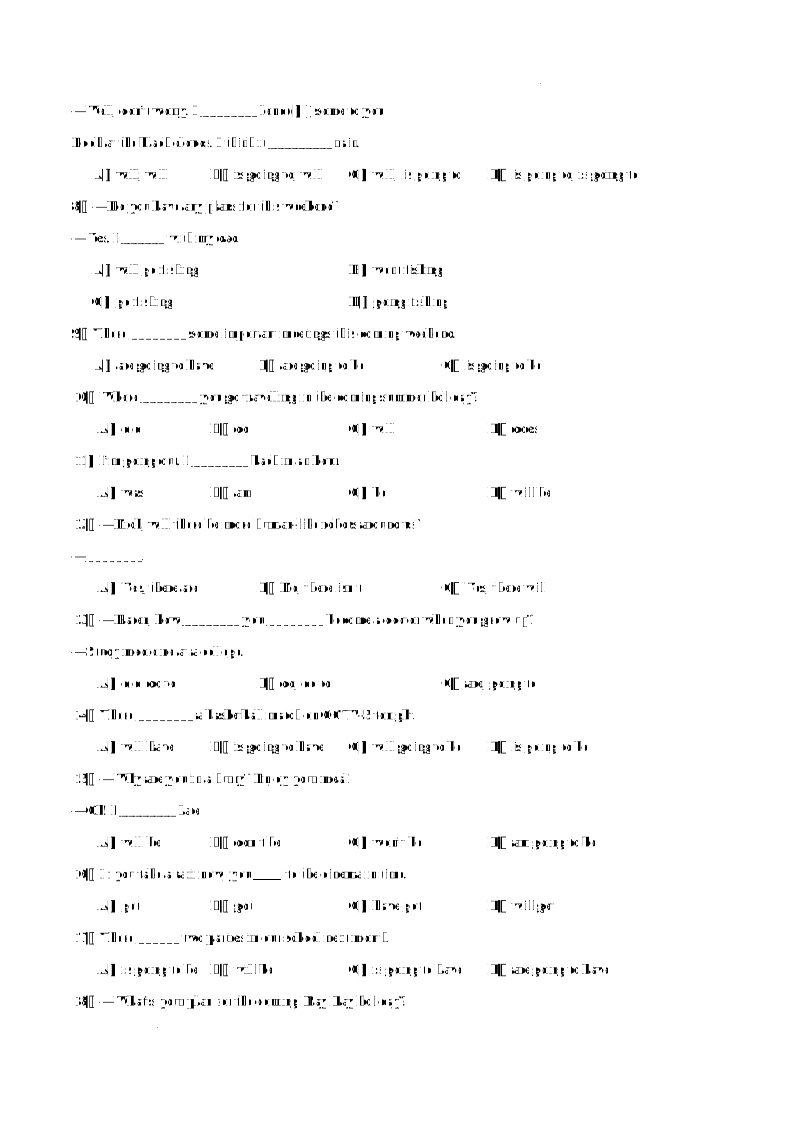
7.—Oh, I haven’t got any money.
—Well, don’t worry. I ________ lend (借) some to you.
Look at the black clouds. I think it _________ rain.
A.will; will B.is going to; will C.will; is going to D.is going to; is going to
【答案】C
【详解】句意:——哦,我没有钱。——别担心。我将借给你一些。看那些乌云。我想天要下雨了。
考查一般将来时。will表示临时决定或自愿做某事,is going to表示有迹象的预测。第一空,此处表示说话时刚刚决定借钱给对方,所以用will;第二空,此处是根据乌云判断即将下雨,所以用is going to。故选C。
8.—Do you have any plans for this weekend?
—Yes. I ______ with my dad.
A.will go fishing B.went fishing
C.go fishing D.going fishing
【答案】A
【详解】句意:——你这个周末有什么计划吗?——是的。我将和我爸爸去钓鱼。
考查一般将来时。will go fishing将去钓鱼,一般将来时;went fishing一般过去时;go fishing一般现在时;going fishing,动名词形式,不能单独作谓语。根据问句中“this weekend”可知,此处询问的是将来的计划,应用一般将来时表达将来要做的事情。故选A。
9.There ________ some important meetings this coming weekend.
A.are going to have B.are going to be C.is going to be
【答案】B
【详解】句意:这个周末将有一些重要的会议。
考查There be的一般将来时。分析句子可知,句子是There be句型,不和have连用,排除A选项;再由“meetings”可知,be动词用are。故选B。
10.Where ________ you go travelling in the coming summer holiday?
A.did B.do C.will D.does
【答案】C
【详解】句意:即将到来的暑假你打算去哪里旅行?
考查一般将来时。根据“in the coming summer holiday”可知,该句询问的是将来的计划,需用一般将来时 “will + 动词原形” 的结构。故选C。
11.I’m going out. I ________ back in an hour.
A.was B.am C.be D.will be
【答案】D
【详解】句意:我要出去了。一小时后回来。
考查时态。根据“in an hour”可知,讲述一小时后发生的事情,用一般将来时,故选D。
12.—Nick, will there be more human-like robots around us?
—________.
A.Yes, there are B.No, there isn’t C.Yes, there will
【答案】C
【详解】句意:——尼克,我们身边会出现更多类人机器人吗?——是的,会有的。
考查时态。根据“Nick, will there be more human-like robots around us?”可知,问句与其答句的时态应一致,也用一般将来时,故选C。
13.—Karen, how ________ you ________ become a doctor when you grow up?
—Study medicine at a college.
A.did; do to B.do; do to C.are; going to
【答案】C
【详解】句意:——凯伦,你长大后打算怎么成为一名医生呢?——在大学里学习医学。
考查时态。根据“when you grow up”可知,此处询问长大后的打算,用一般将来时,“are going to”符合语境。故选C。
14.There ________ a basketball match on CCTV-5 tonight.
A.will have B.is going to have C.will going to be D.is going to be
【答案】D
【详解】句意:今晚CCTV-5将有一场篮球比赛。
考查there be句型的将来时表达。根据“tonight”可知本句是there be的一般将来时结构,表示“将有”,结合主语“a basketball match”是单数,可知结构应该为:there will be/there is going to be。故选D。
15.—Why are you in a hurry? Enjoy your meal!
—Oh! I ________ late.
A.will be B.don’t be C.won’t be D.am going to be
【答案】D
【详解】句意:——你为什么这么着急?好好享受你的饭菜!——哦!我快要迟到了。
考查将来时态表达。考查一般将来时。will be将会是,表将来 ;don’t be不是,用于一般现在时否定 ;won’t be将不会是,表将来否定 ;am going to be即将是,表将来 。根据“Oh! I...late”可推知,此处需用将来时表达即将发生的状态,且“in a hurry”和“Enjoy your meal”的对话背景暗示说话者担心迟到。be going to结构更强调根据当前迹象(如赶时间)判断即将发生的事。故选D。
16.If you take a taxi now, you to the cinema in time.
A.get B.got C.have got D.will get
【答案】D
【详解】句意:如果你现在乘坐出租车,你会及时到达电影院。
考察时态。get到达,一般现在时;got到达,一般过去时;have got拥有;will get将会到达,一般将来时。If 引导的条件状语从句,遵循“主将从现”原则,时态用一般将来时。故选D。
17.There ______ two parties in our school next month.
A.is going to be B.will be C.is going to have D.are going to have
【答案】B
【详解】句意:我们学校下个月将会有两场派对。
考查there be句型的一般将来时。时间是将来“next month”,要用there be句型的一般将来时。there be句型的一般将来时结构为:there will be或there is/are going to be,“two parties”是复数,所以用there are going to be或there will be。故选B。
18.—What’s your plan for the coming May Day holiday?
—I ________ a boat trip along Haohe River with my parents.
A.take B.will take C.am taking D.takes
【答案】B
【详解】句意:——你对即将到来的五一假期有什么计划?——我将和我的父母乘船游览濠河。
考查时态。根据“What’s your plan for the coming May Day holiday?”可知,此处是询问即将到来的五一假期的计划,因此答句应该用一般将来时,其结构是“will+动词原形”。故选B。
19.Lucy ________ a science workshop next Saturday to learn more about robots.
A.attends B.attended C.will attend D.is attending
【答案】C
【详解】句意:露西下周六将参加一个科学研讨会,了解更多关于机器人的知识。
考查时态。attends参加,一般现在时;attended参加,一般过去时;will attend将要参加,一般将来时;is attending正在参加,现在进行时。根据“next Saturday”可知,时态为一般将来时。故选C。
20.Scientists believe we ______ travel to Mars and back in just three days some day.
A.can be able to B.will can C.will be able to D.could
【答案】C
【详解】句意:科学家们认为,未来某一天我们将能够在仅仅三天内往返火星。
考查一般将来时和动词短语用法。can be able to表达错误;will can表达错误;will be able to将能够;could可以。根据“in just three days some day”可知,此处描述将来要发生的事情,应用一般将来时,其结构为“will do”。故选C。
21.He usually ________ to school, but he ________ the school bus there tomorrow.
A.ride; will take B.ride; took C.rides; will take D.rides; took
【答案】C
【详解】句意:他通常骑车上学,不过明天他要乘校车去。
考查一般现在时和一般将来时。根据“usually”可知第一句时态为一般现在时,且主语为第三人称单数,谓语动词应用第三人称单数形式,排除选项A、B;根据“tomorrow”可知第二句时态为一般将来时,结构为“will+动词原形”,排除选项D。故选C。
22.—Alice! Any plans for tomorrow?
—I ________ my grandparents.
A.visit B.am going to visit C.visited
【答案】B
【详解】句意:——爱丽丝!明天有什么计划吗?——我要去看望我的祖父母。
考查一般将来时。visit看望,动词原形;am going to visit将要去看望,一般将来时;visited看望,过去式。根据“Any plans for tomorrow?”可知,此处询问明天的计划,应用一般将来时表示将要发生的动作,am going to visit符合语境。故选B。
23.My father __________ see a film with me next weekend.
A.are going to B.is going to C.am going
【答案】B
【详解】句意:我父亲下周末要和我一起看电影。
考查一般将来时的主谓一致。主语“My father”是单数第三人称,需搭配“is going to”。故选B。
24.Look at the clouds in the sky. I’m afraid it ________ soon.
A.should rain B.is going to rain C.rains D.rained
【答案】B
【详解】句意:看天上的云。恐怕很快就要下雨了。
考查时态。根据“Look at the clouds in the sky”以及“soon”可知,此处表达的是“即将下雨”的意思,应用一般将来时。故选B。
25.—________ he ________ his uncle up at the Shuofang Airport this afternoon?
—Yes, he is.
A.Will; pick B.Does; pick C.Is; going to pick D.Are; going to pick
【答案】C
【详解】句意:——今天下午他要去硕坊机场接他叔叔吗?——是的,他是。
考查一般疑问句和动词时态。根据“this afternoon”可知,本句时态为一般将来时,结合“Yes, he is.”可知表示计划将要做的事情要用be going to do,主语he为单数第三人称,be动词要用is,故选C。
二、单词拼写(每小题1分,共25分)
26.Who (lead) you to the museum tomorrow?
【答案】will lead
【详解】句意:明天谁会带你们去博物馆?根据“tomorrow”可知,为明天发生的事,用一般将来时,谓语结构为“will+动词原形”。故填will lead。
27.Tomorrow will be a rainy day. I’m going to (stay) at home all day.
【答案】stay
【详解】句意:明天会是个下雨天。我打算一整天都待在家里。“be going to do sth.”是一般将来时的一种表达结构,意思是“打算做某事”,其中“to”后面要接动词原形,“stay at home”意为“待在家里”,此处应用动词“stay”的原形,故填stay。
28.I can see you’re busy, so I (not stay) long.
【答案】won’t stay
【详解】句意:我看得出你很忙,所以我不会待太久。根据“I can see you’re busy, so I...(not stay) long.”可知,你很忙,因此“我”不会待太久,表示未来的动作,用一般将来时“will do”,will not可缩写为won’t。故填won’t stay。
29.I (watch) a movie with my friend tomorrow.
【答案】will watch
【详解】句意:明天我要和朋友一起看电影。watch“看”,根据“tomorrow”可知,该句是一般将来时,其结构为“will do”,故填will watch。
30.Look, there are dark clouds in the sky. It (rain).
【答案】is going to rain
【详解】句意:看,天空中有乌云。天要下雨了。rain“下雨”,根据“Look, there are dark clouds in the sky.”可知,基于当前迹象(乌云密布)预测的,时态用一般将来时,用“is/am/are going to do”结构。主语为it,be动词用is。故填is going to rain。
31.Walk along the road and you (find) the hotel on your right.
【答案】will find
【详解】句意:沿着这条路走,你就会发现酒店就在你的右边。根据“Walk along the road and you...the hotel on your right.”可知,动作还未发生,用一般将来时will do,故填will find。
32.Tom (take) part in a community party next week.
【答案】will take
【详解】句意:汤姆下周将参加一个社区派对。根据“next week”可知,这句话是一般将来时,应用“will+动词原形”结构;“take part in”是固定短语,表示“参加”,所以这里要用“will take”来构成一般将来时。故填will take。
33.They (be) going to take part in the tree-planting activity tomorrow.
【答案】are
【详解】句意:他们明天将要参加植树活动。“be going to”表示“将要做某事”,一般将来时。主语“They”是复数,故be动词用are。故填are。
34.—Is your father (play) basketball with you this Sunday morning?
—No, he isn’t.
【答案】going to play
【详解】句意:——你父亲打算这个星期天上午和你一起打篮球吗?——不,他不是。根据“Is your father…basketball with you this Sunday morning?”可知此处是结构为“be going to+动词原形”的一般将来时。故填going to play。
35.Linda (not go) to Beijing next month.
【答案】won’t go
【详解】句意:琳达下个月不会去北京。根据“next month”和英文提示可知,句子时态为一般将来时,其否定形式为“will not + 动词原形”,will not可缩写为won’t。故填won’t go。
36.He (arrive) in Lanzhou the day after tomorrow.
【答案】will arrive
【详解】句意:他后天将到达兰州。根据“the day after tomorrow”以及英文提示可知,句子时态为一般将来时,其结构为“will + 动词原形”。故填will arrive。
37.—What you (be) in the future?
—I’m going to be a scientist.
【答案】 are going to be
【详解】句意:——你将来打算做什么?——我要成为一名科学家。根据“in the future”可知,问句用一般将来时,be going to表示“打算”,主语是you,be动词用are。故填are;going to be。
38.Mrs Brown is not feeling well. She (see) a doctor this afternoon.
【答案】is going to see/will see
【详解】句意:布朗夫人不太舒服。她今天下午要去看医生。根据“Mrs Brown is not feeling well.”和时间状语“this afternoon”可知,本句应该用一般将来时,结构为be going to do或will do,主语She为第三人称单数,be动词也应该用相应的第三人称单数形式。故填is going to see/will see。
39.— he (fix) the radio for me tomorrow?
—Yes, he will.
【答案】 Will fix
【详解】句意:——他明天会给我修理收音机吗?——是的,他会。根据问句的时间状语“tomorrow”和答语“Yes, he will.”可知,问句为一般将来时的一般疑问句,will开头,首字母要大写,动词fix用原形。故填Will;fix。
40.We hope there (be) a new shopping mall in our city next year.
【答案】will be
【详解】句意:我们希望明年我们城市会有一个新的购物中心。根据“next year”可知,此处表示将来的事情,句子时态为一般将来时,结构为“will+动词原形”。故填will be。
41.—My computer isn’t working. Can you help me?
—Sure. I (check) it for you.
【答案】will check/ am going to check
【详解】句意:——我的电脑不能用了。你能帮助我吗?——当然可以。我将为你检查一下它。根据“Can you help me?”及肯定回答“Sure.”,可知检查电脑的动作还没有发生,所以用将来时态,其结构为:be going to+动词原形;will+动词原形;主语为“I”,be用am;check核查,检查,动词原形,故填will check/am going to check。
42.Next month my father (go) to Shanghai.
【答案】is going/will go
【详解】句意:下个月,我的爸爸将去上海。根据“Next month”可知,此句话应为一般将来时态(be going to/will do),go可以用现在进行时表示将来,主语是单数,则be动词用is。或直接在go前加will表将来。故填is going/will go。
43.What you (do) tomorrow evening?
【答案】 will do
【详解】句意:明天晚上你要做什么?根据“tomorrow evening”可知,此句时态为一般将来时,结构为will do。疑问句中将助动词will放于主语“you”前,其后动词用原形。do“做”,动词。故填will;do。
44.It’s raining hard. We have to stay at home. The rain (stop) soon, I think.
【答案】will stop
【详解】句意:雨下得很大。我们不得不待在家里。我想雨很快会停的。根据“soon”以及结合所给词可知,此处应该指的是雨很快会停的,时态为一般将来时,结构为will+动词原形。故填will stop。
45.—Shall we go to the museum tomorrow morning?
—I’m afraid I (not be) free.
【答案】won’t be/will not be
【详解】句意:——我们明天上午去博物馆好吗?——恐怕我没空。tomorrow morning是一般将来时的标志性时间状语,一般将来时的否定形式有“will not+动词原形”;be是动词原形,按照一般将来时否定结构,要用will not be或其缩写won’t be。故填won’t be/will not be。
46.All the students (enjoy) the opera in the hall tomorrow afternoon.
【答案】will enjoy/are going to enjoy
【详解】句意:所有学生明天下午将在大厅里欣赏歌剧。根据“tomorrow afternoon”可知,句子用一般将来时“will do/be going to do”,主语是复数,此时be动词用are。故填will enjoy/are going to enjoy。
47.Are you (run) along the river tomorrow morning?
【答案】going to run
【详解】句意:明天早上你要沿着河跑吗?根据“tomorrow morning” 可知,句子是一般将来时,根据“Are you”可知,句型是be going to do sth.,表示“将要做某事”,因此动词run变成动词不定式to run,由于空前有be动词Are,因此变成going to run。故填going to run。
48.It’s rainy today. I’m afraid we (stay) at home all day.
【答案】will stay
【详解】句意:今天下雨了,恐怕我们一整天都得待在家里。根据“I’m afraid we...at home all day.”可知,在表达预测、担忧或可能性时,常用“will + 动词原形” 构成一般将来时。故填will stay。
49.My aunt is in the UK on business. He (come) back in two days.
【答案】will come
【详解】句意:我的阿姨在英国出差。她将在两天后回来。根据“My aunt is in the UK on business. He...back in two days.”可知,句中“in two days”表示“两天后”,句子时态是一般将来时态,构成为“will+动词原形”。故填will come。
50.Jimmy (not go) to the cinema tonight, because he has a lot of homework to do.
【答案】will not go/won’t go
【详解】句意:吉米今晚不去电影院,因为他有很多作业要做。根据“tonight”可知,句子描述的是将来的动作,要用一般将来时,其结构为“will + 动词原形”,否定形式为“will not + 动词原形”,可缩写为“won’t + 动词原形”。结合括号内的提示“not go”,故填will not go/won’t go。
三、完成句子(每小题2分,共20分)
51.They are going to have a party. (改为否定句)
They going to have a party.
【答案】 are not
【详解】句意:他们将有一个聚会。根据“are going to”可知,本句时态为一般将来时,改为否定句时,需在are后加not,故填are;not。
52.She will join the long-jump. (改为否定句)
She the long-jump.
【答案】 won’t join
【详解】句意:她将参加跳远比赛。原句时态为一般将来时,改为否定句在will后加not,可缩写为won’t,后接动词原形。故填won’t;join。
53.We are going to have a community party next week. (改为一般疑问句)
going to have a community party next week?
【答案】 Are you
【详解】句意:我们下周打算举办一场社区派对。are为be动词,变一般疑问句需位于句首,主语靠后,其余保持不变;we在疑问句中需变成you。故填Are;you。
54.We will leave Beijing at 7:30. (对画线部分提问)
you leave Beijing?
【答案】 What time will
【详解】句意:我们将会在7:30离开北京。划线部分为“at 7:30”,这里是提问具体时间点,用疑问词组what time来提问,原句中有助动词will,在疑问句中需将其提前至主语“you”之前,谓语动词用原形leave。故填What;time;will。
55.Robots will look like humans in the future. (对划线部分提问)
robots look like?
【答案】 What will
【详解】句意:机器人将来会长得像人类。look like后加名词,表示“看起来像……”,对look like后的名词提问用what,一般将来时的疑问句中将will置于主语robots前。故填What;will。
56.The visit will start at 2 o’clock.(对划线部分提问)
the visit start?
【答案】 When will
【详解】句意:参观将在两点钟开始。划线部分是具体时间,疑问句用when来提问,句首首字母大写;原句是一般将来时,疑问句的助动词是will。故填When;will。
57.Our teacher will be back in three weeks. (对划线部分提问)
your teacher be back?
【答案】How soon will
【详解】句意:我们的老师将在三周后回来。对“in+一段时间”进行提问,需用“how soon”意思是“多久以后”;表将来的will需放于主语前,构成疑问句。故填How soon will。
58.Ms. Li is going to work for CCTV. (对画线部分提问)
going to work for CCTV?
【答案】 Who is
【详解】句意:李女士将去CCTV工作。画线部分是Ms. Li表示人,用特殊疑问词who来提问,放句首,首字母大写,故第一个空用Who。句子的时态是be going to构成的一般将来时,特殊疑问词作主语,be动词用is,因此第二个空用is。故填Who;is。
59.They are going to climb the mountain. (对画线部分提问)
going to ?
【答案】 What are they do
【详解】句意:他们将去爬山。划线部分是climb the mountain,对画线部分提问表达为“他们要去做什么”,what“什么”,放于句首;be动词are放于主语they前;do“做”,be going to后跟动词原形,因此do用原形。故填What;are;they;do。
60.Mary will stay at home. (对划线部分提问)
stay at home?
【答案】 Who will
【详解】句意:玛丽将会待在家里。划线部分表示人,且作主语,所以用who提问;原句时态为一般将来时,变为特殊疑问句时,将助动词will置于疑问词之后。故填Who;will。
学科网(北京)股份有限公司
$$
2025-2026学年七年级英语上册单元模块满分必刷题(外研版2024)
Unit 5 The power of plants【刷语法】(重点语法提升练)
一般将来时
一般将来时表示将来某一时刻的动作或状态,或将来某一段时间内经常的动作或状态。常与一些表示将来的时间状语连用,如: tomorrow(明天), next week(下周), from now on(从现在开始);in the future(将来),in a few days等。
1、基本结构:be going to+动词原形 2. will+动词原形
一般将来时:be going to+动词原形
意为自己打算做某事、计划做某事或者有意做某事,be 动词随主语不同可变为is,am,are.它的句式变化如下:
肯定句
主语+be going to do+其他
否定句
主语+be not going to do +其他
一般疑问句
Be +主语+going to do +其他?
肯定回答
Yes, 主语+be.
否定回答
No, 主语+be not.
一般将来时:will+动词原形
用于描述未来的事情或表达对将来的预测等,will没有人称和数的变化,它的句式变化为:
肯定句
主语+will do+其他
否定句
主语+will not/won’t do +其他
一般疑问句
Will +主语+ do +其他?
肯定回答
Yes, 主语+will.
否定回答
No, 主语+won’t.
2. will 和be going to 的区别
will 和be going to一般可以互用,但有时有区别:
1) 含时间和条件状语从句,如果主句是将来时,多用will.
2) 如果不是以人的意愿为转移,将来肯定会发生的动作和状态,多用will
3) be going to根据迹象推测,有可能发生的事情或计划要做的事情。
3. there be 句型的一般将来式:1.There is/are going to be 2. There will be
它的句式变化为:
肯定句
There is/are going to be+主语+其他
There will be+主语+其他
否定句
There is/are not going to be+主语+其他
There will not /won’t be+主语+其他
一般疑问句
Is/Are there going to be+主语+其他?
Will there be+主语+其他?
肯定回答
Yes, there is/are.
Yes, there will.
否定回答
No, there isn’t/aren’t.
No, there won’t.
语法过关小测
满分:70分,时间:40分钟
一、单项选择(每小题1分,共25分)
1.My mum’s birthday is coming. I ________ a gift for her in the supermarket tomorrow.
A.buy B.bought C.will buy D.am buying
2.— Will there ________ a volleyball match next Sunday?
— Yes. There ________ two volleyball matches on that day.
A.be; are going to be B.have; are going to be
C.have; are going to have D.be; are going to have
3.—What are you going to do this weekend?
—I ________ visit the Sydney Opera House. It’s a famous landmark in Australia.
A.am going to B.was going to C.is going to D.are going to
4.—Lisa, shall we go to the theatre to enjoy the local opera?
—I’d love to, but there ________ a meeting for all the teachers this afternoon.
A.is going to be B.is going to have C.are going to be D.are going to have
5.—These English words are so hard to remember!
—Don’t worry! I ________ them with you after class.
A.practise B.am practising C.practised D.will practise
6.There ________ a meeting this evening.
A.will be going to B.will going to C.is going to be D.will have
7.—Oh, I haven’t got any money.
—Well, don’t worry. I ________ lend (借) some to you.
Look at the black clouds. I think it _________ rain.
A.will; will B.is going to; will C.will; is going to D.is going to; is going to
8.—Do you have any plans for this weekend?
—Yes. I ______ with my dad.
A.will go fishing B.went fishing
C.go fishing D.going fishing
9.There ________ some important meetings this coming weekend.
A.are going to have B.are going to be C.is going to be
10.Where ________ you go travelling in the coming summer holiday?
A.did B.do C.will D.does
11.I’m going out. I ________ back in an hour.
A.was B.am C.be D.will be
12.—Nick, will there be more human-like robots around us?
—________.
A.Yes, there are B.No, there isn’t C.Yes, there will
13.—Karen, how ________ you ________ become a doctor when you grow up?
—Study medicine at a college.
A.did; do to B.do; do to C.are; going to
14.There ________ a basketball match on CCTV-5 tonight.
A.will have B.is going to have C.will going to be D.is going to be
15.—Why are you in a hurry? Enjoy your meal!
—Oh! I ________ late.
A.will be B.don’t be C.won’t be D.am going to be
16.If you take a taxi now, you to the cinema in time.
A.get B.got C.have got D.will get
17.There ______ two parties in our school next month.
A.is going to be B.will be C.is going to have D.are going to have
18.—What’s your plan for the coming May Day holiday?
—I ________ a boat trip along Haohe River with my parents.
A.take B.will take C.am taking D.takes
19.Lucy ________ a science workshop next Saturday to learn more about robots.
A.attends B.attended C.will attend D.is attending
20.Scientists believe we ______ travel to Mars and back in just three days some day.
A.can be able to B.will can C.will be able to D.could
21.He usually ________ to school, but he ________ the school bus there tomorrow.
A.ride; will take B.ride; took C.rides; will take D.rides; took
22.—Alice! Any plans for tomorrow?
—I ________ my grandparents.
A.visit B.am going to visit C.visited
23.My father __________ see a film with me next weekend.
A.are going to B.is going to C.am going
24.Look at the clouds in the sky. I’m afraid it ________ soon.
A.should rain B.is going to rain C.rains D.rained
25.—________ he ________ his uncle up at the Shuofang Airport this afternoon?
—Yes, he is.
A.Will; pick B.Does; pick C.Is; going to pick D.Are; going to pick
二、单词拼写(每小题1分,共25分)
26.Who (lead) you to the museum tomorrow?
27.Tomorrow will be a rainy day. I’m going to (stay) at home all day.
28.I can see you’re busy, so I (not stay) long.
29.I (watch) a movie with my friend tomorrow.
30.Look, there are dark clouds in the sky. It (rain).
31.Walk along the road and you (find) the hotel on your right.
32.Tom (take) part in a community party next week.
33.They (be) going to take part in the tree-planting activity tomorrow.
34.—Is your father (play) basketball with you this Sunday morning?
—No, he isn’t.
35.Linda (not go) to Beijing next month.
36.He (arrive) in Lanzhou the day after tomorrow.
37.—What you (be) in the future?
—I’m going to be a scientist.
38.Mrs Brown is not feeling well. She (see) a doctor this afternoon.
39.— he (fix) the radio for me tomorrow?
—Yes, he will.
40.We hope there (be) a new shopping mall in our city next year.
41.—My computer isn’t working. Can you help me?
—Sure. I (check) it for you.
42.Next month my father (go) to Shanghai.
43.What you (do) tomorrow evening?
44.It’s raining hard. We have to stay at home. The rain (stop) soon, I think.
45.—Shall we go to the museum tomorrow morning?
—I’m afraid I (not be) free.
46.All the students (enjoy) the opera in the hall tomorrow afternoon.
47.Are you (run) along the river tomorrow morning?
48.It’s rainy today. I’m afraid we (stay) at home all day.
49.My aunt is in the UK on business. He (come) back in two days.
50.Jimmy (not go) to the cinema tonight, because he has a lot of homework to do.
三、完成句子(每小题2分,共20分)
51.They are going to have a party. (改为否定句)
They going to have a party.
52.She will join the long-jump. (改为否定句)
She the long-jump.
53.We are going to have a community party next week. (改为一般疑问句)
going to have a community party next week?
54.We will leave Beijing at 7:30. (对画线部分提问)
you leave Beijing?
55.Robots will look like humans in the future. (对划线部分提问)
robots look like?
56.The visit will start at 2 o’clock.(对划线部分提问)
the visit start?
57.Our teacher will be back in three weeks. (对划线部分提问)
your teacher be back?
58.Ms. Li is going to work for CCTV. (对画线部分提问)
going to work for CCTV?
59.They are going to climb the mountain. (对画线部分提问)
going to ?
60.Mary will stay at home. (对划线部分提问)
stay at home?
学科网(北京)股份有限公司
$$
资源预览图
1
2
3

相关资源
由于学科网是一个信息分享及获取的平台,不确保部分用户上传资料的 来源及知识产权归属。如您发现相关资料侵犯您的合法权益,请联系学科网,我们核实后将及时进行处理。