Unit 2 Section Ⅲ Discovering Useful Structures(课件PPT)-【金榜题名】2025-2026学年高一英语必修第一册高中同步学案(人教版)
2025-09-10
|
37页
|
38人阅读
|
1人下载
教辅

资源信息
| 学段 | 高中 |
|---|---|
| 学科 | 英语 |
| 教材版本 | 高中英语人教版必修第一册 |
| 年级 | 高一 |
| 章节 | Discovering Useful Structures |
| 类型 | 课件 |
| 知识点 | - |
| 使用场景 | 同步教学-新授课 |
| 学年 | 2025-2026 |
| 地区(省份) | 全国 |
| 地区(市) | - |
| 地区(区县) | - |
| 文件格式 | PPTX |
| 文件大小 | 286 KB |
| 发布时间 | 2025-09-10 |
| 更新时间 | 2025-09-10 |
| 作者 | 梁山启智教育图书有限公司 |
| 品牌系列 | 金榜题名·高中同步学案 |
| 审核时间 | 2025-08-21 |
| 下载链接 | https://m.zxxk.com/soft/53550814.html |
| 价格 | 3.00储值(1储值=1元) |
| 来源 | 学科网 |
内容正文:
Unit 2 Travelling around
Section Ⅲ Discovering Useful Structures
Unit 2 Travelling around
返回导航
1
目录
contents
Part 01 课前预习 基础达标
Part 02 课堂探究 互动导学
Part 04 课时作业(十一)
Part 03 随堂演练 提分提能
Unit 2 Travelling around
返回导航
1
课前预习 基础达标
返回导航
Unit 2 Travelling around
返回导航
1
comes
is closing
takes
is leaving
Unit 2 Travelling around
返回导航
1
is taking/will take
is coming/will come
am staying/will stay
is going/will go
Unit 2 Travelling around
返回导航
1
is taking
come
are flying
leaves
Unit 2 Travelling around
返回导航
1
is landing
is leaving
arrives
Unit 2 Travelling around
返回导航
1
am looking
are taking
are meeting
Unit 2 Travelling around
返回导航
1
课堂探究 互动导学
返回导航
Unit 2 Travelling around
返回导航
1
Unit 2 Travelling around
返回导航
1
Unit 2 Travelling around
返回导航
1
is leaving for
are you setting off
is taking off
Unit 2 Travelling around
返回导航
1
Unit 2 Travelling around
返回导航
1
are you doing
is buying
am meeting
Unit 2 Travelling around
返回导航
1
Unit 2 Travelling around
返回导航
1
Unit 2 Travelling around
返回导航
1
will be
will go
Unit 2 Travelling around
返回导航
1
Unit 2 Travelling around
返回导航
1
am going to play
will go
Unit 2 Travelling around
返回导航
1
not to be
is to take
Unit 2 Travelling around
返回导航
1
Unit 2 Travelling around
返回导航
1
was about to come in
was about to lock the door when
Unit 2 Travelling around
返回导航
1
begins
get
Unit 2 Travelling around
返回导航
1
随堂演练 提分提能
返回导航
Unit 2 Travelling around
返回导航
1
Ⅰ.完成句子
1.这对夫妻暑假期间将把孩子送去夏令营。
The couple __________________________ during the summer holiday.
答案:are sending their kid to a summer camp
2.他两小时后将赴伦敦和经理会面。
He __________________ in two hours to meet with his manager.
答案:is leaving for London
Unit 2 Travelling around
返回导航
1
3.下周五我们将乘飞机去上海出席一个重要的会议。
We ________________________ to attend an important meeting.
答案:are flying to Shanghai next Friday
4.下课后我们打算在操场踢足球。
After class,we ______________ football on the playground.
答案:are going to play
Unit 2 Travelling around
返回导航
1
5.期中考试就要到了,每一个人都在努力复习功课。
The midterm exam ____________,and everyone ______________ revise lessons.
答案:is coming is trying hard to
6.如果明天天气好,我们就去爬山。
If it is fine tomorrow,we ______________.
答案:will go climbing
Unit 2 Travelling around
返回导航
1
Unit 2 Travelling around
返回导航
1
Unit 2 Travelling around
返回导航
1
Unit 2 Travelling around
返回导航
1
Unit 2 Travelling around
返回导航
1
1.Why is it challenging to travel alone?
A.It will finally build your character.
B.You have to make things on your own.
C.It is hard for you to prove yourself to others.
D.You depend on yourself whatever happens.
解析:D 推理判断题。由第三段第一句话In foreign countries,with no one to help you read a map,look after you if you get ill,or lend you money if your wallet is stolen,it is challenging.可知,独自旅行是很有挑战性的,因为独自旅行时,一切都要靠自己。
Unit 2 Travelling around
返回导航
1
2.Which of the following will Kristina Wegscheider agree with?
A.Travelling abroad helps people to find new things.
B.It is more meaningful to travel in foreign countries.
C.It is comfortable to travel around without a friend.
D.Travelling alone is a necessary experience for everyone.
解析:D 细节理解题。由第二段第一句话...believes that it is something everyone should do at least once in their life.可知,Wegscheider认为每个人都应该至少独自旅行一次,所以D项正确。
Unit 2 Travelling around
返回导航
1
3.What can we infer about Chris Richardson?
A.He started travelling at an early age.
B.He was once shot in the arm.
C.He used to work as a salesman.
D.His website inspires others a lot.
解析:C 推理判断题。由第四段第一句话Chris Richardson decided to leave his sales job in Australia to go travelling last year.可知,Chris Richardson过去的职业是销售员。由第四段第三句话He said he wished he had travelled alone earlier.可知,A项错误;由第五段第一句话可知,B项错误;D项无交代,所以不选。
Unit 2 Travelling around
返回导航
1
4.What is the best title for the passage?
A.Travel Wide and Far
B.Travel Unaccompanied
C.Travel Light
D.Travel Abroad
解析:B 标题归纳题。根据文章第一段Now many young people are travelling around the world on their own,not because they have no one to travel with,but because they prefer to go alone.可知,本文讲的是无陪伴的旅游。B项作为题目最合适。
Unit 2 Travelling around
返回导航
1
课时作业(十一)
点击进入
word
Unit 2 Travelling around
返回导航
1
谢谢观看
Unit 2 Travelling around
返回导航
1
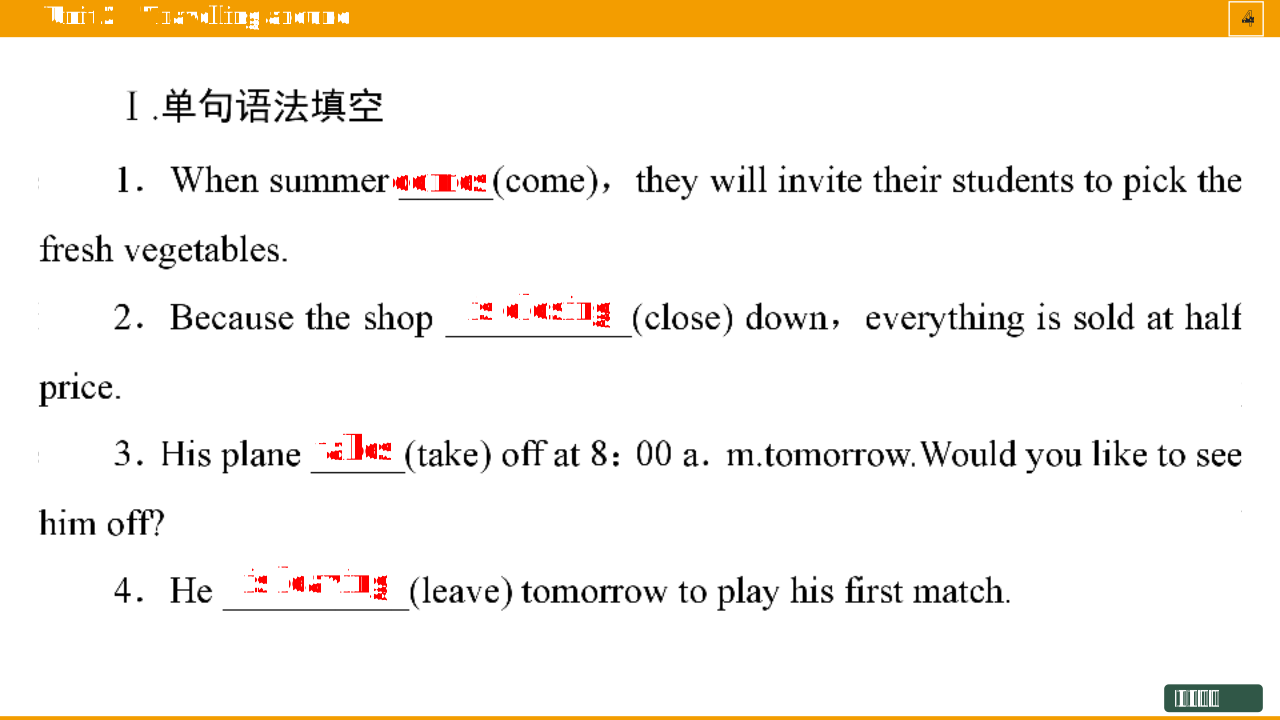
Ⅰ.单句语法填空
1.When summer _____(come),they will invite their students to pick the fresh vegetables.
2.Because the shop __________(close) down,everything is sold at half price.
3.His plane _____(take) off at 8:00 a.m.tomorrow.Would you like to see him off?
4.He __________(leave) tomorrow to play his first match.
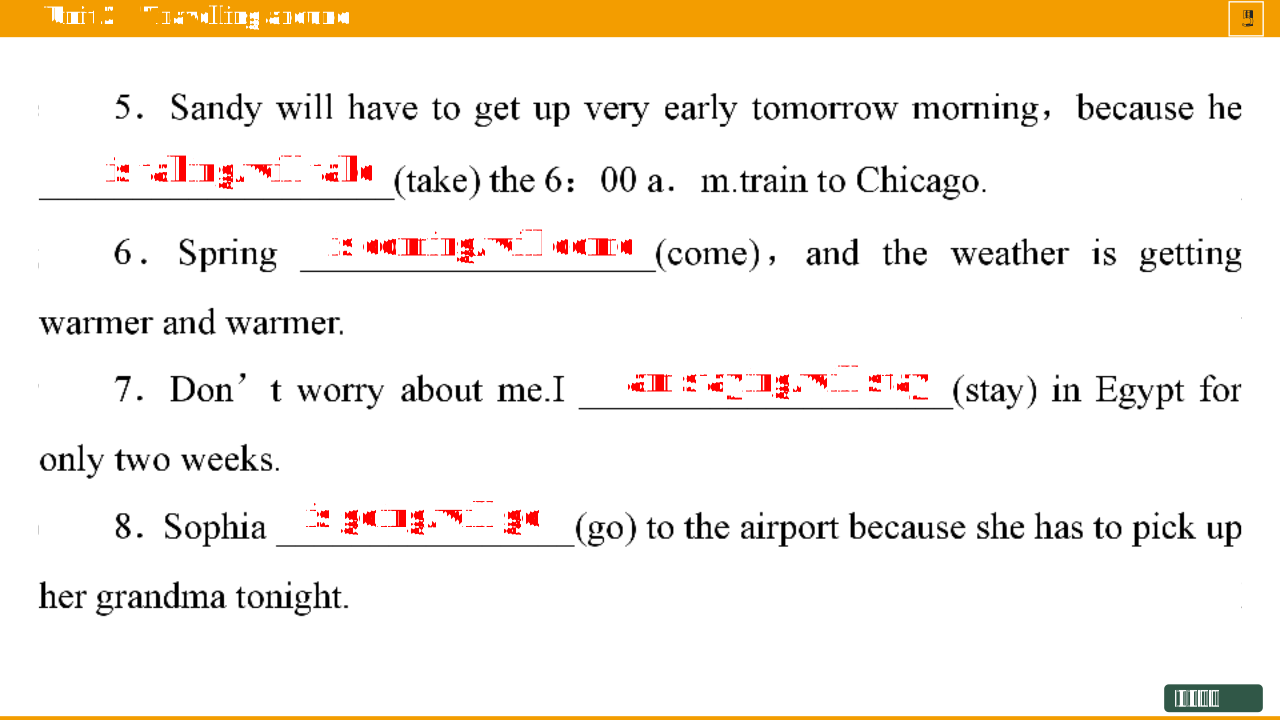
5.Sandy will have to get up very early tomorrow morning,because he ___________________(take) the 6:00 a.m.train to Chicago.
6.Spring ___________________(come),and the weather is getting warmer and warmer.
7.Don’t worry about me.I ____________________(stay) in Egypt for only two weeks.
8.Sophia ________________(go) to the airport because she has to pick up her grandma tonight.
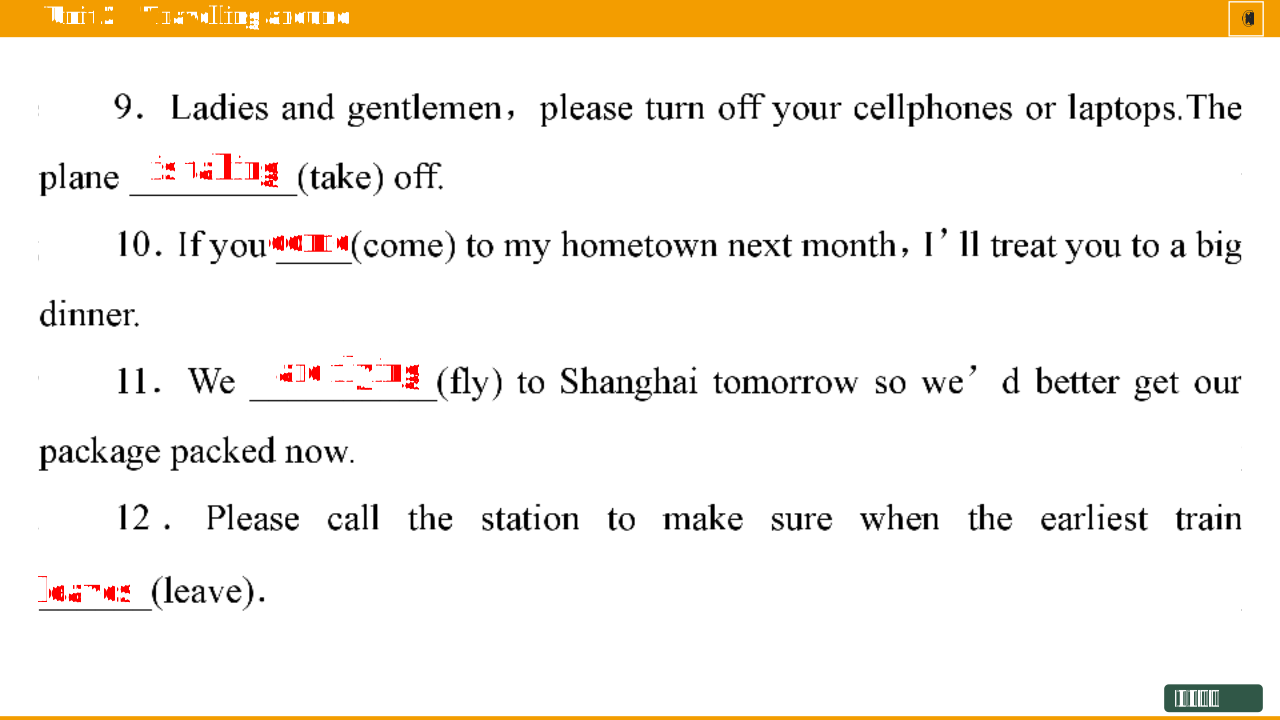
9.Ladies and gentlemen,please turn off your cellphones or laptops.The plane _________(take) off.
10.If you ____(come) to my hometown next month,I’ll treat you to a big dinner.
11.We __________(fly) to Shanghai tomorrow so we’d better get our package packed now.
12.Please call the station to make sure when the earliest train ______(leave).
13.Ladies and gentlemen,pay attention and look out.Our plane __________(land).
14.Mary __________(leave) for Shenyang by plane at 3:00 this afternoon.
15.When our guest _______(arrive),I will pick him up at the airport.
Ⅱ.用所给词的适当形式填空
1.(教材P25)Yes,I __________(look) forward to seeing the colourful lakes,amazing waterfalls...
2.(教材P28) My parents __________(take) me to Hong Kong during the October holiday.
3.(教材P28)We ___________(meet) at 10:00 a.m.at the bus stop near our school.
Step Ⅰ 现在进行时表将来
1.用于位移动词
现在进行时表示将来主要用于按计划或安排将要发生的动作或事情,多用于表示位置转移的动词(短语),如arrive,come,get (to),leave,return,start,travel,take off,fly,see off,set off等。
◆I am seeing him off this afternoon.
今天下午我去给他送行。
◆We’re leaving for Shanghai this afternoon.
今天下午我们将动身去上海。
◆The plane is arriving in 10 minutes.
飞机将在10分钟内到达。
[即时演练1]——完成句子
①她今晚将动身去新加坡。
She ______________ Singapore tonight.
②你什么时候动身去度假?
When ___________________ for your holiday?
③他乘坐的飞机将于9:20起飞,所以他必须在8:30之前到机场。
His plane _____________ at 9:20,so he must be at the airport by 8:30.
2.用于非位移动词
现在进行时表示将来除使用位移动词外,也可使用某些非位移动词,如do,buy,meet,have,play,finish,stay,publish等,此时句中一般要有表示将来的时间状语。
◆The young man is meeting his girlfriend this afternoon.
这个年轻人今天下午要去接他的女朋友。
◆I am publishing a book this year.
我打算今年出一本书。
[即时演练2]——完成句子
①下星期天你打算干什么?
What _____________ next Sunday?
②我妈妈不久将给我买辆自行车。
My mother _________ me a bike soon.
③我下课后见你。
I __________ you after class.
Step Ⅱ 其他表将来的表达方式
1.will/shall do表将来
will/shall do表示单纯的将来,是对未来事情发生的“预见性”。will用于各种人称,而shall一般用于第一人称。
◆She will come back next week.
她将于下周回来。
◆I will go there by myself.
我将自己去那里。
名师点津:表示事先未经过考虑的打算、计划,是在说话时才想到或决定的事,即临时起意,这时通常用will。
◆—Where is the telephone book?
——电话号码簿在哪里?
—I’ll go and get it for you.
——我去给你拿。
[即时演练3]——用所给词的适当形式填空
①—Do you think Mom and Dad _______(be) late?
—No,Swiss Air is usually on time.
②—Mr.Wang is ill in hospital.
—Oh,I _______(go) to see him.
2.be going to do表将来
be going to do表示打算、计划、安排或已经决定要做某事;还可表示根据某种迹象表明将要发生的事。
◆Are you going to watch the football game this afternoon?
你打算今天下午看足球赛吗?
◆Look at the dark clouds! It’s going to rain.
看这些乌云!天要下雨了。
[即时演练4]——完成句子
—I ________________ basketball after school.
——放学后我打算去打篮球。
—Really?I _______ with you.
——真的吗?我要和你一起去。
3.be to do表将来
be to do表示按计划中约定的或按职责、义务、要求必须去做的事或即将发生的动作。
◆You are to be back by 9 o’clock.
你必须(应该)9点以前回来。
[即时演练5]——完成句子
①告诉她不要回来晚了。
Tell her that she is _________ back late.
②婚礼定于下周日举行。
The wedding __________ place next Sunday.
4.be about to do表将来
(1)be about to do意为“刚要;正要”,表示即将发生的动作,不与具体时间连用。
◆You’d better fasten your seat belt.The plane is about to take off.
你最好系好安全带,飞机马上要起飞了。
(2)be about to do...when...是固定句式,意为“正要做……,这时……”。
◆She was about to leave when some guests came.
她正要离开,这时来了一些客人。
[即时演练6]——完成句子
①我正要进来,这时他突然闯出来。
I ____________________ when he rushed out.
②我正要锁门,这时电话响了。
I _______________________________ the telephone rang.
5.一般现在时表将来
一般现在时表示将来,表示按照日程表或时刻表的安排要发生的事,如火车(汽车)出发、船只离岸、飞机起飞等,或用于时间和条件状语从句中。
◆The bus leaves at 9:00 p.m.
汽车将于晚上9点离开。
[即时演练7]——用所给词的适当形式填空
①New term ______(begin) on September 1st.
②I’ll write to you as soon as I ___(get) there.
Ⅱ.阅读理解
Now many young people are travelling around the world on their own,not because they have no one to travel with,but because they prefer to go alone.
Kristina Wegscheider from California first travelled alone when she was at college and believes that it is something everyone should do at least once in their life.“It opens up your mind to new things and pushes you out of your comfort zone.”Wegscheider has visited 46 countries covering all seven continents.
In foreign countries,with no one to help you read a map,look after you if you get ill,or lend you money if your wallet is stolen,it is challenging.This is what drives young people to travel alone.It is seen as character building and a chance to prove that they can make it on their own.
Chris Richardson decided to leave his sales job in Australia to go travelling last year.He set up a website,The Aussie Nomad,to document his adventures.He said he wished he had travelled alone earlier.“The people you meet,the places you visit,or the things you do,everything is up to you and it forces you to grow as a person,” said the 30yearold.
Richardson describes travelling alone like “a shot in the arm”,which “makes you a more confident person that is ready to deal with anything”.He said,“The feeling of having conquered something on my own is a major part of what drives me each day when I’m dealing with a difficult task.I walk around with my head up because I know deep down inside that nothing is impossible if you try.”
The great 19th century explorer John Muir once said,“Only by going alone in silence can one truly get into the heart of the wilderness.”
【语篇解读】 本文提到现在年轻人流行的旅行方式,即独自旅行。选择独自旅行并不是因为没有人做伴而是想独自一个人去面对旅行中遇到的种种问题,挑战自我,让自己变得更自信。
$$
资源预览图

1
2

3
4
5
6

相关资源
由于学科网是一个信息分享及获取的平台,不确保部分用户上传资料的 来源及知识产权归属。如您发现相关资料侵犯您的合法权益,请联系学科网,我们核实后将及时进行处理。