Welcome Unit Section Ⅲ Discovering Useful Structures(课件PPT)-【金榜题名】2025-2026学年高一英语必修第一册高中同步学案(人教版)
2025-08-21
|
42页
|
175人阅读
|
3人下载
教辅

资源信息
| 学段 | 高中 |
|---|---|
| 学科 | 英语 |
| 教材版本 | 高中英语人教版必修第一册 |
| 年级 | 高一 |
| 章节 | Discovering Useful Structures |
| 类型 | 课件 |
| 知识点 | - |
| 使用场景 | 同步教学-新授课 |
| 学年 | 2025-2026 |
| 地区(省份) | 全国 |
| 地区(市) | - |
| 地区(区县) | - |
| 文件格式 | PPTX |
| 文件大小 | 390 KB |
| 发布时间 | 2025-08-21 |
| 更新时间 | 2025-08-21 |
| 作者 | 梁山启智教育图书有限公司 |
| 品牌系列 | 金榜题名·高中同步学案 |
| 审核时间 | 2025-08-21 |
| 下载链接 | https://m.zxxk.com/soft/53550804.html |
| 价格 | 3.00储值(1储值=1元) |
| 来源 | 学科网 |
内容正文:
Welcome Unit
Section Ⅲ Discovering Useful Structures
Welcome Unit
返回导航
1
目录
contents
Part 01 课前预习 基础达标
Part 02 课堂探究 互动导学
Part 04 课时作业(三)
Part 03 随堂演练 提分提能
Welcome Unit
返回导航
1
课前预习 基础达标
返回导航
Welcome Unit
返回导航
1
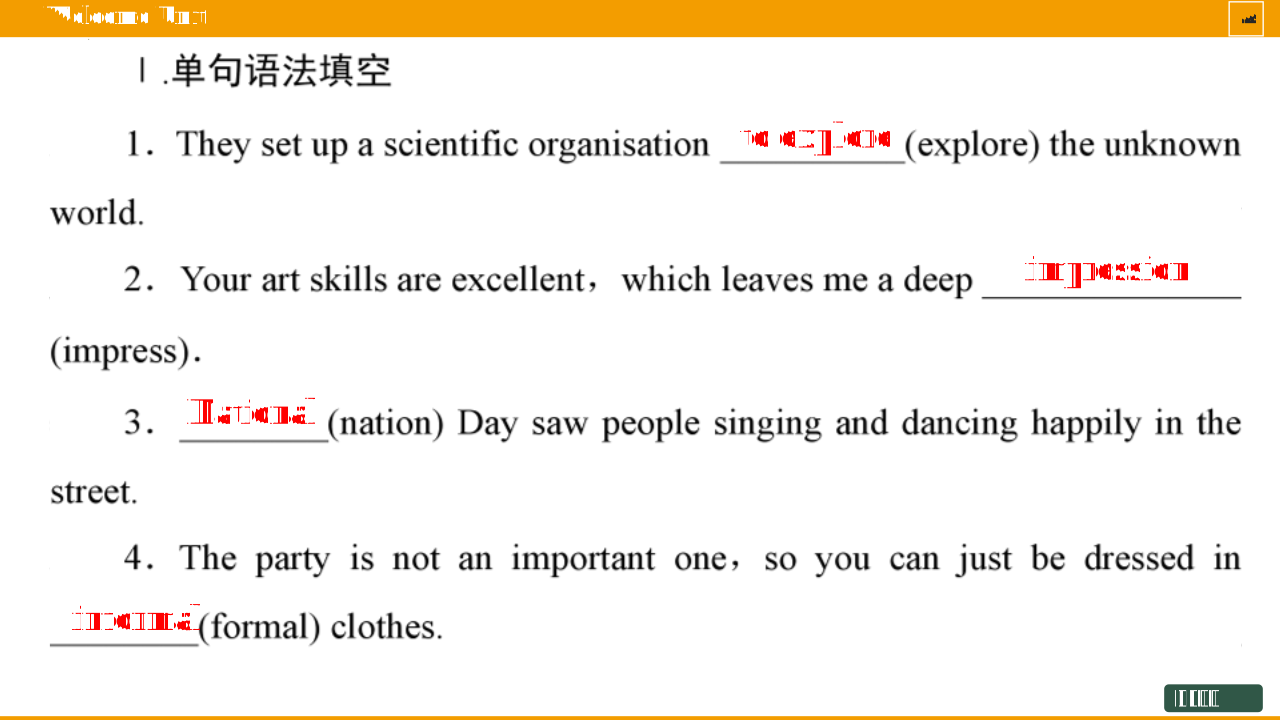
to explore
impression
National
informal
Welcome Unit
返回导航
1
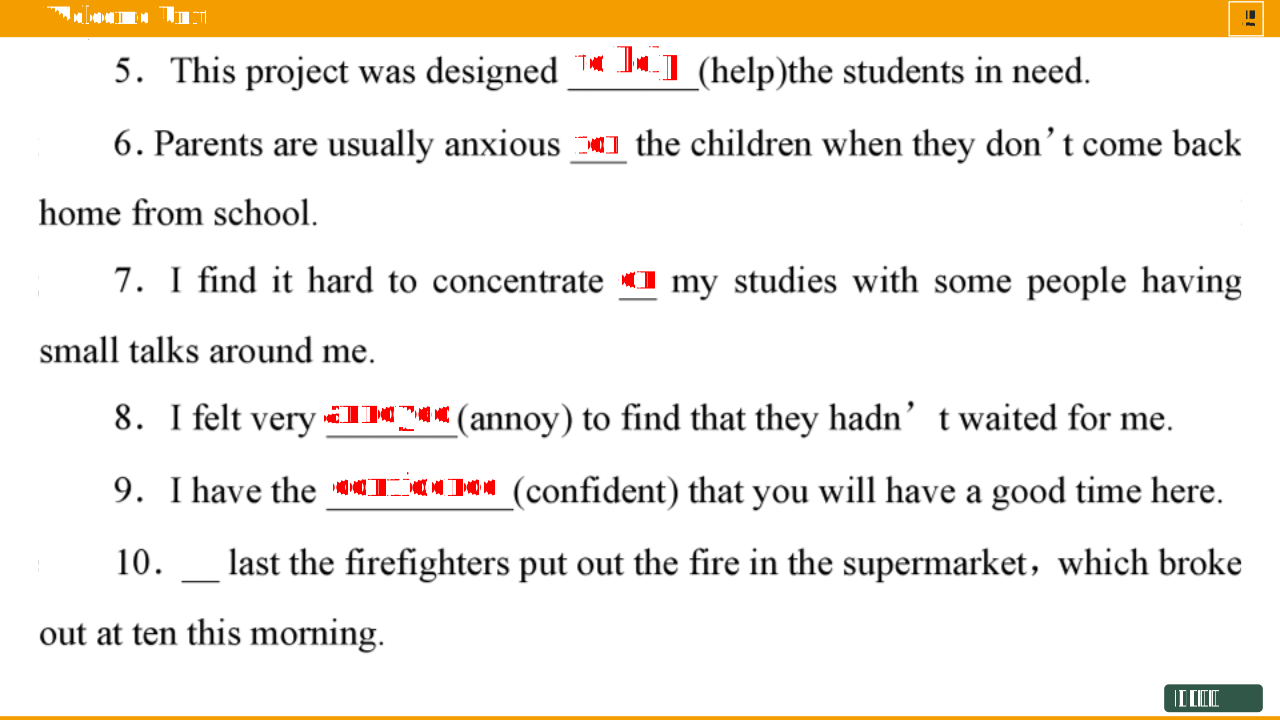
to help
for
on
annoyed
confidence
Welcome Unit
返回导航
1
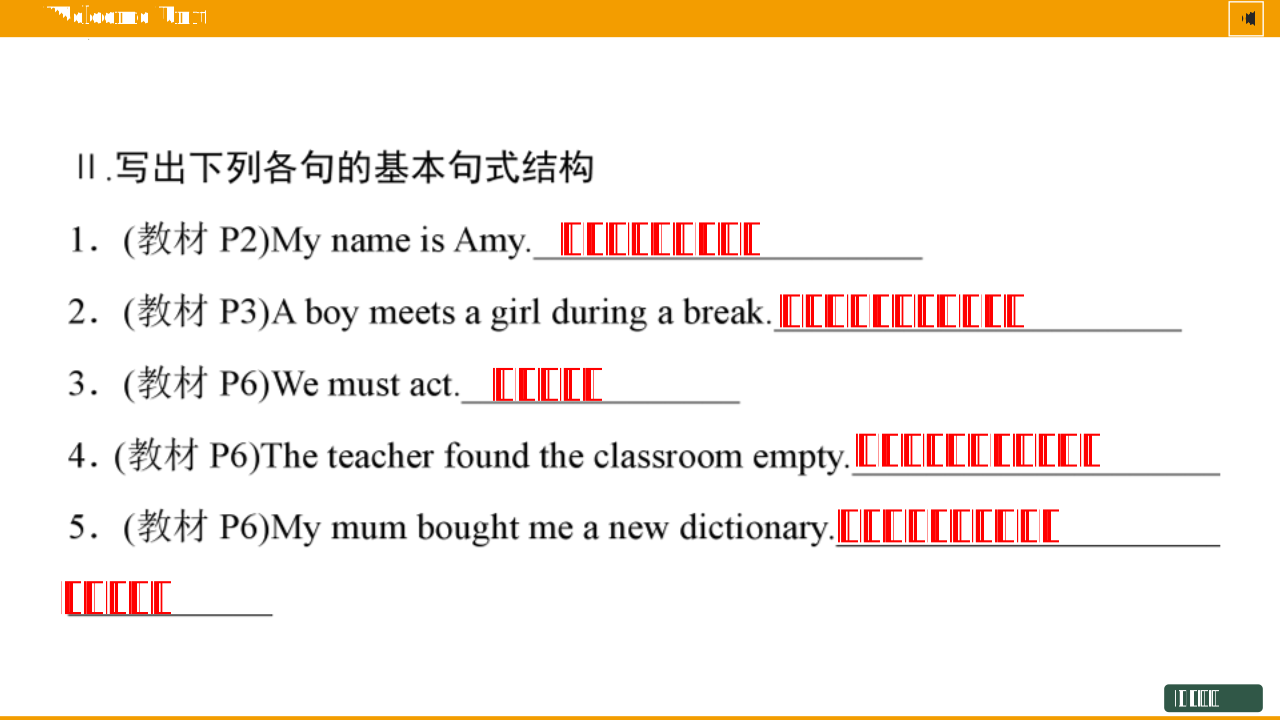
主语+系动词+表语
主语+谓语+宾语+状语
主语+谓语
主语+谓语+宾语+宾补
主语+谓语+间接宾语
+直接宾语
Welcome Unit
返回导航
1
课堂探究 互动导学
返回导航
Welcome Unit
返回导航
1
Welcome Unit
返回导航
1
having
into
down
Welcome Unit
返回导航
1
Welcome Unit
返回导航
1
Welcome Unit
返回导航
1
Welcome Unit
返回导航
1
Welcome Unit
返回导航
1
Welcome Unit
返回导航
1
Welcome Unit
返回导航
1
Welcome Unit
返回导航
1
Welcome Unit
返回导航
1
Welcome Unit
返回导航
1
Welcome Unit
返回导航
1
Welcome Unit
返回导航
1
Welcome Unit
返回导航
1
Welcome Unit
返回导航
1
work day and night
have been opened
to do exercise regularly
above
full of eggs
Welcome Unit
返回导航
1
Welcome Unit
返回导航
1
Welcome Unit
返回导航
1
Welcome Unit
返回导航
1
Welcome Unit
返回导航
1
Welcome Unit
返回导航
1
Welcome Unit
返回导航
1
Welcome Unit
返回导航
1
Welcome Unit
返回导航
1
Welcome Unit
返回导航
1
S+L+P
S+V+Ad
There be句型
S+V+O+OC
Welcome Unit
返回导航
1
随堂演练 提分提能
返回导航
Welcome Unit
返回导航
1
表语
主语
宾语补足语
宾语补足语
定语
Welcome Unit
返回导航
1
宾语
宾语
主语
状语
状语
Welcome Unit
返回导航
1
S+V+O+OC
S+V+Ad
There be句型
S+V+IO+DO
S+V+O+OC
S+L+P
Welcome Unit
返回导航
1
Ⅲ.用给出的句型翻译下列句子。
1.事故是昨天下午发生的。(S+V+Ad)
____________________________________________________________
答案:The accident happened yesterday afternoon.
2.他们发现那座房子无人居住(deserted)。(S+V+O+OC)
____________________________________________________________
答案:They found the house deserted.
3.他拒绝帮助他们。(S+V+O)
____________________________________________________________
答案:He has refused to help them.
Welcome Unit
返回导航
1
4.他长得又高又壮。(S+L+P)
____________________________________________________________
答案:He is growing tall and strong.
5.我告诉他汽车晚点了。(S+V+IO+DO)
____________________________________________________________
答案:I told him that the bus was late.
6.我们将让他们幸福。(S+V+O+OC)
____________________________________________________________
答案:We will make them happy.
Welcome Unit
返回导航
1
7.我相信他。(S+V+O)
___________________________________________________________
答案:I believe him.
8.我们班有24位女生和30位男生。(There be句型)
___________________________________________________________
答案:There are 24 girls and 30 boys in our class.
Welcome Unit
返回导航
1
课时作业(三)
点击进入
word
Welcome Unit
返回导航
1
谢谢观看
Welcome Unit
返回导航
1
Ⅰ.单句语法填空
1.They set up a scientific organisation __________(explore) the unknown world.
2.Your art skills are excellent,which leaves me a deep ______________
(impress).
3.________(nation) Day saw people singing and dancing happily in the street.
4.The party is not an important one,so you can just be dressed in ________(formal) clothes.
5.This project was designed _______(help)the students in need.
6.Parents are usually anxious ___ the children when they don’t come back home from school.
7.I find it hard to concentrate __ my studies with some people having small talks around me.
8.I felt very _______(annoy) to find that they hadn’t waited for me.
9.I have the __________(confident) that you will have a good time here.
10.__ last the firefighters put out the fire in the supermarket,which broke out at ten this morning.
Ⅱ.写出下列各句的基本句式结构
1.(教材P2)My name is Amy._____________________
2.(教材P3)A boy meets a girl during a break.______________________
3.(教材P6)We must act._______________
4.(教材P6)The teacher found the classroom empty._____________________
5.(教材P6)My mum bought me a new dictionary._____________________
___________
Step Ⅰ 语言点
look forward to 盼望;期待
(教材P6)Tom is looking forward to meeting the new exchange student.
汤姆盼望着见到新来的交换生。
look into 往……里看;调查
look on...as... 把……看作……
look out 当心;小心
look down on/upon 轻视,看不起
①I do believe that my suggestions will be of great help to you.I’m looking forward to hearing from you as soon as possible.
我坚信我的建议对你会有很大的帮助。盼望着早日收到你的来信。
②I have been looking forward to ______(have) a chance to pay a visit to Huangshan.
我一直盼望能有机会去黄山观光。
③They are looking ____ the cause of the accident.
他们正在调查事故的原因。
④We shouldn’t look ____ upon the disabled; we should help them.
我们不应该轻视残疾人;我们应该帮助他们。
Step Ⅱ 语法要点:句子成分及八种基本句型
一、句子成分
句子表达一个完整的意思,是由单词按一定的语法规则组合而成的。句子一般可以分成几个部分,每个部分在句中具有一定的功能,称为句子成分。不同的句子成分由一定的词类或词组充当。
1.主语(subject)
主语是一句话的主体,表明句子说的是谁或是什么。它一般放在谓语之前,通常由名词(名词短语)、代词、数词、动词不定式、动名词以及名词性从句等担任。
◆TV news often gives us lots of information.
电视新闻常常给我们许多信息。(名词)
◆Something is wrong with my computer.
我的电脑坏了。(代词)
◆Seventenths of the earth surface is covered with water.
十分之七的地球表面被水覆盖。(数词)
◆To see is to believe.
眼见为实。(动词不定式)
◆Cycling and boating are my favorite free time interests.
骑车和划船是我业余最大的兴趣爱好。(动名词)
◆That she was admitted into a key university greatly comforted her parents.
她被重点大学录取这件事给了她父母极大的安慰。(主语从句)
2.谓语(predicate)
谓语是对主语的有关问题加以说明的部分。谓语说明主语做什么、是什么或者怎么样。谓语位于主语之后,由动词担任。凡是由一个动词或动词词组构成的谓语,无论处在什么时态、语态、语气下,都被称为谓语。谓语分为简单谓语和复合谓语。
◆He practises running every morning.(简单谓语)
他每天早晨锻炼跑步。
◆Great changes have taken place in Shanghai.(复合谓语)
上海发生了巨大的变化。
※名师点津:由系动词加表语也构成复合谓语。如:We are students.
3.表语(predicative)
表语是说明主语“是什么”或“怎么样”的句子成分。它由名词、代词、数词、形容词、动词不定式及短语、副词、介词短语等充当。
◆My favorite attraction is the Great Wall.
我最喜欢的旅游景点是长城。(名词)
◆—Who is there?——谁在那儿?
—It’s me.——是我。(代词)
◆English is both useful and important.
英语有用且很重要。(形容词)
◆The Forbidden City is at the centre of Beijing.
紫禁城位于北京市中心。(介词短语)
◆The greatest happiness is to work for the happiness of all.
最大的快乐就是为大家的快乐而工作。(动词不定式短语)
◆My hobby is collecting stamps.
我的爱好是集邮。(动名词短语)
◆My belief is that our country will become stronger and stronger.
我相信,我们的国家将变得越来越强大。(表语从句)
4.宾语(object)
宾语是及物动词所表示的动作的对象,或是介词所表示的某种联系的对象。宾语放在及物动词的后面。宾语一般由名词、代词、数词、非谓语动词及短语或名词性从句等充当。
◆The children are flying kites.
孩子们正在放风筝。(名词)
◆Call me any time.
请随时打电话给我。(代词)
◆I decide to pick up a new foreign language.
我决定学一门新的外语。(动词不定式短语)
◆Do you mind passing me the dictionary?
请把字典递给我,好吗?(动名词短语)
◆Your success will largely depend upon what you do and how you do it.
你是否成功将主要取决于你做什么和怎样做。(宾语从句)
5.宾补(object complement)
有些及物动词带了宾语后意义仍不够完整,还需要加上宾语补足语来补充说明宾语的行为、状态、身份或特征等。宾语补足语通常放在宾语之后,一般由名词、形容词、副词、介词短语、非谓语动词及短语等充当。
◆He has proved himself an experienced teacher.
他证明自己是一名经验丰富的教师。(名词)
◆We have decided to paint the room pink.
我们决定把房间漆成粉红色。(形容词)
◆My mother always keeps everything in good order.
我妈妈总是把一切安排得井然有序。(介词短语)
◆The teacher asked us not to make so much noise.
老师叫我们不要制造那么多的噪音。(动词不定式短语)
◆I heard the telephone ringing.
我听见电话铃正在响。(现在分词)
◆He was very happy to see the homeless children taken good care of at the orphanage.
他很高兴看见流浪儿童在孤儿院得到很好的照顾。(过去分词)
6.定语(attributive)
定语是用来修饰、限制名词或代词的。一般由形容词、名词、代词、数词、副词、不定式、动名词、分词、介词短语和从句等充当。
◆These are apple trees.
这些是苹果树。(名词)
◆The men here are always busy working on the farm.
这里的男人总是忙于在田间干活。(副词)
◆There is nothing to do today.
今天没有事要做。(不定式)
◆The smiling boy needs a pen bought by his mother.
那个微笑的男孩需要一支他妈妈买的钢笔。(现在分词、过去分词短语)
7.状语(adverbial)
状语用于修饰动词、形容词、副词或整个句子。一般由副词、名词、数词、形容词、不定式、分词、介词短语、独立主格和从句等充当。
◆I’m very pleased to see you.
见到你我非常高兴。(副词)
◆I’ll be back in a while.
我一会儿就回来。(介词短语)
◆When she was 12 years old,she began to live in Dalian.
她12岁的那一年开始居住于大连。(状语从句)
◆Having had a quarrel with his wife,he left home in a bad temper.
由于和妻子吵了一架,他愤怒地离开了家。(分词作状语)
8.同位语(appositive)
若两个语法单位指同一个人或事物,并且句法功能也一样,那么,后一项称为前一项的同位语。
◆We students should study hard.
我们学生应该努力学习。
◆Professor Wang,a famous scientist,will give us a talk tomorrow.
王教授,一位著名的科学家,明天将给我们做报告。
[即时演练1]——写出画线部分所作的成分
①The manager made them work day and night.___________________.
②A lot of green lands have been opened __________________to the public.
③The best method of keeping slim is to do exercise regularly.
_________________________.
④They lived in the room above._________.
⑤He gave me a basket full of eggs.________________.
二、八种基本句型
英语中简单句只有一个主语(或并列主语)和一个谓语动词(或并列谓语动词)。简单句是由主语、谓语、表语、宾语、宾语补足语等组成的,依其组合方式可分为八种基本句型。
1.主语+谓语(S+V)
The sun is rising.太阳正在升起。
主语 谓语
The little boy is crying.小男孩正在哭泣。
主语 谓语
2.主语+谓语+宾语(S+V+O)
He is_watching TV.他正在看电视。
主语 谓语 宾语
3.主语+系动词+表语(S+L+P)
Everything looks different.
主语 系动词 表语
一切看来都不同了。
Computers are useful [in people's life].
主语 系动词 表语 状语
电脑在人们的生活中很有用。
※名师点津:常见的由行为动词转化成的系动词:
(1)表感官的动词:feel,smell,taste,sound,look,appear等。
(2)表转变、变化的动词:become,get,grow,turn,go等。
(3)表延续的动词:remain,keep,hold,stay,rest等。
(4)表瞬间的动词:come,fall等。
The problem remains to be settled.
主语 系动词 表语
问题依然需要解决。
4.主语+谓语+间接宾语+直接宾语(S+V+IO+DO)
这种句型中间接宾语常常指“人”,直接宾语常常指“物”。
He bought mea birthday present.
主语谓语(及物动词)间接宾语 直接宾语
他给我买了一份生日礼物。
I showed him my pictures.
主语 谓语(及物动词) 间接宾语 直接宾语
我给他看我的照片。
※名师点津:常见的能跟双宾语的及物动词:
(1)give,tell,teach,write,bring,lend,hand,show,offer,send,pay,pass,allow,return等后的间接宾语可转换为介词to的宾语。
◆Please hand him a book!=Please hand a book to him!
请递给他一本书。
(2)buy,do,get,fetch,save,make,sing,choose等后的间接宾语可转换为介词for的宾语来表示。
◆Her father bought her a bike.=Her father bought a bike for her.
她的父亲给她买了一辆自行车。
(3)ask,answer,take,cost等无法改变结构形式。
◆The car cost me 2,000 yuan for the repair.
这次修车花了我两千元。
5.主语+谓语+宾语+宾语补足语(S+V+O+OC)
这种句型中的“宾语+宾语补足语”可统称为“复合宾语”。
Mike told me 〈not to go now〉.
主语 谓语(及物动词) 宾语 宾语补足语
迈克告诉我不要现在走。
They painted the door 〈green〉.
主语 谓语 宾语 宾语补足语
他们把门漆成绿色。
6.主语+谓语+状语(S+V+Ad)
They talked [for half an hour].
主语 谓语 状语
他们谈了半个小时。
The time passed [quickly].
主语 谓语(不及物动词) 状语
时光飞逝。
7.主语+谓语+宾语+状语(S+V+O+Ad)
I had my first maths class [in senior high].
主语 谓语 宾语 状语
在高中我上了第一堂数学课。
I waited_for him [at the school gate].
主语 谓语 宾语 状语
我在校门口等他。
8.There be 句型
◆There is a piano in my study.
在我的书房里有一架钢琴。
◆There are 56 students in my class.
我的班里有56名学生。
[即时演练2]——写出下列句子属于哪类句型
①This kind of food tastes terrible.___________
②He studies hard.___________
③There are several books on the desks._____________
④He made me very angry._______________
Ⅰ.写出下列句子中的画线部分充当什么成分
1.The question is that no one knows the location of the new hospital.
2.To be or not to be is a question.
3.His confidence enabled him to finish the task successfully.
4.The class teacher had us clean the classroom yesterday.
5.Is he the man who wants to see you?
6.This book gives me some idea on how to make friends.
7.I feel it our duty to serve the people heart and soul.
8.What you explained just now didn't satisfy me.
9.We must get together again some day.
10.If I am not busy tomorrow,I will play football with you.
Ⅱ.写出下列句子属于哪类句型
1.I found the problem easy. _______________
2.I have never cooked at home. ____________
3.There are ten boys under the big tree.______________
4.Her father bought her a dictionary as a birthday present.____________
5.The boss made him do the work all day.________________
6.The tree has grown much taller than before.___________
$$
资源预览图

1
2

3
4
5
6

相关资源
由于学科网是一个信息分享及获取的平台,不确保部分用户上传资料的 来源及知识产权归属。如您发现相关资料侵犯您的合法权益,请联系学科网,我们核实后将及时进行处理。