Unit 5 What a Delicious Meal 课时课件-2025-2026学年人教版英语八年级上册
2025-08-19
|
6份
|
118页
|
164人阅读
|
1人下载
普通
内容正文:
Unit 5
What a Delicious Meal!
Section A 1a~pronunciation
Lead-in
1. Who are the people in the photo and what are they doing?
They may be a mother and son. They are making food together.
2. How do you think they feel?
They seem to feel happy. Their smiles show that they enjoy the process of cooking together.
3. In your family, who usually does the cooking? Do you help?
In my family, my mother usually does the cooking. Sometimes I help her. For example, I wash vegetables and dishes, which makes me feel a sense of achievement.
Look and guess
861b240d-cd4e-4b4b-87c2-161e8c2fa4ea.source.default.zh-Hans
2
In this unit, you will
1. talk about food and cooking.
2. give cooking instructions.
3. describe a process using adverbs of sequence.
4. use exclamatory sentences to express strong feelings.
5. explore how food and cooking can bring people together.
Learning to cook can not only let us enjoy delicious food but also cultivate our independence and sense of responsibility.
?
BIG
Question
Why do we learn
to cook?
顺序副词
感叹句
Pre-listening
What's your favorite food?
Free talk
861b240d-cd4e-4b4b-87c2-161e8c2fa4ea.source.default.zh-Hans
4
Match the instructions with the pictures.
1a
______ Add pepper to the soup. ______ Cut up the tomatoes.
______ Mix the vegetables. ______ Bake the cake in the oven.
______ Pour the milk into the flour. ______ Boil the potatoes.
A
B
C
D
E
F
D
B
E
A
F
C
/ˈpepə(r)/ n. 胡椒粉;菜椒
切碎;剁碎
/beɪk/ v. 烘焙
/mɪks/ v. (使)混合;融合;调配n. 混合;混杂;混合料
/ˈʌvn/ n. 烤箱;烤炉
将……倒入……
/ˈflaʊə(r)/ n. 面粉
/bɔɪl/ v. 煮沸;烧开
n. 沸腾;沸点
Guess and say
Question: Peter suggests to Teng Fei that they make some mashed potatoes for lunch. What do you think the operation steps might be? Discuss with your deskmate and infer their specific procedures.
Teng Fei
Peter
While-listening
Listen to the conversation and tick the ingredients you hear.
1b
potatoes tomatoes milk butter
sugar salt pepper cheese
/ˈbʌtə(r)/ n. 黄油
/tʃiːz/ n. 奶酪;干酪
861b240d-cd4e-4b4b-87c2-161e8c2fa4ea.source.default.zh-Hans
7
Listen again and number the instructions.
1c
_________ Wash the potatoes and cut them into pieces.
_________ Add salt and pepper.
_________ Get one tablespoon of butter and half a cup of milk.
_________ Mash the potatoes.
_________ Add the milk and the butter to the potatoes, and mix.
_________ Put the potatoes in a pot and boil them until they are soft.
1
2
4
3
5
6
将……切成……
/ˈteɪblspuːn/
n. 一汤匙(的量);餐匙;汤匙
mash /mæʃ/
v. 捣烂;捣碎
Post-listening
Read and fill in the blanks according to the tapescript.
Peter: Let’s make some __________ potatoes for lunch.
Teng Fei: Great idea! How do we make them?
Peter: Well, _________, get some potatoes and wash them.
Teng Fei: OK. ______________ do we need?
Peter: Six. _______ them _______ pieces.
Teng Fei: OK. Done.
Peter: Next, put the potatoes _____________ and boil them _________ they are soft.
Teng Fei: Got it.
Peter: Then, we need some milk and butter. Can you get them for me, please?
mashed
first
How many
Cut
into
in the pot
until
mashed /mæʃt/ potatoes 土豆泥
861b240d-cd4e-4b4b-87c2-161e8c2fa4ea.source.default.zh-Hans
9
Teng Fei: Sure. ____________ do we need?
Peter: One tablespoon of butter and half ____________ milk ... Thanks. Now, let’s start mashing the potatoes.
Teng Fei: The potatoes are done.
Peter: Now, add the milk and butter to the potatoes, and __________.
Teng Fei: Like this?
Peter: Great! ___________, add salt and __________ ... OK. We’re done! Let’s try them!
Teng Fei: Mmm ... _______________ they taste!
How much
a cup of
mix
Finally
pepper
How delicious
Talk about how to make mashed potatoes in your own words.
1d
Assessment ☆☆☆
1. I can give cooking instructions well.
2. I can remember their information accurately.
3. I have good pronunciation(语音) and intonation(语调).
How do we make mashed potatoes?
First, wash the potatoes.
What do we do after that?
Then, …
Language Points!
1. Well, first, get some potatoes and wash them.
Next, put the potatoes in the pot and boil them until they are soft.
Then, we need some milk and butter. Can you get them for me, please?
Now, let’s start mashing the potatoes.
Finally, add salt and pepper ... OK. We’re done! Let’s try them!
【知识点】顺序副词(Sequence Adverbs)
(1) 定义:顺序副词是用来表示动作或事件发生的先后顺序的词,帮助我们有条理地描述过程或步骤。它们常用于讲故事、介绍流程(如烹饪、手工等)或说明步骤。
Language Points!
(2) 常见顺序副词:
first,next,then,after that,finally,lastly等
(3) 位置灵活:顺序副词通常放在句首,后加逗号(如 First, ...),但有时也可放在句中。
例句:Next, we need to buy some milk. (正确)
We need to next buy some milk. (错误,顺序副词一般不放在动词中间)
(4) 避免重复:在同一段落中,尽量搭配不同的顺序副词(如 first → next → then → finally),使表达更丰富。
Language Points!
2. How many do we need? How much do we need? 我们需要多少?
How many 多少,用于可数名词
How much 多少,用于不可数名词
疑问词 修饰对象 回答结构 例句
how many 可数名词复数 具体数字 + 可数名词复数 — How many apples do we need? 我们需要多少苹果?
— Three. 三个。
how much 不可数名词 具体数字 + 度量单位 / 抽象概念 — How much milk do we need? 我们需要多少牛奶?
— Two cups. 两杯。
价格、金额 货币单位(如 dollars, yuan) — How much is the book? 这本书多少钱?
— $20. 20 美元。
Language Points!
3. How delicious they taste! 它们尝起来多么美味啊!
【How的感叹句】
(1) How + 形容词 + 主语 + 谓语!
How beautiful the flower is! 这朵花多么漂亮啊!
(2) How + 副词 + 主语 + 谓语!
How hard they work! 他们工作得多努力啊!
特殊用法:省略主语和谓语。当上下文语境明确时,可省略句子后半部分,只保留 How + 形容词 / 副词!
看到美景时感叹:How beautiful! 多么美丽啊!
Exercise-根据句意和汉语提示完成句子
1. Cut up potatoes and ________(煮沸;烧开) them for mashed dish.
2. Mix flour, butter, and a _____________( 一汤匙) of sugar in a bowl.
3. Cut cheese into cubes and add __________ ( 胡椒粉) to the mix.
4. Pour the _________(面粉) into a pan and bake in the oven.
5. Mash boiled carrots with ________(黄油) for a smooth puree.
boil
tablespoon
pepper
flour
butter
Exercise-翻译题
1. 我妈妈把胡萝卜切成块,然后放进锅里煮。
My mom cuts up the carrots and boils them in a pot.
2. 他在碗里混合了面粉、黄油和一汤匙牛奶。
He mixes flour, butter, and a tablespoon of milk in a bowl.
3. 烘焙师将奶酪切成小块,加入到面团中。
The baker cuts the cheese into small pieces and adds it to the dough.
4. 她把煮好的土豆压成泥,然后加了些胡椒粉调味。
She mashes the boiled potatoes and adds some pepper for seasoning.
Listen and repeat. Add one more word to each group.
1
/əʊ/ /aʊ/ /ɪə/ /eә/ /ʊə/ /sk/ /st/ /sp/ /str/
o, oa ou, ow ear air, are ure, our sk, sch st sp str
potato
coat
____ house
how
____ dear
near
____ air
care
____ sure
tour
____ sky
school
____ stay
stir
____ speak
spoon
____ straight
street
____
Pay attention to the pronunciation!
road
mouth
clear
hair
tourist
skate
star
spider
strong
Listen and repeat. Pay attention to the intonation and pauses.
2
To make a banana milk shake, | you need to get three
bananas, one tablespoon of ice cream, and a cup of
milk. || First, | peel the bananas. || Then, | cut up the
bananas. || After that, | put the bananas and ice
cream in the blender. || Then, | pour the milk into
the blender. || Finally, | pour the milk shake into a
glass | and drink.
语调(Intonation)
英语有两种最基本的语调,即降调和升调。降调的基本意义是“肯定”和“完结”,
通常用于陈述句、特殊疑问句、选择疑问句的后半部分、祈使句和感叹句等。升调的基本意义是“不确定”和“未完结”,可表示犹豫、怀疑、婉转、含蓄、试探等含义。升调通常用于一般疑问句、陈述句表示疑问的各类句子,以及表示意思未完的各种情况。升调可以用于说话者不能确定信息是否准确,需要对方核实的情况。例如:
A: I’m putting the mixture into the oven. What temperature and time should I set?
B: 160 degrees, 50 minutes.
A: 160 degrees? 50 minutes? B: Exactly.
在列举事物时,前面的各件事物都用升调,最后一件事物用降调。例如:
The family enjoy outdoor activities such as mountain climbing, hiking,
boating, and camping.
同一句话用不同语调表达时,意义也会有所不同。
Be quiet. (表示命令)
Be quiet. (表示善意的警告)
I’m sorry. (比较随意)
I’m sorry. (比较真诚)
You will go to the party, won’t you? (说话人不太确定,提出问题让对方回答)
You will go to the party, won’t you? (说话人比较确定,提出问题让对方确认)
Exercise-画线部分读音不同的一项
1. A. float B. toast C. smoke D. potato
2. A. window B. flower C. brown D. allow
3. A. repair B. compare C. airport D. parent
4. A. skirt B. scholar C. scheme D. schnapps
5. A. student B. status C. fast D. stable
Homework
1.When I get home, I will help my mom prepare dinner and then take photos to share tomorrow.
2. Recite the key words and sentences of this lesson.
$$Reading Plus
Unit 5
What a Delicious Meal!
Look and Say
1. What can you see in the picture?
A lovely girl is eating pizza.
2. Do you like eating or cooking pizza?
Yes, I do./No, I don’t like it.
3. What do you think of pizza?
I think pizza is a kind of fast food. It tastes delicious.
4. Is pizza poppular all over the world?
Pre-reading
Let’s guess!
Look at the title and the pictures. Guess what the text is about.
While-reading(Fast reading)
Read the text firstly and match each paragraph with its main purpose.
Paragraph 1 A. The ancient form of “pizza”
Paragraph 2 B. The brief introduction of pizza
Paragraph 3 C. The popularity of pizza
Paragraph 4&5 D. The introduction of modern pizza
861b240d-cd4e-4b4b-87c2-161e8c2fa4ea.source.default.zh-Hans
4
While-reading(Fast reading)
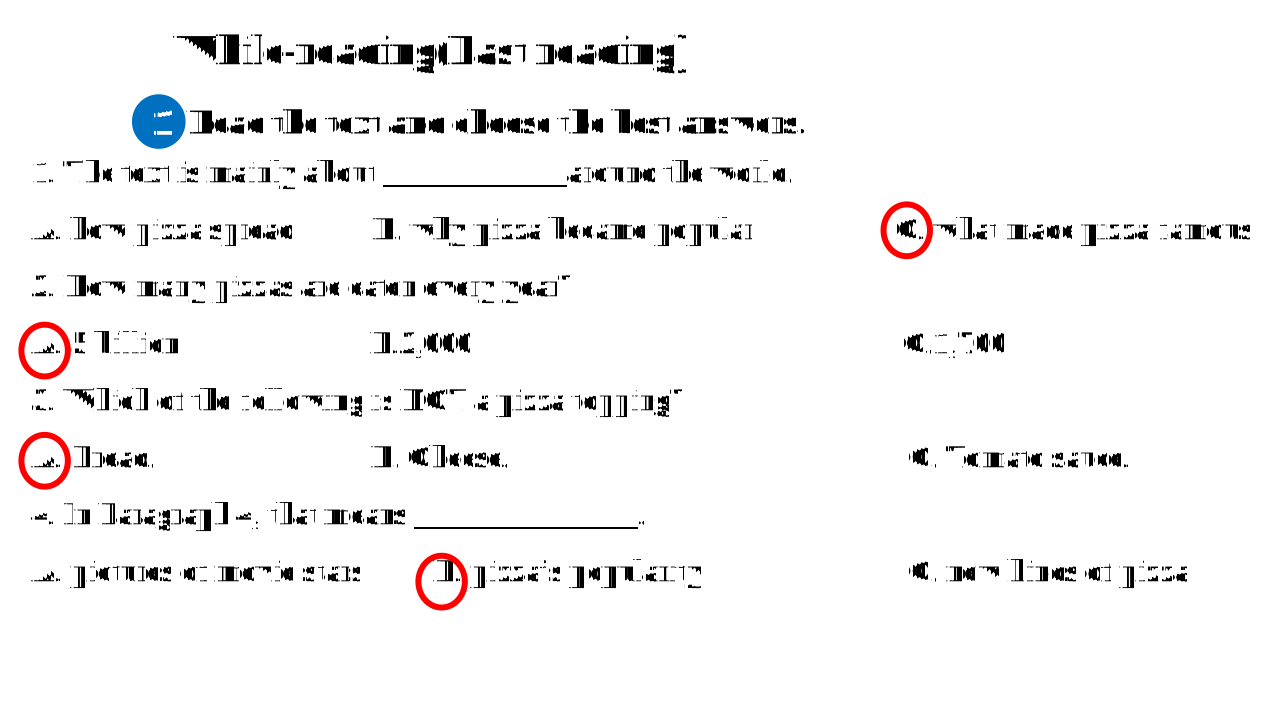
Read the text and choose the best answers.
1
1. The text is mainly about around the world.
A. how pizza spread B. why pizza became popular C. what made pizza famous
2. How many pizzas are eaten every year?
A. 5 billion B.2,000 C.1,700
3. Which of the following is NOT a pizza topping?
A. Bread. B. Cheese. C. Tomato sauce.
4. In Paragraph 4, that means .
A. pictures of movie stars B. pizza’s popularity C. new kinds of pizza
861b240d-cd4e-4b4b-87c2-161e8c2fa4ea.source.default.zh-Hans
5
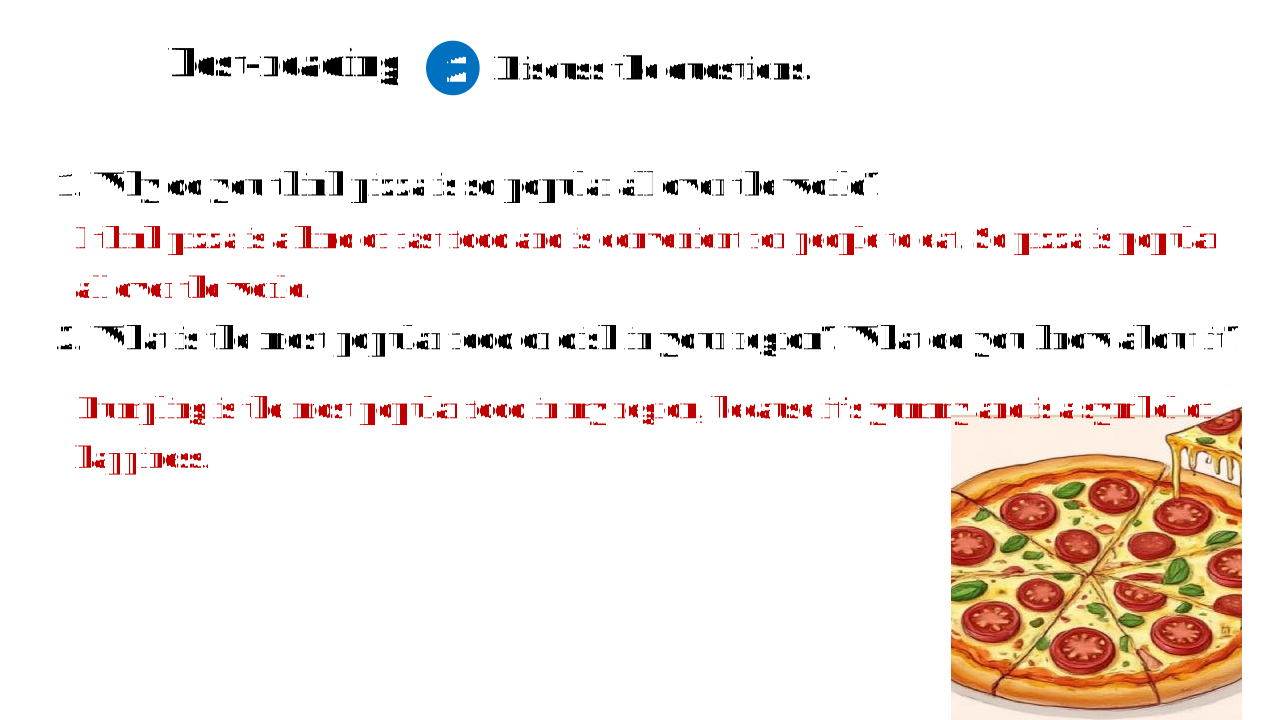
1. Why do you think pizza is so popular all over the world?
2. What is the most popular food or dish in your region? What do you know about it?
I think pizza is a kind of fast food and is convenient for people to eat. So pizza is popular all over the world.
2
Discuss the questions.
Dumpling is the most popular food in my region, because it’s yummy and is a symbol of happiness.
Post-reading
Do you know pizza is one of the most popular fast foods in the world? In fact, around the world, people eat 5 billion pizzas every year! But where did pizza come from and what makes it so popular? Read on to find out.
Let’s learn!
Paragraph 1
宾语从句
事实上
全世界= all over the world
弄清,查明
Thousands of years ago, the Greeks, Italians, and Persians started putting vegetables oil, cheese, and other things on flat bread. The ingredients depended on the area,but there was one thing in common: Everyone put the toppings on some type of bread. This was the ancient form of "pizza".
Paragraph 2
希腊人,意大利人和波斯人
flat/adj. 平的,平坦的
start doing sth. 开始做某事。
ingredients/n. 成分,原料
depend on 取决于
be ... in common 在...有相似之处
ancient/adj. 古代的
Our modern pizza goes back to the Romans more than 2,000 years ago. They put cheese and olive oil on bread. In the 1700s, a pizza with tomato sauce and cheese became popular in Naples, Italy. Later, Italians brought the pizza to America, and then it became a popular food all over the world, with different pizzas from different places.
Paragraph 3
追溯到
多于;超过
那不勒斯(意大利西南部港市)
Photographs of movie stars and famous athletes with pizza helped it become more and more popular, and that led to competitions. Today, we have the World Pizza Games. There are also all kinds of world records. For example, in 2017, there was a new record for the world's longest pizza. It was over 1.9 kilometres long!
Paragraph 4
athletes /n. 运动员,体育健将
比较级and比较级 越来越......
Today, pizza is popular all over the world, and different places have their own local pizzas. So do you like eating or cooking pizza? What is your favourite pizza style?
Paragraph 5
like doing sth. 喜欢做某事
Exercise-根据句意和汉语提示完成句子
1. pizza is one of _______________fast foods in the world(最受欢迎的).
2. She always dreams of traveling _____________ (全世界).
3. There ___ something__________(在...有相似之处)between pizza and hamburger.
4. She starts ______________(开始做某事) pizza.
5. People used to think the earth was _____(平坦的).
the most popular
around the world
are
eating
flat
in common
Homework
1. Do a survey to introduce the popular food in your region, then write it down and share it with everyone in the next class.
2. Recite the key words and sentences of this lesson.
$$Unit 5
What a Delicious Meal!
Section A 2a~2d
Lead in. Free talk
What Chinese dishes can you cook?
cuisine
Sichuan
Mapo Tofu
Shandong
Sweet and Sour Carp
Cantonese
Wonton Noodles
Jiangsu
Squirrel-Shaped Mandarin Fish
Zhejiang
Dongpo Pork
Fujian
Buddha Jumps Over the Wall
...
Pre-reading
Question: Peter asks Teng Fei to teach him a Chinese dish. Which one do you think it will be?
Teng Fei
Peter
861b240d-cd4e-4b4b-87c2-161e8c2fa4ea.source.default.zh-Hans
3
While-reading(listening)
Listen to the conversation and fill in the blanks.
2a
Peter: Hey Teng Fei, can you teach me how to cook a popular Chinese dish?
Teng Fei: Sure. How about stir-fried eggs and tomatoes?
Peter: Great idea! How do we make it?
Teng Fei: We need eggs, tomatoes, ____________, and ____________.
Peter: OK. How many tomatoes and eggs do we need?
Teng Fei: ____________tomatoes and ____________eggs.
Peter: OK. What should we do with the tomatoes and eggs?
Teng Fei: First, cut the tomatoes into small ____________. Next, mix the eggs in a bowl.
Peter: Like this?
salt
sugar
Four
three
pieces
861b240d-cd4e-4b4b-87c2-161e8c2fa4ea.source.default.zh-Hans
4
Peter: Like this?
Teng Fei: Perfect. Then, heat some oil in a pan and add the____________ to it. Stir-fry for one minute. Then take the eggs out of the pan.
Peter: Got it.
Teng Fei: Next, cook the tomatoes in the pan until they’re ____________. Then,
add some salt and sugar.
Peter: What an amazing ____________! What’s next?
Teng Fei: Finally, put the eggs back into the pan and mix them with the tomatoes.
Peter: Wow, it looks so good! How simple!
eggs
soft
smell
Read the conversation and answer the questions.
While-reading(careful reading)
1. What ingredients do they need to make stir-fried eggs and tomatoes?
They need eggs, tomatoes, salt, and sugar.
2. How many tomatoes and eggs are required?
Four tomatoes and three eggs.
3. What's the first step to make stir-fried eggs and tomatoes?
The first step is to cut the tomatoes into small pieces.
861b240d-cd4e-4b4b-87c2-161e8c2fa4ea.source.default.zh-Hans
6
Free talk
4. If you were to introduce a Chinese dish to a foreign friend, which one would you choose and why?
I'd choose mapo tofu(麻婆豆腐). It's a classic Sichuan dish with a strong, spicy flavor.
I would introduce kung pao chicken(宫保鸡丁). It has a perfect balance of flavors-a bit of spiciness, a hint of sweetness, and a nice savory note.
I'd pick dumplings(饺子). They are a staple during festivals in China. They can be filled with various ingredients like meat and vegetables, catering to different tastes.
Read the conversation and complete the recipe.
2b
Stir-fried Eggs and Tomatoes
Ingredients
________________________________________________________
Instructions
First,_______________________________________.
Next, ______
___________________________________________.
Then,______________________________________
___.________for one
minute and then ________
_____________________.
Next,____________________________________
__________.
Then,____________________________________
__________.
Finally,__________________
_______ and
____________
____________.
eggs, tomatoes, salt, sugar
cut
the tomatoes
into small
pieces
the eggs
in a bowl
mix
heat some oil in a
it
Stir-fry
eggs out of the pan
pan and add the eggs to
take the
cook
the tomatoes
in the pan
until they're
soft
add
some salt
and sugar
put the
eggs back into
the pan
mix them with
the tomatoes
ingredient /ɪnˈɡriːdiənt/
n. 材料;食材
instruction /ɪnˈstrʌkʃn/ n. (pl.)
用法说明;操作指南
Post-reading
Peter: Hey Teng Fei, can you teach me how to cook a popular Chinese dish?
Teng Fei: Sure. How about stir-fried eggs and tomatoes?
Peter: Great idea. How do we make it?
Teng Fei: We need eggs, tomatoes, salt, and sugar.
Peter: OK. How many tomatoes and eggs do we need?
Teng Fei: Four tomatoes and three eggs.
Peter: OK. What should we do with the tomatoes and eggs?
Teng Fei: First, cut the tomatoes into small pieces. Next, mix the eggs in a bowl.
Part 1. Let’s learn!
stir-fry /ˈstɜː fraɪ/
v. 翻炒;炒;煸
处理
祈使句
bowl /bəʊl/
n. 碗;钵;盆
861b240d-cd4e-4b4b-87c2-161e8c2fa4ea.source.default.zh-Hans
9
Peter: Like this?
Teng Fei: Perfect. Then, heat some oil in a pan and add the eggs to it. Stir-fry for one minute.
Then take the eggs out of the pan.
Peter: Got it.
Teng Fei: Next, cook the tomatoes in the pan until they’re soft. Then, add some salt and sugar.
Peter: What an amazing smell! What’s next?
Teng Fei: Finally, put the eggs back into the pan and mix them with the tomatoes.
Peter: Wow, it looks so good! How simple!
heat /hiːt/ v. 加热;变热
n. 热;温度;炎热天气
oil /ɔɪl/ n. 食用油;石油;燃油
pan /pæn/ n. 平底锅;烤盘
put sth back 将……放回
mix … with … (使)……和……混合
simple /ˈsɪmpl/ adj. 简单的;朴素的
Listen to the conversation again. Then role-play it.
2c
Peter: Hey Teng Fei, can you teach me how to cook a popular Chinese dish?
Teng Fei: Sure. How about stir-fried eggs and tomatoes?
Peter: Great idea. How do we make it?
Teng Fei: We need eggs, tomatoes, salt, and sugar.
What dish can you make by yourself? Talk about how to cook it with a partner.
2d
How do we make steamed fish /…?
How much beef / salt / tofu /… do we need?
How many green peppers /onions /… do we need?
What else do we need?
First …
Next …
Then …
Finally …
beef with
black pepper
steamed fish
hot and
sour soup
steamed /stiːmd/ fish
清蒸鱼
hot and sour/saʊə(r)/soup
酸辣汤
Language Points!
1. What should we do with the tomatoes and eggs? 我们该怎么处理西红柿和鸡蛋?
do with 是一个动词短语,核心含义为 “处理;对待;利用”。
【同义词】
(1) deal with
含义:处理(更强调解决问题的方式);应对
例如:How do you deal with stress? 你如何应对压力?
(2) handle
含义:处理;应付(及物动词,直接接宾语)
例:Can you handle this problem? 你能处理这个问题吗?
Language Points!
2. First, cut the tomatoes into small pieces. 首先,把西红柿切成小块。
cut the tomatoes into small pieces 是祈使句。
【拓展】
祈使句用于表示请求、命令、劝说、号召、警告、建议等的句子,通常省略主语(you),以动词原形开头,句末用句号或感叹号。
例如:
Sit down, please. 请坐。
Open the window! 打开窗户!
Don’t touch the machine! 不要碰机器!
Language Points!
3. What an amazing smell! 多么迷人的香味啊!
what 引导的感叹句以名词或名词短语为核心。
【what感叹句结构】
(1)What + a/an + 形容词 + 可数名词单数(+ 主语 + 谓语)!
例如:What a beautiful day (it is)! 多么美好的一天啊!
(2)What + 形容词 + 可数名词复数(+ 主语 + 谓语)!
例如:What lovely flowers (they are)! 多么可爱的花啊!
(3)What + 形容词 + 不可数名词(+ 主语 + 谓语)!
例如:What delicious food (it is)! 多么美味的食物啊!
1. ___________(翻炒) the vegetables in hot oil using a pan and a wooden spoon.
2. Mix the chopped _______________(食材) in a bowl before heating them in the pan.
3. Follow the ______________(操作指南) to stir-fry the chicken with simple seasonings.
4. Use a tool like a spatula(锅铲) to ______(放置) the cooked eggs _______(放回) into the bowl.
Exercise-根据句意和汉语提示完成句子
Stir-fry
ingredients
instructions
put
back
Exercise-翻译题
1. 炒蔬菜时,先加热平底锅,然后倒入适量油。
When stir-frying vegetables, first heat the pan and then pour in some oil.
2. 炒菜时,记得用工具将食材来回翻动,确保受热均匀。
When stir-frying, remember to use a tool to put the ingredients back and forth to ensure even heating.
3. 把蒸好的米饭放进碗里,再加入炒好的配菜。
Put the steamed rice into a bowl and then add the stir-fried side dishes.
Homework
1. After class, learn the steps of a dish from your family, write them down, try the experimental process, and share it in class tomorrow.
2. Recite the key words and sentences of this lesson.
$$Unit 5
What a Delicious Meal!
Section B 2a~3c &Project
Vocabulary in Use
List the words you learnt about food and cooking. Are the words countable
nouns or uncountable nouns? Put the words into two groups.
2a
1. Vegetables: _______________________________________
___________________________________________________
2. Fruit: ___________________________________________
___________________________________________________
3. Drinks: __________________________________________
___________________________________________________
4. Meat: ___________________________________________
5. Snacks: _________________________________________
___________________________________________________
6. Kitchen items: ____________________________________
countable nouns: tomato, potato, carrot,
cucumber(黄瓜), onion
countable nouns: apple, pear, peach, orange
uncountable nouns: fruit, banana
countable nouns: bottle of water, cup of tea, glass of juice
uncountable nouns: water, tea, juice, coffee
uncountable nouns: beef, pork, mutton, chicken
countable nouns: cookie, chip, candy, cake
uncountable nouns: chocolate
countable nouns: knife, fork, spoon, plate, bowl, pot
item /ˈaɪtəm/ n. 项目
Match the pictures with the phrases.
2b
_______ 1. a bottle of milk
_______ 3. a cup of tea
_______ 5. a glass of grape juice
_______ 7. a bag of flour
_______ 9. a slice of bread
_______ 2. a bowl of rice
_______ 4. a piece of cake
_______ 6. a plate of spaghetti
_______ 8. a spoon of sugar
A
B
C
D
E
F
G
H
I
D
F
E
B
H
A
I
G
C
spaghetti /spəˈɡeti/ n. 意大利细面条
spoon /spuːn/
n. (= spoonful)一勺的量;勺
slice /slaɪs/ n. 薄片;片
v. 把……切成薄片;切;割
Complete the recipe with the words in the box.
2c
●First, ________ the apples ________ pieces. ________ the flour, salt, and sugar ________ the apples and mix them.
●Then, in a bowl, ________ the eggs the ________ yogurt and oil. Add the apples.
●Next, ________ the mixture ________ a pan. Place the pan in the oven and cook for 45 minutes.
●Finally, ________ the cake ________ your friends and enjoy it together!
add… to pour… into cut… into share… with mix… with
Apple Pie
cut
into
Add
to
mix
with
pour
into
share
with
Lead-in
Think and say
What does this picture talk about?
Guoqiao Rice Noodles
861b240d-cd4e-4b4b-87c2-161e8c2fa4ea.source.default.zh-Hans
6
Pre-reading
Introduction
Can you say the origin(起源) of Guoqiao Rice Noodles?
In the Qing Dynasty, there was a scholar in Mengzi County, Yunnan, who studied on a small island in a lake.
His wife sent him meals every day, but the food was often cold by the time she crossed the bridge to deliver it.
One day, his wife stewed chicken soup and found that the layer of oil on the surface could keep the soup warm.
She then put raw rice noodles, slices of meat, and other ingredients into the hot soup to cook them, so the meal remained hot.
People thought this way of eating was wonderful, and since delivering the meal required crossing a bridge, it was named "Cross-bridge Rice Noodles."
861b240d-cd4e-4b4b-87c2-161e8c2fa4ea.source.default.zh-Hans
7
While-reading
Read the post and circle the ingredients that the chef uses.
3a
(1) What is the passage mainly about?
One chef’s favourite Dish: Guoqiao Rice Noodles
(2) What is the main content of the article about?
This is about the origin of Guoqiao Rice Noodles and the steps for chefs to make this dish.
861b240d-cd4e-4b4b-87c2-161e8c2fa4ea.source.default.zh-Hans
8
Read the post and circle the ingredients that the chef uses.
3a
(1) vegetables(蔬菜)
(2) mushrooms(蘑菇)
(3) chicken(鸡肉)
(4) pork(猪肉)
(5) rice noodles(米线)
Part 3. Read and learn
Long ago, there was a couple living in Yunnan Province, China. The husband studied on an island far from his home. When his wife went a long way to send meals, the food always got cold. One day, the wife boiled some chicken soup and used a large pot to keep it warm. And she kept the ingredients separate. She put the ingredients into the soup when she reached the island, and she found everything still hot. The Guoqiao Rice Noodles was born!
couple /ˈkʌpl/ n. 夫妻;情侣;两人
island /ˈaɪlənd/ n. 岛
很久以前
有一天
keep+宾语+adj. 使某物保持某种状态
separate adj. /ˈseprət/ 单独的;分开的
v. /ˈsepəreɪt/(使)分开;(使)分离
wife /waɪf/ n. (pl. wives /waɪvz/)妻子
born /bɔːn/ v. 出生;出世
adj. 天生(有某方面才能)的
find +宾语+adj.
发现某物某种状态
couple /ˈkʌpl/ n. 夫妻;情侣;两人
很久以前
● First, wash the vegetables and mushrooms.
● Next, cut the chicken and pork into thin pieces.
● Then, boil the chicken soup and pour it into a large bowl.
● After that, put the ingredients into the bowl, one by one.
● Finally, add the boiled rice noodles to the bowl.
So, that’s my favourite dish. What’s yours?
one by one 逐个地;逐一地
结尾句:要求回复帖子
What dish do you like the best? Complete the notes.
3b
●My favourite dish: _________________________________
●Why I like it: _____________________________________
_________________________________________________
_________________________________________________
_________________________________________________
●Ingredients: ______________________________________
_________________________________________________
Mapo Tofu
It tastes really good. The soft tofu is mixed with
spicy and flavorful sauce. It's a perfect combination of spiciness
and smoothness, which always makes my mouth water and
satisfies my taste-buds.
tofu, minced meat, chili peppers, Sichuan
peppercorns, cooking oil, salt, soy sauce
Post-reading(Writing)
Write a response to the post about how to make your favourite dish.
3c
可以用3b的前两个点内容
需要用到3b的第三个点
861b240d-cd4e-4b4b-87c2-161e8c2fa4ea.source.default.zh-Hans
13
Write a response to the post about how to make your favourite dish.
3c
写作指导
文本体裁
话题分析
要求写完成回复论坛帖子,主要书写内容涉及如何制作自己最喜欢的菜。
本文根据3c提示的内容,第一段需要介绍自己最喜欢的菜和原因,第二段需要给出具体的操作步骤,因此是说明文。
人称时态
以第一人称为主;以一般现在时为主。
写作指导
要求写完成回复论坛帖子,主要书写内容涉及如何制作自己最喜欢的菜。
points
Taste(味道)
Appearance(外观)
Easy to make(制作简单)
Observe and think
1. How to write the reason for your favorite dish?
Healthy(健康)
Happy memory(快乐回忆)
...
2. What characteristics do the sentence patterns of sentences about cooking steps have?
(1) use adverbs of sequence:
First, Next, Then, After that, Finally
(3) Use phrasal verbs(动词短语) and the coordinating conjunction "and"(连词and).
(2) Use imperative sentences(祈使句)
Write your post according to the information mentioned above. Pay attention to your spelling and structure.
Checklist Self-evaluation Peer-evaluation Teacher-evaluation
Clear structure
Topic sentence
More relative information
Right linking words
Right grammar
Right spelling
Good handwriting
Great Good Try harder
Work in groups. Choose a dish you want to make and do research on it.
4a
Project
Cook the dish at home and take pictures.
4b
Make your own recipe with the ingredients, cooking instructions,
and the pictures.
4c
Present your recipe in class. Then vote for the most delicious recipes.
4d
The Best Group
The Best Group
1. Can you explain how to cook some dishes?
2. What information should a recipe include?
3. How do food and cooking make you feel?
4. What sentences can you use to express strong feelings?
5. What words and expressions can you use to describe a process?
Reflecting
Homework
1. Finish and polish your composition for 3c and submit it in next class.
2. Recite the key words and sentences of this lesson.
$$Unit 5
What a Delicious Meal!
Section B 1a~1f
Lead-in
Discuss the questions.
1a
1. What’s your favourite dish? Who often makes the dish for you?
2. What kind of food makes you happy?
861b240d-cd4e-4b4b-87c2-161e8c2fa4ea.source.default.zh-Hans
2
Pre-reading
Let’s guess!
Look at the title and the pictures. Guess what the text is about.
3
While-reading
Read the text and tick the best main idea.
1b
Through food and cooking we create memories and show love to others.
It is fun to learn how to make food from other cultures.
I have wonderful memories of my grandmother’s kitchen.
memory /ˈmeməri/ n. 回忆;记忆
4
While-reading
Read again and answer the questions.
1c
1. Why does the writer love cooking?
Because cooking is a great way for the writer to share love with others. Thanks to the grandmother's influence, the writer has this love for cooking.
2. What was so special about the grandmother’s kitchen?
It was the perfect place to warm up and enjoy a taste of the changing seasons. Also, the smell of cinnamon filled the room with sweetness, creating wonderful memories.
3. Where did the grandmother learn to make pumpkin pie?
When she was a college student in the US, she stayed with a host family and learned to make it from the hostess around Thanksgiving.
4. When did the grandmother usually make the pie?
She usually made the pie in autumn when the weather got colder.
861b240d-cd4e-4b4b-87c2-161e8c2fa4ea.source.default.zh-Hans
5
Free talk
5. According to the text, what kind of person do you think the writer’s grandmother is?
The writer's grandmother is a loving person.
She loved cooking and sharing love through food.
She was also open-minded as she loved learning to make food from other cultures to make friends around the world.
according /əˈkɔːdɪŋ/to 根据;依照
Read the recipe and put the pictures in the correct order.
1d
_________ — ________ — ________ — ________ — ________
A
B
C
D
E
B
D
C
A
E
“Cooking is love made visible.” That is what my grandmother always told me. Thanks to her, I love cooking. It’s a great way for me to share my love with others. Every time I sit at the table, after cooking for my family, we create memories. The smells and the food’s taste, along with our conversations, connect us to each other. What wonderful memories I have!
Let’s learn!
Paragraph 1
/ˈvɪzəbl/ adj. 看得见的;可见的
表语从句
多亏了
时间状语从句
along with sb / sth
除……以外(还);
与……同样地
One of my favourite memories is my grandmother’s pumpkin pie. She always made it in autumn, when the weather got colder. Her friendly kitchen was the perfect place to warm up and enjoy a taste of the changing seasons. I still remember the days when the smell of cinnamon filled the room with sweetness. Now, every time I smell cinnamon, I think of my grandmother’s pumpkin pie.
Paragraph 2
pumpkin /ˈpʌmpkɪn/
n. 南瓜
pie /paɪ/ n. 果馅饼;肉馅饼
warm up(使)活跃起来;
热身;预热
cinnamon /ˈsɪnəmən/
n. 肉桂皮;桂皮香料
fill … with …
(使)充满;(使)填满
时间状语从句
想起
sweetness/ˈswiːtnəs/
n. 甜;芬芳;愉悦
My grandmother told me about her first pumpkin pie. When she was a college student in the US, she stayed with a host family. One year around Thanksgiving, the hostess taught her how to make a pumpkin pie. Many years later, she taught me how to make it too.
Paragraph 3
college /ˈkɒlɪdʒ/
n. 学院;大学
host /həʊst/ n. 主人;东道主
v. 主办;主持(活动)
hostess/ˈhəʊstəs/
n. 女主人;女房东
许多年之后
My grandmother loved learning how to make food from other cultures. “It’s my way of making friends from around the world.” she said. Grandmother taught me the secret to cooking: Cook with love. Thanks to my grandmother, I love to try new food and new recipes from other countries and cultures
Paragraph 4
the way of doing sth./ to do sth.
做某事的方法 / 去做某事的方法
recipe /ˈresəpi/ n. 食谱;烹饪法
the secret to doing sth.
做某事的秘诀。其中to是介词
secret /ˈsiːkrət/ n. 诀窍;秘密
adj. 秘密的;隐秘的
Ingredients: eggs, sugar, cinnamon, salt, pumpkin, cream, pie crust
First, mix the eggs.
Then, add the sugar, cinnamon, salt, pumpkin, and cream.
Next, pour the mixture into the pie crust.
After that, place the pie in the oven and cook for 40 to 50 minutes.
Finally, let the pie cool for at least an hour before serving.
Pumpkin Pie Recipe
cream /kriːm/
n. 奶油;护肤霜;奶油色
crust /krʌst/ n. 糕饼酥皮;面包皮
mixture /ˈmɪkstʃə(r)/
n. 混合物;结合体
least /liːst/ adv. & pron. 最小;最少
at least
至少
Post-reading
Complete the summary of the text.
1e
I love to cook because it is a good way to share love with others. Food __________ people and creates __________. For example, I remember my grandmother and her pumpkin pie whenever I __________ cinnamon. My grandmother first learnt how to make it from her __________ family, and after that, she made it every year. She also taught me how to make it. My grandmother made food from other and made __________ with people from around the world. Thanks to her, I also like to try new food and new __________ from different places.
connects
memories
smell
host
friends
recipes
whenever /wenˈevə(r)/ adv. & conj.
每当;在任何……的时候
861b240d-cd4e-4b4b-87c2-161e8c2fa4ea.source.default.zh-Hans
13
Think about a memory you have of food and love. Share it with a partner.
1f
Exercise-根据句意和汉语提示完成句子
1. I have a sweet memory of eating ______________(南瓜饼) with my family on Thanksgiving.
2. The host and hostess prepared a delicious meal following a special _________(食谱).
3. _______________(根据) the recipe, we need to mix cream with flour to make the crust.
4. Whenever I smell _____________(桂皮香料), it reminds me of my grandmother's kitchen.
pumpkin pie
recipe
According to
cinnamon
Summary
New words
Sentences
memory; visible; pumpkin; pie; cinnamon; sweetness; college; host; hostess; recipe; cream; crust; mixture; least; at least; secret; whenever; item; spaghetti; spoon; slice
That is what my grandmother always told me.
Every time I sit at the table, ...
Now, every time I smell cinnamon, ...
...cinnamon filled the room with sweetness.
It’s a great way for me to share my love with others.
It’s my way of making friends from around the world.
能够了解并且谈论家庭里面充满爱意或者印象深刻的菜或者食物
Functions
Expressions
along with sb / sth; warm up; fill … with …; according to
Homework
1. After school, go home and interview your parents about the food they remember most deeply and why. Share it in the next class.
2. Recite the key words and sentences of this lesson.
$$Unit 5
What a Delicious Meal!
Section A Grammar Focus~ 3c
Lead-in
What do these pictures talk about?
感叹句
861b240d-cd4e-4b4b-87c2-161e8c2fa4ea.source.default.zh-Hans
2
Presentation
Read the sentences and discuss how to make exclamatory sentences with what or how.
3a
Translate all the sentences.
What an amazing smell (it is)! How delicious the dish looks!
What a mess (it is)! How clever you are!
What luck (we have)! How wonderful life is!
mess/mes/ n. 脏乱;凌乱
861b240d-cd4e-4b4b-87c2-161e8c2fa4ea.source.default.zh-Hans
3
Presentation
Read the sentences and discuss how to make exclamatory sentences with what or how.
3a
What are exclamatory sentences?
What an amazing smell (it is)! How delicious the dish looks!
What a mess (it is)! How clever you are!
What luck (we have)! How wonderful life is!
感叹句
861b240d-cd4e-4b4b-87c2-161e8c2fa4ea.source.default.zh-Hans
4
一、感叹句的定义
感叹句是用来表达喜、怒、哀、乐等强烈感情的句子叫感叹句。其特点是通过特定的结构强调情感,而非客观陈述事实或提出问题,句末用感叹号。
感叹句一般用what或how引导。what修饰名词,how修饰形容词,副词或者句子。
Presentation
Read the sentences and discuss how to make exclamatory sentences with what or how.
3a
Find the structure!
What an amazing smell (it is)! How delicious the dish looks!
What a mess (it is)! How clever you are!
What luck (we have)! How wonderful life is!
Question: What are the structures of exclamatory sentences led by "What"?
861b240d-cd4e-4b4b-87c2-161e8c2fa4ea.source.default.zh-Hans
6
单数可数名词
What a beautiful flower (it is)!
What an interesting story (he told)!
结构:
What + a/an + 形容词 + 单数可数名词 + (主语 + 谓语)!
复数可数名词
What lovely children (they are)!
What delicious cakes (these are)!
结构:
What + 形容词 + 复数可数名词 + (主语 + 谓语)!
二、What的结构
不可数名词
What heavy rain (it is)!
What great progress (she has made)!
结构:
What + 形容词 + 不可数名词 + (主语 + 谓语)!
注意:
(1)单数名词前必须加 a/an,取决于形容词首音素:
元音音素开头用 an(如 interesting, apple);
辅音音素开头用 a(如 beautiful, story)。
(2)不可数名词前不能加冠词(a/an),且名词用原形。
Presentation
Read the sentences and discuss how to make exclamatory sentences with what or how.
3a
Find the structure!
What an amazing smell (it is)! How delicious the dish looks!
What a mess (it is)! How clever you are!
What luck (we have)! How wonderful life is!
Question: What are the structures of exclamatory sentences led by "How"?
861b240d-cd4e-4b4b-87c2-161e8c2fa4ea.source.default.zh-Hans
9
形容词
How tall the building is!
How beautiful she looks!
结构:
How + 形容词 + 主语 + 谓语!
副词
How fast he runs!
How carefully she writes!
结构:
How + 副词 + 主语 + 谓语!
三、How的结构
句子
How time flies!
How they love each other!(他们多么相爱啊!)
结构:
How + 主语 + 谓语动词(+ 宾语 / 状语等)!
注意:特殊结构
(1) How 修饰“形容词+单数名词”:
例如:How intelligent a student (he is)!
(2) 当名词前面有many/ much/ few/ little,表示“多多少少”的时候,通常也用How来引导感叹句。
(1) How 修饰“形容词+单数名词”:
How clever a boy he is! 他是个多么聪明的男孩啊!
How beautiful a flower it is! 这是一朵多么美丽的花啊!
(2) 当名词前面有many/ much/ few/ little,表示“多多少少”的时候,通常也用How来引导感叹句。
How many books she has! 她有好多书啊!
How few birds are left in the forest! 森林里剩下的鸟太少了!
How much money he spent on the car! 他买这辆车花了好多钱啊!
How little patience he has with his children! 他对孩子的耐心太少了!
特殊结构
Presentation
Read the sentences and discuss how to make exclamatory sentences with what or how.
3a
What an amazing smell (it is)! How delicious the dish looks!
What a mess (it is)! How clever you are!
What luck (we have)! How wonderful life is!
Question: How to determine(确定) whether to use "what" or "how" in an exclamatory sentence?
861b240d-cd4e-4b4b-87c2-161e8c2fa4ea.source.default.zh-Hans
13
四、做题步骤
一去:去掉主语和谓语部分(去主谓)
1
二看:看主语前有名词还是有形容词、副词或者没有其他单词。若有名词,用What;若有形容词或副词, 用How(是否有名词)。
2
三注意:
What 类型单数名词前必须加 a/an,取决于形容词首音素;
How 修饰“形容词+单数名词”;
当名词前面有many/ much/ few/ little,表示“多多少少”的时候,通常也用How来引导感叹句。
3
二看:看主语前有名词还是有形容词、副词或者没有其他单词。若有名词,用What;若有形容词或副词, 用How(是否有名词)。
三注意:
What 类型单数名词前必须加 a/an,取决于形容词首音素;
How 修饰“形容词+单数名词”;
当名词前面有many/ much/ few/ little,表示“多多少少”的时候,通常也用How来引导感叹句。
一去:去掉主语和谓语部分(去主谓)
1
例如:
(1) ______ a delicious cake Mom made when my sister had her birthday party!
(2) ______ happily the kids played in the park where we had a picnic last week!
(3) ______ lovely pandas we saw at the zoo that came from Sichuan Province!
(4) ______ excited they were when they saw their favorite singer on TV last night!
(5) ______ important advice our teacher gave us that helps solve daily problems!
(6) ______ exciting a game it was when our team scored in the last minute!
(7) ______ many books there are in the library which we visited yesterday!
二看:看主语前有名词还是有形容词、副词或者没有其他单词。
2
(1) ______ a delicious cake Mom made when my sister had her birthday party!
(2) ______ happily the kids played in the park where we had a picnic last week!
(3) ______ lovely pandas we saw at the zoo that came from Sichuan Province!
(4) ______ excited they were when they saw their favorite singer on TV last night!
(5) ______ important advice our teacher gave us that helps solve daily problems!
(6) ______ exciting a game it was when our team scored in the last minute!
(7) ______ many books there are in the library which we visited yesterday!
三注意:how修饰“形容词+单数名词”; many/ much/ few/ little
3
What
How
What
How
What
How
How
Presentation
Read the sentences and discuss how to make exclamatory sentences with what or how.
3a
What an amazing smell (it is)! How delicious the dish looks!
What a mess (it is)! How clever you are!
What luck (we have)! How wonderful life is!
Question: Can exclamatory sentences with "What" and "How" be interchanged(互换)?
861b240d-cd4e-4b4b-87c2-161e8c2fa4ea.source.default.zh-Hans
17
五、What与How的互换
What a beautiful flower it is!
How beautiful the flower is!
这是一朵多么漂亮的花啊!
What lovely children they are!
How lovely the children are!
他们是多么可爱的孩子啊!
What delicious milk it is!
How delicious the milk is!
这牛奶多么美味啊!
What an amazing smell (it is)! How delicious the dish looks!
What a mess (it is)! How clever you are!
What luck (we have)! How wonderful life is!
What a delicious dish (it looks)!
What a clever boy (he is)!
What clever boys (they are)!
What wonderful life (it is)!
How amazing the smell is!
How messy the room is!
How lucky we are!
Practice
Change the following sentences into exclamatory sentences.
3b
1. It’s a pretty hat. (what) ___________________________________
2. The weather is terrible. (how) ___________________________________
3. The Christmas tree looks fantastic. (how) ___________________________________
4. The film was interesting. (what) ___________________________________
5. Emma sings very well. (how) ___________________________________
6. The pancake tastes delicious. (how) ___________________________________
What a pretty hat it is!
How terrible the weather is!
How fantastic the Christmas tree looks!
What an interesting film it was!
How well Emma sings!
How delicious the pancake tastes!
pretty /ˈprɪti/
adj. 漂亮的;美丽的
adv. 相当;十分;非常
Christmas/ˈkrɪsməs/
n. 圣诞节
pancake /ˈpænkeɪk/
n. 烙饼;薄饼
pretty /ˈprɪti/
adj. 漂亮的;美丽的
adv. 相当;十分;非常
Christmas/ˈkrɪsməs/
n. 圣诞节
861b240d-cd4e-4b4b-87c2-161e8c2fa4ea.source.default.zh-Hans
20
Complete the conversations using the correct exclamatory sentences.
3c
A. How nice to see you! B. What a surprise! C. What a lovely cake!
D. What a beautiful day! E. How time flies! F. What a great idea!
1. A: _______________________ Did you make it?
B: Yes. I made it for you.
A: Oh, how kind of you! Thank you so much.
2. A: John? _______________________
B: Mary? _______________________
I didn’t think you could come.
A: I finished work early.
B: That’s great.
3. A: Sue got into her dream university!
B: Wow! It feels like yesterday that she
started high school.
_________________________________
C. What a lovely cake!
A. How nice to see you!
E. How time flies!
B. What a surprise!
D. What a beautiful day!
F. What a great idea!
4. A: _______________________
B: Yes, it is.
A: Let’s go boating on the lake!
B: _______________________
dream /driːm/ n. 梦想;梦
v. (dreamt /dremt/或dreamed)
做梦;梦见;梦想
university /ˌjuːnɪˈvɜːsəti/
n. (综合性)大学;高等学府
go boating 去划船
Exercise-翻译题
1. 她的新裙子多么漂亮啊!(how)
How pretty her new dress is!
2.圣诞节的煎饼好美味啊!(how)
How delicious the pancakes at Christmas are!
3.上大学真是个美好的梦想!(What)
What a wonderful dream to go to university is!
4.去划船是多么有趣的事啊!(What)
What fun it is to go boating!
Summary
New words
mess; pretty; Christmas; pancake; dream; university
exclamatory sentences
Grammar
(1) 感叹句的定义
(2) What的结构:What + 名词 + (主语 + 谓语)!
(3) How的结构:How + 形容词/副词 + 主语 + 谓语!
(4) 做题步骤: ①一去 ②二看 ③三注意
(5) What与How的互换
Expressions
go boating
Homework
Summarize the rules and usage of exclamatory sentences
It will be checked in the next class.
$$
资源预览图

1

2

3

4
5
6

相关资源
示范课
由于学科网是一个信息分享及获取的平台,不确保部分用户上传资料的 来源及知识产权归属。如您发现相关资料侵犯您的合法权益,请联系学科网,我们核实后将及时进行处理。