2025年全国新高考二卷英语读后续写(讲义)-2025年高考英语读后续写精讲
2025-08-12
|
2份
|
13页
|
1142人阅读
|
14人下载
精品
资源信息
| 学段 | 高中 |
|---|---|
| 学科 | 英语 |
| 教材版本 | - |
| 年级 | 高三 |
| 章节 | - |
| 类型 | 教案-讲义 |
| 知识点 | - |
| 使用场景 | 高考复习-一轮复习 |
| 学年 | 2026-2027 |
| 地区(省份) | 全国 |
| 地区(市) | - |
| 地区(区县) | - |
| 文件格式 | ZIP |
| 文件大小 | 293 KB |
| 发布时间 | 2025-08-12 |
| 更新时间 | 2025-08-13 |
| 作者 | Selina的资料库 |
| 品牌系列 | - |
| 审核时间 | 2025-08-12 |
| 下载链接 | https://m.zxxk.com/soft/53444665.html |
| 价格 | 3.00储值(1储值=1元) |
| 来源 | 学科网 |
内容正文:
2025年全国新高考Ⅱ卷读后续写解析
引言解读
本文以 “我” 在爱尔兰留学的经历为引,围绕名字 “秋雨” 的发音困境展开,展现了跨文化交流中语言差异带来的尴尬与纠结。从反复解释仍难被正确读出,到因担心影响他人而妥协,再到对 “失去分享文化身份” 的反思,既呈现了个体的心理挣扎,也为后续围绕名字展开的文化交流埋下伏笔,凸显了名字作为文化符号在跨文化互动中的特殊意义。
原文解码(what to read)
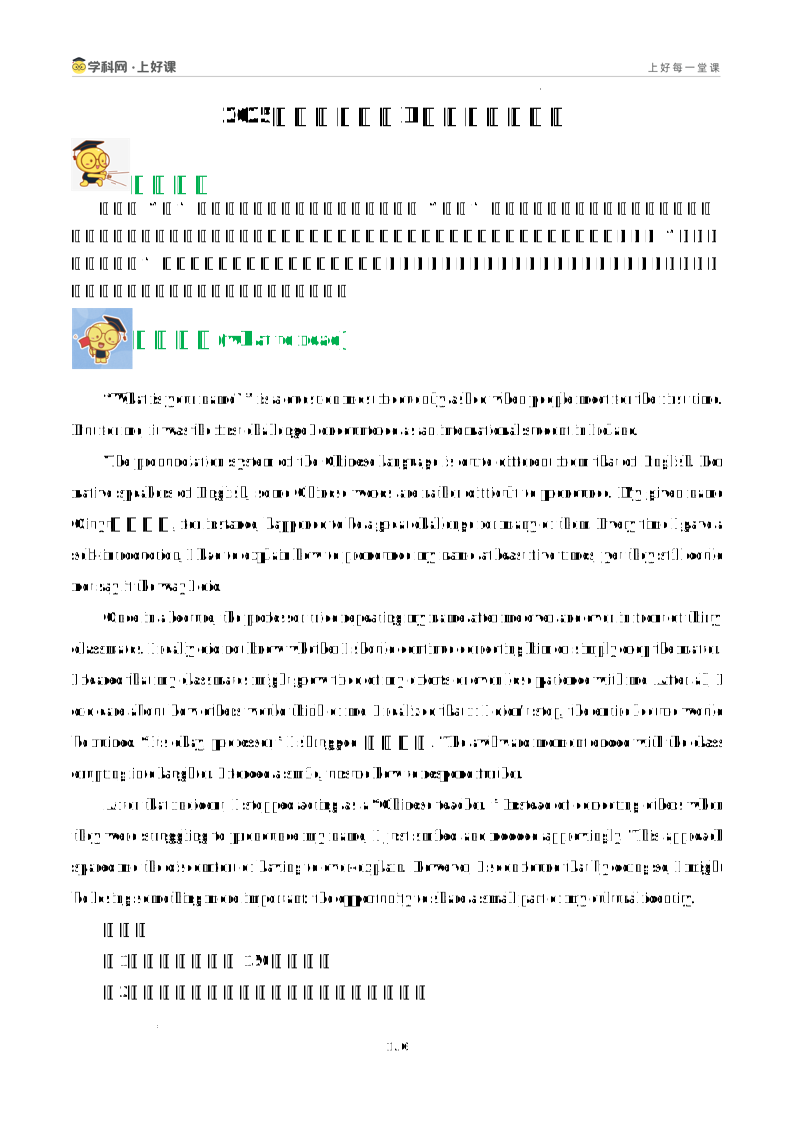
“What is your name? ” is a question most frequently asked when people meet for the first time. But for me, it was the first challenge I encountered as an international student in Ireland.
The pronunciation system of the Chinese language is quite different from that of English. For native speakers of English, some Chinese words are rather difficult to pronounce. My given name Qiuyu(秋雨), for instance, happened to be a great challenge for many of them. Every time I gave a self-introduction, I had to explain how to pronounce my name at least five times, yet they still could not say it the way I did.
Once in a lecture, the professor tried repeating my name after me over and over in front of thirty classmates. I really did not know whether I should continue correcting him or simply drop the matter. I feared that my classmates might grow tired of my efforts or even lose patience with me. After all, I did care about how others would think of me. I realized that if I didn't stop, the entire lecture would be ruined. “It's okay, professor,” I shrugged (耸肩). The awkward moment ended with the class erupting into laughter. I forced a smile, unsure how to respond further.
After that incident, I stopped acting as a “Chinese teacher. ” Instead of correcting others when they were struggling to pronounce my name, I just smiled and nodded approvingly. This approach spared me the discomfort of having to over-explain. However, I soon found that by doing so, I might be losing something more important: the opportunity to share a small part of my cultural identity.
注意:
(1)续写词数应为150个左右;
(2)请按如下格式在答题卡的相应位置作答。
In a class discussion,I was invited to explain the meaning of my name.____________________
___________________________________________________________________________________________________________________________________________________________________________________________________________________________
Many of my classmates got interested and came up to me after class.______________________
___________________________________________________________________________________________________________________________________________________________________________________________________________________________
文本解读:拆解已知信息
(1)段落大意表
Para.
who
what
when
Emotion
1
2
3
4
(2)关键线索标记
时间:
__________________________________________________________________________________________________________________________________________________________________
地点:
__________________________________________________________________________________________________________________________________________________________________
人物关系:
__________________________________________________________________________________________________________________________________________________________________
未解决冲突:
__________________________________________________________________________________________________________________________________________________________________
学生常见误读案例:“我” 的名字 “秋雨(Qiuyu)” 因中英文发音体系差异,英语母语者很难正确发音,即使 “我” 多次解释,他人仍无法准确读出;教授在讲座上反复模仿也难以正确发音
构思逻辑(what to write)
主旨推导:锚定续写方向
(1)原文情感词 / 动作词提炼
情感词:_________________________________________________________
动作词:_________________________________________________________
(2)主旨预判
__________________________________________________________________________________________________________________________________________________________________
语言提升(how to write)
语言积累:场景化表达库
(1) 高频动词 / 动词短语:
pronounce、explain、correct、share、introduce、struggle with、care about、fear、realize、ruin、spare、lose、approach、chat
(2)高分句型
动作描写类
① v-ing/v-ed + 其它,主语 + 动作 1 + 其它
eg: Taking a deep breath, I started to explain the meaning of my name to the class.
② 主语 + 动作 1 + 动作 2,and 动作 3 + 其它
eg: I stood up, smiled at the classmates and began my introduction.
情感描写类
③ 形容词 1 and 形容词 2,主语 + 动词 + 其它
eg: Nervous but excited, I felt my heart beating fast when I was invited to speak.
④ Sb. felt a sense of + 情绪名词 + welling up from one’s heart.
eg: I felt a sense of pride welling up from my heart when my classmates praised my name.
主旨句
⑤ 强调句型
eg: It was the opportunity to share my culture that I cherished most.
⑥ 倒装句
eg: Only by communicating openly can we bridge the cultural gap.
⑦ 定语从句
eg: The name, which carries rich cultural meaning, became a bridge between us.
其它
⑧ With 复合结构
eg: With their eyes full of curiosity, they listened carefully to my words.
⑨ 无灵主语
eg: A warm atmosphere filled the classroom as we talked about different cultures.
⑩ 独立主格结构
eg: Class over, many classmates came up to ask me more about Chinese names.
(3)小试牛刀
① 意识到自己的错误后,我知道是时候主动联系哥哥,修复我们的关系了。
__________________________________________________________________________________________________________________________________________________________________
② 深吸一口气,我站起来,开始介绍我的名字的含义。
__________________________________________________________________________________________________________________________________________________________________
③ 既焦虑又犹豫,我不知道该如何开始我的解释。
__________________________________________________________________________________________________________________________________________________________________
④ 当同学们对我的名字表现出兴趣时,我心中涌起一股幸福感。
__________________________________________________________________________________________________________________________________________________________________
⑤ 我非常珍视这个分享我的文化的机会。
__________________________________________________________________________________________________________________________________________________________________
⑥ 我从未想过我的名字能让我们的距离更近。
__________________________________________________________________________________________________________________________________________________________________
⑦ 那个充满温暖的时刻,让我明白了沟通的重要性。
__________________________________________________________________________________________________________________________________________________________________
⑧ 他们脸上洋溢着灿烂的笑容,鼓励我继续说下去。
__________________________________________________________________________________________________________________________________________________________________
⑨ 当我们分享关于名字的有趣故事时,空气中充满了笑声。
__________________________________________________________________________________________________________________________________________________________________
⑩ 问题提出来后,我尽力一个一个地回答。
__________________________________________________________________________________________________________________________________________________________________
实践演练
续写实操:从构思到落笔
情节构思三原则
逻辑连贯:
__________________________________________________________________________________________________________________________________________________________________
细节支撑:
__________________________________________________________________________________________________________________________________________________________________
呼应主旨:
__________________________________________________________________________________________________________________________________________________________________
迁移训练
总结与迁移
1) 核心步骤回顾
文本解读融主旨,段落拆解要素明。
人事物时情细看,时空人物冲突清。
背景信息莫轻弃,误读陷阱要绕行。
情感动作细提炼,主旨方向早判定。
贴合原文不偏离,核心思想显其形。
价值导向藏文中,呼应主题贯始终。
2) 知识迁移创新
假设场景:作为交换生的李明在法国上学,他的姓氏 “李(Li)” 在法语中发音特殊,常被读错,他既想让同学正确发音,又怕过于较真引起不快,一次小组讨论中,大家聊到各自姓氏的来源,李明被邀请分享。
Hearing the question, Liming smiled and started to share. _________________________
____________________________________________________________________________________________________________________________________________________________________________________________________________________________________________________________________________________________________________________________________
After the discussion, a boy walked up to Liming.___________________________________
____________________________________________________________________________________________________________________________________________________________________________________________________________________________________________________________________________________________________________________________________
2
原创精品资源学科网独家享有版权,侵权必究!
8 / 14
学科网(北京)股份有限公司
学科网(北京)股份有限公司
$$
2025年全国新高考Ⅱ卷读后续写解析
引言解读
本文以 “我” 在爱尔兰留学的经历为引,围绕名字 “秋雨” 的发音困境展开,展现了跨文化交流中语言差异带来的尴尬与纠结。从反复解释仍难被正确读出,到因担心影响他人而妥协,再到对 “失去分享文化身份” 的反思,既呈现了个体的心理挣扎,也为后续围绕名字展开的文化交流埋下伏笔,凸显了名字作为文化符号在跨文化互动中的特殊意义。
原文解码(what to read)
“What is your name? ” is a question most frequently asked when people meet for the first time. But for me, it was the first challenge I encountered as an international student in Ireland.
The pronunciation system of the Chinese language is quite different from that of English. For native speakers of English, some Chinese words are rather difficult to pronounce. My given name Qiuyu(秋雨), for instance, happened to be a great challenge for many of them. Every time I gave a self-introduction, I had to explain how to pronounce my name at least five times, yet they still could not say it the way I did.
Once in a lecture, the professor tried repeating my name after me over and over in front of thirty classmates. I really did not know whether I should continue correcting him or simply drop the matter. I feared that my classmates might grow tired of my efforts or even lose patience with me. After all, I did care about how others would think of me. I realized that if I didn't stop, the entire lecture would be ruined. “It's okay, professor,” I shrugged (耸肩). The awkward moment ended with the class erupting into laughter. I forced a smile, unsure how to respond further.
After that incident, I stopped acting as a “Chinese teacher. ” Instead of correcting others when they were struggling to pronounce my name, I just smiled and nodded approvingly. This approach spared me the discomfort of having to over-explain. However, I soon found that by doing so, I might be losing something more important: the opportunity to share a small part of my cultural identity.
注意:
(1)续写词数应为150个左右;
(2)请按如下格式在答题卡的相应位置作答。
In a class discussion,I was invited to explain the meaning of my name.____________________
___________________________________________________________________________________________________________________________________________________________________________________________________________________________
Many of my classmates got interested and came up to me after class.______________________
___________________________________________________________________________________________________________________________________________________________________________________________________________________________
文本解读:拆解已知信息
(1)段落大意表
Para.
who
what
when
Emotion
1
作为国际学生的 “我”
初次见面时,名字成为 “我” 在爱尔兰遇到的第一个挑战
刚到爱尔兰时
无奈、困扰
2
“我”
中文发音与英语差异大,“我” 的名字 “秋雨” 很难被英语母语者正确发音,每次自我介绍都要多次解释
日常自我介绍时
耐心又无奈
3
“我”、教授、三十名同学
一次讲座上,教授在全班同学面前反复模仿 “我” 的名字发音,“我” 因担心影响讲座而停止纠正,场面尴尬
一次讲座中
尴尬、纠结、不安
4
“我”
那次事件后,“我” 不再纠正他人对自己名字的发音,虽避免了不适,但发现可能失去了分享文化身份的机会
讲座事件之后
释然又失落、反思
(2)关键线索标记
时间:“我” 在爱尔兰当国际学生期间(包含初次见面时、日常自我介绍时、一次讲座中、讲座事件之后等具体时间点)
地点:爱尔兰(具体场景包括进行自我介绍的场合、讲座现场等)
人物关系:“我” 与爱尔兰的教授、同学(存在文化差异下的交流关系)
未解决冲突:“我” 在是否纠正他人对自己名字的发音之间存在矛盾,既不想因过度解释而让他人不适,又不想失去分享自身文化身份的机会
学生常见误读案例:“我” 的名字 “秋雨(Qiuyu)” 因中英文发音体系差异,英语母语者很难正确发音,即使 “我” 多次解释,他人仍无法准确读出;教授在讲座上反复模仿也难以正确发音。
构思逻辑(what to write)
主旨推导:锚定续写方向
(1)原文情感词 / 动作词提炼
情感词:challenge、difficult、feared、awkward、discomfort、important
动作词:asked、encountered、pronounce、gave、explain、repeating、correcting、shrugged、erupting、smiled、nodded、losing、share
(2)主旨预判:本文围绕 “我” 在爱尔兰作为国际学生,因名字发音问题所面临的困境展开,体现了跨文化交流中因语言差异带来的挑战,后续续写可能会围绕 “我” 如何借助解释名字含义的机会,既化解发音带来的尴尬,又成功分享自身文化身份,实现更好的跨文化交流展开。
语言提升(how to write)
语言积累:场景化表达库
(1) 高频动词 / 动词短语:
pronounce、explain、correct、share、introduce、struggle with、care about、fear、realize、ruin、spare、lose、approach、chat
(2)高分句型
动作描写类
① v-ing/v-ed + 其它,主语 + 动作 1 + 其它
eg: Taking a deep breath, I started to explain the meaning of my name to the class.
② 主语 + 动作 1 + 动作 2,and 动作 3 + 其它
eg: I stood up, smiled at the classmates and began my introduction.
情感描写类
③ 形容词 1 and 形容词 2,主语 + 动词 + 其它
eg: Nervous but excited, I felt my heart beating fast when I was invited to speak.
④ Sb. felt a sense of + 情绪名词 + welling up from one’s heart.
eg: I felt a sense of pride welling up from my heart when my classmates praised my name.
主旨句
⑤ 强调句型
eg: It was the opportunity to share my culture that I cherished most.
⑥ 倒装句
eg: Only by communicating openly can we bridge the cultural gap.
⑦ 定语从句
eg: The name, which carries rich cultural meaning, became a bridge between us.
其它
⑧ With 复合结构
eg: With their eyes full of curiosity, they listened carefully to my words.
⑨ 无灵主语
eg: A warm atmosphere filled the classroom as we talked about different cultures.
⑩ 独立主格结构
eg: Class over, many classmates came up to ask me more about Chinese names.
(3)小试牛刀
① 意识到自己的错误后,我知道是时候主动联系哥哥,修复我们的关系了。
Realizing my mistake, I knew it was time to take the initiative to contact my brother and repair our relationship.
② 深吸一口气,我站起来,开始介绍我的名字的含义。
Taking a deep breath, I stood up and began to introduce the meaning of my name.
③ 既焦虑又犹豫,我不知道该如何开始我的解释。
Anxious and hesitant, I didn't know how to start my explanation.
④ 当同学们对我的名字表现出兴趣时,我心中涌起一股幸福感。
I felt a sense of happiness welling up from my heart when my classmates showed interest in my name.
⑤ 我非常珍视这个分享我的文化的机会。
It was the chance to share my culture that I valued greatly.
⑥ 我从未想过我的名字能让我们的距离更近。
Never had I thought that my name could bring us closer.
⑦ 那个充满温暖的时刻,让我明白了沟通的重要性。
The moment, which was full of warmth, made me understand the importance of communication.
⑧ 他们脸上洋溢着灿烂的笑容,鼓励我继续说下去。
With a big smile on their faces, they encouraged me to go on.
⑨ 当我们分享关于名字的有趣故事时,空气中充满了笑声。
Laughter filled the air as we shared interesting stories about names.
⑩ 问题提出来后,我尽力一个一个地回答。
Questions raised, I tried my best to answer them one by one.
实践演练
情节构思三原则
逻辑连贯:续写内容需承接前文 “我” 因名字发音问题的困扰以及对失去分享文化身份机会的反思,在 “我” 被邀请解释名字含义时,自然地引出对 “秋雨” 含义的介绍,与前文的文化身份主题相呼应,后续同学课后感兴趣前来交流也符合正常的情节发展。
细节支撑:在描写 “我” 解释名字含义时,可以加入具体的关于 “秋” 和 “雨” 在中华文化中的象征意义,如秋天的收获、雨的滋润等;描写同学反应时,可以加入他们的表情、动作等细节,如点头、提问、记录等,让情节更生动。
呼应主旨:通过 “我” 对名字含义的解释以及与同学的交流,体现跨文化交流的意义,呼应前文 “分享文化身份” 的主旨,展现文化沟通带来的积极影响。
写作示例:
In a class discussion, I was invited to explain the meaning of my name. I took a deep breath and said, "My name is Qiuyu. 'Qiu' refers to autumn, a season of harvest and beauty in Chinese culture. The golden leaves, ripe fruits all make autumn charming. 'Yu' means rain, which waters the earth and brings vitality. Together, they stand for a poetic scene of autumn rain." As I spoke, I saw curiosity in their eyes.
Many of my classmates got interested and came up to me after class. A girl asked, "Does every Chinese name have such beautiful meanings?" I nodded and shared more examples. We talked happily, and I felt the cultural gap narrowing. It was then that I knew my name could be a wonderful bridge for communication.
(得分点:情节与前文逻辑连贯,详细解释了名字含义体现细节支撑,通过交流展现跨文化沟通意义呼应主旨,运用了多种句型使表达生动。)
迁移训练
总结与迁移
1) 核心步骤回顾
文本解读融主旨,段落拆解要素明。
人事物时情细看,时空人物冲突清。
背景信息莫轻弃,误读陷阱要绕行。
情感动作细提炼,主旨方向早判定。
贴合原文不偏离,核心思想显其形。
价值导向藏文中,呼应主题贯始终。
2) 知识迁移创新
假设场景:作为交换生的李明在法国上学,他的姓氏 “李(Li)” 在法语中发音特殊,常被读错,他既想让同学正确发音,又怕过于较真引起不快,一次小组讨论中,大家聊到各自姓氏的来源,李明被邀请分享。
Hearing the question, Liming smiled and started to share. "My family name is Li, which is one of the most common surnames in China," he said, pausing to trace the character "Li" in the air with his finger. "It originally meant 'plum tree' in ancient Chinese. My ancestors chose it because plums symbolize resilience—they bloom in cold winters, you know?" He glanced around the table, noticing his classmates leaning forward. "As for pronunciation... well, it's trickier in French," he admitted with a laugh. "In Chinese, it's a short, sharp sound like 'lee,' but I know it's easy to mix up. Maybe think of it like the 'li' in 'liberté'—but quicker?" The group nodded, repeating it softly, and he felt a weight lift.
After the discussion, a boy walked up to Li Ming. "Sorry if I butchered your name before," he said, scratching his neck. "I tried saying 'lee' like you said—does that sound right?" Liming grinned, nodding. "Perfect. Thanks for trying." The boy smiled back. "Your surname's story is cool. Plum trees blooming in winter? That's way more interesting than mine—it just means 'blacksmith.'" They chatted for a minute, swapping name origins, and Liming realized that sharing the story behind "Li" had been better than any correction. Sometimes, connection mattered more than perfection.
2
原创精品资源学科网独家享有版权,侵权必究!
8 / 14
学科网(北京)股份有限公司
学科网(北京)股份有限公司
$$
资源预览图
1

2

3

相关资源
由于学科网是一个信息分享及获取的平台,不确保部分用户上传资料的 来源及知识产权归属。如您发现相关资料侵犯您的合法权益,请联系学科网,我们核实后将及时进行处理。