Unit 4 School Days 时间介词at on in和频度副词-【简语法-单元重点语法精练】英语七年级上册(译林版2024)
2025-07-24
|
2份
|
25页
|
533人阅读
|
19人下载

资源信息
| 学段 | 初中 |
|---|---|
| 学科 | 英语 |
| 教材版本 | 初中英语译林版七年级上册 |
| 年级 | 七年级 |
| 章节 | Unit 3 Welcome to our school! |
| 类型 | 题集-专项训练 |
| 知识点 | 时间介词,副词 |
| 使用场景 | 同步教学-单元练习 |
| 学年 | 2025-2026 |
| 地区(省份) | 全国 |
| 地区(市) | - |
| 地区(区县) | - |
| 文件格式 | ZIP |
| 文件大小 | 709 KB |
| 发布时间 | 2025-07-24 |
| 更新时间 | 2025-07-24 |
| 作者 | 乐思英语精品馆 |
| 品牌系列 | - |
| 审核时间 | 2025-07-24 |
| 下载链接 | https://m.zxxk.com/soft/53191448.html |
| 价格 | 3.00储值(1储值=1元) |
| 来源 | 学科网 |
内容正文:
单元核心语法·精练
Unit 4 School Days
(时间介词at on in和频度副词)
内容提要
核心语法回顾
专项能力突破
解题综合提升
一、时间介词(at, on, in)
用法介绍
时间介词用于表示动作发生的时间,不同介词对应不同范围的时间(如时刻、日期、月份等),是英语中描述时间的基础工具。
介词
适用时间范围
示例
at
具体时刻(几点几分);noon/night
at 7:30(在 7 点 30 分);at noon(在中午);at night(在夜晚)
on
具体日期、星期、节日;带修饰词的早 / 中 / 晚
on Monday(在周一);on October 1st(在 10 月 1 日);on Children's Day(在儿童节);on a rainy morning(在一个雨天的早上)
in
年、月、季节;泛指的早 / 中 / 晚
in 2024(在 2024 年);in July(在七月);in summer(在夏天);in the morning(在早上)
注意事项
1. 特殊时间表达:
1) “在周末” 可用 on the weekend 或 at the weekend。
2) 具体某一天的早 / 中 / 晚需用 on,如 on Friday evening(在周五晚上);泛指的早 / 中 / 晚用 in,如 in the evening(在晚上)。
2. 省略介词的情况:this/last/next/every 等词后不加介词,如 this afternoon(今天下午)、last week(上周)、every day(每天)。
3. 时间范围区分:at <1 天(时刻),on = 1 天(具体日期),in> 1 天(年 / 月 / 季节),可借助此规律记忆。
二、频度副词
用法介绍
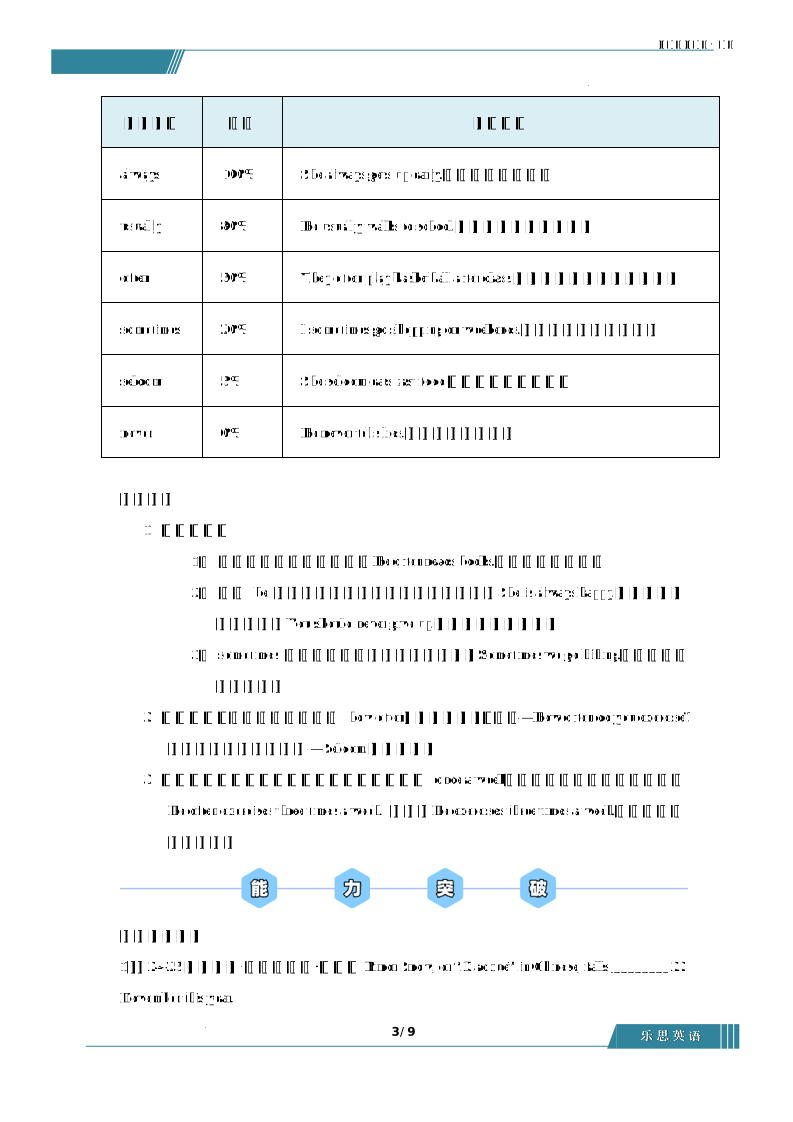
频度副词用于表示动作发生的频率,通常与一般现在时连用,频率从高到低依次为:always > usually > often > sometimes > seldom > never。
频度副词
频率
用法示例
always
100%
She always gets up early.(她总是早起。)
usually
80%
He usually walks to school.(他通常步行上学。)
often
50%
They often play basketball after class.(他们经常课后打篮球。)
sometimes
20%
I sometimes go shopping on weekends.(我有时周末购物。)
seldom
5%
She seldom eats fast food.(她很少吃快餐。)
never
0%
He never tells lies.(他从不撒谎。)
注意事项
1. 位置规则:
1) 位于行为动词之前,如:He often reads books.(他经常看书。)
2) 位于 be 动词、助动词、情态动词之后,如:She is always happy.(她总是很开心。);You should never give up.(你绝不能放弃。)
3) sometimes 可位于句首、句中或句末,如:Sometimes we go hiking.(有时我们去远足。)
2. 提问方式:对频度副词提问用 how often(多久一次),如:—How often do you exercise?(你多久锻炼一次?)—Seldom.(很少。)
3. 避免重复:频度副词与表示频率的短语(如 once a week)不可同时使用,如:错误:He often exercises three times a week. 正确:He exercises three times a week.(他每周锻炼三次。)
一、单项选择
1.(24-25七年级上·江苏连云港·期中)Minor Snow, or “Xiaoxue” in Chinese, falls ________ 22 November this year.
A.at B.on C.in D.to
【答案】B
【详解】句意:小雪,中文叫“小雪”是在今年的11月22日。
考查介词辨析。at用于具体时刻前;on用于日,星期等前;in用于年、月,世纪等前;to到。根据“22 November”可知,指的是11月22日,是具体的某一天,介词on+具体某一天。故选B。
2.(24-25七年级上·江苏泰州·期中)Most students of Grade 7 are 12 years old. They were born ________ 2012.
A.at B.in C.on D.from
【答案】B
【详解】句意:七年级的大部分学生都是12岁。他们出生于2012年。
考查介词辨析。at在;in在……里;on在……上;from来自。根据空格前“were born”,结合选项可知,此处考查:be born in,固定搭配,意为“出生于”符合语境,所以此处应该填入介词in。故选B。
3.(24-25七年级上·江苏常州·期中)Many children watched the interesting film Panda Plan ______ Saturday evening.
A.in B.on C.at D.from
【答案】B
【详解】句意:很多小孩在周六晚上看这部有趣的电影《熊猫计划》。
考查时间介词。in在,后接年/月/季节等;on在,接具体某一天,或接某个具体的上、下午或晚上;at在,接时刻;from从,接时间段的起点。空后的“Saturday evening”为某个具体的晚上,所以,需用介词on。故选B。
4.(24-25七年级上·江苏扬州·期中)—When will the party ________?
—________ the evening of November 11th.
A.take off; On B.take place; In C.take apart; On D.take place; On
【答案】D
【详解】句意:——聚会什么时候举行?——在11月11日的晚上。
考查动词短语及时间介词。take off起飞;take place举行;take apart拆开。第一空指聚会举行,应用“take place”,排除选项A和C;第二空指具体某一天的晚上,应用介词“On”。故选D。
5.(24-25七年级上·江苏盐城·期中)Daniel likes to take things apart ________ his free time ________ Sundays.
A.in; at B.in; on C.at; on D.on; at
【答案】B
【详解】句意:丹尼尔喜欢在周日的空闲时间把东西拆开。
考查介词。in用于年、月、季节等前面;on用于具体的一天;at用于具体时刻。in one’s free time“在某人空闲时间”;on Sundays“在周日”,故选B。
6.(24-25七年级上·江苏扬州·期中)My parents often take me to see a film ________ 7 o’clock ________ Saturday evenings.
A.at; in B.at; on C.in; in D.in; on
【答案】B
【详解】句意:我父母经常在星期六晚上七点带我去看电影。
考查介词辨析。at常用于具体的时间点前;in常用于年、月份或季节前;on常用于星期或具体的某一天前。第一个空后为“7 o’clock”,表示具体的时间点,应用at;第二个空后为“Saturday evenings”,表示“星期六晚上”,是具体的某一天晚上,应用on。故选B。
7.(24-25七年级上·江苏镇江·期中)I watched the film called Super Brain ________ the afternoon of March 28th.
A.in B.on C.at D.to
【答案】B
【详解】句意:在3月28日下午,我看了一部叫《超级大脑》的电影。
考查介词辨析。in用于表示在较长的时间段内,例如在某年、某月、某季节等;on用于表示具体的一天或日期,包括星期几和某一天的上午、下午或晚上;at通常用于表示具体的时间点;to作为介词时,通常表示方向、目标或结果,而不是时间。根据空后的“ the afternoon of March 28th”可知,表示在具体的某一天,应用介词on。故选B。
8.(24-25七年级上·江苏盐城·期中)We usually have a class meeting ________ Friday afternoon.
A.in B.on C.at D./
【答案】B
【详解】句意:我们通常在星期五下午开班会。
考查介词辨析。in在……期间,常用于年、月份或季节前;on在……之时,常用于星期或具体的某一天前;at在……时刻,常用于具体的时间点前;/不填。根据“Friday afternoon”可知,此处表示“星期五下午”,是具体的时间,空处应用on。故选B。
9.(24-25七年级上·江苏南京·阶段练习)I have no idea about what she likes for breakfast because
she ________ talks about her life.
A.seldom B.often C.always D.sometimes
【答案】A
【详解】句意:我不知道她早餐喜欢吃什么,因为她很少谈论她的生活。
考查频度副词。seldom很少;often经常;always总是;sometimes有时。根据“I have no idea about what she likes for breakfast”可知,因为她很少谈论她的生活,所以“我”不太了解她。故选A。
10.(24-25七年级上·江苏盐城·期中)—I don’t like sweets. What about you?
—Me either, but I ________ have a little to give me some energy.
A.sometimes B.often C.seldom D.always
【答案】A
【详解】句意:——我不喜欢甜食。你呢?——我也不喜欢,但我偶尔吃一点以获得一些能量。
考查频率副词辨析。sometimes偶尔,有时;often经常;seldom很少;always总是。根据“Me either”及but表示转折可知,虽然不爱甜食,但偶尔会吃一点糖以获得能量,故选A。
11.(24-25七年级上·江苏扬州·期中)Mary is quiet and _________ plays with other students. She has no friends.
A.seldom B.always C.usually D.often
【答案】A
【详解】句意:玛丽很安静,很少和其他学生一起玩。她没有朋友。
考查副词辨析。seldom很少;always总是;usually通常;often经常。结合“She has no friends.”可知,她很少和其他学生一起玩。故选A。
12.(24-25七年级上·江苏扬州·期中)My sister is a polite girl. She ________ forgets to say “please” and “thank you”.
A.never B.often C.usually D.always
【答案】A
【详解】句意:我妹妹是一个有礼貌的女孩。她从来没有 忘记说“请”和“谢谢”。
考查副词辨析。never从不;often经常;usually通常;always总是。由“My sister is a polite girl”可知,此处应是指从来没有忘记说“请”和“谢谢”。故选A。
13.(24-25七年级上·江苏南通·期中)—Is your brother free at weekends?
—Yes. He ________ has much work to do.
A.often B.seldom C.usually D.always
【答案】B
【详解】句意:——你的弟弟在周末有时间吗?——是的。他很少有太多的家庭作业。
考查频度副词。often经常;seldom很少;usually通常;always总是。根据“Yes.”可知,周末我的弟弟有时间,因为他很少有太多的家庭作业。故选B。
14.(24-25七年级上·江苏连云港·期中)Sun Yingsha loves ping-pong, and she ________ practices it for over 8 hours every day.
A.never B.seldom C.sometimes D.always
【答案】D
【详解】句意:孙颖莎喜欢乒乓球,她总是每天练习8个多小时。
考查频度副词。never从不;seldom几乎不;sometimes有时候;always总是。根据“Sun Yingsha loves ping-pong”可知,她喜欢乒乓球,因此她总是每天练习8个多小时。故选D。
15.(24-25七年级上·江苏泰州·期中)—You look strong and healthy. ________ do you do sport?
—I’m a fan of ball games, and I ________ play volleyball after school every day.
A.How much; often B.How long; seldom
C.How often; usually D.How often; never
【答案】C
【详解】句意:——你看起来强壮而且健康。你多久做一次运动?——我是球类运动迷,通常每天放学后打排球。
考查特殊疑问词及频度副词。how much多少,对数量提问;often经常;how long多久,对时间段提问;seldom很少;how often多久一次,对频率提问;usually通常;never从来不。根据答语“I ... play volleyball after school every day”可知,第一空是问多久做一次运动,用how often;根据“I’m a fan of ball games,”可知,第二空可以排除seldom和never。故选C。
二、完成句子:根据句意在空格处填入一个合适的单词或者用括号所给单词的正确形式填空
1. (24-25七年级上·全国·单元测试)Pine trees bloom May and June.
【答案】in
【详解】句意:松树五月和六月开花。“May and June”表示月份,月份前用时间介词in。故填in。
2. (24-25七年级上·全国·单元测试)Brown bears live in the forests and they are brown color.
【答案】in
【详解】句意:棕熊生活在森林里,它们是棕色的。根据“they are brown ... color.”可知,棕熊的颜色是棕色,in color“在颜色方面”。故填in。
3. (24-25七年级上·全国·单元测试)Most bats are active night.
【答案】at
【详解】句意:大多数蝙蝠在夜间活跃。at night“在夜里”,固定搭配。故填at。
4. (24-25七年级上·全国·单元测试)This restaurant isn’t open Monday.
【答案】on
【详解】句意:这家餐馆在星期一不营业。根据“Monday”可知,在星期之前需要使用介词on,on Monday“在星期一”。故填on。
5. (24-25七年级上·全国·单元测试)We are buying some fruit and vegetables the supermarket. (填入适当的介词)
【答案】at/in
【详解】句意:我们正在超市里买一些水果和蔬菜。根据题干可知,此处要填入合适的介词。in the supermarket在超市里,固定搭配,表示大体的位置;at the supermarket在超市,固定搭配,表示具体的位置。故此处用at或in。故填at/in。
6. (24-25七年级上·全国·单元测试)I want to go the library this weekend. (填入适当的介词)
【答案】to
【详解】句意:这个周末我想去图书馆。go to the library去图书馆,固定搭配,故填to。
7. (24-25七年级上·全国·单元测试)Look that beautiful sunset (晚霞). It’s so amazing! (填入适当的介词)
【答案】at
【详解】句意:看那美丽的晚霞。它是如此的令人惊叹的!look看,不及物动词;look后需要加介词at再加宾语表示“看某物”。故填at。
8. (24-25七年级上·江苏无锡·单元测试)—How often does your school have a school sports meeting?
—Only (one) a year. What about your school?
【答案】once
【详解】句意:——你们学校多久举行一次学校运动会?——一年只有一次。你的学校呢?根据“How often does your school have a school sports meeting?”可知,此处询问学校运动会举行频次,once“一次”符合,once a year“一年一次”。故填once。
9. (23-24七年级上·江苏扬州·期末)Kitty often goes to the museum a month. (two)
【答案】twice
【详解】句意:凯蒂经常一个月去两次博物馆。根据语境可知,此处表示频率,“一个月两次”twice a month。故填twice。
10. (24-25七年级上·江苏扬州·期中)I do some cleaning (one) a week.
【答案】once
【详解】句意:我每周做一次清洁工作。根据“I do some cleaning…a week.”可知,此处指的是一周一次,应用频度副词once表示“一次”。故填once。
11. (24-25七年级上·全国·单元测试)When do you (usual) get up?
【答案】usually
【详解】句意:你通常早上几点起床?句中需用副词usually“通常”,修饰动词get up。故填usually。
12. (24-25七年级上·全国·单元测试)We need to brush our (tooth) (two) a day.
【答案】 teeth twice
【详解】句意:我们需要每天刷牙两次。根据语境可知,第一个空应用复数形式表示泛指,故填teeth;第二个空表示频率,twice a day“每天两次”,固定词组。故填teeth;twice。
13. (24-25七年级上·全国·单元测试)He likes to play soccer on weekends.
【答案】often
【详解】句意:他经常喜欢在周末踢足球。根据“He…likes to play soccer on weekends.”可知,此处是指经常在周末踢足球,应用频度副词often表示“经常”。故填often。
14. (22-23七年级上·广东广州·单元测试)Kelly is often busy and she has time to see a film.
【答案】seldom
【详解】句意:凯莉经常很忙,她很少有时间去看电影。根据“Kelly is often busy and she…has time to see a film”可知,经常忙,所以很少有时间去看电影,seldom“很少”,故填seldom。
15. (22-23七年级上·全国·课后作业)Tim gets up before 7:00 am. He always gets up at 8:00 am.
【答案】never
【详解】句意:Tim在七点之前从不起床。他总是在八点起床。根据“He always gets up at 8:00 am.”可知他总是在八点起床,从不在七点之前起床。故填never。
三、选词填空
Passage 1
(24-25七年级上·江苏盐城·期中)阅读短文,从方框中选择适当的词或短语并用其正确形式填空,使短文通顺,意思完整,每词或短语限用一次。
show, come, like, good, take part in
Hi, everybody! My name is Mark. I am a Grade 7 student in a school in Shanghai.
Our school has a Happy Life Festival in June every year. There are lots of 1 during the Happy Life Festival. I want 2 the Best Food Show in the dining hall, so I ask my good friends Jane and James for help. I think we can have 3 ideas when we work together. That day 4 . It is a little bit hot, so we choose to make a salad. To make the salad look colourful, we use many kinds of fruit and vegetables, 5 red tomatoes and purple grapes.
tiring, website, duty, we, take turns
Jane washes the fruit and vegetables. James cuts them into pieces. I mix them with salad dressing (调味汁). We 6 to do our chores. Each of 7 tries our best to make the salad look colourful and taste good. We take many photos and share them on our school 8 . After that, we clean up the dining area. We do the cleaning in groups. It is one of our 9 to keep the school clean and beautiful.
It is a 10 but exciting day for all of us. It makes us feel good to make delicious food for ourselves!
【答案】
1. shows 2. to take part in 3. better 4. comes 5. like 6. take turns 7. us 8. website 9. duties 10. tiring
【导语】本文是一篇记叙文,讲述了Mark和他的朋友们参加学校举办的“快乐生活节”并展示他们的美食制作过程。
1. 句意:在快乐生活节期间有许多活动。根据“the Best Food Show”可知期间有很多展示活动,lots of后接名词复数shows“展示,展览”。故填shows。
2. 句意:我想参加餐厅的最佳美食秀,所以我向我的好朋友简和詹姆斯寻求帮助。根据“the Best Food Show”可知是想参加这一活动,want后接不定式to take part in“参加”作宾语。故填to take part in。
3. 句意:我认为当我们一起做事情时,我们可以有更好的想法。根据“when we work together”可知一起想办法会有更好的注意,修饰名词ideas用形容词good的比较级better“更好的”。故填better。
4. 句意:那一天来了。空处应填动词作谓语,come“到来”符合,整篇文章时态为一般现在时,主语是第三人称单数,come用三单形式。故填comes。
5. 句意:为了使沙拉看起来五颜六色,我们使用了多种水果和蔬菜,比如红番茄和紫葡萄。根据“red tomatoes and purple grapes”可知是在举例子,介词like“像,比如”符合语境。故填like。
6. 句意:我们轮流干活。根据“to do our chores”和备选词汇可知是几个人轮流干活,take turns to do sth“轮流做某事”,主语是We,take用原形。故填take turns。
7. 句意:我们每个人都尽力让沙拉看起来五颜六色并尝起来味道很好。句子主语不全,of后用we的宾格us“我们”。故填us。
8. 句意:我们拍了很多照片并在学校网站上分享。根据“We take many photos and share them on our school...”可知是把照片发到学校网站上,website“网站”,此处用单数。故填website。
9. 句意:保持学校的清洁和美丽是我们的职责之一。根据“to keep the school clean and beautiful”可知这是我们的责任,one of后接名词复数duties“责任”。故填duties。
10. 句意: 对我们所有人来说,这是一个疲惫但令人兴奋的一天。根据“but exciting day”可知空处填与exciting意义相反的形容词,tiring“令人疲惫的”符合,作定语修饰day。故填tiring。
Passage 2
(24-25七年级上·江苏盐城·阶段练习)根据短文内容,从框中选出恰当的词填空,每空填一词,每个词只能填一次。
favourite, and, be, good, with, buy, want, school, weekend, big
My brother is a sports fan (体育迷). He likes watching sports games. He loves basketball, tennis, badminton 1 swimming. He plays football very 2 .
Li Hua is his 3 football player (运动员). Every time he goes shopping, he always 4 newspapers about football.
My brother is a member (成员) of the 5 Football Club. His school is very 6 and beautiful. There 7 a football field, a tennis court and a swimming pool in it. He often plays football 8 his classmates after school. He wants to be a famous player in the future. My brother often goes to the stadium (体育馆) to watch football matches at 9 . He doesn’t 10 to miss (错过) any football matches.
【答案】
1. and 2. well 3. favourite 4. buys 5. school 6. big 7. is 8. with 9. weekends 10. want
【导语】本文介绍了作者的哥哥,他是一个体育迷,擅长踢足球,是学校足球俱乐部的成员。
1. 句意:他喜欢篮球、网球、羽毛球和游泳。根据“He loves basketball, tennis, badminton…swimming.”及备选词可知,此处几项运动构成并列关系,本句为肯定句,应用and“和”连接。故填and。
2. 句意:他足球踢得非常好。根据“He plays football very….”及备选词可知,此处指足球踢得好,应用good的副词形式well“好地”修饰动词plays。故填well。
3. 句意:李华是他最喜欢的足球运动员。根据“Li Hua is his…football player (运动员).”及备选词可知,形容词favourite“最爱的”符合语境,作定语,修饰football player。故填favourite。
4. 句意:他总是购买有关足球的报纸。根据“Every time he goes shopping, he always… newspapers about football.”及备选词可知,此处指购买报纸,时态是一般现在时,主语是he,动词buy“买”的三单形式符合语境。故填buys。
5. 句意:我哥哥是学校足球俱乐部的成员。根据“My brother is a member (成员) of the…Football Club.”及备选词可知,此处是指学校足球俱乐部,school“学校”符合语境。故填school。
6. 句意:他的学校非常大并且很漂亮。根据“His school is very…and beautiful.”及备选词可知,此处修饰学校,形容词big“大的”符合语境。故填big。
7. 句意:那里有一个足球场。根据“There…a football field, a tennis court and a swimming pool in it.”及备选词可知,此处是there be句型,遵循“就近原则”,时态为一般现在时,主语a football field为单数,be动词用is。故填is。
8. 句意:他放学后经常和同学们一起踢足球。根据“He often plays football…his classmates after school.”及备选词可知,此处为固定短语play football with“和……一起踢足球”,介词with符合语境。故填with。
9. 句意:我哥哥周末经常去体育馆看足球比赛。根据“My brother often goes to the stadium (体育馆) to watch football matches at….”及备选词可知,此处是指在周末,固定短语为at weekends“在周末”,应用名词复数形式,表泛指。故填weekends。
10. 句意:他不想错过任何足球比赛。根据“He doesn’t…to miss (错过) any football matches.”及备选词可知,他不想错过足球比赛,动词want“想要”符合语境,doesn’t后用动词原形。故填want。
四、语法填空
Passage 1
(24-25七年级上·江苏徐州·期中)阅读短文,在文中空白处填入1个适当的单词或用括号中所给单词的适当形式填空。
It is autumn. It’s a good time to go on a school trip to a farm. A trip to a farm can be 1 (tire), but we can learn a lot from it. We can get closer (更近的) to nature, 2 we can learn to do things with our hands. Our class trip to Sunnyside Farm is coming. I will enjoy 3 (I) on the farm! The fruits there are waiting for me. I really enjoy 4 (pick) fruits.
Before I go on the trip, my father gives me some tips (建议). 5 (one) of all, I need to wear comfortable (舒服的) clothes and shoes. On the school trip, I will do lots of activities 6 walking and climbing. Second, I have to take some water with me. I need to drink lots of water when I work outside. 7 weather can be hot sometimes. Third, I can take a music player with me. Then I will not feel bored (无聊的) on the bus.
I think the tips are 8 (real) helpful. And I borrow a camera (照相机) from my sister because I want to take some photos and make 9 (video). After I get home, I will share them with my friends on the Internet!
Now, I’m ready 10 (leave) for the farm. I hope to have fun with my classmates there.
【答案】
1. tiring 2. and 3. myself 4. picking 5. First 6. like 7. The 8. really 9. videos 10. to leave
【导语】本文主要讲述了一次秋季学校旅行的计划和准备工作。
1. 句意:去农场旅行可能很累,但我们可以从中学到很多东西。be后应跟形容词作表语,空处修饰“trip”,所以用ing结尾的形容词tiring“令人疲倦的,累人的”,故填tiring。
2. 句意:我们可以更接近自然,我们可以学会用我们的双手做事。空前空后在句意上是顺承关系,所以用and连接,故填and。
3. 句意:我会在农场玩得很开心的!enjoy oneself“玩得开心”,所以空处用I对应的反身代词myself“我自己”,故填myself。
4. 句意:我很喜欢摘水果。enjoy doing sth“喜欢做某事”,空处应填pick的动名词形式,故填picking。
5. 句意:首先,我需要穿舒适的衣服和鞋子。first of all“首先”,固定短语,故填First。
6. 句意:在学校旅行中,我会做很多活动,比如散步和爬山。根据“do lots of activities ...walking and climbing”可知,空后是举例说明,所以用like表示“例如”,故填like。
7. 句意:天气有时可能很热。此处特指天气,所以使用定冠词“the”,故填The。
8. 句意:我认为这些建议真的很有帮助。空处修饰形容词helpful,所以用real的副词形式really“真的”,故填really。
9. 句意:我从我姐姐那里借了一台相机,因为我想拍一些照片和录像。video“录像”,此处表示泛指,所以用复数形式,故填videos。
10. 句意:现在,我准备离开去农场。be ready to do sth 表示“准备好做某事”,空处用动词不定式,故填to leave。
Passage 2
(24-25七年级上·江苏南通·期中)阅读短文内容,根据方框中所含单词用其适当形式填空,每个只用一次。
My home is far from our school. So I live in school on weekdays. At school, I have many friends. I 1 (real) like them. I’m 2 (interest) in all the subjects. I always have fun 3 (study) with my classmates together. I like English best. Our English teacher is lovely and 4 (teach) us a lot. We all like her. Next month, Our school 5 (have) a school trip to an apple farm. Everyone is happy.
To keep fit, I always eat 6 (healthy). I also like sports. After school, I spend half an hour 7 (practise) volleyball for about an hour with my friends.
We don’t have too much homework 8 (do) at school. When I finish my homework, I read books 9 (quiet). I think 10 (read) is fun. I know a lot from books.
【答案】
1. really 2. interested 3. studying 4. teaches 5. will have 6. healthily 7. practising 8. to do 9. quietly 10. reading
【导语】本文主要介绍了作者在学校和放学后的日常。
1. 句意:我真的很喜欢他们。根据“I…like them.”可知,此处要用副词,修饰like。故填really。
2. 句意:我对所有的学科都感兴趣。为be interested in“对……感兴趣”,形容词短语。故填interested。
3. 句意:我总是和我的同学们在一起玩得很开心。have fun doing sth“做某事很开心”,动词短语。故填studying。
4. 句意:我们的英语老师很可爱并且教了我们很多。根据“Our English teacher is lovely and…us a lot.”可知,主语为第三人称单数形式,时态为一般现在时,teach也要用第三人称单数形式。故填teaches。
5. 句意:下个月,我们学校将组织一次去苹果农场的校外旅行。根据next month可知,时态为一般将来时,其结构为will+动词原形。故填will have。
6. 句意:为了保持健康,我总是吃得很健康。根据“I always eat…”可知,此处要用副词,修饰eat。故填healthily。
7. 句意:放学后,我用半个小时和朋友们练习打排球。spend time doing sth“花费时间做某事”,动词短语。故填practising。
8. 句意:在学校,我们没有太多作业要做。根据“We don’t have too much homework…at school.”可知,此处要用动词不定式作后置定语,修饰homework。故填to do。
9. 句意:当我完成作业的时候,我会安静地看书。根据“I read books…”可知。此处要用副词,修饰read。故填quietly。
10. 句意:我认为读书很有趣。根据“I think…is fun.”可知,此处宾语从句中缺少主语,应用read的动名词形式。故填reading。
Passage 3
(24-25七年级上·江苏宿迁·期中)阅读下面短文,在空白处填入一个适当的单词或括号内单词的正确形式。
At school, students learn different subjects 1 English, math, art and so on. They learn 2 (this) subjects in the classroom. These days, the school gardening becomes popular in many schools. Students learn it outside the classroom. It is not only 3 interesting subject, but also a great way to keep healthy.
They can learn a lot from the gardening class. When some young students have food, they always ask, “Where 4 (do) the rice (米饭) come from?” In this class, they can get the answer. And they can learn to do things with their own (自己的) 5 (hand).
Keeping a school garden is difficult, but teachers are 6 (try) to make it work. Some schools can have gardens inside while other schools are small, 7 teachers turn to gardens and parks near the school.
At 8 (one), teachers decide (决定) what vegetables to grow (种植). Then they grow 9 (they) with students. Carrots and tomatoes 10 (be) their favorites because it is nice for them to get a carrot or a tomato, wash it and eat it right in the garden.
【答案】
1. like 2. these 3. an 4. does 5. hands 6. trying 7. so 8. first 9. them 10. are
【导语】本文讲述了一门有趣的学校课程——园艺课。
1. 句意:在学校,学生学习不同的科目,如英语、数学、艺术等等。根据空格后“English, math, art and so on.”可知,此处表列举,所以此处应该填入介词like,意为“像……”符合语境。故填like。
2. 句意:他们在教室里学习这些科目。根据空格后“subjects”,结合所给词可知,此处指这些科目,所以此处应该填入this的复数形式these,意为“这些”符合语境。故填these。
3. 句意:这不仅是一门有趣的学科,也是保持健康的好方法。根据空格后“interesting subject”可知,此处泛指一门有趣的学科,结合空格后“interesting ”是以元音音素开头的词,所以此处应该填入不定冠词an,意为“一门”符合语境。故填an。
4. 句意:有些青年学生有饭吃的时候,总会问:“米是哪里来的?”根据语境可知,时态为一般现在时,又根据分析句子“Where…the rice (米饭) come from?”,结合备选词可知,主语是the rice (米饭),所以此处助动词应该用第三人称单数形式does。故填does。
5. 句意:他们可以学会用自己的双手做事情。根据空格前“their own (自己的)”可知,此处指他们自己的双手,结合所给词可知,hand“手”,可数名词,此处应该用复数形式hands。故填hands。
6. 句意:管理一个学校花园很困难,但是老师们正在努力让它发挥作用。根据前半句“Keeping a school garden is difficult”和空格前“are”,结合所给词可知,此处应该表达但是老师们正在努力让它发挥作用,时态为现在进行时,结构为;are+现在分词,try的现在分词是trying。故填trying。
7. 句意:一些学校里面可以有花园,而另一些学校很小,所以老师们转向学校附近的花园和公园。根据分析句子“Some schools can have gardens inside while other schools are small,…teachers turn to gardens and parks near the school.”可知,该句前后构成因果关系,所以此处应该填入从属连词so,引导结果状语从句。意为“所以”符合语境。故填so。
8. 句意:首先,老师决定种植什么蔬菜。根据空格前“At”,结合所给词可知,此处考查固定搭配:at first,意为“首先”符合语境。故填first。
9. 句意:然后他们和学生一起种植。根据分析句子“Then they grow…with students.”可知,该句缺宾语,they“他们”,主格人称代词,此处应该填入宾格人称代词them,意为“他们”符合语境。故填them。
10. 句意:胡萝卜和西红柿是他们的最爱,因为对他们来说,在花园里摘一个胡萝卜或西红柿,洗净后吃是很好的。根据语境可知,时态为一般现在时,结合分析句子“Carrots and tomatoes…their favorites because it is nice for them to get a carrot or a tomato, wash it and eat it right in the garden.”可知,主语是Carrots and tomatoes,所以此处be动词用are。故填are。
2 / 17
学科网(北京)股份有限公司
$$单元核心语法·精练
Unit 4 School Days
(时间介词at on in和频度副词)
内容提要
核心语法回顾
专项能力突破
解题综合提升
一、时间介词(at, on, in)
用法介绍
时间介词用于表示动作发生的时间,不同介词对应不同范围的时间(如时刻、日期、月份等),是英语中描述时间的基础工具。
介词
适用时间范围
示例
at
具体时刻(几点几分);noon/night
at 7:30(在 7 点 30 分);at noon(在中午);at night(在夜晚)
on
具体日期、星期、节日;带修饰词的早 / 中 / 晚
on Monday(在周一);on October 1st(在 10 月 1 日);on Children's Day(在儿童节);on a rainy morning(在一个雨天的早上)
in
年、月、季节;泛指的早 / 中 / 晚
in 2024(在 2024 年);in July(在七月);in summer(在夏天);in the morning(在早上)
注意事项
1. 特殊时间表达:
1) “在周末” 可用 on the weekend 或 at the weekend。
2) 具体某一天的早 / 中 / 晚需用 on,如 on Friday evening(在周五晚上);泛指的早 / 中 / 晚用 in,如 in the evening(在晚上)。
2. 省略介词的情况:this/last/next/every 等词后不加介词,如 this afternoon(今天下午)、last week(上周)、every day(每天)。
3. 时间范围区分:at <1 天(时刻),on = 1 天(具体日期),in> 1 天(年 / 月 / 季节),可借助此规律记忆。
二、频度副词
用法介绍
频度副词用于表示动作发生的频率,通常与一般现在时连用,频率从高到低依次为:always > usually > often > sometimes > seldom > never。
频度副词
频率
用法示例
always
100%
She always gets up early.(她总是早起。)
usually
80%
He usually walks to school.(他通常步行上学。)
often
50%
They often play basketball after class.(他们经常课后打篮球。)
sometimes
20%
I sometimes go shopping on weekends.(我有时周末购物。)
seldom
5%
She seldom eats fast food.(她很少吃快餐。)
never
0%
He never tells lies.(他从不撒谎。)
注意事项
1. 位置规则:
1) 位于行为动词之前,如:He often reads books.(他经常看书。)
2) 位于 be 动词、助动词、情态动词之后,如:She is always happy.(她总是很开心。);You should never give up.(你绝不能放弃。)
3) sometimes 可位于句首、句中或句末,如:Sometimes we go hiking.(有时我们去远足。)
2. 提问方式:对频度副词提问用 how often(多久一次),如:—How often do you exercise?(你多久锻炼一次?)—Seldom.(很少。)
3. 避免重复:频度副词与表示频率的短语(如 once a week)不可同时使用,如:错误:He often exercises three times a week. 正确:He exercises three times a week.(他每周锻炼三次。)
一、单项选择
1.(24-25七年级上·江苏连云港·期中)Minor Snow, or “Xiaoxue” in Chinese, falls ________ 22 November this year.
A.at B.on C.in D.to
2.(24-25七年级上·江苏泰州·期中)Most students of Grade 7 are 12 years old. They were born ________ 2012.
A.at B.in C.on D.from
3.(24-25七年级上·江苏常州·期中)Many children watched the interesting film Panda Plan ______ Saturday evening.
A.in B.on C.at D.from
4.(24-25七年级上·江苏扬州·期中)—When will the party ________?
—________ the evening of November 11th.
A.take off; On B.take place; In C.take apart; On D.take place; On
5.(24-25七年级上·江苏盐城·期中)Daniel likes to take things apart ________ his free time ________ Sundays.
A.in; at B.in; on C.at; on D.on; at
6.(24-25七年级上·江苏扬州·期中)My parents often take me to see a film ________ 7 o’clock ________ Saturday evenings.
A.at; in B.at; on C.in; in D.in; on
7.(24-25七年级上·江苏镇江·期中)I watched the film called Super Brain ________ the afternoon of March 28th.
A.in B.on C.at D.to
8.(24-25七年级上·江苏盐城·期中)We usually have a class meeting ________ Friday afternoon.
A.in B.on C.at D./
9.(24-25七年级上·江苏南京·阶段练习)I have no idea about what she likes for breakfast because
she ________ talks about her life.
A.seldom B.often C.always D.sometimes
10.(24-25七年级上·江苏盐城·期中)—I don’t like sweets. What about you?
—Me either, but I ________ have a little to give me some energy.
A.sometimes B.often C.seldom D.always
11.(24-25七年级上·江苏扬州·期中)Mary is quiet and _________ plays with other students. She has no friends.
A.seldom B.always C.usually D.often
12.(24-25七年级上·江苏扬州·期中)My sister is a polite girl. She ________ forgets to say “please” and “thank you”.
A.never B.often C.usually D.always
13.(24-25七年级上·江苏南通·期中)—Is your brother free at weekends?
—Yes. He ________ has much work to do.
A.often B.seldom C.usually D.always
14.(24-25七年级上·江苏连云港·期中)Sun Yingsha loves ping-pong, and she ________ practices it for over 8 hours every day.
A.never B.seldom C.sometimes D.always
15.(24-25七年级上·江苏泰州·期中)—You look strong and healthy. ________ do you do sport?
—I’m a fan of ball games, and I ________ play volleyball after school every day.
A.How much; often B.How long; seldom
C.How often; usually D.How often; never
二、完成句子:根据句意在空格处填入一个合适的单词或者用括号所给单词的正确形式填空
1. (24-25七年级上·全国·单元测试)Pine trees bloom May and June.
2. (24-25七年级上·全国·单元测试)Brown bears live in the forests and they are brown color.
3. (24-25七年级上·全国·单元测试)Most bats are active night.
4. (24-25七年级上·全国·单元测试)This restaurant isn’t open Monday.
5. (24-25七年级上·全国·单元测试)We are buying some fruit and vegetables the supermarket. (填入适当的介词)
6. (24-25七年级上·全国·单元测试)I want to go the library this weekend. (填入适当的介词)
7. (24-25七年级上·全国·单元测试)Look that beautiful sunset (晚霞). It’s so amazing! (填入适当的介词)
8. (24-25七年级上·江苏无锡·单元测试)—How often does your school have a school sports meeting?
—Only (one) a year. What about your school?
9. (23-24七年级上·江苏扬州·期末)Kitty often goes to the museum a month. (two)
10. (24-25七年级上·江苏扬州·期中)I do some cleaning (one) a week.
11. (24-25七年级上·全国·单元测试)When do you (usual) get up?
12. (24-25七年级上·全国·单元测试)We need to brush our (tooth) (two) a day.
13. (24-25七年级上·全国·单元测试)He likes to play soccer on weekends.
14. (22-23七年级上·广东广州·单元测试)Kelly is often busy and she has time to see a film.
15. (22-23七年级上·全国·课后作业)Tim gets up before 7:00 am. He always gets up at 8:00 am.
三、选词填空
Passage 1
(24-25七年级上·江苏盐城·期中)阅读短文,从方框中选择适当的词或短语并用其正确形式填空,使短文通顺,意思完整,每词或短语限用一次。
show, come, like, good, take part in
Hi, everybody! My name is Mark. I am a Grade 7 student in a school in Shanghai.
Our school has a Happy Life Festival in June every year. There are lots of 1 during the Happy Life Festival. I want 2 the Best Food Show in the dining hall, so I ask my good friends Jane and James for help. I think we can have 3 ideas when we work together. That day 4 . It is a little bit hot, so we choose to make a salad. To make the salad look colourful, we use many kinds of fruit and vegetables, 5 red tomatoes and purple grapes.
tiring, website, duty, we, take turns
Jane washes the fruit and vegetables. James cuts them into pieces. I mix them with salad dressing (调味汁). We 6 to do our chores. Each of 7 tries our best to make the salad look colourful and taste good. We take many photos and share them on our school 8 . After that, we clean up the dining area. We do the cleaning in groups. It is one of our 9 to keep the school clean and beautiful.
It is a 10 but exciting day for all of us. It makes us feel good to make delicious food for ourselves!
Passage 2
(24-25七年级上·江苏盐城·阶段练习)根据短文内容,从框中选出恰当的词填空,每空填一词,每个词只能填一次。
favourite, and, be, good, with, buy, want, school, weekend, big
My brother is a sports fan (体育迷). He likes watching sports games. He loves basketball, tennis, badminton 1 swimming. He plays football very 2 .
Li Hua is his 3 football player (运动员). Every time he goes shopping, he always 4 newspapers about football.
My brother is a member (成员) of the 5 Football Club. His school is very 6 and beautiful. There 7 a football field, a tennis court and a swimming pool in it. He often plays football 8 his classmates after school. He wants to be a famous player in the future. My brother often goes to the stadium (体育馆) to watch football matches at 9 . He doesn’t 10 to miss (错过) any football matches.
四、语法填空
Passage 1
(24-25七年级上·江苏徐州·期中)阅读短文,在文中空白处填入1个适当的单词或用括号中所给单词的适当形式填空。
It is autumn. It’s a good time to go on a school trip to a farm. A trip to a farm can be 1 (tire), but we can learn a lot from it. We can get closer (更近的) to nature, 2 we can learn to do things with our hands. Our class trip to Sunnyside Farm is coming. I will enjoy 3 (I) on the farm! The fruits there are waiting for me. I really enjoy 4 (pick) fruits.
Before I go on the trip, my father gives me some tips (建议). 5 (one) of all, I need to wear comfortable (舒服的) clothes and shoes. On the school trip, I will do lots of activities 6 walking and climbing. Second, I have to take some water with me. I need to drink lots of water when I work outside. 7 weather can be hot sometimes. Third, I can take a music player with me. Then I will not feel bored (无聊的) on the bus.
I think the tips are 8 (real) helpful. And I borrow a camera (照相机) from my sister because I want to take some photos and make 9 (video). After I get home, I will share them with my friends on the Internet!
Now, I’m ready 10 (leave) for the farm. I hope to have fun with my classmates there.
Passage 2
(24-25七年级上·江苏南通·期中)阅读短文内容,根据方框中所含单词用其适当形式填空,每个只用一次。
My home is far from our school. So I live in school on weekdays. At school, I have many friends. I 1 (real) like them. I’m 2 (interest) in all the subjects. I always have fun 3 (study) with my classmates together. I like English best. Our English teacher is lovely and 4 (teach) us a lot. We all like her. Next month, Our school 5 (have) a school trip to an apple farm. Everyone is happy.
To keep fit, I always eat 6 (healthy). I also like sports. After school, I spend half an hour 7 (practise) volleyball for about an hour with my friends.
We don’t have too much homework 8 (do) at school. When I finish my homework, I read books 9 (quiet). I think 10 (read) is fun. I know a lot from books.
Passage 3
(24-25七年级上·江苏宿迁·期中)阅读下面短文,在空白处填入一个适当的单词或括号内单词的正确形式。
At school, students learn different subjects 1 English, math, art and so on. They learn 2 (this) subjects in the classroom. These days, the school gardening becomes popular in many schools. Students learn it outside the classroom. It is not only 3 interesting subject, but also a great way to keep healthy.
They can learn a lot from the gardening class. When some young students have food, they always ask, “Where 4 (do) the rice (米饭) come from?” In this class, they can get the answer. And they can learn to do things with their own (自己的) 5 (hand).
Keeping a school garden is difficult, but teachers are 6 (try) to make it work. Some schools can have gardens inside while other schools are small, 7 teachers turn to gardens and parks near the school.
At 8 (one), teachers decide (决定) what vegetables to grow (种植). Then they grow 9 (they) with students. Carrots and tomatoes 10 (be) their favorites because it is nice for them to get a carrot or a tomato, wash it and eat it right in the garden.
2 / 8
学科网(北京)股份有限公司
$$
资源预览图

1

2
3

相关资源
由于学科网是一个信息分享及获取的平台,不确保部分用户上传资料的 来源及知识产权归属。如您发现相关资料侵犯您的合法权益,请联系学科网,我们核实后将及时进行处理。