期末复习重点短语、词汇、语法2024-2025学年冀教版英语七年级上册
2025-07-05
|
12页
|
348人阅读
|
8人下载
普通
资源信息
| 学段 | 初中 |
|---|---|
| 学科 | 英语 |
| 教材版本 | 初中英语冀教版(2012)七年级上册 |
| 年级 | 七年级 |
| 章节 | - |
| 类型 | 学案-知识清单 |
| 知识点 | - |
| 使用场景 | 同步教学-期末 |
| 学年 | 2025-2026 |
| 地区(省份) | 甘肃省 |
| 地区(市) | 定西市 |
| 地区(区县) | 岷县 |
| 文件格式 | DOCX |
| 文件大小 | 67 KB |
| 发布时间 | 2025-07-05 |
| 更新时间 | 2025-07-05 |
| 作者 | xkw_027045707 |
| 品牌系列 | - |
| 审核时间 | 2025-07-05 |
| 下载链接 | https://m.zxxk.com/soft/52909972.html |
| 价格 | 1.50储值(1储值=1元) |
| 来源 | 学科网 |
内容正文:
七年级上册重点内容
Unit 1
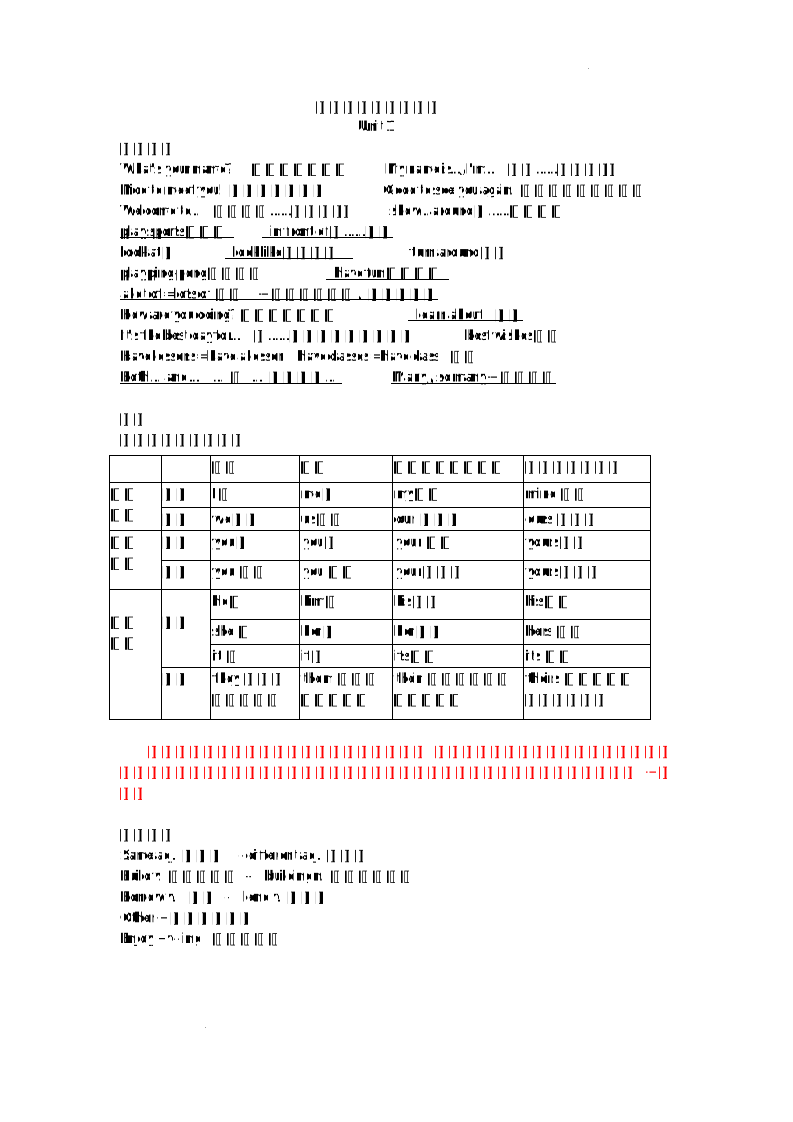
重点短语
What's your name? 你叫什么名字? My name is.../I'm... 我叫......(名字)。
Nice to meet you! 很高兴见到你! Good to see you again. 再次见到你很高兴。
Welcome to... 欢迎来到......(地方)。 show...around带......四处逛逛
play sports做运动 in front of在......前面
look at看 look like看起来像 turn around转身
play ping-pong打乒乓球 have fun玩得开心
a lot of = lots of 很多 + 可数名词复数/ 不可数名词
How are you doing? 你最近怎么样? learn about 了解
It's the best day for... 对......来说是最好的一天。 best wishes祝好
Have lessons = have a lesson have classes = have class 上课
Both ... and ... ... 和 ... ,两者都... Many / so many + 名词复数
语法
人称代词和物主代词
主格
宾格
形容词性物主代词
名词性物主代词
第一
人称
单数
I我
me我
my我的
mine 我的
复数
we我们
us我们
our 我们的
ours 我们的
第二
人称
单数
you你
you你
your 你的
yours你的
复数
you 你们
you 你们
your你们的
yours你们的
第三
人称
单数
he他
him他
his他的
his他的
she 她
her她
her她的
hers 她的
it 它
it它
its它的
its 它的
复数
they 他们、
她们、它们
them 他们、
她们、它们
their 他们的、她们
的、它们的
theirs 他们的、她
们的、它们的
人称代词主格置于句首做主语、宾格置于动词 、介词之后做宾语,形容词性物主代词性质相当于形容词,置于名词前做定语,名词性物主代词性质相当于名词,等于形代 + 名词。
重点词汇
Same adj. 相同的 - different adj. 不同的
Build v. 建造,建设 - building n. 楼房,建筑物
Borrow v. 借来 - lend v. 借出去
Other + 可数名词复数
Enjoy + v - ing 喜欢做某事
Unit 2
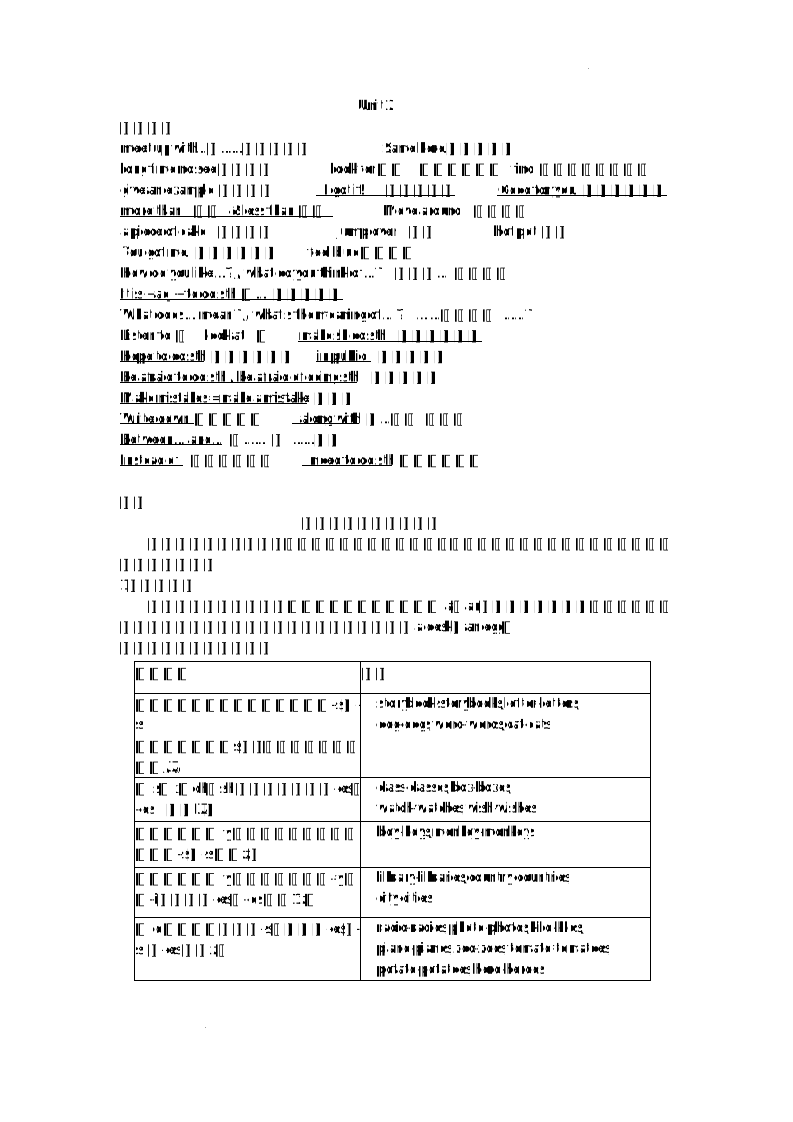
重点短语
meet up with...与......见面,会面 Same here.我也一样。
long time no see好久不见 look for寻找 (强调过程) find 找到(强调结果)
give an example 举个例子 I got it! 我明白了! Good for you. 你真了不起。
more than 多于 & less than 少于 Move around 四处移动
a piece of cake 小菜一碟 jump over 跳过 hot pot 火锅
You got me. 你难住我了。 feel blue感到忧郁
How do you like ...? / what do you think of ...? 你认为... 怎么样?
It is + adj + to do sth 做... 是怎么样的
What does ... mean ? / what’s the meaning of ... ? ... ...的意思是 ......?
Listen to 听 look at 看 make sb do sth 让某人做某事
Hope to do sth 希望去做某事 in public 在公共场合
Be afraid to do sth / be afraid of doing sth 害怕做某事
Make mistakes = make a mistake 犯错误
Write down 记下,写下 along with 和...一起 、随着
Between ... and ... 在...... 和 ......之间
Instead of 代替、而不是 need to do sth 需要去做某事
语法
可数名词与不可数名词
名词是表示人、事物、地点或抽象概念名称的词。名词按其是否可以计数分为可数名词和不可数名词。
1.可数名词
可数名词指可以计数,即其前面可以用不定冠词a(an)和数词的名词,以及其他可有复数形式的名词,一般不可以单独使用。例如:a desk、an egg。
名词复数形式的变化规则
构成方法
例词
一般情况下,在单数形式后面加-s。-s
在清辅音后读/s/;在浊辅音和元音后读/Z/
storybook-storybooks,letter-letters,
dog-dogs,word-words,cat-cats
以s、x、ch、sh结尾的名词,加-es。-es 读/IZ/
class-classes,box-boxes,
watch-watches,wish-wishes
以元音字母加y结尾的名词,直接在词尾加-s。-s读/z/
boy-boys,monkey-monkeys
以辅音字母加y结尾的名词,将-y改为-i,然后加-es。-es读/1z/
library-libraries,country-countries,
city-cities
以o结尾的,有的加-s,有的加-es。-s 和-es读/z/
radio-radios,photo-photos,kilo-kilos,
piano-pianos,zoo-zoos,tomato-tomatoes,
potato-potatoes,hero-heroes
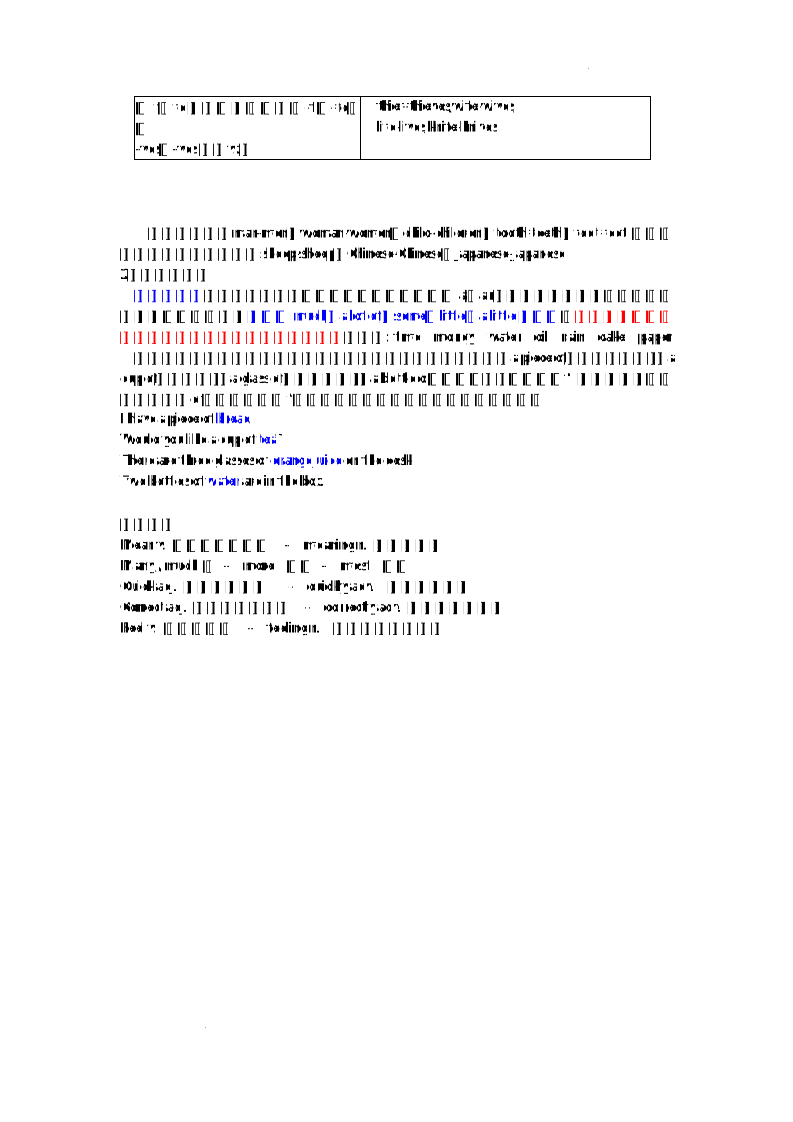
以f、fe结尾的名词,去掉-f或-fe,加
-ves。-ves读/vz/
thief-thieves,wife-wives,
life-lives,knife-knives
不规则变化:man-men,woman-women,child-children,tooth-teeth,foot-feet 有些名词的单数与复数同形:sheep-sheep,Chinese-Chinese,Japanese-Japanese
2.不可数名词
不可数名词指不可以计数,即其前面不能用不定冠词a(an)和数词的名词,以及没有复数形式的名词,它们可以用much、a lot of、some、little、a little等修饰。不可数名词作主语时,谓语动词用第三人称单数形式。例如: time money water oil rain cake paper
不可数名词的数量可以用适当的量词来表示,常用的量词有:a piece of(一片;一张)、a cup of(一茶杯)、a glass of(一玻璃杯)、a bottle of(一瓶)等。其结构为“数词+量词(普通名词)+of+不可数名词”,其单复数变化就体现在量词上。例如:
I have a piece of bread.
Would you like a cup of tea?
There are three glasses of orange juice on the desk.
Two bottles of water are in the box.
重点词汇
Mean v. 意思是、意味着 - meaning n. 含义、意义
Many / much 多 - more 更多 - most 最多
Quick adj. 快的、迅速的 - quickly adv. 快的,迅速的
Correct adj. 正确的、合适的 - correctly adv. 正确的、合适的
Feel v. 感觉、感受 - feeling n. 感觉、想法、态度
Unit 3
重点短语
speak Chinese 说中文 do housework 做家务 do homework 做作业
help...with... / help sb do sth 帮助......做......
What's the matter?怎么了?
have a headache / toothache / stomachache头疼 / 牙疼 / 肚子疼
feel sick 感觉不舒服 / feel blue 心情低落 have a fever 发烧
Don't worry. 别担心。 take medicine 吃药 get some rest休息一下
old saying古老的谚语 as for me对我来说
make friends = make a friend 交朋友
How tall are you ? 你多高?
See with ... 用 ...... 看 Smell with ... 用 ...... 闻 talk with ... 用...... 说话
write with ... 用 ...... 写 play with ... 和......玩
Some ... others ... 一些 ...... 另一些 ......
Play chess 下象棋 just like 正如、好像
Take photos = take a photo / take pictures = take a picture 拍照
Have difficulty in 在 ...... 上有困难
Be happy to do sth 做 ...... 很开心
语法
动词be(Verb be)
be作系动词时一般表示“是”。在句子中,根据主语的人称与数的不同,be有不同的形式。在人称代词I的后面用am;人称代词第三人称单数(he、she、it)或可数名词单数、不可数名词后面用is;其他情况用are。例如:
I'm from China. He is tall and thin. She's twelve years old.
It is a table. The water is hot. The shirt is too small.
Where are you from? Where are they?
Many people are on holiday in August. Li Ming and Jack are at the supermarket.
动词 have(Verb have)
have作实义动词时一般表示“有”,它的第三人称单数是has。例如:
I have many friends at school. We have two young people with us.
She has black and short hair. Different people have different hobbies.
have用于此义作谓语的句子变为一般疑问句、否定句时,通常借助助动词do或does。例如:
Do you have a dictionary? Does he have big eyes?
Do they have blond hair? He doesn't have any coffee.
I don't have an eraser.
重点词汇
Play v. 玩 - player n. 运动员、参赛选手 High adj. 高 - height n. 身高、高度
Different adj. 不同的 - difference n. 区别、差异
Use v. 运用、使用 - useful adj. 有用的
Discuss v. 谈论、讨论 - discussion n. 谈论、讨论
Skill n. 技能、技巧 - skillful adj. 有技能的
Life n. - ( pl. lives) 生活、生命 hobby n. - (p. hobbies)爱好
match n. - (pl. matches) 比赛
Housework n. 家务劳动(不可数) homework n. 家庭作业 (不可数)
Unit 4
重点短语
be ready to do sth...愿意做......;准备做...... plant flowers种花 go outdoors去户外
go on a picnic去野餐 by the lake在湖边 put...on... 把......放在......上
look out注意 over there在那边 over here 在这边
have a good time玩得开心 Walk by / go by 走过;路过
walk away 转身离开 set the table 摆餐具 point to... 指向······
at the end of... 在······最后 jump out 跳出来
What do / does sb do ? 询问某人的职业 He is a doctor . / She is a teacher.
How old is /are sb ? 询问某人的年龄 How old are you ? / How old is she ?
In need 有需要的 on weekends 在周末 / on weekdays 在周内
Go outdoors 出门 go on a picnic 去野餐 put ... on ... 把...... 放在......上
Be busy doing sth 忙于做某事 be interested in doing sth 对做..... 有兴趣
Not ... at all 一点儿也不 play games 玩游戏 come true 实现
Use ... to do ... 用 ...... 做 ...... work hard 努力工作
Care about 关心 、 在意 date back to 追溯到...... for example 例如
语法
现在进行时(Present continuous tense)
现在进行时的基本用法是表示现在或现阶段正在进行的动作。
1.现在进行时的构成
现在进行时的构成为:be(am、is are)+v-ing(动词原形加-ing)。
2.现在进行时的句式
肯定句:主语+am/is/are+v-ing+其他
否定句:主语+am/is/are+not+v-ing + 其他。例如:
一般疑问句:Am/Is/Are+主语+v-ing+其他。例如:
特殊疑问句:特殊疑问词+一般疑问句。例如:
What are you doing? What is Rover doing?
3.现在分词的变化规则
构成方法
例词
一般情况下在原形词尾加-ing
go-going,eat-eating
以不发音的e结尾的词,去掉-e,再加-ing
make-making,have-having
以重读闭音节结尾,词尾只有一个辅音字母(x 除外)的动词原形,先双写这个辅音字母,再加-ing
begin-beginning,swim-swimming,
run-running,sit-sitting
以ie结尾的词,变-ie为-y,再加-ing
die-dying,lie-lying
4.现在进行时的一般用法
(1)表示此时此刻正在进行或发生的动作,通常与now、at the moment等时间状语连用,也可以不用时间状语。例如:The bear is sleeping now.
(2)表示现阶段正在进行的动作(说话当时不一定在进行),可以与this week、these days等时间状语连用,也可以不用时间状语。例如:
She is making a new coat for me this week. I'm looking after Zoe these days.
(3)可以表示即将发生的动作,常有“意图”“安排”“打算”的含义,多用于go、come、leave、start、begin等转移动词,也可以用于buy、do、have、meet、read等非转移动词。例如:
He's going. They are coming back in June.
My father is leaving for Beijing tomorrow.
注意:
有些表示感觉、情感等的动词不能用进行时,如know、understand、love、like、hate、feel、wish、want、hear、see、remember、forget等,通常用一般现在时表示说话时发生的动作。例如:
I hear him playing the piano in the next room.
He sees the baby crying.
I forget opening the door.
重点词汇
Lady n. - (pl. Ladies ) 女士、夫人
Unit 5
重点短语
jump off跳下来,跳离 on a business trip 在出差
look after = take care of 照顾、照料 help each other 互相帮助
Keep / stay healthy 保持健康 wake up醒来 take photos拍照
instead of 而不是 black and white 黑白相间的 be up to高达 、由......决定
all over the world 全世界 live in groups 群居生活
Would like / love to do sth = want to do sth 想要做某事
One ... the other...... 一个 ...... 另一个......(特指两者中的一个,另一个)
Let sb do sth 让某人做某事 live in + 地点 住在某地
Keep ... in balance 保持 ......的平衡 cut down 砍伐 、缩减
The number of ... ...... 的数量 A number of 许多的、大量的
A group of 一群、一组 stop doing sth 停止做某事 / stop to do sth 停下来,去做某事
As ... as ... 和...... 一样 (中间放形容词、副词原级) avoid + doing sth 避免做某事
重点词汇
Friend n. 朋友 - friendly adj. 友好的、友爱的
Loyal adj. 忠诚的、忠实的 - loyalty n. 忠诚
Danger n. 危险、风险 - dangerous adj. 危险的 Safe adj. 安全的 - safety n. 安全、平安
Scare v. 惊吓、使害怕 - scared adj. 害怕的 (修饰人)- scary adj. 可怕的、恐怖的(修饰物)
Fun n. 乐趣、享受、玩笑 - funny adj. 滑稽的、好笑的
Fat adj. 肥的、胖的 - fatter (比较级) - fattest (最高级)
Hair n. 毛、头发 - hairy adj. 多毛的
Leaf n. 树叶 - ( pl. Leaves ) 复数形式
Usual adj. 通常的、惯常的 - usually adv. 通常的
重点语法
现在进行时(同上一单元)
Unit 6
重点短语
go by underground / subway 乘地铁 come out of...从......出来
ask for请求;要求 go down / along 沿着......走 at the traffic lights 在交通灯处
on your right / left 在你右边 / 左边 go straight 直走
next to 紧邻;在......近旁 turn left 左转 turn right 右转 You're welcome. 别客气。 at the museum 在博物馆 shopping list 购物清单 Here you are. 给你。 My pleasure. 我的荣幸。 thank you for doing sth 感谢做了某事
What about / how about + doing sth 做......怎么样?
Can’t wait to do sth 迫不及待去做某事 let me see 让我想想
Be ready to do sth 准备好去做某事
May / can I help you ? 我能为你做......吗? a can of 一罐 a bowl of 一碗
Different kinds of 不同种类的 / many kinds of 许多种类的 / all kinds of 各种各样的 +可数名词复数 a kind of 一种 + 可数名词单数
Go for a walk / take a walk 去散步
重点语法
情态动词(Modal verbs)
情态动词表示说话人对所说话语的观点和态度,或表示主观设想及其他情态意义,如需要、猜测、意愿或怀疑等。
情态动词的语法特征:
1.有实际意义,但在句中不能单独充当谓语。
2.后面跟动词原形。表示否定时,在其后面加not;表示疑问时,将它提到句首。
3.无人称和数的变化。
常见的情态动词有:can、could、may、might、must、need、shall、should、will、would等。
1.can/could能,可能,可以(can多用于指现在或将来,could多用于指过去)
(1)表示能力,相当于be able to。例如:
I can make noodles myself.
The girl could speak English when she was a child.
(2)表示可能。例如:
You can see many beautiful buildings, gardens, and treasures.
can/could用在否定句和疑问句中多表示猜测。例如:
The boy can't be so careless. There is someone outside. Who can it be?
Where could Danny be at that time?
(3)表示请求或允许。例如:
Can you help us? Can you send me a photo of yourself?
You can go.
could代替can,语气显得更加委婉。例如:
Could you speak more loudly?
2.may/might都可表示现在说话人许可、请求对方许可;都可表示现在或将来的可能性。might是may的过去式。
(1)might表示许可,语气更加委婉、客气,一般用于疑问句或间接疑问句,不可以用于肯定句或否定句。例如:
Might I have your email address?
I want to know whether I might have your email address.
(2)might表示比may稍小的可能性。例如:
He may be at home.(可能)
He might be at home.(可能性稍小)
重点词汇
Gentleman n. 绅士、君子、先生 - ( pl. Gentlemen ) 复数形式
Second n. 秒 & num. 第二 strawberry n. 草莓 - ( pl. Strawberries ) 复数形式
Waiter n. 男服务员 / waitress n. 女服务员
Mirror n. 镜子 & v. 反映、反射
Unit 7
重点短语
robot show机器人展 by noon在中午之前 have no idea不知道
What day is it today?今天星期几? How is the weather?天气怎么样?
What's the date today?今天是几月几日?
drop to降至 turn into变成 make snowmen堆雪人
Have snowball fights 打雪仗 go skating 去滑冰 go skiing 去滑雪 go swimming去游泳
offer...to...向......提供...... make a present for给......制作礼物
take away带走 Merry Christmas!圣诞节快乐! Happy New Year!新年快乐!
Go camping 去露营 go hiking 去远足、去徒步旅行
have fun 玩的开心 Good for you ! 做的好
From ... to ... 从...... 到 ...... play volleyball 打排球
The Dragon Boat Festival 端午节 lunar calendar 农历 The Spring Festival 春节
Labour Day 劳动节 Children’s Day 儿童节 Teachers’ Day 教师节
National Day 国庆节 New Year’s Day 元旦
Get together 团聚 count down 倒计时
重点语法
数词(Numerals)
数词是表示数目多少和顺序先后的词,分为基数词(cardinal numeral)和序数词(ordinal numeral)。基数词表示数目,序数词表示顺序。
基数词:
1.基数词的构成
(1)1~12为:one,two,three,four,five,six,seven, eight, nine, ten, eleven, twelve
(2)13~19为: thirteen,fourteen,fifteen,sixteen,seventeen,eighteen,nineteen
(3)20~100为:twenty,twenty-one, twenty-two, twenty-three... thirty, forty, fifty,sixty,seventy,eighty, ninety, one hundred
2.基数词的用法
(1)基数词在句中可以用作主语、宾语、表语和定语。例如:
Ten of them are boys.(ten作主语) Five plus four is nine. (four作介词宾语)
I'm 12.(twelve作表语) He has twenty books.(twenty作定语)
(2)用于名词之后表示顺序。例如:
Lesson One is very easy. Please open your books and turn to Page 5.
(3)基数词可以表示年份、时间(钟点)、电话号码、年龄等。例如:
He was born in July,2010. His telephone number is 88940530.
I get up at seven every morning. She is 13 years old.
序数词:
1.序数词的构成
序数词一般以与之相应的基数词词尾加-th构成,例如:sixth。但是下面这些基数词在变为序数词时,有特殊变化。
基数词
序数词
one
First
two
second
three
third
five
fifth
eight
eighth
nine
ninth
twelve
twelfth
2.序数词的用法
(1)序数词常用作定语,前面通常加定冠词 the。例如:
What is the first day of the first month in the Chinese lunar calendar,Zack?
February is the second month of the year.
Li Ming is the first student to come to school.
也可以用作主语、表语或宾语。例如:
The second is mine.(the second作主语)
Who was the first in the race?(the first作表语)
Please give me the fifth.(the fifth作宾语)
(2)用于表示日期。例如:
It's on the fourth day of October.
Labour Day is on May 1.
重点词汇
Mark n. 记号、标记 、分数 — v. 做标记、做记号
Real adj. 真的、真正的 - really adv. 真正的、确实
Fog n. 雾 - foggy adj. 多雾的 Sun n. 太阳 - sunny adj. 晴朗的
snow n. 雪 - snowy adj. 多雪的、下雪的
Clear adj. 晴朗的、明亮的、清楚地 - clearly adv. Activity n. 活动- ( pl. Activities )
Experience n ( 可数、经历、体验 ) & (不可数、经验)
Important adj. 重要的 - importance n. 重要性
Probable adj. - probably adv. 或许、大概
Hope v. &n. 希望、期望 - hopeful adj. 有希望的
Unit 8
重点短语
invite...to...邀请......做...... be supposed to... = should 应该做......
can't wait to do sth ... 迫不及待做...... go across横穿 ship of the desert沙漠之舟
run through穿过 be on a video call打视频电话. take off脱下 / 起飞
Be known for = be famous for 因...... 而出名 be home to 是 ...... 的所在地 / 栖息地
One third 三分之一 two thirds 三分之二 (分数用法:分子基,分母序,分子大于1,分母加-s)
重点语法
it的用法(Usage of it)
代词it在句中可以指人、物、时间、天气、距离等。例如:
-Is this your pen?-Yes,it is. (it指物pen)
-What is it?-It's a baby. (it指婴儿)
-Who is it? -It's me. (it指人)
It is 7:00 now. (it指时间)
It is April 10 today. (it指日期)
It is three dollars. (it指价格)
It's snowing heavily. (it指天气)
It is 5 kilometres from my home to school. (it指距离)
重点词汇
Invite v. - invitation n. 邀请
Know v. 知道 - known adj. 知名的、已知的
Taste v. 品尝 - tasty adj. 美味的、可口的
Normal adj. - normally adv. 正常的、典型的
Russia n. 俄罗斯 - Russian n. 俄语、俄罗斯人 & adj. 俄罗斯的
Nation n. 国家 - national adj. 国家的
America n. 美国 - American n. 美国人 & adj. 美国的
Tour n. 旅游 - tourist n. 游客
Heavy adj. 重的、大的 - heavily adv.
Scarf n. - ( pl. Scarves ) 围巾、头巾
学科网(北京)股份有限公司
$$
资源预览图
1
2
3
相关资源
由于学科网是一个信息分享及获取的平台,不确保部分用户上传资料的 来源及知识产权归属。如您发现相关资料侵犯您的合法权益,请联系学科网,我们核实后将及时进行处理。