第04讲 Unit 4 Inventions(知识全梳理&考点精准练)-【暑假自学课】2025年新八年级英语暑假提升精品讲义(沪教版2024)
2025-06-23
|
2份
|
53页
|
820人阅读
|
160人下载
精品

资源信息
| 学段 | 初中 |
|---|---|
| 学科 | 英语 |
| 教材版本 | 初中英语沪教版八年级上册 |
| 年级 | 八年级 |
| 章节 | Unit 4 Inventions |
| 类型 | 教案-讲义 |
| 知识点 | 谓语动词的时态 |
| 使用场景 | 寒暑假-暑假 |
| 学年 | 2025-2026 |
| 地区(省份) | 全国 |
| 地区(市) | - |
| 地区(区县) | - |
| 文件格式 | ZIP |
| 文件大小 | 1.75 MB |
| 发布时间 | 2025-06-23 |
| 更新时间 | 2025-06-23 |
| 作者 | 创新初高英语精品馆 |
| 品牌系列 | 上好课·暑假轻松学 |
| 审核时间 | 2025-06-23 |
| 下载链接 | https://m.zxxk.com/soft/52692057.html |
| 价格 | 4.00储值(1储值=1元) |
| 来源 | 学科网 |
内容正文:
第04讲 Unit 4 Inventions(知识全梳理&考点精准练)
内容导航——预习三步曲
第一步:学
析教材 学知识:教材精讲精析、全方位预习
练习题 讲典例:教材习题学解题、快速掌握解题方法
练考点 强知识:核心考点精准练
第二步:记
串知识 识框架:思维导图助力掌握知识框架、学习目标复核内容掌握
第三步:测
过关测 稳提升:小试牛刀检测预习效果、查漏补缺快速提升
培素养 提综能:培养综能素养,提高学科综合能力
1. 单词学习(教材P146-147)
balloon n. 气球
wheel /wiːl/ n. 轮;车轮 p. 52
central /'sentrəl/ adj. 在中心的 p. 53
although /ɔːl'ðəʊ/ conj. 虽然;尽管;即使 p. 53
attach /ə'tætʃ/ v. 把……固定;把……附(在……上)
pull /pʊl/ v. 拉;拽;扯;拖 p. 53
international /ˌɪntə'næʃnəl/ adj. 国际的 p. 53
path /pɑːθ/ n. 小路;小径 p. 53
technique /tek'niːk/ n. 技巧;技艺 p. 53
depend /dɪ'pend/ v. 需要;依靠 p. 53
doubt /daʊt/ n. 疑惑;疑问 p. 53
personally /'pɜːsənəli/ adv. 就个人意见 p. 53
*prediction /prɪ'dɪkʃn/ n. 预言;预测 p. 56
statement /'steɪtmənt/ n. 说明 p. 56
benefit /'benɪfɪt/ n. 益处;优势 p. 60
wing /wɪŋ/ n. (飞行器的)翅膀;机翼 p. 60
distance /'dɪstəns/ n. 距离 p. 60
petrol /'petrəl/ n. 汽油 p. 60
avoid /ə'vɔɪd/ v. 避免;防止 p. 60
anywhere /'eniweə(r)/ adv. 在(或去)任何地方 p. 60
notice /'nəʊtɪs/ v. 看(或听)到;注意到 p. 62
type /taɪp/ n. (印刷用的)活字 p. 62
*mixture /'mɪkstʃə(r)/ n. 混合物 p. 62
heat /hiːt/ v. 加热;变热 p. 62
press /pres/ v. (被)压 p. 62
metal /'metl/ n. 金属 p. 62
steam locomotive 蒸汽机车 p. 52
crewed spacecraft 载人航天器 p. 52
on foot 步行 p. 53
a number of 几个;若干 p. 53
take place 发生;进行 p. 53
for instance 例如;比如 p. 53
large amounts of 大量 p. 53
international trade 国际贸易 p. 53
depend on 依靠;依赖 p. 53
3D printer 3D 打印机 p. 53
without doubt 毫无疑问 p. 53
of all time 自古以来;有史以来 p. 53
make fun of 取笑;拿……开玩笑 p. 56
traffic jam 堵车;交通阻塞 p. 60
2.教材原文 Reading(教材P52-P53)
(教材P52)
Read the article about the wheel and find out how this invention changed transport around the world.
The wonder of the wheel
When the first humans decided to leave their homes over 100,000 years ago in search of new places to live and better sources of food, they did it on foot. Humans continued walking across the globe for the next 94,000 years, until about 6,000 years ago when a number of important changes took place. For instance, in the Central Asian country of Kazakhstan, people started to ride horses. Although this meant that people could travel further and faster, transporting large amounts of goods was still a difficult job. That all changed, however, a few hundred years later with the invention of the wheel.
Who first invented the wheel? We will never know for sure, but the inventors probably first used wheels to make pottery①. Later, they realized that they could also use them to transport people and things. They soon attached wheels to horse - pulled vehicles. Farmers were suddenly able to transport their goods to markets far away. This invention increased national and international trade.
The wheel changed the way villages, towns and even countries did business with each other, but it wasn’t perfect. The roads were old walking paths.
(教材P53)
These old paths quickly became extremely difficult to use in wet weather. As a result, the first roads made of stone appeared after the arrival of the wheel. The Romans then invented new road - building techniques. The new roads were very good, and we still use some of them today.
The wheel not only changed the way humans move, but it also allowed us to build all types of amazing machines. Windmills①, clocks and other machines all use wheels, and the Industrial Revolution depended on the wheel. Even in our digitalized world, we still use wheels in devices such as 3D printers. Without doubt, the wheel is one of the most important inventions of all time.
2. 知识点梳理
考点1 When the first humans decided to leave their homes over 100,000 years ago in search of new places to live and better sources of food, they did it on foot.当第一批人类在10万年前决定离开家园,寻找新的居住地和更好的食物来源时,他们都是步行的。(教材P52)
①句子结构分析:这是一个主从复合句,从句由when引导的时间状语从句,主句部分是 “they did it on foot.”
在此我们只分析从句成分:
When the first humans decided to leave their homes over 100,000 years ago in search of new places to live
连词 主语 谓语 宾语 时间状语 目的状语
and better sources of food
④ in search of 介词短语,表目的。意为 “为了寻找”,意思等同于 “to search/ in order to search”.
③ on foot 步行(介词短语,不作谓语)
【拓展】交通方式的表达
1) take + 交通工具:
take a bus /train/plane /ship/taxi(乘公交 / 火车 / 飞机 / 轮船/出租车)
例:I take the subway to work every day.(我每天乘地铁上班。)
2) by + 交通工具(无冠词):
by bus /car/train /air/sea(乘公交 / 汽车 / 火车 / 飞机 / 海运)
例:She travels by plane twice a month.(她每月乘飞机两次。)
3) on/in + 限定词 + 交通工具:
on a bike /bus/train(骑自行车 / 乘公交 / 火车)
in a car /taxi(乘汽车 / 出租车)
例:He goes to school on his bike.(他骑自行车上学。)
4) 驾驶 / 骑行类
drive a car /truck(驾驶汽车 / 卡车)
ride a bike /motorcycle(骑自行车 / 摩托车)
例:My father drives me to school daily.(我父亲每天开车送我上学。)
5) 步行与特殊方式
walk to + 地点 = go to + 地点 + on foot(步行去……)
例:I walk to the park /go to the park on foot.(我步行去公园。)
考点2 Humans continued walking across the globe for the next 94,000 years, until about 6,000 years ago when a number of important changes took place. 人类在接下来的94000年里继续在地球上行走,直到大约6000年前发生了一些重要的变化。(教材P52)
①辨析:a number of;the number of
A.a number of 意为”“几个;若干”。of后跟复数名词或代词;作主语时,谓语动词用复数形式。常用small/large 修饰number。即:a large number of... 大量的......; a small number of:少量的......
B.the number of 表示“……的数量”,of后跟复数名词 或代词;作主语时,谓语动词用第三人 称单数形式
例句:A number of people have attended the meeting.有若干人参加了这次会议。
The number of students in our class is 50.我们班学生的数量是50人。
The number of cars in this city is increasing rapidly.(这个城市汽车的数量正在迅速增加。
② take place:不及物动词短语,意为 “发生;举行”,更侧重强调事件的计划性、规律性或人为安排。
例句:The meeting will take place next month.会议将于下个月举行。
happen 也意为 “发生”,强调事件的偶然性、随机性或非计划性。
例句:An accident happened on the highway.高速公路上发生了一起事故。
考点3 For instance, in the Central Asian country of Kazakhstan, people started to ride horses. 例如,在中亚国家哈萨克斯坦,人们开始骑马。(教材P52)
①“For instance” 是英语中常用的连接词,相当于 “for example”,用于举例说明前文提到的观点或情况,使表述更具体、易懂。
辨析
用法特点
举例场景
for instance/
example
侧重列举具体、典型的例子,可单独使用。
For instance, he loves classic novels like Pride and Prejudice.
such as
后接多个例子列举,不能单独成句,不用逗号隔开。
He enjoys sports such as basketball, tennis, and swimming.
②central adj. 中心的;重要的;核心的 →centre/center n. 中心
【短语】“in the centre of” 是介词短语,意为 “在…… 的中心 / 中央”,用于描述物体、地点或抽象概念的空间位置或核心地位。
考点4 Although this meant that people could travel further and faster, transporting large amounts of goods was still a difficult job. 虽然这意味着人们可以走得更远、更快,但运输大量货物仍然是件困难的工作。(教材P52)
①句子结构分析:这是一个主从复合句,从句是由although引导的让步状语从句,
从句部分:Although this meant that people could travel further and faster
连词 主语 谓语 宾语(是一个that引导的宾语从句)
主句部分:transporting large amounts of goods was still a difficult job.
主语(动名词短语作主语,谓语用单数) 系动词 表语
②although连词(conj.),用于引导让步状语从句,表示 “尽管;虽然”,体现主从句之间的转折关系。不能跟but 一起用,但主句中可加 yet/still/nevertheless 等副词,强调转折。
例:Although he is rich, he is unhappy.虽然他很富有,但他并不快乐。
Although she’s young, yet she is very independent.她虽年轻,却很独立。
③large amounts of ... 意为:“大量的......”。反义表达:small amounts of...
拓展:the amount of... 和an amount of...
· the amount of + 不可数名词
表示 “一定量的、…数量”。
例句:The amount of homework affects students’ free time.(作业量影响学生空闲时间。)
· an amount of + 不可数名词
表示 “不确定的、泛指的数量”,相当于 “some” 或 “a certain quantity”,后接不可数名词。
强调 “大量”:a large/great/enormous amount of...(例:a large amount of data)
强调 “少量”:a small amount of...(例:a small amount of sugar)
例句:An amount of time is needed to master a new skill.(掌握新技能需要一定时间。)
· 谓语动词形式
无论 the amount of 还是 an amount of,谓语动词均用单数形式,因为核心词是 “amount”(数量)。
例句:The amount of pollution in the city has decreased.城市污染量已减少。
An amount of effort is required to finish the project.完成项目需要一定努力。
考点5 Who first invented the wheel? 谁最先发明了轮子?(教材P52)
【词根拓展】
invention
n.
发明;发明物
The light bulb is a famous invention.(电灯泡是著名的发明。)
inventor
n.
发明家
Edison was a great inventor.(爱迪生是伟大的发明家。)
【用法辨析】invent,discover,find,find out, look for
· invent:意为 “发明”,指发明或创造先前不存在的东西。
例:Edison worked hard to invent the light bulb, bringing light to people's lives.
爱迪生努力发明了电灯泡,为人们的生活带来了光明 。
· discover:意为 “发现”,多指发现先前已经存在但未被发现的事物、真理或情况
例:Scientists hope to discover new planets in the universe.科学家们希望在宇宙中发现新的行星 。
· find out:意为 “发现;查明”,同 discover,多指发现某个事实、真相或者较为抽象的东西
例:We need to find out the truth behind this mystery.我们需要查明这个谜团背后的真相 。
· find:意为 “发现;找到”,多指找到具体的物品,强调 “找” 的结果
例:I finally find my lost keys under the sofa.我终于在沙发下面找到了我丢失的钥匙 。
· look for:意为 “寻找;找”,强调 “找” 的动作和过程。
例:She is looking for her notebook everywhere in the classroom.她正在教室里到处找她的笔记本 。
考点6 They soon attached wheels to horse - pulled vehicles.他们很快就在马车上装上了轮子。(教材P53)
attach的基本用法
1.vt.安装;固定;连接
基本结构:attach sth. to sth.(把某物安装 / 固定到某物上)
例:They attached wheels to the cart.(他们把轮子装到马车上。)
例:Attach the photo to the application form.(把照片贴在申请表上。)
【拓展运用】
2.vt.使附属;使隶属于
结构:attach sb./sth. to sth.(使某人 / 物附属于……)
例:The research unit is attached to the university.(该研究单位附属于这所大学。)
例:She attached herself to the local charity group.(她加入了当地慈善团体。)
结构:be attached to sb./sth.
含义:① 依恋;喜爱(情感层面) ② 附属于;与…… 相连(物理 / 组织层面)
例:She is deeply attached to her hometown.(她深爱自己的家乡。)
例:The hospital is attached to a medical school.(这家医院附属于一所医学院。)
4.vt.重视;认为…… 有重要性
结构:attach importance/significance to sth.(重视某物)
例:Parents often attach great importance to their children’s education.(父母常高度重视孩子的教育。)
例:The company attaches significance to environmental protection.(这家公司重视环境保护。)
考点7 The wheel not only changed the way humans move, but it also allowed us to build all types of amazing machines. 轮子不仅改变了人类的移动方式,还让我们能够建造各种各样的神奇机器。(教材P53)
①not only... but also: 意为“不仅......而且”。用于连接两个并列的成分,表示递进关系。
1.连接并列谓语
当连接两个谓语动词时,时态需保持一致。
例:She not only studies hard, but also participates in many activities.(她不仅学习努力,还参加很多活动。)
2.连接并列主语
遵循 “就近原则”,谓语动词与 but also 后的主语一致。
例:Not only the students but also the teacher is excited about the trip.(不仅学生,老师也对这次旅行感到兴奋。)
3.连接并列句子
not only 置于句首时,前半句需部分倒装(助动词 / 情态动词提前),but also 后的句子不倒装。
例:Not only did he finish the work, but he also helped others.(他不仅完成了工作,还帮助了别人。)
4.省略与简化
but also 可省略为 but 或 also,口语中更常见。
例:He not only likes reading, but enjoys writing.(他不仅喜欢阅读,还喜欢写作。)
②、allow 的用法搭配
1. allow sth. /allow doing sth. 允许某事 / 允许做某事。后接名词或动名词作宾语,不可接不定式作宾语。
例:The school allows mobile phones in specific areas.(学校允许在特定区域使用手机。)
例:We don’t allow smoking here.(我们这里不允许吸烟。)
2. allow sb. to do sth. 允许某人做某事
例:My parents allow me to stay out until 10 pm.(我父母允许我在外待到晚上 10 点。)
3. be allowed to do sth. 被允许做某事(被动语态)
例:Students are allowed to use calculators in the exam.(学生在考试中被允许使用计算器。)
考点8 Windmills, clocks and other machines all use wheels, and the Industrial Revolution depended on the wheel.风车、钟表和其他机器都使用轮子,工业革命依赖于轮子。(教材P53)
【词根】depend:v.依赖;依靠
→adj.dependent(依赖的)→ independent(不依赖的→独立的)
→ n. dependence(依靠;依赖)
→adj. dependable可靠的,可信赖的
【短语和句型】
depend on表示 “依赖 ;依靠某人 / 某物”;还表示 “取决于某事”。同义表达有:rely on, count on, be dependent on。
depend on + 名词 / 代词 / 动名词
例句:Children depend on their parents for food and shelter.孩子们依赖父母提供食物和住所。
Whether we go out depends on the weather.我们是否外出取决于天气。
depend on + 疑问词(what/how/when等)+ 从句
例句:The price depends on how much you buy.价格取决于你购买的数量。
depend on sb. /sth. to do sth. 依靠某人/某物做某事
例句:You can depend on him to finish the task on time.你可以指望他按时完成任务。
考点9 Without doubt, the wheel is one of the most important inventions of all time.毫无疑问,轮子是有史以来最重要的发明之一。(教材P53)
①doubt 作名词,意为“疑惑;疑问”,既作可数名词, 又作不可数名词。其常见搭配如下:
without doubt 毫无疑问= undoubtedly=beyond doubt
There is no doubt (that)...:毫无疑问……
例句:There is no doubt that regular exercise improves physical and mental health.
毫无疑问,定期锻炼能改善身心健康。
doubt 还作动词,意为“怀疑”,其后可接名词、代词或 if/whether/that引导的宾语从句。
I doubt his words.He may be lying. 我怀疑他的话。他可能在说谎。
I doubt if he has read this article. 我怀疑他是否读过这篇文章。
②of all time:一直,始终;有史以来=in the history= throughout the history
考点10 The speaker personally likes the invention very much.说话人本人非常喜欢这项发明。(教材P56)
personally: adv. 就个人意见
例句:I like him personally, but I don't agree with his decision.(我个人喜欢他,但我不同意他的决定。 )
【同根词】person(名词)人;个人 【短语】 in person 亲自
personal(形容词)个人的;私人的;亲自的 。
personality(名词)个性;性格;人格;名人 。
考点11 making fun of the invention嘲笑这项发明(教材P56)
make fun of意为 “取笑;嘲弄;开玩笑”,后接宾语(人或事物),用于描述以幽默或嘲讽的方式调侃他人或事物。
近义表达:make a fool of; laugh at,play a joke on, make jokes about, play a trick on
考点12 Benefits of my invention 我的发明具有的优点(教材P60)
(1) n. benefits(复数形式最常见) 好处、益处
例:Exercise brings numerous benefits to health.运动对健康有许多好处。
(2) v. benefit(及物 / 不及物动词)
1. benefit sb./sth.(及物):使受益
例:The new policy will benefit low-income families.(新政策将惠及低收入家庭。)
2. benefit from/by sth.(不及物):从… 中获益
例:Students benefit greatly from interactive learning.(学生从互动学习中获益良多。)
考点13 My invention will help people avoid traffic jams. 我的发明将帮助人们避免交通堵塞。(教材P60)
(1) avoid 作及物动词,意为“避免;防止”,其后可跟名词、代词或动词-ing形式作宾语。
例句:We should avoid rush hours.我们应该避开高峰时间。
Students must avoid copying others’ homework.学生必须避免抄袭他人作业。
(2) 同根词:avoidable adj.可避免的;能预防的 avoidable adj. 可避免的;能预防的
考点14 He was so busy that he didn’t notice her.他太忙了,没有注意到她。(教材P62)
(1) notice: 动词(vt.):注意到;留意到
用法1:notice + 宾语(名词 / 代词)
例:She noticed a strange noise outside.(她注意到外面有奇怪的声音。)
用法2:notice + that 从句
例:Did you notice that he left early?(你注意到他早走了吗?)
用法3:notice + 宾语 + do sth. {宾补为不带 to 的不定式(do):强调动作全过程}
例:I noticed her enter the room quietly.(我注意到她悄悄进了房间。)
用法 4: notice + 宾语 + doing sth. {宾补为现在分词(doing):强调动作正在进行}
例:He noticed a bird singing in the tree.(他注意到一只鸟在树上唱歌。)
(2) 名词(n.):通知;布告;预告
例:There’s a notice about the meeting on the board.公告栏上有会议通知。
考点15 辨析 anywhere,somewhere,nowhere, everywhere
易混词
含义及用法
例句
somewhere
意为“在某处;到某处”,常用于肯定句中
Let’s meet somewhere near the park.
我们在公园附近找个地方见面吧。
anywhere
意为“在(或去)任何地方”,常用于否定句、疑问句和
条件状语从句中;用于肯定 句中时,强调任何一个地方。
I can’t find my keys anywhere.我哪儿都找不到钥匙。
Did you go anywhere interesting during the holiday?
假期你去什么有趣的地方了吗?
everywhere
意为“处处;到处”,常用于肯定句中。
He looked everywhere for his missing phone.
他到处找他丢失的手机。
nowhere
意为“无处;哪里都不”,相当于not..anywhere
Without a map, we felt like we were going nowhere.
没有地图,我们感觉哪儿也去不了。
Grammar 形容词的比较级和最高级(二)
(教材P57)
Grammar
A good, bad and far
Some comparative and superlative adjectives are irregular.
Read the passage and pay attention to the words in bold.
Many inventions make people’s lives better. For example, the invention of the wheel allowed people to travel farther distances. However, there are bad inventions too. A magazine once picked the top ten worst inventions in human history, such as cigarettes and plastic bags. Many people think these inventions make the world a worse place to live in.
Adjective
Comparative adjectives
Superlative adjectives
good
better
best
bad
worse
worst
far
farther / further
farthest / furthest
B (not) as... as
We use (not) as... as to say that things or people are (not) equal in some way.
Read the sentences below and pay attention to the words in bold.
Early computers were as big as a room.
With electric lights, people can do as many things in the evenings as they can in the daytime.
A candle does not produce as much light as a light bulb.
Let's sum up the rules!
· We use (not) as... as with the base form of adjectives to compare things and people.
· We use (not) as... as with many + the plural form of a countable noun or much + an uncountable noun to compare amounts.
单元语法归纳与拓展运用
一、形容词的比较级和最高的不规则变化
原级
比较级
最高级
good, well 好的
better
Best
bad, ill 坏的
worse
worst
many, much许多的
more
most
little 少
less
least
far 远的
farther
farthest
further
furthest
old老的
older
oldest
elder
eldest
注意:
(1)farther和further 都可表示“更远的”,但further 还可用于表示“更进一步的”“更多的”等抽象含义。
如:further study 深造
(2) elder和eldest只能用作定语修饰名词,用于表示家庭成员之间的长幼关系,不用于比较级句型中。
如:elder sister(姐姐),elder brother(哥哥)
B、原级结构和句型
1. 在表示“和…一样…”时,可用“as + 形容词as”结构(形容词要用原形):
Early computers were as big as a room.早期的计算机和一间房间一样大。
He is as busy as before. 他还是和以前一样忙。
2. 在表示“不如…那样…”时可用“not as(so)... as”这种结构:
It isn’t so cold as yesterday. 今天不像昨天那样冷。
He is not so handsome as his brother. 他不像他哥哥那样英俊。
3.“(not)as many+复数名词+as”和“(not)as much+ 不可数名词+as”表示数量或程度,意为 “和……(不)一样多的……"”。
I have as many books as you. 我和你拥有一样多的书。
A candle does not produce as much light as a light bulb.蜡烛发出的光不如灯泡多。
4. 表示倍数,如“一半/两倍/三倍/四倍/······”等用“half/twice/three/four/...times+ as...as...”结构.
We got three times as many people as we expected.来人的数目是我们预期的三倍.
5. 其它几个关于as…as的句型:
☆as … as one can:尽其所能
He began to run as fast as he could. 他尽其所能跑得快。
☆as … as possible:尽可能
Please help us as quickly as possible. 请尽可能地帮助我们。
☆as soon as…一……就……
He will call me as soon as he comes here. 他一来这儿就会给我打电话。
(教材P55)
Vocabulary practice
1 Find the words and the phrase in the article on pages 52-53 and match them with their meanings.
(1) attach (line 13) a a feeling of not being sure about something
(2) pull (line 13) b a way made by a lot of people walking on it
(3) path (line 17) c to need something in order for something else to happen
(4) depend on (line 24) d to join one thing to another
(5) doubt (line 26) e to move something in a certain direction
【答案和解析】
(1) - d
解析:“attach”的意思是“附上;系上;连接”,与“to join one thing to another”(把一个东西连接到另一个东西上)意思相符,所以(1)选d。
(2) - e
解析:“pull”的意思是“拉;拖;拽”,与“to move something in a certain direction”(朝某个方向移动某物)意思相符,所以(2)选e。
(3) - b
解析:“path”的意思是“小路;小径”,也就是“a way made by a lot of people walking on it”(很多人走过而形成的路),所以(3)选b。
(4) - c
解析:“depend on”的意思是“取决于;依靠”,与“to need something in order for something else to happen”(需要某物以便其他事情发生)意思相符,所以(4)选c。
(5) - a
解析:“doubt”的意思是“怀疑;疑惑”,即“a feeling of not being sure about something”(对某事不确定的感觉),所以(5)选a。
2 Complete the conversation with the words and the phrase from Exercise 1. Change the form if necessary.
Interviewer: Hello Dr Li! You wrote a book about the history of the wheel. How did the wheel change people’s lives?
Dr Li: Before the wheel, people (1) animals to carry heavy things, or they carried things themselves.
Interviewer: Did people continue to use animals to move things after the invention of the wheel?
Dr Li: Yes. That’s how horse-pulled vehicles came about. They put things in the vehicles, (2) the horses and off they went! It was so much easier for a horse to (3) something than carry it on its back.
Interviewer: How were the roads back then?
Dr Li: Terrible! The roads were really just (4) from people walking the same way for years.
Interviewer: Thank you for the information!
Dr Li: You’re welcome. There is no (5) that the wheel is the greatest invention of all time!
【答案及解析】
(1)depended on
解析:根据句子“Before the wheel, people (1) ___ animals to carry heavy things”可知,这里需要一个动词表示“使用”,且句子时态为一般过去时,所以填depended on。“depend on sth. to do sth.”表示“依靠某物做某事”。
(2) attached
解析:根据上下文“They put things in the vehicles, (2) _________ the horses and off they went!”,这里需要一个表示“把马套在车上”的短语,表示“把……套在……上”,且这里是一般过去时,所以填attached.
(3)pull
解析:“It was so much easier for a horse to (3) ___ something than carry it on its back.”,这里需要一个动词原形,“pull something”表示“拉某物”,且“it is + adj. + for sb. to do sth.”是固定句型,所以填pull。
(4)paths
解析:根据“How were the roads back then? Terrible! The roads were really just (4) ___ from people walking the same way for years.”可知,这里需要一个名词表示“小路”,所以填paths。
(5)doubt
解析:“There is no (5) ___ that the wheel is the greatest invention of all time!”,“There is no doubt that...”是固定句型,表示“毫无疑问……”,所以填doubt。
全文翻译
采访者:你好,李博士!你写了一本关于轮子历史的书。轮子是如何改变人们的生活的?
李博士:在轮子出现之前,人们用动物来搬运重物,或者自己搬运。
采访者:轮子发明之后,人们还继续用动物来搬运东西吗?
李博士:是的。这就是马车出现的原因。他们把东西放在车上,把马拉上(车),然后就出发了!对马来说,拉东西比驮在背上要容易得多。
采访者:那时的路怎么样?
李博士:很糟糕!那些路实际上只是人们多年来一直走的同一条路形成的小道。
采访者:谢谢你提供的信息!
李博士:不客气。毫无疑问,轮子是有史以来最伟大的发明!
(教材P58)
1. Some historians have made a list of great inventions in the past 1,000 years. Look at the list and complete the conversation below with the correct form of the words in brackets.
Year
Invention
Year
Invention
1041 - 1048
movable type
1885
car
1440 - 1450
printing press
1895
radio
1796
vaccine ¹
1903
airplane
1876
telephone
1925
television
1879
light bulb
1940s
computer
Su Wen: I think movable type is the (1)__________ (good) invention in the past 1,000 years. Thanks to this, people could have books to read.
Su Mei: Well, it is an important invention. However, I think the light bulb is an even (2)__________ (good) invention. It was hard to read and write at night before we had light bulbs. Which modern invention do you think is the most important?
Su Wen: Definitely the computer. It has been almost (3)__________ (important, as... as) the movable type.
Su Mei: The things on the list are all great inventions. After all, life would be much (4)__________ (bad) without them!
【答案和解析】
(1) best (2) better (3) as important as (4) worse
解析:
第一空根据“in the past 1,000 years”可知是在这1000年里的发明进行比较,要用最高级,good的最高级是best,所以填best。
第二空根据even可知要用比较级,good的比较级是better,所以填better。
第三空根据“as... as”结构,中间要用原级,所以填as important as。
第四空根据without可知意思是“没有它们生活会更糟糕”,bad的比较级是worse,所以填worse。
【全文翻译】
一些历史学家列出了过去1000年的重大发明清单。看一下清单并用括号内单词的正确形式完成下面的对话。
年份
发明
年份
发明
1041 - 1048
活字印刷术
1885
汽车
1440 - 1450
印刷机
1895
收音机
1796
疫苗
1903
飞机
1876
电话
1925
电视
1879
电灯泡
20世纪40年代
计算机
苏文:我认为活字印刷术是过去1000年里最好的发明。多亏了它,人们才有书可读。
苏梅:嗯,它确实是一项重要的发明。然而,我认为电灯泡是一项更好的发明。在有电灯之前,晚上读写都很困难。你认为哪项现代发明最重要?
苏文:当然是计算机。它几乎和活字印刷术一样重要。
苏梅:毕竟,清单上的所有东西都是伟大的发明。没有它们,生活会糟糕得多!
/
考点1 although
1.________ our soccer team failed in the match, we did our best.
A.Although B.But C.Because D.As
【答案】A
【详解】句意:虽然我们的足球队在比赛中失败了,但我们已经尽力了。
考查连词辨析。Although虽然;But但是;Because因为;As作为。根据前后句句意可知,前后句之间存在让步关系,即虽然足球队失败了,但是已经尽力了,Although可引导让步状语从句。故选A。
2.________ she is young, ________ she plays the piano very well.
A.Although; but B.But; although
C.Although; / D.But; /
【答案】C
【详解】句意:虽然她年轻,但她钢琴弹得很好。
考查连词。Although“虽然”,引导让步状语从句;But“但是”,连接并列句,but不能与although同时使用,排除A和B;。根据“…she is young, …she plays the piano very well.”可知,应该是“虽然她年轻,但是她钢琴弹得好”,用although引导让步状语从句。故选C。
3.尽管今天有太阳,但并不暖和。(although)
【答案】Although it’s sunny today, it is not warm.
【详解】今天“today”;有太阳的“ sunny”,表达天气主语用it;尽管“although”,连词;不“not”;暖和的“warm”。句子用一般现在时陈述客观的事实。故填Although it’s sunny today, it is not warm.
考点2 number/ amount
1.Every year, Stacy pays ________ money for renting a house and buying equipment.
A.many B.a large number of C.quite a few D.huge amounts of
【答案】D
【详解】句意:每年,Stacy 要支付巨额钱来租房和购买设备。
考查短语辨析。many许多,修饰可数名词;a large number of大量的,修饰可数名词;quite a few非常多,修饰可数名词;huge amounts of大量的,修饰不可数名词。money是不可数名词,故选D。
2.A(n) ________ of experts are looking into the matter and finding out the cause of it will take a certain ________ of time.
A.number; amount B.number; amounts C.amount; amount D.amount; number
【答案】A
【详解】句意:许多专家正在调查此事,找出原因需要一定的时间。
考查固定短语。a number of“许多”,修饰可数名词的复数形式;an amount of“许多”,修饰不可数名词。第一空修饰复数名词“experts”,用a number of;第二空修饰不可数名词“time”,用a mounat of。故选A。
3.A large amount of money ______ spent, and a number of students from the countryside _____ helped.
A.were; were B.was; was C.was; were D.were; was
【答案】C
【详解】句意:花了一大笔钱,帮助了许多来自农村的学生。
were系动词,主语是复数名词;was系动词,主语是单数或者不可数名词。第一句中主语money是不可数名词,故填was;第二句中,主语部分的中心词students是名词复数,故填were,故选C。
4.Every day, I spend ________ time doing my favorite things like drawing and reading.
A.huge amounts of B.huge amount of C.quite a few D.a huge number of
【答案】A
【详解】句意:每天,我都会花大量时间做我最喜欢的事情,比如画画和阅读。
考查短语辨析。huge amounts of大量的,修饰不可数名词;huge amount of语法错误;quite a few非常多,修饰可数名词;a large number of大量的,修饰可数名词。time是不可数名词,故选A。
考点3 take place
1.—________ do the Olympic Games ________?
—Every four years.
A.How long; happen B.How often; happen
C.How often; take place D.How long; happen
【答案】C
【详解】句意:——奥林匹克运动会多久举行一次?——每四年一次。
考查特殊疑问句及动词辨析。How long多久;How often多久一次;happen发生;take place举办,指有计划的事情发生。根据“Every four years.”可知是询问频率,用how often提问;第二空表示运动会进行,应用take place。故选C。
2.Our school sports meeting will ________ next week. I will take part in it.
A.take place B.in place C.happen D.happen to
【答案】A
【详解】句意:我们学校的运动会将于下周举行。我会参加的。
考查动词短语。take place发生;in place在适当位置;happen发生;happen to发生在某人身上。根据“Our school sports meeting will”可知是按照计划举行运动会,用动词短语take place。故选A。
考点4 for instance
1.For example, the color red makes people hungry.
A.Such as B.Like
C.For instance D.After all
【答案】C
【详解】试题分析:根据题干,for example="for" instance是“例如”的意思。 而such as, like作“例如”时不接句子,一般跟名词。所以本题选C。
考点:本题考查同义词。
点评:做本题时,需要充分了解这几个短语的意思,然后根据其用法加以选择。After all是“毕竟”的意思。
2.Students have many problems nowadays. ________, they often feel worried before an exam.
A.For instance B.Such as C.Like D.As for
【答案】A
【详解】句意:学生们有很多难题。例如,他们经常在考试前感到担心。
考查介词短语。For instance例如,用逗号和句子隔开;Such as例如,列举多个例子;是对前面某个词的举例; Like像,As for关于。此处列举问题,且表示“例如”,空后有逗号,接句子,用For instance。故选A。
考点5 depend on
1.—What are you going to do this summer holiday?
—________. If there’s enough time, I may go to Guizhou as a volunteer.
A.It depends B.It doesn’t matter C.Don’t mention it D.Forget it
【答案】A
【详解】句意:——这个暑假你打算做什么?——那要看情况。如果有足够的时间,我可能会去贵州当志愿者。
考查情景交际。It depends那要看情况;It doesn’t matter没关系;Don’t mention it别客气;Forget it算了吧。根据“If there’s enough time, I may go to Guizhou as a volunteer.”可知,说话者对于暑假的计划并不是确定的,而是取决于是否有足够的时间,所以应该用“It depends”来表示“那要看情况”。故选A。
2.We students should learn some living skills since we must depend on ________ one day.
A.yourselves B.themselves C.ourselves D.yourself
【答案】C
【详解】句意:我们学生应该学习一些生活技能,因为我们总有一天必须依靠自己。
考查反身代词。yourselves你们自己;themselves他们自己;ourselves我们自己;yourself你自己。主语是we,因此应用we的反身代词ourselves。故选C。
3.—Now I know how to do these things well by ________.
—So you don’t have to ________ your parents.
A.me; depend on B.myself; depend in C.myself; depend on D.me; depend in
【答案】C
【详解】句意:——现在我知道如何自己把这些事情做好了。——所以你不必依赖你的父母。
考查代词辨析和动词短语。me我,宾格;myself我自己,反身代词。根据“I know how to do these things well by”可知是自己做事情,用反身代词;depend on“依靠”,动词短语。故选C。
4.Whether you will succeed or not ________ how hard you work.
A.depends on B.depends at C.looks after D.in order to
【答案】A
【详解】句意:你是否成功取决于你工作的努力程度。depend on依靠;look after照看;in order to为了。结合句意可知,答案为A。
5.如今,越来越多的人依靠它们。
These days, more and more people them.
【答案】 depend on
【详解】根据中英文对照可知,英文句子缺少“依靠”,英文表达是depend on,动词短语,根据“These days”和语境可知,时态是一般现在时,主语more and more people表示复数,所以动词depend保持原形。故填depend;on。
考点6 anywhere,somewhere, nowhere, everywhere
1.Bob went to ________ last month.
A.anywhere interesting B.interesting anywhere
C.interesting somewhere D.somewhere interesting
【答案】D
【详解】句意:上个月Bob去了一个有趣的地方。
考查定语后置和地点副词的用法。根据“went to …”可知是指某个具体的地方,肯定句中用somewhere且定语要后置。故选D。
2.Tony likes watching cartoons very much. The pictures of cartoon heroes are _____ in his room.
A.anywhere B.nowhere C.somewhere D.everywhere
【答案】D
【详解】句意:Tony 非常喜欢看卡通。在他的房间卡通英雄的照片到处都是。
A. anywhere任何地方B. nowhere没有地方 C. somewhere 有些地方 D. everywhere到处,根据句意“Tony likes watching cartoons very much”所以房间到处都是卡通英雄的照片,故选D。
3.I can’t remember where I put the pen, it is ________to be found.
A.nowhere B.somewhere C.anywhere D.however
【答案】A
【详解】句意:我想不起来我把钢笔放在哪儿了,哪里都找不到。nowhere任何地方都不;somewhere 某个地方;anywhere 任何地方;however然而;无论多么。根据句意I can’t remember where I put the pen可知,说话人不知道把钢笔放在了哪里,所以是哪里都找不到,应选否定的意思,选A。
4.He is not planning to go________.
A.anywhere B.somewhere C.nowhere D.everywhere
【答案】A
【详解】句意:他不打算去任何地方。anywhere任何地方,常用于否定句或者疑问句中;somewhere某个地方;nowhere没有什么地方;everywhere到处,处处。这是一个否定句中,根据句意可知应选A。
考点7 avoid
1.The teacher asked the students to avoid ________ too many mistakes in the exam.
A.made B.to make C.have made D.making
【答案】D
【详解】句意:老师要求学生在考试中避免犯太多错误。
考查动名词作宾语。avoid doing sth.是固定短语,表示“避免做某事”,此处表示避免犯太多错误。故选D。
考点8 doubt
1.毫无疑问,教育不发达的国家将继续贫穷。
There is that countries with undeveloped education will remain poor.
【答案】 no doubt
【详解】There is no doubt that“毫无疑问”,固定搭配,故填no;doubt。
2.毫无疑问,阅读对于心智是有帮助的。
, reading is good for the mind.
【答案】 Without doubt
【详解】根据中英文对比可知,空格处应填without doubt“毫无疑问”,句首字母w应大写。故填Without;doubt。
考点9 单元语法
1.At the age of 60, Uncle Sam is still as ________ as he used to be.
A.strong B.stronger C.strongest D.the strongest
【答案】A
【详解】句意:在60岁时,山姆叔叔仍然和过去一样强壮。
考查形容词的原级形式。strong强壮的,原级;stronger强壮的,比较级;strongest强壮的,最高级;the strongest强壮的,最高级。由“as...as”可知,此空用原级,表示“像……一样”。故选A。
2.He doesn’t eat ________ much junk food ________ he used to, so he is much healthier.
A.as; as B.too; to C.so; that D.such; that
【答案】A
【详解】句意:他不像以前一样吃那么多垃圾食品了,所以他健康多了。
考查“as...as”结构。as...as和……一样;too...to太……而不能;so...that如此……以至于;such...that如此……以至于。结合选项和题干可知,此处表示“他没有像以前一样吃那么多垃圾食品”。故选A。
3.With light bulbs, people can do ________ in the evening as they can in the daytime.
A.more things B.many things as C.so many things D.as many things
【答案】D
【详解】句意:有了灯泡,人们可以在晚上做和白天一样多的事情。
考查as...as的用法。根据“as they can in the daytime”和选项可知,本题考查“as many+可数名词复数形式+as”结构,表示“和……一样多”。故选D。
4.Jinling Hotel was the highest building in Nanjing thirty years ago. But now, the building next to it is twice as ________ as it.
A.higher B.highest C.high D.the highest
【答案】C
【详解】句意:三十年前,金陵饭店是南京最高的建筑。但现在,它旁边的建筑是它的两倍高。
考查形容词原级。higher更高的;highest最高的;high高的;the highest最高的。as ... as表示“和……一样”,中间用形容词原级。故选C。
5.We bought a house for $50, 500, ________ it was worth.
A.as much as twice B.as much twice as
C.as twice much as D.twice as much as
【答案】D
【详解】句意:我们花了50500美元买了一栋房子,是它价值的两倍。
考查倍数表达。根据“it was worth.”可知,此处考查“倍数+as+形容词原级+as”,表示“是……的多少倍”。故选D。
6.That book is as ________ as this one.
A.the most interesting B.more interesting
C.most interesting D.interesting
【答案】D
【详解】句意:那本书和这本一样有趣。
考查形容词原级比较。as...as和……一样,中间用形容词的原级,故选D。
7.我希望能像我爸爸一样强壮。
I hope I can be my father.
【答案】 as strong as
【详解】根据中英文句子可知,空处填 “和爸爸一样强壮”。 as…as:和……一样,中间接形容词原级;strong:强壮的,即as strong as表示 “和……一样强壮”,故填as;strong;as。
8.我哥哥和我爸爸一样高。
My brother is my father.
【答案】 as tall as
【详解】as ... as“和……一样”,中间用形容词或副词原级;根据“is”可知,此处用形容词原级tall“高的”。故填as;tall;as。
9.我想尽可能多地拍照。
I want to take photos I can.
【答案】 as many as
【详解】根据中英文对照可知,photos“照片”,可数名词复数形式,因此应用as many as“尽可能多地”。故填as;many;as。
100.人们说他和张骞一样伟大。
People say he is great Zhang Qian.
【答案】 as as
【详解】as...as“和……一样……”,用于同级比较。故填as;as。
10.其他考点
1.My father often goes to work ________ bike, but sometimes he goes ________ foot.
A.by; by B.on; on C.by; on D.on; by
【答案】C
【详解】句意:我父亲经常骑自行车去上班,但有时他步行。
考查介词。“by + 交通工具” 表示出行方式,by bike 意为“骑自行车”;“on foot”是固定短语,意为“步行”,故选C。
2.The blind ________ to take guide dogs into more public places. It’s really helpful.
A.allow B.are allowed C.allowed D.were allowed
【答案】B
【详解】句意:盲人被允许带导盲犬进入更多公共场所,这真的很有帮助。
考查被动语态。,主语“the blind”与动词“allow”之间是被动关系,且句子描述的是现在的一般情况,需用一般现在时的被动语态。故选B。
3.—Look at the sign! You can’t smoke here.
—Sorry, I ________ it.
A.don’t notice B.didn’t notice C.haven’t noticed D.won’t notice
【答案】B
【详解】句意:——看这个标志!你不能在这里抽烟。——对不起,我没注意到。
考查时态。根据“Sorry, I ... it.”可知,是过去没看到,用一般过去时,故选B。
4.取笑别人是不礼貌的。
It’s impolite others.
【答案】 to make fun of
【详解】make fun of“取笑”,动词短语;根据“It’s impolite ... others.”可知,it is+adj.+to do sth.表示“做某事是……的”,it作形式主语,不定式作真正的主语。故填to;make;fun;of。
1、 根据中英文提示或语境填入正确的单词。
1.After he p (按) the key on the computer, the door opened.
【答案】(p)ressed
【详解】句意:他按下电脑上的键后,门开了。根据汉语和首字母“p”提示可知,此处考查press“按”,动词;又根据“the door opened”可知,句子时态为一般过去时,谓语动词应用过去式pressed。故填(p)ressed。
2.The manager of the hotel will lead you to your room . (person)
【答案】personally
【详解】句意:酒店经理将亲自带您到您的房间。分析句子结构可知,空处需用副词作状语修饰动词lead;person人,名词,其副词为personally“亲自地”。故填personally。
3.What t of house do you live in?
【答案】(t)ype
【详解】句意:你住的是哪种类型的房子?根据“What t... of house do you live in”可知,是指住的是哪种类型的房子,名词type“类型”符合语境。故填(t)ype。
4.I can’t find the cat. Did you see it a ?
【答案】(a)nywhere
【详解】句意:我找不到猫。你在什么地方看到了吗?根据“I can’t find the cat.”和首字母提示可知,此处是询问你在什么地方看到了吗。句子为疑问句,应用anywhere“任何地方”,地点副词作状语。故填(a)nywhere。
5.A the weather is not so good, they have a good time.
【答案】(A)lthough
【详解】句意:尽管天气不太好,他们仍然玩得很开心。根据“...the weather is not so good, they have a good time.”,可知句子之间为让步关系,表示“尽管天气不太好,他们仍然玩得很开心”,结合首字母提示,although“尽管”符合,句首单词开头字母大写。故填(A)lthough。
6.Those b (气球) come in many colours, like blue, yellow and green.
【答案】(b)alloons
【详解】句意:那些气球有很多颜色,比如蓝色、黄色和绿色。“气球”英文表达为balloon,those后接可数名词复数。故填(b)alloons。
7.Children these days d on their parents on their parents too much.
【答案】(d)epend
【详解】句意:如今孩子们过于依赖他们的父母们了。根据首字母提示d可知,本题考查固定搭配depend on“依赖”,表示如今的一个现象,孩子们太依赖父母,使用一般现在时态,且主语children“孩子们”是复数,故填(d)epend。
8.I love the wide open spaces of (centre) Australia.
【答案】central
【详解】句意:我喜欢澳大利亚中部的广阔空间。“centre”是名词,表示“中心”,而此处需要形容词来修饰“Australia”,因此需将“centre”变为形容词形式“central”。故填central。
9.Add the eggs to the (mix) and beat well.
【答案】mixture
【详解】句意:把鸡蛋加入混合物中,然后充分搅拌。mix混合,是一个动词。由空前的定冠词“the”可知,该空应用名词形式mixture,意为“混合物”,符合语境。故填mixture。
10.Peter wants to work in an (国际化的) bank when he grows up.
【答案】international
【详解】句意:彼得想长大后在一家国际银行工作。international“国际的”,形容词,在句中作定语,修饰名词bank。故填international。
11.Jack walks slowly to (避免) bumping into others.
【答案】avoid
【详解】句意:杰克走得很慢,以免撞到别人。avoid“避免”,动词不定式符号to后跟动词原形。故填avoid。
12.If you can’t push the door open, then try p it.
【答案】(p)ulling
【详解】句意:如果你推不开这扇门,那就试试拉它。根据“If you can’t push the door open”可知,你推不开这扇门,应尝试着拉拉它,pull“拉,拽”,try doing sth“尝试做某事”,故填(p)ulling。
13.An electric oven takes a while to up, so don’t be in a hurry. (hot)
【答案】heat
【详解】句意:电烤箱需要一段时间来加热,所以不要着急。根据“An electric oven takes a while to”及所给词可知,电烤箱需要一段时间加热,heat up“加热”,不定式后用动词原形,故填heat。
14.The shopping is located in the part of the town. (centre)
【答案】 centre central
【详解】句意:这个购物中心位于城镇的中心。根据“The shopping”可知第一空应填入名词centre“中心”,作主语;根据“part”可知第二空填入形容词central“中心的”,作定语。故填centre;central。
15.He works as hard his elder brother.
【答案】as
【详解】句意:他和他哥哥一样努力工作。“as+副词原级+as”表示“和……一样……”。故填as。
二、完形填空
阅读下列短文,从每小题A、B、C、D四个选项中,选出可以填入相应空白处的最佳选项。
Wang Xingxing is a young man from Ningbo. He has a great love for technology. When he was a little boy, he was always 1 in robots. He thought robots were really cool.
When he was 18 years old, he decided to make his 2 robot. He found an old bicycle motor and 3 it to make part of his robot’s arm. His bedroom was full of different tools and small parts. It was like a 4 workshop. His friends often saw him looking in the junkyards. He was looking for old electronic (电子的) parts that people didn’t want anymore. He believed these parts still had value (价值) and could be used again.
Some of his teachers didn’t think he could make good robots. But Wang didn’t 5 hope. He 6 working hard. 7 he made a robot that could put recyclable things in different groups. Then the teachers started to believe in his ability (能力).
In 2018, Wang faced a big challenge. He wanted to make a cheap robotic guide dog. For many months, he worked day and night, trying out different sensors. One evening, when it was raining hard, his robotic guide dog finally 8 well. It could clearly tell where the road was. “All my efforts got a good result at that moment,” Wang said.
A technology company liked his design and wanted to buy it. But Wang refused. He thought robots should help 9 people. So he started his own small company. Now his robots are used in communities, nursing homes and schools.
At a technology show, a little child hugged one of his robots and
10 , “This robot is my friend!” Wang was very happy. His dream of using technology to help people came true.
1.A.bored B.tired C.interested D.relaxed
2.A.first B.second C.third D.last
3.A.used B.turned C.made D.got
4.A.small B.big C.new D.old
5.A.give out B.give up C.give away D.give back
6.A.stopped B.began C.kept D.finished
7.A.Finally B.Firstly C.Secondly D.Thirdly
8.A.studied B.worked C.exercised D.traveled
9.A.few B.many C.some D.no
10.A.cried B.shouted C.whispered D.said
【答案】
1.C 2.A 3.A 4.A 5.B 6.C 7.A 8.B 9.B 10.B
【导语】本文是一篇记叙文,讲述了宁波青年王兴兴热爱科技、坚持制作机器人的故事。
1.句意:当他还是个小男孩时,他总是对机器人感兴趣。
bored无聊的;tired疲倦的;interested感兴趣的;relaxed放松的。根据后文“He thought robots were really cool.”可知,他对机器人持有积极喜爱的态度。be interested in为固定搭配,意为“对……感兴趣”,故选C。
2.句意:18岁时,他决定制作自己的第一个机器人。
first第一;second第二;third第三;last最后的。根据“He found an old bicycle motor and...it to make part of his robot’s arm.” 可知,这是他首次尝试制作机器人,强调初次的概念。故选A。
3.句意:他找到一个旧自行车电机,用它制作机器人手臂的一部分。
used使用;turned转动;made制作;got获得。根据“His bedroom was full of different tools and small parts.”可知,他的房间堆满了各种不同的工具和小零件,目的是使用这些东西。故选A。
4.句意:他的卧室里摆满了各种工具和小零件,就像一个小工作室。
small小的;big大的;new新的;old旧的。根据“His bedroom was full of different tools” 可知,卧室空间有限,small符合实际场景。故选A。
5.句意:但王没有放弃希望。
give out分发;give up放弃;give away赠送;give back归还。根据前文“Some of his teachers didn’t think he could make good robots.”可知,他的老师认为他做不出好机器人,此处形成转折,强调他坚持不放弃。故选B。
6.句意:他继续努力工作。
stopped停止;began开始;kept持续;finished完成。结合上文“没有放弃希望”,此处需体现 “持续努力” 的状态。kept working hard表示“继续努力”。故选C。
7.句意:最终,他制作出一个能将可回收物品分类的机器人。
Finally最终;Firstly首先;Secondly其次;Thirdly第三。根据“Then the teachers started to believe in his ability (能力).”可知,老师开始相信他的能力,是因为他最终制作出了能将可回收物品分类的机器人。故选A。
8.句意:一个暴雨的夜晚,他的导盲机器人终于运行良好。
studied学习;worked运行;exercised锻炼;traveled旅行。根据“It could clearly tell where the road was.”可知,它能清晰地告诉路在哪儿,很显然,这个机器人运行良好。worked well意为“运行良好”。故选B。
9.句意:他认为机器人应该帮助许多人。
few很少;many许多;some一些;no没有。根据“Now his robots are used in communities, nursing homes and schools.”可知, 机器人应用范围广泛,服务对象众多。故选B。
10.句意:一个小孩拥抱他的机器人并喊道:“这个机器人是我的朋友!”
cried哭泣;shouted喊叫;whispered低语;said说。根据“a little child hugged one of his robots”以及“This robot is my friend!”可知,小孩情绪激动,所以他大声喊叫。故选B。
三、阅读理解
A
3- D VR glasses
4- This is a new arrival 3-D VR Shinecon Helmet Virtual(虚拟的) reality glasses. It supports many smart phone models with Android or IOS system. Put your phone into the VR glasses and enter the virtual reality world. You can enjoy the super big screen effect and 3-D videos. No need to go to cinemas. You can also play 3-D games with it.
5- Specification(规格说明)
Brand Name: Gtek Size: 190 mm×135 mm×85 mm Weight: 500 g
Lens(镜头): HD Optical Resin Augmented Lens Lens Diameter(直径): 30 mm
Phone Supported: Screen size from 3.5 to 6.0 inches, phone width less than 85 mm, length less than 160 mm
1.What kind of smart phones does the 3-D VR glasses support?
A.Only those with Android system. B.Only those with IOS system.
C.Those with Android or IOS system. D.Any kind of smart phones.
2.How do you use the 3-D VR glasses?
A.By putting your phone into them. B.By putting them into your phone.
C.By connecting them with your computer. D.By touching the screen of your phone.
3.According to the specification, what CANNOT we know?
A.Brand name. B.Weight.
C.Phone supported. D.Packing size.
4.Which of the following is TRUE according to the passage?
A.You must go to cinemas if you want to use the 3-D VR glasses.
B.You can use the 3-D VR glasses to play 3-D games.
C.The 3-D VR glasses is about 190 grams in weight.
D.If your smart phone is 200 millimetres in length, you can use the 3-D VR glasses.
5.Where is the passage mainly from?
A.A shopping website. B.An introduction of 3-D VR games.
C.An introduction of a movie. D.A poster of new smart phones.
【答案】1.C 2.A 3.D 4.B 5.A
【导语】本文是一则3D虚拟眼镜的广告信息。
1.细节理解题。根据“It supports many smart phone models with Android or IOS system”可知,它支持许多安卓或IOS系统的智能手机型号,故选C。
2.细节理解题。根据“Put your phone into the VR glasses and enter the virtual reality world”可知,将手机放入VR眼镜,进入虚拟现实世界,故选A。
3.细节理解题。根据“Brand Name”“Weight”“Phone Supported”可知,我们不知道包装的尺寸,故选D。
4.细节理解题。根据“You can also play 3-D games with it.”可知,可以用3D虚拟眼镜玩3D游戏,故选B。
5.推理判断题。本文是一则3D虚拟眼镜的广告信息,由此可知会在购物网站上看到,故选A。
B
On January 20, 2025, a Chinese tech company (公司) named DeepSeek made a new AI called DeepSeek-R1. This smart program can solve math problems, write code, and answer questions like top models such as OpenAI’s GPT-4, but it costs much less to build. The team spent only $5.58 million (1/70 of OpenAI’s cost) and used 2,048 computer chips for two months. This shows that good ideas can beat big money.
DeepSeek-R1 learns by trying many times and getting better, like how students practice maths. Other AI s need lots of prepared examples, but R1 improved by itself. For example, in a global math test, it got 79.8% right, a little higher than Open AI’s model. A simple version (简单版本) of R1 can even run on low-cost computers, helping schools and small companies.
DeepSeek-R1 is free to use and change. On its first day online, over 19,000 programmers around the world started projects to study it. A German scientist said experiments (实验) with R1 cost 10 instead of 300 with other AIs. Even Meta (a famous U.S. tech company) top scientist said, “This kind of free AI could change the world.”
US tech companies are worried. Meta plans to spend over $65 billion on AI research (研究). Experts say China is catching up fast. A report in Nature magazine called R1 a “big step forward”, proving that smart ideas beat expensive tools.
As a DeepSeek engineer said, “We want AI to be a friend, not something only rich people can use.” With R1, China shows the world that great things come from new ideas and hard work, not just money.
1.Compared with OpenAI’s GPT-4, DeepSeek-R1 is ________.
A.more expensive B.the same cost C.less useful D.much cheaper
2.What does the underlined word “improved” in paragraph 2 mean?
A.提升 B.降低 C.修理 D.克制
3.How much does Meta plan to spend on AI research?
A.Less than 65 million dollars. B.More than 65 million dollars.
C.More than 65 billion dollars. D.Less than 65 billion dollars.
4.Why is R1 so popular according to the passage?
A.Because it is free to use and change.
B.Because it isn’t useful and easy to research.
C.Because its simple version can run on high-cost computers.
D.Because it only comes from new ideas.
5.What is the main purpose (目的) of the passage?
A.To explain how computer chips work.
B.To introduce a low-cost AI model from China.
C.To encourage students to become programmers.
D.To compare African and American AI technologies.
【答案】1.D 2.A 3.C 4.A 5.B
【导语】本文是一篇说明文,主要介绍了中国科技公司DeepSeek开发的低成本AI模型DeepSeek-R1,其性能媲美顶级模型但成本更低,且开源免费,展现了创新和高效的特点。
1.细节理解题。根据文章第1段“This smart program can solve math problems… but it costs much less to build. The team spent only $5.58 million (1/70 of OpenAI’s cost)”可知,DeepSeek-R1的开发成本仅为558万美元,是OpenAI成本的1/70,说明其成本低得多。故选D。
2.词句猜测题。根据文章第2段“Other AIs need lots of prepared examples, but R1 improved by itself”及后文“in a global math test, it got 79.8% right”可知,R1通过自我学习提高了准确率,因此“improved”意为“提升”。故选A。
3.细节理解题。根据文章第4段“Meta plans to spend over $65 billion on AI research”可知,Meta计划投入超过650亿美元用于AI研究。故选C。
4.细节理解题。根据文章第3段“DeepSeek-R1 is free to use and change”及“over 19,000 programmers… started projects to study it”可知,R1因免费开源而受欢迎。故选A。
5.主旨大意题。全文围绕DeepSeek-R1的低成本、高性能和开源特点展开,旨在介绍这款中国AI模型的创新性。故选B。
四、阅读匹配
下面的材料A~F是对六个发明产品的介绍。请根据下面五个年轻人的需求,选出最适合他们的产品,并将其标号填入题前括号内。
A.The 3D Food Printer is a fantastic invention. It can “type out” all the food you wish to eat. When you want a dish, you just need to give the printer instructions and press the button.
B.Samsung Sero is a smart TV. You can rotate (使旋转) the screen of the IV. It’s more like a giant smartphone. It gives people the ability to watch Instagram stories and TikTok videos on a bigger screen.
C. With Ember Cup, you can drink water at any time. By using a smart charging base (充电底座) and a special app, the cup can keep the water’s temperature between 49℃ and 62℃.
D.Norton Core is a special router (路由器). Different from other routers, Norton Core can be used to check your computer and smartphone. When finding something unsafe, it will quickly cut off the Internet to keep your computer and smartphone safe.
E. Fresh air is important to us. Molekule is a smart purifier (净化器). It can take in something harmful in the air and kill germs and viruses in it with the help of the newest technology.
F. E-Sight 3 is a kind of special glasses. They can help people with low vision (视力). A small, high-definition camera inside takes pictures of everything the user is looking at. And then the glasses turn these pictures into information that the user can “see”.
_____1.There is something wrong with Ted’s eyes. For him, it’s not convenient to travel around, so he always wants a new product to help him.
_____2.Alice likes to drink coffee, but too hot or too cold coffee is not good. She needs a product to help her drink coffee at the right temperature.
_____3.Zhang Ming doesn’t like to eat out, but he is too busy to cook by himself. He needs a new product to help him out.
_____4.Kate wishes to breathe fresh air at home, but sometimes the dirty air can get into her home when the windows are open. She needs a new product to help her solve the problem.
_____5.Tony often uses smart home devices (设备). However, sometimes he is worried that the network virus might attack (攻击) these devices.
【答案】1.F 2.C 3.A 4.E 5.D
【导语】本文介绍了六个不同的发明产品,并且描述了五个年轻人对产品的不同需求。
1.根据“There is something wrong with Ted’s eyes. For him, it’s not convenient to travel around, so he always wants a new product to help him.”可知,Ted有视力问题并需要帮助其出行方便的产品,选项F“E-Sight 3眼镜能帮助视力低下的人并将图像转化为可‘看见’的信息”与之匹配。故选F。
2.根据“Alice likes to drink coffee, but too hot or too cold coffee is not good. She needs a product to help her drink coffee at the right temperature.”可知,Alice需要一款能保持咖啡合适温度的产品,选项C“Ember Cup可在49℃到62℃之间保持水温”与之匹配。故选C。
3.根据“Zhang Ming doesn’t like to eat out, but he is too busy to cook by himself. He needs a new product to help him out.”可知,Zhang Ming忙于工作没时间做饭,选项A“3D食品打印机可以打印出想吃的食物”与之匹配。故选A。
4.根据“Kate wishes to breathe fresh air at home, but sometimes the dirty air can get into her home when the windows are open. She needs a new product to help her solve the problem.”可知,Kate想要在家呼吸新鲜空气,选项E“Molekule净化器能清除空气中的有害物质及细菌”与之匹配。故选E。
5.根据“Tony often uses smart home devices (设备). However, sometimes he is worried that the network virus might attack (攻击) these devices.”可知,Tony担心网络病毒攻击智能设备,选项D“Norton Core是一种特殊路由器,能在发现不安全因素时切断网络保证安全”与之匹配。故选D。
5、 语法填空
请根据句子意思,用所给单词的适当形式填空,未提供单词的根据上下文填入适当的词。
Great 1 (inventions) change the world. They help people live a better life. The following are three of 2 (important) inventions in history.
The wheel may be the greatest invention in history. Travelling became faster and more comfortable after its invention. Several thousand years ago, people started to use wheels on carriages. In the early 19th century, the first trains began to carry passengers. At the 3 (begin) of the 20th century, cars became popular.
4 the wheel, we would not have these inventions. One of the first 5 (practice) telephones was invented by Alexander Graham Bell in 1876. Since then, people 6 (be) able to speak to each other over long distances. Today 7 (million) of people across the world own mobile phones. They allow people to keep in touch 8 each other anytime, anywhere. Thomas Edison 9 (develop) the first useful light bulb in 1897. With light bulbs, people can do as many things in the evenings as they can in the daytime. Can you imagine 10 (live) a life without them?
【答案】
1.inventions 2.the most important 3.beginning 4.Without 5.practical 6.have been 7.millions 8.with 9.developed 10.living
【导语】本文是一篇说明文。它介绍了几个重要的发明及其对世界的影响。
1.句意:伟大的发明改变了世界。由于“Great”是形容词,后接名词,此空用名词,由于“change”是动词原形,其主语是第三人称复数,此空用复数,inventions发明。故填inventions。
2.句意:以下是历史上三个最重要的发明。由“in history”可知,此空用最高级,the most important表示“最重要的”。故填the most important。
3.句意:20世纪初,汽车变得流行。由“At the”和括号内所给词可知,此空填“beginning”,At the beginning of在……之初。故填beginning。
4.句意:没有轮子,我们就不会有这些发明。由“we would not have these inventions.”可知,此空表示“没有”,没有:Without,位于句首,首字母要大写。故填Without。
5.句意:其中一个最早的实用电话是亚历山大·格雷厄姆·贝尔在1876年发明的。由于“telephones”是名词,其前用形容词修饰,practice练习,实践,其形容词为:practical实用的。故填practical。
6.句意:从那时起,人们就能够在长距离之间通话。由“Since then”可知,此句用现在完成时,由于“people”是复数,谓语动词用have been。故填have been。
7.句意:如今,全世界有数百万人拥有手机。由“of”和所给词可知,millions of数以百万计。故填millions。
8.句意:它们让人们可以随时随地保持联系。由“keep in touch”可知,keep in touch with与……保持联系。故填with。
9.句意:托马斯·爱迪生在1897年发明了第一个有用的灯泡。由“in 1897”可知,时态为一般过去时,动词用过去式。故填developed。
10.句意:你能想象没有它们的生活吗?由“imagine”可知,imagine doing sth.想象做某事,此空用动名词。故填living。
18 / 18
学科网(北京)股份有限公司
$$
第04讲 Unit 4 Inventions(知识全梳理&考点精准练)
内容导航——预习三步曲
第一步:学
析教材 学知识:教材精讲精析、全方位预习
练习题 讲典例:教材习题学解题、快速掌握解题方法
练考点 强知识:核心考点精准练
第二步:记
串知识 识框架:思维导图助力掌握知识框架、学习目标复核内容掌握
第三步:测
过关测 稳提升:小试牛刀检测预习效果、查漏补缺快速提升
培素养 提综能:培养综能素养,提高学科综合能力
1. 单词学习(教材P146-147)
balloon n. 气球
wheel /wiːl/ n. 轮;车轮 p. 52
central /'sentrəl/ adj. 在中心的 p. 53
although /ɔːl'ðəʊ/ conj. 虽然;尽管;即使 p. 53
attach /ə'tætʃ/ v. 把……固定;把……附(在……上)
pull /pʊl/ v. 拉;拽;扯;拖 p. 53
international /ˌɪntə'næʃnəl/ adj. 国际的 p. 53
path /pɑːθ/ n. 小路;小径 p. 53
technique /tek'niːk/ n. 技巧;技艺 p. 53
depend /dɪ'pend/ v. 需要;依靠 p. 53
doubt /daʊt/ n. 疑惑;疑问 p. 53
personally /'pɜːsənəli/ adv. 就个人意见 p. 53
*prediction /prɪ'dɪkʃn/ n. 预言;预测 p. 56
statement /'steɪtmənt/ n. 说明 p. 56
benefit /'benɪfɪt/ n. 益处;优势 p. 60
wing /wɪŋ/ n. (飞行器的)翅膀;机翼 p. 60
distance /'dɪstəns/ n. 距离 p. 60
petrol /'petrəl/ n. 汽油 p. 60
avoid /ə'vɔɪd/ v. 避免;防止 p. 60
anywhere /'eniweə(r)/ adv. 在(或去)任何地方 p. 60
notice /'nəʊtɪs/ v. 看(或听)到;注意到 p. 62
type /taɪp/ n. (印刷用的)活字 p. 62
*mixture /'mɪkstʃə(r)/ n. 混合物 p. 62
heat /hiːt/ v. 加热;变热 p. 62
press /pres/ v. (被)压 p. 62
metal /'metl/ n. 金属 p. 62
steam locomotive 蒸汽机车 p. 52
crewed spacecraft 载人航天器 p. 52
on foot 步行 p. 53
a number of 几个;若干 p. 53
take place 发生;进行 p. 53
for instance 例如;比如 p. 53
large amounts of 大量 p. 53
international trade 国际贸易 p. 53
depend on 依靠;依赖 p. 53
3D printer 3D 打印机 p. 53
without doubt 毫无疑问 p. 53
of all time 自古以来;有史以来 p. 53
make fun of 取笑;拿……开玩笑 p. 56
traffic jam 堵车;交通阻塞 p. 60
2.教材原文 Reading(教材P52-P53)
(教材P52)
Read the article about the wheel and find out how this invention changed transport around the world.
The wonder of the wheel
When the first humans decided to leave their homes over 100,000 years ago in search of new places to live and better sources of food, they did it on foot. Humans continued walking across the globe for the next 94,000 years, until about 6,000 years ago when a number of important changes took place. For instance, in the Central Asian country of Kazakhstan, people started to ride horses. Although this meant that people could travel further and faster, transporting large amounts of goods was still a difficult job. That all changed, however, a few hundred years later with the invention of the wheel.
Who first invented the wheel? We will never know for sure, but the inventors probably first used wheels to make pottery①. Later, they realized that they could also use them to transport people and things. They soon attached wheels to horse - pulled vehicles. Farmers were suddenly able to transport their goods to markets far away. This invention increased national and international trade.
The wheel changed the way villages, towns and even countries did business with each other, but it wasn’t perfect. The roads were old walking paths.
(教材P53)
These old paths quickly became extremely difficult to use in wet weather. As a result, the first roads made of stone appeared after the arrival of the wheel. The Romans then invented new road - building techniques. The new roads were very good, and we still use some of them today.
The wheel not only changed the way humans move, but it also allowed us to build all types of amazing machines. Windmills①, clocks and other machines all use wheels, and the Industrial Revolution depended on the wheel. Even in our digitalized world, we still use wheels in devices such as 3D printers. Without doubt, the wheel is one of the most important inventions of all time.
2. 知识点梳理
考点1 When the first humans decided to leave their homes over 100,000 years ago in search of new places to live and better sources of food, they did it on foot.当第一批人类在10万年前决定离开家园,寻找新的居住地和更好的食物来源时,他们都是步行的。(教材P52)
①句子结构分析:这是一个主从复合句,从句由when引导的时间状语从句,主句部分是 “they did it on foot.”
在此我们只分析从句成分:
When the first humans decided to leave their homes over 100,000 years ago in search of new places to live
连词 主语 谓语 宾语 时间状语 目的状语
and better sources of food
④ in search of 介词短语,表目的。意为 “为了寻找”,意思等同于 “to search/ in order to search”.
③ on foot 步行(介词短语,不作谓语)
【拓展】交通方式的表达
1) take + 交通工具:
take a bus /train/plane /ship/taxi(乘公交 / 火车 / 飞机 / 轮船/出租车)
例:I take the subway to work every day.(我每天乘地铁上班。)
2) by + 交通工具(无冠词):
by bus /car/train /air/sea(乘公交 / 汽车 / 火车 / 飞机 / 海运)
例:She travels by plane twice a month.(她每月乘飞机两次。)
3) on/in + 限定词 + 交通工具:
on a bike /bus/train(骑自行车 / 乘公交 / 火车)
in a car /taxi(乘汽车 / 出租车)
例:He goes to school on his bike.(他骑自行车上学。)
4) 驾驶 / 骑行类
drive a car /truck(驾驶汽车 / 卡车)
ride a bike /motorcycle(骑自行车 / 摩托车)
例:My father drives me to school daily.(我父亲每天开车送我上学。)
5) 步行与特殊方式
walk to + 地点 = go to + 地点 + on foot(步行去……)
例:I walk to the park /go to the park on foot.(我步行去公园。)
考点2 Humans continued walking across the globe for the next 94,000 years, until about 6,000 years ago when a number of important changes took place. 人类在接下来的94000年里继续在地球上行走,直到大约6000年前发生了一些重要的变化。(教材P52)
①辨析:a number of;the number of
A.a number of 意为”“几个;若干”。of后跟复数名词或代词;作主语时,谓语动词用复数形式。常用small/large 修饰number。即:a large number of... 大量的......; a small number of:少量的......
B.the number of 表示“……的数量”,of后跟复数名词 或代词;作主语时,谓语动词用第三人 称单数形式
例句:A number of people have attended the meeting.有若干人参加了这次会议。
The number of students in our class is 50.我们班学生的数量是50人。
The number of cars in this city is increasing rapidly.(这个城市汽车的数量正在迅速增加。
② take place:不及物动词短语,意为 “发生;举行”,更侧重强调事件的计划性、规律性或人为安排。
例句:The meeting will take place next month.会议将于下个月举行。
happen 也意为 “发生”,强调事件的偶然性、随机性或非计划性。
例句:An accident happened on the highway.高速公路上发生了一起事故。
考点3 For instance, in the Central Asian country of Kazakhstan, people started to ride horses. 例如,在中亚国家哈萨克斯坦,人们开始骑马。(教材P52)
①“For instance” 是英语中常用的连接词,相当于 “for example”,用于举例说明前文提到的观点或情况,使表述更具体、易懂。
辨析
用法特点
举例场景
for instance/
example
侧重列举具体、典型的例子,可单独使用。
For instance, he loves classic novels like Pride and Prejudice.
such as
后接多个例子列举,不能单独成句,不用逗号隔开。
He enjoys sports such as basketball, tennis, and swimming.
②central adj. 中心的;重要的;核心的 →centre/center n. 中心
【短语】“in the centre of” 是介词短语,意为 “在…… 的中心 / 中央”,用于描述物体、地点或抽象概念的空间位置或核心地位。
考点4 Although this meant that people could travel further and faster, transporting large amounts of goods was still a difficult job. 虽然这意味着人们可以走得更远、更快,但运输大量货物仍然是件困难的工作。(教材P52)
①句子结构分析:这是一个主从复合句,从句是由although引导的让步状语从句,
从句部分:Although this meant that people could travel further and faster
连词 主语 谓语 宾语(是一个that引导的宾语从句)
主句部分:transporting large amounts of goods was still a difficult job.
主语(动名词短语作主语,谓语用单数) 系动词 表语
②although连词(conj.),用于引导让步状语从句,表示 “尽管;虽然”,体现主从句之间的转折关系。不能跟but 一起用,但主句中可加 yet/still/nevertheless 等副词,强调转折。
例:Although he is rich, he is unhappy.虽然他很富有,但他并不快乐。
Although she’s young, yet she is very independent.她虽年轻,却很独立。
③large amounts of ... 意为:“大量的......”。反义表达:small amounts of...
拓展:the amount of... 和an amount of...
· the amount of + 不可数名词
表示 “一定量的、…数量”。
例句:The amount of homework affects students’ free time.(作业量影响学生空闲时间。)
· an amount of + 不可数名词
表示 “不确定的、泛指的数量”,相当于 “some” 或 “a certain quantity”,后接不可数名词。
强调 “大量”:a large/great/enormous amount of...(例:a large amount of data)
强调 “少量”:a small amount of...(例:a small amount of sugar)
例句:An amount of time is needed to master a new skill.(掌握新技能需要一定时间。)
· 谓语动词形式
无论 the amount of 还是 an amount of,谓语动词均用单数形式,因为核心词是 “amount”(数量)。
例句:The amount of pollution in the city has decreased.城市污染量已减少。
An amount of effort is required to finish the project.完成项目需要一定努力。
考点5 Who first invented the wheel? 谁最先发明了轮子?(教材P52)
【词根拓展】
invention
n.
发明;发明物
The light bulb is a famous invention.(电灯泡是著名的发明。)
inventor
n.
发明家
Edison was a great inventor.(爱迪生是伟大的发明家。)
【用法辨析】invent,discover,find,find out, look for
· invent:意为 “发明”,指发明或创造先前不存在的东西。
例:Edison worked hard to invent the light bulb, bringing light to people's lives.
爱迪生努力发明了电灯泡,为人们的生活带来了光明 。
· discover:意为 “发现”,多指发现先前已经存在但未被发现的事物、真理或情况
例:Scientists hope to discover new planets in the universe.科学家们希望在宇宙中发现新的行星 。
· find out:意为 “发现;查明”,同 discover,多指发现某个事实、真相或者较为抽象的东西
例:We need to find out the truth behind this mystery.我们需要查明这个谜团背后的真相 。
· find:意为 “发现;找到”,多指找到具体的物品,强调 “找” 的结果
例:I finally find my lost keys under the sofa.我终于在沙发下面找到了我丢失的钥匙 。
· look for:意为 “寻找;找”,强调 “找” 的动作和过程。
例:She is looking for her notebook everywhere in the classroom.她正在教室里到处找她的笔记本 。
考点6 They soon attached wheels to horse - pulled vehicles.他们很快就在马车上装上了轮子。(教材P53)
attach的基本用法
1.vt.安装;固定;连接
基本结构:attach sth. to sth.(把某物安装 / 固定到某物上)
例:They attached wheels to the cart.(他们把轮子装到马车上。)
例:Attach the photo to the application form.(把照片贴在申请表上。)
【拓展运用】
2.vt.使附属;使隶属于
结构:attach sb./sth. to sth.(使某人 / 物附属于……)
例:The research unit is attached to the university.(该研究单位附属于这所大学。)
例:She attached herself to the local charity group.(她加入了当地慈善团体。)
结构:be attached to sb./sth.
含义:① 依恋;喜爱(情感层面) ② 附属于;与…… 相连(物理 / 组织层面)
例:She is deeply attached to her hometown.(她深爱自己的家乡。)
例:The hospital is attached to a medical school.(这家医院附属于一所医学院。)
4.vt.重视;认为…… 有重要性
结构:attach importance/significance to sth.(重视某物)
例:Parents often attach great importance to their children’s education.(父母常高度重视孩子的教育。)
例:The company attaches significance to environmental protection.(这家公司重视环境保护。)
考点7 The wheel not only changed the way humans move, but it also allowed us to build all types of amazing machines. 轮子不仅改变了人类的移动方式,还让我们能够建造各种各样的神奇机器。(教材P53)
①not only... but also: 意为“不仅......而且”。用于连接两个并列的成分,表示递进关系。
1.连接并列谓语
当连接两个谓语动词时,时态需保持一致。
例:She not only studies hard, but also participates in many activities.(她不仅学习努力,还参加很多活动。)
2.连接并列主语
遵循 “就近原则”,谓语动词与 but also 后的主语一致。
例:Not only the students but also the teacher is excited about the trip.(不仅学生,老师也对这次旅行感到兴奋。)
3.连接并列句子
not only 置于句首时,前半句需部分倒装(助动词 / 情态动词提前),but also 后的句子不倒装。
例:Not only did he finish the work, but he also helped others.(他不仅完成了工作,还帮助了别人。)
4.省略与简化
but also 可省略为 but 或 also,口语中更常见。
例:He not only likes reading, but enjoys writing.(他不仅喜欢阅读,还喜欢写作。)
②、allow 的用法搭配
1. allow sth. /allow doing sth. 允许某事 / 允许做某事。后接名词或动名词作宾语,不可接不定式作宾语。
例:The school allows mobile phones in specific areas.(学校允许在特定区域使用手机。)
例:We don’t allow smoking here.(我们这里不允许吸烟。)
2. allow sb. to do sth. 允许某人做某事
例:My parents allow me to stay out until 10 pm.(我父母允许我在外待到晚上 10 点。)
3. be allowed to do sth. 被允许做某事(被动语态)
例:Students are allowed to use calculators in the exam.(学生在考试中被允许使用计算器。)
考点8 Windmills, clocks and other machines all use wheels, and the Industrial Revolution depended on the wheel.风车、钟表和其他机器都使用轮子,工业革命依赖于轮子。(教材P53)
【词根】depend:v.依赖;依靠
→adj.dependent(依赖的)→ independent(不依赖的→独立的)
→ n. dependence(依靠;依赖)
→adj. dependable可靠的,可信赖的
【短语和句型】
depend on表示 “依赖 ;依靠某人 / 某物”;还表示 “取决于某事”。同义表达有:rely on, count on, be dependent on。
depend on + 名词 / 代词 / 动名词
例句:Children depend on their parents for food and shelter.孩子们依赖父母提供食物和住所。
Whether we go out depends on the weather.我们是否外出取决于天气。
depend on + 疑问词(what/how/when等)+ 从句
例句:The price depends on how much you buy.价格取决于你购买的数量。
depend on sb. /sth. to do sth. 依靠某人/某物做某事
例句:You can depend on him to finish the task on time.你可以指望他按时完成任务。
考点9 Without doubt, the wheel is one of the most important inventions of all time.毫无疑问,轮子是有史以来最重要的发明之一。(教材P53)
①doubt 作名词,意为“疑惑;疑问”,既作可数名词, 又作不可数名词。其常见搭配如下:
without doubt 毫无疑问= undoubtedly=beyond doubt
There is no doubt (that)...:毫无疑问……
例句:There is no doubt that regular exercise improves physical and mental health.
毫无疑问,定期锻炼能改善身心健康。
doubt 还作动词,意为“怀疑”,其后可接名词、代词或 if/whether/that引导的宾语从句。
I doubt his words.He may be lying. 我怀疑他的话。他可能在说谎。
I doubt if he has read this article. 我怀疑他是否读过这篇文章。
②of all time:一直,始终;有史以来=in the history= throughout the history
考点10 The speaker personally likes the invention very much.说话人本人非常喜欢这项发明。(教材P56)
personally: adv. 就个人意见
例句:I like him personally, but I don't agree with his decision.(我个人喜欢他,但我不同意他的决定。 )
【同根词】person(名词)人;个人 【短语】 in person 亲自
personal(形容词)个人的;私人的;亲自的 。
personality(名词)个性;性格;人格;名人 。
考点11 making fun of the invention嘲笑这项发明(教材P56)
make fun of意为 “取笑;嘲弄;开玩笑”,后接宾语(人或事物),用于描述以幽默或嘲讽的方式调侃他人或事物。
近义表达:make a fool of; laugh at,play a joke on, make jokes about, play a trick on
考点12 Benefits of my invention 我的发明具有的优点(教材P60)
(1) n. benefits(复数形式最常见) 好处、益处
例:Exercise brings numerous benefits to health.运动对健康有许多好处。
(2) v. benefit(及物 / 不及物动词)
1. benefit sb./sth.(及物):使受益
例:The new policy will benefit low-income families.(新政策将惠及低收入家庭。)
2. benefit from/by sth.(不及物):从… 中获益
例:Students benefit greatly from interactive learning.(学生从互动学习中获益良多。)
考点13 My invention will help people avoid traffic jams. 我的发明将帮助人们避免交通堵塞。(教材P60)
(1) avoid 作及物动词,意为“避免;防止”,其后可跟名词、代词或动词-ing形式作宾语。
例句:We should avoid rush hours.我们应该避开高峰时间。
Students must avoid copying others’ homework.学生必须避免抄袭他人作业。
(2) 同根词:avoidable adj.可避免的;能预防的 avoidable adj. 可避免的;能预防的
考点14 He was so busy that he didn’t notice her.他太忙了,没有注意到她。(教材P62)
(1) notice: 动词(vt.):注意到;留意到
用法1:notice + 宾语(名词 / 代词)
例:She noticed a strange noise outside.(她注意到外面有奇怪的声音。)
用法2:notice + that 从句
例:Did you notice that he left early?(你注意到他早走了吗?)
用法3:notice + 宾语 + do sth. {宾补为不带 to 的不定式(do):强调动作全过程}
例:I noticed her enter the room quietly.(我注意到她悄悄进了房间。)
用法 4: notice + 宾语 + doing sth. {宾补为现在分词(doing):强调动作正在进行}
例:He noticed a bird singing in the tree.(他注意到一只鸟在树上唱歌。)
(2) 名词(n.):通知;布告;预告
例:There’s a notice about the meeting on the board.公告栏上有会议通知。
考点15 辨析 anywhere,somewhere,nowhere, everywhere
易混词
含义及用法
例句
somewhere
意为“在某处;到某处”,常用于肯定句中
Let’s meet somewhere near the park.
我们在公园附近找个地方见面吧。
anywhere
意为“在(或去)任何地方”,常用于否定句、疑问句和
条件状语从句中;用于肯定 句中时,强调任何一个地方。
I can’t find my keys anywhere.我哪儿都找不到钥匙。
Did you go anywhere interesting during the holiday?
假期你去什么有趣的地方了吗?
everywhere
意为“处处;到处”,常用于肯定句中。
He looked everywhere for his missing phone.
他到处找他丢失的手机。
nowhere
意为“无处;哪里都不”,相当于not..anywhere
Without a map, we felt like we were going nowhere.
没有地图,我们感觉哪儿也去不了。
Grammar 形容词的比较级和最高级(二)
(教材P57)
Grammar
A good, bad and far
Some comparative and superlative adjectives are irregular.
Read the passage and pay attention to the words in bold.
Many inventions make people’s lives better. For example, the invention of the wheel allowed people to travel farther distances. However, there are bad inventions too. A magazine once picked the top ten worst inventions in human history, such as cigarettes and plastic bags. Many people think these inventions make the world a worse place to live in.
Adjective
Comparative adjectives
Superlative adjectives
good
better
best
bad
worse
worst
far
farther / further
farthest / furthest
B (not) as... as
We use (not) as... as to say that things or people are (not) equal in some way.
Read the sentences below and pay attention to the words in bold.
Early computers were as big as a room.
With electric lights, people can do as many things in the evenings as they can in the daytime.
A candle does not produce as much light as a light bulb.
Let's sum up the rules!
· We use (not) as... as with the base form of adjectives to compare things and people.
· We use (not) as... as with many + the plural form of a countable noun or much + an uncountable noun to compare amounts.
单元语法归纳与拓展运用
一、形容词的比较级和最高的不规则变化
原级
比较级
最高级
good, well 好的
better
Best
bad, ill 坏的
worse
worst
many, much许多的
more
most
little 少
less
least
far 远的
farther
farthest
further
furthest
old老的
older
oldest
elder
eldest
注意:
(1)farther和further 都可表示“更远的”,但further 还可用于表示“更进一步的”“更多的”等抽象含义。
如:further study 深造
(2) elder和eldest只能用作定语修饰名词,用于表示家庭成员之间的长幼关系,不用于比较级句型中。
如:elder sister(姐姐),elder brother(哥哥)
B、原级结构和句型
1. 在表示“和…一样…”时,可用“as + 形容词as”结构(形容词要用原形):
Early computers were as big as a room.早期的计算机和一间房间一样大。
He is as busy as before. 他还是和以前一样忙。
2. 在表示“不如…那样…”时可用“not as(so)... as”这种结构:
It isn’t so cold as yesterday. 今天不像昨天那样冷。
He is not so handsome as his brother. 他不像他哥哥那样英俊。
3.“(not)as many+复数名词+as”和“(not)as much+ 不可数名词+as”表示数量或程度,意为 “和……(不)一样多的……"”。
I have as many books as you. 我和你拥有一样多的书。
A candle does not produce as much light as a light bulb.蜡烛发出的光不如灯泡多。
4. 表示倍数,如“一半/两倍/三倍/四倍/······”等用“half/twice/three/four/...times+ as...as...”结构.
We got three times as many people as we expected.来人的数目是我们预期的三倍.
5. 其它几个关于as…as的句型:
☆as … as one can:尽其所能
He began to run as fast as he could. 他尽其所能跑得快。
☆as … as possible:尽可能
Please help us as quickly as possible. 请尽可能地帮助我们。
☆as soon as…一……就……
He will call me as soon as he comes here. 他一来这儿就会给我打电话。
(教材P55)
Vocabulary practice
1 Find the words and the phrase in the article on pages 52-53 and match them with their meanings.
(1) attach (line 13) a a feeling of not being sure about something
(2) pull (line 13) b a way made by a lot of people walking on it
(3) path (line 17) c to need something in order for something else to happen
(4) depend on (line 24) d to join one thing to another
(5) doubt (line 26) e to move something in a certain direction
【答案和解析】
(1) - d
解析:“attach”的意思是“附上;系上;连接”,与“to join one thing to another”(把一个东西连接到另一个东西上)意思相符,所以(1)选d。
(2) - e
解析:“pull”的意思是“拉;拖;拽”,与“to move something in a certain direction”(朝某个方向移动某物)意思相符,所以(2)选e。
(3) - b
解析:“path”的意思是“小路;小径”,也就是“a way made by a lot of people walking on it”(很多人走过而形成的路),所以(3)选b。
(4) - c
解析:“depend on”的意思是“取决于;依靠”,与“to need something in order for something else to happen”(需要某物以便其他事情发生)意思相符,所以(4)选c。
(5) - a
解析:“doubt”的意思是“怀疑;疑惑”,即“a feeling of not being sure about something”(对某事不确定的感觉),所以(5)选a。
2 Complete the conversation with the words and the phrase from Exercise 1. Change the form if necessary.
Interviewer: Hello Dr Li! You wrote a book about the history of the wheel. How did the wheel change people’s lives?
Dr Li: Before the wheel, people (1) animals to carry heavy things, or they carried things themselves.
Interviewer: Did people continue to use animals to move things after the invention of the wheel?
Dr Li: Yes. That’s how horse-pulled vehicles came about. They put things in the vehicles, (2) the horses and off they went! It was so much easier for a horse to (3) something than carry it on its back.
Interviewer: How were the roads back then?
Dr Li: Terrible! The roads were really just (4) from people walking the same way for years.
Interviewer: Thank you for the information!
Dr Li: You’re welcome. There is no (5) that the wheel is the greatest invention of all time!
(教材P58)
1. Some historians have made a list of great inventions in the past 1,000 years. Look at the list and complete the conversation below with the correct form of the words in brackets.
Year
Invention
Year
Invention
1041 - 1048
movable type
1885
car
1440 - 1450
printing press
1895
radio
1796
vaccine ¹
1903
airplane
1876
telephone
1925
television
1879
light bulb
1940s
computer
Su Wen: I think movable type is the (1)__________ (good) invention in the past 1,000 years. Thanks to this, people could have books to read.
Su Mei: Well, it is an important invention. However, I think the light bulb is an even (2)__________ (good) invention. It was hard to read and write at night before we had light bulbs. Which modern invention do you think is the most important?
Su Wen: Definitely the computer. It has been almost (3)__________ (important, as... as) the movable type.
Su Mei: The things on the list are all great inventions. After all, life would be much (4)__________ (bad) without them!
/
考点1 although
1.________ our soccer team failed in the match, we did our best.
A.Although B.But C.Because D.As
2.________ she is young, ________ she plays the piano very well.
A.Although; but B.But; although
C.Although; / D.But; /
3.尽管今天有太阳,但并不暖和。(although)
考点2 number/ amount
1.Every year, Stacy pays ________ money for renting a house and buying equipment.
A.many B.a large number of C.quite a few D.huge amounts of
2.A(n) ________ of experts are looking into the matter and finding out the cause of it will take a certain ________ of time.
A.number; amount B.number; amounts C.amount; amount D.amount; number
3.A large amount of money ______ spent, and a number of students from the countryside _____ helped.
A.were; were B.was; was C.was; were D.were; was
4.Every day, I spend ________ time doing my favorite things like drawing and reading.
A.huge amounts of B.huge amount of C.quite a few D.a huge number of
考点3 take place
1.—________ do the Olympic Games ________?
—Every four years.
A.How long; happen B.How often; happen
C.How often; take place D.How long; happen
2.Our school sports meeting will ________ next week. I will take part in it.
A.take place B.in place C.happen D.happen to
考点4 for instance
1.For example, the color red makes people hungry.
A.Such as B.Like
C.For instance D.After all
2.Students have many problems nowadays. ________, they often feel worried before an exam.
A.For instance B.Such as C.Like D.As for
考点5 depend on
1.—What are you going to do this summer holiday?
—________. If there’s enough time, I may go to Guizhou as a volunteer.
A.It depends B.It doesn’t matter C.Don’t mention it D.Forget it
2.We students should learn some living skills since we must depend on ________ one day.
A.yourselves B.themselves C.ourselves D.yourself
3.—Now I know how to do these things well by ________.
—So you don’t have to ________ your parents.
A.me; depend on B.myself; depend in C.myself; depend on D.me; depend in
4.Whether you will succeed or not ________ how hard you work.
A.depends on B.depends at C.looks after D.in order to
5.如今,越来越多的人依靠它们。
These days, more and more people them.
考点6 anywhere,somewhere, nowhere, everywhere
1.Bob went to ________ last month.
A.anywhere interesting B.interesting anywhere
C.interesting somewhere D.somewhere interesting
2.Tony likes watching cartoons very much. The pictures of cartoon heroes are _____ in his room.
A.anywhere B.nowhere C.somewhere D.everywhere
3.I can’t remember where I put the pen, it is ________to be found.
A.nowhere B.somewhere C.anywhere D.however
4.He is not planning to go________.
A.anywhere B.somewhere C.nowhere D.everywhere
考点7 avoid
1.The teacher asked the students to avoid ________ too many mistakes in the exam.
A.made B.to make C.have made D.making
考点8 doubt
1.毫无疑问,教育不发达的国家将继续贫穷。
There is that countries with undeveloped education will remain poor.
2.毫无疑问,阅读对于心智是有帮助的。
, reading is good for the mind.
考点9 单元语法
1.At the age of 60, Uncle Sam is still as ________ as he used to be.
A.strong B.stronger C.strongest D.the strongest
2.He doesn’t eat ________ much junk food ________ he used to, so he is much healthier.
A.as; as B.too; to C.so; that D.such; that
3.With light bulbs, people can do ________ in the evening as they can in the daytime.
A.more things B.many things as C.so many things D.as many things
4.Jinling Hotel was the highest building in Nanjing thirty years ago. But now, the building next to it is twice as ________ as it.
A.higher B.highest C.high D.the highest
5.We bought a house for $50, 500, ________ it was worth.
A.as much as twice B.as much twice as
C.as twice much as D.twice as much as
6.That book is as ________ as this one.
A.the most interesting B.more interesting
C.most interesting D.interesting
7.我希望能像我爸爸一样强壮。
I hope I can be my father.
8.我哥哥和我爸爸一样高。
My brother is my father.
9.我想尽可能多地拍照。
I want to take photos I can.
100.人们说他和张骞一样伟大。
People say he is great Zhang Qian.
10.其他考点
1.My father often goes to work ________ bike, but sometimes he goes ________ foot.
A.by; by B.on; on C.by; on D.on; by
2.The blind ________ to take guide dogs into more public places. It’s really helpful.
A.allow B.are allowed C.allowed D.were allowed
3.—Look at the sign! You can’t smoke here.
—Sorry, I ________ it.
A.don’t notice B.didn’t notice C.haven’t noticed D.won’t notice
4.取笑别人是不礼貌的。
It’s impolite others.
1、 根据中英文提示或语境填入正确的单词。
1.After he p (按) the key on the computer, the door opened.
2.The manager of the hotel will lead you to your room . (person)
3.What t of house do you live in?
4.I can’t find the cat. Did you see it a ?
5.A the weather is not so good, they have a good time.
6.Those b (气球) come in many colours, like blue, yellow and green.
7.Children these days d on their parents on their parents too much.
8.I love the wide open spaces of (centre) Australia.
9.Add the eggs to the (mix) and beat well.
10.Peter wants to work in an (国际化的) bank when he grows up.
11.Jack walks slowly to (避免) bumping into others.
12.If you can’t push the door open, then try p it.
13.An electric oven takes a while to up, so don’t be in a hurry. (hot)
14.The shopping is located in the part of the town. (centre)
15.He works as hard his elder brother.
二、完形填空
阅读下列短文,从每小题A、B、C、D四个选项中,选出可以填入相应空白处的最佳选项。
Wang Xingxing is a young man from Ningbo. He has a great love for technology. When he was a little boy, he was always 1 in robots. He thought robots were really cool.
When he was 18 years old, he decided to make his 2 robot. He found an old bicycle motor and 3 it to make part of his robot’s arm. His bedroom was full of different tools and small parts. It was like a 4 workshop. His friends often saw him looking in the junkyards. He was looking for old electronic (电子的) parts that people didn’t want anymore. He believed these parts still had value (价值) and could be used again.
Some of his teachers didn’t think he could make good robots. But Wang didn’t 5 hope. He 6 working hard. 7 he made a robot that could put recyclable things in different groups. Then the teachers started to believe in his ability (能力).
In 2018, Wang faced a big challenge. He wanted to make a cheap robotic guide dog. For many months, he worked day and night, trying out different sensors. One evening, when it was raining hard, his robotic guide dog finally 8 well. It could clearly tell where the road was. “All my efforts got a good result at that moment,” Wang said.
A technology company liked his design and wanted to buy it. But Wang refused. He thought robots should help 9 people. So he started his own small company. Now his robots are used in communities, nursing homes and schools.
At a technology show, a little child hugged one of his robots and
10 , “This robot is my friend!” Wang was very happy. His dream of using technology to help people came true.
1.A.bored B.tired C.interested D.relaxed
2.A.first B.second C.third D.last
3.A.used B.turned C.made D.got
4.A.small B.big C.new D.old
5.A.give out B.give up C.give away D.give back
6.A.stopped B.began C.kept D.finished
7.A.Finally B.Firstly C.Secondly D.Thirdly
8.A.studied B.worked C.exercised D.traveled
9.A.few B.many C.some D.no
10.A.cried B.shouted C.whispered D.said
三、阅读理解
A
3- D VR glasses
4- This is a new arrival 3-D VR Shinecon Helmet Virtual(虚拟的) reality glasses. It supports many smart phone models with Android or IOS system. Put your phone into the VR glasses and enter the virtual reality world. You can enjoy the super big screen effect and 3-D videos. No need to go to cinemas. You can also play 3-D games with it.
5- Specification(规格说明)
Brand Name: Gtek Size: 190 mm×135 mm×85 mm Weight: 500 g
Lens(镜头): HD Optical Resin Augmented Lens Lens Diameter(直径): 30 mm
Phone Supported: Screen size from 3.5 to 6.0 inches, phone width less than 85 mm, length less than 160 mm
1.What kind of smart phones does the 3-D VR glasses support?
A.Only those with Android system. B.Only those with IOS system.
C.Those with Android or IOS system. D.Any kind of smart phones.
2.How do you use the 3-D VR glasses?
A.By putting your phone into them. B.By putting them into your phone.
C.By connecting them with your computer. D.By touching the screen of your phone.
3.According to the specification, what CANNOT we know?
A.Brand name. B.Weight.
C.Phone supported. D.Packing size.
4.Which of the following is TRUE according to the passage?
A.You must go to cinemas if you want to use the 3-D VR glasses.
B.You can use the 3-D VR glasses to play 3-D games.
C.The 3-D VR glasses is about 190 grams in weight.
D.If your smart phone is 200 millimetres in length, you can use the 3-D VR glasses.
5.Where is the passage mainly from?
A.A shopping website. B.An introduction of 3-D VR games.
C.An introduction of a movie. D.A poster of new smart phones.
B
On January 20, 2025, a Chinese tech company (公司) named DeepSeek made a new AI called DeepSeek-R1. This smart program can solve math problems, write code, and answer questions like top models such as OpenAI’s GPT-4, but it costs much less to build. The team spent only $5.58 million (1/70 of OpenAI’s cost) and used 2,048 computer chips for two months. This shows that good ideas can beat big money.
DeepSeek-R1 learns by trying many times and getting better, like how students practice maths. Other AI s need lots of prepared examples, but R1 improved by itself. For example, in a global math test, it got 79.8% right, a little higher than Open AI’s model. A simple version (简单版本) of R1 can even run on low-cost computers, helping schools and small companies.
DeepSeek-R1 is free to use and change. On its first day online, over 19,000 programmers around the world started projects to study it. A German scientist said experiments (实验) with R1 cost 10 instead of 300 with other AIs. Even Meta (a famous U.S. tech company) top scientist said, “This kind of free AI could change the world.”
US tech companies are worried. Meta plans to spend over $65 billion on AI research (研究). Experts say China is catching up fast. A report in Nature magazine called R1 a “big step forward”, proving that smart ideas beat expensive tools.
As a DeepSeek engineer said, “We want AI to be a friend, not something only rich people can use.” With R1, China shows the world that great things come from new ideas and hard work, not just money.
1.Compared with OpenAI’s GPT-4, DeepSeek-R1 is ________.
A.more expensive B.the same cost C.less useful D.much cheaper
2.What does the underlined word “improved” in paragraph 2 mean?
A.提升 B.降低 C.修理 D.克制
3.How much does Meta plan to spend on AI research?
A.Less than 65 million dollars. B.More than 65 million dollars.
C.More than 65 billion dollars. D.Less than 65 billion dollars.
4.Why is R1 so popular according to the passage?
A.Because it is free to use and change.
B.Because it isn’t useful and easy to research.
C.Because its simple version can run on high-cost computers.
D.Because it only comes from new ideas.
5.What is the main purpose (目的) of the passage?
A.To explain how computer chips work.
B.To introduce a low-cost AI model from China.
C.To encourage students to become programmers.
D.To compare African and American AI technologies.
四、阅读匹配
下面的材料A~F是对六个发明产品的介绍。请根据下面五个年轻人的需求,选出最适合他们的产品,并将其标号填入题前括号内。
A.The 3D Food Printer is a fantastic invention. It can “type out” all the food you wish to eat. When you want a dish, you just need to give the printer instructions and press the button.
B.Samsung Sero is a smart TV. You can rotate (使旋转) the screen of the IV. It’s more like a giant smartphone. It gives people the ability to watch Instagram stories and TikTok videos on a bigger screen.
C. With Ember Cup, you can drink water at any time. By using a smart charging base (充电底座) and a special app, the cup can keep the water’s temperature between 49℃ and 62℃.
D.Norton Core is a special router (路由器). Different from other routers, Norton Core can be used to check your computer and smartphone. When finding something unsafe, it will quickly cut off the Internet to keep your computer and smartphone safe.
E. Fresh air is important to us. Molekule is a smart purifier (净化器). It can take in something harmful in the air and kill germs and viruses in it with the help of the newest technology.
F. E-Sight 3 is a kind of special glasses. They can help people with low vision (视力). A small, high-definition camera inside takes pictures of everything the user is looking at. And then the glasses turn these pictures into information that the user can “see”.
_____1.There is something wrong with Ted’s eyes. For him, it’s not convenient to travel around, so he always wants a new product to help him.
_____2.Alice likes to drink coffee, but too hot or too cold coffee is not good. She needs a product to help her drink coffee at the right temperature.
_____3.Zhang Ming doesn’t like to eat out, but he is too busy to cook by himself. He needs a new product to help him out.
_____4.Kate wishes to breathe fresh air at home, but sometimes the dirty air can get into her home when the windows are open. She needs a new product to help her solve the problem.
_____5.Tony often uses smart home devices (设备). However, sometimes he is worried that the network virus might attack (攻击) these devices.
5、 语法填空
请根据句子意思,用所给单词的适当形式填空,未提供单词的根据上下文填入适当的词。
Great 1 (inventions) change the world. They help people live a better life. The following are three of 2 (important) inventions in history.
The wheel may be the greatest invention in history. Travelling became faster and more comfortable after its invention. Several thousand years ago, people started to use wheels on carriages. In the early 19th century, the first trains began to carry passengers. At the 3 (begin) of the 20th century, cars became popular.
4 the wheel, we would not have these inventions. One of the first 5 (practice) telephones was invented by Alexander Graham Bell in 1876. Since then, people 6 (be) able to speak to each other over long distances. Today 7 (million) of people across the world own mobile phones. They allow people to keep in touch 8 each other anytime, anywhere. Thomas Edison 9 (develop) the first useful light bulb in 1897. With light bulbs, people can do as many things in the evenings as they can in the daytime. Can you imagine 10 (live) a life without them?
18 / 18
学科网(北京)股份有限公司
$$
资源预览图

1
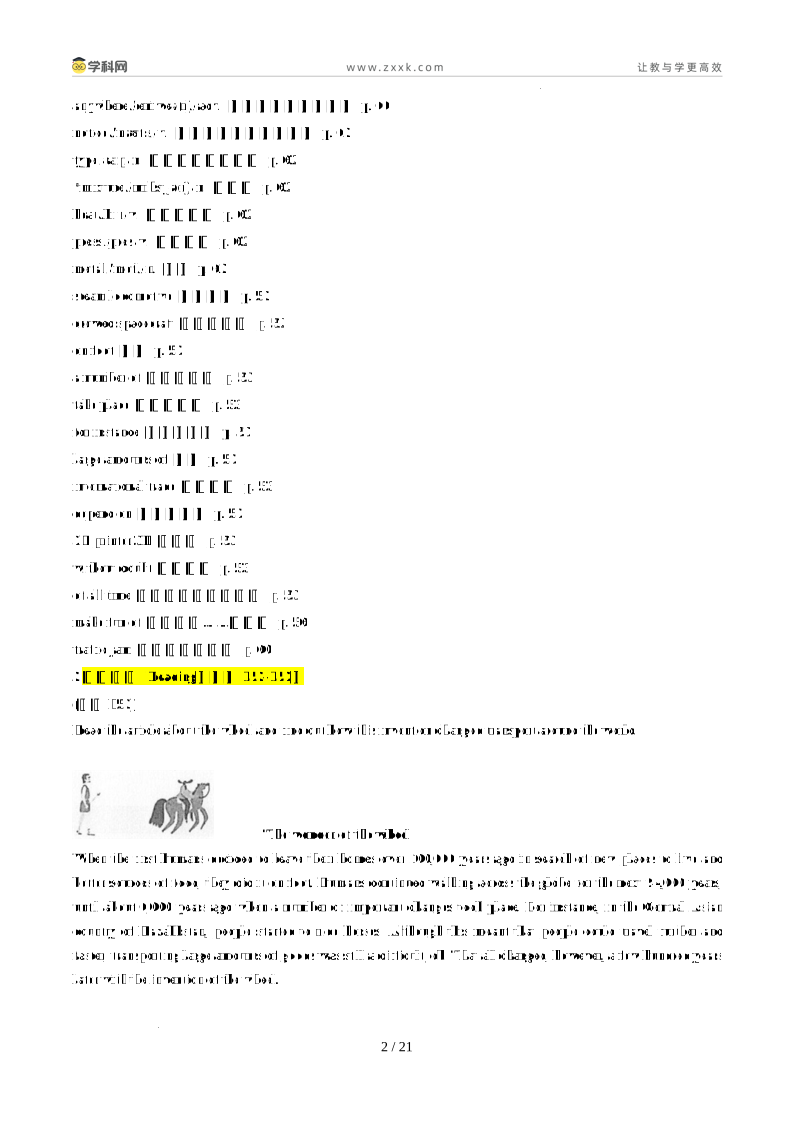
2
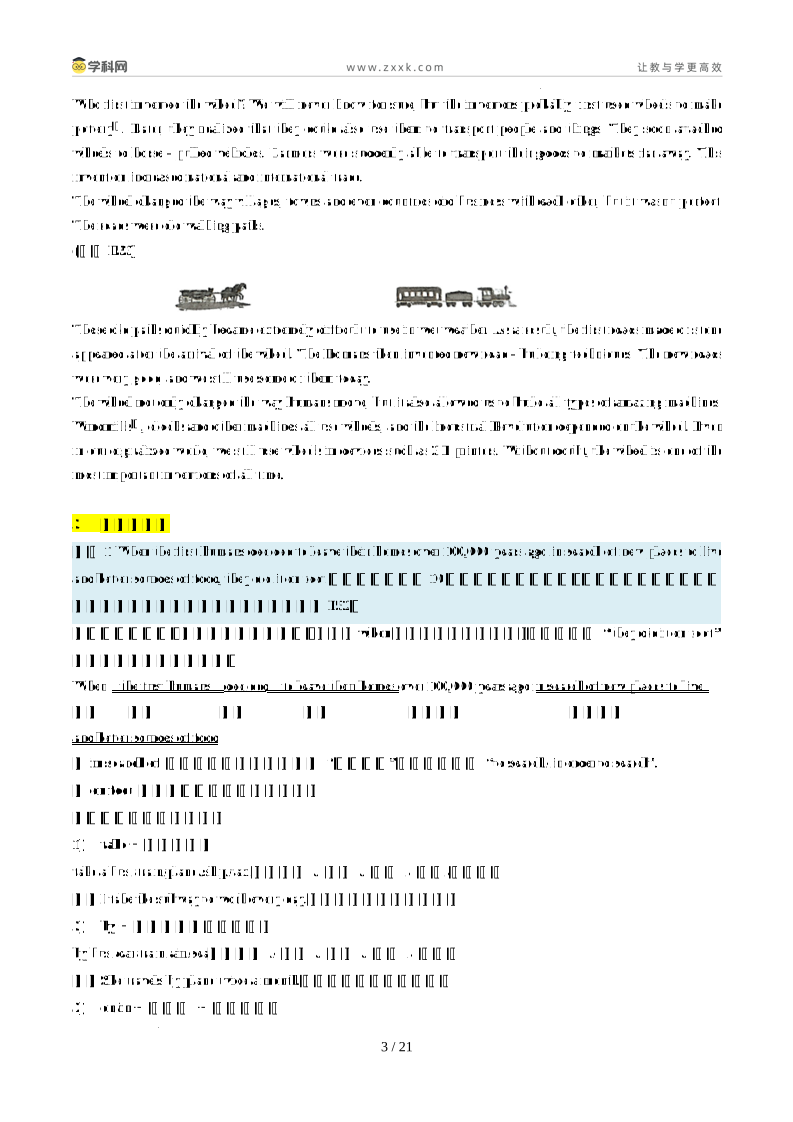
3
所属专辑

相关资源
由于学科网是一个信息分享及获取的平台,不确保部分用户上传资料的 来源及知识产权归属。如您发现相关资料侵犯您的合法权益,请联系学科网,我们核实后将及时进行处理。