期末复习知识点2024-2025学年译林版(2012)八年级英语下册
2025-06-21
|
7页
|
737人阅读
|
66人下载
普通
资源信息
| 学段 | 初中 |
|---|---|
| 学科 | 英语 |
| 教材版本 | 初中英语译林版(2012)八年级下册 |
| 年级 | 八年级 |
| 章节 | - |
| 类型 | 教案-讲义 |
| 知识点 | - |
| 使用场景 | 同步教学-期末 |
| 学年 | 2025-2026 |
| 地区(省份) | 江苏省 |
| 地区(市) | 盐城市 |
| 地区(区县) | 盐都区 |
| 文件格式 | DOCX |
| 文件大小 | 85 KB |
| 发布时间 | 2025-06-21 |
| 更新时间 | 2025-06-22 |
| 作者 | 微信用户 |
| 品牌系列 | - |
| 审核时间 | 2025-06-21 |
| 下载链接 | https://m.zxxk.com/soft/52673830.html |
| 价格 | 1.50储值(1储值=1元) |
| 来源 | 学科网 |
内容正文:
期末复习
核心语法
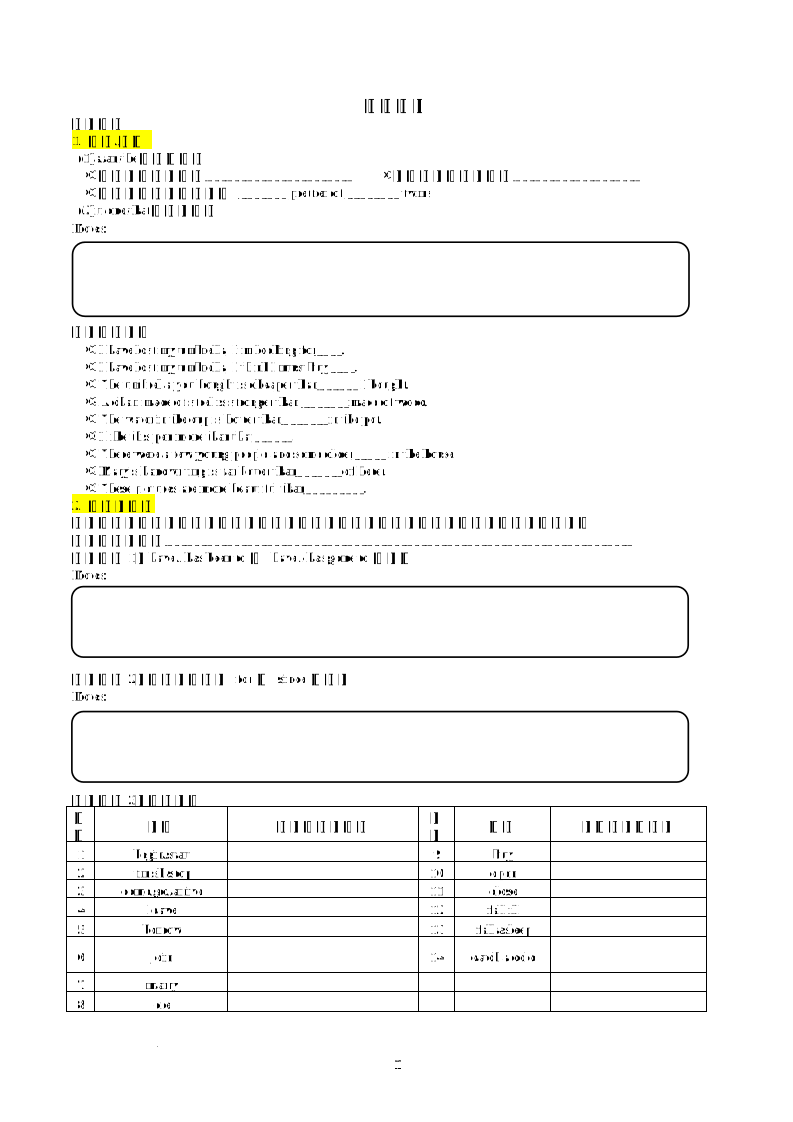
1. 冠词/代词
(1)a/an/the用法辨析:
①穿着红衣服的女孩______________________ ②一次为期一天的旅行___________________
③双胞胎中较漂亮的那个 _______ prettier of ________ twins
(2)it/one/that用法辨析:
Notes:
【小试牛刀】
①I have lost my umbrella; I’m looking for____.
②I have lost my umbrella; I think I must buy____.
③The umbrella you bought is cheaper than______ I bought.
④A chair made of steel is stronger than _______made of wood.
⑤The water in the cup is hotter than_______in the pot.
⑥I like this pen more than that______.
⑦There were a few young people and some older_____ in the house.
⑧Mary’s handwriting is far better than_______of Peter.
⑨These pictures are more beautiful than_________.
2. 现在完成时
现在完成时表示从过去持续到现在的动作或状态,或已完成但对现在有一定影响的动作。
常见时间状语:______________________________________________________________________
【注意点1】have / has been to 与 have / has gone to 的区别
Notes:
【注意点2】现在完成时中 for 和 since 的用法
Notes:
【注意点3】瞬间动词
序号
动词
完成时态延续性
序号
动词
完成时态延续性
1
begin/start
9
buy
2
finish/stop
10
open
3
come/go/arrive
11
close
4
leave
12
fall ill
5
borrow
13
fall asleep
6
join
14
catch a cold
7
marry
8
die
【小试牛刀】
①—Let’s go to the museum this afternoon.
—The museum again? Oh, no! I __________ the museum many times.
②—Is your dad at home, Nancy?
—No, he ___________ the supermarket with my mum. Can I take a message?
③Diana ______________ Beijing twice, but she still wants to go there a third time.
④If we have the party tonight, Jack won’t come. He _____________ Shanghai for an important meeting.
⑤Mr Green has been a teacher ________ five years.
⑥Nick has kept the book _________ three weeks ago.
⑦I saw my friend Jim two months ago, but I haven’t seen him ________ then.
⑧ My sister has taught English at this school ________ ten years.
⑨—How long has she kept this camera?
—________________ three days ago.
⑩The shop closed two hours ago. (同义句转换)
The shop ________ _________ _________ for _________ _________.
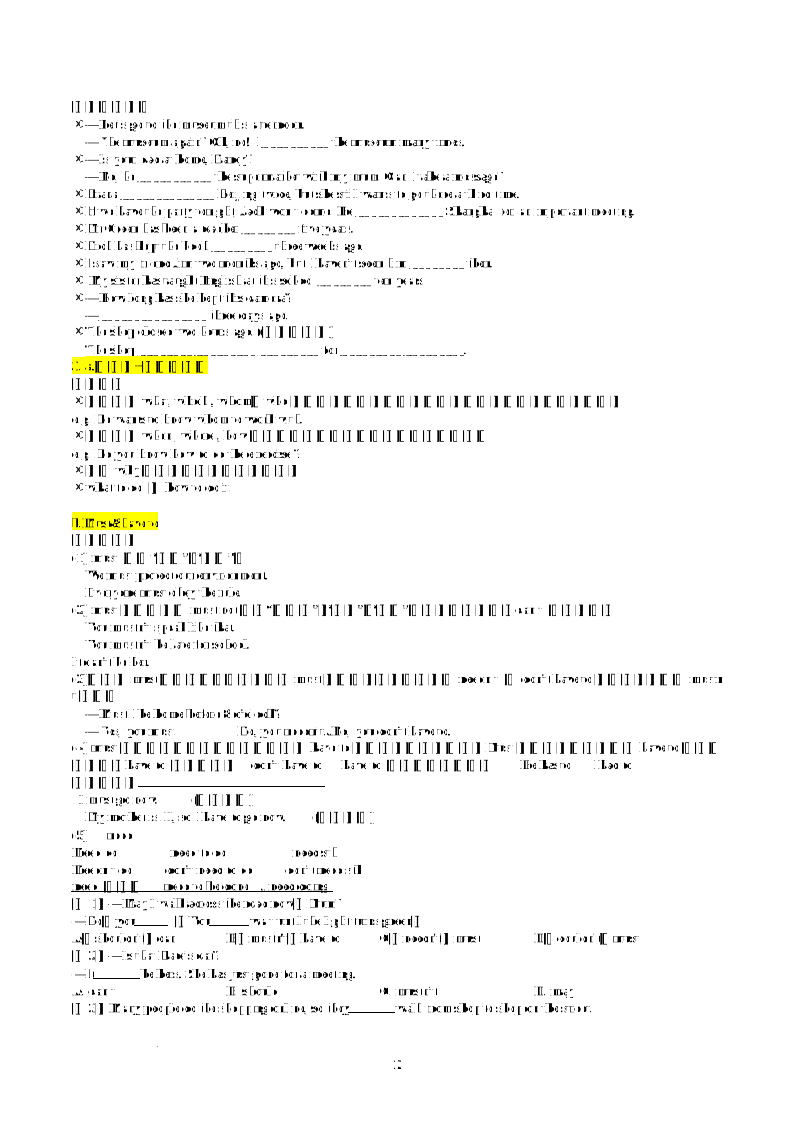
3. a.疑问词+动词不定式
易错点:
①疑问代词what, which , whom(who的宾格形式)后面如果加不及物动词,要加上相应的介词
e.g. He wants to know whom to work with.
②疑问副词when , where , how后面如果加及物动词,须有自己的宾语。
e.g. Do you know how to do the exercise ?
③只有why不可以与动词不定式连用。
④what to do 和how to do it.
b.Must&have to
【注意点】
(1) must 表示“必须”、“应该”。
We must protect our environment.
Everyone must obey the rule.
(2) must的否定形式must not表示“不应该”、“禁止”、“不准”。语气比较强烈,can’t 表示肯定不
You mustn’t speak like that.
You mustn’t be late for school.
It can’t be her.
(3)在回答must的问句时,肯定形式用must来回答,但否定形式用needn’t 或don’t have to来回答。而不用mustn’t来回答
—Must I be home before 8 o’clock?
—Yes, you must. No, you needn’t./No, you don’t have to.
(4) must表示的是说话人的主观看法,而have to则表示的是客观需要。Must一般只有现在时,而have to有更多的形式。have to 的否定形式 don’t have to have to 有人称和数的变化 He has to I had to
最好做某事
I must go now. (主观看法)
My mother is ill, so I have to go now. (客观需要)
(5) need
Need do need to do need sth
Needn’t do don’t need to do don’t need sth
need 的被动 need to be done / need doing
例1:—May I walk across the road now,Mum?
—No,you .You wait until the light turns green.
A.shouldn't;can B.mustn't;have to C.needn't;must D.couldn't;must
例2:—Is that Kate’s car?
—It be hers. She has just gone for a meeting.
A. can’t B. should C. mustn’t D. may
例3:Many people do the shopping online, so they walk from shop to shop on the street.
A. can't B. mustn't C. needn't D. shouldn't
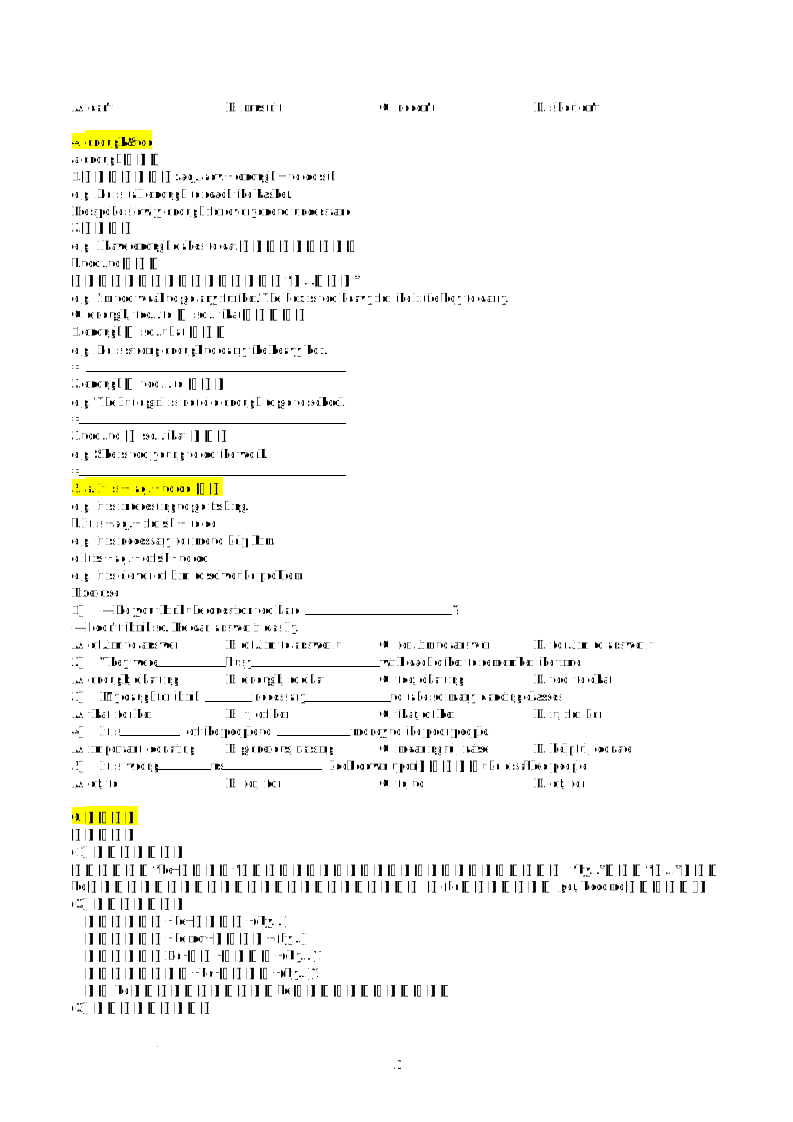
4. enough&too
a.enough的用法
1.形容词副词结构:adj./adv.+ enough + to do sth
e.g. He is tall enough to reach the basket.
He spoke slowly enough for everyone to understand.
2.名词结构
e.g. I have enough cakes to eat. 我有足够的蛋糕吃。
b.too...to的用法
该结构表示一种否定的结果,翻译成“太...而不能”
e.g. I'm too weak to go any further.The box is too heavy for the little boy to carry.
C. enough, too...to 与so... that句型的转換
1.enough与so...that 的转换
e.g. He is strong enough to carry the heavy box.
=
2.enough与too ...to 的转换
e.g. The little girl is not old enough to go to school.
=
3.too...to 与so...that 的转换
e.g. She is too young to do the work.
=
5. a. It is + adj.+ to do 句型
e.g. It is interesting to go fishing.
b.It is +adj.+ for sb + to do
e.g. It is necessary for me to help him.
c.It is +adj.+ of sb+ to do
e.g. It is clever of him to solve the problem.
Exercise
1) —Do you think the question too hard ?
—I don't think so. He can answer it easily.
A. of Jim to answer B. of Jim to answer it C. for Jim to answer D. for Jim to answer it
2) They were busy with each other to remember the time.
A. enough; chatting B. enough; to chat C. too; chatting D. too; to chat
3) My daughter think necessary to take so many dancing classes.
A. that; for her B. it; of her C. that; of her D. it; for her
4) It is of the people to money to the poor people.
A. important; donating B. generous; raising C. meaningful; raise D. helpful; donate
5) It is wrong us look down upon(看不起)the disabled people.
A. of; to B. for; for C. to; to D. of; for
6. 被动语态
【注意点】
(1) 被动语态的构成
被动语态是由“be+过去分词”构成的,如果需强调动作或行为的发出者时,在其后接 “by...”,意为“被...”。这里be是助动词,必须与主语的人称和数相一致,并有时态的变 化(be有时也可以使用get, become等词来代替)。
(2) 被动语态的句型
肯定句:主语+be+过去分词+(by...)
否定句:主语+be not+过去分词+(by...)
一般疑问句:Be+主语+过去分词+(by...)?
特殊问句:疑问词+be+过去分词+(by...)?
这里be决定了被动语态的时态,be后面的过去分词没有变化。
(3) 被动语态的八种时态
①一般现在时:am (is, are) + 过去分词
Football is played all over the world. 足球运动遍及全世界。
②一般过去时:was (were) + 过去分词
These new books were published last month. 这些新书是上个月刚出版的。
③一般将来时:will be+过去分词
That film will be directed by Zhang Yimou. 那部电影将由张艺谋执导。
④现在进行时:am (is, are)+being+过去分词
A new free way from Beijing to Shanghai is being built now.
一条从北京到上海的新的高速公路正在建设之中。
⑤过去进行时:was (were)+being+过去分词
The car wasn’t being repaired by me then. 那时这辆车不是由我修的。
⑥现在完成时:have (has) + been+过去分词
Has the bridge in Yangzhou been built? 扬州的那座大桥建成了吗?
⑦过去完成时:had + been+过去分词
The bridge had been built by the end of 1998. 那座桥1998年年底以前就建好了。
Supper had not been cooked when I got there last time. 上次我到那儿时,晚饭还没有做。
⑧过去将来时:would + be+过去分词
She told me that a new English teacher would be sent to our class in a week.
她告诉我一周以后要给我们班派一位新的英语老师来。
(4)主动语态变为被动语态的口诀
宾作主,主BY宾;谓变BE+PP,时不变;注意数、格,抄其余。
Bruce writes a letter every week.(主动语态)
主语 谓语 宾语 状语
A letter is written by Bruce every week. (被动语态)
主语 谓语 补语 状语
(5) 被动语态的基本用法
①需要强调动作的承受者时,用被动语态。
Magazines and newspapers in the reading-room mustn’t be taken away.
②不知道或者没有必要指出动作的执行者时,应使用被动语态。
The problem has to be dealt with right now. 这个问题必须马上处理。
③当说话人需要强调客观时,用被动语态。
It is said that the temperature tomorrow will be 40℃. 据说明天的气温将要达到摄氏40度。
【必背】这一类用法的句型还有:
It is believed that... 据信,大家相信 It is known that... 众所周知
It is supposed that... 大家认为 It is suggested that... 据建议,有人建议
It must be remembered that... 务必记住 It is reported that... 据报道
(6) see the huge glass ball falling through the darkness
see sb doing sth (改被动) sb be seen doing sth
see sb do sth (改被动) sb be seen to do sth
类同的词: hear ; watch; notice
常用的使役动词的被动
make sb do sth →be made to do
let sb do sth→be let to do
help sb do sth→be helped to do
keep(保持) sb do sth→ be kept to do
【小试牛刀】
①-Look, what have they done?
-Sorry. I think if I __________ another chance, I’ll do it better.
A. give B. will be given C. will give D. am given
②It is reported that about 120 foreign soccer experts ______ to teach soccer school students.
A. invite B. invited C. to be invited D. will be invited
③My grandparents _____ for over 60 years and they love each other very much.
A. have been married B. got married C. were married D. have got married
④I don’t think the boy who you are talking about ______. He is too young to understand the question.
A. needs punishing B. needs punished C. need punishing D. need punished
⑤The new computer, which ______ in a store yesterday, doesn’t work now.
A. was bought B. is bought C. has been bought D. had been bought
练习
一、根据句意、首字母、中文提示或括号内单词的正确形式填空
1 Parents always try to p_______ a comfortable environment for their children.
2 Give up smoking. It's __________(有害的) not only to you but also to others.
3 Please avoid ___________(触摸) your eyes and noses when your hands are dirty.
4 He felt __________(自豪) that he got the first prize in the writing competition.
5 With the ____________(发展)of science and technology, our country become stronger and stronger.
6 Few people stayed _______(活着的)after the terrible earthquake.
7 Some children can’t get good e________ in the west of out country.
8 There is a(n) ________(医学的)college in Nantong.
9 I don’t think he stole the painting. When he _______(ask) what he was doing at 7:00 yesterday evening, he was very calm.
10 Bob was a very good football c______, and the team progressed very well.
11 I don’t feel like ______(eat) anything.
12 I am glad to work ______(close) with those children.
13 “A miss is as good as a mile,” I often say to ______(I).
14 A big storm made it _________(possible) for us to go out.
15 “Erquan Yingyue” is one of the most moving pieces of music that I _________(hear).
16 How about_______(go) shopping with me this afternoon?
17 She is often heard _______(sing) in the next room.
18 He stopped _______(talk)when the teacher went out.
19 The man was too angry _______(say) anything.
20 I remembered _______(pay) him for the book, but he said he had not got it.
21 Something is wrong with my bike. I’m going to have it ______(repair).
22 He went on ______(do) physics exercises after he finished doing chemistry homework.
二、单项选择
1. 一Judy is a thoughtful and organized girl.
一Yes. I think she is plan everything well.
A. clever enough to B. too clever to C. so clever that D. enough clever to
2. Many girls are afraid of ______ out at night.
A. to go B. go C. going D. goes
3. I would rather ______ a dozen cherry trees than that you should tell me one lie.
A. to lose B. lose C. losing D. lost
4. —Are you used to ______ in the village school?
—No, I can’t get well on with the children there.
A. study B. studying C. to study D. studied
5. Your brother is ____ young ____ he can’t go to school.
A. too... to B. very... to C. so... that D. too... that
6. People have come to know that their health must ______.
A. pay more attention B. pay more attention to
C. be paid more attention D. be paid more attention to
7. You’d better ________ smoking because it is not good for your health.
A. give in B. give up C. give away D. give out
8. You’ll _______ skate after you have practiced it twice or three times.
A. can B. be able to C. could D. may
9. —Do you mind my parking my car here?
—________. Look at the sign. It says “No parking!”.
A. It doesn’t matter B. No, not at all C. You’d better not D. Never mind
10. In order_______ for the meeting, my sister forced herself to get up early this morning.
A. not to be late B. not being late C. to be late D. being late
11. —Dad, can I go to the movies tonight?
—Sure, but you ________ come back home before 9 o’clock.
A. can B. must C. may D. might
12. —______ of us live on rice.
—Yes, you are right. We live ______ on rice.
A. Most; mostly B. Most; almost C. Mostly; most D. Mostly; almost
13. —______ fine day it is today!
—Yes, the sunshine is ______ beautiful that I’d like to go swimming in the sea.
A. How; such B. What a; very C. How; so D. What a; so
14. The bag is ______ heavy for me _______.
A. so; to carry B. too; to carry it C. not enough; to carry it D. too; to carry
15. The old book there ______ some strange pictures in it. Nobody can understand.
A. are B. is C. with D. has
17. —It’s too hot. Would you mind _______ the door?
—_______, please do it now.
A. to open; OK B. opening; Certainly not
C. opening; Of course D. to open; Good idea
18. In our school girl students are not allowed_______long hair.
A. having B. have C. had D. to have
19. —Mum, can you give me some advice on how to behave myself at the table?
—Well, I do have some advice. ________, please keep quiet while eating.
A. In all B. Of all C. At all D. Above all
20. Volunteers often ________ the leaflets to people in the streets.
A. hand out B. put out C. run out D. come out
三、根据首字母提示完成短文
London was built on b 1 sides of the River Thames. The first bridge was built across the river as close to the sea as p 2 .
London g 3 quickly. Around 1600, the population was a quarter of a million. By 1700, it was already h 4 a million, and by 1900, it was about one million. In 1750, one in ten of the population of Britain lived in the capital compared with one in forty in France and one in eight in Spain.
Most of the old city was burnt by a great f 5 in 1666. A 6 the fire, the city was rebuilt. Three c 7 later, much of central and eastern London was damaged in the Second World War by bombs.
London was once an important seaport(海港城市). It was the closest port to Europe. Ships came up the river into the middle of London. Goods(货物)were b 8 into the port and were taken all over the country by canal and later by rail and road.
Today the port is closed. Very few goods are produced today in London. I 9 , it has become a centre for banking. Tourism and shopping are also important.
London is joined by rail and r 10 to the rest of the country. Very little is carried on the canals and rivers because these are so small.
1. _________ 2. _________ 3. _________ 4. _________ 5. _________
6. _________ 7. _________ 8. _________ 9. _________ 10. _________
2
1
学科网(北京)股份有限公司
重点单词和短语
1. cut in on sb 插嘴,打断某人说话
2. polite adj.---politely adv. 礼貌的/地
3. leave the tap running 使水龙头一直开着
4. queue for... 排队等候…
5. greet v. greeting n. 问候,打招呼
greet sb 问候某人
6. shake sb’s hand 与某人握手
7. avoid doing sth 避免做某事
8. behave politely 举止文明
9. in public 公开地,在别人面前
10. push in before others 在别人前面插队
11.as well 也(用于句末)
12. as well as... 还有(连接两个并列的部分)
13. by accident 偶然,意外地
14. explain sth to sb 向某人解释某事
15.protect sb/sth. from doing sth 保护...使…免受于…
16.warn sb not to do sth 警告某人不要做某事
17. in all 总计
after all 毕竟
above all 首要的是
18.support sb
with one’s support 支持某人
19.meaningful---meaningless (反义词) 无意义的
20.volunteer to do sth 志愿/义务做某事
21. expect to do sth 期待做某事
22. chance --- chances n. 机会(可数)
23. be similar to sth 与…相似
24. give up (doing) sth 放弃做某事
25. necessary---unnecessary(反义词)没有必要的
26. work closely with... 与…密切合作
27. achieve one’s dream 实现梦想
28. achievement n. (可数) 成就
29. donate...to doing sth 捐献...做某事
30. operate on sb= do/have an operation on sb 给某人做手术
31. especially +名词/代词/动名词/句子 尤其是…
32. basic education 基础教育
33. equal rights 平等权利
34. prevent the spread of... 阻止/预防…扩散
35. afford sth 买得起…
afford to do sth 能做某事
36. be proud of... =take pride in 以…骄傲/自豪
37. carry on with sth 继续开展...
carry on doing sth = continue doing = go on doing 继续做某事
38. hand out leaflets 发传单
39. set up 成立,建起
40. including prep. 包括 include, included
41. make up one’s mind to do sth 决定做某事
42. turn off 关,关掉(电器)
turn on 开,打开(电器)
turn up 调高(音量); 出现
turn down 调低(音量); 拒绝
43. wise---wisely adv. 明智地
44. separate...into... 把...分开成...
45. allow sb to do sth 允许某人做某事
46. cut down 砍倒
47. be fined 被罚款
48. depend on/upon 依靠,取决于
49. make a difference to sb/sth 对...有影响/起作用
50. do/have a survey 做研究,做调查
51. do harm to...=be harmful to... 对...有害
52. in place 在正确位置
53. carefully---carelessly adv. (反义词)粗心地
54. can’t stop doing sth. 忍不住做某事
can’t help doing sth 情不自禁做某事
can’t wait to do sth 等不及做某事(用于表示对即将发生的事感到兴奋和迫不及待)
55. prevent/stop/keep sth./sb.(from) doing sth 阻止做某事
56. keep doing sth (不停地做某事) keep on doing (继续做某事)
57. hear from sb. = receive a letter from sb.收到某人的来信
58. hope to do sth hope sb +句子
59. have been to (次数) 曾经到过某地
have gone to (Where…) 去了某地(人不在)
have been in (How long…) 在某地呆了多久
60. be on business 出差
61. run a business 经营一家企业
62. none of your business 不关你的事
63. take a direct fight to…. 搭乘直达航班
64. leave for… 动身去(某处)
65. 三个半小时 three hours and a half
three and a half hours
一个半小时 one hour and a half
one and a half hours
66. manage to do sth 设法做某事
manage not to do sth
67. too…to 太……而不能
You are never too old to learn. 活到老,学到老
sb + be +adj. +enough to do sth 有足够的……做某事
68. be born with 生来具有
69. try one’s best to do sth 尽某人最大的努力做某事
try to do sth do one’s best to do sth
70. finish fourth 取得第四 (序数词表示名次时,定冠词可省略)
give me a second time 表示“再一次,又一次”时,序数词前使用不定冠词a
71. provide sth for sb = provide sb with sth
offer sb sth = offer sth to sb
72. so + adj. + a/an + 可数名词(单数)
such + a/an + adj+可数名词(单数)
such + adj + 不可数名词/可数名词(复数)
so many/ few +可数名词(复数) so much/ little +不可数名词
73. make up one’s mind to do sth 下定决心做某事
74. depend on doing sth 依赖于做某事
75. too much + 不可数名词 (很多)
too many + 可数名词
much too + 形容词 很,非常
76. mind one’s doing sth (介意某人做某事)
1
学科网(北京)股份有限公司
$$
资源预览图
1
2
3
相关资源
由于学科网是一个信息分享及获取的平台,不确保部分用户上传资料的 来源及知识产权归属。如您发现相关资料侵犯您的合法权益,请联系学科网,我们核实后将及时进行处理。