Unit 4 Exploring Literature Grammar and usage Modal verbs in Classic lines 课件-2024-2025学年高中英语译林版(2020)必修第二册
2025-05-28
|
15页
|
1322人阅读
|
322人下载
普通
内容正文:
e7d195523061f1c0600ade85ab8d19863d296bbd6d3c8047FB0A4867354E4F1E3A7DEAE3C4C4B5C9777EC9E9D7F78045DB0296A4194571101A21F67FC7D6C39966CE50B69116E2EE84E571E25F3C0CCE22FAE078BE3E45890212CE28C2E1755588EF359AEEFE742A13238BDDAC9A3BEC769B38E265FC8E91AF2BDA1EFA2A99F2664A28AE60E4928D8DF07BAA80326902
Modal verbs in Classic lines
UNIT 4 Exploring literature
Grammar & Usage
1
e7d195523061f1c0600ade85ab8d19863d296bbd6d3c8047FB0A4867354E4F1E3A7DEAE3C4C4B5C9777EC9E9D7F78045DB0296A4194571101A21F67FC7D6C39966CE50B69116E2EE84E571E25F3C0CCE22FAE078BE3E45890212CE28C2E1755588EF359AEEFE742A13238BDDAC9A3BEC769B38E265FC8E91AF2BDA1EFA2A99F2664A28AE60E4928D8DF07BAA80326902
世事洞明皆学问,
人情练达即文章。
A grasp of mundane affairs is genuine knowledge.
Understanding of worldly wisdom is true learning.
曹雪芹
Cao Xueqin
——《红楼梦》
(Dream of the Red Chamber )
2
e7d195523061f1c0600ade85ab8d19863d296bbd6d3c8047FB0A4867354E4F1E3A7DEAE3C4C4B5C9777EC9E9D7F78045DB0296A4194571101A21F67FC7D6C39966CE50B69116E2EE84E571E25F3C0CCE22FAE078BE3E45890212CE28C2E1755588EF359AEEFE742A13238BDDAC9A3BEC769B38E265FC8E91AF2BDA1EFA2A99F2664A28AE60E4928D8DF07BAA80326902
Shall I compare thee to a summer's day?
Thou art more lovely and more temperate:
Rough winds do shake the darling buds of May,
And summer's lease hath all too short a date:
Sometime too hot the eye of heaven shines,
And often is his gold complexion dimm'd;
And every fair from fair sometime declines,
By chance, or nature's changing course untrimm'd;
But thy eternal summer should not fade,
Nor lose possession of that fair thou ow'st;
Nor shall Death brag thou wander'st in his shade,
When in eternal lines to time thou grow'st:
So long as men can breathe, or eyes can see,
So long lives this and this gives life to thee
Listen not to the rain beating against the trees.
Why don’t you slowly walk and chant at ease.
Better than a saddle I like sandals and cane.
I would fain,
In a straw cloak, spend my life in mist and rain.
Drunken, I am sobered by the vernal wind shrill
And rather chill.
In front, I see the slanting sun atop the hill;
Turning my head, I see the dreary beaten track.
Let me go back!
Impervious to rain or shine, I will have my own will.
文法之美
3
e7d195523061f1c0600ade85ab8d19863d296bbd6d3c8047FB0A4867354E4F1E3A7DEAE3C4C4B5C9777EC9E9D7F78045DB0296A4194571101A21F67FC7D6C39966CE50B69116E2EE84E571E25F3C0CCE22FAE078BE3E45890212CE28C2E1755588EF359AEEFE742A13238BDDAC9A3BEC769B38E265FC8E91AF2BDA1EFA2A99F2664A28AE60E4928D8DF07BAA80326902
Modal Verbs
情态动词,即表示人的情感和态度的动词,它们本身有一定的词义,但是不能独立作谓语,只能跟行为动词一起构成谓语。
常见的情态动词主要有:can(could), may(might) , shall(should), will(would) , must, have to, need, ought to, dare等。
Model verbs are a type of auxiliary verbs that express ability or necessity(obligation). They can also make suggestions, permission, willingness or describe the possibility of an event. The same modal verb can have different functions.
Modal verbs can be followed by _____________.
a. do(the base form) d. be done(the passive voice)
b. doing(the verb-ing form) e. be doing(the continuous form)
c. did (the past form) f. have done (the perfect form)
a, d, e, f
4
e7d195523061f1c0600ade85ab8d19863d296bbd6d3c8047FB0A4867354E4F1E3A7DEAE3C4C4B5C9777EC9E9D7F78045DB0296A4194571101A21F67FC7D6C39966CE50B69116E2EE84E571E25F3C0CCE22FAE078BE3E45890212CE28C2E1755588EF359AEEFE742A13238BDDAC9A3BEC769B38E265FC8E91AF2BDA1EFA2A99F2664A28AE60E4928D8DF07BAA80326902
Explore the rules
* 表示能力(could是过去时)。
* 表示猜测,意为“可能”,一般用于疑问句和否定句(could是过去时)。
* 表示请求和许可(could表示更委婉的语气,回答时只能用can)。
* 习惯用法“cannot...too...”表示“无论怎样……都不过分,越…越好”。有时cannot可用can never替代。
But a man is not made for defeat. A man can be destroyed but not defeated人不是生来要给打败的,你尽可把他消灭掉,可就是打不败他。
If you said a good thing, it could not happen. 如果你说出了一件好的事情,那么那件好事可能就会不出现了。
5
e7d195523061f1c0600ade85ab8d19863d296bbd6d3c8047FB0A4867354E4F1E3A7DEAE3C4C4B5C9777EC9E9D7F78045DB0296A4194571101A21F67FC7D6C39966CE50B69116E2EE84E571E25F3C0CCE22FAE078BE3E45890212CE28C2E1755588EF359AEEFE742A13238BDDAC9A3BEC769B38E265FC8E91AF2BDA1EFA2A99F2664A28AE60E4928D8DF07BAA80326902
Explore the rules
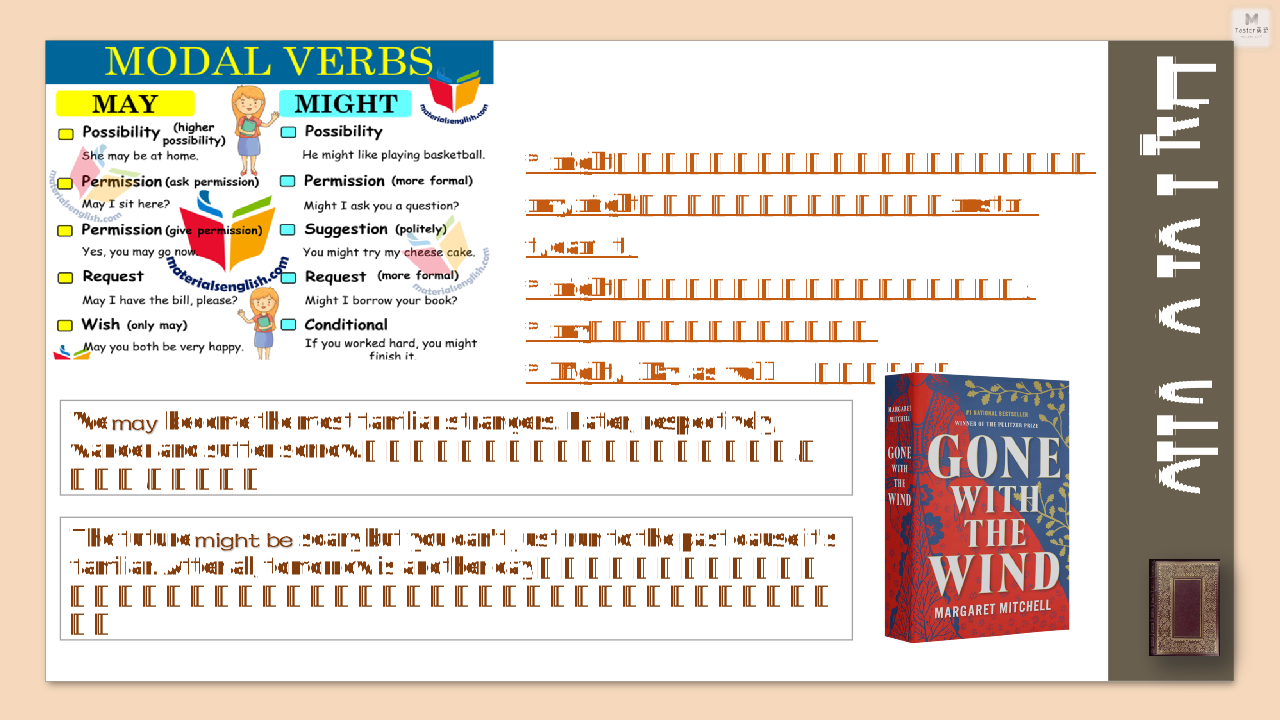
We may become the most familiar strangers. Later, respectively, wander and suffer sorrow.我们也许成了世上最熟悉的陌生人。从此,各自飘零,各自悲哀。
The future might be scary but you can't just run to the past cause it's familiar. After all, tomorrow is another day.未来会让人心生畏惧,但是我们却不能因为习惯了过去,就逃回过去。不管怎样,明天又是全新的一天。
* might可以指过去时间或现在时间,语气更委婉。以may/might开头的问句在否定回答中要用mustn’t/can’t;
* might可以指过去或现在,但语气更加不肯定;
* may还可用于祈使句表示祝愿;
* Might/ May as well 不妨做某事。
6
e7d195523061f1c0600ade85ab8d19863d296bbd6d3c8047FB0A4867354E4F1E3A7DEAE3C4C4B5C9777EC9E9D7F78045DB0296A4194571101A21F67FC7D6C39966CE50B69116E2EE84E571E25F3C0CCE22FAE078BE3E45890212CE28C2E1755588EF359AEEFE742A13238BDDAC9A3BEC769B38E265FC8E91AF2BDA1EFA2A99F2664A28AE60E4928D8DF07BAA80326902
Explore the rules
*should表示惊讶、愤怒、失望等情绪,意为“竟然”;
*should具有一定的推测, “按道理说应该”;
*shall用于第一、第三人称的疑问句中,表示说话人征求对方的意见或向对方请示;
* shall用于第二、第三人称,表示说话人给对方的命令、警告、允诺或威胁。
He shall never know I love him: and that, not because he's handsome, but because he's more myself than I am.他永远也不会知道我爱他,我爱他不是因为他长得英俊,而是因为他比我更像我自己。
My great thought in living is himself. If all else perished, and he remained, I should still continue to be; and if all else remained, and he were annihilated, the universe would turn to a mighty stranger: I should not seem a part of it.他是我活着最大的信念,如果你还在这个世界存在着,那么无论变成什么样,对我来说都有意义,如果你不在了,无论这个世界所么美好,对我来说都是一片荒芜,我就是一个孤魂野鬼。
7
e7d195523061f1c0600ade85ab8d19863d296bbd6d3c8047FB0A4867354E4F1E3A7DEAE3C4C4B5C9777EC9E9D7F78045DB0296A4194571101A21F67FC7D6C39966CE50B69116E2EE84E571E25F3C0CCE22FAE078BE3E45890212CE28C2E1755588EF359AEEFE742A13238BDDAC9A3BEC769B38E265FC8E91AF2BDA1EFA2A99F2664A28AE60E4928D8DF07BAA80326902
Explore the rules
If someone doesn't love me, I would rather die than live - I can't stand loneliness and loathing.如果别人不爱我,我宁愿死去而不愿活着—我受不了孤独和被人憎恶。
Do you think, because I am poor, obscure, plain, and little, I am soulless and heartless? You think wrong!--I have as much soul as you,--and full as much heart! And if God had gifted me with some beauty and much wealth, I will make it as hard for you to leave me, as it is now for me to leave you.你以为我贫穷、低微、不美、缈小,我就没有灵魂,没有心吗?你想错了,我和你有一样多的灵魂,一样充实的心。如果上帝赐予我美貌和财富,我就会让你难以离开我,就象我现在难以离开你一样。--it is my spirit that addresses your spirit; just as if both had passed through the grave,and we stood at God’s feet, equal,--as we are!”
*表示意志、意愿和决心,用于各种人称,will指现在,would指过去;
*征求意见,提出请求,用于第二人称的疑问句,would表示更委婉的语气;
*表示习惯性的动作 “总是;习惯于”,will指现在,would指过去;
*表示推测,will推测现在/would推测过去,其推测程度略低于must。
8
e7d195523061f1c0600ade85ab8d19863d296bbd6d3c8047FB0A4867354E4F1E3A7DEAE3C4C4B5C9777EC9E9D7F78045DB0296A4194571101A21F67FC7D6C39966CE50B69116E2EE84E571E25F3C0CCE22FAE078BE3E45890212CE28C2E1755588EF359AEEFE742A13238BDDAC9A3BEC769B38E265FC8E91AF2BDA1EFA2A99F2664A28AE60E4928D8DF07BAA80326902
Explore the rules
*must表示“必须”,语气比should,ought to强烈。其否定形式为mustn’t (不准,禁止)。
*must表示推测,意为“一定,肯定”,指说话人有根据、有把握地推测;
*must表示“偏要”,“非要”, 指令人不愉快的事情发生;
* must表示说话者坚定的态度,也可表示必然的结果。
*must强调主观看法,have to强调客观情况。
We must understand that when people live, they will not be able to make friends when they die.我们要明白,讲交情要在人活着的时候讲,人死就没有交情了。
We rowed hard, fought against the waves, but finally had to be rushed back to our past. For this reason, we will stand up the tide that keeps going back to the past and strive to move forward.我们拼命划桨,奋力与波浪抗争,最终却不得不被冲回到我们的往昔。为此,我们将顶住那不停地退回到过去的潮头,奋力向前。
9
e7d195523061f1c0600ade85ab8d19863d296bbd6d3c8047FB0A4867354E4F1E3A7DEAE3C4C4B5C9777EC9E9D7F78045DB0296A4194571101A21F67FC7D6C39966CE50B69116E2EE84E571E25F3C0CCE22FAE078BE3E45890212CE28C2E1755588EF359AEEFE742A13238BDDAC9A3BEC769B38E265FC8E91AF2BDA1EFA2A99F2664A28AE60E4928D8DF07BAA80326902
Explore the rules
Dare and the world always yields. If it beats you sometimes, dare it again and again and it will succumb.大胆挑战,世界总会让步。如果有时候你被它打败了,不断地挑战,它总会屈服的。
*dare既可以作实义动词,也可以作情态动词。作情态动词时,多用于疑问句、否定句、条件状语从句以及表示怀疑的名词性从句中,表示“敢……”。作实义动词时,在否定句和疑问句中不定式符号to也可以省略。
*need既可作实义动词,也可作情态动词。作情态动词时,后跟动词原形,表示“需要,有必要”,无人称和数的变化,多用于否定句、疑问句或条件句中。Need后带to是“实义动词” 。由need引起的一般疑问句的肯定回答常用must或have to;否定回答常用needn’t。
Selfishness is one of the qualities apt to inspire love. This need be thought out at great length.自私是一种容易激发爱的品质。这一点仔细想才能体会到。
10
e7d195523061f1c0600ade85ab8d19863d296bbd6d3c8047FB0A4867354E4F1E3A7DEAE3C4C4B5C9777EC9E9D7F78045DB0296A4194571101A21F67FC7D6C39966CE50B69116E2EE84E571E25F3C0CCE22FAE078BE3E45890212CE28C2E1755588EF359AEEFE742A13238BDDAC9A3BEC769B38E265FC8E91AF2BDA1EFA2A99F2664A28AE60E4928D8DF07BAA80326902
Explore the rules
When someone dies, there are always a few people could have thought: a lot of things was ignored, many things should have been done; how many things forgotten, and more things must have been unable to be saved.
每当有人逝去,总有少数的人们会想到:许多事情被忽略了,许多事情还未来得及去做;多少事情给遗忘了,而更多事情已无法得到弥救。
must have done:
can/could have done:
can’t / couldn’t have done:
may/might(not) have done:
过去一定做过某事
过去不可能做某事
过去可能做过某事
过去可能(没)做过某事
should/ought to have done:
shouldn’t/ ought not to have done:
could have done:
might have done:
needn’t have done:
本该做却没有做
本可以/本可能做某事却没做
本不该做却做了
本可能但实际没有发生的事
本来不需要做却做了
11
e7d195523061f1c0600ade85ab8d19863d296bbd6d3c8047FB0A4867354E4F1E3A7DEAE3C4C4B5C9777EC9E9D7F78045DB0296A4194571101A21F67FC7D6C39966CE50B69116E2EE84E571E25F3C0CCE22FAE078BE3E45890212CE28C2E1755588EF359AEEFE742A13238BDDAC9A3BEC769B38E265FC8E91AF2BDA1EFA2A99F2664A28AE60E4928D8DF07BAA80326902
Apply the rules
01
04
05
B1 For the following groups of three sentences, tick the sentence which uses the modal verb differently from the other two.
√
√
√
√
request
ability
ability
possibility
possibility
suggestion
necessity
possibility
necessity
suggestion
possibility
possibility
12
e7d195523061f1c0600ade85ab8d19863d296bbd6d3c8047FB0A4867354E4F1E3A7DEAE3C4C4B5C9777EC9E9D7F78045DB0296A4194571101A21F67FC7D6C39966CE50B69116E2EE84E571E25F3C0CCE22FAE078BE3E45890212CE28C2E1755588EF359AEEFE742A13238BDDAC9A3BEC769B38E265FC8E91AF2BDA1EFA2A99F2664A28AE60E4928D8DF07BAA80326902
Apply the rules
04
05
B2 Below is an entry in a student’s reading journal. Complete the entry with the correct.
can’t
must
could
must
must
must
must
13
e7d195523061f1c0600ade85ab8d19863d296bbd6d3c8047FB0A4867354E4F1E3A7DEAE3C4C4B5C9777EC9E9D7F78045DB0296A4194571101A21F67FC7D6C39966CE50B69116E2EE84E571E25F3C0CCE22FAE078BE3E45890212CE28C2E1755588EF359AEEFE742A13238BDDAC9A3BEC769B38E265FC8E91AF2BDA1EFA2A99F2664A28AE60E4928D8DF07BAA80326902
Model verbs :can(could), may(might) , shall(should), will(would) , must, have to, need, ought to, dare
Model verbs :a type of auxiliary verbs that express ability or necessity(obligation) or make suggestions, permission, willingness or describe the possibility.
summary
summary
Modal verbs
14
e7d195523061f1c0600ade85ab8d19863d296bbd6d3c8047FB0A4867354E4F1E3A7DEAE3C4C4B5C9777EC9E9D7F78045DB0296A4194571101A21F67FC7D6C39966CE50B69116E2EE84E571E25F3C0CCE22FAE078BE3E45890212CE28C2E1755588EF359AEEFE742A13238BDDAC9A3BEC769B38E265FC8E91AF2BDA1EFA2A99F2664A28AE60E4928D8DF07BAA80326902
再
会
世事洞明皆学问,
人情练达即文章。
A grasp of mundane affairs is genuine knowledge.
Understanding of worldly wisdom is true learning.
曹雪芹
Cao Xueqin
15
190051.55
Lavf58.29.100
Packed by Bilibili XCoder v2.0.2
Lavf58.29.100
Packed by Bilibili XCoder v2.0.2
Lavf58.29.100
Packed by Bilibili XCoder v2.0.2
$$
资源预览图

1

2

3

4

5
6

相关资源
示范课
由于学科网是一个信息分享及获取的平台,不确保部分用户上传资料的 来源及知识产权归属。如您发现相关资料侵犯您的合法权益,请联系学科网,我们核实后将及时进行处理。