专题02 全册重点语法巩固进阶练100题(Units1-8,一卷全搞定)-【刷题补漏】2024-2025学年七年级英语下学期期末重难点易错题特训(沪教版2024)
2025-05-23
|
2份
|
35页
|
536人阅读
|
67人下载

资源信息
| 学段 | 初中 |
|---|---|
| 学科 | 英语 |
| 教材版本 | 初中英语沪教版七年级下册 |
| 年级 | 七年级 |
| 章节 | - |
| 类型 | 题集-专项训练 |
| 知识点 | 语法 |
| 使用场景 | 同步教学-期末 |
| 学年 | 2025-2026 |
| 地区(省份) | 全国 |
| 地区(市) | - |
| 地区(区县) | - |
| 文件格式 | ZIP |
| 文件大小 | 442 KB |
| 发布时间 | 2025-05-23 |
| 更新时间 | 2025-05-23 |
| 作者 | 初高中原创精品库 |
| 品牌系列 | - |
| 审核时间 | 2025-05-23 |
| 下载链接 | https://m.zxxk.com/soft/52248189.html |
| 价格 | 3.00储值(1储值=1元) |
| 来源 | 学科网 |
内容正文:
2024-2025学年一线教师制作新教材期末精品复习资料,押题预测!
2024-2025学年一线教师制作新教材期末精品复习资料,押题预测!
学校:___________姓名:___________班级:___________考号:___________
专题02 全册重点语法巩固进阶练100题
(Units1-8,一卷全搞定)
目录
一、U1重点语法:定冠词the 1
二、U2重点语法:专有名词和连词 4
三、U3重点语法:现在进行时 7
四、U4重点语法:地点方位介词和反身代词 9
五、U5重点语法:谈论数量 13
六、U6重点语法:情态动词can/may/must 16
七、U7重点语法:感叹句和祈使句 18
八、U8重点语法:时间状语从句/used to do 22
一、U1重点语法:定冠词the
1.—Does the room have ________ good view?
— Yes, it’s on ________ top floor of the building.
A.a; a B.the; the C.a; the D.the; a
【答案】C
【详解】句意:——这个房间有好的视野吗?——是的,它在建筑的顶层。
考查冠词用法。a表示泛指,一个;the表示特指。第一句中的“good view”是泛指,表示“一个好的视野”,因此使用不定冠词“a”;第二句中的“top floor”是特指“建筑的顶层”,因此使用定冠词“the”。故选C。
2.New York is ______ capital of the USA, and it is really ______ modern city.
A.a, an B.the, a C.the, the D.a, the
【答案】B
【详解】句意:纽约是美国的首都,它确实是一座现代化城市。
考查冠词的用法。a泛指,用于辅音音素开头的单词前;an泛指,用于元音音素开头的单词前;the表示特指。第一空特指“美国的首都”,需用定冠词the;第二空泛指“一座现代化城市”,且modern以辅音音素开头,需用不定冠词a。故选B。
3.The girl is from ________ village in the mountain area of Yunnan. Her birthday is on ________ second of May.
A.a; / B.the; the C.a; the D.the; /
【答案】C
【详解】句意:这个女孩来自云南山区的一个村庄。她的生日是五月二日。
考查冠词用法。根据“village in the mountain area of Yunnan.”可知,第一空泛指一个村庄,village以辅音音素开头,要用不定冠词a;根据“second of May”可知,此处指五月二日,second是序数词,要用定冠词the。故选C。
4.—Our dog is really ________ clever animal.
—Yes. It’s ________ cleverest dog in the world.
A.the; the B.a; the C.a; a D.the; a
【答案】B
【详解】句意:——我们的狗真是一种聪明的动物。——是的。它是世界上最聪明的狗。
考查冠词。a不定冠词,表泛指,用于以辅音音素开头的单词前;the定冠词,表特指。句子中的“clever animal”是泛指某类事物,且“clever”以辅音音素开头,因此用不定冠词a修饰,A、D选项可排除;根据“It’s...cleverest dog in the world.”可知,形容词最高级前用定冠词the修饰。故选B。
5.She bought an interesting book yesterday. ________ book is about animals.
A.A B.An C.The D./
【答案】C
【详解】句意:她昨天买了一本有趣的书。这本书是关于动物的。
考查冠词。根据“She bought an interesting book yesterday...book is about animals.”可知此处特指她买的那本书,用定冠词the。故选C。
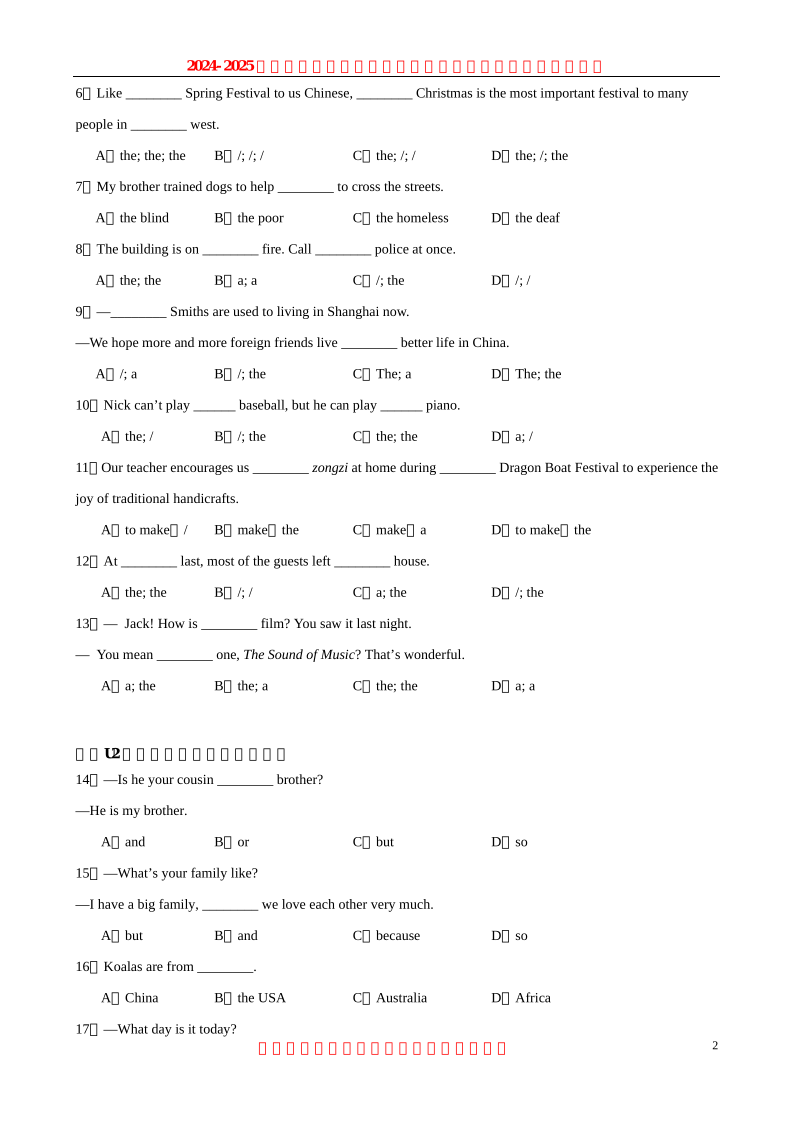
6.Like ________ Spring Festival to us Chinese, ________ Christmas is the most important festival to many people in ________ west.
A.the; the; the B./; /; / C.the; /; / D.the; /; the
【答案】D
【详解】句意:就像春节对我们中国人来说一样,圣诞节对许多西方人来说是最重要的节日。
考查冠词。因节日是专有名词,节日这一类比较特殊,只有中国的传统节日前要用冠词the,所以第一空填the,第二空不填;in the west“在西方”。故选D。
7.My brother trained dogs to help ________ to cross the streets.
A.the blind B.the poor C.the homeless D.the deaf
【答案】A
【详解】句意:我哥哥训练狗帮助盲人过马路。
考查名词短语。the blind盲人;the poor穷人;the homeless无家可归的人;the deaf聋人。根据“trained dogs to help…to cross the streets”可知,训练狗是用于帮助盲人安全过马路。故选A。
8.The building is on ________ fire. Call ________ police at once.
A.the; the B.a; a C./; the D./; /
【答案】C
【详解】句意:大楼着火了。马上给警察打电话。
考查冠词。the那个,表示特指;a一个,表示泛指;/零冠词。on fire意为“着火”;the police“警察”,表示一类,故选C。
9.—________ Smiths are used to living in Shanghai now.
—We hope more and more foreign friends live ________ better life in China.
A./; a B./; the C.The; a D.The; the
【答案】C
【详解】句意:——史密斯一家人现在习惯居住在上海。 ——我们希望越来越多的外国朋友在中国过更好的生活。
考查冠词。定冠词the加姓氏复数表示“一家人”,所以第一空用The;第二空后的better是辅音开头的单词,表泛指用不定冠词a。故选C。
10.Nick can’t play ______ baseball, but he can play ______ piano.
A.the; / B./; the C.the; the D.a; /
【答案】B
【详解】句意:尼可不会打棒球,但他会弹钢琴。
考查冠词用法。根据通常的固定搭配规则可知,play+运动项目(无冠词),如play baseball;play+the+乐器,如play the piano。故选B。
11.Our teacher encourages us ________ zongzi at home during ________ Dragon Boat Festival to experience the joy of traditional handicrafts.
A.to make;/ B.make;the C.make;a D.to make;the
【答案】D
【详解】句意:老师鼓励我们在端午节的时候自己在家包粽子,体验传统手工艺的乐趣。
考查非谓语动词和冠词。动词encourage的固定用法是encourage sb. to do sth.意为“鼓励某人做某事”,因此第一空应填to make,B、C选项可排除。a不定冠词,表泛指,用于以辅音音素开头的单词前;the定冠词,表特指;/零冠词。“Dragon Boat Festival”(端午节)是特定节日的名称,需加定冠词the。故选D。
12.At ________ last, most of the guests left ________ house.
A.the; the B./; / C.a; the D./; the
【答案】D
【详解】句意:最后,大多数客人离开了房子。
考查冠词。the那个,表示特指;a一个;/表示零冠词。at last“最后”,第一空用零冠词;第二空表示说话的双方都知道的那座房子,用定冠词the修饰,故选D。
13.— Jack! How is ________ film? You saw it last night.
— You mean ________ one, The Sound of Music? That’s wonderful.
A.a; the B.the; a C.the; the D.a; a
【答案】C
【详解】句意:——杰克! 那部电影怎么样? 你昨晚看的那部。——你是说《音乐之声》这部吗? 非常精彩。
考查冠词。a一个,不定冠词表示泛指;the这个,定冠词表示特指。第一个空表示昨天晚上看的电影,应该用特指,故用the;第二个空表示特指《音乐之声》这部电影,也应该用the。故选C。
二、U2重点语法:专有名词和连词
14.—Is he your cousin ________ brother?
—He is my brother.
A.and B.or C.but D.so
【答案】B
【详解】句意:——他是你表兄还是哥哥(弟弟)?——他是我哥哥(弟弟)。
考查连词辨析。and和,表示并列关系;or还是,表示选择关系;but但是,表示转折关系;so所以,表示因果关系。根据“He is my brother.”可知,上句表示选择关系。故选B。
15.—What’s your family like?
—I have a big family, ________ we love each other very much.
A.but B.and C.because D.so
【答案】B
【详解】句意:——你的家人怎么样?——我有一个大家庭,我们非常相爱。
考查连词辨析。but但是;and和;because因为;so所以。根据“I have a big family…we love each other very much.”的语境可知,此处表示并列关系,and符合。故选B。
16.Koalas are from ________.
A.China B.the USA C.Australia D.Africa
【答案】C
【详解】句意:考拉来自澳大利亚。
考查名词辨析。China中国;the USA美国;Australia澳大利亚;Africa非洲。根据“Koalas”可知,考拉来自澳大利亚。故选C。
17.—What day is it today?
—It’s _________.
A.Monday B.summer C.sunny D.Dec. 12th
【答案】A
【详解】句意:——今天是星期几?——星期一。
考查特殊疑问句和星期。Monday星期一;summer夏天;sunny晴朗的; Dec. 12th十二月十二日。根据“What day is it today?”可知,问句询问的是星期几,故选A。
18.My sister ________ went to visit ________ in Beijing last weekend.
A.Jenny, the great wall B.jenny, the Great Wall
C.jenny, the great wall D.Jenny, the Great Wall
【答案】D
【详解】句意:我姐姐珍妮上周末去北京参观了长城。
考查名词。Jenny珍妮,专有名词,首字母大写;the Great Wall“长城”,是表示地点的名词,要大写首字母。故选D。
19.It took Tom two hours to fish in the river ________ he caught nothing.
A.because B.but C.so D.for
【答案】B
【详解】句意:汤姆花了两个小时在河里钓鱼,但是他什么也没钓到。
考查连词辨析。because因为,引导原因状语从句;but但是,表转折关系;so所以,表因果关系;for为了,也可作连词表原因,常用于补充说明理由 。根据“It took Tom two hours to fish in the river ... he caught nothing”可知,“花两小时钓鱼”和“什么也没钓到”之间是转折关系,所以用but连接,故选 B。
20.She was ill, ________ she didn’t go to school yesterday.
A.and B.but C.so D.or
【答案】C
【详解】句意:她生病了,所以她昨天没去上学。
考查连词辨析。and和;but但是;so所以;or或者。根据“She was ill… she didn’t go to school”可知,前后句为因果关系,需用“so”连接。故选C。
21.After school, you can go home ________ you can join the science club.
A.so B.because C.but D.or
【答案】D
【详解】句意:放学后,你可以回家,或者可以加入科学俱乐部。
考查连词辨析。so所以;because因为;but但是;or或者。根据“you can go home...you can join the science club.”可知,前后是选择关系,用连词or。故选D。
22.My name is David Brown. You can call me ________.
A.Mr. Brown B.Ms David C.Mr. David D.Miss Brown
【答案】A
【详解】句意:我的名字是大卫•布朗。你可以叫我布朗先生。
考查英文称呼。在英语中,称呼通常由姓氏和适当的称谓构成。对于男性,“Mr.” 是常用的称谓,后面跟随姓氏。因此,“Mr. Brown” 是正确的称呼方式。故选A。
23.In many countries, ________ is on the fourth Thursday in ________.
A.thanksgiving day; november B.Thanksgiving day; november
C.thanksgiving day; November D.Thanksgiving Day; November
【答案】D
【详解】句意:在许多国家,感恩节在十一月的第四个星期四。
考查专有名词。Thanksgiving Day“感恩节”,节日名称,专有名词,首字母要大写;November“十一月”,月份名称,专有名词,首字母也要大写。故选D。
24.I am Bob, a new student at No. 1 Middle School. I’m in ________.
A.Class 1, Grade 7 B.Class 7, Grade 1 C.Grade 7, Class 1 D.Grade 1, Class 7
【答案】A
【详解】句意:我是鲍勃,是第一中学的一名新生。我在七年级一班。
考查专有名词及编号的表达。根据“a new student at No. 1 Middle School”及常识可知,中学新生应是7年级。表达“几年级几班”时的结构为“班级在前,年级在后”,且“班级class”、“年级grade”的首字母需大写。故选A。
25.We will visit ________ in Paris during ________.
A.Louvre Museum, Spring festival B.the Louvre Museum, spring festival
C.Louvre museum, the Spring Festival D.the Louvre Museum, the Spring Festival
【答案】D
【详解】句意:春节期间,我们会去参观卢浮宫。
考查地名和节日名。卢浮宫是地名,专有名词,用the Louvre Museum表示,春节是节日名,也是专有名词,用the Spring Festival表示。故选D。
三、U3重点语法:现在进行时
26.Mary always makes careful notes while she ________.
A.is read B.will read C.has read D.is reading
【答案】D
【详解】句意:玛丽读书时总是仔细做笔记。
考查时态。根据“while”可知,阅读的时候总是做笔记,应用现在进行时“am/is/are+动词现在分词”,主语为she,be动词用is,故选D。
27. —What’s your brother doing now?
—He is ________ a kite.
A.fly B.flying C.flies D.flew
【答案】B
【详解】句意:——你弟弟现在在做什么?——他在放风筝。
考查现在进行时的用法。根据“What’s your brother doing now”可知,答句时态为现在进行时,结构为is doing。空处填fly的现在分词flying。故选B。
28.Several children are _______ bread to the ducks.
A.feeding B.feed C.to feed D.fed
【答案】A
【详解】句意:几个孩子正在给鸭子喂面包。
考查时态。根据句中的“are”可知,此处指的是现在进行时,表示正在进行的动作,空处用现在分词,故选A。
29.Look! The girls ________ on the chairs, but the boys ________ on the floor! Interesting!
A.are siting ... are lying B.sit ... are lying
C.are sitting … lie D.are sitting ... are lying
【答案】D
【详解】句意:看!女孩们坐在椅子上,但男孩们躺在地板上!真有趣!
考查时态。根据“Look!”可知,这个句子描述的是正在发生的情景,空格处都应使用现在进行时,即am/is/are +现在分词。选项A中的“siting”为错误拼写,正确是“sitting”;B和C两个选项的时态不一致。故选D。
30.—________ you ________ to the park tomorrow?
—Yes, I am.
A.Will; go B.Are; going C.Do; go D.Did; go
【答案】B
【详解】句意:——你明天要去公园吗?——是的,我去。
考查一般疑问句和时态。根据答语“Yes, I am.”可知,一般疑问句是以be动词开头,动词go的现在进行时“be doing”可表示将来的动作,主语为you,be动词为are,故选B。
31.Our knowledge of the universe _________ all the time.
A.is grown B.has grown C.is growing D.grew
【答案】C
【详解】句意:我们对宇宙的知识一直在增长。
考查现在进行时。根据时间状语“all the time”可知,句子时态是现在进行时,谓语动词构成是am/is/are+现在分词,主语是knowledge,be动词用is。故选C。
32.Why ________ you always ________ late for class?
A.did; come B.are; coming C.was; come D.are; come
【答案】B
【详解】句意:你怎么总是上学迟到?
考查动词时态,由always可推断本题表示反复出现的习惯性动作,表明说话者讨厌、不满的情绪,应用现在进行时be+v.ing。这里主语为you,be动词用are,故选B。
33.Peter is warm-hearted. He ________ always ________ me a helping hand whenever I am in trouble.
A.was...give B.is...giving C.has...given D.had...given
【答案】B
【详解】句意:彼得很热心。每当我遇到麻烦时,他总是伸出援手。
考查时态。根据“He…always…me a helping hand whenever I am in trouble.”可知,该句表示屡次发生的动作,带有赞扬感情色彩,并与副词always连用,所以应用现在进行时,结构为“am/is/are+动词现在分词”,主语为He,be动词用is,故选B。
34.—Jim, you look so happy.
—Yes. We ________ New Year this week.
A.celebrating B.to celebrate C.celebrate D.are celebrating
【答案】D
【详解】句意:——吉姆,你看起来很开心。——是的。本周我们在庆祝新年。
考查现在进行时。根据“this week”可知,此处表示现阶段正在进行的动作,应用现在进行时。故选D。
35.—Where are Kitty and Sandy?
—They ________ for the final examination (期末考试) these days.
A.prepare B.are preparing C.will prepare D.prepares
【答案】B
【详解】句意:——Kitty和Sandy在哪里?——他们这些天在准备期末考试。
考查现在进行时。根据“Where are Kitty and Sandy?”和“these days”可知,本句表示现阶段正在发生的事情,所以应用现在进行时,其结构为“主语+be动词+动词的现在分词形式”,主语为They,be动词用are。故选B。
36.—Can I speak to Jenny?
—Sorry. She ________ baseball with her friend right now.
A.play B.played C.is playing D.plays
【答案】C
【详解】句意:——我能和珍妮说话吗?——对不起,她正在和她的朋友打棒球。
考查动词时态。根据“Sorry,”以及“right now.”可知,空处动作正在进行,故应用现在进行时,其结构为be doing;主语she是第三人称单数形式,故be用is,play的现在分词是playing。故选C。
37.The students are ________ for the school trip.
A.prepare B.preparing C.prepared D.prepares
【答案】B
【详解】句意:学生们正在为学校旅行做准备。
考查动词时态。根据“are…for”可知,此处需用现在进行时(be + doing)表示“正在准备”。故选B。
四、U4重点语法:地点方位介词和反身代词
38.In the picture, there is a basketball ________ the bench.
A.in front of B.under C.behind D.beside
【答案】B
【详解】句意:在图片中,长凳下面有一个篮球。
考查方位介词。in front of在……之前;under在……下面;behind在……后面;beside在……旁边。根据图片可知,长凳下面有一个篮球。故选B。
39.—Excuse me. Could you please tell me where the playground is?
—It’s _______ the east of the school, _______ the classroom building.
A.to; in the front of B.on; in front of C.in; in front of D.in; in the front of
【答案】C
【详解】句意:——打扰一下。你能告诉我操场在哪里吗?——它在学校的东边,在教学楼的前面。
考查介词和介词短语。in表示在某个范围内或内部;on表示两个地点接壤;to表示两地之间有距离,不在同一范围内,不接壤;in the front of在……的前面,在内部;in front of在……的前面,在外部。第一个空描述操场位于学校内部的东侧,使用介词in,表示在某一范围内的方位;第二个空指的是操场在教室楼的外部前方(非内部),使用in front of。故选C。
40.In the movie Nezha 2, when Nezha stood on the fiery wind wheel (风火轮) high in the sky, he looked down at the village ________ him. There, people lived a happy life.
A.over B.under C.above D.below
【答案】D
【详解】句意:在电影《哪吒2》中,当哪吒高高站在天空中的风火轮上时,他俯视着他下面的村庄。在那里,人们过着幸福的生活。
考查方位介词辨析。over在……正上方;under在……正下方;above在……上方(不一定是正上方);below在……下方(不一定是正下方)。此处是从高处往下看村庄,村庄在其下方,不一定是正下方,所以用below。故选D。
41.—Excuse me. Could you please tell me where the school library is?
—It’s ________ the west of the school, ________ the south of the classroom building.
A.to; to B.on; in C.to; in D.in; to
【答案】D
【详解】句意:——打扰一下。你能告诉我学校图书馆在哪里吗?——它在学校的西部,在教学楼的南面。
考查介词辨析。to表示在某个范围之外且不接壤;on表示与某地接壤,在……上面;in表示在某个范围之内。根据“It’s…the west of the school”可知,学校图书馆在学校这个范围之内,所以用in;根据“…the south of the classroom building.”可知,图书馆在教学楼范围之外且不接壤,所以用to。故选D。
42.Look at the picture of the school. Which sentence is correct?
A.The library stands to the west of the football field.
B.The football field is between the library and the teaching building.
C.Trees are to the north of the football field.
D.The teaching building is across from the football field.
【答案】D
【详解】句意:看学校的图片。哪一个句子是正确的?
考查方位和常识。The library stands to the west of the football field.图书馆位于足球场的西面;The football field is between the library and the teaching building.足球场在图书馆和教学楼之间;Trees are to the north of the football field.树在足球场的北面;The teaching building is across from the football field.教学楼在足球场对面。根据图片和常识可知,教学楼在足球场对面,故选D。
43.Mrs Fang lives on the fifth floor and I live on the third floor. I live two floors ________ her.
A.above B.below C.under D.over
【答案】B
【详解】句意:方女士住在五楼,我住在三楼。我住得比她低两层。
考查介词辨析。above在……上方,强调位置高于;below在……下方,强调位置低于;under在……正下方,指垂直下方;over在……上方,指垂直上方,有覆盖之意。由“Mrs Fang lives on the fifth floor and I live on the third floor.”可知,“我”住的楼层比方女士低两层,不是垂直下方关系,所以用below符合语境。故选B。
44.Walk ________ the hutong, and you will see a bridge ________ a river.
A.through; over B.into; through C.through; on D.into; on
【答案】A
【详解】句意:穿过这个胡同,你将会看到一座桥在河上。
考查介词辨析。through穿过,指从物体内部穿过;into到……里面;over在……上方;on在……上面,指与物体表面相接触。结合语境可知,第一处用through,表示“穿过胡同”,第二处用over,表示“桥在河的上方”。故选A。
45.The Sports Day was held ________ the school playground.
A.in B.on C.at D.with
【答案】B
【详解】句意:运动会在学校操场上举行。
考查介词辨析。in在……里,用于封闭空间;on在……上,用于露天开阔场地;at在;with和。根据“the school playground”可知,此处指在学校操场上。on the playground“在操场上”,固定搭配。故选B。
46.Look at the picture on the right. Where is the cat?
A.It’s outside the house. B.It’s near the ball.
C.It’s below the floor. D.It’s under the table.
【答案】B
【详解】句意:看右边的图片。猫在哪里?
考查介词。It’s outside the house它在房子外面;It’s near the ball它在球附近;It’s below the floor它在地板下面;It’s under the table它在桌子下面。由图片可知,猫在球的附近。故选B。
47.Help ________, children. All the food and drinks are for ________.
A.yourselves, your B.yourself, you C.yourselves, you D.yourself, your
【答案】C
【详解】句意:孩子们,请自便。这些食物和饮料都是给你们准备的。
考查代词。yourselves你们自己;your你的;yourself你自己;you你,主格或宾格。根据“children”可知,第一个空指“你们自己”;根据“All the food and drinks are for...”可知,第二空作宾语,应使用宾格you。故选C。
48.— David made plans to exercise and read books every day to improve ________.
— That’s good! I also decided to care more about ________ health.
A.him;my B.him;myself C.himself;my D.himself;myself
【答案】C
【详解】句意:——大卫制定了每天锻炼和读书的计划来提高自己。——太好了!我也决定更关心自己的健康。
考查代词辨析。him他,人称代词宾格;himself他自己,反身代词;my我的,形容词性物主代词;myself我自己,反身代词。根据句中“made plans to exercise and read books”提示,此处指的是提高自己,第一空应填反身代词,A、B选项可排除。第二空后为名词“health”,故此处应用形容词性物主代词修饰名词,故选C。
49.Please keep the book ________ because it is your ________ book.
A.own; yourself B.yourself; own C.own; own D.your; own
【答案】B
【详解】句意:请自己保管这本书,因为这是你自己的书。
考查反身代词以及形容词的用法。own自己的;yourself你自己。根据“keep the book”可知,第一处表示让自己保管书,故第一空填反身代词yourself。第二空是固定搭配“one’s own”表示“某人自己的”,故选B。
50.—I saw your grandma using a shopping app on the phone. Who taught her?
—Nobody. She taught ________.
A.himself B.myself C.herself D.yourself
【答案】C
【详解】句意:——我看到你奶奶在手机上使用购物软件。谁教她的?——没有人。她是自学的。
考查反身代词。himself他自己;myself我自己;herself她自己;yourself你自己。此处是主语she对应的反身代词是herself。故选C。
五、U5重点语法:谈论数量
51.—Shall we leave now?
—Hurry up! We have ________ time left.
A.little B.a little C.few D.a few
【答案】A
【详解】句意:——我们现在离开好吗? ——快点!我们没时间了。
考查不定代词。little几乎没有,修饰不可数名词;a little一点,修饰不可数名词;few几乎没有,修饰可数名词;a few一点,修饰可数名词。根据“Hurry up!”可知,没时间了,表示否定,且time为不可数名词,用little。故选A。
52.There is ________ milk in the glass. I need to buy some.
A.few B.a few C.little D.a little
【答案】C
【详解】句意:杯子里没有牛奶,我需要买一些。
考查不定代词辨析。few几乎没有;a few有一点;little几乎没有;a little有一点。“milk”是不可数名词,“few” 和“a few”修饰可数名词,故排除A和B;根据“I need to buy some.”可知,杯子里几乎没有牛奶了,所以要去买一些,故选C。
53.Tom has been in Shanghai for five years, so he can speak ________ Chinese.
A.a few B.a little C.little D.few
【答案】B
【详解】句意:汤姆在上海已经五年了,所以他能说一点儿中文。
考查代词辨析。a few一些,用于修饰可数名词复数;a little一点儿,少量,用于修饰不可数名词;little几乎没有,是否定含义,用于修饰不可数名词;few几乎没有,用于修饰可数名词复数。空后“Chinese”是不可数名词,应用a little或little修饰,排除A和D;再根据上文“Tom has been in Shanghai for five years”可知,他在上海待了五年,所以此处是指他能说一点儿中文,应用“a little”。故选B。
54.My father is very busy. He has ________ work to do every day.
A.too many B.too much C.many too D.much too
【答案】B
【详解】句意:我的父亲非常忙。他每天都有太多工作要做。
考查形容词短语。too many太多,修饰可数名词复数;too much太多,修饰不可数名词;many too此写法错误;much too太……,修饰形容词或副词。根据“... work”可知,指的是太多的工作,work是不可数名词,用too much修饰。故选B。
55.Mary and her two sons went to the park, but ________ of them had a great time because there were too many people and it was too noisy.
A.both B.all C.each D.none
【答案】D
【详解】句意:Mary和她的两个儿子去了公园,但他们都没有玩得开心,因为人太多而且太吵了。
考查代词辨析。both都;用于两者之间;all都,用于三者及三者以上;each每一个;none没有一个,用于三者及三者以上,表示否定。根据“because there were too many people and it was too noisy”可知,此处表示否定含义,都没有玩得开心。故选D。
56.—Are you free on Wednesday or Thursday? I want to go to the concert hall with you.
—________ day is OK. I am always ready for you.
A.Either B.Both C.Neither D.All
【答案】A
【详解】句意:——你周三或周四有空吗?我想和你一起去音乐厅。——任意一天都可以。我随时为你准备着。
考查不定代词辨析。Either(两者中)任意一个;Both两者都;Neither两者都不;All全部(三者及以上)。根据“Are you free on Wednesday or Thursday?”和“...day is OK. I am always ready for you.”可知,此处指周三或周四这两天中哪一天都可以,排除选项C和D;both作主语时,视作复数,be动词要用are,排除选项B。故选A。
57.There _________ not _________ milk in the glass on the table.
A.are; many B.are; much C.is; much D.is; many
【答案】C
【详解】句意:桌子上的玻璃杯里没有多少牛奶。
考查主谓一致及代词辨析。many许多,修饰可数名词;much许多,修饰不可数名词。milk是不可数名词,需用much修饰,谓语动词用单数形式is,故选C。
58.—Would you like ________ tea?
—Yes, please.
A.some B.any C.a D.an
【答案】A
【详解】句意:——你想要一些茶吗?——是的,请。
考查代词和冠词。some一些,用于肯定句或表示请求、建议的疑问句中;any一些,一般用于否定句和疑问句中;a一个;an一个。tea是不可数名词,排除CD;此处是表示请求、建议的疑问句,希望得到对方肯定回答,用some。故选A。
59.There isn’t ________ water in the bottle. Could you please get me ________?
A.any; some B.some; any C.any; any D.some; some
【答案】A
【详解】句意:瓶子里没有水了。你能给我拿一些吗?
考查代词辨析。some一些(常用于肯定句和期待得到肯定回答的疑问句中);any任何(常用于疑问句和否定句中)。根据“There isn’t...water in the bottle.”可知,此句是否定句,所以any符合语境;根据“Could you please get me...?”可知,此处期待对方给我拿一些水,所以some符合语境。故选A。
60.I have a sandwich, a glass of milk, and ________ egg for breakfast.
A.some B.a C.any D.an
【答案】D
【详解】句意:我早餐吃一个三明治,一杯牛奶和一个鸡蛋。
考查冠词。some一些;a一个,用于辅音音素开头的单词前;any任何;an用于元音音素开头的单词前。根据“egg”可知,这里表示吃了一个鸡蛋,egg是元音音素开头的单词,用an。故选D。
六、U6重点语法:情态动词can/may/must
61.You _______ cross the road when the light is red.
A.must B.have to C.mustn’t D.don’t have to
【答案】C
【详解】句意:红灯亮时,你禁止横穿马路。
考查情态动词辨析。must必须;have to不得不;mustn’t禁止;don’t have to不必。根据“when the light is red”可知红灯时禁止通行,应选择表示禁止的情态动词。故选C。
62.—Can we bring our phones to class?
—No, you ________.
A.can’t B.mustn’t C.must D.can
【答案】B
【详解】句意:——我们可以带手机来教室吗?——不行,你们不准。
考查情态动词用法。can’t不能;mustn’t禁止;must必须;can可以。根据“Can we bring our phones to class?”和“No”可知,此处是老师明确禁止携带手机,强调规则约束,用mustn’t。故选B。
63.—Whose English book is this?
—It ________ be Lily’s, but I’m not sure.
A.might B.can’t C.must D.need
【答案】A
【详解】句意——这个是谁的英语书?——它可能是Lily的,但是我不太确定。
考查情态动词。might或许,可能;can’t不能;must必须,一定;need需要。根据“I’m not sure”可知,是情态动词表推测,因此“可能”符合语境,指的是书可能是Lily的。故选A。
64.People ________ wear helmets when they ride an e-bike according the new traffic rules, or they will be fined.
A.would B.can C.may D.must
【答案】D
【详解】句意:根据新的交通规则,人们骑电动自行车时必须戴头盔,否则会被罚款。
考查情态动词辨析。would将会、愿意,“will”的过去式;can能、可以;may可以、也许;must必须。根据“People...wear helmets when they ride an e-bike according the new traffic rules, or they will be fined.”可知,骑电动自行车戴头盔是一项明确的规定和要求,是人们“必须”要遵守的义务,需要用“must”来表示这种强烈的必要性。故选D。
65.—Whose pencil case is this?
—It ________ be Lucy’s, but I’m not sure. She has one of this colour.
A.might B.must C.can’t D.shouldn’t
【答案】A
【详解】句意:——这是谁的铅笔盒?——它可能是露西的,但我不确定。她有一个这种颜色的。
考查情态动词。might可能;must一定;can’t不可能;shouldn’t不应该。根据“I’m not sure.”可知,回答者表示“不确定”,但提到露西有同颜色的铅笔盒,表达“可能”。故选A。
66.You’d better take an umbrella with you. ________ the weather forecast isn’t that accurate (准确的), and there ________ a rain tonight.
A.Maybe; may be B.Maybe; maybe
C.May be; may be D.May be; maybe
【答案】A
【详解】句意:你最好带把伞。也许天气预报没那么准确,今晚可能会下雨。
考查maybe和may be用法辨析。maybe也许,副词,放在句首;may be可能是,是情态动词may和be动词的组合,放在句中。第一个空位于句首,用副词maybe;第二个空句中缺少谓语,用may be。故选A。
67.—________ I come in?
—Sure. Come here and here’s a gift for you.
A.Must B.May C.Do D.Should
【答案】B
【详解】句意:——我可以进来吗?——当然。过来,这是给你的礼物。
考查情态动词辨析。Must必须;May可以;Do助动词;Should应该。根据“I come in?”可知,此处是请求许可的礼貌用语,需用“May”表示“可以/能否”。故选B。
68.________ you please help me make a flyer for World Wildlife Day?
A.Could B.Should C.Must D.Need
【答案】A
【详解】句意:你能帮我制作一张世界野生动物日的传单吗?
考查动词辨析。Could可以;Should应该;Must必须;Need需要。could you please...为固定句型,表示委婉客气地请求别人做某事。故选A。
69.— ________ we bring our phones to class?
—No, we can’t. We must keep them in our lockers.
A.Must B.May C.Can D.Will
【答案】C
【详解】句意:——我们可以带手机来上课吗?——不,不行。我们必须把它们放在储物柜里。
考查情态动词辨析。Must必须;May可能;Can可以/能够;Will将要。根据答句“No, we can’t.”中的“can’t”可知,问句询问的是“是否允许”,需用“Can”提问。故选C。
70.— Peter, ________ you play the piano?
— No, I can’t, but I can play the guitar.
A.should B.can C.must D.need
【答案】B
【详解】句意:——皮特,你会弹钢琴吗?——不,我不会,但是我会弹吉他。
考查情态动词辨析。should应该;can能,会,表达能力;must必须;need需要。根据“No, I can’t, but I can play the guitar.”可知,此处在询问能力。故选B。
71.—Look! Is that girl Alice?
—No, it ________ be her. She is on a tour in Beijing now.
A.can’t B.must C.couldn’t D.may
【答案】A
【详解】句意:——看!那个女孩是爱丽丝吗?——不,不可能是她。她现在在北京旅游。
考查情态动词。can’t不可能;must必须;couldn’t不能;may可能。根据“She is on a tour in Beijing now.”可知,爱丽丝现在在北京旅游,所以不可能是她。故选A。
72.— It’s too hot. ________ I swim in the lake near our home, mum?
—No, you ________. It’s so dangerous. You’d better go to the swimming pool.
A.Could; couldn’t B.Need; mustn’t C.Must; needn’t D.Could; can’t
【答案】D
【详解】句意:——天气太热了。我能在我们家附近的湖里游泳吗,妈妈?——不,你不可以。太危险了。你最好去游泳池。
考查情态动词。could能,表示委婉地请求;need需要;mustn’t不准;must必须;needn’t不必;can’t不能,不可以。根据“...I swim in the lake near our home, mum?”可知,第一空表示请求许可,要用could,此时否定回答为“No,you can’t.”。第二空根据前面的No以及后面的“It’s so dangerous.”可知应表示“不可以”,用can’t,故选D。
七、U7重点语法:感叹句和祈使句
73.________ beautiful place Yunnan is! ________ interesting the talk is!
A.How; What B.What; How C.What a; How D.How; What an
【答案】C
【详解】句意:云南是一个多么美丽的地方啊!这个演讲是多么有趣啊!
考查感叹句。感叹句的结构是:What + a/an + 形容词 + 可数名词单数 + 主语 + 谓语!/ What + 形容词 + 不可数名词/可数名词复数 + 主语 + 谓语!/How + 形容词 / 副词 + 主语 + 谓语!第一个空后“place”是可数名词单数,所以用What a引导;第二个空后的“interesting”是形容词,故用How引导。故选C。
74.— What a _______ rain!
— It has rained _______ since last night.
A.heavily; heavy B.hardly; hard C.heavy; heavily D.hard; hardly
【答案】C
【详解】句意:—— 好大的雨啊!—— 从昨晚开始雨就一直下得很大。
考查形容词和副词用法。heavily大量地,猛烈地,副词;heavy重的,大的,形容词;hardly几乎不,副词;hard努力地,副词。第一句是感叹句What a + 形容词 + 可数名词单数结构 ,这里需要一个形容词来修饰名词rain,heavy rain表示“大雨”;第二空根据“It has rained”可知,表示雨下得很大,修饰动词应该用副词,rain heavily表示“雨下得大”。故选C。
75.________ unforgettable adventure the students had last weekend!
A.How B.What C.What a D.What an
【答案】D
【详解】句意:上个周末,学生们进行了一次多么难忘的冒险啊!
考查感叹句。该句中心词为名词adventure“冒险”,是可数名词单数形式,unforgettable是元音音素开头,不定冠词用an,所以该句结构应用what+an+adj+可数名词单数+主语+谓语+其他。故选D。
76.Please _________ hard and you’ll get good grades in this exam.
A.study B.to study C.studying D.studied
【答案】A
【详解】句意:请努力学习,你在这次考试中会取得好成绩。
考查动词形式。根据“Please...hard and you’ll get good grades in this exam.”可知,此处是祈使句,“Please”后接动词原形表示请求或建议。故选A。
77. _______ a diary, and you will improve your writing skills.
A.Keep B.Keeps C.To keep D.Keeping
【答案】A
【详解】句意:坚持写日记,你会提高你的写作技巧。
考查祈使句。根据“…a diary, and you will improve your writing skills.”可知,该句为祈使句,应用动词原形开头。故选A。
78.________ the pandas’ ________ neighbours, such as golden monkeys.
A.Discovering; amazing B.Watching; amazed
C.Watch, amazed D.Discover; amazing
【答案】D
【详解】句意:发现大熊猫的神奇邻居,比如金丝猴。
考查祈使句和形容词。Watch看;Discover发现;amazing令人惊喜的;amazed感到惊讶的。句子结构为祈使句,需用动词原形开头,排除选项AB;根据“neighbours, such as golden monkeys.”可知,此处描述事物本身特性,用amazing,符合“金丝猴等邻居本身的特点”,amazed多用于描述人的感受,此处不适用。故选D。
79.—Let’s sing an English song here.
—________ that. The kids are sleeping. Please keep quiet.
A.Do B.Don’t do C.Doing D.Does
【答案】B
【详解】句意:——让我们在这里唱一首英文歌吧。——别这样做。孩子们在睡觉。请保持安静。
考查否定祈使句。根据“The kids are sleeping. Please keep quiet.”可知,对上文“Let’s sing an English song here.”的提议表示拒绝,用否定祈使句“Don’t+动词原形”,故选B。
80.—________ exciting the news report is!
—Yes. It shows us the beauty of the natural wonders.
A.How B.What a C.What an D.What
【答案】A
【详解】句意:——这个新闻报道多么激动人心啊!——是的,它给我们展示了自然奇迹的美。
考查感叹句。感叹句结构为“What+名词短语+主谓!”或“How+形容词/副词+主谓!”,本句中心词exciting是形容词,故用how引导感叹句。故选A。
81.—It’s sunny today. Could you join us to have a picnic in the garden?
—________ nice the weather is today! Let’s go.
A.What B.What a C.How D.How a
【答案】C
【详解】句意:——今天是晴天。你能和我们一起在花园里野餐吗? ——今天的天气多好啊!我们走吧。
考查感叹句。分析句子结构可知,该句中心词nice为形容词;主语为the weather;谓语为is。应用感叹句型“How+形容词+主语+谓语!”。故选C。
82._________ fine day it is! Let’s fly kites.
A.What a B.What C.How D.What an
【答案】A
【详解】句意:多好的天气啊!我们去放风筝吧。
考查感叹句。分析句子可知,中心词“day”为单数可数名词,符合“What + a/an + 形容词 + 单数可数名词 + 主语 + 谓语”的感叹句结构,“fine”以辅音音素开头,不定冠词应用a。故选A。
83._______ you helped make the event!
A.What a great success B.What great success
C.How a great success D.How great success
【答案】A
【详解】句意:你帮助使个活动办得多么成功啊!
考查感叹句。感叹句常见结构为“What + (a/an) + 形容词 + 名词 + 主语 + 谓语!”和“How + 形容词/副词 + 主语 + 谓语!” 。这里“success”在表示“一件成功的事”时是可数名词,此句强调“一次巨大的成功” ,中心词是名词“success”,要用“What”引导,且需用不定冠词“a”。故选A。
84.Tom, ________ to your teachers carefully in class. In this way, you ________ it easy to study well.
A.listen; find B.listens; find C.listen; will find D.listens; will find
【答案】C
【详解】句意:汤姆,在课堂上认真听老师讲课。这样,你将会发现学好(功课)很容易。
考查祈使句和一般将来时态。第一空是祈使句,祈使句以动词原形开头,所以用“listen”;In this way是一种条件或方式状语,即“按照这种方式(在课堂上认真听讲)”,将会发现学好很容易,所以用一般将来时态,其结构为“will + 动词原形”,所以用“will find”。故选C。
85.________ to turn off the lights when leaving the classroom.
A.Remember B.To remember C.Remembered D.Remembering
【答案】A
【详解】句意:离开教室时要记得关灯。
考查祈使句。Remember记得,动词原形;To remember动词不定式;Remembered动词的过去式或过去分词;Remembering动名词或现在分词。根据句子结构可知,这里是一个祈使句,用来表达请求、命令或建议等语气,通常以动词原形开头。故选A。
86.________ worry if you ________ hungry.
A.Not; are B.Don’t; will be C.Not, will be D.Don’t; are.
【答案】D
【详解】句意:如果你饿了,不要担心。
考查祈使句和条件状语从句的时态。第一空所在句子是祈使句,祈使句的否定形式是在动词原形前加Don’t,所以排除A和C选项;第二空所在句子是if引导的条件状语从句,遵循“主将从现”原则,即主句用一般将来时,从句用一般现在时表将来,这里从句用一般现在时,主语是you,be动词用are,所以排除B选项。故选D。
87.__________ the animals food. It’s not good for them.
A.Not feed B.Don’t feed C.Feeding D.Feed
【答案】B
【详解】句意:不要喂动物食物。这对它们不好。
考查祈使句。Feed为动词,此处空位于句首,句中“animals”和“food”都为名词,故本句为祈使句,根据“It’s not good for them”可知是不让喂动物食物,要用祈使句的否定形式,Don’t+动词原形。故选B。
八、U8重点语法:时间状语从句/used to do
88.My grandpa ________ live in the countryside, but now he ________ living in the city.
A.used to; is used to B.is used to; used to
C.used to; used to D.is used to; is used to
【答案】A
【详解】句意:我爷爷过去住在农村,但现在他习惯了住在城市。
考查动词短语。used to do sth.过去常常做某事;be used to doing sth.习惯做某事。根据第一个空后的“live”为动词原形可知,此处指爷爷过去住在农村;根据第二个空后的“living”为动名词可知,此处指他习惯了住在城市,结合选项可知,A项符合。故选A。
89.Tom used to ________ TV on weekends, but now he is used to ________ with his friends outside.
A.watch; playing B.watching; watching
C.watch; play D.watching; play
【答案】A
【详解】句意:汤姆过去常常在周末看电视,但现在他习惯于在外面和朋友们一起玩。
考查动词短语和固定搭配。used to do sth. 是固定搭配,意为“过去常常做某事”,强调过去与现在的对比,表示过去有某种习惯或行为,但现在不再如此,所以第一个空应该用动词原形watch,表示汤姆过去常常在周末看电视;be used to doing sth. 是另一个固定搭配,意为“习惯于做某事”,描述某人现在习惯于某种行为或状态,所以第二个空应该用动名词playing,表示他现在习惯于在外面和朋友们一起玩。故选A。
90.Smiling is the best policy. People will smile back ________ you smile at them.
A.unless B.though C.when D.until
【答案】C
【详解】句意:微笑是最好的策略,当你对他们微笑时,人们将回报你笑容。
考查时间状语从句。unless除非;though虽然;when当……时;until直到……才。根据“People will smile back...you smile at them.”可知,指当你对他们微笑时,此句是when引导的时间状语从句,意为“当……时”。故选C。
91.As soon as he was safe on the beach, ________.
A.a shark began to swim back B.Sam was really scared
C.the dolphin swam away D.the beach was too far away
【答案】C
【详解】句意:他一安全到达海滩,海豚就游走了。
考查时间状语从句。a shark began to swim back鲨鱼开始游回来;Sam was really scared塞姆真得很害怕;the dolphin swam away海豚游走了;the beach was too far away海滩太远了。根据“As soon as he was safe on the beach”可知,他安全到达海滩后,海豚就游走了。只有C项符合语境。故选C。
92.Jack was busy taking notes ________ Mr.Brown was giving a lesson.
A.if B.while C.unless D.when
【答案】B
【详解】句意:布朗先生上课的时候,杰克正忙着记笔记。
考查连词辨析。if如果,引导条件状语从句;while当……时,引导时间状语从句,强调主从句动作同时发生,且从句中常用延续性动词;unless除非,引导条件状语从句;when当……时,引导时间状语从句,可表示瞬间或延续性动作,但更侧重某个时间点。 句中“杰克记笔记”与“布朗先生上课”为同时进行的延续性动作,需用while连接,故选B。
93.Daisy always turns on the TV ________ she comes home.
A.because B.as soon as C.though D.then
【答案】B
【详解】句意:黛西总是一回家就打开电视。
考查词义辨析。because因为;as soon as 一……就;though虽然;then然后。根据“Daisy always turns on the TV…she comes home.”的语境可知,此处强调两个动作的连续性,指黛西一回家就打开电视,B项符合。故选B。
94.— Li Yang has changed so much.
— Yeah, he ________ be shy, but now he is active.
A.used to B.is used to C.was used to D.got used to
【答案】A
【详解】句意:——李阳改变了很多。——是的,他过去很害羞,但是现在他很活跃。
考查动词短语。used to do sth过去常常做某事;be/get used to doing sth习惯做某事。根据“but now he is active.”可知,他过去很害羞,用used to。故选A。
95.Mary says good night to her parents ________ she goes to bed every day.
A.if B.until C.before D.unless
【答案】C
【详解】句意:Mary 每天睡觉前都会跟父母说晚安。
考查连词辨析。if如果;until直到;before在……之前;unless除非。根据“says good night...”可知,睡觉之前说晚安,用before引导时间状语从句,故选C。
96.Buy some food now! Don’t wait ________ you’re hungry. There might not be a shop around then.
A.until B.when C.if D.after
【答案】A
【详解】句意:现在买一些食物!不要等到直到你饿了才买。那时候可能附近没有商店。
考查连词辨析。until直到;when当……时候;if如果;after在……之后。根据“Don’t wait…you’re hungry.”可知,此处指的应是“不要等到直到你饿了才买”。故选A。
97.The students usually have a 15-minute short rest _________ they have a class.
A.when B.after C.so D.until
【答案】B
【详解】句意:学生们通常在课后有15分钟的短暂休息。
考查时间介词辨析。when当……时候;after在……之后;so所以;until直到。根据“have a 15-minute short rest”和“have a class”可知,空前后句子之间的逻辑关系是课后进行休息。故选B。
98.I didn’t go to bed ________ my mother came home last night.
A.however B.because C.so D.until
【答案】D
【详解】句意:昨天晚上直到我的妈妈回家了,我才上床睡觉。
考查连词辨析。however无论怎样,because因为,so所以,until直到。not....until…:直到……才……,是固定搭配。故选D。
99.The boy promised to give this newly-published novel to Jack ________ he came back.
A.as long as B.as soon as C.as well as D.as fast as
【答案】B
【详解】句意:这个男孩承诺等杰克一回来就把这本新出版的小说给他。
考查连词短语辨析。as long as 只要,引导条件状语从句;as soon as 一……就……,引导时间状语从句;as well as 也,和……一样好,连接并列成分;as fast as和……一样快,用于比较速度。 根据“The boy promised to give this newly - published novel to Jack...he came back.”可知,这里表达的是杰克一回来男孩就把小说给他,“as soon as”符合语境,引导时间状语从句,故选B。
100.John ________with a fork and a knife, but now he ________with chopsticks after living in Beijing for several years.
A.used to eat, is used to eat B.used to eating, is used to eat
C.used to eat, is used to eating D.was used to eating, used to eat
【答案】C
【详解】句意:约翰以前用叉子和刀子吃饭,但现在他在北京住了几年以后,已经习惯用筷子吃饭了。
考查动词短语。used to do sth.过去常常做某事;be used to doing sth.习惯于做某事;be used to do sth. 被用于做某事。根据“but now”可知,此处句意发生了转折,指过去的行为与现在的习惯进行对比,表示约翰以前用叉子和刀子吃饭,但现在已经习惯用筷子吃饭了,结合选项可知,C项符合。故选C。
24
同步新教材,周周有练习,月月有重点!
25
同步新教材,周周有练习,月月有重点!
学科网(北京)股份有限公司
$$
2024-2025学年一线教师制作新教材期末精品复习资料,押题预测!
2024-2025学年一线教师制作新教材期末精品复习资料,押题预测!
学校:___________姓名:___________班级:___________考号:___________
专题02 全册重点语法巩固进阶练100题
(Units1-8,一卷全搞定)
目录
一、U1重点语法:定冠词the 1
二、U2重点语法:专有名词和连词 4
三、U3重点语法:现在进行时 7
四、U4重点语法:地点方位介词和反身代词 9
五、U5重点语法:谈论数量 13
六、U6重点语法:情态动词can/may/must 16
七、U7重点语法:感叹句和祈使句 18
八、U8重点语法:时间状语从句/used to do 22
一、U1重点语法:定冠词the
1.—Does the room have ________ good view?
— Yes, it’s on ________ top floor of the building.
A.a; a B.the; the C.a; the D.the; a
2.New York is ______ capital of the USA, and it is really ______ modern city.
A.a, an B.the, a C.the, the D.a, the
3.The girl is from ________ village in the mountain area of Yunnan. Her birthday is on ________ second of May.
A.a; / B.the; the C.a; the D.the; /
4.—Our dog is really ________ clever animal.
—Yes. It’s ________ cleverest dog in the world.
A.the; the B.a; the C.a; a D.the; a
5.She bought an interesting book yesterday. ________ book is about animals.
A.A B.An C.The D./
6.Like ________ Spring Festival to us Chinese, ________ Christmas is the most important festival to many people in ________ west.
A.the; the; the B./; /; / C.the; /; / D.the; /; the
7.My brother trained dogs to help ________ to cross the streets.
A.the blind B.the poor C.the homeless D.the deaf
8.The building is on ________ fire. Call ________ police at once.
A.the; the B.a; a C./; the D./; /
9.—________ Smiths are used to living in Shanghai now.
—We hope more and more foreign friends live ________ better life in China.
A./; a B./; the C.The; a D.The; the
10.Nick can’t play ______ baseball, but he can play ______ piano.
A.the; / B./; the C.the; the D.a; /
11.Our teacher encourages us ________ zongzi at home during ________ Dragon Boat Festival to experience the joy of traditional handicrafts.
A.to make;/ B.make;the C.make;a D.to make;the
12.At ________ last, most of the guests left ________ house.
A.the; the B./; / C.a; the D./; the
13.— Jack! How is ________ film? You saw it last night.
— You mean ________ one, The Sound of Music? That’s wonderful.
A.a; the B.the; a C.the; the D.a; a
二、U2重点语法:专有名词和连词
14.—Is he your cousin ________ brother?
—He is my brother.
A.and B.or C.but D.so
15.—What’s your family like?
—I have a big family, ________ we love each other very much.
A.but B.and C.because D.so
16.Koalas are from ________.
A.China B.the USA C.Australia D.Africa
17.—What day is it today?
—It’s _________.
A.Monday B.summer C.sunny D.Dec. 12th
18.My sister ________ went to visit ________ in Beijing last weekend.
A.Jenny, the great wall B.jenny, the Great Wall
C.jenny, the great wall D.Jenny, the Great Wall
19.It took Tom two hours to fish in the river ________ he caught nothing.
A.because B.but C.so D.for
20.She was ill, ________ she didn’t go to school yesterday.
A.and B.but C.so D.or
21.After school, you can go home ________ you can join the science club.
A.so B.because C.but D.or
22.My name is David Brown. You can call me ________.
A.Mr. Brown B.Ms David C.Mr. David D.Miss Brown
23.In many countries, ________ is on the fourth Thursday in ________.
A.thanksgiving day; november B.Thanksgiving day; november
C.thanksgiving day; November D.Thanksgiving Day; November
24.I am Bob, a new student at No. 1 Middle School. I’m in ________.
A.Class 1, Grade 7 B.Class 7, Grade 1 C.Grade 7, Class 1 D.Grade 1, Class 7
25.We will visit ________ in Paris during ________.
A.Louvre Museum, Spring festival B.the Louvre Museum, spring festival
C.Louvre museum, the Spring Festival D.the Louvre Museum, the Spring Festival
三、U3重点语法:现在进行时
26.Mary always makes careful notes while she ________.
A.is read B.will read C.has read D.is reading
27. —What’s your brother doing now?
—He is ________ a kite.
A.fly B.flying C.flies D.flew
28.Several children are _______ bread to the ducks.
A.feeding B.feed C.to feed D.fed
29.Look! The girls ________ on the chairs, but the boys ________ on the floor! Interesting!
A.are siting ... are lying B.sit ... are lying
C.are sitting … lie D.are sitting ... are lying
30.—________ you ________ to the park tomorrow?
—Yes, I am.
A.Will; go B.Are; going C.Do; go D.Did; go
31.Our knowledge of the universe _________ all the time.
A.is grown B.has grown C.is growing D.grew
32.Why ________ you always ________ late for class?
A.did; come B.are; coming C.was; come D.are; come
33.Peter is warm-hearted. He ________ always ________ me a helping hand whenever I am in trouble.
A.was...give B.is...giving C.has...given D.had...given
34.—Jim, you look so happy.
—Yes. We ________ New Year this week.
A.celebrating B.to celebrate C.celebrate D.are celebrating
35.—Where are Kitty and Sandy?
—They ________ for the final examination (期末考试) these days.
A.prepare B.are preparing C.will prepare D.prepares
36.—Can I speak to Jenny?
—Sorry. She ________ baseball with her friend right now.
A.play B.played C.is playing D.plays
37.The students are ________ for the school trip.
A.prepare B.preparing C.prepared D.prepares
四、U4重点语法:地点方位介词和反身代词
38.In the picture, there is a basketball ________ the bench.
A.in front of B.under C.behind D.beside
39.—Excuse me. Could you please tell me where the playground is?
—It’s _______ the east of the school, _______ the classroom building.
A.to; in the front of B.on; in front of C.in; in front of D.in; in the front of
40.In the movie Nezha 2, when Nezha stood on the fiery wind wheel (风火轮) high in the sky, he looked down at the village ________ him. There, people lived a happy life.
A.over B.under C.above D.below
41.—Excuse me. Could you please tell me where the school library is?
—It’s ________ the west of the school, ________ the south of the classroom building.
A.to; to B.on; in C.to; in D.in; to
42.Look at the picture of the school. Which sentence is correct?
A.The library stands to the west of the football field.
B.The football field is between the library and the teaching building.
C.Trees are to the north of the football field.
D.The teaching building is across from the football field.
43.Mrs Fang lives on the fifth floor and I live on the third floor. I live two floors ________ her.
A.above B.below C.under D.over
44.Walk ________ the hutong, and you will see a bridge ________ a river.
A.through; over B.into; through C.through; on D.into; on
45.The Sports Day was held ________ the school playground.
A.in B.on C.at D.with
46.Look at the picture on the right. Where is the cat?
A.It’s outside the house. B.It’s near the ball.
C.It’s below the floor. D.It’s under the table.
47.Help ________, children. All the food and drinks are for ________.
A.yourselves, your B.yourself, you C.yourselves, you D.yourself, your
48.— David made plans to exercise and read books every day to improve ________.
— That’s good! I also decided to care more about ________ health.
A.him;my B.him;myself C.himself;my D.himself;myself
49.Please keep the book ________ because it is your ________ book.
A.own; yourself B.yourself; own C.own; own D.your; own
50.—I saw your grandma using a shopping app on the phone. Who taught her?
—Nobody. She taught ________.
A.himself B.myself C.herself D.yourself
五、U5重点语法:谈论数量
51.—Shall we leave now?
—Hurry up! We have ________ time left.
A.little B.a little C.few D.a few
52.There is ________ milk in the glass. I need to buy some.
A.few B.a few C.little D.a little
53.Tom has been in Shanghai for five years, so he can speak ________ Chinese.
A.a few B.a little C.little D.few
54.My father is very busy. He has ________ work to do every day.
A.too many B.too much C.many too D.much too
55.Mary and her two sons went to the park, but ________ of them had a great time because there were too many people and it was too noisy.
A.both B.all C.each D.none
56.—Are you free on Wednesday or Thursday? I want to go to the concert hall with you.
—________ day is OK. I am always ready for you.
A.Either B.Both C.Neither D.All
57.There _________ not _________ milk in the glass on the table.
A.are; many B.are; much C.is; much D.is; many
58.—Would you like ________ tea?
—Yes, please.
A.some B.any C.a D.an
59.There isn’t ________ water in the bottle. Could you please get me ________?
A.any; some B.some; any C.any; any D.some; some
60.I have a sandwich, a glass of milk, and ________ egg for breakfast.
A.some B.a C.any D.an
六、U6重点语法:情态动词can/may/must
61.You _______ cross the road when the light is red.
A.must B.have to C.mustn’t D.don’t have to
62.—Can we bring our phones to class?
—No, you ________.
A.can’t B.mustn’t C.must D.can
63.—Whose English book is this?
—It ________ be Lily’s, but I’m not sure.
A.might B.can’t C.must D.need
64.People ________ wear helmets when they ride an e-bike according the new traffic rules, or they will be fined.
A.would B.can C.may D.must
65.—Whose pencil case is this?
—It ________ be Lucy’s, but I’m not sure. She has one of this colour.
A.might B.must C.can’t D.shouldn’t
66.You’d better take an umbrella with you. ________ the weather forecast isn’t that accurate (准确的), and there ________ a rain tonight.
A.Maybe; may be B.Maybe; maybe
C.May be; may be D.May be; maybe
67.—________ I come in?
—Sure. Come here and here’s a gift for you.
A.Must B.May C.Do D.Should
68.________ you please help me make a flyer for World Wildlife Day?
A.Could B.Should C.Must D.Need
69.— ________ we bring our phones to class?
—No, we can’t. We must keep them in our lockers.
A.Must B.May C.Can D.Will
70.— Peter, ________ you play the piano?
— No, I can’t, but I can play the guitar.
A.should B.can C.must D.need
71.—Look! Is that girl Alice?
—No, it ________ be her. She is on a tour in Beijing now.
A.can’t B.must C.couldn’t D.may
72.— It’s too hot. ________ I swim in the lake near our home, mum?
—No, you ________. It’s so dangerous. You’d better go to the swimming pool.
A.Could; couldn’t B.Need; mustn’t C.Must; needn’t D.Could; can’t
七、U7重点语法:感叹句和祈使句
73.________ beautiful place Yunnan is! ________ interesting the talk is!
A.How; What B.What; How C.What a; How D.How; What an
74.— What a _______ rain!
— It has rained _______ since last night.
A.heavily; heavy B.hardly; hard C.heavy; heavily D.hard; hardly
75.________ unforgettable adventure the students had last weekend!
A.How B.What C.What a D.What an
76.Please _________ hard and you’ll get good grades in this exam.
A.study B.to study C.studying D.studied
77. _______ a diary, and you will improve your writing skills.
A.Keep B.Keeps C.To keep D.Keeping
78.________ the pandas’ ________ neighbours, such as golden monkeys.
A.Discovering; amazing B.Watching; amazed
C.Watch, amazed D.Discover; amazing
79.—Let’s sing an English song here.
—________ that. The kids are sleeping. Please keep quiet.
A.Do B.Don’t do C.Doing D.Does
80.—________ exciting the news report is!
—Yes. It shows us the beauty of the natural wonders.
A.How B.What a C.What an D.What
81.—It’s sunny today. Could you join us to have a picnic in the garden?
—________ nice the weather is today! Let’s go.
A.What B.What a C.How D.How a
82._________ fine day it is! Let’s fly kites.
A.What a B.What C.How D.What an
83._______ you helped make the event!
A.What a great success B.What great success
C.How a great success D.How great success
84.Tom, ________ to your teachers carefully in class. In this way, you ________ it easy to study well.
A.listen; find B.listens; find C.listen; will find D.listens; will find
85.________ to turn off the lights when leaving the classroom.
A.Remember B.To remember C.Remembered D.Remembering
86.________ worry if you ________ hungry.
A.Not; are B.Don’t; will be C.Not, will be D.Don’t; are.
87.__________ the animals food. It’s not good for them.
A.Not feed B.Don’t feed C.Feeding D.Feed
八、U8重点语法:时间状语从句/used to do
88.My grandpa ________ live in the countryside, but now he ________ living in the city.
A.used to; is used to B.is used to; used to
C.used to; used to D.is used to; is used to
89.Tom used to ________ TV on weekends, but now he is used to ________ with his friends outside.
A.watch; playing B.watching; watching
C.watch; play D.watching; play
90.Smiling is the best policy. People will smile back ________ you smile at them.
A.unless B.though C.when D.until
91.As soon as he was safe on the beach, ________.
A.a shark began to swim back B.Sam was really scared
C.the dolphin swam away D.the beach was too far away
92.Jack was busy taking notes ________ Mr.Brown was giving a lesson.
A.if B.while C.unless D.when
93.Daisy always turns on the TV ________ she comes home.
A.because B.as soon as C.though D.then
94.— Li Yang has changed so much.
— Yeah, he ________ be shy, but now he is active.
A.used to B.is used to C.was used to D.got used to
95.Mary says good night to her parents ________ she goes to bed every day.
A.if B.until C.before D.unless
96.Buy some food now! Don’t wait ________ you’re hungry. There might not be a shop around then.
A.until B.when C.if D.after
97.The students usually have a 15-minute short rest _________ they have a class.
A.when B.after C.so D.until
98.I didn’t go to bed ________ my mother came home last night.
A.however B.because C.so D.until
99.The boy promised to give this newly-published novel to Jack ________ he came back.
A.as long as B.as soon as C.as well as D.as fast as
100.John ________with a fork and a knife, but now he ________with chopsticks after living in Beijing for several years.
A.used to eat, is used to eat B.used to eating, is used to eat
C.used to eat, is used to eating D.was used to eating, used to eat
4
同步新教材,周周有练习,月月有重点!
9
同步新教材,周周有练习,月月有重点!
学科网(北京)股份有限公司
$$
资源预览图

1
2

3

相关资源
由于学科网是一个信息分享及获取的平台,不确保部分用户上传资料的 来源及知识产权归属。如您发现相关资料侵犯您的合法权益,请联系学科网,我们核实后将及时进行处理。