专题02 核心语法复习二(情态动词、现在进行时、used to用法、祈使句和感叹句、时间状语从句)-【暑假自学课】2025年新八年级英语暑假提升精品讲义(沪教版2024)
2025-05-22
|
2份
|
36页
|
1084人阅读
|
94人下载
精品

资源信息
| 学段 | 初中 |
|---|---|
| 学科 | 英语 |
| 教材版本 | 初中英语沪教版七年级下册 |
| 年级 | 八年级 |
| 章节 | - |
| 类型 | 教案-讲义 |
| 知识点 | 状语从句,情态动词,现在进行时 |
| 使用场景 | 寒暑假-暑假 |
| 学年 | 2025-2026 |
| 地区(省份) | 全国 |
| 地区(市) | - |
| 地区(区县) | - |
| 文件格式 | ZIP |
| 文件大小 | 7.56 MB |
| 发布时间 | 2025-05-22 |
| 更新时间 | 2025-05-22 |
| 作者 | 创新初高英语精品馆 |
| 品牌系列 | 上好课·暑假轻松学 |
| 审核时间 | 2025-05-22 |
| 下载链接 | https://m.zxxk.com/soft/52239844.html |
| 价格 | 3.00储值(1储值=1元) |
| 来源 | 学科网 |
内容正文:
专题02 核心语法复习二
( 情态动词、现在进行时、祈使句和感叹句、used to、时间状语从句)
内容导航
重点速记:知识点和关键点梳理,查漏补缺
难点强化:即学即练强化效果,能力提升
复习提升:真题感知+提升专练,全面突破
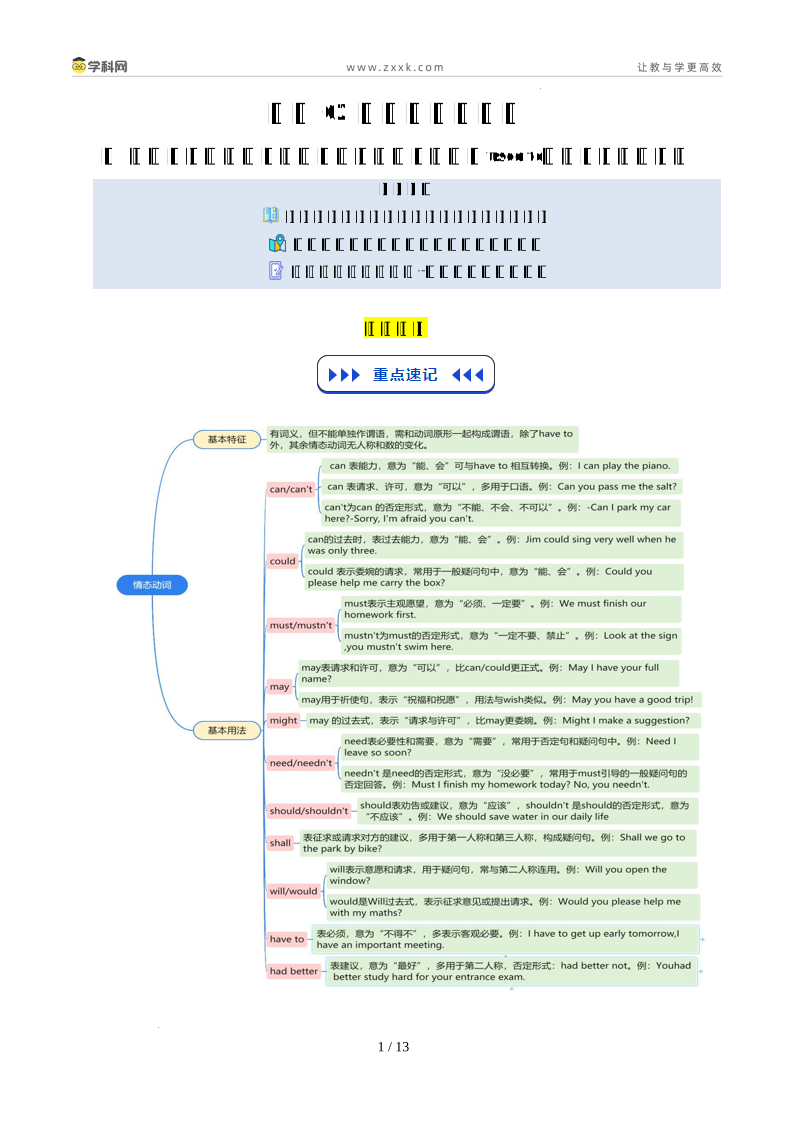
情态动词
1.Students ________ follow the school rules. For example, they ________ bring mobile phones to class.
A.may; needn’t B.can; mustn’t C.must; can’t D.should; don’t have to
2.— ________ we bring our phones to class?
—No, we can’t. We must keep them in our lockers.
A.Must B.May C.Can D.Will
3.—________ I borrow your bike? Mine is broken.
—Sure. Here’s the key.
A.Must B.Should C.May D.Need
4.People ________ wear helmets (头盔) when they ride an e-bike according to the new traffic rules, or they will be fined.
A.must B.would C.can D.may
5.In the library you ________ draw or write in the books, or you will be fined.
A.needn’t B.mustn’t C.couldn’t D.wouldn’t
6.You ________ eat too much junk food. It’s bad for your health.
A.should B.shouldn’t C.can D.can’t
7.—________ you like some tea?
—Yes, please.
A.Need B.May C.Would D.Can
8.If you put the food or drinks into your mouth in the lab, you may _________ some of dangerous things.
A.eating B.to eat C.eats D.eat
9.—Must we clean the classroom now?
—No, you ________. You can clean it after school.
A.mustn’t B.can’t C.needn’t D.shouldn’t
10.Jack ________ be at home because I saw him in the library just now.
A.can’t B.may C.must D.mustn’t
11.It ________ rain later. I decide to take an umbrella.
A.should B.should not C.may D.may not
12.You ________ pay for your breakfasts. They are in the price of your room.
A.shouldn’t B.mustn’t C.can’t D.don’t have to
现在进行时
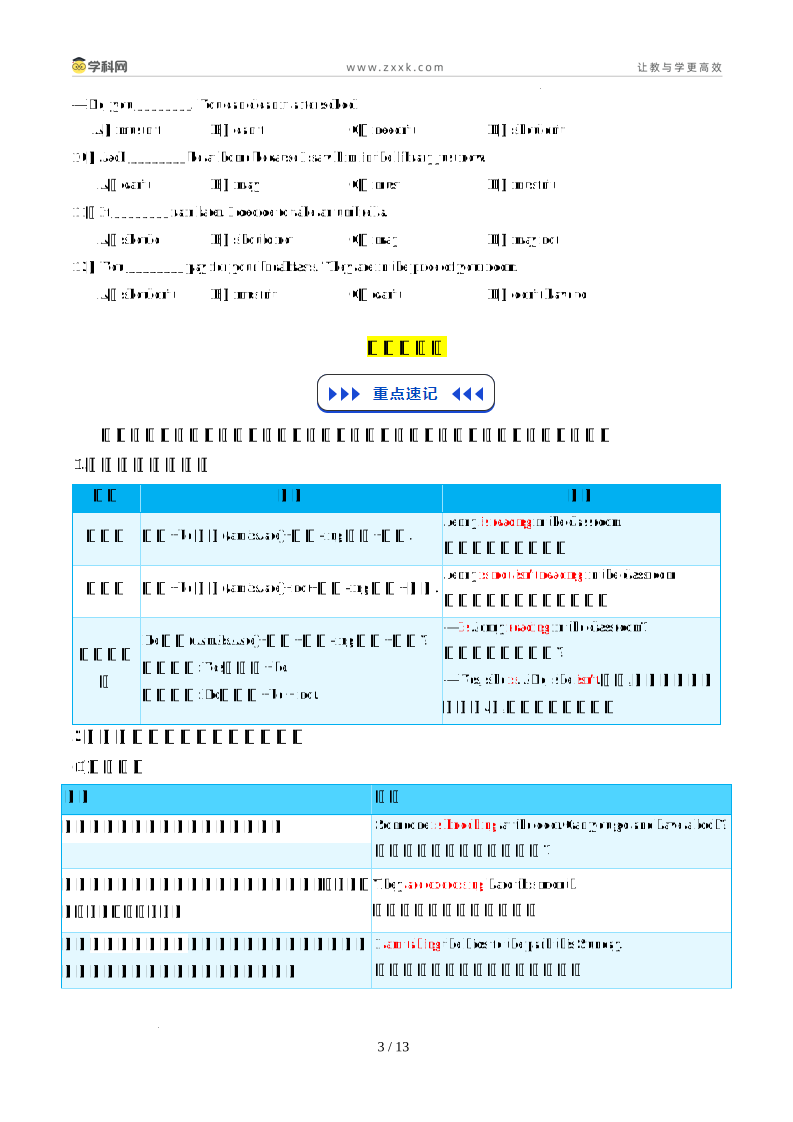
现在进行时主要用来表示现在或当前一段时间内正在进行的动作或存在的状态。
1.现在进行时的形式
句式
结构
示例
肯定句
主语+be动词(am/is/are)+动词-ing形式+其他.
Jenny is reading in the classroom.
珍妮正在教室看书。
否定句
主语+be动词(am/is/are)+not+动词-ing形式+其他.
Jenny is not/isn't reading in the classroom.
珍妮现在不在教室里看书。
一般疑问句
Be动词(Am/Is/Are)+主语+动词-ing形式+其他?
肯定回答:Yes,主语+be.
否定回答:No,主语+be + not.
—Is Jenny reading in the classroom?
珍妮在教室看书吗?
—Yes, she is. /No, she isn't.是的,她在教室看书读书。/不,她没在教室看书。
2.现在进行时的用法及时间标志词
(1)基本用法
用法
示例
表示说话人说话时正在进行的动作。
Someone is knocking at the door.Can you go and have a look?
有人在敲门。你能去看看吗?
表示现阶段正在进行的动作或持续的状态,但动作在说话时未必正在进行。
They are exercising hard this month.
他们这个月正在努力锻炼。
表示按计划或安排将要发生的动作,此时常与表示将来的时间状语连用,主语往往是人。
I am taking the kids to the park this Sunday.
这个星期天我要带孩子们去公园。
go,leave,arrive,start,come,begin等非延续性动词用现在进行时表示马上就要发生的事情。
如:The school sports meeting is coming.
学校运动会就要到来了。
表示现阶段经常或习惯性的动作,常与always, usually等副词连用,含有不满、好奇或赞扬等感情色彩。
I'm always losing keys.我总是丢钥匙。(生气)
(2)时间标志词
now 现在 at this time 这时 at present 目前
right now 此刻;此时此刻 at the/this moment此刻 when/while 当……时
Look/Listen!看/听! these days 近来 these days近来
(3)易错点:不用进行时的情况
①表示思考、理解等心理活动类动词不能用于进行时态:believe、hear、doubt、forget、know、remember、agree、understand等。
She understands you better now. 她现在更了解你了。
②表示占有与从属类的动词及动词短语不能用于进行时态。常见的此类动词(短语)有have(有)、own、possess、belong to、consist of等。
This dictionary belongs to Tom.. 这本词典属于汤姆。
③表示感觉、感知类的动词一般不能用于进行时态。常见的此类动词有look、sound、taste、feel、smell等。feel 用于进行时态时表示一时的感觉。
I'm not feeling well today. 我今天感觉不适。
④表示感情类动词不能用于进行时态,常见的此类动词有like、love、hate、hope、prefer、want、wish等。
He loves her very much. 他爱她很深。
1. Look! Some fire engines ________ fast towards the Garden Hotel which is on fire now.
A.drive B.have driven C.drove D.are driving
2. —Be quiet! Your father ________ an online meeting now.
—OK, mum.
A.had B.has C.will have D.is having
3. Linda ________ her grandmother every Saturday. Now she ________ for her visit tomorrow.
A.is visiting; is preparing B.visits; is preparing
C.visits; prepares D.is visiting; prepares
4. — Listen! Mary ________ upstairs.
— Yes. Everyone knows she ________ singing very much.
A.sings, likes B.is singing, is liking C.sings, is liking D.is singing, likes
5. (2025·江苏宿迁·一模)—Jim, could you help me plant some trees in the garden?
—Just a minute, Dad. I ________ my dirty shoes now.
A.washed B.am washing C.have washed D.was washing
6. The lights are still on. The Blacks (plan) what to take to the party tomorrow in the next room.
7. It is said our city (build) another science museum in three years.
8. Shall we go out for a picnic if it (not be) rainy tomorrow?
9. Shenyang Imperial Palace (receive) more than 4 million visitors in 2023.
10. Andy is a good boy because he (follow) the rules both at school and at home.
祈使句和感叹句
一、感叹句
由what引导的感叹句
1. ① What + a / an+(形容词)+单数可数名词+主语+谓语!
② What+名词词组+主语+谓语!
· What a fine day it is!
2. What+(形容词)+可数名词复数或不可数名词+主语+谓语!
· What kind women they are!
What nice music it is!
由How引导的感叹句
(how用来修饰形容词、副词或动词。)
1. How+形容词(副词)+主语+谓语!
· How hard the workers are working!
· How clever the girl is!
· How quickly the boy is writing!
二、祈使句
(一).祈使句的定义及句式特征:
定义:祈使句是用来表示请求、命令、叮嘱、邀请、劝告或祝愿等的句子。它的特点是通常省略主语you,以动词原形开头,末尾可用句号或感叹号。祈使句没有疑问句的形式,一般只有肯定和否定两种形式。
Go and wash your hands. (表命令)
Be quite, please. (Please be quiet.)(表请求)
Be kind to your sister.(表劝告)
Watch your steps.(表警告)
No parking. (表禁止)
Best wishes! (表祝愿)
(2) 句型
肯定句
否定句
1. 动词原形+其他
① Come in, please!
② Please open your books!
③Put them away!
1.Don’t + 动词原形
①Don’t believe him!
②Don’t open the window.
③Don’t put them away
2. Be+名词/形容词+其他
①Be quiet / quick!
②Be a good student!
③Be careful when crossing the street.
2. Don’t /Never +be+名词/形容词+其他
①Don’t be careless!
②Don’t be a bad boy
③Never do it again!
3. let sb. do sth
① Let him do it by himself.
② Let me help you.
③Let’s go to the park.
3. let sb. not do sth.
① Let her not do that.
② Let her not hurt me!
② Don’t let them go, please.
4. No+名词 / 动词ing
① NO PHOTOS! ② No parking!
【注意】
1 在表达请求或劝告时,有时为了表示委婉的语气,可以在句首或句末please,
但是如果please加在句末,应用逗号将其与前面的部分隔开。
Sit down, please. Please look after the twins.
2 有时为了加强语气,可以在动词前使用do. Do be careful!一定要小心!
3 有时为了强调对方,也可加上主语you,人名或everybody, anybody等不定代词。
You sweep the floor and I clean the window. Stand up, everybody.
(三)祈使句的回答
祈使句的动作通常是表示将来发生的动作,所以回答祈使句时,一般用will或won’t。
在回答具有否定意义的祈使句时,要注意两点:
1) Please remember to bring your homework here tomorrow. ---Yes, I will.
2) Don’t look out of the window. ---Sorry, I won’t..
(四)祈使句,and/or +结果, 可以转换为if 从句。
Hurry up, or you will be late for school.快点,否则你会迟到的。
=If you hurry up, you won’t be late for school.
=If you don’t hurry up, you will be late for school.
Study hard, and you will catch up with others. 努力学习,你就会赶上别人。
= If you study hard , you will catch up with others.
1. ________ beautiful place Yunnan is! ________ interesting the talk is!
A.How; What B.What; How C.What a; How D.How; What an
2.—It’s sunny today. Could you join us to have a picnic in the garden?
—________ nice the weather is today! Let’s go.
A.What B.What a C.How D.How a
3. ________ good advice he gave me ________ how to make a speech!
A.What, on B.What a, on C.How a, about D.How, on
4. ________ great news! My best friend Lily has been elected to be monitor in our class.
A.What an B.What C.What a D.How
5. —________ beautiful the peacock dances are!
—Yes! The dancers have practiced for a long time.
A.What B.What a C.How D.How a
6. —________ exciting the news report is!
—Yes. It shows us the beauty of the natural wonders.
A.How B.What a C.What an D.What
7. ________ in the library. It’s a place for reading.
A.Don’t talk B.Not talk C.Not talking D.Talk not
8. No ______ loudly in the museum! Please be quiet.
A.talk B.talking C.talks D.talked
9. Ben, ________ off the tap while brushing your teeth.
A.turn B.turns C.turning D.turned
10. Let’s ________ the Da Li this Sunday.
A.go B.to go C.going D.go to
Used to的用法
used to意为”过去常常·····”,表示过去的习惯、状态或过去反复发生的动作,暗含现在已不存在或不再发生之意.其中,to为不定式符号,后接动词原形,其主语可以是各种人称.
考点一:used to的句式
肯定句
used to+动词原形
He used to wear glasses.他过去戴眼镜.
否定句
didn't use to+动词原形
He didn't use to wear glasses.他过去不戴眼镜.
usedn't to+动词原形(用于正式英语)
He usedn't to wear glasses.他过去不戴眼镜.
一般疑问句
及其答语
①-Did sb. use to+动词原形...?
-Yes, sb.+ did./No, sb. +didn't.
-Did he use to wear glasses?他过去戴眼镜吗?
-Yes, he did./No, he didn't.是的,他戴./不,他不戴.
②Used sb to+动词原形...?
-Yes, sb.+ used to./No, sb. +usedn't to.
-Used he to wear glasses?他过去戴眼镜吗?
-Yes, he used to./No, he usedn't to.是的,他过去戴./不,他过去不戴.
考点二:辨析used to do;be used to do;be/get used to doing
✅ I used to ride a bike. 我以前经常骑自行车。
✅ I'm used to getting up early. 我习惯早起了。
✅ This knife is used to cut bread. 这把刀子是用来切面包的。=This knife is used for cutting bread.
1. Helen _______ be interested in cooking, but now she hardly cooks.
A.was used to B.wasn’t used to C.didn’t use to D.used to
2. There________ some small restaurants and shops near our primary school.
A.used to be B.used to have C.was used to be D.was used to having
3. My grandparents used to _______ in the countryside, but now they are used to _______ in the city.
A.live; live B.live; living C.living; live D.living; living
时间状语从句
时间状语从句:用表示时间的连词连接一个句子作状语,这样的主从复合句就是时间状语从句。
引导时间状语从句的连词及具体用法:
连词
含义及用法
示例
while
意为“正当……时”, while引导的从句中,谓 语动词必须是延续性动词,且常用进行时
Everybody was dancing while the music was playing.
音乐响起时,每个人都在跳舞。
when
意为“当……的时候”, 从句用一般过去时,主句用过去的某种时态。由 when引导的从句,谓语动词既可以是延续性动词,也可以是非延续性动词
When he arrives, he will tell us all about the match.
他到达之后,就会告诉我们有关比赛的一切情况。
as
意为“当……时”,引导时间状语从句时,谓语动词只能用延续性动词,主、从句动作同时发生时,强调“一边……一 边…… ”
My father was cooking as I was reading a book.
我在读书的时候我爸爸正在做饭。
after
意为“在……之后”,表 示主句的动作发生在从句的动作之后
I went to bed after I finished my homework.
做完作业后,我去睡觉了。
before
意为“在……之前”,表示主句的动作发生在从句的动作之前
Try to finish your work before you leave.
在你离开之前设法完成你的工作。
until
意为“直到……为止”,常用在“not... until... ” 结构中,表示“直到……才……”
He did not go to bed until he finished his homework.
他直到完成家庭作业才上床睡觉。
since
意为“自……以来”,主句用现在完成时,从句用一般过去时
I have lived in Beijing since I came to China.
我来到中国以来就住在北京。
as soon as
意为“—……就……”, 引导的从句常用一般现 在时,主句用一般将来时
I will return “The Gone with the Wind” to the library as soon as I finish reading it.
我一读完《飘》就把它归还图书馆。
注意:在含有when引导的时间 状语从句的主从复合句中,若主句用一般将来时,从句常用一般现在时。
My father will come back when he isn't busy.当我父亲不忙的时候,他将回来。
1. The man was looking at a postcard sadly ________ his friend came in.
A.while B.when C.after D.before
2. Jack was busy taking notes ________ Mr.Brown was giving a lesson.
A.if B.while C.unless D.when
3. —There is still a lot of work to do ________ we finish the project.
—Don’t worry. Let’s keep working hard.
A.or B.but C.before D.because
4. She felt more confident _______ she won the speaking competition.
A.until B.while C.before D.after
5. I didn’t go to bed ________ my mother came home last night.
A.however B.because C.so D.until
6. The boy promised to give this newly-published novel to Jack ________ he came back.
A.as long as B.as soon as C.as well as D.as fast as
7. — Hello! May I speak to Mike?
— Sorry, he’s out. I will ask him to call as soon as he ________ back.
A.will come B.comes C.come D.came
8. James always shares some housework ________ his parents work hard.
A.but B.or C.when D.before
`.(2024·四川广元·中考真题)—I wonder if these are Jane’s glasses.
—They ________hers. She doesn’t wear glasses.
A.are B.might be C.must be D.can’t be
2.(2024·江苏南通·中考真题)—Must I use pink to paint my bedroom?
—No, you ________. You can use any colour you like,
A.can’t B.mustn’t C.shouldn’t D.needn’t
3.(2024·内蒙古呼和浩特·中考真题)—Must I come before 6:00 tomorrow morning?
—No, you ________. The meeting will begin at 8:00.
A.mustn’t B.needn’t C.can’t D.shouldn’t
4.(2024·西藏·中考真题)You ________ eat too much food before you go to bed, or it’s bad for you.
A.can B.could C.shouldn’t D.would
5.(2024·江苏镇江·中考真题)With the help of modern technology, now people ________ enjoy the proudest moment when China’s first astronaut Yang Liwei entered space.
A.may B.can C.should D.must
6.(2024·北京·中考真题)— Bill, ________ I use your ruler?
— Of course you can. Here you are.
A.can B.must C.need D.should
7.(2024·江苏常州·中考真题)When you make a fresh salad, you ______ add your favorite fruit if you would like to.
A.may B.should C.must D.have to
8.(2024·吉林长春·中考真题)Lili ________ be at home. She has gone to the farm to pick apples.
A.mustn’t B.can’t C.must D.can
9.(2025·云南玉溪·二模)— Peter, what are your class doing?
—Oh, we ________ a speech about national heroes.
A.will prepare B.are preparing C.prepared D.have prepared
10.(2025·江西南昌·二模)Some teenagers ________ football over there. Let’s go and join them.
A.play B.played C.are playing D.were playing
11.(2024·吉林长春·中考真题)Look! The students ________ an art class in the park.
A.have B.were having C.had D.are having
12.(2024·内蒙古呼和浩特·中考真题)In China, hotpot has a history of over 1,000 years. It first ________ in the Mongolia area, and then became popular in the southern part of China.
A.has appeared B.appears C.will appear D.appeared
13.(2024·北京·中考真题)—What did you do last Saturday, Tina?
—I ________ to the nursing home and worked as a volunteer there.
A.go B.went C.will go D.was going
14.(2024·内蒙古呼和浩特·中考真题)—Mom, when can I have an ice cream?
—When you ________ your meal. But don’t rush it.
A.finish B.will finish C.finishes D.finished
15.(2024·江苏宿迁·中考真题)To make our hometown more beautiful, we _______ many trees and flowers every year.
A.plant B.are planting C.planted D.were planting
16.(2024·天津·中考真题)— Jane and I _________ a picnic this Sunday. Would you like to come with us?
— Sure. See you then.
A.had B.have had C.were having D.are going to have
17.(2024·甘肃白银·中考真题)—Oh, no! Your brother left his umbrella at home. There ________ heavy rain this afternoon.
—Don’t worry, Mom. I’ll bring it to him.
A.was B.has been C.are D.will be
18.(2025·云南德宏·一模)Listen carefully in class, ________ you will have no problem with your study.
A.or B.but C.and D.because
19.(2024·吉林长春·中考真题)________ helpful the speech is! It tells us to use the Internet safely.
A.What B.What a C.How D.What an
20.(2024·四川广元·中考真题)—________ fresh air it is in Qingcheng Mountain!
—Yes. Because there are a lot of trees.
A.How B.What C.How a D.What a
21.(2024·西藏·中考真题)________ amazing magic show I saw yesterday!
A.How B.What C.What an D.What a
22.(2024·江苏宿迁·中考真题)—_______ fine weather! It’s a good match for going on a picnic.
—Exactly. I simply can’t wait!
A.How B.What C.How a D.What a
23.(2024·甘肃临夏·中考真题)—________ wonderful experience our family had in the Mogao Caves!
—I’m glad you had a good time.
A.What B.How C.How a D.What a
24.(2025·山东日照·一模)Tom used to ________ TV on weekends, but now he is used to ________ with his friends outside.
A.watch; playing B.watching; watching
C.watch; play D.watching; play
25.(2024·甘肃临夏·中考真题)Tom didn’t go to bed ________ his mother came back last night.
A.until B.if C.because D.unless
26.(2025·天津河北·一模)Please send me a text message _________ you arrive at the station.
A.because B.but C.while D.as soon as
27.(2025·上海·模拟预测)The dog didn’t stop barking ________ the strangers went far away.
A.since B.until C.because D.while
28.(2025·安徽安庆·一模)—What do you usually do ________ you finish your homework?
—I usually go out for a walk with my parents or read the books that I like.
A.since B.after C.until D.while
29.(2025·江苏南通·一模)—Daniel made a serious mistake, but he took action to change that ________ it got worse.
—Luckily, he didn’t cause any loss.
A.when B.after C.until D.before
30.(2025·江西抚州·模拟预测)Jack ________ get up late but now he ________ reading English in the morning, so his English level has improved a lot.
A.used to; is getting used to B.used to; gets used to
C.is getting used to; used to D.used to; getting used to
二、短文填空
(2024·山东日照·中考真题)阅读下面短文,在空白处填入1个单词或括号内所给单词的正确形式 (每空不多于3个单词)。
Using AI to help others
“At first, I just wanted a tool to help with my studies. Then it 1 (draw) attention from more people,” Qiu Yumo, aged 13, told Teens. Qiu is from Huitong School in Shenzhen, Guangdong. She made AI Button. It’s 2 online AI learning tool for middle school students.
“My classmates and I want to have a learning friend 3 (help) us remember the key information. When we don’t know something, we can also ask for help at any time,” Qiu said about her idea.
Students only need to put what they 4 (study) into AI Button. The AI will 5 (quick) find key points, ask questions, 6 answer students’ questions as well. “This AI is like a teacher and meets each 7 (student) needs,” Qiu said.
Qiu Yumo started learning programming 8 the age of six. She started to program with AI to make tools in 2023. As a pet lover, she also made a tool to count pets’ steps, which can help people to keep their pets healthy.
Many students loved Qiu’s idea of AI Button. They wanted to join her to make it 9 (good), so that they could get more timely help. “Now I have a small team of students from different schools. We are improving AI Button and trying to let more people know 10 ,” she said.
19 / 21
学科网(北京)股份有限公司
$$
专题02 核心语法复习二
( 情态动词、现在进行时、祈使句和感叹句、used to、时间状语从句)
内容导航
重点速记:知识点和关键点梳理,查漏补缺
难点强化:即学即练强化效果,能力提升
复习提升:真题感知+提升专练,全面突破
情态动词
1.Students ________ follow the school rules. For example, they ________ bring mobile phones to class.
A.may; needn’t B.can; mustn’t C.must; can’t D.should; don’t have to
【答案】C
【详解】句意:学生们必须遵守学校的规定。例如,他们不能把手机带到课堂上。
考查情态动词的用法。may可以;needn’t不必;can能;mustn’t禁止;must必须;can’t不能;should应当;don’t have to不必。根据“follow the school rules”可知,校规是必须遵守的,而且是不能带手机到校的。故选C。
2.— ________ we bring our phones to class?
—No, we can’t. We must keep them in our lockers.
A.Must B.May C.Can D.Will
【答案】C
【详解】句意:——我们可以带手机来上课吗?——不,不行。我们必须把它们放在储物柜里。
考查情态动词辨析。Must必须;May可能;Can可以/能够;Will将要。根据答句“No, we can’t.”中的“can’t”可知,问句询问的是“是否允许”,需用“Can”提问。故选C。
3.—________ I borrow your bike? Mine is broken.
—Sure. Here’s the key.
A.Must B.Should C.May D.Need
【答案】C
【详解】句意:——我能借你的自行车吗?我的坏了。——当然。这是钥匙。
考查情态动词。Must必须;Should应该;May能;Need需要。根据答语“Sure”可知,此处是请求许可,需用“May”表示礼貌询问。故选C。
4.People ________ wear helmets (头盔) when they ride an e-bike according to the new traffic rules, or they will be fined.
A.must B.would C.can D.may
【答案】A
【详解】句意:根据新的交通规则,人们骑电动自行车时必须戴头盔,否则他们将被罚款。
考查情态动词辨析。must必须;would将会,愿意;can能够,可以;may也许,可能。根据“or they will be fined”可知,不戴头盔会被罚款,所以骑电动自行车时必须戴头盔,故选A。
5.In the library you ________ draw or write in the books, or you will be fined.
A.needn’t B.mustn’t C.couldn’t D.wouldn’t
【答案】B
【详解】句意:在图书馆你不能在书上画画或写字,否则你会被罚款。
考查情态动词。needn’t不必;mustn’t禁止;couldn’t不能;wouldn’t不会。根据“or you will be fined”可知,是禁止在书上画画或写字。故选B。
6.You ________ eat too much junk food. It’s bad for your health.
A.should B.shouldn’t C.can D.can’t
【答案】B
【详解】句意:你不应该吃太多垃圾食品。这对你的健康有害。
考查情态动词辨析。should应该;shouldn’t不应该;can能够;can’t不能。根据“It’s bad for your health.”可知,吃太多垃圾食品有害健康,shouldn’t “不应该”符合句意。故选B。
7.—________ you like some tea?
—Yes, please.
A.Need B.May C.Would D.Can
【答案】C
【详解】句意:——你想要些茶吗?——好的,麻烦了。
考查情态动词。Need需要;May可以;Would愿意;Can能,会。根据答语“Yes, please”和“you like …”可知,此处考查“Would you like...?”句型,常用来询问对方意愿,这里是询问对方是否要喝点茶。故选C。
8.If you put the food or drinks into your mouth in the lab, you may _________ some of dangerous things.
A.eating B.to eat C.eats D.eat
【答案】D
【详解】句意:如果你在实验室里把食物或饮料放进嘴里,你可能会吃到一些危险的东西。
考查情态动词的用法。分析句子结构,空格所在句中的情态动词may后应接其动词原形。故选D。
9.—Must we clean the classroom now?
—No, you ________. You can clean it after school.
A.mustn’t B.can’t C.needn’t D.shouldn’t
【答案】C
【详解】句意:——我们现在必须打扫教室吗?——不,你们不必。你们可以放学后打扫。
考查情态动词辨析。mustn’t禁止;can’t不能;needn’t不必;shouldn’t不应该。根据“No, you…. You can clean it after school.”可知,此处表示“不必现在打扫”,must必须,其否定回答用needn’t表示“不必”。故选C。
10.Jack ________ be at home because I saw him in the library just now.
A.can’t B.may C.must D.mustn’t
【答案】A
【详解】句意:杰克不可能在家,因为我刚才在图书馆看见他了。
考查情态动词辨析。can’t不可能;may也许;must一定;mustn’t禁止。根据“I saw him in the library just now”可知,“我”刚才在图书馆看见杰克了,由此推测他不可能在家。因此,此处表示把握较大的否定推测,can’t符合语境。故选A。
11.It ________ rain later. I decide to take an umbrella.
A.should B.should not C.may D.may not
【答案】C
【详解】句意:一会儿可能下雨。我决定带把伞。
考查情态动词。should应该;should not不应该;may可能;may not可能不。根据“I decide to take an umbrella.”可知,有可能下雨,因此要带把伞,故选C。
12.You ________ pay for your breakfasts. They are in the price of your room.
A.shouldn’t B.mustn’t C.can’t D.don’t have to
【答案】D
【详解】句意:你不必为早餐付费。早餐已包含在房费中。
考查情态动词。shouldn’t不应该;mustn’t不准;can’t不能够;don’t have to不必。根据“They are in the price of your room.”可知,早餐费已包含在房费中,所以不必付费。故选D。
现在进行时
现在进行时主要用来表示现在或当前一段时间内正在进行的动作或存在的状态。
1.现在进行时的形式
句式
结构
示例
肯定句
主语+be动词(am/is/are)+动词-ing形式+其他.
Jenny is reading in the classroom.
珍妮正在教室看书。
否定句
主语+be动词(am/is/are)+not+动词-ing形式+其他.
Jenny is not/isn't reading in the classroom.
珍妮现在不在教室里看书。
一般疑问句
Be动词(Am/Is/Are)+主语+动词-ing形式+其他?
肯定回答:Yes,主语+be.
否定回答:No,主语+be + not.
—Is Jenny reading in the classroom?
珍妮在教室看书吗?
—Yes, she is. /No, she isn't.是的,她在教室看书读书。/不,她没在教室看书。
2.现在进行时的用法及时间标志词
(1)基本用法
用法
示例
表示说话人说话时正在进行的动作。
Someone is knocking at the door.Can you go and have a look?
有人在敲门。你能去看看吗?
表示现阶段正在进行的动作或持续的状态,但动作在说话时未必正在进行。
They are exercising hard this month.
他们这个月正在努力锻炼。
表示按计划或安排将要发生的动作,此时常与表示将来的时间状语连用,主语往往是人。
I am taking the kids to the park this Sunday.
这个星期天我要带孩子们去公园。
go,leave,arrive,start,come,begin等非延续性动词用现在进行时表示马上就要发生的事情。
如:The school sports meeting is coming.
学校运动会就要到来了。
表示现阶段经常或习惯性的动作,常与always, usually等副词连用,含有不满、好奇或赞扬等感情色彩。
I'm always losing keys.我总是丢钥匙。(生气)
(2)时间标志词
now 现在 at this time 这时 at present 目前
right now 此刻;此时此刻 at the/this moment此刻 when/while 当……时
Look/Listen!看/听! these days 近来 these days近来
(3)易错点:不用进行时的情况
①表示思考、理解等心理活动类动词不能用于进行时态:believe、hear、doubt、forget、know、remember、agree、understand等。
She understands you better now. 她现在更了解你了。
②表示占有与从属类的动词及动词短语不能用于进行时态。常见的此类动词(短语)有have(有)、own、possess、belong to、consist of等。
This dictionary belongs to Tom.. 这本词典属于汤姆。
③表示感觉、感知类的动词一般不能用于进行时态。常见的此类动词有look、sound、taste、feel、smell等。feel 用于进行时态时表示一时的感觉。
I'm not feeling well today. 我今天感觉不适。
④表示感情类动词不能用于进行时态,常见的此类动词有like、love、hate、hope、prefer、want、wish等。
He loves her very much. 他爱她很深。
1. Look! Some fire engines ________ fast towards the Garden Hotel which is on fire now.
A.drive B.have driven C.drove D.are driving
【答案】D
【详解】句意:看!一些消防车正快速驶向着火的花园酒店。
考查动词时态。根据“Look!”和“now”可知,此处描述的是正在发生的动作,要用现在进行时:am/is/are+doing。故选D。
2. —Be quiet! Your father ________ an online meeting now.
—OK, mum.
A.had B.has C.will have D.is having
【答案】D
【详解】句意:——安静点!你爸爸正在开网络会议。——好的,妈妈。
考查动词时态。had过去式;has一般现在时;will have一般将来时;is having现在进行时。根据“Be quiet!”和“now”可知,表示正在进行的动作,用现在进行时。故选D。
3. Linda ________ her grandmother every Saturday. Now she ________ for her visit tomorrow.
A.is visiting; is preparing B.visits; is preparing
C.visits; prepares D.is visiting; prepares
【答案】B
【详解】句意:琳达每个星期六都去拜访她的祖母。现在她正在为她明天的拜访做准备。
考查时态。第一空根据 “every Saturday(每个星期六)” 可知是一般现在时,主语Linda是第三人称单数,所以动词用visits;第二空根据 “Now(现在)” 可知是现在进行时,结构是 “be+动词-ing形式” ,主语she是第三人称单数,be动词用is。故选B。
4. — Listen! Mary ________ upstairs.
— Yes. Everyone knows she ________ singing very much.
A.sings, likes B.is singing, is liking C.sings, is liking D.is singing, likes
【答案】D
【详解】句意:——听!玛丽正在楼上唱歌。——是的。大家都知道她非常喜欢唱歌。
考查动词时态。根据“Listen!”可知,第一句是现在进行时;like一般不用进行时 ,故第二空用likes,故选D。
5. (2025·江苏宿迁·一模)—Jim, could you help me plant some trees in the garden?
—Just a minute, Dad. I ________ my dirty shoes now.
A.washed B.am washing C.have washed D.was washing
【答案】B
【详解】句意:——吉姆,你能帮我在花园里种些树吗? ——稍等一下,爸爸。我现在正在洗我的脏鞋子。
考查动词时态。washed洗,过去式,一般过去时;am washing正在洗,现在进行时;have washed已经洗,现在完成时;was washing正在洗,过去进行时。根据“Just a minute, Dad.”以及“now”可知,吉姆现在正在洗鞋子,强调此时此刻正在进行的动作,应用现在进行时am washing。故选B。
6. The lights are still on. The Blacks (plan) what to take to the party tomorrow in the next room.
【答案】are planning
【详解】句意:灯还亮着。布莱克一家正在隔壁房间计划明天带什么去聚会。根据“The lights are still on”可知,本句所表达的事情正在发生,本句应用现在进行时。根据“The Blacks...what to take to the party tomorrow in the next room.”可知,空格处为本句谓语动词,主语为The Blacks,表示“布莱克一家人”,为复数,故填are planning。
7. It is said our city (build) another science museum in three years.
【答案】will build
【详解】句意:据说我们城市三年后将建造另一个科学博物馆。“in three years”表示“三年后”,是一般将来时的时间标志。故填will build。
8. Shall we go out for a picnic if it (not be) rainy tomorrow?
【答案】isn’t/is not
【详解】句意:如果明天不下雨,我们出去野餐好吗?分析句子结构可知,这是一个含有if引导的条件状语从句,遵循“主将从现”原则,从句主语it是第三人称单数,be动词要用is,其否定形式为isn’t或is not。故填isn’t/is not。
9. Shenyang Imperial Palace (receive) more than 4 million visitors in 2023.
【答案】received
【详解】句意:沈阳故宫在2023年接待了超过400万游客。根据“in 2023”可知,时态为一般过去时,因此填receive的过去式。故填received。
10. Andy is a good boy because he (follow) the rules both at school and at home.
【答案】follows
【详解】句意:Andy是一个好孩子,因为他在学校和家里都遵守规则。根据because引导的原因状语从句和“Andy is a good boy”可知,表示经常性状态,时态应为一般现在时;主语是Andy,谓语动词用第三人称单数形式。故填follows。
祈使句和感叹句
一、感叹句
由what引导的感叹句
1. ① What + a / an+(形容词)+单数可数名词+主语+谓语!
② What+名词词组+主语+谓语!
· What a fine day it is!
2. What+(形容词)+可数名词复数或不可数名词+主语+谓语!
· What kind women they are!
What nice music it is!
由How引导的感叹句
(how用来修饰形容词、副词或动词。)
1. How+形容词(副词)+主语+谓语!
· How hard the workers are working!
· How clever the girl is!
· How quickly the boy is writing!
二、祈使句
(一).祈使句的定义及句式特征:
定义:祈使句是用来表示请求、命令、叮嘱、邀请、劝告或祝愿等的句子。它的特点是通常省略主语you,以动词原形开头,末尾可用句号或感叹号。祈使句没有疑问句的形式,一般只有肯定和否定两种形式。
Go and wash your hands. (表命令)
Be quite, please. (Please be quiet.)(表请求)
Be kind to your sister.(表劝告)
Watch your steps.(表警告)
No parking. (表禁止)
Best wishes! (表祝愿)
(2) 句型
肯定句
否定句
1. 动词原形+其他
① Come in, please!
② Please open your books!
③Put them away!
1.Don’t + 动词原形
①Don’t believe him!
②Don’t open the window.
③Don’t put them away
2. Be+名词/形容词+其他
①Be quiet / quick!
②Be a good student!
③Be careful when crossing the street.
2. Don’t /Never +be+名词/形容词+其他
①Don’t be careless!
②Don’t be a bad boy
③Never do it again!
3. let sb. do sth
① Let him do it by himself.
② Let me help you.
③Let’s go to the park.
3. let sb. not do sth.
① Let her not do that.
② Let her not hurt me!
② Don’t let them go, please.
4. No+名词 / 动词ing
① NO PHOTOS! ② No parking!
【注意】
1 在表达请求或劝告时,有时为了表示委婉的语气,可以在句首或句末please,
但是如果please加在句末,应用逗号将其与前面的部分隔开。
Sit down, please. Please look after the twins.
2 有时为了加强语气,可以在动词前使用do. Do be careful!一定要小心!
3 有时为了强调对方,也可加上主语you,人名或everybody, anybody等不定代词。
You sweep the floor and I clean the window. Stand up, everybody.
(三)祈使句的回答
祈使句的动作通常是表示将来发生的动作,所以回答祈使句时,一般用will或won’t。
在回答具有否定意义的祈使句时,要注意两点:
1) Please remember to bring your homework here tomorrow. ---Yes, I will.
2) Don’t look out of the window. ---Sorry, I won’t..
(四)祈使句,and/or +结果, 可以转换为if 从句。
Hurry up, or you will be late for school.快点,否则你会迟到的。
=If you hurry up, you won’t be late for school.
=If you don’t hurry up, you will be late for school.
Study hard, and you will catch up with others. 努力学习,你就会赶上别人。
= If you study hard , you will catch up with others.
1. ________ beautiful place Yunnan is! ________ interesting the talk is!
A.How; What B.What; How C.What a; How D.How; What an
【答案】C
【详解】句意:云南是一个多么美丽的地方啊!这个演讲是多么有趣啊!
考查感叹句。感叹句的结构是:What + a/an + 形容词 + 可数名词单数 + 主语 + 谓语!/ What + 形容词 + 不可数名词/可数名词复数 + 主语 + 谓语!/How + 形容词 / 副词 + 主语 + 谓语!第一个空后“place”是可数名词单数,所以用What a引导;第二个空后的“interesting”是形容词,故用How引导。故选C。
2.—It’s sunny today. Could you join us to have a picnic in the garden?
—________ nice the weather is today! Let’s go.
A.What B.What a C.How D.How a
【答案】C
【详解】句意:——今天是晴天。你能和我们一起在花园里野餐吗? ——今天的天气多好啊!我们走吧。
考查感叹句。分析句子结构可知,该句中心词nice为形容词;主语为the weather;谓语为is。应用感叹句型“How+形容词+主语+谓语!”。故选C。
3. ________ good advice he gave me ________ how to make a speech!
A.What, on B.What a, on C.How a, about D.How, on
【答案】A
【详解】句意:关于如何演讲,他给了我多么好的建议啊!
考查感叹句和介词辨析。根据“good advice he gave me”可知,该句中心词是不可数名词“advice”,符合的结构“What+形容词+不可数名词+主谓”,因此第一空填“What”;“关于……的建议”常用“advice on something”,第二空填on。故选A。
4. ________ great news! My best friend Lily has been elected to be monitor in our class.
A.What an B.What C.What a D.How
【答案】B
【详解】句意:好消息!我最好的朋友莉莉被选为我们班的班长。
考查感叹句。分析句子结构可知,此句为感叹句,中心词为不可数名词“news”,结构为“What + 形容词 + 不可数名词 + 主语+谓语!”,结合选项可知,B项符合。故选B。
5. —________ beautiful the peacock dances are!
—Yes! The dancers have practiced for a long time.
A.What B.What a C.How D.How a
【答案】C
【详解】句意:——孔雀舞多美啊!——是的!舞者们已经练习了很长时间。
考查感叹句。感叹句有“What+名词短语+主谓”或“How+形容词/副词+主谓”。beautiful是形容词,故用how引导感叹句。故选C。
6. —________ exciting the news report is!
—Yes. It shows us the beauty of the natural wonders.
A.How B.What a C.What an D.What
【答案】A
【详解】句意:——这个新闻报道多么激动人心啊!——是的,它给我们展示了自然奇迹的美。
考查感叹句。感叹句结构为“What+名词短语+主谓!”或“How+形容词/副词+主谓!”,本句中心词exciting是形容词,故用how引导感叹句。故选A。
7. ________ in the library. It’s a place for reading.
A.Don’t talk B.Not talk C.Not talking D.Talk not
【答案】A
【详解】句意:在图书馆里不要说话。这是一个阅读的地方。
考查祈使句。根据“It’s a place for reading.”可知,强调图书馆的功能是阅读,所以不要在里面说话,应用祈使句的否定形式,结构是No+V-ing或Don’t+V原形。故选A。
8. No ______ loudly in the museum! Please be quiet.
A.talk B.talking C.talks D.talked
【答案】B
【详解】句意:博物馆禁止大声喧哗。请保持安静。
考查祈使句。英语中常用“No+动名词(-ing形式)”的结构来表达禁止。故选B。
9. Ben, ________ off the tap while brushing your teeth.
A.turn B.turns C.turning D.turned
【答案】A
【详解】句意:本,刷牙的时候关掉水龙头。
考查祈使句。根据“off the tap while brushing your teeth.”可知,该句为祈使句,祈使句通常以动词原形开头。故选A。
10. Let’s ________ the Da Li this Sunday.
A.go B.to go C.going D.go to
【答案】D
【详解】句意:这个星期天让我们去大理吧。
考查非谓语动词。句中Let’s是Let us的缩写,let是使役动词,let sb. do sth.“让某人做某事”,go to sp.“去某地”。故选D。
Used to的用法
used to意为”过去常常·····”,表示过去的习惯、状态或过去反复发生的动作,暗含现在已不存在或不再发生之意.其中,to为不定式符号,后接动词原形,其主语可以是各种人称.
考点一:used to的句式
肯定句
used to+动词原形
He used to wear glasses.他过去戴眼镜.
否定句
didn't use to+动词原形
He didn't use to wear glasses.他过去不戴眼镜.
usedn't to+动词原形(用于正式英语)
He usedn't to wear glasses.他过去不戴眼镜.
一般疑问句
及其答语
①-Did sb. use to+动词原形...?
-Yes, sb.+ did./No, sb. +didn't.
-Did he use to wear glasses?他过去戴眼镜吗?
-Yes, he did./No, he didn't.是的,他戴./不,他不戴.
②Used sb to+动词原形...?
-Yes, sb.+ used to./No, sb. +usedn't to.
-Used he to wear glasses?他过去戴眼镜吗?
-Yes, he used to./No, he usedn't to.是的,他过去戴./不,他过去不戴.
考点二:辨析used to do;be used to do;be/get used to doing
✅ I used to ride a bike. 我以前经常骑自行车。
✅ I'm used to getting up early. 我习惯早起了。
✅ This knife is used to cut bread. 这把刀子是用来切面包的。=This knife is used for cutting bread.
1. Helen _______ be interested in cooking, but now she hardly cooks.
A.was used to B.wasn’t used to C.didn’t use to D.used to
【答案】D
【详解】句意:Helen过去对做饭很感兴趣,但是现在她几乎不做饭。
考查 used to 的用法。was used to习惯;wasn’t used to不习惯;didn’t use to过去不常;used to过去常常。根据“but now she hardly cooks.”可知,她现在几乎不做饭,过去常常做。故选D。
2. There________ some small restaurants and shops near our primary school.
A.used to be B.used to have C.was used to be D.was used to having
【答案】A
【详解】句意:在我们小学附近曾经有一些小餐馆和商店。
考查动词短语和There be句型。used to do sth. 过去常常做某事;be used to do sth.被用来做某事;be used to doing sth.习惯做某事。根据“some small restaurants and shops near our primary school.”可知,这里指的是小学附近过去有一些小餐馆和商店。此句是There be句型,用used to be。故选A。
3. My grandparents used to _______ in the countryside, but now they are used to _______ in the city.
A.live; live B.live; living C.living; live D.living; living
【答案】B
【详解】句意:我祖父母过去住在乡村,但是现在他们习惯于住在城市了。
考查非谓语动词和动词短语。根据语境可知,这里是说祖父母过去住在农村,现在习惯住在城市。第一个空用used to do“过去常常”,排除D和C,第二个空用be used to doing sth.“习惯于做某事”,排除A,故选B。
时间状语从句
时间状语从句:用表示时间的连词连接一个句子作状语,这样的主从复合句就是时间状语从句。
引导时间状语从句的连词及具体用法:
连词
含义及用法
示例
while
意为“正当……时”, while引导的从句中,谓 语动词必须是延续性动词,且常用进行时
Everybody was dancing while the music was playing.
音乐响起时,每个人都在跳舞。
when
意为“当……的时候”, 从句用一般过去时,主句用过去的某种时态。由 when引导的从句,谓语动词既可以是延续性动词,也可以是非延续性动词
When he arrives, he will tell us all about the match.
他到达之后,就会告诉我们有关比赛的一切情况。
as
意为“当……时”,引导时间状语从句时,谓语动词只能用延续性动词,主、从句动作同时发生时,强调“一边……一 边…… ”
My father was cooking as I was reading a book.
我在读书的时候我爸爸正在做饭。
after
意为“在……之后”,表 示主句的动作发生在从句的动作之后
I went to bed after I finished my homework.
做完作业后,我去睡觉了。
before
意为“在……之前”,表示主句的动作发生在从句的动作之前
Try to finish your work before you leave.
在你离开之前设法完成你的工作。
until
意为“直到……为止”,常用在“not... until... ” 结构中,表示“直到……才……”
He did not go to bed until he finished his homework.
他直到完成家庭作业才上床睡觉。
since
意为“自……以来”,主句用现在完成时,从句用一般过去时
I have lived in Beijing since I came to China.
我来到中国以来就住在北京。
as soon as
意为“—……就……”, 引导的从句常用一般现 在时,主句用一般将来时
I will return “The Gone with the Wind” to the library as soon as I finish reading it.
我一读完《飘》就把它归还图书馆。
注意:在含有when引导的时间 状语从句的主从复合句中,若主句用一般将来时,从句常用一般现在时。
My father will come back when he isn't busy.当我父亲不忙的时候,他将回来。
1. The man was looking at a postcard sadly ________ his friend came in.
A.while B.when C.after D.before
【答案】B
【详解】句意:那个男人正悲伤地看着一张明信片,这时他的朋友走了进来。
考查连词辨析。while当……时候,搭配延续性动词,接持续性的动作;when当……时候;after在……之后;before在……之前。当一个动作发生,另一个动作正在进行时,用when/while引导时间状语从句,且从句中的谓语动词came in“进来”为瞬间动词可知,应用when引导时间状语从句。故选B。
2. Jack was busy taking notes ________ Mr.Brown was giving a lesson.
A.if B.while C.unless D.when
【答案】B
【详解】句意:布朗先生上课的时候,杰克正忙着记笔记。
考查连词辨析。if如果,引导条件状语从句;while当……时,引导时间状语从句,强调主从句动作同时发生,且从句中常用延续性动词;unless除非,引导条件状语从句;when当……时,引导时间状语从句,可表示瞬间或延续性动作,但更侧重某个时间点。 句中“杰克记笔记”与“布朗先生上课”为同时进行的延续性动作,需用while连接,故选B。
3. —There is still a lot of work to do ________ we finish the project.
—Don’t worry. Let’s keep working hard.
A.or B.but C.before D.because
【答案】C
【详解】句意:——在我们完成这项工程之前,仍然有许多工作要做。——别担心。让我们继续努力。
考查连词辨析。or还是;but但是;before在……以前;because因为。根据“There is still a lot of work to do...we finish the project.”可知,此处表示在我们完成这项工程之前,仍然有许多工作要做。故选C。
4. She felt more confident _______ she won the speaking competition.
A.until B.while C.before D.after
【答案】D
【详解】句意:她在演讲比赛中获胜后更加自信了。考查连词。A. until直到;B. while当…时候;C. before在…之前;D. after在…之后。根据She felt more confident ___ she won the speaking competition.可知,应该是她在演讲比赛中获胜后更加自信了,故答案选D。
5. I didn’t go to bed ________ my mother came home last night.
A.however B.because C.so D.until
【答案】D
【详解】句意:昨天晚上直到我的妈妈回家了,我才上床睡觉。
考查连词辨析。however无论怎样,because因为,so所以,until直到。not....until…:直到……才……,是固定搭配。故选D。
6. The boy promised to give this newly-published novel to Jack ________ he came back.
A.as long as B.as soon as C.as well as D.as fast as
【答案】B
【详解】句意:这个男孩承诺等杰克一回来就把这本新出版的小说给他。
考查连词短语辨析。as long as 只要,引导条件状语从句;as soon as 一……就……,引导时间状语从句;as well as 也,和……一样好,连接并列成分;as fast as和……一样快,用于比较速度。 根据“The boy promised to give this newly - published novel to Jack...he came back.”可知,这里表达的是杰克一回来男孩就把小说给他,“as soon as”符合语境,引导时间状语从句,故选B。
7. — Hello! May I speak to Mike?
— Sorry, he’s out. I will ask him to call as soon as he ________ back.
A.will come B.comes C.come D.came
【答案】B
【详解】句意:——你好!我能和麦克说话吗?——对不起,他出去了。他一回来我就让他给你回电话。
考查时间状语从句。will come用于一般将来时;comes动词第三人称单数,用于一般现在时;come动词原形,用于一般现在时;came动词过去式,用于一般过去时。根据as soon as“一……就……”,可知此句为时间状语从句,主句中will ask可知,主句为一般将来时,故从句要用一般现在时表将来,从句主语为he,动词要用第三人称单数。故选B。
8. James always shares some housework ________ his parents work hard.
A.but B.or C.when D.before
【答案】C
【详解】句意:当父母努力工作时,詹姆斯总是分担一些家务。
考查连词词义辨析。but但是;or或者;when当……时候;before在……之前。根据“James always shares some housework…his parents work hard.”的语境可知,此处主从句动作同时发生,应用when引导时间状语从句。故选C。
`.(2024·四川广元·中考真题)—I wonder if these are Jane’s glasses.
—They ________hers. She doesn’t wear glasses.
A.are B.might be C.must be D.can’t be
【答案】D
【详解】句意:——我想知道这是不是Jane的眼镜。——它们不可能是她的。她不戴眼镜。
考查情态动词表推测。are是;might be可能是;must be一定是;can’t be不可能是。根据“She doesn’t wear glasses.”可知,此处表示眼镜不可能是她的,否定推测用can’t be。故选D。
2.(2024·江苏南通·中考真题)—Must I use pink to paint my bedroom?
—No, you ________. You can use any colour you like,
A.can’t B.mustn’t C.shouldn’t D.needn’t
【答案】D
【详解】句意:——我必须用粉红色来粉刷我的卧室吗?——不,你不用。你可以用任何你喜欢的颜色。
考查情态动词。can’t不能;mustn’t禁止;shouldn’t不应该;needn’t不必。根据“Must I...”可知其否定回答用needn’t。故选D。
3.(2024·内蒙古呼和浩特·中考真题)—Must I come before 6:00 tomorrow morning?
—No, you ________. The meeting will begin at 8:00.
A.mustn’t B.needn’t C.can’t D.shouldn’t
【答案】B
【详解】句意:——我明天早上必须在6点之前来吗?——不,你不必。会议将在8点开始。
考查动词辨析。mustn’t禁止;needn’t不必;can’t不能;shouldn’t不应该。对于must引导的一般疑问句的否定回答,用needn’t或don’t have to。故选B。
4.(2024·西藏·中考真题)You ________ eat too much food before you go to bed, or it’s bad for you.
A.can B.could C.shouldn’t D.would
【答案】C
【详解】句意:你不应该在睡觉前吃太多的食物,否则对你的身体不好。
考查情态动词辨析。can 可以;could可以;shouldn’t不应该;would将会。根据“or it’s bad for you”可知,此处建议睡觉前不要吃太多的食物,故选C。
5.(2024·江苏镇江·中考真题)With the help of modern technology, now people ________ enjoy the proudest moment when China’s first astronaut Yang Liwei entered space.
A.may B.can C.should D.must
【答案】B
【详解】句意:在现代科技的帮助下,现在人们可以享受中国第一位宇航员杨利伟进入太空的最自豪的时刻。
考查情态动词辨析。may可能;can能够,可以;should应该;must必须。根据“With the help of modern technology, now people … enjoy the proudest moment when China’s first astronaut Yang Liwei entered space.”可知,人们可以享受中国第一位宇航员杨利伟进入太空的最自豪的时刻,故选B。
6.(2024·北京·中考真题)— Bill, ________ I use your ruler?
— Of course you can. Here you are.
A.can B.must C.need D.should
【答案】A
【详解】句意:——Bill,我可以用你的尺子吗?——当然可以。给你。
考查情态动词辨析。can可以;must必须;need需要;should应该。根据答语中的“Of course you can.”可知,此处表示“请求使用对方的东西”,can表“请求允许”,符合句意。故选A。
7.(2024·江苏常州·中考真题)When you make a fresh salad, you ______ add your favorite fruit if you would like to.
A.may B.should C.must D.have to
【答案】A
【详解】句意:当你做新鲜的沙拉时,如果你想,你可以添加你最喜欢的水果。
考查情态动词辨析。may可以;should应该;must必须;have to不得不。根据“When you make a fresh salad, you ... add your favorite fruit if you would like to.”可知,做沙拉时,你可以添加你最喜欢的水果。故选A。
8.(2024·吉林长春·中考真题)Lili ________ be at home. She has gone to the farm to pick apples.
A.mustn’t B.can’t C.must D.can
【答案】B
【详解】句意:莉莉不可能在家。她去农场摘苹果了。
考查情态动词。mustn’t禁止;can’t不可能;must必须;can可以。根据“She has gone to the farm to pick apples.”可知她去农场摘苹果了,所以她不可能在家,表示否定推测用can’t。故选B。
9.(2025·云南玉溪·二模)— Peter, what are your class doing?
—Oh, we ________ a speech about national heroes.
A.will prepare B.are preparing C.prepared D.have prepared
【答案】B
【详解】句意:——彼得,你们班在做什么?——哦,我们正在准备关于国家英雄的演讲。
考查时态。根据“what are your class doing”可知,此处指动作正在发生,应用现在进行时,故选B。
10.(2025·江西南昌·二模)Some teenagers ________ football over there. Let’s go and join them.
A.play B.played C.are playing D.were playing
【答案】C
【详解】句意:一些青少年正在那边踢足球。我们去加入他们吧。
考查动词时态。根据“Let’s go and join them.”可知,青少年们应该是正在踢足球,应用现在进行时:am/is/are doing。故选C。
11.(2024·吉林长春·中考真题)Look! The students ________ an art class in the park.
A.have B.were having C.had D.are having
【答案】D
【详解】句意:看!学生们正在公园里上艺术课。
考查时态。根据“Look”可知此处表示动作正在进行,用现在进行时,主语是名词复数,be动词用are。故选D。
12.(2024·内蒙古呼和浩特·中考真题)In China, hotpot has a history of over 1,000 years. It first ________ in the Mongolia area, and then became popular in the southern part of China.
A.has appeared B.appears C.will appear D.appeared
【答案】D
【详解】句意:在中国,火锅已有1000多年的历史。它首先出现在蒙古地区,然后在中国南方流行起来。
考查时态。根据“It first...in the Mongolia area”可知动作发生在过去,用一般过去时,动词用过去式。故选D。
13.(2024·北京·中考真题)—What did you do last Saturday, Tina?
—I ________ to the nursing home and worked as a volunteer there.
A.go B.went C.will go D.was going
【答案】B
【详解】句意:——蒂娜,你上周六做了什么?——我去了养老院,在那里做志愿者。
考查动词的时态。根据“last Saturday”可知,句子使用一般过去时,动词用过去式,故选B。
14.(2024·内蒙古呼和浩特·中考真题)—Mom, when can I have an ice cream?
—When you ________ your meal. But don’t rush it.
A.finish B.will finish C.finishes D.finished
【答案】A
【详解】句意:——妈妈,我什么时候可以吃冰淇淋?——当你吃完饭的时候。但是不要着急。
考查动词时态。根据“when can I have an ice cream?”可知,此处用一般现在时,主语是you,动词用原形finish。故选A。
15.(2024·江苏宿迁·中考真题)To make our hometown more beautiful, we _______ many trees and flowers every year.
A.plant B.are planting C.planted D.were planting
【答案】A
【详解】句意:为了使我们的家乡更美丽,我们每年都种很多树和花。
考查时态。根据“every year”可知,是一般现在时,主语是we,动词用原形,故选A。
16.(2024·天津·中考真题)— Jane and I _________ a picnic this Sunday. Would you like to come with us?
— Sure. See you then.
A.had B.have had C.were having D.are going to have
【答案】D
【详解】句意:——这个星期天,简和我打算去野餐。你愿意和我们一起去吗?——当然。到时见。
考查动词时态。根据“this Sunday”可知,这个星期天要去野餐,事情发生在将来,时态是一般将来时,结构是will do或be doing to do。故选D。
17.(2024·甘肃白银·中考真题)—Oh, no! Your brother left his umbrella at home. There ________ heavy rain this afternoon.
—Don’t worry, Mom. I’ll bring it to him.
A.was B.has been C.are D.will be
【答案】D
【详解】句意:——哦,不!你哥哥把伞忘在家里了。今天下午会有大雨。——别担心,妈妈。我会拿给他的。
考查动词时态。根据“this afternoon”可知是一般将来时,故选D。
18.(2025·云南德宏·一模)Listen carefully in class, ________ you will have no problem with your study.
A.or B.but C.and D.because
【答案】C
【详解】句意:上课认真听讲,你的学习就不会有问题。
考查连词辨析。or否则,不然,表转折;but但是,表转折;and和,又,表顺承;because因为,表因果。根据“Listen carefully in class”可知,只要课上认真听,学习就没问题,表示顺承关系,用and连接。故选C。
19.(2024·吉林长春·中考真题)________ helpful the speech is! It tells us to use the Internet safely.
A.What B.What a C.How D.What an
【答案】C
【详解】句意:这演讲真有帮助!它告诉我们要安全地使用互联网。
考查感叹句。句子是感叹句,中心词是形容词helpful,用感叹句结构:how adj.+主谓。故选C。
20.(2024·四川广元·中考真题)—________ fresh air it is in Qingcheng Mountain!
—Yes. Because there are a lot of trees.
A.How B.What C.How a D.What a
【答案】B
【详解】句意:——青城山的空气是多么的清新啊!——是的。因为有很多树。
考查感叹句。此句中强调的中心词是不可数名词air,所以用感叹句结构:What+形容词+不可数名词+主语+谓语+其他。故选B。
21.(2024·西藏·中考真题)________ amazing magic show I saw yesterday!
A.How B.What C.What an D.What a
【答案】C
【详解】句意:昨天我看了一场多么精彩的魔术表演啊!
考查感叹句的用法。此句中心词是可数名词单数show,形容词amazing是元音音素开头,an符合句意,用what引导,句型为“what+a/an+adj+名词+主谓”。故选C。
22.(2024·江苏宿迁·中考真题)—_______ fine weather! It’s a good match for going on a picnic.
—Exactly. I simply can’t wait!
A.How B.What C.How a D.What a
【答案】B
【详解】句意:——多好的天气啊!这很适合去野餐。 ——确实不错。我简直等不及了!
考查感叹句。根据“fine weather”可知,中心词weather是不可数名词,结合what+adj.+不可数名词+(主谓)可知,what符合句式结构,故选B。
23.(2024·甘肃临夏·中考真题)—________ wonderful experience our family had in the Mogao Caves!
—I’m glad you had a good time.
A.What B.How C.How a D.What a
【答案】D
【详解】句意:——我们全家在莫高窟的经历真是太棒了!——我很高兴你玩得开心。
考查感叹句。根据“...wonderful experience our family had in the Mogao Caves!”可知,此句应为what引导的感叹句,结构为:what+a/an+形容词+可数名词单数+主语+谓语,experience在此处表示“经历”,是可数名词,wonderful是以辅音音素开头的单词,用不定冠词a修饰。故选D 。
24.(2025·山东日照·一模)Tom used to ________ TV on weekends, but now he is used to ________ with his friends outside.
A.watch; playing B.watching; watching
C.watch; play D.watching; play
【答案】A
【详解】句意:汤姆过去常常在周末看电视,但现在他习惯于在外面和朋友们一起玩。
考查动词短语和固定搭配。used to do sth. 是固定搭配,意为“过去常常做某事”,强调过去与现在的对比,表示过去有某种习惯或行为,但现在不再如此,所以第一个空应该用动词原形watch,表示汤姆过去常常在周末看电视;be used to doing sth. 是另一个固定搭配,意为“习惯于做某事”,描述某人现在习惯于某种行为或状态,所以第二个空应该用动名词playing,表示他现在习惯于在外面和朋友们一起玩。故选A。
25.(2024·甘肃临夏·中考真题)Tom didn’t go to bed ________ his mother came back last night.
A.until B.if C.because D.unless
【答案】A
【详解】句意:汤姆直到他妈妈昨晚回来才上床睡觉。
考查连词辨析。until直到;if如果;because因为;unless除非。分析句子可知,此处指汤姆直到妈妈回来才上床睡觉。not…until…“直到……才……”。故选A。
26.(2025·天津河北·一模)Please send me a text message _________ you arrive at the station.
A.because B.but C.while D.as soon as
【答案】D
【详解】句意:你一到车站就给我发短信。
考查连词辨析。because因为;but但是;while当……时候;as soon as一……就……。根据“Please send me a text message ... you arrive at the station.”可知,前后分句表达的是时间上的先后发生,as soon as用来表示两个动作紧接着发生,符合句意。故选D。
27.(2025·上海·模拟预测)The dog didn’t stop barking ________ the strangers went far away.
A.since B.until C.because D.while
【答案】B
【详解】句意:这只狗直到陌生人走远才停止吠叫。
考查连词辨析。since自从;until直到;because因为; while当……时候。分析题干可知,此处是not...until“直到……才”结构,表示直到陌生人走远才停止吠叫。故选B。
28.(2025·安徽安庆·一模)—What do you usually do ________ you finish your homework?
—I usually go out for a walk with my parents or read the books that I like.
A.since B.after C.until D.while
【答案】B
【详解】句意:——你做完作业后通常做什么?——我通常和我的父母出去散步或读我喜欢的书。
考查连词辨析。since自从;after在……之后;until直到;while在……期间。根据“What do you usually do…you finish your homework?”可知,此处表示“做完家庭作业之后”,故选B。
29.(2025·江苏南通·一模)—Daniel made a serious mistake, but he took action to change that ________ it got worse.
—Luckily, he didn’t cause any loss.
A.when B.after C.until D.before
【答案】D
【详解】句意:——丹尼尔犯了一个严重的错误,但他在事情变得更糟之前采取了行动。——幸运的是,他没有造成任何损失。
考查连词辨析。when当……时候;after在……之后;until直到;before在……之前。根据“Luckily, he didn‘t cause any loss.”可知,丹尼尔没有造成损失,所以是在事情更糟糕之前采取了行动,故选D。
30.(2025·江西抚州·模拟预测)Jack ________ get up late but now he ________ reading English in the morning, so his English level has improved a lot.
A.used to; is getting used to B.used to; gets used to
C.is getting used to; used to D.used to; getting used to
【答案】B
【详解】句意:杰克过去常常起床晚,但是现在他习惯早上读英语,所以他的英语水平提高了很多。
考查动词短语。used to do过去常常,后面跟动词原形;be/get used to doing习惯做某事,to是介词,后面跟doing结构。根据“reading”可知,第二个空用be/get used to doing,主语是第三人称单数,应用is/gets used to doing,排除A、C、D。故选B。
二、短文填空
(2024·山东日照·中考真题)阅读下面短文,在空白处填入1个单词或括号内所给单词的正确形式 (每空不多于3个单词)。
Using AI to help others
“At first, I just wanted a tool to help with my studies. Then it 1 (draw) attention from more people,” Qiu Yumo, aged 13, told Teens. Qiu is from Huitong School in Shenzhen, Guangdong. She made AI Button. It’s 2 online AI learning tool for middle school students.
“My classmates and I want to have a learning friend 3 (help) us remember the key information. When we don’t know something, we can also ask for help at any time,” Qiu said about her idea.
Students only need to put what they 4 (study) into AI Button. The AI will 5 (quick) find key points, ask questions, 6 answer students’ questions as well. “This AI is like a teacher and meets each 7 (student) needs,” Qiu said.
Qiu Yumo started learning programming 8 the age of six. She started to program with AI to make tools in 2023. As a pet lover, she also made a tool to count pets’ steps, which can help people to keep their pets healthy.
Many students loved Qiu’s idea of AI Button. They wanted to join her to make it 9 (good), so that they could get more timely help. “Now I have a small team of students from different schools. We are improving AI Button and trying to let more people know 10 ,” she said.
【答案】
1.drew 2.an 3.to help 4.are studying 5.quickly 6.and 7.student’s 8.at 9.better 10.it
【导语】本文主要讲述了13岁的学生制作了一个人工智能按钮,它是一个针对中学生的在线人工智能学习工具。
1.句意:然后它引起了更多人的关注。draw attention from sb“引起某人的注意”,是固定搭配,根据“At first, I just wanted a tool to help with my studies”可知,该句时态为一般过去时,谓语动词用过去式。故填drew。
2.句意:这是一款面向中学生的在线人工智能学习工具。根据“online AI learning tool”可知,设空处后是可数名词单数,泛指一种工具,且“online”是元音音素开头的单词,故填an。
3.句意:我的同学和我想有一个学习的朋友来帮助我们记住关键信息。根据“us remember the key information.”可知,设空处作目的状语,填不定式。故填to help。
4.句意:学生只需要把他们正在学习的东西放入AI按钮。根据“to put what they…into AI Button.”可知,此处指学生需要把他们正在学的东西,放入AI按钮,因此填现在进行时,主语是“they”,故填are studying。
5.句意:人工智能将快速找到关键点,提出问题,并回答学生的问题。quick“快速的”,形容词,空处修饰动词“find”,用副词形式quickly。故填quickly。
6.句意:人工智能将快速找到关键点,提出问题,并回答学生的问题。根据“find key points, ask questions”以及“answer students’ questions”可知,设空处前后为一系列发生的动作,and符合题意。故填and。
7.句意:他说:“这个人工智能就像一个老师,能满足每个学生的需求。”根据“each…needs”可知,此处指的每个学生的需求,填单数名词所有格student’s“学生的”,故填student’s。
8.句意:邱玉墨六岁开始学习编程。at the age of+基数词,表示“在几岁的时候”,为固定搭配。故填at。
9.句意:他们想和她一起把事情做得更好,这样他们就能得到更及时的帮助。根据“They wanted to join her to make it”并结合语境,此处指做得更好,应该填比较级better“更好”,故填better。
10.句意:我们正在改进AI按钮,并试图让更多的人知道它。根据“We are improving AI Button and trying to let more people know”可知,设空处指的是前文的AI按钮,用it代替。故填it。
19 / 21
学科网(北京)股份有限公司
$$
资源预览图
1

2
3
所属专辑

相关资源
由于学科网是一个信息分享及获取的平台,不确保部分用户上传资料的 来源及知识产权归属。如您发现相关资料侵犯您的合法权益,请联系学科网,我们核实后将及时进行处理。