Unit 5 Welcome-Reading 同步课时训练 2024-2025学年牛津译林版英语八年级下册
2025-04-25
|
7页
|
169人阅读
|
12人下载
资源信息
| 学段 | 初中 |
|---|---|
| 学科 | 英语 |
| 教材版本 | 初中英语译林版(2012)八年级下册 |
| 年级 | 八年级 |
| 章节 | Comic strip & Welcome to the unit,Reading |
| 类型 | 作业-同步练 |
| 知识点 | - |
| 使用场景 | 同步教学-新授课 |
| 学年 | 2025-2026 |
| 地区(省份) | 全国 |
| 地区(市) | - |
| 地区(区县) | - |
| 文件格式 | DOCX |
| 文件大小 | 40 KB |
| 发布时间 | 2025-04-25 |
| 更新时间 | 2025-05-08 |
| 作者 | 匿名 |
| 品牌系列 | - |
| 审核时间 | 2025-04-25 |
| 下载链接 | https://m.zxxk.com/soft/51823682.html |
| 价格 | 0.50储值(1储值=1元) |
| 来源 | 学科网 |
内容正文:
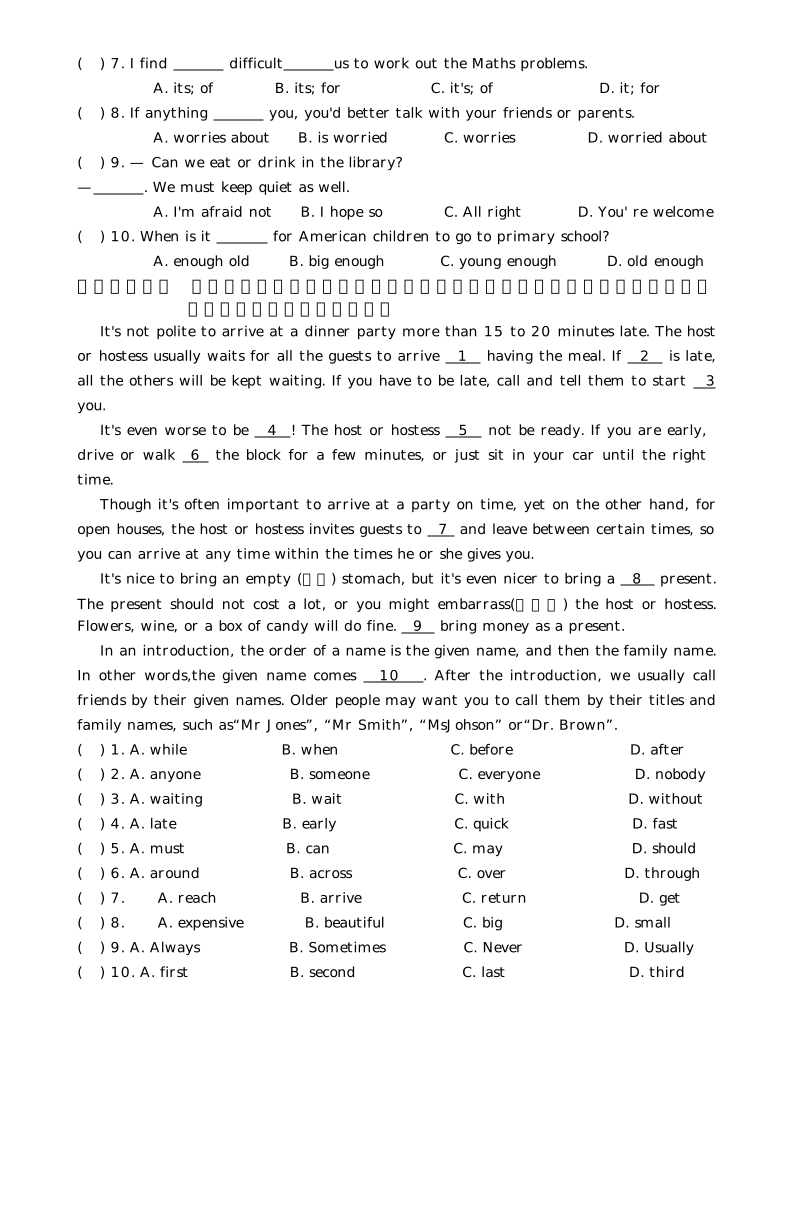
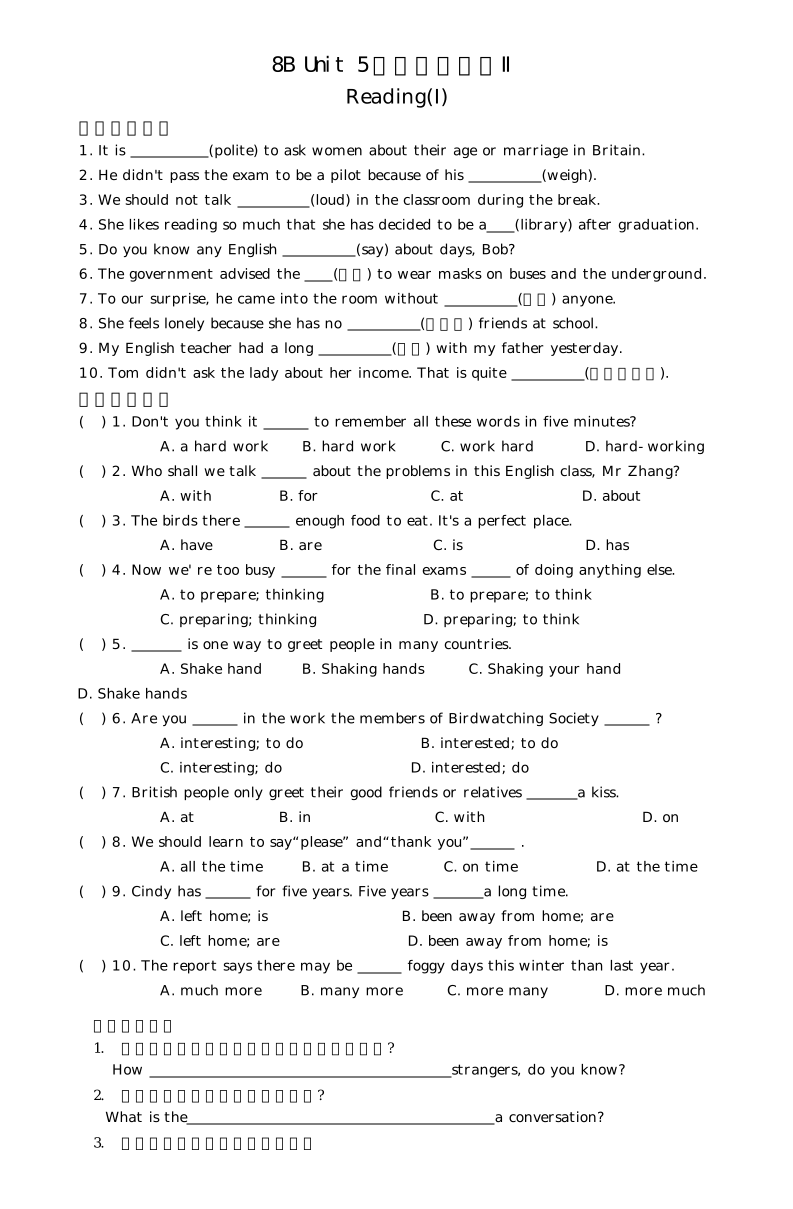
Unit 5 Good members 8B Unit 5同步课时训练 Comic strip& Welcome to the unit 一、词汇运用 1. The water has kept (run) for some time. Who forgot to turn it off? 2. It's important to speak to the elderly (polite). 3. They spent half a day (pick) apples on the trees last week. 4. (cut) in on others is thought to be impolite. 5. The little boy always (遵守) school rules when he is at school. 6. The (龙头) made of metal feel smooth and cold. 7. Is it my (顺序) to recommend my favourite book, Mrs Wu? 8. How much have you known about table (礼仪), Jane? 、动词填空 1. He was busy (prepare) for his report when I called him. 2. My classmates (do) some surveys on teenage problems these days. 3. You needn't tell me more about him. I (know) him since ten years ago. 4. Mr Duke hasn't decided where (spend) his weekend. 5. Someone (pick) you up when you arrive at the station. 6. When Mr Smith got home yesterday, his daughter (search) for information online. 三、完成句子 1. 我认为汤姆还没到学开车的年龄。 I Tom is learn to drive. 2. 记得不要随处乱丢垃圾。 Remember 3. 人人都有必要遵守交通规则。 It is necessary for 4. 刷牙时让水龙头开着是一种浪费。 It's a waste while brushing your teeth 四、单项选择 ( ) 1. We all like to make friends with people a smile on the face. A. without B. have C. there are D. with ( ) 2. Please don't your little dog. I can it while you are away. A. worry; look for B. worry about; look after C. worry; look at D. be worried about; look up ( ) 3. — I can't stop smoking, doctor. —— For your health, I'm afraid you . A. must B. can C. have to D. need ( ) 4. We all know that it is impolite to others. A. cut in on B. cut off C. cut out D. cut on in ( ) 5. We must do something the students who need in the poor area. A. to help; help B. help; helping C. help; to help D. to help; to help ( ) 6. After reading the books in the library, we must . A. put them back B. put back them C. take them away D. take away them ( ) 7. I find difficult us to work out the Maths problems. A. its; of B. its; for C. it's; of D. it; for ( ) 8. If anything you, you'd better talk with your friends or parents. A. worries about B. is worried C. worries D. worried about ( ) 9. — Can we eat or drink in the library? — . We must keep quiet as well. A. I'm afraid not B. I hope so C. All right D. You' re welcome ( ) 10. When is it for American children to go to primary school? A. enough old B. big enough C. young enough D. old enough 五、完形填空 先通读下面的短文,掌握其大意,然后在每小题所给的四个选项中,选出可以填入空白处的最佳选项。 It's not polite to arrive at a dinner party more than 15 to 20 minutes late. The host or hostess usually waits for all the guests to arrive 1 having the meal. If 2 is late, all the others will be kept waiting. If you have to be late, call and tell them to start 3 you. It's even worse to be 4 ! The host or hostess 5 not be ready. If you are early, drive or walk 6 the block for a few minutes, or just sit in your car until the right time. Though it's often important to arrive at a party on time, yet on the other hand, for open houses, the host or hostess invites guests to 7 and leave between certain times, so you can arrive at any time within the times he or she gives you. It's nice to bring an empty (空的) stomach, but it's even nicer to bring a 8 present. The present should not cost a lot, or you might embarrass(使尴尬) the host or hostess. Flowers, wine, or a box of candy will do fine. 9 bring money as a present. In an introduction, the order of a name is the given name, and then the family name. In other words,the given name comes 10 . After the introduction, we usually call friends by their given names. Older people may want you to call them by their titles and family names, such as“Mr Jones”, “Mr Smith”, “MsJohson” or“Dr. Brown”. ( ) 1. A. while B. when C. before D. after ( ) 2. A. anyone B. someone C. everyone D. nobody ( ) 3. A. waiting B. wait C. with D. without ( ) 4. A. late B. early C. quick D. fast ( ) 5. A. must B. can C. may D. should ( ) 6. A. around B. across C. over D. through ( ) 7. A. reach B. arrive C. return D. get ( ) 8. A. expensive B. beautiful C. big D. small ( ) 9. A. Always B. Sometimes C. Never D. Usually ( ) 10. A. first B. second C. last D. third 8B Unit 5同步课时训练 Reading(I) 一、词汇运用 1. It is (polite) to ask women about their age or marriage in Britain. 2. He didn't pass the exam to be a pilot because of his (weigh). 3. We should not talk (loud) in the classroom during the break. 4. She likes reading so much that she has decided to be a (library) after graduation. 5. Do you know any English (say) about days, Bob? 6. The government advised the (民众) to wear masks on buses and the underground. 7. To our surprise, he came into the room without (问候) anyone. 8. She feels lonely because she has no (亲密的) friends at school. 9. My English teacher had a long (交谈) with my father yesterday. 10. Tom didn't ask the lady about her income. That is quite (符合习俗的). 二、单项选择 ( ) 1. Don't you think it to remember all these words in five minutes? A. a hard work B. hard work C. work hard D. hard-working ( ) 2. Who shall we talk about the problems in this English class, Mr Zhang? A. with B. for C. at D. about ( ) 3. The birds there enough food to eat. It's a perfect place. A. have B. are C. is D. has ( ) 4. Now we' re too busy for the final exams of doing anything else. A. to prepare; thinking B. to prepare; to think C. preparing; thinking D. preparing; to think ( ) 5. is one way to greet people in many countries. A. Shake hand B. Shaking hands C. Shaking your hand D. Shake hands ( ) 6. Are you in the work the members of Birdwatching Society ? A. interesting; to do B. interested; to do C. interesting; do D. interested; do ( ) 7. British people only greet their good friends or relatives a kiss. A. at B. in C. with D. on ( ) 8. We should learn to say“please” and“thank you” . A. all the time B. at a time C. on time D. at the time ( ) 9. Cindy has for five years. Five years a long time. A. left home; is B. been away from home; are C. left home; are D. been away from home; is ( ) 10. The report says there may be foggy days this winter than last year. A. much more B. many more C. more many D. more much 三、完成句子 1. 英国人是怎样跟陌生人打招呼的,你知道吗? How strangers, do you know? 2. 与人开始交谈的正确方式是什么? What is the a conversation? 3. 我祖父以前常常在晚饭后遛狗。 My grandfather after supper. 4. 她压低声音以免吵醒她父母。 She not to wake up her parents. 5. 我们应该学会在公共场合表现得彬彬有礼。 We must learn . 6. 那个男子在我们前面插队,真没礼貌。 It was rude us. 四、阅读理解 阅读下面的短文,然后根据短文内容,在每小题所给的四个选项中选出最佳选项。 Do you know how to talk about your feelings? First of all, you may have to choose a person that you like to talk with. Once you know who you can talk with, you may want to choose a time and place to talk.Does it need to be private(私人的), or can you talk with your brother and sister in the room? If you think you' ll have trouble saying what's on your mind, write it down on a piece of paper. If the person doesn't understand what you mean right away, try to explain it in a different way or give an example of what you are concerned. Is there anything you think could be done to make things better? If so, say it. Some kids, just like some adults, are more private than others. That means some people will feel shier about sharing their feelings. A kid doesn't have to share every feeling he or she has, but it is important to share feelings when he or she needs help. You don't have to solve (解决) every problem on your own. Sometimes you need help. If you do, talking about your feelings can be the first step to feel better. ( ) 1. You need to first when you want to talk about your feelings. A. choose the right person B. find a quiet place C. choose the right time D. make a small talk ( ) 2. If you don't know how to talk about your feelings, you can . A. give your friend a phone call B. say it in a different way C. draw a picture to tell others D. write it down on a piece of paper ( ) 3. The underlined word“concerned” in the passage means in Chinese. A.妨碍的 B.忧虑的 C.推动的 D.鼓励的 ( ) 4. We can learn from the passage that . A. all the people feel shy about sharing their feelings B. a kid needs to share his or her feelings with his or her parents C. kids should try their best to solve the problems they have all by themselves D. when kids need help, it is important for them not to hide feelings 8B Unit 5同步课时训练 Reading(II) 一、单项选择 ( ) 1. People in big cities like London and Shanghai go to and from work by underground because of the heavy traffic. A. most B. mainly C. main D. at most ( ) 2. I'm sorry to trouble you, but I wonder if we can have a word with you . A. some time B. sometime C. sometimes D. some times ( ) 3. — Is your aunt a Chinese teacher? —— Well, she , but now she teaches History in her school. A. used to do B. used to be C. is used to D. was used to ( ) 4. Your mobile phone looks so cool. I want to buy too. A. it B. that C. this D. one ( ) 5. hard work! How could you do it all by yourself? A. What B. What a C. How D. How a ( ) 6. All the people I meet here every day good manners. A. having B. has C. with D. have ( ) 7. Don't you think rude to push in before other people? A. this B. that C. those D. it ( ) 8. The you' ve given us is really helpful,I think. A. tips B. advice C. ideas D. conversation 二、动词填空 1. The Greens enjoyed (eat) Chinese food soon after they moved to China. 2. Most people in the Western countries greet their friends by (kiss) each other. 3. Jenny (tell) us something about table manners in her tomorrow's speech. 4. The Blacks (hold) a birthday party for their daughter when I got to their home. 5. Remember (not cut) in on others whether it is in public or not. 6. It's quite a long time since I last (see) my cousin in America. 7. Steven (learn) a lot about Chinese culture since he came to our school. 8. Nobody was sure who (ask) for help at that time. 9. — Is everyone here? — Not yet. Look, the rest (come). 10. I'm sure she' ll get a better result if she (not be) careless in the next test. 三、完成句子 1. 在公共场合,我们应避免大声说话。 We should loudly places. 2. 在和你第一次见面时,他们会和你握手。 They with you when they meet you 3. 假如你挡了他们的路,他们会说“劳驾”。 They will say . 4.在公交车上大笑或大声喧哗是不礼貌的。 not polite. 5. 排队等候是一种很好的礼仪。 It's good manners . 四、综合阅读 阅读下面的短文,然后根据短文内容回答问题,每小题答案不超过8个单词。 Travelling to all corners of the world gets easier and easier. We live in a global village, but this doesn't mean that we all behave in the same way. How should we behave when you meet someone for the first time? An American shakes your hand firmly while looking you straight in the eye. In many parts of Asia, there is no physical contact(身体接触) at all. In Japan, you should bow(鞠躬), and the more respect(尊重) you want to show, the deeper you should bow. In Thailand, people greet each other by pressing both hands together at the chest (双手合十在胸前). In both countries, eye contact is avoided as a sign of respect. Many countries have rules about what you should and shouldn't wear. In a Muslim country, women should wear long blouses and skirts. In Korea, you should take off your shoes when entering a house.Remember to place them neatly together where you came in. In Spain, lunch is often the biggest meal of the day, and can last two or three hours. So many people eat a light breakfast and a late dinner. In Mexico, lunch is a time to relax, and many people don't discuss business as they eat. In Britain, it's not unusual to have a business meeting over breakfast. In most countries, an exchange of business cards is necessary for all introductions. You should include your company name and your position(职位). If you are going to a country where your language is not widely spoken, you can get the back side of your card printed in the local language. In China, you may present your card with the writing facing the person you are giving it to. 1. Why is it easier and easier to travel around the world? 2. How do people in Thailand to show respect when greeting each other? 3. What does a woman have to wear in a Muslim country? 4. How long does lunch often last in Spain? 5. Where can you present your business card with the writing facing the person you are giving it to? 参考答案: 一、1 .running 2.politely 3.picking 4.Cutting 5.obeys 6.taps 7.turn 8.manners 二、1.preparing 2.are doing 3.have known 4.to spend 5.will pick 6.was searching 三、1.don't think; old enough to 2.not to drop litter anywhere 3.everyone/anybody to obey traffic rules 4.to leave the tap running 四、 DBCAA ADCAD 五、1-5CBDBC 6-10ABDCA 一、1.impolite 2.weight 3.loudly 4.librarian 5.saying(s) 6.public 7.greeting 8.close 9.conversation 10.proper 二、1-5BAADB 6-10DCADB 三、1.do British people greet 2.proper way to start 3.used to walk his dog 4.kept her voice down in order 5.to behave politely in public 6.of the man to push/cut in before 四、1-4ADBD 一、BBBDADDB 二、1.eating 2.kissing 3.will tell 4.were holding 5.not to cut 6.saw 7.has learned 8.to ask 9.are coming 10.isn't 三、 1.avoid speaking/talking; in public 2.shake hands; for the first time 3. " excuse me" if you are in their way 4.Laughing loudly in public is 5.Waiting in line/Queuing for your turn is 四、1.Because we live in a global village 2. By pressing both hands together at the chest. 3. Women should wear long blouses and skirts. 4. Two or three hours. 5. In China. 学科网(北京)股份有限公司 $$
资源预览图

1
2
3
相关资源
由于学科网是一个信息分享及获取的平台,不确保部分用户上传资料的 来源及知识产权归属。如您发现相关资料侵犯您的合法权益,请联系学科网,我们核实后将及时进行处理。