Unit 1 Making friends Part C(教学设计)-2024-2025学年人教PEP版(2024)英语三年级上册
2025-03-18
|
6页
|
184人阅读
|
42人下载
普通
内容正文:
教学评一体化课时备课模板
课题
Part C
课时
1
所在教材与单元
人教PEP版(2024)-Unit 1 Making friends
课型
新授
学习目标
语言能力:学生在阅读绘本与完成思维导图过程中,进一步掌握与运用交友相关词汇、句型,提升语言表达与运用能力,能用英语清晰表达交朋友的方法与和朋友相处的活动。
思维品质:绘制思维导图促使学生梳理思路,分析、归纳交友要点,培养逻辑思维;对绘本故事的理解与思考,提升其批判性思维与创新思维,如思考故事中人物交友方式的合理性与独特性。
文化意识:通过学习内容感受不同文化背景下人们交友的方式与态度,理解友好、分享等价值观在全球交友文化中的共通性,拓宽国际视野。
学习能力:学生在自主阅读绘本、绘制思维导图以及小组讨论等活动中,学会自主学习、合作学习,逐步掌握有效的学习策略,提升学习能力。
重难点
重点:能熟练运用本单元所学词汇、句型阅读绘本故事,理解故事内容;掌握用英语表达交朋友的方法,完成思维导图并向他人介绍。
难点:深入理解绘本故事所传达的交友理念与情感;在绘制思维导图时,全面且有条理地选取并梳理与朋友相处的行为及想法,将抽象的交友概念转化为具体、清晰的图示与英语表达。
教学环节
学习活动
新课教学
Teacher: Good morning, boys and girls!
Students: Good morning, teacher!
Teacher: Welcome to today's English class. Before we start, let's warm up with a song. Are you ready?
Students: Yes, we are!
Teacher: (plays the song "Hello")
(Students sing and dance along with the song)
Teacher: Alright, that was fun! I see many of you remembered the lyrics. What are the greeting words we used in the song?
Student 1: Hello and Hi!
Teacher: Very good! And what's another greeting we often use?
Student 2: Goodbye!
Teacher: Exactly! Those are very useful everyday greetings in English. Today, we're going to meet some new friends and learn how they greet and introduce themselves. Let's dive into our Reading time for today.
Part 1: Warm-up and Introduction
Teacher: (shows a picture from the textbook) Look at the picture, can you tell me who you see?
Student 3: I see Zoom and Zip!
Teacher: Correct! And who else do you see?
Student 4: I see some new friends!
Teacher: Great observation! Zoom and Zip have some new friends too. Let's listen to their conversation and see what they're talking about. (plays the audio recording of the text)
Teacher: Now, tell me, what new words did you hear?
Student 5: I heard Canada, USA, and UK.
Teacher: Excellent! And anyone else?
Student 6: I also heard China!
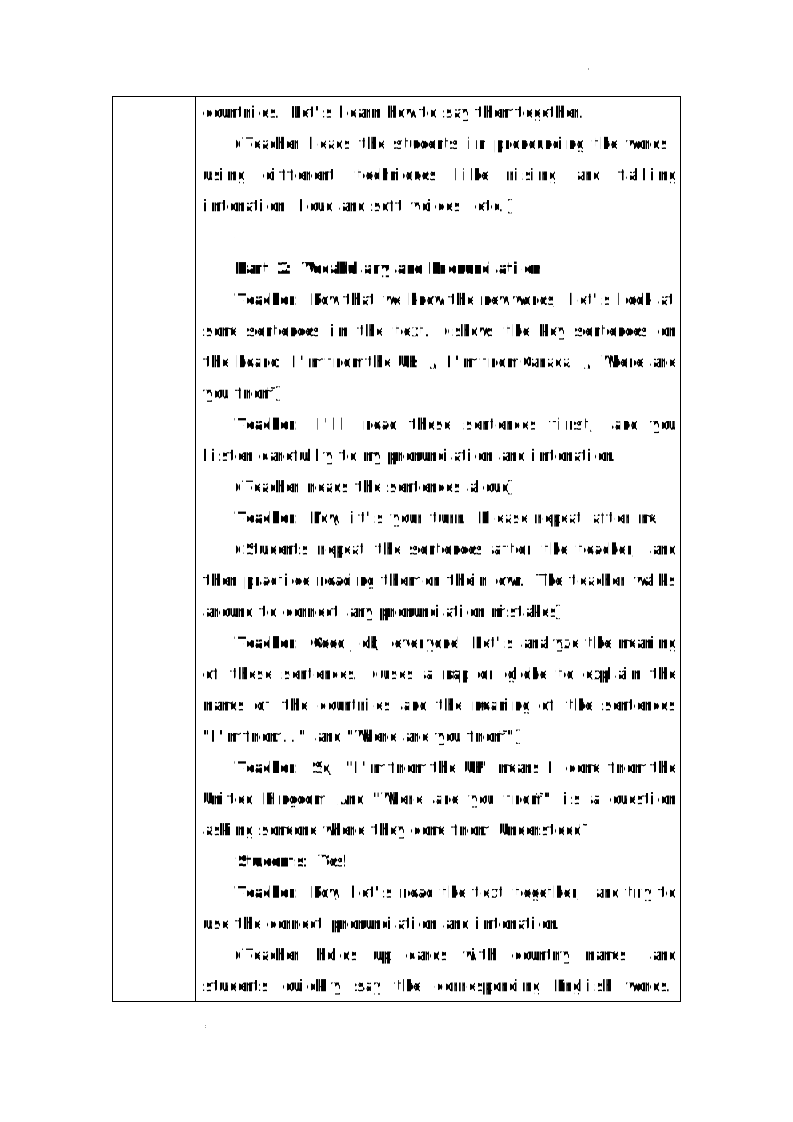
Teacher: Perfect! (writes the words on the board: Canada, USA, UK, China) These are the names of different countries. Let's learn how to say them together.
(Teacher leads the students in pronouncing the words, using different techniques like rising and falling intonation, loud and soft voices, etc.)
Part 2: Vocabulary and Pronunciation
Teacher: Now that we know the new words, let's look at some sentences in the text. (shows the key sentences on the board: I'm from the UK. / I'm from Canada. / Where are you from?)
Teacher: I'll read these sentences first, and you listen carefully to my pronunciation and intonation.
(Teacher reads the sentences aloud)
Teacher: Now, it's your turn. Please repeat after me.
(Students repeat the sentences after the teacher, and then practice reading them on their own. The teacher walks around to correct any pronunciation mistakes)
Teacher: Good job, everyone! Let's analyze the meaning of these sentences. (uses a map or globe to explain the names of the countries and the meaning of the sentences "I'm from..." and "Where are you from?")
Teacher: So, "I'm from the UK" means I come from the United Kingdom. And "Where are you from?" is a question asking someone where they come from. Understood?
Students: Yes!
Teacher: Now, let's read the text together, and try to use the correct pronunciation and intonation.
(Teacher holds up cards with country names, and students quickly say the corresponding English words. Then, they play a question-and-answer game using the sentences "I'm from..." and "Where are you from?")
Part 3: Reading and Comprehension
Teacher: Now, let's read the text together again, but this time, we'll focus on understanding the story.
(Students read the text aloud with the teacher, paying attention to comprehension)
Teacher: Can anyone tell me, how do Zoom and Zip make friends?
Student 7: They play together, listen with care, and help each other.
Teacher: That's right! And what do good friends do?
Student 8: They share, help, and listen with care.
Teacher: Excellent summary! Good friends indeed share, help, and listen with care. Let's practice this by role-playing the conversation between Zoom and Zip.
(Students pair up and practice the conversation, with the teacher walking around to provide guidance and encouragement)
Part 4: Language Practice and Role-play
Teacher: Alright, it's time for us to role-play the conversation. Who wants to be Zoom? And who wants to be Zip?
(Students volunteer to be Zoom and Zip, and then perform the conversation in front of the class)
Teacher: Great job, everyone! You all did a fantastic job of role-playing. Now, let's retell the story together using the key sentences we learned.
(Teacher leads the students in retelling the story, using the sentences "Hi, I'm..." "Nice to meet you." "Zoom is my new friend." "We share food." "We play together." etc.)
Teacher: Finally, let's create a mind map together to summarize what we've learned about making friends.
(Teacher draws a mind map on the board, and students contribute ideas about what friends should do)
Teacher: What should friends do?
Students: Say hi, smile, listen, help, share, and be nice.
Teacher: Perfect! That's what good friends do.
Part 5: Homework and Conclusion
Teacher: Before we wrap up, let's review what we've learned today. We learned some new words like Canada, USA, UK, and China. We also learned sentences like "I'm from..." and "Where are you from?" to ask and answer questions about where people come from. And we practiced making friends by playing together, listening with care, and helping each other.
Teacher: For homework, I want you to read the story fluently and act it out with your friends. Also, share your friends book with your classmates after class. And try to enjoy a book about friends.
Teacher: Remember, practicing is the key to learning any language. So, keep practicing what we've learned today, and don't be afraid to use it in real life.
Teacher: Alright, that's all for today. I hope you enjoyed the class and learned a lot. See you next time!
Students: See you, teacher!
Teacher: Goodbye, boys and girls!
Teacher: (as the students are leaving the classroom) Remember to practice your English every day, and don't forget to bring your homework next class. Have a great day!
(Students wave goodbye and leave the classroom)
学科网(北京)股份有限公司
学科网(北京)股份有限公司
$$
资源预览图

1

2
3
相关资源
示范课
由于学科网是一个信息分享及获取的平台,不确保部分用户上传资料的 来源及知识产权归属。如您发现相关资料侵犯您的合法权益,请联系学科网,我们核实后将及时进行处理。