Unit 3 Times Change!Developing ideas 导学案-2024-2025学年高二上学期英语外研版(2019)选择性必修第二册
2025-03-16
|
6页
|
336人阅读
|
1人下载
特供
资源信息
| 学段 | 高中 |
|---|---|
| 学科 | 英语 |
| 教材版本 | 高中英语外研版选择性必修第二册 |
| 年级 | 高二 |
| 章节 | Developing ideas |
| 类型 | 学案-导学案 |
| 知识点 | - |
| 使用场景 | 同步教学-新授课 |
| 学年 | 2024-2025 |
| 地区(省份) | 全国 |
| 地区(市) | - |
| 地区(区县) | - |
| 文件格式 | DOCX |
| 文件大小 | 338 KB |
| 发布时间 | 2025-03-16 |
| 更新时间 | 2025-03-16 |
| 作者 | 匿名 |
| 品牌系列 | - |
| 审核时间 | 2025-03-16 |
| 下载链接 | https://m.zxxk.com/soft/51051699.html |
| 价格 | 1.00储值(1储值=1元) |
| 来源 | 学科网 |
内容正文:
Unit 3 Times change! Emojis: a new language?
Developing ideas
Unit3 Developing ideas 学案
Developing ideas Emojis: a new language?
(
Some famous quotes about the theme
)
The golden age is before us, not behind us.
—Mark Twain
黄金时代在我们面前而不在我们背后。
——马克·吐温
The challenge for our generation is to create a world where everyone has a sense of purpose.
—Zuckerberg
我们这代人面临的挑战,是创造一个人人都能有使命感的世界。
——扎克伯格
Every generation needs regeneration.
—Spurgeon
每一代都需要更新。
——斯珀吉翁
(
Key words and phrases
)
①cafeteria n.自助餐厅
②run late晚了 run early/on time早了/准时
③emoji n.表情符号
④attempt to do sth. 做某事的尝试/企图
attempt n. &v.试图, 尝试
at the first attempt第一次尝试
attempt to do sth.试图做某事
⑤follow the trend of跟随...的潮流 trend n.趋势,趋向
a downward /an upward trend in sth. ....下滑/上升的趋势
⑥an integral component不可缺少的组成部分
integral adj.不可缺少的 component n.组成部分
a key/vital component重要的/至关重要的组成部分
⑦express oneself表达自己的思想感情
⑧symbol n.符号,代号,记号 sign n.符号,记号
symbolize v.象征,是...的象征 symbolic adj象征性的
⑨come in different categories有不同的种类
⑩be limited to被限制在......
⑪expand upon详述,充分叙述
⑫the word of the year年度热词
⑬pictograph n.象形图
⑭have advantages over 比……有优势
⑮emotional adj.情绪(上)的,情感(上)的
emotion n.情感,情绪
⑯gesture n.手势,姿势
⑰facial expressions面部表情 facial adj.脸上的,面部的
⑱a string of 一串……
⑲separation n.分开,分离;离别
separate v. (使)分离,分散
separate A from/and B 把A与B分开
⑳spread to蔓延至,扩散到
㉑textspeak n.短信简写语
㉒intention n.意图,目的
㉓adaptation n.改编版
㉔accessible ad.易懂的
㉕take away拿走,带走
㉖heart and soul 精髓 soul n. 精神
㉗have a tendency to do(sth.)有做某事的趋势 tendency n.趋势
㉘facilitate v.促进,使便利
facilitation n.简易化,简便化,促进
㉙educator n.教育工作者
㉚pictorial adj.图画的
(
Pre-reading
)
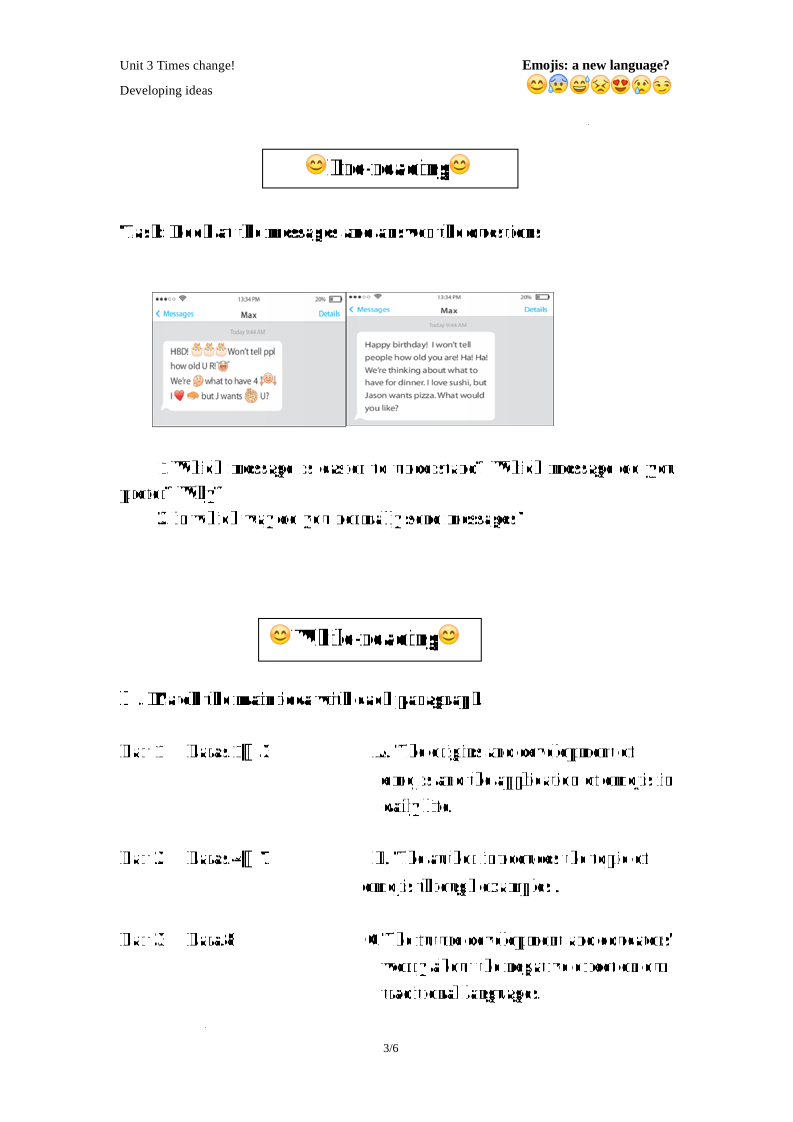
Task: Look at the messages and answer the questions
1.Which message is easier to understand? Which message do you prefer? Why?
2.In which way do you normally send messages?
(
While-reading
)
Ⅰ. Match the main idea with each paragraph.
A. The origins and development of emojis and the application of emojis in daily life.
B. The author introduces the topic of emojis through examples .
C.The future development and educators' worry about the negative effect on our traditional languages.
Ⅱ. Read the text quickly and then choose the best answers.
1.What did the author reply with to his friend?
A.Emojis. B.“OK”. C.Words. D.Expressions.
2.Why do people use emojis in classics?
A.To replace the old version.
B.To attract more young readers.
C.To take away the heart and soul of Shakespeare's plays.
D.To make it easier for young readers to understand the classics.
3.Where does the word “emoji” come from?
A.The Oxford Dictionary. B.Shakespeare's plays.
C.Japan. D.China.
4.Which of the following is NOT true according to the passage?
A.Emojis are used everywhere,from text messages to emails and blogs.
B.There are more than 200 emojis when they are first introduced in
Japan in 1999.
C.Emojis have obvious advantages over written language.
D. Emojis can express feelings when people cannot find the appropriate words.
Ⅲ. Read the passage carefully, and answer the questions.
1. Read paras.1-2 carefully. What are the meanings of the two sets of emojis?
__________________ _________________
________________ _______________
2. Read paras.3-5 carefully.
①How popular emojis are now?
A. Using emojis to communicate isn’t common
B. They are an essential part of today’s language
C. They are an impolite way to express ourselves
D. Their development is slow
②Why do the writer mention the Oxford Dictionaries Word of the year here?
A. To show the popularity of emojis
B. To introduce the authority (权威) of the Oxford Dictionaries
C. To tell the government’ support for emojis
D. To stress the importance of emojis
3. Read paras.6-7 carefully.
What is the advantage of using emojis in daily life and classical literature?
①_______________________________________________________
②_______________________________________________________
③_______________________________________________________
④_______________________________________________________
4.Read para.8 carefully.
Why are educators worried about the use of emojis?
①______________________________________________________
②______________________________________________________
③______________________________________________________
④______________________________________________________
Ⅳ. Fill in the blanks according to the text.
Emojis are small symbols representing ideas, emotions or feelings. When first 1.____________(introduce) in Japan in 1999, emojis were limited to 176 simple designs. Now there are more than 3,000 emojis that expand upon the way in 2.___________we communicate. Due to their 3.____________(popular), the Oxford Dictionaries Word of the Year in 2015 was, for the first time ever, a pictograph instead of a traditional word.
People like them because they add 4.____________(emotion) meaning and are quick and easy 5.____________(use). With a smiling or sad face added 6.____________ a message or post, your reader can “see” your facial expression while 7.____________(read) your words. Emojis can also help people express their feelings when they cannot find the appropriate words.
The use of emojis 8.____________(spread) to classical literature in the last few years. As we can see, emojis have a tendency to pop up all over the place. But this makes others, 9.____________(especial) educators, worry that we are losing the ability to communicate properly using the written word, or even the spoken word. But, for now, maybe 10.____________ is best that we just enjoy using them.
(
Post-reading
)
Work in groups and give a talk about the sentence from the passage.
Perhaps people will one day choose to communicate in pictures,and forget how to write properly.
1.Do you agree or disagree with the sentence? Discuss with your group mates and sort your ideas.
2.Provide three reasons to support your ideas and present your ideas to the whole class.
1/1
学科网(北京)股份有限公司
$$
资源预览图

1

2
3

相关资源
由于学科网是一个信息分享及获取的平台,不确保部分用户上传资料的 来源及知识产权归属。如您发现相关资料侵犯您的合法权益,请联系学科网,我们核实后将及时进行处理。