Unit 2 Section Ⅲ Discovering Useful Structures-【正禾一本通】2024-2025学年高中英语必修第三册同步课堂高效讲义教师用书(人教版2019)
2025-04-14
|
6页
|
44人阅读
|
2人下载
教辅

资源信息
| 学段 | 高中 |
|---|---|
| 学科 | 英语 |
| 教材版本 | 高中英语人教版必修第三册 |
| 年级 | 高一 |
| 章节 | Discovering Useful Structures |
| 类型 | 教案-讲义 |
| 知识点 | - |
| 使用场景 | 同步教学-新授课 |
| 学年 | 2025-2026 |
| 地区(省份) | 全国 |
| 地区(市) | - |
| 地区(区县) | - |
| 文件格式 | DOCX |
| 文件大小 | 155 KB |
| 发布时间 | 2025-04-14 |
| 更新时间 | 2025-04-14 |
| 作者 | 山东正禾大教育科技有限公司 |
| 品牌系列 | 正禾一本通·高考一轮总复习高效讲义 |
| 审核时间 | 2025-03-14 |
| 下载链接 | https://m.zxxk.com/soft/51006787.html |
| 价格 | 2.00储值(1储值=1元) |
| 来源 | 学科网 |
内容正文:
Section Ⅲ Discovering Useful Structures
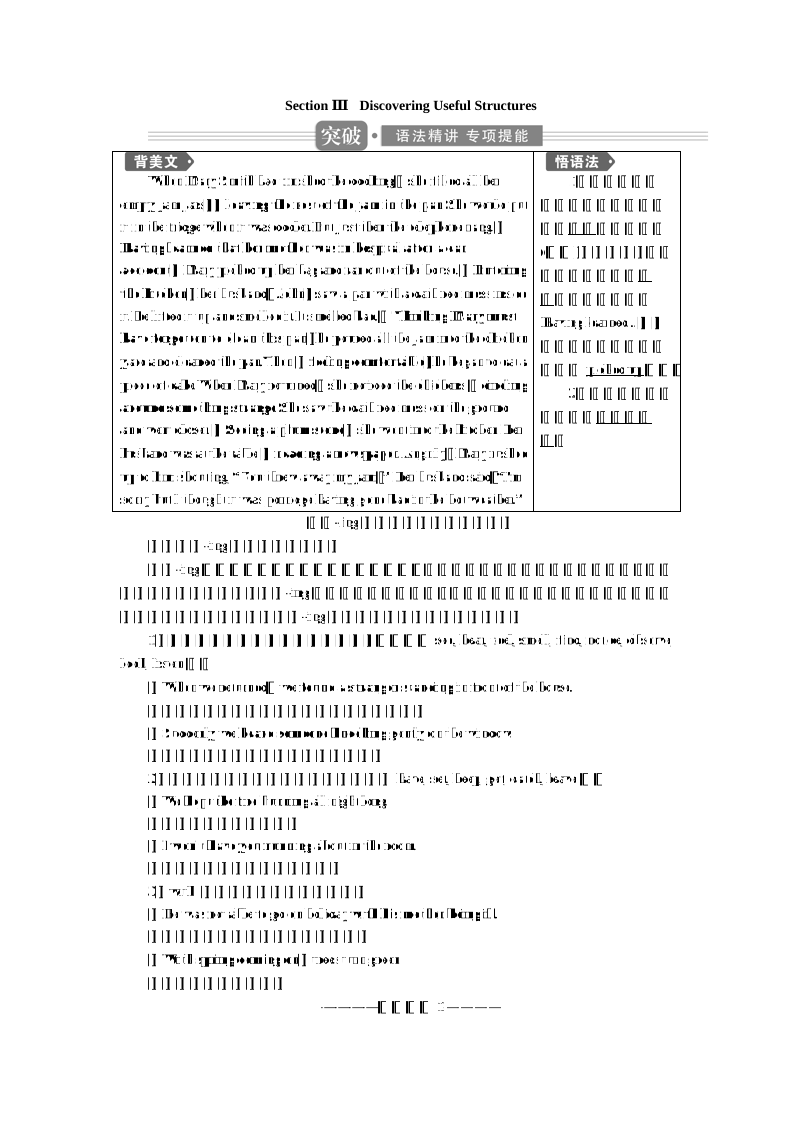
When Mary Smith had finished the cooking,she filled all her empty jam jars,①leaving the rest of the jam in the pan.She would put it in the fridge when it was cooler.But just then the telephone rang.②Having learned that her mother was in hospital after a car accident,Mary picked up her bag and ran out of the house.③Entering the kitchen,her husband,John,saw a pan with a dark red mess inside it.He lifted it up and smelled it.It smelled bad.④Thinking Mary must have forgotten to clean this pan,he poured all the jam into the chicken yard and cleaned the pan.Then ⑤feeling comfortable,he began to eat a piece of cake.When Mary returned,she noticed the chickens ⑥circling around something strange.She saw the dark red mess on the ground and went closer.⑦Seeing a plum stone,she went into the kitchen.Her husband was at the table ⑧reading a newspaper.Angrily,Mary rushed up to him shouting, “You threw away my jam!” Her husband said,“I'm sorry but I thought it was porridge having gone bad in the hot weather.”
1.加黑部分①②③④⑤⑦⑧在句子中作状语,现在分词(短语)作状语时,其逻辑主语是句子的主语,其中句②中的Having learned...作状语表示其动作先于主句动作picked up发生。
2.加黑部分⑥在句子中作宾语补足语。
动词ing形式作宾语补足语和状语
一、动词ing形式作宾语补足语
动词ing形式作宾语补足语常放在宾语后面,表示一个正在进行的主动性的动作,强调一个过程或一种状态。动词ing形式作宾语补足语时,宾语与宾语补足语之间在逻辑上是主谓关系。以下列举了能用动词ing形式作宾语补足语的几种情况:
1.表示感觉和心理状态的感官动词,常见的有see, hear, feel, smell, find, notice, observe, look, listen等。
①When we returned,we found a stranger standing in front of the house.
我们回来时,发现一个陌生人站在房子前面。
②Suddenly we heard someone knocking gently on the window.
忽然,我们听见有人在轻轻地敲窗户。
2.表示指使意义的使役动词,常见的有have, set, keep, get, catch, leave等。
①We kept the fire burning all night long.
我们让火炉整夜燃烧着。
②I won't have you running about in the room.
我不允许你在房间里跑来跑去。
3.with 复合结构中的宾语补足语。
①He was not able to go on holiday with his mother being ill.
由于母亲生病,他抽不开身去度假。
②With spring coming on,trees turn green.
春天到了,树变绿了。
————即学即练1————
完成句子
①他昨天这个时候看到一个女孩正在街上闲逛。
He saw a girl wandering on the street this time yesterday.
②一位墨西哥农民惊讶地看到他土地上的一小处地方冒出了烟。
A Mexican farmer was surprised to see smoke rising from a small part of his land.
③刷牙时不要让水一直流。
Don't leave the water running while you brush your teeth.
④她把那只乌龟放入河中, 眼里满是泪水。
She put the tortoise into the river, with tears filling her eyes.
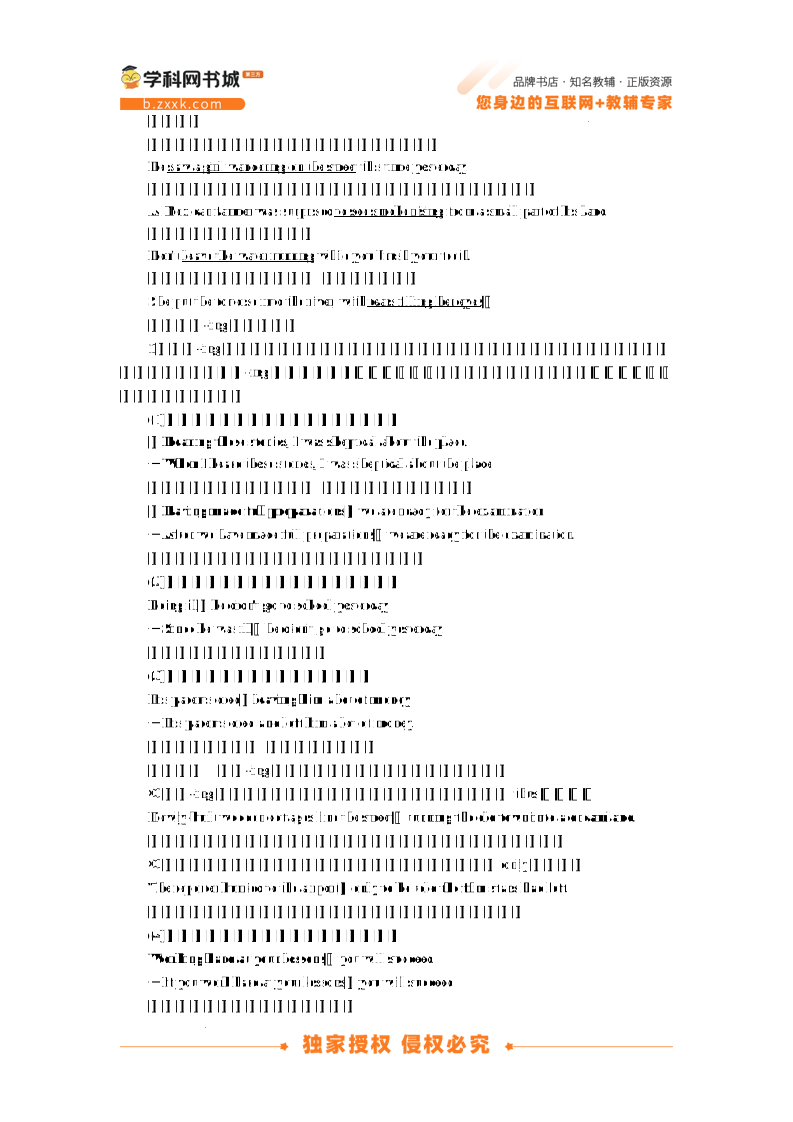
二、动词ing形式作状语
1.动词ing形式可以作状语,在句中表示时间、原因、结果、条件、让步、行为方式或伴随情况等。动词ing形式作时间、原因、条件、让步状语时多位于句首;作结果、伴随状语时常位于句末。
(1)表示时间,相当于一个时间状语从句。
①Hearing these stories, I was skeptical about the place.
→When I heard these stories, I was skeptical about the place.
当我听到这些故事的时候, 我对这个地方有点怀疑。
②Having made full preparations,we are ready for the examination.
→After we have made full preparations,we are ready for the examination.
我们已经做好了充分准备,现在可以应考了。
(2)表示原因,相当于一个原因状语从句。
Being ill,he didn't go to school yesterday.
→Since he was ill,he didn't go to school yesterday.
由于生病,他昨天没去上学。
(3)表示结果,相当于一个并列谓语。
His parents died,leaving him a lot of money.
→His parents died and left him a lot of money.
他父母都过世了, 留给了他许多钱。
【点拨】 动词ing形式和动词不定式作结果状语的区别:
①动词ing形式作结果状语表示自然而然的结果,有时可加thus表强调;
Newlybuilt wooden cottages line the street,turning the old town into a dreamland.
新建的小木屋排列在街道两边,使这个古镇变成了梦境一样的地方。
②动词不定式作结果状语表示出乎意料的结果,其前常加only表强调。
The reporter hurried to the airport,only to be told the film stars had left.
那个记者急匆匆赶到机场,却被告知电影明星们已经离开了。
(4)表示条件,相当于一个条件状语从句。
Working hard at your lessons,you will succeed.
→If you work hard at your lessons,you will succeed.
如果你努力学习,就一定能成功。
(5)表示让步,相当于一个让步状语从句。
Knowing all this,they made me pay for the damage.
→Although they knew all this,they made me pay for the damage.
尽管知道了一切情况,他们还是要我赔偿损失。
(6)表示行为方式、伴随情况或补充说明,相当于一个并列结构。
He lay on the grass,staring at the sky for a long time.
→He lay on the grass and stared at the sky for a long time.
他躺在草地上,盯着天空看了很长时间。
(7)作评注性状语
有些动词ing形式在句中没有逻辑主语,它们往往作为句子的评注性状语来修饰整个句子,表明说话者的态度、观点等。如:generally speaking“一般来说”,judging by/from...“从……判断”,taking everything into consideration “全盘考虑”。
Judging from his behaviour,he must be mad.
从他的行为来判断,他一定是生气了。
————即学即练2————
同义句转换
①It rained heavily and it caused great damage.
→It rained heavily,causing great damage.
②The boy sat in front of the farm house,and cut the branches.
→The boy sat in front of the farm house,cutting the branches.
③As he was ill,he couldn't attend the meeting.
→Being ill,he couldn't attend the meeting.
④John watched curiously,and thought that the woman seemed a little crazy.
→John watched curiously, thinking that the woman seemed a little crazy.
⑤When she turned around,she saw a car driving up.
→Turning around,she saw a car driving up.
2.作状语时的注意事项
(1)动词ing形式的时态
动词ing形式作状语时,要注意其时间性,是用一般式(doing),还是用完成式(having done)。当动词ing形式的动作与谓语动词的动作同时发生时,用一般式;当动词ing形式的动作先发生,而谓语动词的动作后发生时,用完成式。
①Walking in the street,I met an old friend of mine.(walking和谓语动词met同时发生)
我走在大街上时遇到了一位老朋友。
②Having finished the letter,he went to post it.(having finished是先发生的,went是后发生的)
他写完信后就把它寄了出去。
(2)动词ing形式的语态
使用动词ing形式的主动式还是被动式主要取决于动词ing形式和句子主语之间的关系。句子的主语就是动词ing形式的逻辑主语。
①Having been shown around the factory, they were very happy.(现在分词的被动式)
被领着参观了工厂后,他们很高兴。
②Having finished his homework,he went to bed.(现在分词的主动式)
完成了作业后,他上床睡觉了。
(3)动词ing形式的否定式
动词ing形式的否定式为:not+动词ing形式/not having+动词ed形式
①Not knowing this,he didn't come.
他不知道这件事,所以没来。
②Not having made full preparations,we put off the sports meeting.
因为没有做好充分的准备,我们把运动会延期了。
(4)独立主格结构
如果作状语的动词ing形式的逻辑主语不与句子主语一致,动词ing形式就要带上自己的逻辑主语,构成独立主格结构。
①Class being over,the children went home.
一放学,孩子们就回家了。
②All audience having taken their seats,the play began.
所有观众就座之后,戏剧开始了。
————即学即练3————
(1)用所给词的正确形式填空
①Having lived (live)there for years,he got used to the life there.
②Winter coming (come),it gets colder and colder.
(2)同义句转换
①After he had eaten his dinner,the boy rushed out.
→Having eaten his dinner,the boy rushed out.
②As I did not know how to get there,I had to ask the way.
→Not knowing how to get there,I had to ask the way.
③Because she had been bitten by a snake,she was frightened of it.
→Having been bitten by a snake,she was frightened of it.
operation n.手术;企业;经营;运转
(1)be in operation 工作中;使用中;有效
come/go into operation 开始工作/运转/生效
put/bring...into operation 实施/执行……;使……运转
(2)operate vi.工作;运转;给……动手术;起作用 vt.操作;经营
operate on/upon sb 给某人动手术
【练透】 单句语法填空/翻译句子
①I hear that the new rules come into operation (operate) from next week.
②Macedonia was the first European country to operate (operate) a highspeed train that was made in China.
③Doctors decided to operate on/upon the patient injured in the accident at once.
④据说这次会议上提出的法律不久就要开始生效。
It's said that it won't be long before the law which was put forward in the meeting comes into operation.
whisper vi.& vt.悄声说;耳语;低语;私下说 n.耳语(声);低语(声);传言;谣传
(1)whisper (sth) to sb 悄声对某人说……
It is whispered that... 有人私下说……
(2)in whispers/a whisper 低声地;悄声地
【练透】 单句语法填空/完成句子
①Mum whispered to us,“Be quiet! Your little sister is sleeping.”
②我们轻声谈话以免吵醒婴儿。
We spoke in whispers/a whisper for fear that we might wake the baby.
③有人私下说我们的班主任老师要高升了。
It was whispered that our headteacher would get a promotion.
assist vt.帮助;援助
(1)assist sb in doing sth=assist sb to do sth 帮助某人做某事
assist sb with sth 帮助某人某事
(2)assistance n.帮助;协助
come to one's assistance 援助某人
with the assistance of sb 在某人的帮助下
(3)assistant n.助手;助理;售货员
【练透】 单句语法填空/完成句子
①I am grateful to my headteacher who always assists me with my learning.(感谢信)
②I am writing to apply to be your teaching assistant.I hold the strong belief that if I come to your assistance,you will know about our class as quickly as possible.(assist)(申请信)
③约翰非常高兴帮助伯纳德在市场制作和售卖爆米花。在约翰的帮助下,伯纳德的爆米花卖得很好。
John was quite pleased to assist Bernard in making and selling popcorn/assist Bernard to make and sell popcorn in the market.With the assistance of John,Bernard's popcorn sold well.
pass away 去世;消失
pass sth down 使世代相传;流传
pass sb off as... 某人伪装成……
pass...on to... 把……传递给……
pass by... 走过;经过(……旁边)
【练透】 单句语法填空/完成句子
①The boss passed himself off as a customer to experience his restaurant's service.
②最伟大的农业专家袁隆平去世后,人们自发地组织各种各样的活动来纪念他。他无私地把许多宝贵的知识传递给了我们。(人物介绍)
After the greatest agricultural expert,Yuan Longping,passed away,people voluntarily organized a wide range of activities in memory of him.He selflessly passed a great deal of precious knowledge down to us.
in memory of 作为对……的纪念
in honour of... 为了向……表示敬意;为纪念……
in search of... 寻找……
in praise of... 赞扬……
in charge of... 掌管……
in favour of... 赞同,支持……
in terms of... 就……而言
【练透】 单句语法填空/完成句子
①People celebrate the Dragon Boat Festival in memory of/in honour of Qu Yuan,who is a famous Chinese poet.(传统文化)
②听了他的主意,一些人赞成他的建议,但另一些人却强烈反对。
Hearing about his idea, some were in favour of his suggestion, but others were strongly against it.
③为了表扬我的努力,我获得了一个特别奖,我的脸上洋溢着喜悦。(2023·新高考Ⅰ卷读后续写)
I was awarded a special prize in praise of my great efforts and my face lit up with joy.
学科网(北京)股份有限公司
$$
资源预览图
1
2

3
相关资源
由于学科网是一个信息分享及获取的平台,不确保部分用户上传资料的 来源及知识产权归属。如您发现相关资料侵犯您的合法权益,请联系学科网,我们核实后将及时进行处理。