UNIT 2 Section Ⅰ Reading and Thinking(Word教参)-【状元桥·优质课堂】2024-2025学年高中英语选择性必修第四册(人教版2024)
2025-03-12
|
10页
|
48人阅读
|
2人下载
教辅

资源信息
| 学段 | 高中 |
|---|---|
| 学科 | 英语 |
| 教材版本 | 高中英语人教版选择性必修第四册 |
| 年级 | 高二 |
| 章节 | Reading and Thinking |
| 类型 | 教案-讲义 |
| 知识点 | - |
| 使用场景 | 同步教学-新授课 |
| 学年 | 2025-2026 |
| 地区(省份) | 全国 |
| 地区(市) | - |
| 地区(区县) | - |
| 文件格式 | DOCX |
| 文件大小 | 307 KB |
| 发布时间 | 2025-03-12 |
| 更新时间 | 2025-03-12 |
| 作者 | 湖北千里万卷教育科技有限责任公司 |
| 品牌系列 | 状元桥·优质课堂·高中同步 |
| 审核时间 | 2025-03-12 |
| 下载链接 | https://m.zxxk.com/soft/50950076.html |
| 价格 | 3.00储值(1储值=1元) |
| 来源 | 学科网 |
内容正文:
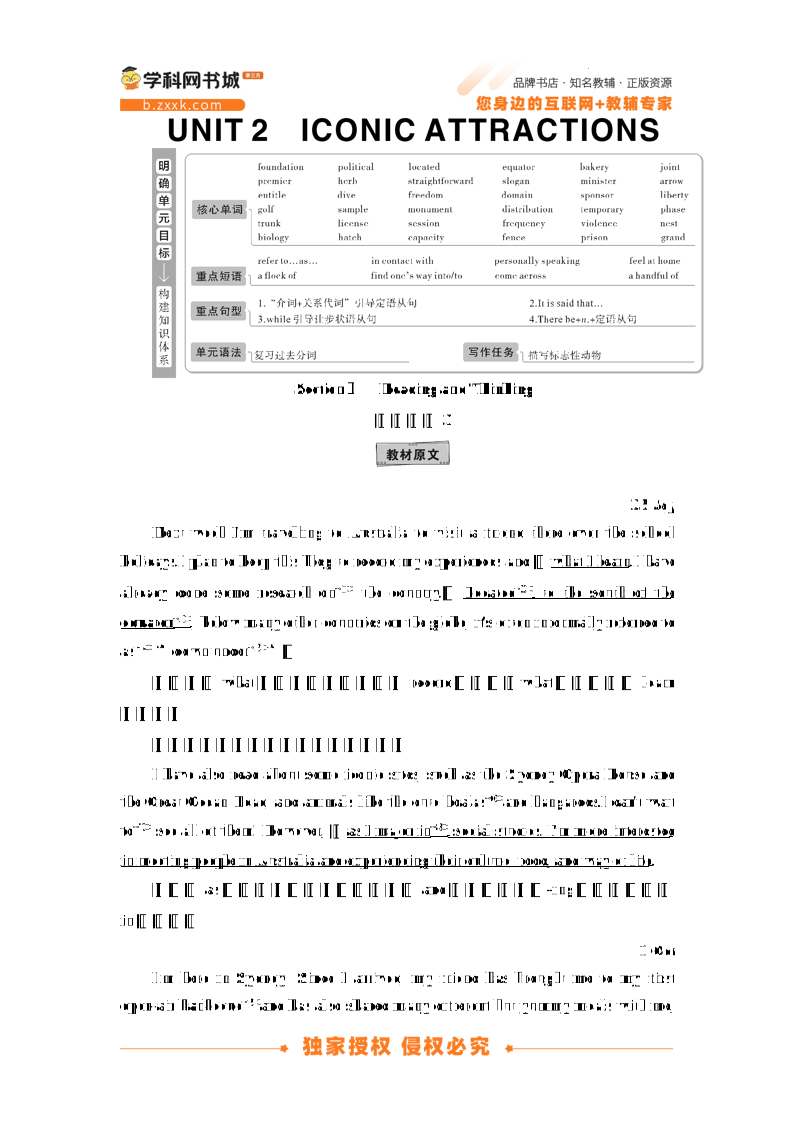
Section Ⅰ Reading and Thinking
教材助读3
25 Sep
Next week I'm travelling to Australia to visit a friend there over the school holidays.I plan to keep this blog to record my experiences and ①what I learn.I have already done some research on<1> the country.②Located<2> to the south of the equator<3>, below many other countries on the globe, it's often informally referred to as<4> “down under<5>”.
①此处为what引导的宾语从句,作record的宾语,what在从句中作learn的宾语。
②此处为过去分词短语作原因状语。
I have also read about some iconic sites, such as the Sydney Opera House and the Great Ocean Road, and animals like the cute koalas<6>and kangaroos.I can't wait to<7> see all of them! However, ③as I major in<8> social studies, I'm more interested in meeting people in Australia and experiencing their culture, food, and way of life.
③句中as引导原因状语从句,主句中and连接两个动词-ing短语,作介词in的宾语。
1 Oct
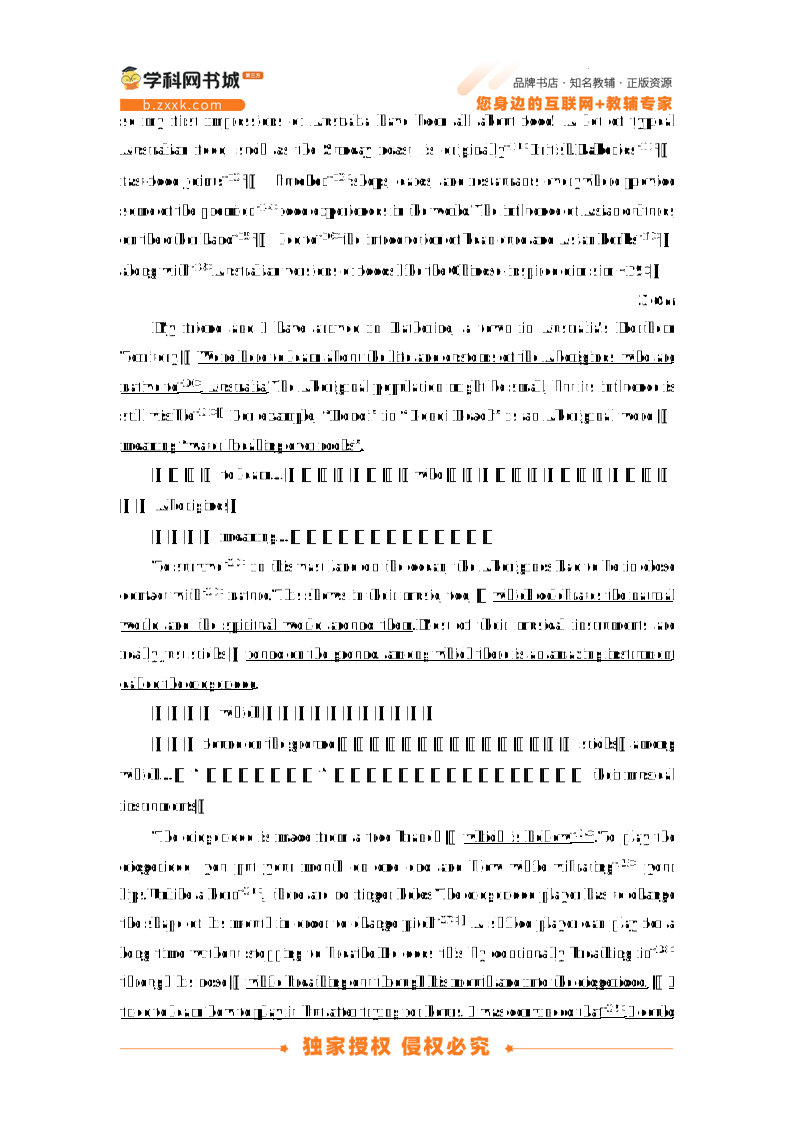
I'm here in Sydney! Since I arrived, my friend has brought me to my first open-air barbecue<9>and has also shared many different but yummy meals with me, so my first impressions of Australia have been all about food! A lot of typical Australian food, such as the Sunday roast, is originally<10>British.Bakeries<11>, fast-food joints<12>, butcher<13>shops, cafes, and restaurants everywhere provide some of the premier<14>food experiences in the world.The influence of Asian cultures, on the other hand<15>, led to<16>the introduction of bean curd and Asian herbs<17>, along with<18>Australian versions of foods like the Chinese-inspired dim sim <19>.
3 Oct
My friend and I have arrived in Katherine, a town in Australia's Northern Territory.④We're here to learn about the life and customs of the Aborigines, who are native to<20> Australia.The Aboriginal population might be small, but its influence is still visible<21>.For example, “Bondi” in “Bondi Beach” is an Aboriginal word ⑤meaning “water breaking over rocks”.
④此处的to learn…是不定式作表语;who引导非限制性定语从句,修饰先行词Aborigines。
⑤此处的meaning…是现在分词短语作后置定语。
To survive<22> in this vast land on the ocean, the Aborigines had to be in close contact with<23> nature.This shows in their music, too, ⑥which celebrates the natural world and the spiritual world around them.Most of their musical instruments are really just sticks ⑦found on the ground, among which there is an amazing instrument called the didgeridoo.
⑥此处的which引导非限制性定语从句。
⑦此处found on the ground为过去分词短语作后置定语,修饰sticks;among which…为“介词+关系代词”引导的非限制性定语从句,先行词为their musical instruments。
The didgeridoo is made from a tree branch ⑧which is hollow<24>.To play the didgeridoo, you put your mouth on one end and blow while vibrating<25> your lips.Unlike a horn<26>, there are no finger holes.The didgeridoo player has to change the shape of his mouth in order to change pitch<27>.A skilled player can play for a long time without stopping to breathe.He does this by continually breathing in<28> through his nose ⑨while breathing out through his mouth and into the didgeridoo. ⑩I tried to learn how to play it, but after trying for hours, I was convinced that<29> I could never make a musical sound with this instrument!
⑧which在此引导定语从句,修饰a tree branch。
⑨此处的while breathing out…是状语从句的省略形式。
⑩句中but连接表示转折关系的并列句,第二个分句中that引导宾语从句。
6 Oct
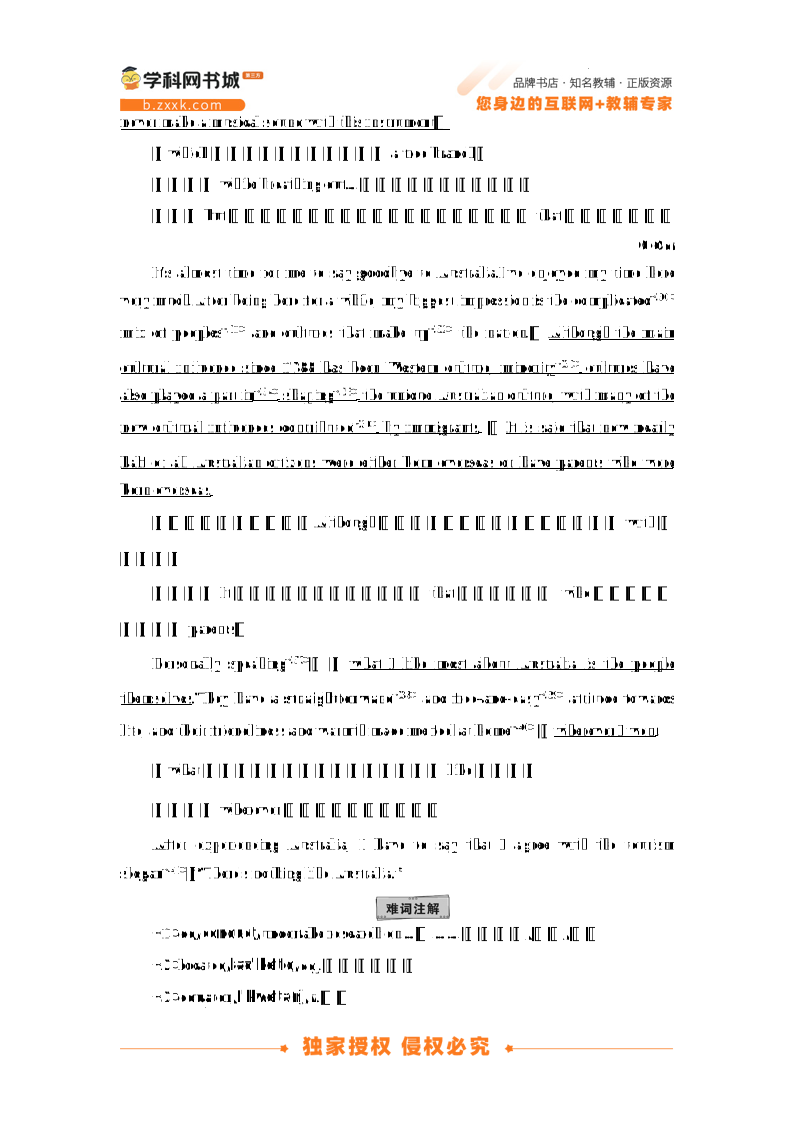
It's almost time for me to say goodbye to Australia.I've enjoyed my time here very much.After being here for a while, my biggest impression is the complicated<30> mix of peoples<31> and cultures that make up<32> the nation.⑪Although the main cultural influence since 1788 has been Western culture, minority<33> cultures have also played a part in<34> shaping<35> the unique Australian culture, with many of the new cultural influences contributed<36> by immigrants. ⑫It is said that now nearly half of all Australian citizens were either born overseas or have parents who were born overseas.
⑪本句为主从复合句。Although在此引导让步状语从句,句中包含with复合结构。
⑫本句中It为形式主语,真正的主语为that引导的从句, who引导定语从句,修饰parents。
Personally speaking<37>,⑬what I like most about Australia is the people themselves.They have a straightforward<38> and free-and-easy<39> attitude towards life, and their friendliness and warmth made me feel at home<40> ⑭wherever I went.
⑬what在此引导主语从句,并在从句中作like的宾语。
⑭此处为wherever引导的让步状语从句。
After experiencing Australia, I have to say that I agree with the tourism slogan<41>:“There's nothing like Australia.”
<1>do/conduct/undertake research on…对……进行研究/调查/探索
<2>located/ləʊˈkeItId/adj.位于;坐落在
<3>equator/IˈkweItə(r)/n.赤道
<4>refer to…as…把……称作……
<5>down under的字面意思是“底下”,这是澳大利亚的一个非正式的别称。down under还可以指新西兰。在实际使用中,down under还可以大写,即Down Under。
<6>koala/kəʊˈɑːlə/n.考拉;树袋熊
<7>can't wait to do sth迫不及待地做某事
<8>major in主修
<9>barbecue/ˈbɑːbIkjuː/n.[C](abbr.BBQ)户外烧烤;烤架
<10>originally adv.原来,起初
original adj.原来的;独创的;原作的 n.原件,原作
origin n.起源;源头;起因;身世;出身
<11>bakery/ˈbeIkəri/n.[C]面包(糕饼)店;面包厂
bake vt.& vi.(在烤炉里)烘烤;焙
<12>joint/dʒɔInt/n.[C]公共场所(尤指价格低廉的饮食和娱乐场所),关节 adj.联合的;共同的
<13>butcher/ˈbʊtʃə(r)/n.[C]肉贩;屠夫;刽子手
<14>premier/ˈpremiə(r);NAmE prIˈmIr/adj.最著名的;第一的;首要的 n.总理;首相
<15>on the other hand另一方面,常与on the one hand连用,构成搭配,意为“一方面……,另一方面……”,用于引出对立的观点、思想等。
<16>lead to导致;造成
<17>herb/hɜːb/n.[C]药草;香草;草本
<18>along with除……之外(还)
<19>dim sim (特指澳大利亚的)点心
<20>be native to…原产于……
<21>visible adj.明显的;能注意到的;看得见的;可见的
[反义]invisible adj.看不见的;隐形的
<22>survive vi.生存,存活,继续存在
survival n.[U]生存;存活;幸存[C]残存物;幸存事物
<23>in contact with…与……有联系/接触
<24>hollow/ˈhɒləʊ/adj.中空的;空心的
<25>vibrate/vaIˈbreIt/vt.&vi.(使)振动
<26>horn/hɔːn/n.(乐器)号
<27>pitch/pItʃ/n.音高
<28>breathe in吸气
breathe out呼气
<29>be convinced that…确信……
convinced adj.坚信的;深信的;确信的
convincing adj.令人信服的;有说服力的
convince vt.使确信;使信服;说服
<30>complicated adj.复杂的;难懂的
<31>people在此意为“民族、种族”,为可数名词。
<32>make up构成;组成
<33>minority n.少数民族;少数派;少数;少数人
majority/məˈdʒɒrəti/n.大部分;大多数
<34>play a part in…在……中起作用;参与……
<35>shape vt.决定……的形成;影响……的发展;使成为……形状(或样子);塑造
<36>contribute vt.& vi.为……做贡献
contribution n.贡献;捐赠;捐助
<37>personally speaking就个人而言
<38>straightforward/ˌstreItˈfɔːwəd/adj.坦率的;简单的
<39>free-and-easy adj.不拘礼节的
<40>feel at home舒适自在;无拘无束
<41>slogan/ˈsləʊɡən/n.标语;口号
9月25日
趁学校放假,我打算下周去澳大利亚看望那里的一位朋友。我计划用这个博客记录我的所见所闻。我早已对澳大利亚做了一番研究。它位于赤道以南,并在地球上很多国家的下方,常被非正式地称为“down under”。
我也看了一些标志性景点的介绍,比如悉尼歌剧院和大洋路,还有可爱的考拉和袋鼠等动物的资料。我迫不及待想见到所有这一切!不过,因为我主修社会研究,所以我对结识澳大利亚人并体验他们的文化、饮食和生活方式更感兴趣。
10月1日
我在悉尼啦!自我来这儿之后,朋友就带着我去吃了这辈子第一次的露天烧烤,还和我分享了许多风格各异的美味佳肴,所以我对澳大利亚的第一印象就是美食!很多澳大利亚的特色美食都源自英国,比如星期日烤肉。随处可见的面包店、快餐连锁店、肉店、咖啡馆和餐馆提供世界顶级的美食体验。另一方面,受亚洲文化的影响,除了灵感源自中国的点心等澳大利亚版的食物以外,还引入了豆腐和(用于调味的)亚洲药草。
10月3日
我和朋友来到了澳大利亚北部地区的凯瑟琳小镇。我们此行的目的是了解土著人的生活和习俗,他们是澳大利亚的原住民。土著人的人口可能很少,但其影响依旧可见。例如,“邦迪海滩”中的“邦迪”就是一个土著词汇,意思是“拍打着岩石的海浪(声)”。
为了在大洋中这片辽阔的土地上生存,澳大利亚土著人得和大自然保持密切的联系。这也体现在他们的音乐中。这些音乐歌颂身边的自然世界,以及围绕着他们的精神世界。他们绝大多数的乐器其实就是在地上找到的树枝,其中有一种令人惊叹的叫作迪吉里杜管的乐器。
迪吉里杜管由空心的树干制成。吹奏迪吉里杜管时,把嘴巴靠在一端,一边吹气,一边振动嘴唇。与喇叭不同,迪吉里杜管没有指孔。吹奏迪吉里杜管必须靠改变嘴形才能改变音高。一名娴熟的演奏者可以长时间吹奏,不用停下来换气。演奏者可以不停地用鼻子吸气,同时通过嘴巴吐气,吹入迪吉里杜管中。我试着学习吹奏方法,但经过好几个小时的努力,我只能确信我永远都无法用这个乐器发出乐声!
10月6日
差不多是我跟澳大利亚说再见的时候了。我在这里过得十分愉快。在这里住了一段时间之后,我最深刻的印象是组成这个国家的复杂的民族和文化。尽管自1788年以来,主要的文化影响是西方文化,但少数族裔文化在塑造独特的澳大利亚文化方面也发挥了作用,还有许多随着移民而来的新文化的影响。据说现在近一半的澳大利亚公民要么自己出生于海外,要么父母出生于海外。
对我个人来说,澳大利亚让我最喜欢的就是这里的人民,他们对待生活的态度简单直接、直率、洒脱,他们的友善和热情让我无论走到哪里都有宾至如归的感觉。
在游历了澳大利亚之后,我得说我十分赞同他们的旅游口号:“澳大利亚,尽是不同。”
Ⅰ.明主旨大意
What's the main idea of the text?
A.The author's impression of the food and music of Australia.
B.The author's experiences in Australia.
C.The author's impression of the people and culture of Australia.
D.The author's impression of the attractions of Australia.
答案 B
Ⅱ.绘层次结构
Match the blog entries to the subheadings.
(1)25 Sep. A.Reflections on multiculturalism
(2)1 Oct. B.Preparing to travel
(3)3 Oct. C.First impressions
(4)6 Oct. D.Aborigines and the didgeridoo
答案 (1)~(4) BCDA
Read the text (P14~15), then choose the best answer.
1.How many days did the author stay in Australia?
A.About 4 days. B.About 6 days.
C.About 7 days. D.About 12 days.
答案 B
2.What is the focus of the Aborigines' music?
A.Love. B.Nature.
C.History. D.Food.
答案 B
3.What impressed the author most in Australia?
A.The different but yummy food.
B.The amazing instrument didgeridoo.
C.The mix of peoples and cultures.
D.The iconic sites.
答案 C
4.What can we know about typical Australian food?
A.It mostly originated from England.
B.It was introduced from Asia.
C.It is from the local areas.
D.It is a mix of different food cultures around the world.
答案 A
5.Why does the author mention “Bondi Beach” in the blog?
A.To show the beauty of Australian beaches.
B.To introduce the Aboriginal culture.
C.To display the influence of the Aborigines.
D.To introduce the language of the Aborigines.
答案 C
Ⅰ.解决长难句
1.
不定式作 目的 状语
↑
To survive in this vast land on the ocean, the Aborigines had to be in close contact with nature.
↓
主句
[尝试翻译] 为了在大洋中这片辽阔的土地上生存,澳大利亚土著人得和大自然保持密切的联系。
2.
过去分词短语作 定语
↑
Most of their musical instruments are really just sticks found on the ground, among which there is an amazing instrument called the didgeridoo.
↓
“介词+关系代词”引导的 非限制性定语 从句
[尝试翻译] 他们的大多数乐器其实就是在地上找到的树枝,其中有一种叫作迪吉里杜管的神奇乐器。
3.
形式主语 that引导的从句作 真正的主语
↑ ↑
It is said that now nearly half of all Australian citizens were either born overseas or have parents who were born overseas.
↓
who引导的定语从句
[尝试翻译] 据说现在近一半的澳大利亚公民要么自己出生于海外,要么父母出生于海外。
Ⅱ.课文语法填空
I have done some research before 1. travelling (travel) to Australia.Located to the south of the equator, below many other countries on the globe, it's often informally referred to 2. as “down under”.
On Oct.1, I arrived in Sydney.My first 3. impressions (impress) of Australia were about food.The influence of Asian cultures led 4. to the introduction of bean curd and Asian herbs, along with Australian versions of foods like the Chinese-inspired dim sim.On Oct.3, my friend and I arrived in a town in Australia's Northern Territory.We were there 5. to learn (learn) about the life and customs of the Aborigines.To survive in this vast land on the ocean, the Aborigines had to be in close contact with 6. nature (natural).Most of their musical instruments are 7. really (real) just sticks 8. found (find) on the ground, among which there is an amazing instrument called the didgeridoo.
After being there for a while, my 9. biggest (big) impression of Australia is the complicated mix of peoples and cultures 10. that make up the nation.
学科网(北京)股份有限公司
$$
资源预览图
1
2
3

相关资源
由于学科网是一个信息分享及获取的平台,不确保部分用户上传资料的 来源及知识产权归属。如您发现相关资料侵犯您的合法权益,请联系学科网,我们核实后将及时进行处理。