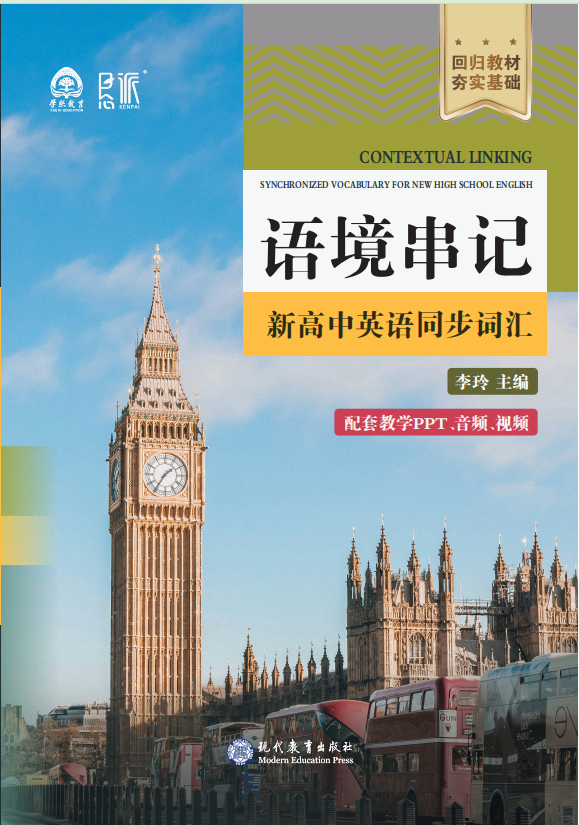
Unit 4 Natural Disasters-新高中英语高一同步词汇——语境串记
2025-03-10
|
43页
|
128人阅读
|
18人下载
教辅

内容正文:
Unit 4
NATURAL DISASTERS
HARMONY
Passage 1 单词串串烧
1.灾难
2.龙卷风
3.旱灾
4.滑坡
5.海啸
6.水灾
7.台风
8.飓风
9.火山爆发
10.破坏
11.死亡
12.发生
13.废墟
Passage 1 单词串串烧
1.灾难
2.龙卷风
3.旱灾
4.滑坡
5.海啸
6.水灾
7.台风
8.飓风
9.火山爆发
10.破坏
11.死亡
12.发生
13.废墟
1.disasters/disaster
2.tornados/tornado
3.droughts/drought
4.landslides/landslide
5.tsunamis/tsunami
6.floods/flood
7.typhoons/typhoon
8.hurricanes/hurricane
9.volcanic eruptions
/volcanic eruption
10.damage
11.deaths/death
12.struck/strike
13.in ruins/ruin
Passage 1 单词串串烧
14.震惊
15.裂
16.铁
17.覆盖着地面
18.砖块
19.困
20.埋
21.敲打水管
22.吹口哨
23.援救
24.不遗余力
25.幸存者
Passage 1 单词串串烧
14.震惊
15.裂
16.铁
17.覆盖着地面
18.砖块
19.困
20.埋
21.敲打水管
22.吹口哨
23.援救
24.不遗余力
25.幸存者
14.shocked/shock
15.cracked/crack
16.metal
17.covering the ground/cover∽
18.bricks/brick
19.trapped/trap
20.buried/bury
21.tapped on pipes/tap on pipe
22.whistled/whistle
23.rescue
24.spared no effort/spare no effort
25.survivors/survivor
Passage 1 单词串串烧
26.避难所
27.露天
28.电
29.提供
30.恢复了生机
31.努力
32.废墟
33.灾害来临
34.勠力同心
35.智慧
Passage 1 单词串串烧
26.避难所
27.露天
28.电
29.提供
30.恢复了生机
31.努力
32.废墟
33.灾害来临
34.勠力同心
35.智慧
26.shelters/shelter
27.in the open air
28.electricity /electric
29.supplied /supply
30.breathe/breath
31.efforts/effort
32.ruins/ruin
33.disaster strikes
/disaster strike
34.unify/unite
35.wisdom /wise
Passage 1 单词串串烧
14.震惊
15.裂
16.铁
17.覆盖着
地面
18.砖块
19.困
20.埋
21.敲打水管
22.吹口哨
23.援救
24.不遗余力
25.幸存者
26.避难所
27.露天
28.电
29.提供
30.恢复了生机
31.努力
32.废墟
33.灾害来临
34.勠力同心
35.智慧
26.shelters
27.in the open air
28.electricity
29.supplied
30.breathe
31.efforts
32.ruins
33.disaster strikes
34.unify
35.wisdom
14.shocked/shock
15.cracked/crack
16.metal
17.covering the ground
/cover∽
18.bricks/brick
19.trapped/trap
20.buried/bury
21.tapped on pipes/tap on pipe
22.whistled/whistle
23.rescue
24.spared no effort/spare no effort
25.survivors/survivor
Passage 1
Among natural disasters, like tornados, droughts, landslides, tsunamis, floods, typhoons, hurricanes and volcanic eruptions, which often cause terrible damage and a lot of deaths, earthquakes tend to be the most destructive.
The earthquake that struck Tangshan on 28 July 1976, nearly put the city in ruins.
People were shocked to find the walls cracked, the railway tracks became useless pieces of metal, and over 75 percent of the buildings fell down, covering the ground with broken bricks.
People who were trapped or buried tapped on pipes or whistled for help.
Before long, rescue teams spared no effort to dig them out, and the survivors were settled in shelters that were put up in the open air, where electricity and fresh water could be supplied.
Slowly, the city began to breathe again.
With strong support from the government and tireless efforts of the people, a new Tangshan has been built upon the earthquake ruins, which has proved that when a disaster strikes, people must unify and show the wisdom to rebuild for a brighter future.
Passage 2 单词串串烧
1.海啸
2.重创
3.级
4.巨浪
5.摧毁
6.受灾
7.死亡
8.灾难
9.遭遇
10.活下来
11.海啸席卷
12.援助
13.运送
14.补给
Passage 2 单词串串烧
1.海啸
2.重创
3.级
4.巨浪
5.摧毁
6.受灾
7.死亡
8.灾难
9.遭遇
10.活下来
11.海啸席卷
12.援助
13.运送
14.补给
1.tsunami
2.crashed/crash
3.magnitude
4.waves /wave
5.destroyed/destroy
6.affected/affect
7.deaths / death
8.disaster
9.suffering / suffer
10.survived
11.tsunami swept away
/ tsunami sweep away 12.aid 13.deliver
14.supplies/ supply
Passage 2
The tsunami, caused by an earthquake, which was the most disastrous one recorded in the past 40 years, crashed into the coastline across Asia on Sunday, 26 December 2004.
Within hours of the earthquake, reaching a magnitude of 9.0, powerful waves destroyed nearly everything in their paths, killing over 6,500 people in many countries, including Indonesia, India, Thailand and Malaysia.
The west coast of Indonesia’s Sumatra Island and Sri Lanka, the two worst-affected areas, reported the most deaths according to the local government officials, where approximately 5,000 were killed or went missing in the disaster.
Some were found alive, though they were suffering a lot.
Those few who survived gave an account after the tsunami swept away the famous tourist resort in Thailand.
Foreign aid was on the way to the tsunami-hit areas.
Foreign aid was on the way to the tsunami-hit areas.
However, dangerous conditions and damaged roads made it difficult to deliver food and supplies.
The tsunami, caused by an earthquake, which was the most disastrous one recorded in the past 40 years, crashed into the coastline across Asia on Sunday, 26 December 2004. Within hours of the earthquake, reaching a magnitude of 9.0, powerful waves destroyed nearly everything in their paths, killing over 6,500 people in many countries, including Indonesia, India, Thailand and Malaysia.
The west coast of Indonesia’s Sumatra Island and Sri Lanka, the two worst-affected areas, reported the most deaths according to the local government officials, where approximately 5,000 were killed or went missing in the disaster.
Some were found alive, though they were suffering a lot. Those few who survived gave an account after the tsunami swept away the famous tourist resort in Thailand. Foreign aid was on the way to the tsunami-hit areas. However, dangerous conditions and damaged roads made it difficult to deliver food and supplies.
Passage 3 单词串串烧
1.灾难
2.应急物资
3.提前
4.急救箱
5.冷静
6.电
7.物资
8.总之
9.来临
10.智慧
11.影响
Passage 3 单词串串烧
1.灾难
2.应急物资
3.提前
4.急救箱
5.冷静
6.电
7.物资
8.总之
9.来临
10.智慧
11.影响
1.disasters/disaster
2.emergency supplies
/emergency supply
3.in advance
4.first aid kit
5.calm
6.power
7.supplies/supply
8.In summary
9.strikes/strike
10.wisdom
11.effect
Passage 3
Actually, there’s no way to prevent earthquakes, but if we are prepared, we can keep them from becoming disasters that kill or injure people.
Knowing some safety instructions can make a difference.
Having emergency supplies prepared in advance is very important, including water and food for three days, a flashlight, and a first aid kit.
In times of earthquakes, first of all, keep calm and go to an open place if possible.
Cover your head with your hands, and stay away from glass, windows, trees, power lines or anything that could fall.
Use your supplies and stay in contact with others so they know you are OK.
In summary, when a disaster or an emergency strikes, we should unify and show the wisdom to stay positive to reduce its undesirable effects
Grammar Practice
用10分钟完成相关的语法填空练习
语法填空
01
Passage 1
Among natural disasters, like tornados, droughts, landslides, tsunamis, floods, typhoons, hurricanes and volcanic eruptions, which often cause terrible damage and a lot of 1__________ (death), earthquakes tend to be the most 2__________ (destroy).
The earthquake that 3__________ (strike) Tangshan on 18 July 1976, nearly put the city in ruins. People were shocked 4__________(find) the walls cracked, the railway tracks became useless pieces of metal, and over 75 percent of the buildings fell down, covering the ground 5__________broken bricks.
People who 6____________ (trap) or buried tapped on pipes or whistled for help. Before long, rescue teams spared no effort to dig 7__________(they) out, and the survivors were settled in shelters that were put up in 8__________open air, 9__________ electricity and fresh water could be supplied.10__________ (slow), the city began to breathe again.
deaths
destructive
struck
to find
with
were trapped
them
the
where
Slowly
Passage 2
The tsunami, caused by an earthquake, 1__________ was the most disastrous one recorded in the past 40 years, 2__________ (crash) into coastlines across Asia on Sunday, 26 December 2004. Within hours of the earthquake, 3__________ (reach) a magnitude of 9.0, powerful waves destroyed nearly everything on its path, killing over 6,500 people in many countries, including Indonesia, India, Thailand and Malaysia.
The west coast of Indonesia’s Sumatra Island and Sri Lanka, the two 4__________ (bad) affected areas, reported the most 5__________ (die) according to the local government officials, where approximately 5,000 were killed 6__________ went 7__________ (miss) in the disaster.
Some 8__________ (find) alive, though they were suffering a lot. Those few who survivedgave an account after the tsunami swept away the famous tourist resort in Thailand. Foreign aid was on the way to the tsunami-hit areas. 9__________, dangerous conditions and damaged roads made 10__________ difficult to deliver food and supplies.
which
crashed
reaching
worst
deaths
or
missing
were found
However
it
Passage 3
Actually, there’s no way to prevent earthquakes, but if we prepare, we can keep them from becoming disasters that kill or injure people. Knowing some safety instructions can make 1__________ difference.
Having emergency supplies 2__________ (prepare) in advance is very important, including water and food for three days, a flashlight, and a first aid kit. In 3__________ (time) of earthquakes, first of all, keep calm and go to 4__________open place in the meantime. Cover your head with your hands, and stay away 5__________ glass, windows, trees, power lines or anything 6__________could fall. Use your supplies and stay in contact with 7__________(other) so they know you are OK.
In summary, when a disaster or an emergency 8__________(strike), we should unify and show the 9__________(wise) to stay positive to reduce its 10___________(desirable) effects.
a
prepared
times
an
from
that
others
strikes
wisdom
undesirable
Oral Translation
安排5分钟让学生尝试将语境助记的中文口头翻译成英文
口头翻译
02
口头翻译(Passage 1)
1. 在自然灾害中,地震往往是最具摧毁力的。(among, tend to, destructive)
2. 在此次地震中丧生或身受重伤的人数超过了 40 万。(the number of, who…, more than)
Among natural disasters, earthquakes tend to be the most destructive.
The number of people who were killed or badly injured in the earthquake was more than 400,000.
3. 砖块就像秋天的红叶覆盖着地面,但是却没有风能将其吹走。(cover the ground like, blow away)
4. 很 快, 救 援 队 伍 不 遗 余 力 地 把 幸 存 的 人 挖 出 来。(before long, rescue, spare no effort, survivor)
Bricks covered the ground like red autumn leaves, but no wind could blow them away.
Before long, rescue teams spared no effort to dig the survivors out.
5. 唐山开始苏醒过来并又站了起来。
(revive oneself, on one’s feet)
Tangshan began to revive itself and get up on its feet again.
口头翻译(Passage 3)
6. 了解一些安全指引,往往会起很大的作用。(instructions, make a difference)
7. 用手保护头部,远离玻璃。(cover… with, stay away from)
Knowing some safety instructions can make a difference.
Cover your head with your hands, and stay away from glass.
8. 总之,当灾难或紧急情况来临时,我们要团结一致,展现出智慧。(disaster, strike, unify, wisdom)
In summary , when a disaster or an emergency strikes, we should unify and show the wisdom.
Basic Practice
配套英文的视频资源,作为教师可讲解课标单词时的补充作业
基础训练
03
基础训练
1.Originally, they were supposed to be on the front line of rescue efforts, but now the ________ became the ________. (rescue)
2.A number of areas have suffered serious ___________ (dry) this year, especially the rivers are ___________(dry) up in summer.
3.These doctors wondered whether the ___________ (dead) disease would lead to the _________ (die) king’s ___________ (dead).
4 Villagers turn to the __________ (wisdom) elderly for his _________ (wise) of how to live _________ (wise).
5_____________ (power) humans should never ignore the power of the _____________ (power) nature.
rescuers
rescued
drought
drying
deadly
dying
death
wise
wisdom
wisely
Powerless
powerful
基础训练
6.Those adventurers who ______________(survive) the landslide were called lucky ____________(survive).
7.The post-quake fire left the building in _________, and everything inside had been _________ (ruin).
8. He took a deep ______________ (breathe), and began to climb the hill. After getting to the peak, he became ___________(breath). 9 Those _____________(suffer) simply tell us real ____________ (suffer) is part of life.
10 The old man fetched some water and ___________ (calm) poured it into the fire. His __________
(calm) made a difference.
11 Taking notes is one of the ______________ (effect) ways to build up our vocabulary and has a
good ____________ (effect) on learning
rescuers
rescued
drought
drying
deadly
dying
death
wise
wisdom
wisely
Powerless
powerful
基础训练
6.Those adventurers who ______________(survive) the landslide were called lucky ____________(survive).
7.The post-quake fire left the building in _________, and everything inside had been _________ (ruin).
8. He took a deep ______________ (breathe), and began to climb the hill. After getting to the peak, he became ___________(breath).
9.Those _____________(suffer) simply tell us real ____________ (suffer) is part of life.
survived
survivors
ruins
ruined
breath
breathless
sufferers
suffering
基础训练
10.The old man fetched some water and ___________ (calm) poured it into the fire. His __________(calm) made a difference.
11. Taking notes is one of the ______________ (effect) ways to build up our vocabulary and has a good ____________ (effect) on learning.
calmly
calmness
effective
effect
佳句仿写
1. 在自然灾害中,地震往往是最具摧毁力的。
Among natural disasters, earthquakes tend to be the most destructive.
仿写:在各种灾害中,火灾往往具有摧毁力。
——————————————————————————————————————————————————————————————
Among different kinds of disasters, fires tend to be destructive.
2. 地震几乎把整个城市变成了一片废墟。
The earthquake nearly put the city in ruins.
仿写:火灾几乎会把整个房子变成一片废墟。
——————————————————————————————————————————————————————————————
The fire would nearly put the whole house in ruins.
3. 如果我们提前做好准备,我们就可以避免让它们变成严重的灾难。
If we are prepared ahead of time, we can keep them from becoming serious disasters.
仿写:如果我们提前做好准备,可以避免严重火灾。
——————————————————————————————————————————————————————————————
If we are prepared ahead of time, we can keep them from serious fires.
4. 了解一些安全指引,往往会起很大的作用。
Knowing some safety instructions can make a big difference.
仿写:提高防火意识往往会起很大的作用。
——————————————————————————————————————————————————————————————
Raising the awareness of preventing fires can make a big difference.
5. 遇到地震时,首先要保持冷静。
In times of earthquakes, first of all, keep calm.
仿写:遇到火灾,首先要保持冷静。
——————————————————————————————————————————————————————————————
In times of fires, first of all, keep calm.
6. 尽可能到户外。
Go to an open place if possible.
仿写:在此期间,设法躲在安全的地方,等待救援。
——————————————————————————————————————————————————————————————
Manage to shelter in a safe place in the meantime, waiting for rescue.
7. 用手保护头部,远离玻璃。
Cover your head with your hands, and stay away from glass.
仿写:用湿毛巾保护脸部,远离浓烟。
——————————————————————————————————————————————————————————————
Cover your face with a wet towel, and stay away from thick smoke.
8. 用你的物资,与外界取得联系,让他们知道你安然无恙。
Use your supplies and stay in contact with others so they know you are OK.
仿写:尽快与外界取得联系,让他们知道你安然无恙。
——————————————————————————————————————————————————————————————
Get in contact with others as soon as possible so they know you are OK.
9. 总之,当灾难来临时,我们要团结一致,展现出智慧。
In summary, when a disaster strikes, we should unify and show the wisdom.
仿写:总之,当火灾来临时,我们要团结一致,展现出智慧。
——————————————————————————————————————————————————————————————
In summary, when a fire strikes, we should unify and show the wisdom.
TOPIC WRITING
通过背诵和默写优秀范文,强化语料库
单元写作
04
基础写作
假设你是李华,每年 10 月 13 日是国际减轻自然灾害日。学校英语广播站以“How to prevent fires”为题征稿,请根据以下要点写一份稿件。
内容包括:
1. 火灾危害;
2. 防火、救护措施;
3. 表达期望。
注意事项:
1. 词数不少于 80;
2. 可适当增加细节,以使行文连贯。
范文赏析
Dear editor,
Among different kinds of disasters, fires tend to be destructive. In the worst case, the fire would nearly put the whole house in ruins.
However, if we are prepared ahead of time, we can keep them from becoming serious fires. Raising the awareness of preventing fires can make a big difference. In times of fires, first of all, keep calm. Manage to shelter in a safe place in the meantime, waiting for rescue. Cover your face with a wet towel, and stay away from thick smoke. Get in contact with others as soon as possible so they know you are OK.
In summary, when a fire strikes, we should unify and show the wisdom.
Yours,
Li Hua
THANKS
60655.16
49475.332
41534.52
91534.18
5485.7275
14079.939
3500.4133
20062.031
98143.805
22674.336
9012.258
14132.184
58252.02
4310.2124
7862.8804
4414.7026
8228.596
87667.68
17998.31
18520.771
18808.125
41691.246
7653.9
10109.385
7549.4097
12460.371
74030.43
15673.386
3996.742
12120.784
$$
资源预览图

1

2

3

4

5

6
相关资源
示范课
由于学科网是一个信息分享及获取的平台,不确保部分用户上传资料的 来源及知识产权归属。如您发现相关资料侵犯您的合法权益,请联系学科网,我们核实后将及时进行处理。