UNIT 2 Section Ⅱ Learning About Language(课件PPT)-【状元桥·优质课堂】2024-2025学年高中英语选择性必修第四册(人教版2024)
2025-03-10
|
46页
|
39人阅读
|
2人下载
教辅

资源信息
| 学段 | 高中 |
|---|---|
| 学科 | 英语 |
| 教材版本 | 高中英语人教版选择性必修第四册 |
| 年级 | 高二 |
| 章节 | Learning About Language |
| 类型 | 课件 |
| 知识点 | - |
| 使用场景 | 同步教学-新授课 |
| 学年 | 2025-2026 |
| 地区(省份) | 全国 |
| 地区(市) | - |
| 地区(区县) | - |
| 文件格式 | PPTX |
| 文件大小 | 1.89 MB |
| 发布时间 | 2025-03-10 |
| 更新时间 | 2025-03-10 |
| 作者 | 湖北千里万卷教育科技有限责任公司 |
| 品牌系列 | 状元桥·优质课堂·高中同步 |
| 审核时间 | 2025-03-10 |
| 下载链接 | https://m.zxxk.com/soft/50915046.html |
| 价格 | 4.00储值(1储值=1元) |
| 来源 | 学科网 |
内容正文:
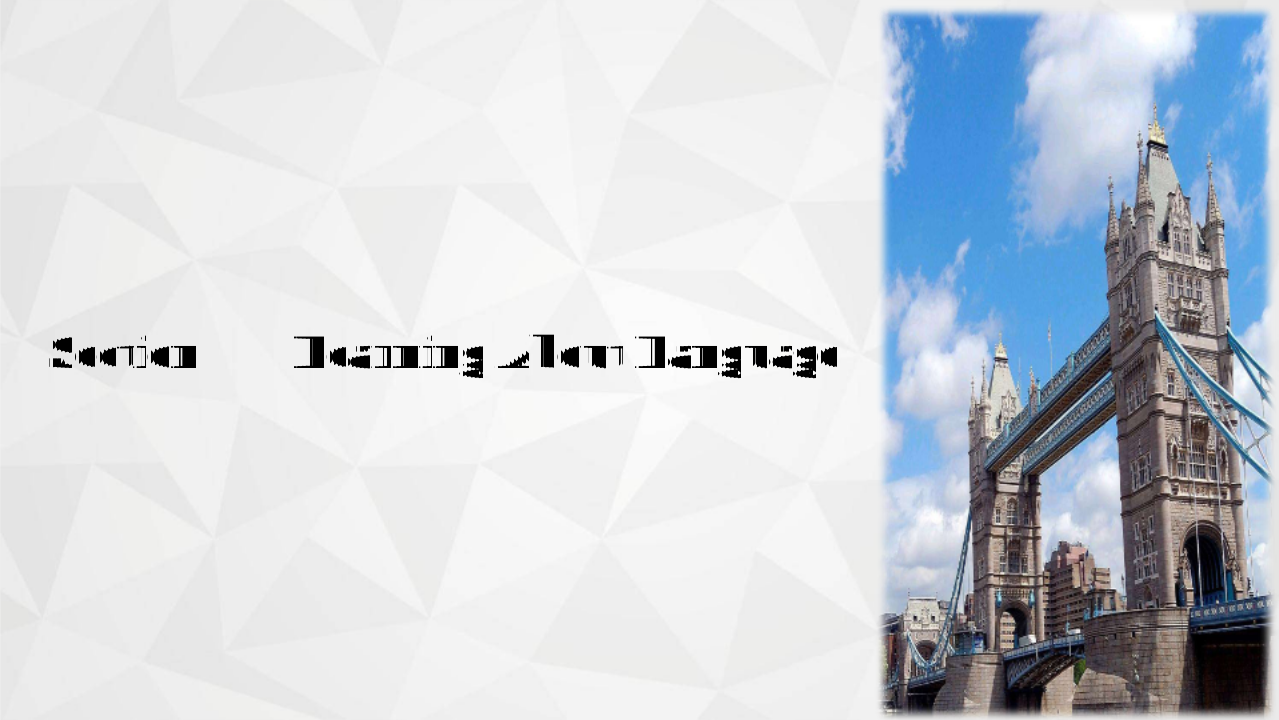
ICONIC ATTRACTIONS
UNIT 2
Section Ⅱ Learning About Language
语法慧学·提升语言能力
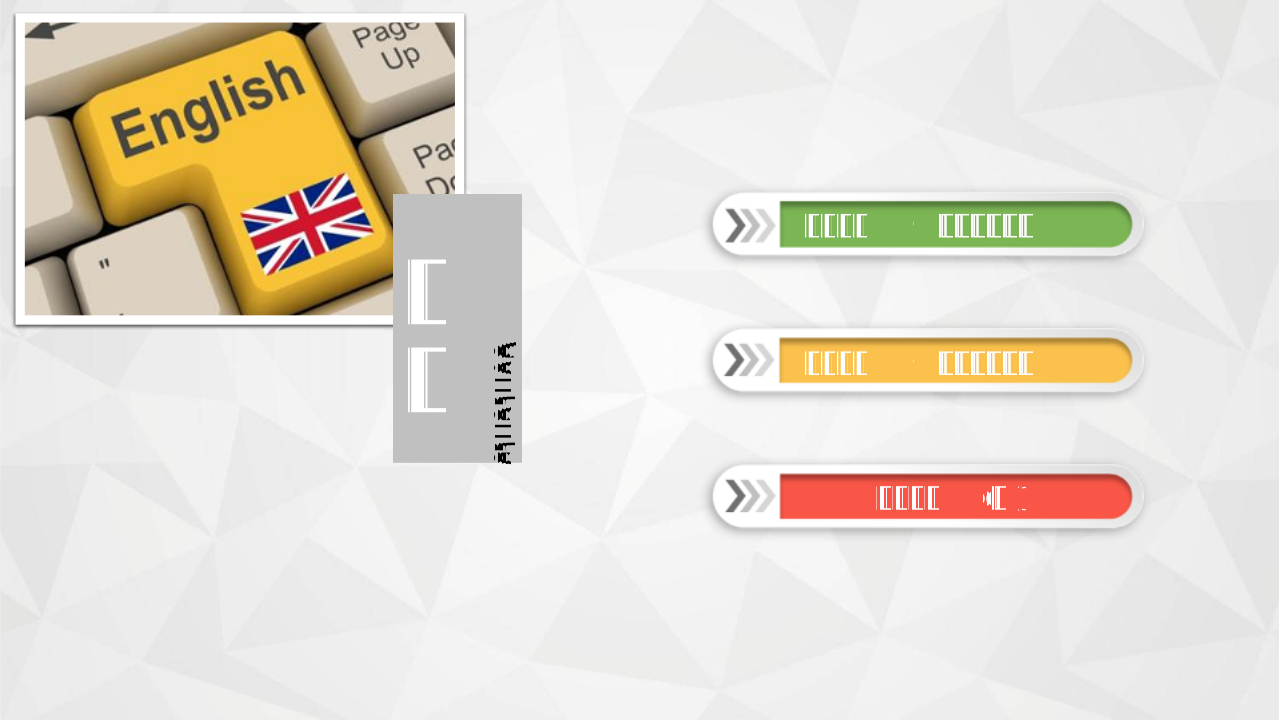
目
录
Contents
课时作业(五)
语基输入·助力语言输出
语法慧学·提升语言能力
interested
返回目录
英语 选择性必修 第四册
found
called
contributed
返回目录
英语 选择性必修 第四册
返回目录
英语 选择性必修 第四册
返回目录
英语 选择性必修 第四册
返回目录
英语 选择性必修 第四册
返回目录
英语 选择性必修 第四册
返回目录
英语 选择性必修 第四册
designed
recognized
返回目录
英语 选择性必修 第四册
surrounded
返回目录
英语 选择性必修 第四册
返回目录
英语 选择性必修 第四册
返回目录
英语 选择性必修 第四册
返回目录
英语 选择性必修 第四册
closed
promoted
cheated
返回目录
英语 选择性必修 第四册
返回目录
英语 选择性必修 第四册
返回目录
英语 选择性必修 第四册
返回目录
英语 选择性必修 第四册
返回目录
英语 选择性必修 第四册
返回目录
英语 选择性必修 第四册
informed
lost
untouched
返回目录
英语 选择性必修 第四册
返回目录
英语 选择性必修 第四册
返回目录
英语 选择性必修 第四册
返回目录
英语 选择性必修 第四册
返回目录
英语 选择性必修 第四册
返回目录
英语 选择性必修 第四册
返回目录
英语 选择性必修 第四册
返回目录
英语 选择性必修 第四册
Moved by their speech
Built before the war
返回目录
英语 选择性必修 第四册
Asked who had broken the window
Seated at the back of the classroom
返回目录
英语 选择性必修 第四册
Worried
to be held
blocked
返回目录
英语 选择性必修 第四册
focused
educated
marked
返回目录
英语 选择性必修 第四册
disappointed
reminded
completed
Raised
返回目录
英语 选择性必修 第四册
Regardless of the risk of getting infected
Injured in the accident
my classmates are
becoming more and more excited
返回目录
英语 选择性必修 第四册
Worried about the coming exam
Determined to learn from him
I get punished for eating in the English
class
返回目录
英语 选择性必修 第四册
语基输入·助力语言输出
1
返回目录
英语 选择性必修 第四册
返回目录
英语 选择性必修 第四册
to be admitted
entitled
entitlement
返回目录
英语 选择性必修 第四册
are entitled
to an education
返回目录
英语 选择性必修 第四册
2
返回目录
英语 选择性必修 第四册
返回目录
英语 选择性必修 第四册
freedom
from/of
返回目录
英语 选择性必修 第四册
you might/can have the
freedom to decide your own future
you are free to decide your
own future
返回目录
英语 选择性必修 第四册
课时作业(五) 语言运用专项
返回目录
英语 选择性必修 第四册
制 作 者:状元桥
适用对象:高中学生
制作软件:Powerpoint2010、
Photoshop cs3
运行环境:WindowsXP以上操作系统
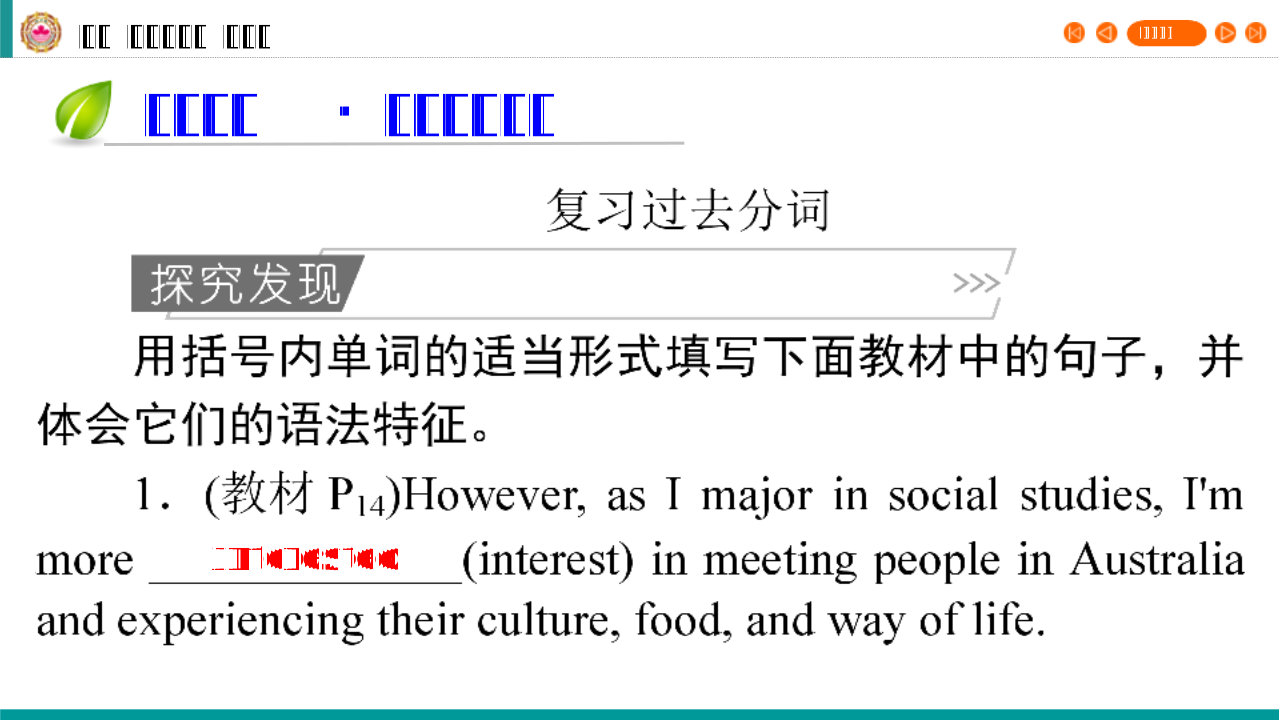
复习过去分词
用括号内单词的适当形式填写下面教材中的句子,并体会它们的语法特征。
1.(教材P14)However, as I major in social studies, I'm more _____________(interest) in meeting people in Australia and experiencing their culture, food, and way of life.
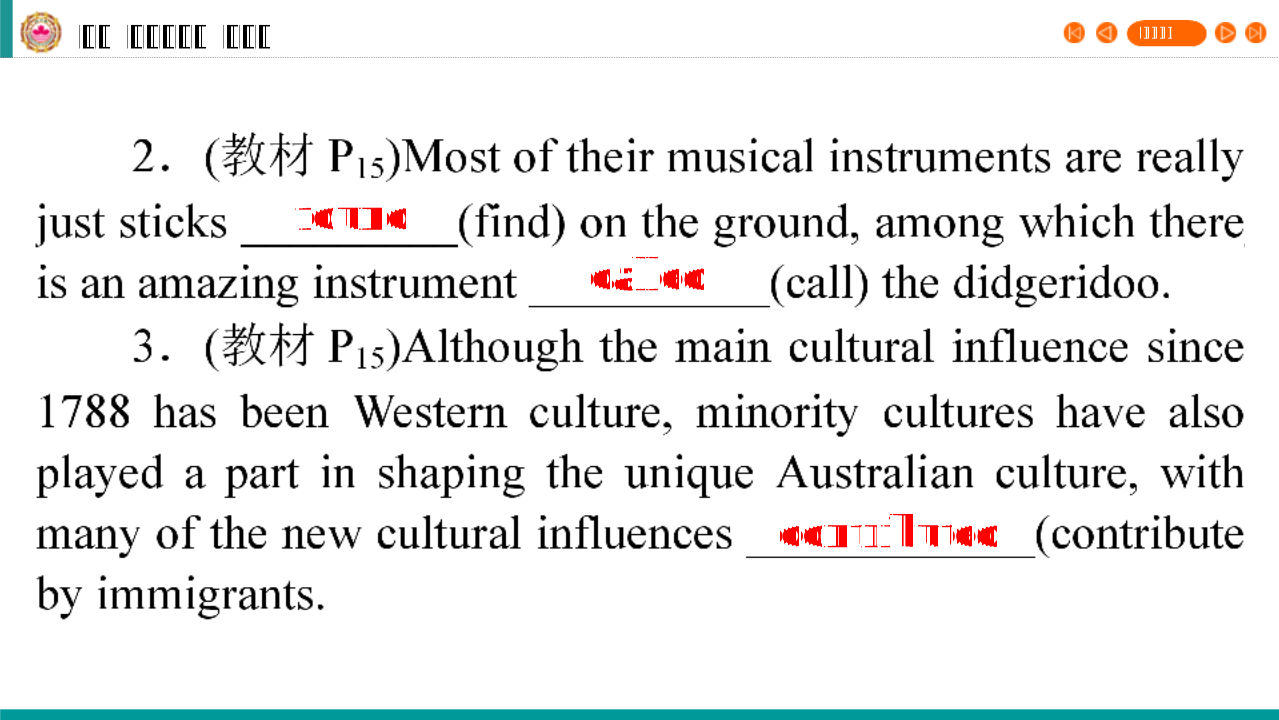
2.(教材P15)Most of their musical instruments are really just sticks _________(find) on the ground, among which there is an amazing instrument __________(call) the didgeridoo.
3.(教材P15)Although the main cultural influence since 1788 has been Western culture, minority cultures have also played a part in shaping the unique Australian culture, with many of the new cultural influences ____________(contribute) by immigrants.
一、过去分词作定语
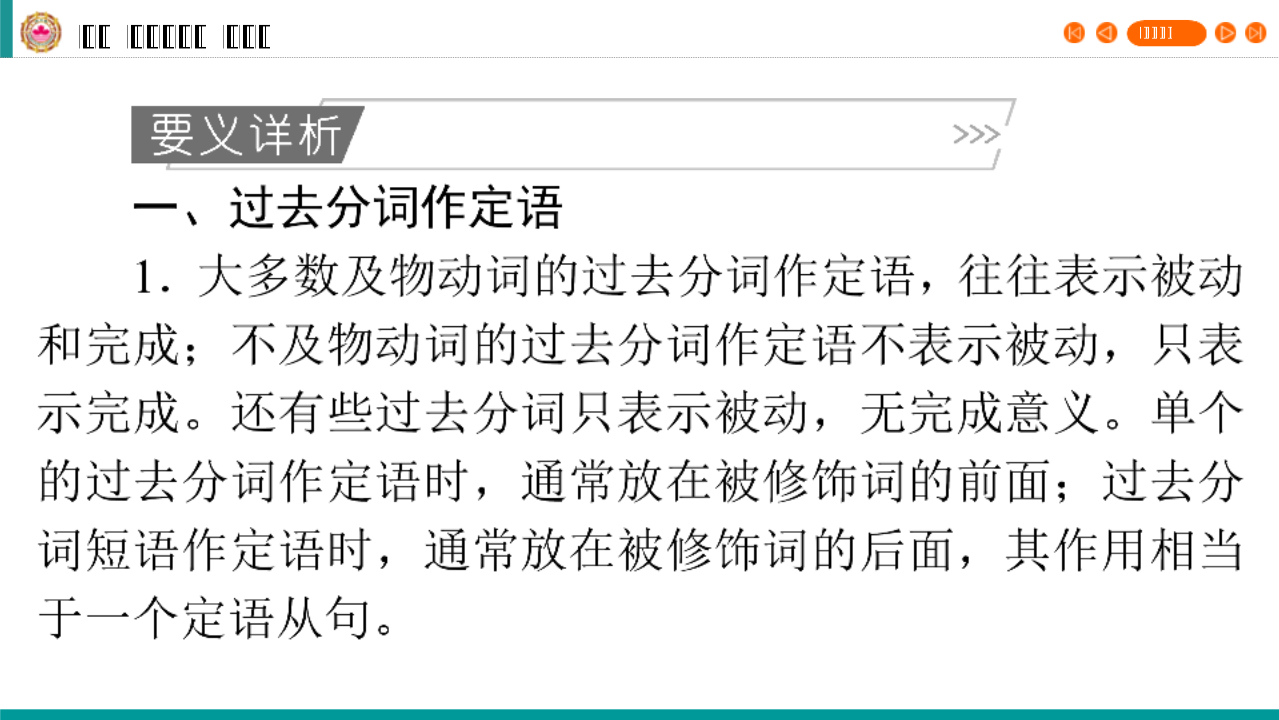
1.大多数及物动词的过去分词作定语,往往表示被动和完成;不及物动词的过去分词作定语不表示被动,只表示完成。还有些过去分词只表示被动,无完成意义。单个的过去分词作定语时,通常放在被修饰词的前面;过去分词短语作定语时,通常放在被修饰词的后面,其作用相当于一个定语从句。
►Charlie Waite is one of today's most respected landscape photographers.
查理·维特是今天最受尊敬的陆地景观摄影师之一。(表示被动完成)
►The old man is sweeping the fallen leaves in the yard.
老人正在清扫院子里的落叶。(仅表完成)
►The student dressed in white is my daughter.
=The student who is dressed in white is my daughter.
穿白色衣服的那个学生是我女儿。
[提示] 过去分词作定语和现在分词作定语的区别:
过去分词表示被动和已经完成的动作;现在分词表示主动和正在进行的动作。
►The question discussed was very important.
讨论过的那个问题很重要。
►The house standing at the corner of the street was built in 2016.
坐落在街角的那个房子是2016年建成的。
2.过去分词(done)、现在分词的被动语态(being done)与动词不定式的被动语态(to be done)作定语的区别:
形 式
意 义
done
被动、完成
being done
被动、进行
to be done
被动、尚未发生
►The building built last year is our teaching building.
去年建造的大楼是我们的教学楼。
►The building being built now is our teaching building.
现在正在建造的大楼是我们的教学楼。
►The building to be built next month is our teaching building.
下个月将要建造的大楼是我们的教学楼。
[即时训练1]——单句语法填空
(1)(2024·1月浙江)Over the last two years, some supermarkets have started selling chicken or salad in packs ____________(design) with two halves containing separate portions(份).
(2)(2023·新课标Ⅰ)Shanghai may be the ____________ (recognize) home of the soup dumplings but food historians will actually point you to the neighboring canal town of Nanxiang as Xiao long bao's birthplace.
(3)(2023·1月浙江)In the Ming Dynasty, the center was the Forbidden City, ____________(surround) in concentric(同心的) circles by the Inner City and Outer City.
二、过去分词作表语
1.过去分词作表语时放在系动词后面,构成系表结构,表示主语所处的状态。
►She is equally interested to learn more about Chinese philosophy.
她对学习更多关于中国哲学的事情同样感兴趣。
►We were encouraged at the news.
听到这个消息我们很受鼓舞。
2.感觉类及物动词的现在分词与过去分词作表语的区别:
英语中有很多与感觉有关的及物动词,其现在分词表示主动意义,即“令人有某种感觉的”,多用来修饰物;其过去分词表示被动意义,即“人被引起某种感觉的”,多用来指人、人的声音、笑容或表情等。
►I don't know where it will lead, but I'm excited I'm on this pursuit.
我不知道它通往哪里,但是我很兴奋我在追求中。
►His words were discouraging, which made many people discouraged.
他的话令人泄气,使得很多人灰心丧气。
[即时训练2]——单句语法填空
(1)(2024·新课标Ⅰ)In cold weather, the structure stays __________(close) to protect the plants.
(2)Tan was admitted as a dancer by the company of San Francisco Ballet, soon after which she got ____________ (promote) to be its leading dancer.
(3)It is recognised that people making friends online are afraid of getting ___________(cheat).
三、过去分词作宾语补足语
1.过去分词作宾语补足语时,与宾语之间是逻辑上的动宾关系。宾语是过去分词所表示的动作的承受者。
►But that's how nature is—always leaving us astonished.
但那就是大自然的样子——总是让我们惊讶。
2.能够接过去分词作宾语补足语的动词(短语)有以下几类:
(1)表示感觉或心理状态的动词(短语),如see, watch, observe, find, look at, hear, listen to, feel, notice, think等。
►When we got to school, we saw the door locked.
到了学校,我们看见门锁着。
(2)表示“致、使”意义的动词,如have, make, get, keep, leave等。
►They managed to make themselves understood by using very simple English.
他们用了很浅显的英语设法使别人听懂。
[提示] 过去分词作宾补时,要注意以下几种情况:
(1)使役动词have接过去分词作宾补有两种情况:
①过去分词所表示的动作由他人完成。
►He had his money stolen.
他的钱被偷了。(被别人偷去了)
②过去分词所表示的动作由句中的主语所经历。
►He had his leg broken.
他的腿断了。(自己的经历)
(2)过去分词在原句中作宾补时,如果原句变为被动语态,那么过去分词就在新句中作主补了。
►Almost no student is seen punished in this school.
在这所学校,几乎见不到学生被惩罚。
[即时训练3]——单句语法填空
(1)Every night it goes on the web, keeping parents and the world ____________(inform) of the happenings at Pali.
(2)Even the excellent writers sometimes find themselves ________(lose) for words.
(3)The boy left the house in a hurry, leaving his lunch _____________(untouch).
四、过去分词作状语
过去分词(短语)作状语,表示被动的或完成的动作,这时句子的主语和过去分词之间为逻辑上的动宾关系。过去分词通常在句中作时间状语、原因状语、条件状语、让步状语、方式状语和伴随状语等。
1.过去分词作时间状语,在句中相当于一个时间状语从句。
►Asked about his address(=When he was asked about his address), the boy didn't respond.
问及他的地址时,男孩没有作答。
2.过去分词作原因状语,在句中相当于一个原因状语从句。
►Encouraged by the progress he has made(=As he is encouraged by the progress he has made), he works harder.由于受到所取得的进步的鼓励,他工作更努力了。
3.过去分词作条件状语,在句中相当于一个条件状语从句。
►Given more time(=If they were given more time), the trees could grow taller.
如果再多给一点时间,这些树会长得更高。
4.过去分词作让步状语,在句中相当于一个让步状语从句。
►Though warned of the storm(=Though they had been warned of the storm), the farmers were still working in the fields.
尽管被提醒有暴风雨,农民们仍然在田地里劳作。
5.过去分词作方式、伴随状语,在句中相当于一个并列句。
►Followed by a group of students, the teacher entered the classroom.
=The teacher entered the classroom and he was followed by a group of students.
老师走进教室,后面跟着一群学生。
[提示] (1)过去分词(短语)作状语时,前面有时可以加上when, if, while, though, even if, until, unless等连词,这种结构可以看作是一种省略的状语从句(省略部分多为“主语+be的某种形式”)。需要注意的是,省略的主语必须和主句的主语相同或为it。
►Even if invited(=Even if I'm invited), I won't take part in the party.
即使受到邀请,我也不会参加这个聚会。
(2)有些过去分词因来源于系表结构,作状语时不表示被动,而表示主动。这样的过去分词及短语有:lost(迷路、沉溺于), seated(坐), dressed in(穿着), tired of(厌烦), faced with(面临), accustomed to(习惯于)等。
►Lost in deep thought, he didn't hear the sound.
因为专注于思考,他没听到那个声音。
►Dressed in a new dress, she looks very beautiful.
她穿了一件新连衣裙,看上去很漂亮。
(3)过去分词作状语,其逻辑主语必须和句子的主语一致。如果不一致,则必须用状语从句、独立主格结构等其他表达形式。
►If caught, the police will punish the thief.(×)
►If caught, the thief will be punished by the police.(√)
►If the thief is caught, the police will punish him/her.(√)
如果小偷被抓,警察会惩罚他/她。
[即时训练4]——句型转换
(1)As I was moved by their speech, I was at a loss what to say.
→______________________, I was at a loss what to say.
(2)Although it was built before the war, the engine is still in perfect order.
→_____________________, the engine is still in perfect order.
(3)When they were asked who had broken the window, the children all kept silent.
→_________________________________, the children all kept silent.
(4)She was seated at the back of the classroom and didn't talk to anyone.
→___________________________________, she didn't talk to anyone.
Ⅰ.单句语法填空
1.___________(worry) about the time available, the girl made a list of the tourist attractions she wanted to visit.
2.I wonder whether Jack will go to the birthday party ______________(hold) at the Green's tomorrow.
3.When we saw the road ___________(block) with snow, we decided to spend the holiday at home.
4.While rock-climbing, you need to remain very ___________(focus) so that you won't make any dangerous errors.
5.It is different from traditional tourism because it allows the traveler to become____________(educate) about the areas.
6.Earth Day, _________(mark) on 22 April, is an annual event aiming to raise public awareness about environmental protection.
7.There were many people waiting at the bus stop, and some of them looked very anxious and ________________ (disappoint).
8.Michael put up a picture of Yao Ming beside the bed to keep himself ____________(remind) of his own dreams.
9.John received an invitation to dinner, and with his work _____________(complete), he gladly accepted it.
10.__________(raise) in the poorest area of Glasgow, he had a long, hard road to becoming a football star.
Ⅱ.语法与写作(使用过去分词)
1.李叔叔不顾被感染的风险,对工作尽职尽责。
______________________________________________, Uncle Li is responsible and devoted to his job.
2.由于在事故中受伤了,这名运动员只好退出了比赛。
___________________________, the player had to drop out of the match.
3.随着假期临近,我的同学们变得越来越兴奋。
With the holiday approaching,_____________________ ______________________________.
4.因为担心即将到来的考试,有些同学学习到深夜。
_________________________________, some students study until midnight.
5.决心向他学习,我也开始在教室吃饭。但是我因为在英语课上吃东西被惩罚了。
_______________________________, I also begin to eat in the classroom, but _________________________________ _________.
(教材P16)Ethnic minority groups in China are often entitled to special funds from the government to help protect their cultural heritage.
中国的少数民族通常有权从政府获得特别资金,以帮助保护他们的文化遗产。
entitle vt.给……命名(或题名);使享有权利
①entitle sb to do sth 使某人有权做某事
be entitled to 有权享有……
②entitlement n.权利;资格
Every worker will be entitled to four weeks' paid holiday a year.
每个工人每年能享受4周的带薪休假。
[融会练通]——单句语法填空
(1)Excellent performance in the college entrance examination entitled him__________________(admit) into a key university.
(2)When I entered the room, he was reading a poem ____________(entitle) Salt.
(3)They lose their _______________(entitle) to welfare when they start work.
[习作练笔]——补全句子
(4)全部高中毕业生中排名前三分之一的有资格到加利福尼亚州立大学学习。
The top one-third of all high school graduates _________ _______________ at California State University.
(教材P16)Unfortunately, elephants are endangered in Thailand, but special parks have been set up to protect their safety and freedom.
不幸的是,在泰国大象濒临灭绝,但已经建立起专门的公园来保护它们的安全和自由。
freedom n.自由;不受……影响的状态
①the freedom to do/in doing sth做某事的自由
②free adj.自由的;免费的;空闲的;无……的
adv.自由地,免费地
v.使自由;解放;释放
set…free释放……;使……获得自由
be free to do sth自由地做某事
free of charge (=for free)免费
free of/from无……的;摆脱了……的
③freely adv.自由地;自如地
(2023·1月浙江)When you're riding on trains, you won't be provided with a blanket for free, even if your trip is an overnight one.
当你乘坐火车时,即使你的旅行是过夜的,你也不会免费获得毯子。
[融会练通]——单句语法填空
(1)With a bicycle, you can certainly enjoy the _________ (free) of travelling around town.
(2)People from all walks of life should build a society where they keep their children free ___________ violence.
[习作练笔]——一句多译
(3)既然你已经长大了,你可以自由决定自己的未来。
①Now that you've grown up, ______________________ ______________________________________.(freedom)
②Now that you've grown up, ______________________ ______________.(free)
$$
资源预览图

1
2
3
4
5
6

相关资源
由于学科网是一个信息分享及获取的平台,不确保部分用户上传资料的 来源及知识产权归属。如您发现相关资料侵犯您的合法权益,请联系学科网,我们核实后将及时进行处理。