Unit 1 Unit Review-【绿卡初中创新题】2024-2025学年八年级下册英语同步教案(冀教版)
2025-01-23
|
6页
|
289人阅读
|
1人下载
教辅

内容正文:
Unit 1 Spring Is Coming!
课时
Unit Review
课型
新授课
教学目标
【知识与技能】
1. 掌握本单元新学的单词、短语和句型;
2. 掌握本单元的语法:构词法——合成法。
【情感、态度与价值观】
该部分学习内容贴近学生的生活,谈论的主题是春天。通过复习本单元所学,引导学生谈论自己最喜欢的季节、天气及活动,学习不同地区的春天活动,使同学们感受到四季之美,发现自然之美,从而热爱生活,进而达到教学目的,实现教学目标。
教学重点
复习本单元所学的单词、短语和句型;掌握本单元的语法:构词法——合成法。
教学难点
能够谈论自己最喜欢的季节、天气以及活动。
教学准备
教师:音频、课件。
教 学
过 程
Step 1: Revision
建议:教师带领学生回顾本单元所学词汇
Example:
Ⅰ. 1. n. 阵雨;淋浴
2. v. & n. 升起;上升;增加
3. conj. & adv. 既不;也不;(二者)都不
4. conj. & adv. 也不;也没
5. n.风;气流
6. adv. 几乎;差不多;将近
7. n.丰富;大量
8. adv. 代替;更换
9. v. & n. 推;按下
10. v.aux. 将;会
11. n.兔子
12. adj. 低的;浅的
13. adj. 高的
14. prep. & adv. 低于;在……下面
15. 在……上(反义)
16. num. 零→zero hour 零时
17. conj. ( =till )直到……为止
Answers: 1. shower 2. rise 3. neither 4. nor 5. wind 6. nearly
7. plenty 8. instead 9. push 10. shall 11. rabbit 12. low 13. high
14. below 15. above 16. zero 17. until
Ⅱ. 1. 害怕 2. 既不……也不……
3. 一个接一个 4. 因为做某事感谢某人
5. 转身 6. 打开
7. 调低 8. 关闭
9. 变成 10. 抓住,抓紧
11. 下来 12. 来自
13. 快点,加油 14. 想出
15. 出现,出版 16. 和……一样……
Answers: 1. be scared of 2. neither…nor… 3. one by one 4. thank sb. for
doing sth. 5. turn around 6. turn on 7. turn down 8. turn off 9. turn
into 10. hold on 11. come down 12. come from 13. come on 14. come
up with 15. come out 16. as…as…
Step 2: Presentation
建议:教师展示多媒体课件,播放本单元学过的词汇及句型
Step 3: Building Your Vocabulary
建议:教师展示习题,让学生按要求完成。
Ⅰ.
Answers:
Words: instead, push, nearly, wind, plenty, long
Riddle: spring
Ⅱ. 选词填空
push plenty of not...until neither...nor average activity
1. Don’t worry. We have time to get ready for the trip.
2. Lucy her sister passed the English exam.
3. This year, our school organized lots of to enrich our lives.
4. Brian the door open and went into the room.
5. He did watch TV 10:00 p. m.
6. The age of these workers is 20. They are really active.
Answers: 1. plenty of 2. Neither, nor 3. activities 4. pushed 5. not, until
6. average
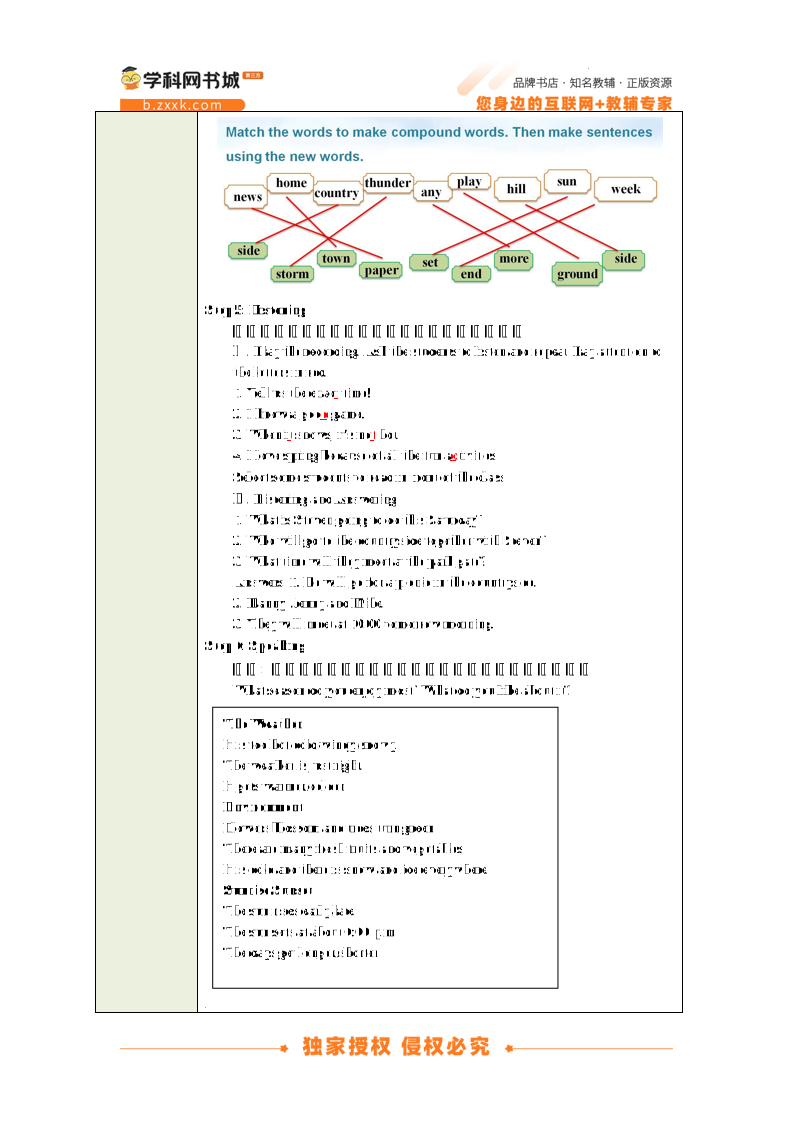
Step 4: Grammar in Use
Step 5: Listening
建议:教师播放录音,让学生按要求完成习题。
Ⅰ. Play the recording. Ask the students to listen and repeat. Pay attention to
the letters in red.
1. Tell us the exact time!
2. I know a good game.
3. When it snows, it's not hot.
4. I love spring because of all the fun activities.
Select some students to read in front of the class.
Ⅱ. Listening and Answering
1. What is Steven going to do this Saturday?
2. Who will go to the countryside together with Steven?
3. What time will they meet at the park gate?
Answers: 1. He will go for a picnic in the countryside.
2. Danny, Jenny and Mike.
3. They will meet at 10:00 tomorrow morning.
Step 6: Speaking
建议: 就以下问题让学生进行讨论,可以使用框内的表达。
What season do you enjoy most? What do you like about it?
(
The Weather
It is too hot/cold/windy/snowy.
The weather is just right.
It gets warmer/colder.
Environment
Flowers blossom and trees turn green.
There are many fresh fruits and vegetables.
It is cold and there is snow and ice everywhere.
Sunrise/Sunset
The sun rises early/late.
The sun sets at about 6
:
00 p.m.
The days get longer/shorter.
)
(
Activities
I love swimming in the sea.
I can go boating with my parents.
We go skiing during the winter holiday.
)
Step 7: Putting It All Togehter
建议: 让学生阅读课本P15的短文,回答问题。
1. How long does the Spring Festival last in China?
2. What are some common cultural activities during the Spring Festival?
3. Why are pancakes an important part of the celebration of Maslenitsa in
Russia?
4. Who celebrates the Festival of Colours?
Answers: 1. Fifteen days.
2. Firework shows, dragon dancing and lion dancing are very common.
3. Because they are round, yellow and hot, just like the sun.
4. Indian people.
Step 8: Language Points
一、合成词
合成词:由两个或两个以上的词合成的一个新词。
考点:最常见的有合成名词、合成形容词、合成代词等。
I.合成名词
名词+名词:weekend周末 名词+动词:sunset日落
名词+动名词:handwriting书法 动词+名词:playground操场
动名词+名词:reading room阅览室 形容词+名词:blackboard黑板
介词+名词:afternoon下午 副词+名词:outdoors外面
【例句】
My father’s handwriting is very good.
我爸爸的书法很棒。
They often go shopping at the weekend.
他们常在周末去购物。
Ⅱ.合成形容词
名词+形容词:snow-white雪白的
名词+现在分词:English-speaking讲英语的
名词+to+名词:face-to-face面对面的
名词+过去分词:man-made人造的
数词+名词:one-way单行的
数词+名词+形容词:two-year-old两岁的
副词+过去分词:well-known著名的
副词+动名词:hard-working勤劳的
副词+名词:out-door户外的
【例句】
England is an Englishspeaking country.
英国是一个讲英语的国家。
【提示】在构成合成词时,有的需加连字符,如hard-working;有的不加连字符,如sunrise。但由三个或三个以上的单词构成的合成词一般加连字符,如:ten-year-old。
Ⅲ.合成代词
反身代词:myself, ourselves, yourself, yourselves, himself, herself, itself, themselves。
【例句】
The boy teaches himself English.
这个男孩自学英语。
Step 9: Self-Evaluation
建议:让学生依据自己掌握的内容进行自我评价。
Step 10: Enjoyment
建议:让学生阅读诗歌。
Step 11: Summary
建议:让学生自己总结本节课主要学习了什么,还有哪些疑惑?教师可作
补充。
For example:
本节课我们复习了1.合成词的用法2.本单元的生词及描述季节的表达方
式,合成词是本单元的重点,也是难点,我们会在以后的学习中加以巩固。
课堂作业
1.口头作业: 阅读本单元的课文。
2.书面作业: 复习合成词的用法,并用本单元所学写一篇关于春天的短文。
板书设计
Unit 1 Spring Is Coming!
Unit Review
语法:合成词
合成词:由两个或两个以上的词合成的一个新词。
Ⅰ.合成名词
Ⅱ.合成形容词
Ⅲ.【重点】合成代词
教学反思
这是单元的复习课。因此,复习本单元的所学内容是本节课的重点内容。首先,老师引领学生回顾本单元的重点词汇,为接下来的习题做好铺垫。在猜字谜游戏中,激发学生学习英语的兴趣。讲解合成词这一语法,解答学生的语法疑难。然后做对应的语法训练题目,检查学生对语法知识的掌握情况。根据语言知识设计适当的交际活动,让学生用英语理解、表达和交流,从而体现“用英语做事情”的原则。最后学生进行自我评价,欣赏诗歌,从而达到教学目的,实现教学目标。
学科网(北京)股份有限公司
$$
资源预览图

1

2
3
相关资源
示范课
由于学科网是一个信息分享及获取的平台,不确保部分用户上传资料的 来源及知识产权归属。如您发现相关资料侵犯您的合法权益,请联系学科网,我们核实后将及时进行处理。