Unit 6 SectionA 2a-2e 听说课公开课课件-2024-2025学年人教版(2024)七年级英语上册
2025-01-05
|
15份
|
36页
|
565人阅读
|
9人下载
普通
资源信息
| 学段 | 初中 |
|---|---|
| 学科 | 英语 |
| 教材版本 | 初中英语人教版七年级上册 |
| 年级 | 七年级 |
| 章节 | 2a-2e |
| 类型 | 课件 |
| 知识点 | - |
| 使用场景 | 同步教学-新授课 |
| 学年 | 2024-2025 |
| 地区(省份) | 全国 |
| 地区(市) | - |
| 地区(区县) | - |
| 文件格式 | ZIP |
| 文件大小 | 80.99 MB |
| 发布时间 | 2025-01-05 |
| 更新时间 | 2025-01-05 |
| 作者 | 旭日东升 |
| 品牌系列 | - |
| 审核时间 | 2025-01-05 |
| 下载链接 | https://m.zxxk.com/soft/49779365.html |
| 价格 | 1.00储值(1储值=1元) |
| 来源 | 学科网 |
内容正文:
nullnullnullnullnullnullnullnullPresentation
Unit 6 A Day in the Life
Section A How do you spend your school day?
(2a-2e)
听说课公开课
单元主题范畴:人与自我
单元主题内容:自我认识、自我管理、自我提升
(2024新版)人教版 七年级(上册)
Presentation
Learning Objectives
1.通过观看视频和图片,能够正确地完成句子,能够谈论自己或他人一天的活动及活动时间,能够用含有when / what time的特殊疑问句对时间和活动进行提问;进一步学习有关时间先后顺序的表达。(学习理解)
2.能够用恰当的听力策略(上下文)完成2a的听力填空,能够通过听读对话能够获取汤姆上学一天的作息时间等信息;能够识别对话中询问并回答作息时间的句式,能够梳理出对话中所提到活动及时间数字等关键词。(应用实践)
3.能运用目标语言,询问同班同学的学校日作息时间及活动,并在班级中完成角色扮演,能够正确合理的规划安排好每一天的时间和任务,充分认识的时间的重要性。(迁移创新)
Presentation
Ask and answer
A: What time do you
usually …?
B: I usually … at …
Ask and answer
7:00
7:05
7:15
8:00
16:30
18:20
19:10
21:30
16:00
Presentation
Look and say
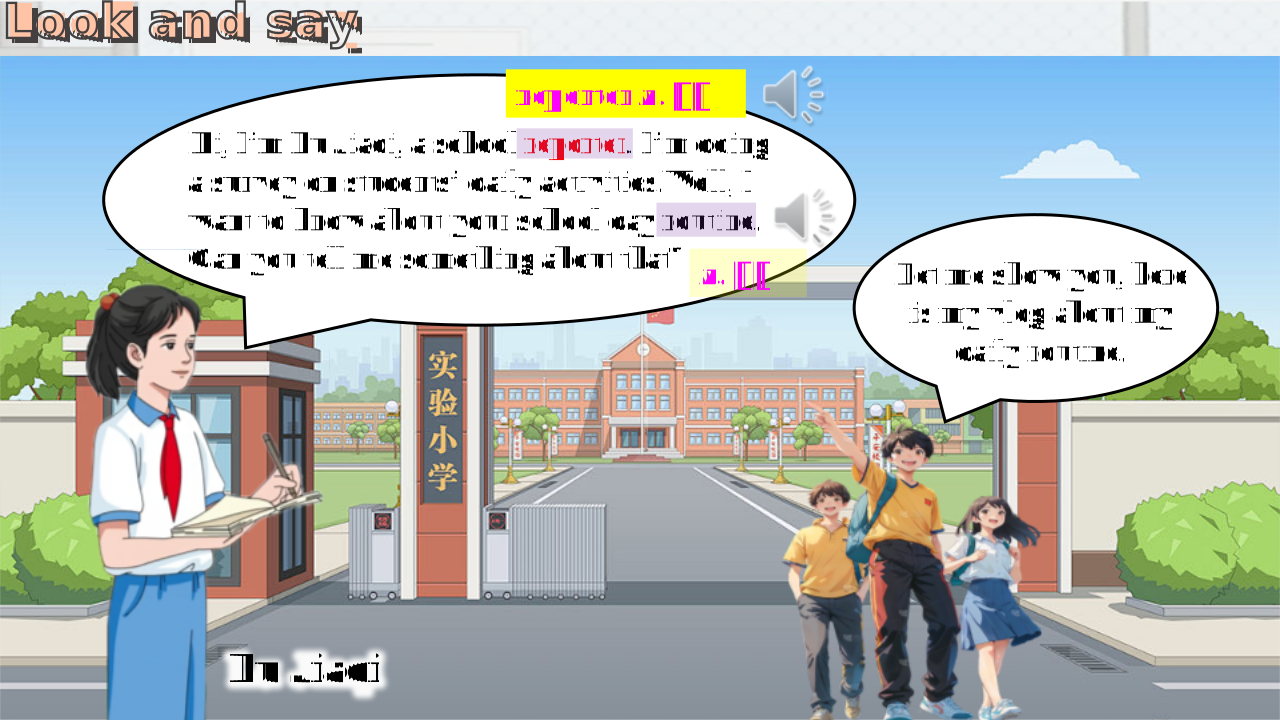
Hi, I’m Lu Jiaqi, a school reporter. I’m doing a survey on students’ daily activities.Well, I want to know about your school day routine. Can you tell me something about that?
Let me show you, here is my vlog about my daily routine.
Lu Jiaqi
reporter n. 记者
n. 常规
Presentation
Watch and answer
What does the boy usually do on a school day?
Presentation
Look and say
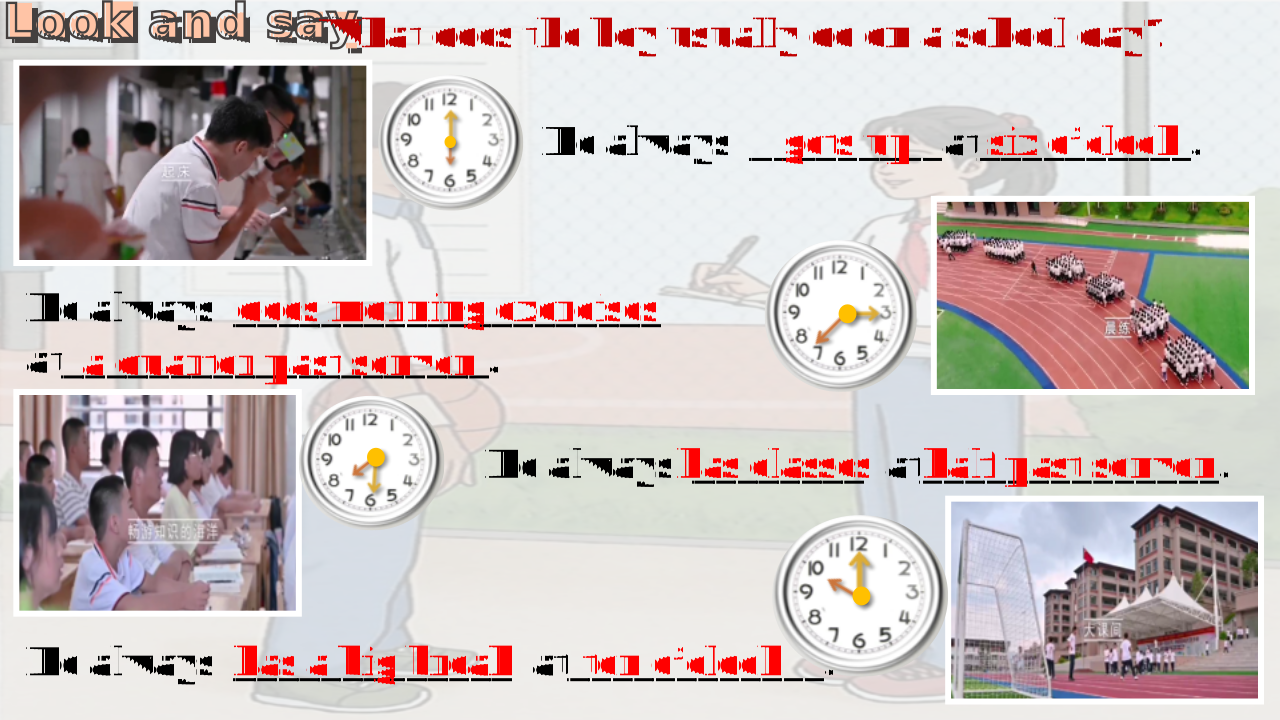
What does the boy usually do on a school day?
He always _________at__________.
six o’clock
gets up
He always ____________________
at____________________.
a quarter past senven
does morning exercises
He always ________ at______________.
half past senven
has classes
He always _____________ at____________.
ten o’clock
has a big break
Presentation
Look and say
What does the boy usually do on a school day?
He always __________
at_______________.
half past twelve
has lunch
He always _______________
at_______________.
a quarter to two
has lunch break
He always ____________________
at____________.
five to four
has interesting clubs
He always ___________
at_______________.
goes to bed
a quarter to ten
Presentation
Look and say
And this time, I go to the sports field to ask some other students.
Here comes another student. Let’s know about his daily routines.
Presentation
Look and guess
1.Where are the two students?
2.When does this conversation take place?
3.What is in the girl’s hand? What is she doing?
4.What is their relationship? Are they friends or strangers?
They are next to the basketball court(篮球场).
During the break time.
A notebook and a pen. She is asking the boy some questions and taking notes.
They are strangers.
What questions does Liu Jiaqi ask?
Presentation
Watch and tick
Watch the video and tick(√) the questions the school reporter asked.
What time do you usually get up?
What time do you have breakfast?
When do you go to school?
When do you go home?
What do you do after you go home?
When do you usually go to bed?
上床睡觉
Presentation
Listen and fill
2a
Listen to the conversation and fill in the blanks.
Lu Jiaqi: Hi! I’m Lu Jiaqi, a school reporter. What’ your name?
Tom: Tom.
Lu Jiaqi: So, Tom, what time do you usually get up?
Tom: At 6: 45.
Lu Jiaqi:And then?
Tom: I have breakfast at about ________________. Then I go to school at 7: 50.
Lu Jiaqi: When do you go home?
Tom: Around _________.
Lu Jiaqi: What do you do after that?
Tom: Sometimes I play basketball. I have dinner at ______________.
Then I do my homework.
Lu Jiaqi: When do you usually go to bed?
Tom: At _________________.
Lu Jiaqi: That’s early!
Tom: Well, you know the saying, “Early to bed, early to rise!”
What are the missing words about? Pay attention to the prepositions(介词).
【听力策略】
听中,重点关注空格部分,快速记录表示时间的词语,听后,将其转化为数词形式。
ten past seven/ 7:10
five/ 5:00
half past six/ 6:30
half past nine/ 9:30
Tip
We usually use what time to ask about specific time. But we use when for both specific time and any time period.
1.when是疑问副词,意为“什么时候,何时”,用于对日期(某年、某月、某日)提问。
eg:When are you going to leave Shanghai?你们打算何时离开上海?
When were you born?你何时出生的?
2.当询问某年某月某日的上午、下午、晚上等某个具体时刻钟点时,用what time。当泛指“做某事的时间”时,when和what time一般可互换。
3.when还表示“当……的时候”,而what time无此意思。
eg:I was reading a book when my mother got home. 妈妈到家时我在读书。
4.what time用来对某个时间提问,希望知道的时间比when更具体。
eg:—What time do you get up in the morning? 你早上几点起床?
—About six.大约6点。
What time does the shop open?这个商店几点开门?
Presentation
Look and read
Can you read these times in English?
It's a quarter past three in the afternoon.
It's half past six in the morning.
It's a quarter to seven in the evening.
It's a quarter to ten in the evening.
Presentation
Look and read
Can you read these times in English?
It's a quarter past three in the afternoon.
It's half past six in the morning.
It's a quarter to seven in the evening.
It's a quarter to ten in the evening.
Presentation
Look and say
o‘clock
five past
ten past
quarter Past
twenty past
twenty -five past
half past
five to
ten to
quarter to
twenty to
twenty-five to
Presentation
Look and say
直接读数法
使用基数词进行读数:时针的读数加上分针的读数。
如:
6:00 six o’clock 7:10 seven ten
如果所表述的时间在半小时之内,可以用【分钟 + past + 小时】:6:10 ten past six
如果所表述的时间在半小时之外,可以用【(相差的)分钟 + to + (下一)小时】:10:35 twenty-five to eleven
如果所表述的时间恰好为半小时,可以用【half + past + 小时】:11:30 half past
如果所表述的分钟和15有关,就有三种表达法:(15分钟又叫一刻钟:a quarter)
9:15 nine fifteen ; fifteen past nine ; a quarter past nine
3:45 three forty-five ; fifteen to four ; a quarter to four
Presentation
Read and answer
2b
Read the conversation and answer the questions.
Lu Jiaqi: Hi! I’m Lu Jiaqi, a school reporter. What’ your name?
Tom: Tom.
Lu Jiaqi: So, Tom, what time do you usually get up?
Tom: At 6: 45.
Lu Jiaqi:And then?
Tom: I have breakfast at about 7:10. Then I go to school at 7: 50.
Lu Jiaqi: When do you go home?
Tom: Around 5:00.
Lu Jiaqi: What do you do after that?
Tom: Sometimes I play basketball. I have dinner at 6:30.
Then I do my homework.
Lu Jiaqi: When do you usually go to bed?
Tom: At 9:30.
Lu Jiaqi: That’s early!
Tom: Well, you know the saying, “Early to bed, early to rise!”
1.What does Jiaqi ask Tom about?
2.How long does Tom stay at school?
3.Why does Tom go to bed early?
Lu Jiaqi asks Tom about his name and his daily routines.
For about 9 hours.
多长时间,常用介词for+一段时间回答
待在学校
特殊疑问词,意为“为什么”,用来询问原因,常用because回答
Because he can get up early in the morning.
stay v. 停留;待
Presentation
Look and say
Culture
Note
About the saying:
A “saying” is a well-known phrase or statement that expresses something about life that most people believe is wise and true. The full saying Tom is referring to is: “Early to bed and early to rise makes one healthy, wealthy, and wise.”
Presentation
Read and fill
2c
Read again and complete Tom’s school day timetable.
Time Tom’s activity
6: 45 a.m.
have breakfast
7: 50 a.m.
go home
Before dinner
have dinner
After dinner
go to bed
Lu Jiaqi: Hi! I’m Lu Jiaqi, a school reporter. What’ your name?
Tom: Tom.
Lu Jiaqi: So, Tom, what time do you usually get up?
Tom: At 6: 45.
Lu Jiaqi:And then?
Tom: I have breakfast at about 7:10. Then I go to school at 7: 50.
Lu Jiaqi: When do you go home?
Tom: Around 5:00.
Lu Jiaqi: What do you do after that?
Tom: Sometimes I play basketball. I have dinner at 6:30.
Then I do my homework.
Lu Jiaqi: When do you usually go to bed?
Tom: At 9:30.
Lu Jiaqi: That’s early!
Tom: Well, you know the saying, “Early to bed, early to rise!”
get up
7: 10 a.m.
go to school
5: 00 p.m.
play basketball
6: 30 p.m.
do homework
9: 30 p.m.
Presentation
Ask and answer
Talk about Tom's dily routines in pairs, then make a report about them .
Time Tom’s activity
6: 45 a.m.
have breakfast
7: 50 a.m.
go home
Before dinner
have dinner
After dinner
go to bed
get up
7: 10 a.m.
go to school
play basketball
do homework
5: 00 p.m.
6: 30 p.m.
9: 30 p.m.
EXAMPLE
A: What does Tom do at 6: 50
in the morning?
B: He…
B: When/What time does Tom
have breakfast?
A: He…
This is Tom’s school day routines. He gets up at ... and has breakfast at … I think he lives a ... life.
Presentation
Listen and repeat
Lu Jiaqi: Hi! I’m Lu Jiaqi, a school reporter. What’ your name?
Tom: Tom.
Lu Jiaqi: So, Tom, what time do you usually get up?
Tom: At 6: 45.
Lu Jiaqi:And then?
Tom: I have breakfast at about __________________. Then I go to school at 7: 50.
Lu Jiaqi: When do you go home?
Tom: Around _________.
Lu Jiaqi: What do you do after that?
Tom: Sometimes I play basketball. I have dinner at ______________.
Then I do my homework.
Lu Jiaqi: When do you usually go to bed?
Tom: At _________________.
Lu Jiaqi: That’s early!
Tom: Well, you know the saying, “Early to bed, early to rise!”
ten past seven/ 7:10
five/ 5:00
half past six/ 6:30
half past nine/ 9:30
adv. & prep. 大约;环绕;到处
n. 家庭作业
v. 起床;升起;增长
n. 增加;增强
n. 谚语;格言
Presentation
Look and learn
Lu Jiaqi: Hi! I’m Lu Jiaqi, a school reporter. What’ your name?
Tom: Tom.
Lu Jiaqi: So, Tom, what time do you usually get up?
Tom: At 6: 45.
Lu Jiaqi:And then?
Tom: I have breakfast at about 7:10. Then I go to school at 7: 50.
Lu Jiaqi: When do you go home?
Tom: Around 5:00.
Lu Jiaqi: What do you do after that?
Tom: Sometimes I play basketball. I have dinner at 6:30. Then I do my homework.
Lu Jiaqi: When do you usually go to bed?
Tom: At 9:30.
Lu Jiaqi: That’s early!
Tom: Well, you know the saying, “Early to bed, early to rise!”
n. 记者,由动词report(报道)+er构成,表示专门从事这一职业的人,类似的表达还有:worker→worker, sing→singer, teach→teacher
起床
与get有关的短语还有:get to 到达 get on 上车 get off 下车 get back 返回 get down 从…下来
回家,注意这里home是副词,不需要加介词to e.g. go to school, go home
有时,偶尔
做家庭作业
homework:
是一个不可数名词,不能用many修饰,但是可以用much, a lot of, lots of等表示数量之多。
上床睡觉
早睡早起!
Presentation
Watch and say
Retell Tom’s daily routines according to the pictures.
Retell Tom’s daily routines according to the pictures.
6: 45 a.m.
7: 10 a.m.
7:50 a.m.
5:00 p.m.
6:30 p.m.
9:30 p.m.
before dinner
after dinner
Presentation
Think and answer
Think deeper:
1. What do you think of Tom’s school day routine?
2. Is he good at time management? Why?
Time Tom’s activity
6: 45 a.m.
have breakfast
7: 50 a.m.
go home
Before dinner
have dinner
After dinner
go to bed
get up
7: 10 a.m.
go to school
play basketball
do homework
5: 00 p.m.
6: 30 p.m.
9: 30 p.m.
Early to bed, early to rise.
Eat on time.
Get to school and get home on time.
Do exercise.
Do homework actively.
I think he has a relaxing and healthy daily routine. He goes to bed early so that he has more time to relax. He also plays basketball to keep healthy.
Presentation
Look and say
Lu Jiaqi: Hi! I’m Lu Jiaqi, a school reporter. What’ your name?
Tom: Tom.
Lu Jiaqi: So, Tom, what time do you usually get up?
Tom: At 6: 45.
Lu Jiaqi:And then?
Tom: I have breakfast at about 7:10. Then I go to school at 7: 50.
Lu Jiaqi: When do you go home?
Tom: Around 5:00.
Lu Jiaqi: What do you do after that?
Tom: Sometimes I play basketball. I have dinner at 6:30. Then I do my homework.
Lu Jiaqi: When do you usually go to bed?
Tom: At 9:30.
Lu Jiaqi: That’s early!
Tom: Well, you know the saying, “Early to bed, early to rise!”
Greeting&Introduction
Hi/Hello! Good ...!
I’m ..., a school reporter.
What’s your name?
May I have your name?
Asking about daily routines
What time/When do ...?
And then?
What do ... after that?
...
Describing daily routines
I usually/often/always/... at ...
How does Li Jiaqi interview?
Presentation
Watch and say
2d
Listen to the conversation again and pay attention to the stressed words.
Then role-play the conversation.
Lu Jiaqi: 'Hi! I’m 'Lu Jiaqi, a 'school 'reporter. 'What’s your 'name?
Tom: 'Tom.
Lu Jiaqi: So 'Tom, 'what time do you 'usually 'get 'up?
Tom: At a 'quarter to 'seven.
Lu Jiaqi: And 'then?
Tom: I 'have 'breakfast at about 'ten past 'seven. 'Then I 'go to 'school at 'ten to 'eight.
Lu Jiaqi: 'When do you 'go 'home?
Tom: Around 'five.
Lu Jiaqi: 'What do you 'do 'after 'that?
Tom: 'Sometimes I 'play 'basketball. I 'have 'dinner at 'half past 'six. ˈThen I 'do my
'homework.
Lu Jiaqi: 'When do you 'usually 'go to 'bed?
Tom: At 'half past 'nine.
Lu Jiaqi: That’s 'early!
Tom: Well, you 'know the 'saying, “'Early to 'bed, 'early to 'rise!”
Sentence stress(句子重音)
英语中每个独立的词都有词的重音,但在连贯言语中有些词就是失去重音了,这是因为并非所有的词在语句中都有同等的重要性。一般来说,名词、动词、形容词、副词等重读,而冠词、连词、介词、人称代词、助动词 、情态动词肯定式等不重读。(教材P94)例如:(1) I can ˈsing, but I ˈcan’t ˈdance.
(2) A: Does she ˈ like ˈ history?
B: No, she ˈ doesn’t.
(3) A: ˈ What ˈ time do you ˈ usually ˈ get ˈ up?
B: At ˈ eight ˈ thirty in the ˈ morning.
Presentation
Role-play and act
Role play the conversation.
Student A
Student B
Work with your partner:
Student 1: act as Liu Jiaqi
Student 2: act as Tom
Presentation
Look and say
2e
Ask a partner about his or her school day routine. Then give a report.
A: What time do you get up on a school day?
B: I get up at…
A: When do you…?
B: I …
This is Liu Heng’s school day routine. He gets up at 6:30 a.m. he has a shower and brushes his teeth. The he eats breakfast and leaves the house at 7:15. he gets to school at 7:45. after school he goes to ping-pong club at 4:15 p.m. he gets home at 5:30. he has his dinner at 6:00, and then he does his homework and plays his guitar until 8:30. He reads a little before he goes to bed at 9:00 p.m.
Presentation
Look and say
Answer the following questions.
1. What do you think of Tom’s routines on a school day? And why?
I think it’s very healthy. Because as the saying goes “Early to bed, early to rise makes a man healthy, wealthy and wise.” He has a healthy living habit.
2.What can we do to change our habits and daily routines to make better use of time(利用好时间)?
A habit is a thing we do often and without always thinking about it.
We can go to bed early and never stay up late.
We should stop using phones or watching TV for a long time.
We can read a little before sleeping.
…
Presentation
Watch and say
Do you have a good time management (管理)?
How can we make good use of our time?
Make good use of time and plan life well.
Don’t stay up late.
Get up immediately.
Yesterday's the past, tomorrow's the future, but today is a gift. That's why it's called the present.Try to cherish the present moment!
昨天是过去,明天是未来,但今天是一个礼物。这就是为什么它被称为现在。珍惜此刻时光!
Presentation
Watch and say
What do you think of “Early to bed, early to rise!”?
It is a good habit.
It is good for our health.
We’ll be energetic(精力充沛的) for the coming day.
We won’t be in a hurry.
It makes a person healthy, wealthy, and wise.
Presentation
Language points
1. Well, you know the saying, “Early to bed, early to rise!”
(教材61页 2a)
saying (n.) 谚语;格言;言论;话。
“saying” 作名词,意为“谚语;格言;言论;话”。常见搭配有an old saying(一句古老的谚语);as the saying goes(常言道)。
There is an old saying, “Where there is a will, there is a way.”
有一句古老的谚语:“有志者,事竟成。”
As the saying goes, “Practice makes perfect.”
常言道:“熟能生巧。”
Presentation
Language points
2. Well, you know the saying, “Early to bed, early to rise!”
(教材61页 2a)
early (adj/adv.) 早的(地);早期的(地);提早的(地)。
“early” 作形容词/副词,意为“早的(地);早期的(地);提早的(地)”。常见搭配有in the early morning(在清晨);early bird(早起的人);an early start(早开始)。
I get up early in the morning. 我清晨就起床。
My father is an early bird. 我父亲是个早起的人。
We need an early start if we want to finish.如果我们想完成,就早开始。
Presentation
Language points
3. How long does Tom stay at school? (教材62页 2b)
“stay” 作动词,意为“停留;保持;待;逗留”。常见搭配有stay at home(待在家里);stay healthy(保持健康);stay up(熬夜)。
I usually stay at home on weekends. 我周末通常待在家里。
You should eat well and exercise to stay healthy.
你应该吃得好并且锻炼来保持健康。
Don't stay up too late. It's bad for your health.
不要熬夜太晚。这对健康有害。
stay (v.) 停留;保持;待;逗留。
Presentation
Class test
一、用括号中的单词的适当形式填空。
1. My mother often ___________ (watch) TV at 7:00 every evening.
2. What time does your sister _____________ (go) home every day?
3. My little brother _____________ (not do) his homework at six in the evening.
4. Please brush your ____________ (tooth) after you get up.
5. Many students have lots of _____________ (homework) to do every day.
6. They _____________ (usual) go home after school.
7. My sister always get _____________(dress) at half past seven.
8.I usually _____________ my trousers and shoes with my big and small _____________. (brush)
watches
goes
doesn’t do
teeth
homework
usually
dressed
brush
brushes
Presentation
Class test
二、选择句子补全对话
A: Hi! Linda. Do you want to practice Chinese with me?
B: (1) ________
A: What time do you usually go to school?
B: I usually go to school at seven o’clock.
A: Oh, it’s quite early. (2) ________ And then I go to school at 7:40.
B: Well, I like to be early so that I can do many things. (3) ________
A: That’s good for your health! Do you have lunch at home?
B: (4) ________ I have lunch at school to save time. After lunch I play volleyball with my friends.
A: That’s a good habit! I like playing volleyball too. (5) ________
B
D
C
E
A
Presentation
Must do:
Write a short passage to introduce your partner’s school day routine.
Choose to do:
Surf the internet to learn more about sentence stress.
$$nullnullnullnullnullnull
资源预览图

1
2

3
4

5
6
相关资源
由于学科网是一个信息分享及获取的平台,不确保部分用户上传资料的 来源及知识产权归属。如您发现相关资料侵犯您的合法权益,请联系学科网,我们核实后将及时进行处理。