Unit 6 第2课时 Section A (2a-2e) 课件 2024-2025学年人教版英语七年级上册
2025-01-19
|
20页
|
947人阅读
|
771人下载
普通
资源信息
| 学段 | 初中 |
|---|---|
| 学科 | 英语 |
| 教材版本 | 初中英语人教版七年级上册 |
| 年级 | 七年级 |
| 章节 | 2a-2e |
| 类型 | 课件 |
| 知识点 | - |
| 使用场景 | 同步教学-新授课 |
| 学年 | 2024-2025 |
| 地区(省份) | 全国 |
| 地区(市) | - |
| 地区(区县) | - |
| 文件格式 | PPTX |
| 文件大小 | 5.80 MB |
| 发布时间 | 2025-01-19 |
| 更新时间 | 2025-01-24 |
| 作者 | 小小鱼321 |
| 品牌系列 | - |
| 审核时间 | 2025-01-19 |
| 下载链接 | https://m.zxxk.com/soft/50100918.html |
| 价格 | 0.00储值(1储值=1元) |
| 来源 | 学科网 |
内容正文:
Unit 6
A Day in the Life
第2课时 Section A (2a-2e)
What time does he usually …?
Bob is a good boy, because he
has some healthy habits.
He usually ________ at__________.
gets up
six thirty
6:50
He usually _______________ at___________.
takes a shower
ten to seven
He usually ______________ at_____________.
eats breakfast
seven o’clock
He usually _____________ at____________.
7:15
gets dressed
seven fifteen
7:30
He usually ______________ at_____________.
goes to school
half past seven
Lead- in
7:00
6:30
2
Pre-listening
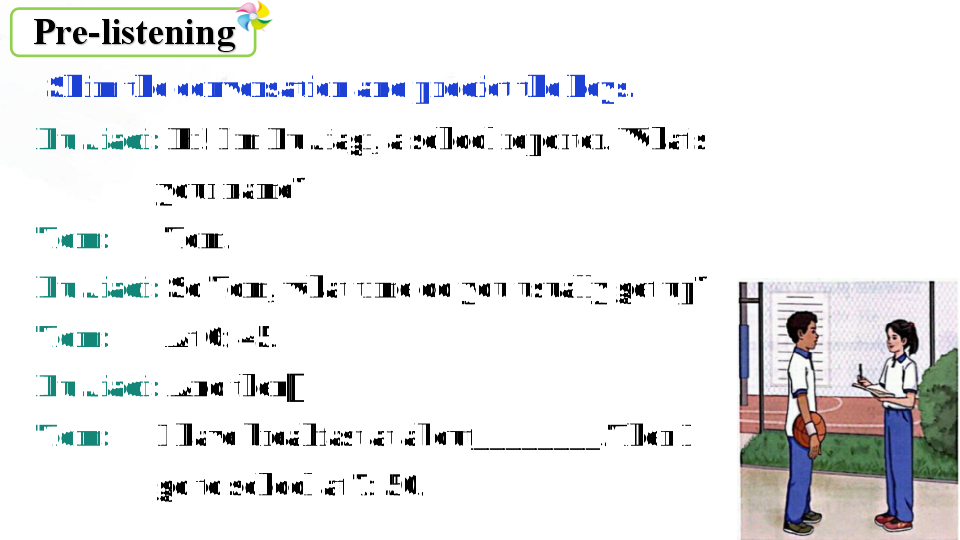
Skim the conversation and predict the keys.
Lu Jiaqi: Hi! I'm Lu Jiagi, a school reporter. What's
your name?
Tom: Tom.
Lu Jiaqi: So Tom, what time do you usually get up?
Tom: At 6: 45.
Lu Jiaqi: And then?
Tom: I have breakfast at about________.Then I
go to school at 7: 50.
Pre-listening
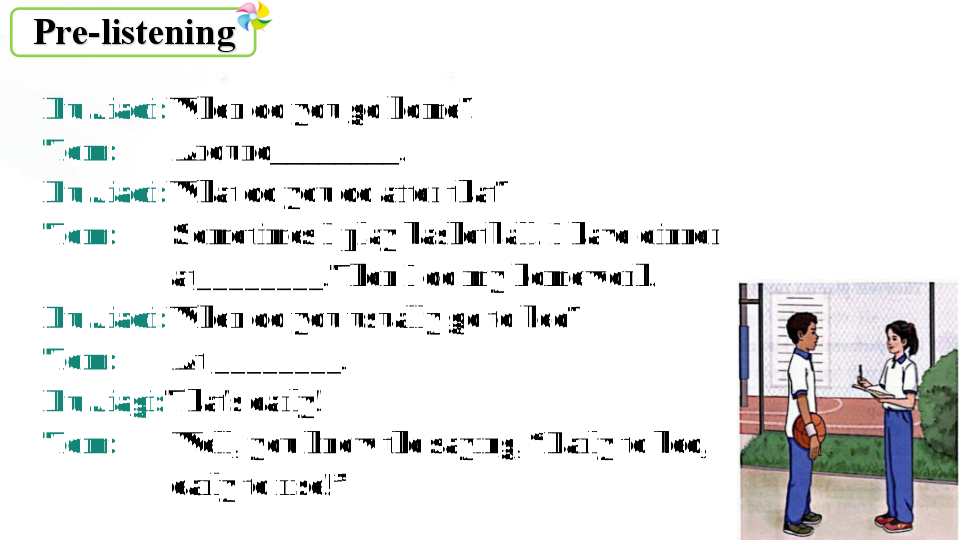
Lu Jiaqi:When do you go home?
Tom: Around________.
Lu Jiaqi:What do you do after that?
Tom: Sometimes I play basketball. I have dinner
at________.Then I do my homework.
Lu Jiaqi:When do you usually go to bed?
Tom: At ________.
Lu Jiagi:That's early!
Tom: Well, you know the saying, “Early to bed,
early to rise!”
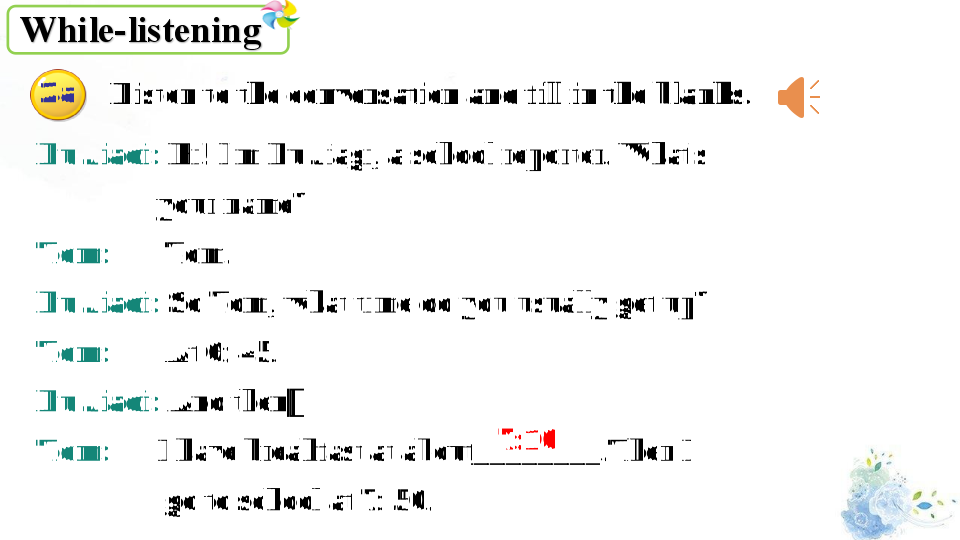
Lu Jiaqi: Hi! I'm Lu Jiagi, a school reporter. What's
your name?
Tom: Tom.
Lu Jiaqi: So Tom, what time do you usually get up?
Tom: At 6: 45.
Lu Jiaqi: And then?
Tom: I have breakfast at about________.Then I
go to school at 7: 50.
Listen to the conversation and fill in the blanks.
2a
While-listening
7:10
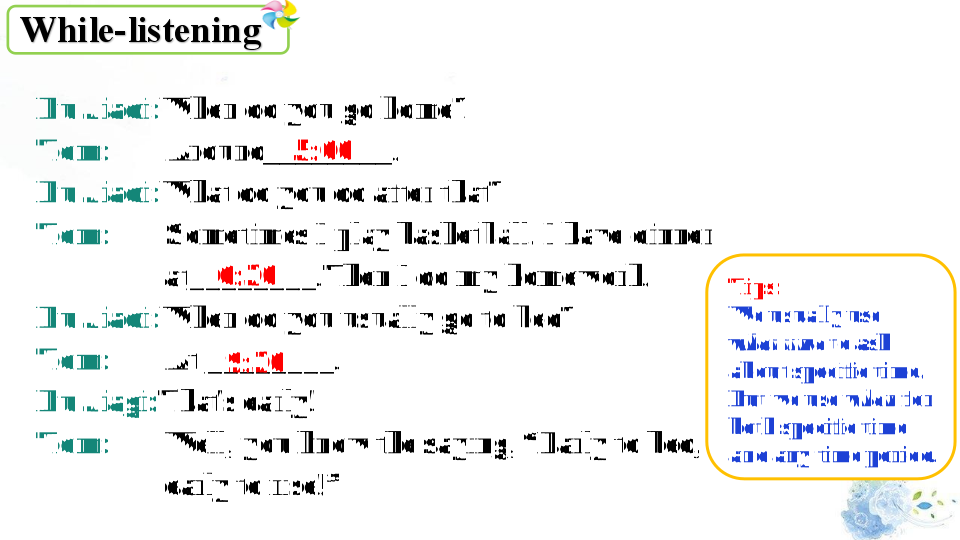
Lu Jiaqi:When do you go home?
Tom: Around________.
Lu Jiaqi:What do you do after that?
Tom: Sometimes I play basketball. I have dinner
at________.Then I do my homework.
Lu Jiaqi:When do you usually go to bed?
Tom: At ________.
Lu Jiagi:That's early!
Tom: Well, you know the saying, “Early to bed,
early to rise!”
While-listening
Tips:
We usually use what time to ask about specific time. But we use when for both specific time and any time period.
5:00
6:30
9:30
While-listening
( )1.What does Lu Jiaqi do?
A.A writer. B.A teacher. C.A school reporter.
( )2. What time does Tom usually get up?
A.At 6:15. B.At 6:50. C.At 6:55.
Listen and choose the right answers.
C
B
While-listening
( )3. What does Tom do at around 7:50?
A.Has breakfast. B.Takes a shower.
C.Goes to school.
( )4. When does Tom do his homework?
A.Before 6:30. B.At 6:30. C.After 6:30.
( )5. Tom goes to bed________.
A.early B.at 9:00 C.late
Listen and choose the right answers.
C
C
A
1.What does Jiaqi ask Tom about?
2.How long does Tom stay at school?
3.Why does Tom go to bed early?
Read the conversation again and answer the questions.
Post-listening
2b
His school day routine.
Around 9 hours.
Early to bed,early to rise.
Read the conversation again and complete Tom's school day timetable.
2c
Time Tom’s activity
6.45 a.m.
have breakfast
7.50 a.m.
go home
before dinner
have dinner
after dinner
go to bed
get up
Post-listening
7:10 a.m.
go to school
5:00 p.m.
play basketball
6:30 p.m.
do his homework
9:30 p.m.
Listen to the conversation and pay attention to the stressed words .Then role-play the conversation.
2d
Post-listening
Lu Jiaqi: Hi! I'm Lu Jiagi, a school reporter. What's
your name?
Tom: Tom.
Lu Jiaqi: So Tom, what time do you usually get up?
Tom: At a quarter to seven.
Lu Jiaqi: And then?
Tom: I have breakfast at about ten past seven.Then I
go to school at ten to eight.
Listen to the conversation and pay attention to the stressed words .Then role-play the conversation.
2d
Post-listening
Lu Jiaqi:When do you go home?
Tom: Around five o’clock.
Lu Jiaqi:What do you do after that?
Tom: Sometimes I play basketball. I have dinner
at ten past seven.Then I do my homework.
Lu Jiaqi:When do you usually go to bed?
Tom: At half past nine.
Lu Jiagi:That's early!
Tom: Well, you know the saying, “Early to bed, early to rise!”
Language points
Post-listening
1. around的用法:
(1)副词:大约 用于数字前,与about同义
I get up at around 6:00.我大约6点起床。
(2)副词:到处
He like walking around.他喜欢到处走走。
(3)介词:环绕
My grandfather works around the house every day.
我爷爷每天都在房子周围干活。
Language points
Post-listening
2. homework的用法
(1)不可数名词:家庭作业,没有复数形式
I have a lot of homework today.
今天我有很多作业。
(2)do one’s homework 做某人的家庭作业
He does homework at 7:00 pm.
他晚上7点做作业。
Language points
Post-listening
3. rise的用法:
动词:①起床 Early to bed, early to rise. 早睡早起。
②升起 The sun rises in the east.太阳从东方升起。
③增长 The number of the students is rising.
学生的数量在增长。
名词:①增加 Will we get a pay rise?我们会增加薪水吗?
②增强 We have to stop working because the rise of the wind.
因为风势增强我们不得不停止工作。
rise 不及物动词,后面不接宾语,即“某人、某物自己升起来” Smoke rises above the house.
屋顶上升起了炊烟。
raise 及物动词,后须接宾语,即“某人把某物举起来” Help me raise the box onto the chair.
帮我把盒子抬到椅子上。
Language points
Post-listening
rise和raise辨析:
Language points
Post-listening
4. stay 的用法:
Ask a partner about his or her school day routine.
Then give a report.
2e
Practise
get up have breakfast go to school have class
play sport have lunch go home do homework
brush teeth have dinner take a shower go to bed
A:What time do you get up on a school day?
B: I get up at....
A:When do you...?
B: I...
This is...'s school day routine.He/She gets up at...
Ⅰ.根据句意及首字母或汉语提示填写单词
1.There are a /a 18 000 books in the library.
2.She has h (作业) every day.
3.I like Early to bed and early to r .
4.I like s (待) at home on Sunday.
5.Can you show us your daily (常规).
Exercises
round
bout
omework
ise
taying
routine
Homework
1.Try to remember the new words and useful sentence structures;
2.Read the conversation in 2a over and over again and role play it;
3.Write a report about your partner's school day routine.
null
72828.68
$$
资源预览图

1

2
3
4
5
6
相关资源
由于学科网是一个信息分享及获取的平台,不确保部分用户上传资料的 来源及知识产权归属。如您发现相关资料侵犯您的合法权益,请联系学科网,我们核实后将及时进行处理。