期末 Unit 6 测试题 2024-2025学年外研版英语七年级上册
2025-01-03
|
3页
|
296人阅读
|
22人下载
资源信息
| 学段 | 初中 |
|---|---|
| 学科 | 英语 |
| 教材版本 | 初中英语外研版七年级上册 |
| 年级 | 七年级 |
| 章节 | Unit 5 The power of plants |
| 类型 | 作业-单元卷 |
| 知识点 | - |
| 使用场景 | 同步教学-期末 |
| 学年 | 2024-2025 |
| 地区(省份) | 全国 |
| 地区(市) | - |
| 地区(区县) | - |
| 文件格式 | DOCX |
| 文件大小 | 231 KB |
| 发布时间 | 2025-01-03 |
| 更新时间 | 2025-01-04 |
| 作者 | 匿名 |
| 品牌系列 | - |
| 审核时间 | 2025-01-03 |
| 下载链接 | https://m.zxxk.com/soft/49756580.html |
| 价格 | 0.50储值(1储值=1元) |
| 来源 | 学科网 |
内容正文:
Unit6 测试题 满分60分
1、 翻译句子.(每小题2分,计10分)
1. 植物收集阳光和二氧化碳并将它们与水混合产生糖和氧气。
Plants____________ _____________and CO2, and___________them with water
_______ ______________sugar and oxygen.
2. 茶是世界上最受欢迎的饮料不是秘密。
________ _______ ___________that tea is the__________ ____________ _________ in the world.
3. 在这个英语夏令营,你不仅能够交朋友,而且还能练习英语。
In this English summer camp, you can_________ __________make_____________,
________ __________practise your English.
4. 这个消息让我觉得绿对我们的健康有益。
The_________made me feel that_________ ________is________ ______our___________.
5. 不要整天忙于工作。让我们沏茶休息一下。
Don’t_______ ________ _________work all day. Let’s___________ _________and
_________ ______ __________.
2、 阅读理解。(每小题2分,计40分)
A
Do you have plants in your home or garden? They are important to people and animals. They make our lives better in many ways. How do plants help us? Read to find out.
Plants give us oxygen. Oxygen is in the air we breathe. All living things need it. Plants make oxygen. Plants give us food. Many plants are good to eat. Vegetables are good plants. Fruits, nuts, beans and seeds come from plants.
Plants give us shade (阴凉处). Trees are plants. In summer, trees are full of leaves. Leaves make shadows. On a hot, sunny day, sit under a tree, and you will stay cool in its shade.
Plants give us shelter. Birds, insects, and many other animals live in trees and other plants. People use wood from trees to build homes.
( )1. The underlined word “it” refers to_________.
A. oxygen B. air C. food D. plant
( )2. Why does the writer mention (提到) “nuts” in the second paragraph?
A. Because they are very popular. B. Because they are food from plants.
C.Because they are delicious and healthy. D. Because it’s easy to get them from plants.
( )3. The underlined word “shelter” probably means__________in Chinese.
A. 氧气 B. 影子 C. 树荫 D. 住所
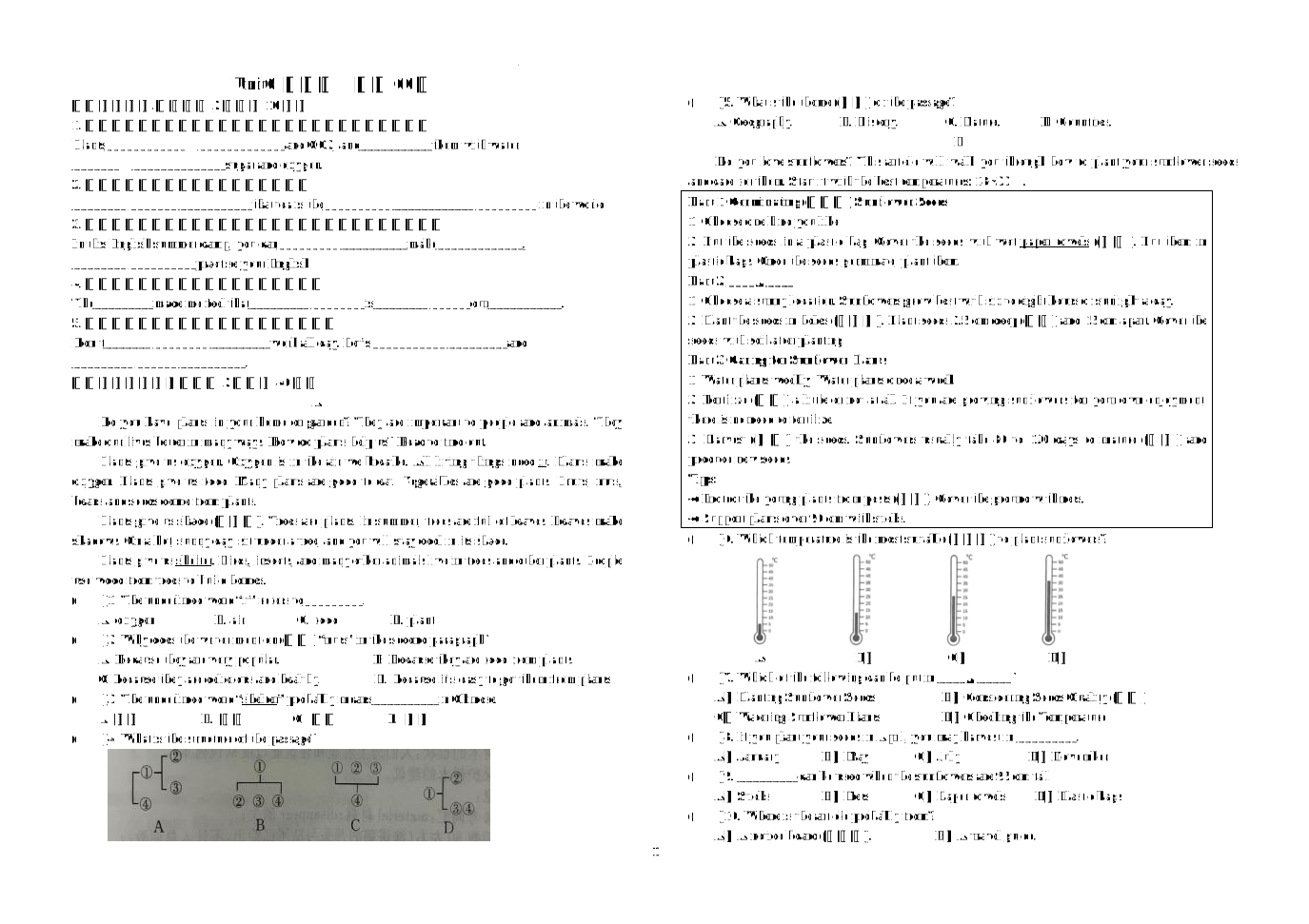
( )4. What is the structure of the passage?
( )5. What’s the theme (主题) of the passage?
A. Geography. B. History. C. Nature. D. Countries.
B
Do you love sunflowers? This article will walk you through how to plant your sunflower seeds and care for them. Start it with the best temperatures: 18~33℃.
Part 1 Germinating (使发芽) Sunflower Seeds
1. Choose one kind you like.
2. Put the seeds in a plastic bag. Cover the seeds with wet paper towels (纸巾). Put them in plastic bags. Once the seeds germinate, plant them.
Part 2 ____▲____
1. Choose a sunny location. Sunflowers grow best with six to eight hours of sunlight a day.
2. Plant the seeds in holes (洞,坑). Plant seeds 2.5 cm deep (深的) and 15 cm apart. Cover the seeds with soil after planting.
Part 3 Caring for Sunflower Plants
1. Water plants weekly. Water plants once a week.
2. Fertilize (施肥) a little or not at all. If you are growing sunflowers for your own enjoyment, there is no need to fertilize.
3. Harvest (收获) the seeds. Sunflowers usually take 80 to 120 days to mature (成熟) and produce new seeds.
Tips:
◆Protect the young plants from pests (害虫). Cover the ground with nets.
◆Support plants over 90 cm with sticks.
( )6. Which temperature is the most suitable(合适的) to plant sunflowers?
A. B. C. D.
( )7. Which of the following can be put in ____▲_____?
A.Planting Sunflower Seeds B.Considering Seeds Quality (质量)
C.Watering Sunflower Plants D.Checking the Temperature
( )8. If you plant your seeds in April, you may harvest in _________.
A.January B.May C.July D.November
( )9. _________can be used when the sunflowers are 95 cm tall.
A.Sticks B.Nets C.Paper towels D.Plastic bags
( )10. Where is the article probably from?
A.A notice board (公告板). B.A travel guide.
C.A planting diary. D.A gardening (园艺) magazine.
C
There is a scholar (学者) in Yunnan. He studies hard day and night on an island. His wife is very kind. She crosses a bridge (桥) to take meals to him every day. It is far from their home to the island so the food gets cold and tastes bad when she gets there. As time goes by, the scholar is becoming thin (瘦的) and not in good health, so his wife is worried about his health.
One day, the scholar’s wife cooks chicken soup in an earthen pot (砂锅). She puts some rice noodles, some pieces of meat and vegetables into it. When she crosses the bridge on the way to the island, she falls (摔倒) and can’t stand up for a long time. When she arrives, she is surprised that the earthen pot is still hot. Her husband is surprised, too. They find two secrets: there is thick chicken oil (油) on the surface (表面) of the soup and the earthen pot can keep the heat in. As a result, the soup is hot and delicious.
After that, the scholar eats well and becomes healthy. Finally, he succeeds in the exams (考试). Then crossing-over bridge rice noodles become famous and popular.
( )11. Where does the scholar study?
A. In the mountain. B. In a park. C. On an island. D. Along the road.
( )12. What is the scholar’s wife worried about?
A. The scholar’s study. B. The scholar’s health. C. The climate. D. The food.
( )13. What can we know from the passage?
A. The scholar’s wife succeeds in the exams finally.
B. The food gets cold but tastes good when the scholar’s wife arrives.
C. The scholar’s wife is kind and makes meals for him every day.
D. The scholar’s wife is not worried about her husband’s health.
( )14. What does the underlined word “heat” mean in Chinese?
A. 热量 B. 寒冷 C. 财富 D. 营养
( )15. What’s the best title for the passage?
A. A Great Scholar and His Wife
B. The Earthen Pot is Very Important
C. Crossing-over Bridge Rice Noodles
D. Health is the Most Important
D
Tea culture is varied in different countries by the way tea is made and drunk, and by the places for tea drinking. How to make tea may be different. According to the ways of making tea, tea is classified (分类) into white tea, green tea, black tea, etc. And how to prepare tea may be different, too. In Tibet, tea is commonly boiled (煮) with salt and butter (黄油). People may drink tea at home or in public, for example, at tea houses.
As part of culture, tea has a relationship with history, health, education, communication and so on. It is commonly used at social activities. For example, afternoon tea is a British custom. Families or friends can communicate with each other while having afternoon tea.
Tea has remained a way of daily life in China and drinking tea has a lot of advantages. It makes people less tired, clears heat in the human body and helps people lose weight.
Chinese people are good at using tea to make other things delicious. Tea, originally (最初) served as a medicine in ancient times, is now not just a kind of drink, but also excellent seasoning (调味品). Here are two delicious dishes made with tea:
Tea Eggs: You can find them cooked and sold in street markets in almost every city in China.
Dragon Well Tea Shrimp (龙井虾仁): It’s one of the most well-known dishes in Hangzhou.
Before you drink tea, please check the following tips:
◆Drink tea hot.
◆The best time to drink is in between meals. It is bad for your stomach if you drink tea just before meals, during meals or soon after meals.
◆Do not drink too much strong tea.
( )16. Tea has no relationship with________as part of culture according to the passage.
A. history B. health C. education D. sports
( )17. Afternoon tea in Britain is a ________ according to the passage.
A. way of communication B. hobby C. game D. weekend activity
( )18. In ancient China, tea was originally served as________according to the passage.
A. a medicine B. a drink C. seasoning D. a dish
( )19. The best time to drink tea is ________ according to the passage.
A. just before meals B. during meals
C. soon after meals D. in between meals
( )20. The passage doesn’t mention (提到) ________.
A. ways of making tea B. places to drink tea
C. tools (工具) for drinking tea D. advantages of drinking tea
三、语法填空。(每小题1分,计10分)
November 19th, 2022-----China’s (1)________________(tradition) tea-making was added to UNESCO’s intangible cultural heritage list (非物质文化遗产名录).
Tea (2)__________(have) a history of about 5000 years in China. In ancient times, people (3)____________(call) tea by many different names. It’s said that the Chinese character “cha” for tea is finally decided by Lu Yu.
Chinese tea left a big influence on other countries in the Tang Dynasty (唐代). After the 18th century, Chinese tea was successfully introduced to many (4)______________(country), such as India and Sri Lanka. Now a great number of people enjoy (5)____________(drink) tea. Besides, they are (6)______________(interest) in (7)_________(it) history and culture.
China is (8)_____________(real) the only country that can produce all six types of tea------green tea, yellow tea, dark tea, white tea, oolong tea and black tea. There are more than 2000 tea (9)______________(produce). Chinese tea culture includes the Chinese way of (10)_______________(connect) with the world. In tea, we find peace, art and politeness. It has been an important part of Chinese culture.
(
1
)
学科网(北京)股份有限公司
$$
资源预览图
1
相关资源
由于学科网是一个信息分享及获取的平台,不确保部分用户上传资料的 来源及知识产权归属。如您发现相关资料侵犯您的合法权益,请联系学科网,我们核实后将及时进行处理。