Unit 5 Reading Ⅱ 同步练习 2024-2025学年牛津译林版英语八年级上册
2025-01-03
|
6页
|
144人阅读
|
0人下载
内容正文:
Unit 5 Reading II
Ⅰ. 用括号中所给单词的适当形式填空
5. Five weeks (late), David could drive the car skillfully.
2. We love our dog (call) Wang Wang.
3. There are many (mouse) in the house.
4. At the (begin) of the trip, I felt a little sick.
5. There is little time (leave). We have to be quick.
Ⅱ. 根据汉语意思完成句子
1. 因此,汤姆的老师叫他立刻去她的办公室。
, Tom's teacher asked him to go to her office .
2. 让我们一起采取行动来保护那些处于危险中的野生动物。
Let’s ______ the wild animals together.
3. 熊猫宝宝们需要和它们的妈妈一起待在野外。
need to with their mothers.
4. 熊猫主要以食竹子为生。然而,竹林正变得越来越少。
Pandas bamboo. However, the bamboo forests are becoming .
5. 我的弟弟出生的时候只有3 公斤重。
My little brother 3 kilos when he .
B.知识综合运用
Ⅲ. 单项选择
( ) 1. There is ________ monkey in he zoo.
A. an one-year-old B. a eight-year-old
C. an eight years old D. a one-year-old
( ) 2. I don’t know if he ______ tomorrow. If he ______, I will tell him about it.
A. will come; will come B. comes; comes
C. comes; will come D. will come; comes
( ) 3. I think ______ necessary for us _______ the birds.
A. it; protect B. its; to protect C. it's; protecting D. it’s; protect
( ) 4. Our government to solve them quickly when we had difficulties at the beginning of this year.
A. took action B. took off C. took in D. took place
( ) 5. —Mr. Lee is an animal lover. He does everything he can______ animals.
—He is a true friend of animals'.
A. hunting B. to hunt C. to protect D. protecting
A. D. it’s; to protect
( ) 6.﹣I just don't think zoo is a good place for animals. They are not free in the zoo.
﹣___. But don't you think the zoo looks after animals well?
A. I don't agree B. I don't think so C. You must be joking D. Maybe you're right
( )7. Giant pandas have places to live. Instead, the number of farms is getting
A. fewer and fewer; more B. fewer and fewer; larger
C. less and less; more D. more and more; larger
Ⅳ. There's nothing quite like falling sound asleep after a full day of work.Like people, animals need to rest after working hard. Some animals sleep in water. Others dig holes under the ground. Some even sleep high in trees or under leaves. But they all find a way to rest.
Some animals in the sea sleep in strange ways. Fish sleep with their eyes open. They seem to look ahead far into the sea while they rest. Sea otters sometimes sleep in beds of the plants that grow in the sea. This keeps them from moving away. Parrotfish blow something from their mouths when they are ready to sleep. Then a bubble(气泡) will be formed around them. The bubble protects them from harm while they sleep.
Some animals sleep under the ground. Chipmunks(花栗鼠) sleep curled up(蜷缩) in a ball. Their beds are made of leaves and grass. In winter, they sleep for two weeks and wake up to eat the stored food. Then they go back to sleep for another two weeks before waking up again. Some desert frogs dig underground holes during the hot, dry season. A frog may stay in its hole for months.
High above the ground, monkeys find leafy places in trees each evening before they sleep. The tall trees help to keep monkeys safe during the night.Some insects even sleep under the leaf that will be their next meal. A bee may climb down into a flower to rest. When it climbs out the next morning, it is rested and ready for work.
( )1. What animals blow bubbles when they sleep?
A. Sea otters. B. Monkeys.
C. Desert frogs. D. Parrotfish.
( )2. What do we know about chipmunks according to the text?
A. They rest with their eyes open.
B. They never sleep curled up in a ball.
C. They wake up now and then in winter.
D. They don't eat any food during the winter.
( )3. What does the last paragraph mainly talk about?
A. The forest where monkeys sleep safely.
B. The animals that sleep above the ground.
C. The reason why bees climb down into flowers.
D. The ways that keep animals away from danger.
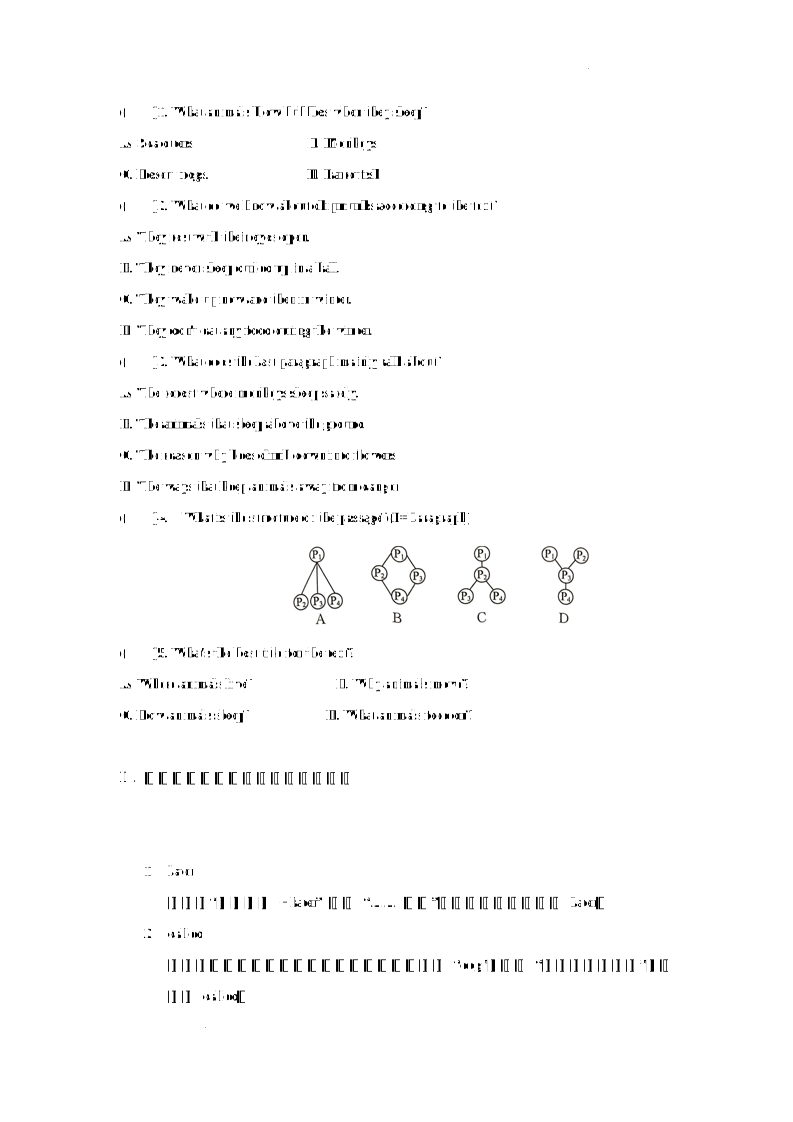
( )4. What is the structure of the passage?(P=Paragraph)
( )5. What's the best title for the text?
A. Where animals live? B. Why animals move?
C. How animals sleep? D. What animals feed on?
Ⅰ. 用括号中所给单词的适当形式填空
1. later
解析:“一段时间 + later” 表示 “…… 之后”,符合语境,所以填 later。
2. called
解析:此处用过去分词短语作后置定语,修饰 “dog”,表示 “被叫做汪汪的狗”,所以填 called。
3. mice
解析:“many” 后接可数名词复数形式,“mouse” 的复数是 “mice”,所以填 mice。
4. beginning
解析:“at the beginning of...” 表示 “在…… 开始的时候”,是固定短语,所以填 beginning。
5. left
解析:此处用过去分词作后置定语,修饰 “time”,表示 “剩下的时间”,所以填 left。
Ⅱ. 根据汉语意思完成句子
1. Therefore; at once
解析:“因此” 用 “Therefore” 表示;“立刻” 用 “at once” 表示,句首单词首字母大写。
2. take action to protect; in danger
解析:“采取行动做某事” 用 “take action to do sth.” 表示;“处于危险中” 用 “in danger” 表示。
3. Baby pandas; stay in the wild
解析:“熊猫宝宝” 用 “Baby pandas” 表示;“待在野外” 用 “stay in the wild” 表示,注意用动词原形作谓语,因为前面是 need to 结构。
4. mainly live on; smaller and smaller
解析:“主要以…… 为生” 用 “mainly live on...” 表示;“越来越少” 用 “smaller and smaller” 表示,形容竹林面积变小。
5. weighed only; was born
解析:“重达……” 用 “weigh” 表示,根据语境用一般过去时,weigh 的过去式是 weighed;“出生” 用 “be born” 表示,也是一般过去时,主语是 he,be 动词用 was。
Ⅲ. 单项选择
1. D
解析:“eight-year-old” 是复合形容词,修饰名词时 year 用单数形式,且 eight 以元音音素开头,前面用 an;“one-year-old” 同样是复合形容词,修饰名词 monkey,且 one 以辅音音素开头,前面用 a,所以选 D。
2. D
解析:第一个 if 引导的是宾语从句,根据 “tomorrow” 可知要用一般将来时;第二个 if 引导的是条件状语从句,遵循 “主将从现” 原则,从句用一般现在时,所以选 D。
3. D
解析:“think + it + 形容词 + for sb. to do sth.” 是固定句型,it 作形式宾语,真正的宾语是后面的不定式短语,所以选 D。
4. A
解析:“took action” 表示 “采取行动”;“took off” 表示 “起飞,脱下” 等;“took in” 表示 “吸收,理解” 等;“took place” 表示 “发生”。句中说政府采取行动解决困难,所以选 A。
5. C
解析:此处用不定式作目的状语,“can” 后面省略了 “do”,表示 “尽他所能去保护动物”,所以选 C。
6. D
解析:根据 “But don't you think the zoo looks after animals well?” 可知前面是部分认同对方的观点,“Maybe you're right” 表示 “也许你是对的”,符合语境,所以选 D。
7. B
解析:“places” 是可数名词复数,用 “fewer and fewer” 修饰,表示 “越来越少的(可数)”;“the number of...” 表示 “…… 的数量”,数量多用 “large” 修饰,“越来越大” 用 “larger and larger”,所以选 B。
Ⅳ.
1. D
解析:根据 “Parrotfish blow something from their mouths when they are ready to sleep. Then a bubble (气泡) will be formed around them.” 可知鹦鹉鱼睡觉时会吹出气泡,所以选 D。
2. C
解析:根据 “In winter, they sleep for two weeks and wake up to eat the stored food. Then they go back to sleep for another two weeks before waking up again.” 可知花栗鼠在冬天会时不时醒来吃东西,所以选 C。
3. B
解析:最后一段主要讲了猴子、一些昆虫等在地面上方睡觉的情况,也就是介绍了在地面上方睡觉的动物,所以选 B。
4. B
解析:文章第一段总述动物们都需要休息且有不同的休息方式;第二段介绍海里动物的睡眠方式;第三段介绍地下动物的睡眠方式;第四段介绍地面上方动物的睡眠方式,属于总分结构,所以选 B。
5. C
解析:文章主要围绕动物们不同的睡眠方式展开,所以 “How animals sleep?” 作为标题最合适,所以选 C。
学科网(北京)股份有限公司
$$
资源预览图

1

2
3
相关资源
示范课
由于学科网是一个信息分享及获取的平台,不确保部分用户上传资料的 来源及知识产权归属。如您发现相关资料侵犯您的合法权益,请联系学科网,我们核实后将及时进行处理。