Unit 5 Poems 一轮复习单元自主检测-2025届高三英语人教版(2019) 选择性必修第三册
2024-12-13
|
6页
|
400人阅读
|
6人下载
内容正文:
选择性必修三Unit5 Poems单元自主检测
1、 基础词汇检查
1.drama n.
2.rhythm n.
3.nursery adj.
n.
4.diamond n.
5.dewdrop n.
6.blossom n.
7.await vt.
8.revolve vi.
9.cherry n.
adj.
10.cherry blossom
11.civilian n.
12.prose n.
13.version n.
14.dominant adj.
15.sonnet n.
16.string n.
vt.
adj.
17. barren adj.
18. n.押韵词;押韵的短诗
vi.& vt.(使)押韵
19. adj.民间的;民俗的;普通百姓的
20. n.蜜蜂
21. n.黎明;开端;萌芽
22. vi.& vt.取笑(某人);揶揄;逗弄
23. n.格式;总体安排;(出版物的)版式
vt.格式化
24. adj.精美的;精致的;脆弱的
25. vt.出声;说;讲
adj.完全的;十足的;彻底的
26. n.(pl.shelves)架子;搁板
27. vt.& vi.播种;种
28. n.种子;起源;萌芽
29. conj.在任何地方;在所有……的情况下 adv.(用于问句)究竟在(到)哪里
30. n.偏见;成见
vt.使怀有(或形成)偏见
二、单句语法填空
1.Bernard and his parents were moved in (tear) when seeing the big basket full of popcorn.
2.I went through (complicate) emotions, such as fear, anxiety and sadness, just like many other people.
3.The poet composed quite a few poems (feature) the image of cherry blossoms, and describing the joys and (sorrow) of life.
4.The good-tempered man wore a (sorrow) expression when reading the poem.
5. (contest) in the competition, the enthusiastic student has to finish the assignment that involves (recite) ten poems.
6.Only when we make our actions correspond our words can we win the trust of others.
7.With so many types of bicycles (choose) from, I was really at a loss as to which one to buy.
8.I had sympathy Tom from the bottom of my heart, who was leading a miserable life full of adversities.
三、阅读理解
A
Poetry Writing Contest
Contest information
Deadline: 30 November
Results: Announced on 31 December
Prizes: Win $1,600 in prize money
Guest judges: Ken Liu, Brian Evenson, and Faylita Hicks
Entry requirements
Your poetry can be laid out as you wish, as we understand that form often relates to the effect of a poem.However, please be sure to stick to a maximum of 3 pages per poem.
Submission guidelines
We accept works, written in English, from anywhere in the world.But we don’t accept works previously published elsewhere.
Writers over the age of thirteen are welcome to participate.Please note that if you’re aged 13-16 and your work is selected for publication, we’ll require a signature from a parent or a guardian.
Please include your name and contact information in your cover letter only and remove any identifying information from both the submitted work and the file name.
We edit every piece accepted for publication whether your work is selected for publication through our online blog or in our print magazine.For this cooperative process we’ll pair you with one of our senior editors.All our editors have been trained to help guide the development of each piece to reach its fullest potential in keeping with the author’s vision.This doesn’t mean we’ll take on a wild jumble of words and half-formed thoughts.
Notes
The contest reserves the right to NOT award a winner if the submissions don’t reach a publishable standard.In this case, the winner won’t be announced.Although this has rarely come to pass in our six-year publishing history, our top priority must remain with the quality of the work we publish.
1.What do you have to avoid in order to participate in the contest?
A.Writing a 3-page-long poem.
B.Writing your work in English.
C.Providing your contact information.
D.Submitting your entry after 30 November.
2.What do we know about the contest?
A.It is held on an annual basis.
B.It is intended for teenagers only.
C.It is open to global poetry lovers.
D.It is aimed at making poetry more popular.
3.What are you expected to do if your poem is selected for publication?
A.Make sure that it is original.
B.Polish it as you’re required to.
C.Go to receive the prize on time.
D.Give your permission to publish it.
B
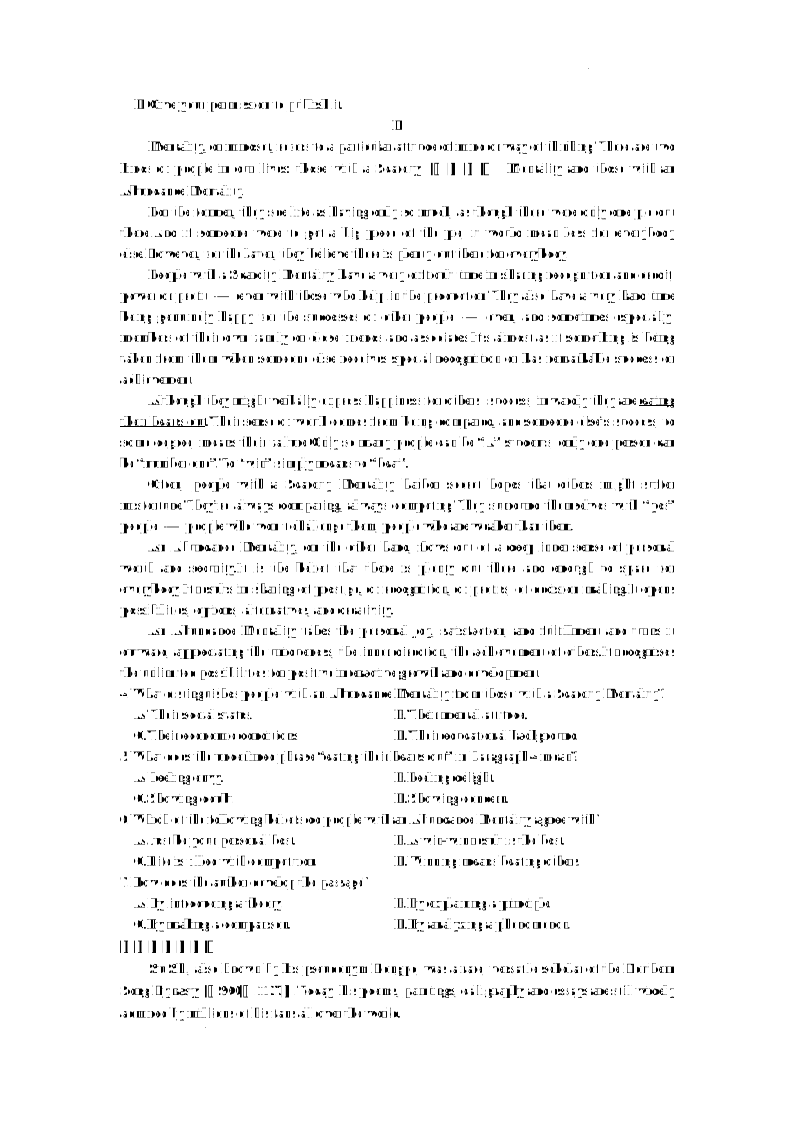
Mentality, or mindset, refers to a particular attitude of mind or way of thinking.There are two kinds of people in our lives: those with a Scarcity (短缺) Mentality and those with an Abundance Mentality.
For the former, they see life as having only so much, as though there were only one pie out there.And if someone were to get a big piece of the pie, it would mean less for everybody else.However, for the latter, they believe there is plenty out there for everybody.
People with a Scarcity Mentality have a very difficult time in sharing recognition and credit, power or profit — even with those who help in the production.They also have a very hard time being genuinely happy for the successes of other people — even, and sometimes especially, members of their own family or close friends and associates.It’s almost as if something is being taken from them when someone else receives special recognition or has remarkable success or achievement.
Although they might verbally express happiness for others’ success, inwardly they are eating their hearts out.Their sense of worth comes from being compared, and someone else’s success, to some degree, means their failure.Only so many people can be “A” students; only one person can be “number one”.To “win” simply means to “beat”.
Often, people with a Scarcity Mentality harbor secret hopes that others might suffer misfortune.They’re always comparing, always competing.They surround themselves with “yes” people — people who won’t challenge them, people who are weaker than them.
An Abundance Mentality, on the other hand, flows out of a deep inner sense of personal worth and security.It is the belief that there is plenty out there and enough to spare for everybody.It results in sharing of prestige, of recognition, of profits, of decision making.It opens possibilities, options, alternatives, and creativity.
An Abundance Mentality takes the personal joy, satisfaction, and fulfillment and turns it outward, appreciating the uniqueness, the inner direction, the achievement of others.It recognises the unlimited possibilities for positive interactive growth and development.
4.What distinguishes people with an Abundance Mentality from those with a Scarcity Mentality?
A.Their social status. B.Their mental attitude.
C.Their economic conditions. D.Their educational background.
5.What does the underlined phrase “eating their hearts out” in Paragraph 4 mean?
A.Feeling envy. B.Feeling delight.
C.Showing doubt. D.Showing concern.
6.Which of the following beliefs do people with an Abundance Mentality agree with?
A.Just be your personal best. B.A win-win result is the best.
C.Life is filled with competition. D.Winning means beating others.
7.How does the author develop the passage?
A.By introducing a theory. B.By explaining a principle.
C.By making a comparison. D.By analyzing a phenomenon.
四、阅读七选五
Su Shi, also known by his pseudonym Dongpo, was a rare, versatile scholar of the Northern Song Dynasty (960-1127).Today, his poems, paintings, calligraphy and essays are still widely admired by millions of his fans all over the world.
Su Shi, who was born in Meishan in today’s Sichuan Province, passed the imperial civil service examinations to obtain the prestigious title of Jinshi (or “Presented Scholar”) when he was only 19. 8 .
However, this highly talented scholar seemed to be always at odds with a political faction headed by the then prime minister, Wang Anshi. 9 .Therefore, Su was banished (驱逐) several times and lived in political exile (流放) for many years in various places around the country.
But Su played a crucial role in the history of Chinese poetry.He founded a school of expressive poetry and he often combined vivid descriptions of natural phenomena with deep emotions and political ideas. 10 .Among them, Battle of Red Cliffs, Jiang Chengzi, The Immortal by the River and quite a few other poems are deemed the most notable.
11 , and he left behind a rich trove of cultural heritage.Even today, many places have built pavilions, bridges, statues and memorial halls to exhibit Su’s poems, paintings, calligraphy and lyrics.
Su took his pen name from a rural place called Dongpo (Eastern Slope), where Su lived during his first exile. 12 .According to legend, Su created the dish of stewed pork totally by accident.He actually overcooked the stew as he concentrated on a chess game and forgot what he was preparing.
Su died at 64 in Changzhou in eastern China after a long period of political exile.
A.More than 2,300 of his poems have survived
B.Both his father and his brother were famous writers
C.Su’s life in exile took him to many parts of the country
D.Later the name was given to a famous dish, Dongpo Pork
E.As a result, he later served in a number of government offices
F.Battle of Red Cliffs is so popular that nearly every school student can recite it
G.Su frequently wrote poems and essays criticizing Wang’s reforms and the government’s policies
答案:
一、基础词汇检查
1.戏;剧;戏剧艺术 2.节奏;韵律;规律 3.幼儿教育的 托儿所;保育室 4.钻石;金刚石;菱形 5.露珠;水珠 6.花朵;花簇 7.等候;期待;将发生在 8.旋转;环绕;转动 9.樱桃;樱桃树;樱桃色 樱桃色的;鲜红色的 10.樱花 11.平民;老百姓 12.散文 13.版本;(从不同角度的)说法 14.首要的;占支配地位的;显著的 15.十四行诗 16.细绳;线;一串 悬挂;系 弦乐器的;线织的 17.贫瘠的;不结果实的 18.rhyme 19.folk 20.bee 21.dawn 22.tease 23.format 24.delicate 25.utter 26.shelf 27.sow 28.seed 29.wherever 30.prejudice
二、单句语法填空
1.tears 2.complicated 3.featuring; sorrows 4.sorrowful 5.To contest; reciting 6.with 7.to choose 8.for
三、阅读理解
A
语篇解读:本文是一篇应用文。文章主要介绍了一项诗歌创作比赛的相关信息。
1.D 细节理解题。根据Contest information部分的Deadline:30 November可知,为了参加比赛,你必须避免在11月30日之后提交你的作品。
2.C 细节理解题。根据Submission guidelines部分的We accept works, written in English, from anywhere in the world.可知,这个比赛面向全球诗歌爱好者。
3.B 细节理解题。根据Submission guidelines部分的We edit every piece accepted for publication whether your work is selected for publication ...keeping with the author’s vision.可知,如果你的诗被选上出版,你需要按要求对诗歌进行润色。
B
语篇解读:本文是一篇议论文。在我们的生活中有两类人:一类是拥有匮乏心态的人,另一类是拥有富足心态的人。
4.B 细节理解题。根据第一、二段可知,区别两类人的关键既不是他们的社会地位和经济地位,也不是教育背景,而是他们的心态,也就是看问题的方式。
5.A 词义猜测题。根据第三、四段可知,拥有匮乏心态的人喜欢攀比和竞争,他们不会真正为他人的成功高兴(即使是亲朋好友),相反,他们认为别人的成功意味着自己的失败。由此可知,他们面对别人的成功会表现出“羡慕或妒忌”。
6.B 推理判断题。根据最后两段可知,拥有富足心态的人喜欢分享、善于合作,他们追求的必然是合作共赢。
7.C 推理判断题。综合全文可知,作者先指出我们生活中有两类人(拥有匮乏心态的人和拥有富足心态的人),然后将这两类人进行了对比。
四、七选五
语篇解读:本文是一篇说明文。苏轼是我国北宋著名文学家、书法家、画家,也是“唐宋八大家”中的代表人物。
8.E 上文说苏轼通过科举考试考中进士,E项则接着说他因此可以进入朝廷工作。
9.G 下句说苏轼遭到朝廷的驱逐并被流放,G项则说明他遭此待遇的原因。
10.A 根据下句中的Among them以及提到的作品名称可知,上句应该是在谈论苏轼的作品。故A项符合语境。
11.C 下句主语为he,暗示上句提到了苏轼,故C项符合语境。
12.D 本段主要讲述苏轼笔名“东坡”的来历,以及他创制“东坡肉”的故事,故D项符合语境。
学科网(北京)股份有限公司
$$
资源预览图

1

2
3
相关资源
示范课
由于学科网是一个信息分享及获取的平台,不确保部分用户上传资料的 来源及知识产权归属。如您发现相关资料侵犯您的合法权益,请联系学科网,我们核实后将及时进行处理。