串讲 02 语法归纳 Section 7 - Section 12 -2024-2025学年七年级英语上学期期末考点大串讲(北师大版2024)
2024-11-27
|
53页
|
188人阅读
|
2人下载
精品
资源信息
| 学段 | 初中 |
|---|---|
| 学科 | 英语 |
| 教材版本 | 初中英语北师大版七年级上册 |
| 年级 | 七年级 |
| 章节 | - |
| 类型 | 课件 |
| 知识点 | - |
| 使用场景 | 同步教学-期末 |
| 学年 | 2024-2025 |
| 地区(省份) | 全国 |
| 地区(市) | - |
| 地区(区县) | - |
| 文件格式 | PPTX |
| 文件大小 | 4.49 MB |
| 发布时间 | 2024-11-27 |
| 更新时间 | 2024-11-27 |
| 作者 | 88998899 |
| 品牌系列 | 上好课·考点大串讲 |
| 审核时间 | 2024-11-27 |
| 下载链接 | https://m.zxxk.com/soft/48968151.html |
| 价格 | 3.00储值(1储值=1元) |
| 来源 | 学科网 |
内容正文:
北师大版七年级上期末考点串讲
Starter
Section 7 - Section 12
目
录
CONTENT
介词
词性
名词复数
句子成分
2
3
4
1
5
疑问词
目
录
CONTENT
介词
1
表示持续时间的介词
介词 用法 示例
since 接过去某时间点,常用于完成时。 I've earned my own living since last year.
for 接一段时间,常用于完成时。 I haven’t played the piano for many years.
after 表“……以后”,常与过去时或过去完成时连用。 After I told her the news, she stared at me in astonishment.
in in+一段时间,通常用于将来时或含有将来意义的句子。 We'll give you our decision in a few days.
during 表示“……期间”,强调动作持续整个时间段。 The prices of fruit generally run up during the winter months.
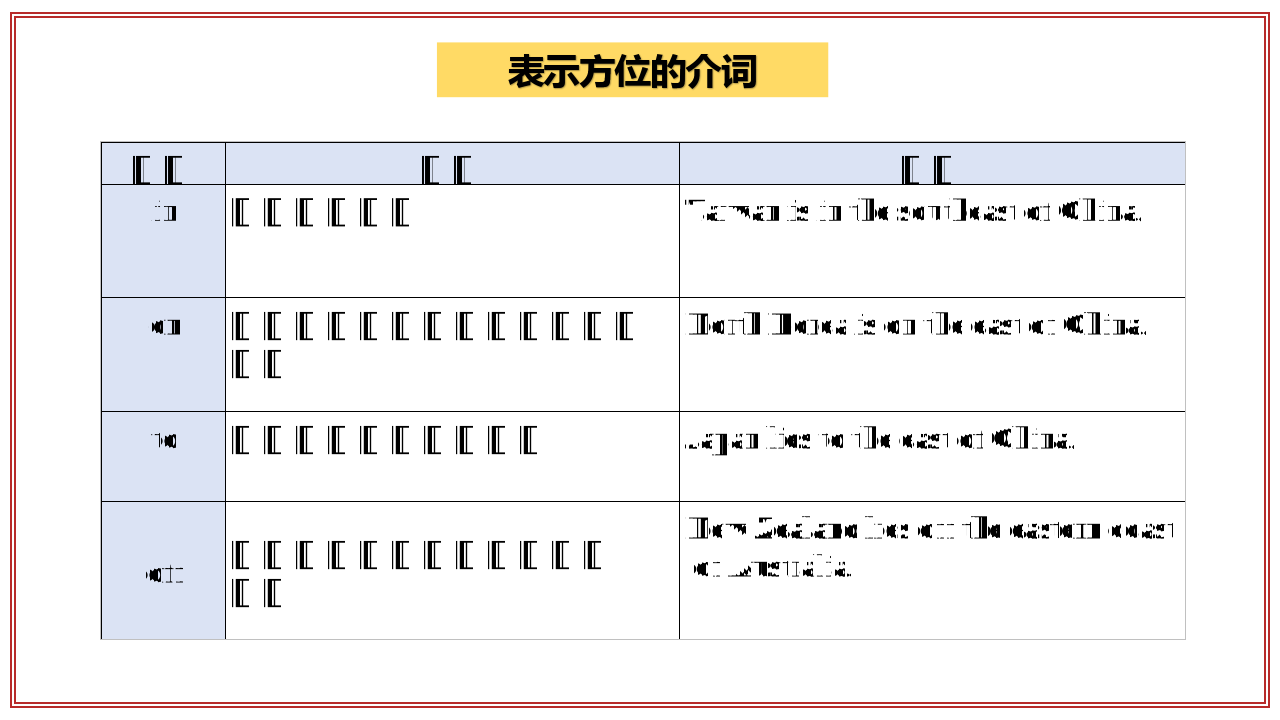
表示方位的介词
介词 用法 示范
in 表示在境内。 Taiwan is in the southeast of China.
on 表示相邻或在边界上,不在境内。 North Korea is on the east of China.
to 表示在境外,不接壤。 Japan lies to the east of China.
off 表示在海面上靠近海岸的地方。 New Zealand lies off the eastern coast of Australia.
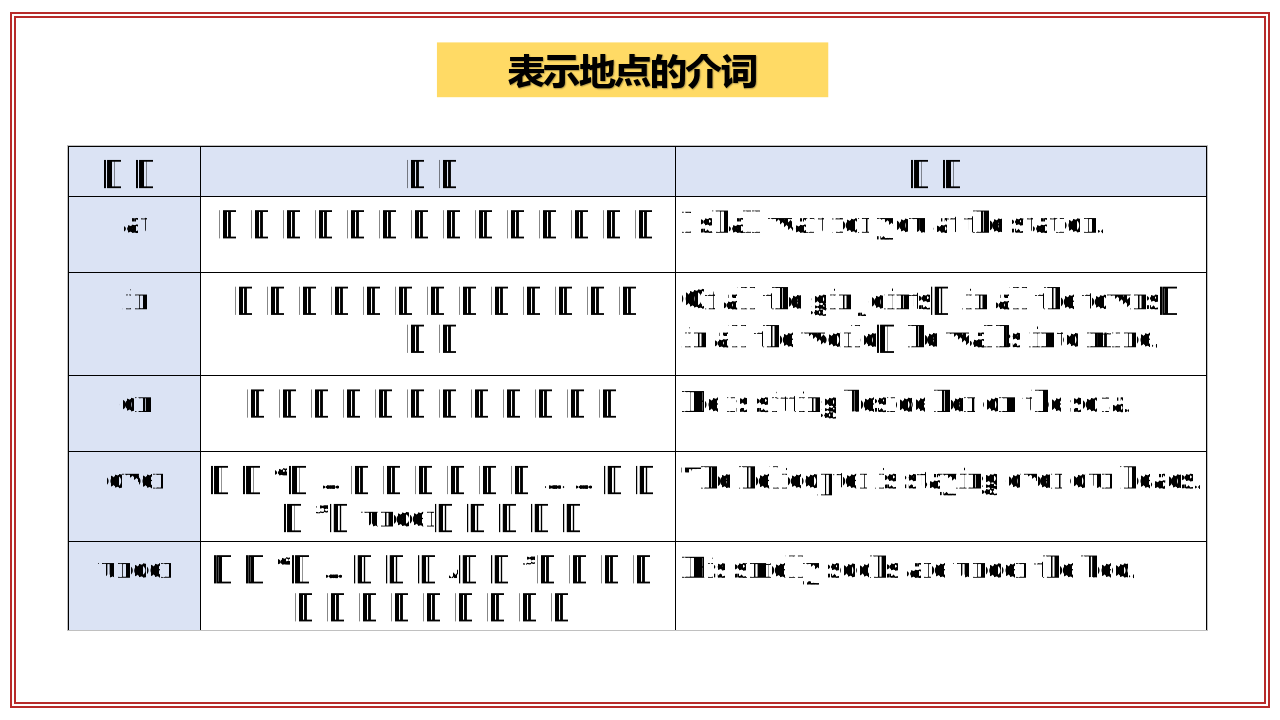
表示地点的介词
介词 用法 示例
at 表示在较小的地方(车站、家) I shall wait for you at the station.
in 表示在较大的地方(国家、城市) Of all the gin joints,in all the towns,
in all the world,he walks into mine.
on 表示在某物上(表面接触) He is sitting beside her on the sofa.
over 表示“在…的上方或覆于……的上面”,under的相反词。 The helicopter is staying over our heads.
under 表示“在…的下面/下方”,通常表示位置处于正下方。 His smelly socks are under the bed.
表示运动方向或目的的介词
介词 用法
across 表示穿过一平面。
through 表示穿过一空间。
along 表示沿着一条线平行。
up 表示向上,由南到北,由东到西,由沿海到内陆,由小地方到大地方,由农村到城市;反之则用down。
to 表示动作的目的地;towards指朝向,无到达的意思。
for 表示去向,常与leave, start off, set out, head, sail等动词连用。
in the end/at the end of/by the end of的区别
词组 用法 示例
in the end 意为“最后、终于”,相当于finally, at last,在句子中一般单独使用。 In the end, it doesn't even
matter.
at the end of+名词短语 意思是“在……末端/尽头”。 Our teacher ran over the
mainpoints at the end of each class.
by the end of+表示时间的名词 意为“到…为止,到…最后”,如果of后面接过去时间,那谓语必须用过去完成时态。 By the end of last month, we had produced twice as many cars as we did last year.
on/about的区别
介词 用法 示例
about 两者都有“关于”的意思,有时可互相替换使用,about侧重叙事。 stories about Michael
Jordan 迈克尔·乔丹的故事
on on侧重论述,说明书、文章或报告等是严肃的或学术的,更强调“指导、入门”层面的意义。 a book on the radio无线电入门(如果将on换成about,则是指一本关于无线电的科普故事书。)
表示“除……之外”的介词
介词/词组 用法
besides 表示包含,除…之外还有…
but 表示排除,多与不定代词如nobody, none 等连用。
except 表示排除,除…之外,主要用来谈论同类事物,不用于句首。
except for 表示“只是,只不过”,主要用来谈论不同类事物。
目
录
CONTENT
词性
2
10大词性
名词:
可数名词指表示的人或事物可以用数来计量,它有单数与复数两种形式。不可数名词指所表示的事物不能用数来计量。物质名词与抽象名词一般无法用数目,来统计,都成为不可数名词。
不可数名词前一般不能用冠词a、an来表示数量,没有复数形式。要表示“一个……”这一概念,就须加a piece of这一类短语。要注意许多名词在汉语里看来是可数名词,在英语里却不可数。如:chalk,paper,bread,rice,grass,news等。
注释:名词的可数与不可数
名词:
A.一般情况下加-s。
B.以s, x, ch, sh, 结尾的加-es
C.以辅音字母加y结尾的改y为i再加-es
D.以f,fe结尾的,去掉f或fe,变成v再加-es
注释:名词复数的规则变化
名词:
A. 单数名词词尾加’s,复数名词词尾若没有s,也要加’s。
B. 表示几个人共有一样东西,只需在最后一个人的名字后加’ s若表示各自所有,则需在各个名字后’ s。
C. 如果是通过在词尾加—s构成的复数形式的名词,只加’。
如:the students’ books,the girls’ blouses
(名词+of+名词名词是有生命的,我们就用’s结构来表示所有关系。如果名词所表示的事物是无生命的,我们就要用名词+of+名词的结构来表示所有关系。)
注释:名词的所有格
代词:
1.人称代词
第一人称 单数 I me my mine myself 复数 we us our ours ourselves
第二人称 单数 you you your yours yourself 复数 you you your yours yourselves
第三人称 单数 he him his his himself she her her hers herself it it its its itself
复数 they them their theirs themselves
2.物主代词
物主代词的用法:形容词性物主代词后面一定要跟上一个名词;名词性物主代词可作主语、表语、宾语。
注释:人称代词,物主代词,反身代词,指示代词,不定代词
代词:
3.反身代词
反身代词的构成分两种:第一、二人称反身代词在形容词性物主代词后加上self或selves,第三人称的反身代词在宾格代词后加上self或selves.
4.指示代词
● 为了避免重复,可用that,those代替前面提到过的名词,但是this,these不可以。
● this,that有时可代替句子或句子中的一部分。
5.不定代词
one,some,any,other,another,all,both,each,neither,many,much等
注释:人称代词,物主代词,反身代词,指示代词,不定代词
冠词:
定冠词的基本用法
A. 用在重新提到的人或事物前面。
B. 指谈话双方都知道的人或事物前面。
C. 用在单数可数名词前面,表示某一类人或事物。
注释:不定冠词an用在元音读音开头(不是指元音字母)的词前,其余用不定冠词a.
冠词:
定冠词的特殊用法
A. 用在世界上独一无二的事物或方位名词前。
B. 用在序数词、形容词的最高级及only所修饰的名词前。
C. 用在江河、海洋、山脉、湖泊、群岛的名称前面。
D. 用在由普通名词和另外一些词所构成的专有名词前面。
E. 用在姓氏的复数形式前面,表示全家人或这一姓的夫妇二人。
F. 用在乐器名称前。
G. 和某些形容词连用,表示某一类人或事物。
注释:不定冠词an用在元音读音开头(不是指元音字母)的词前,其余用不定冠词a.
冠词:
名词前不用冠词的情况
A. 在专有名词 (包括人名、地名、节日、月份、季节) 、物质名词和抽象名词前—般不用冠词。但在以Festival组成的民间节日前要加the。
B. 表示一类人或事物的复数名词前。
C. 名词前有物主代词、指示代词、不定代词或名词所有格修饰时,不用冠词。
D. 三餐饭、球类、棋类、游戏名称前一般不用冠词。正在有些词组中,有无冠词含义不同。(sit) at table就餐; sit at the table坐在桌边go to school去上学;go to the school去那所学校;in hospital住院;in the hospital在那个医院里
注释:不定冠词an用在元音读音开头(不是指元音字母)的词前,其余用不定冠词a.
数词:
1.数字的表示
三位数数词要在百位和十位(若无十位则和个位)之间加and。
1,000以上的数字,从后向前第三位数加一个“,”,第一个“,”前为thousand,第二个“,”前为million,第三个“,”前为billion。
2.序数词
除了first,second,third外,其余都在基数词尾加-th构成。
3.分数分子在前,分母在后,分子用基数词,分母用序数词,当分子大于1小时,分母序数词要变成复数。
形容词和副词:
A. 形容词作定语一般要放在名词前面,但当形容词修饰不定代词something,nothing,anything时要放在所修饰的不定代词之后。如:something important,nothing serious。
B. 当形容词带有表示度量的词或词组作定语或表语时,定语或表语要后置。如:We have dug a hole two meters deep.
注释:形容词的位置
形容词和副词:
形容词的比较等级
单音节词和少数双音节词,在词尾加—(e)r,—(e)st来构成比较级和最高级。其他双音节词和多音节词,在前面加more,most来构成比较级和最高级。如:popular———more popular———most popular
副词的比较等级
单音节副词和个别双音节副词通过加-er,-est来构成比较级和最高级。绝大多数副词借助more,most来构成比较级和最高级。
注释:比较等级
形容词和副词:
原级 比较级 最高级
well —— better —— best
badly —— worse —— worst
much —— more —— most
little —— less —— least
far —— farther —— farthest farthest furthest
late —— later —— latest
注释:少数形容词和副词比较级/最高级的不规则变化
介词:
in, at, on, before,after,till,since,for, fromto, until, by,in the middle of,at the beginning of, at the end of,at half past five,at night,in a week,in the morning,in class,at sunrise, in spring/summer/autumn/winter,on Sunday,on Saturday afternoon,on a winter evening,for a long time,for two months,after school,since liberation,before lunch,at the time of,at the age of
注释:表示时间的介词及介词短语
介词:
in,at,into,to,on,beside,before,behind,above,under,
outside,inside,up,from,far,from,near,across, off, down, among, past,between,out of,around,in the front of, in the middle of, at the back of,at the foot of,at home,at the gate,at the table,in the sky, on the ground,in a tree, in the south,in the sun,in the bed,on one’s way home,by the side
注释:表示地点的介词及介词短语
目
录
CONTENT
名词复数
3
名词复数的规则变化
1.以y结尾的专有名词,或元音音素+y 结尾的名词变复数时,直接加s变复数:
如: two Marys; the Henrys;monkey---monkeys; holiday---holidays;
比较: 层楼:storey ---storeys;story---stories;
2.以o 结尾的名词,变复数时:
a. 加s,如:photo---photos;piano---pianos;radio---radios;zoo---zoos;
b. 加es,如:potato--potatoes;tomato--tomatoes;
c. 均可,如:zero---zeros / zeroes
名词复数的规则变化
3. 以f或fe 结尾的名词变复数时:
a. 加s,如:belief---beliefs;roof---roofs;safe---safes;gulf---gulfs;
b. 去f,fe 加ves,如:half---halves;knife---knives;leaf---leaves;wolf---wolves;
wife---wives;life---lives; thief---thieves;
c. 均可, 如:handkerchief---handkerchiefs / handkerchieves
名词复数的不规则变化
1. 复数不规则变化名词
child---children;foot---feet;tooth---teeth;
mouse---mice;man---men;woman---women;
注意:与 man 和 woman构成的合成词,其复数形式也是 -men 和-women。
如: an Englishman,two Englishmen. 但German不是合成词,故复数形式为Germans;Bowman是姓,其复数是the Bowmans。
名词复数的不规则变化
2.单复同形
如:deer,sheep,fish,Chinese,Japanese, li,jin,yuan,two li,three mu
但除人民币元、角、分外,美元、英镑、法郎等都有复数形式。
如:a dollar, two dollars; a meter, two meters
3. 集体名词,以单数形式出现,但实为复数。
如: people police cattle 等本身就是复数,不能说 a people,a police,a cattle,但可以说:a person,a policeman,a head of cattle,the English,the British,the French,the Chinese,the Japanese,the Swiss 等名词,表国民总称时,作复数用。
名词复数的不规则变化
4. 以s结尾,仍为单数的名词,
如:a. maths,politics,physics等学科名词,为不可数名词,是单数。
b. news 是不可数名词。
c. the United States,the United Nations 应视为单数。
The United Nations was organized in 1945. 联合国是1945年组建起来的。
d. 以复数形式出现的书名,剧名,报纸,杂志名,也可视为单数。
"The Arabian Nights" is a very interesting story-book.
<<一千零一夜>>是一本非常有趣的故事书。
名词复数的不规则变化
5. 表示由两部分构成的东西,
如:glasses 眼镜; trousers裤子; clothes 衣服;
若表达具体数目,要借助数量词 pair(对,双); suit(套);
a pair of glasses; two pairs of trousers
6. 另外还有一些名词,其复数形式有时可表示特别意思,
如:
goods货物,waters水域,fishes(各种)鱼
目
录
CONTENT
句子成分
4
主语Subject :
Tom is a good boy.(名词)
We often speak English in class. (代词)
One-third of the students in this class are girls. (数词)
To swim in the river is a great pleasure. (不定式)
Smoking does harm to the health. (动名词)
The rich should help the poor. (名词化形容词)
When we are going to have an English test has not been decided. (主语从句)
It is necessary to master a foreign language.(it为形式主语,真正的主语是不定式)
主语是一个句子的主要成分,也是句子所叙述的主体,一般位于句首,表示句子所说的是“什么人”或“什么事物”。一般由名词、代词、数词、不定式、动名词、名词化的形容词和主语从句等充当。
注意:在there be结构、疑问(当主语不是疑问词时)和倒装句中,主语位于谓语动词、助动词或情态动词后面。
谓语Predicate :
1.简单谓语:由一个动词或动词短语构成。例如:
I like apples. ( 动词 )
He practices running every morning. (动词短语)
2.复合谓语:(1)由(情态动词或其他助动词+动词原形)构成;
例如:You may keep the book for two weeks.
He has caught a bad cold.
(2)由(系动词+表语)构成。 We are having a quick breakfast.
谓语说明主语所做的动作或具有的特征和状态。说明主语“做什么”、“是什么”或“怎么样”,一般由动词或动词短语来充当,一般放在主语之后。谓语和主语在人称和数两方面必须一致。
表语Predicative:
My mother is a doctor. (名词)
Is it yours? (代词)
The weather has turned cold. (形容词)
The speech is exciting. (现在分词)
The door is closed. (过去分词)
Three times seven is twenty one. (数词)
His job is to teach English. (不定式)
表语用于说明主语的性质、身份、特征和状态等,说明主语“是什么” 或“怎么样”。表语一般位于系动词之后。表语须和连系动词一起构成句子的复合谓语,即成系表结构。
His hobby is playing football. (动名词)
The machine must be out of order.(介词短语)
Time is up. The class is over. (副词)
The truth is that he has never been abroad. (表语从句)
宾语Object:
They went to see an exhibition yesterday. (名词)
The heavy rain prevented me from coming to school on time. (代词)
How many dictionaries do you have? I have three. (数词)
They helped the old with their housework yesterday. (名词化形容词)
He pretended not to see me. (不定式)
I enjoy listening to popular music. (动名词)
I think (that) he is fit for this job. (宾语从句)
宾语表示动作的对象或承受者,一般位于及物动词和介词后面,和及物动词一起说明主语“做什么”,由名词、代词、数词、名词化的形容词、不定式和宾语从句。
宾语补足语
Object Complement:
His father named him Dong Ming. (名词)
They painted their boat white. (形容词)
Let the fresh air in. (副词)
I ask him to go home now. (不定式)
We saw her entering the room. (现在分词)
He found the door locked. (过去分词)
We found everything in the lab in good order. (介词短语)
We will soon make our city what your city is now. (从句)
用来补充说明宾语的特征、状态或身份,宾语补足语可由名词、形容词、副词、不定式、分词、介词短语和从句充当。并与宾语一起构成复合宾语的句子成分,叫做宾语补足语。
定语Attributive:
Guilin is a beautiful city. (形容词)
China is a developing country. (现在分词)
America is a developed country. (过去分词)
There are thirty women teachers in our school. (名词)
His maths is very good. (形容词性物主代词)
I am the last person to leave the classroom. (不定式)
The teaching plan for next term has been worked out. (动名词)
He is reading an article about how to learn German. (介词短语)
修饰名词或代词的词、短语或从句称为定语。定语可由名词、形容词、代词、数词、副词、介词短语、不定式、分词等来充当。
状语Adverbial:
Light travels most quickly. (副词性词组)
He has lived in the city for ten years. (介词短语)
He is proud to have passed the national college entrance examination. (不定式)
He is in the room making a model plane. (现在分词短语)
Wait a minute. (名词)
Once you begin, you must continue. (状语从句)
用来修饰动词、形容词、副词或整个句子,表示行为发生的时间、 地点、目的、方式、程度等。一般由副词、名词、介词短语、不定式、从句或相当于副词的词组或短语等来充当。
状语种类:
How about meeting again at six? (时间状语)
Last night he didn’t go to the dance party because of the rain. (原因状语)
I shall go there if it doesn’t rain. (条件状语从句)
Mr. Smith lived on the third floor.(地点状语)
She put the eggs into the basket with great care. (方式状语)
She came in with a book in her hand. (伴随状语)
In order to catch up with the others, I must work harder.(目的状语)
He was so tired that he fell asleep immediately. (结果状语从句)
She works very hard though she is old. (让步状语从句)
I am taller than he is. (比较状语从句)
时间状语、原因状语、条件状语、地点状语、方式状语、目的状语、结果状语、让步状语、伴随状语、比较状语等。
独立成分:
感叹词:oh, hello, aha, ah,等。
肯定词:yes
否定词:no
称呼语:称呼人的用语。
插入语:一些句中插入的 I think , I believe,等。
如: The story, I think, has never come to the end. 我相信,这个故事还远没结束.
与全句没有语法关系的句子成分叫做句子的独立成分
目
录
CONTENT
疑问词
5
what
what 对事情或东西提问
What's this?
What's wrong?
What are you going to do?
what 引申的其它疑问词:
what color 对颜色提问 What color is your schoolbag?
what time 对时间提问 What time is it now?
who
who 对人物提问
He is LiLie.Who is he ?
He is my brother. Who is he ?
Who's your English teacher?
Who is the girl in red?
Who is he?
where
where 对地点提问
Where do you play games on Sunday?
Where are you from?
Where is your school?
Where is the post office?
why
why 对原因提问
Why do you like winter?
Because I can make a snowman.
Why are you angry?
Why the earth goes around the sun?
which
which 对同类中的某一个提问
Which season do you like best?
Which one do you like,the red one or the blue one?
Which country do you come from?
when
when 对时间提问
When is your birthday?
When is Mid-Autumn Festival?
When are you going to Shanghai?
whose
whose 对物品所属关系提问
Whose book is this?
Whose clothes are those?
Whose basketball is that?
how
how 对方式,方法或程度提问
How is she now?
how 引申的其它疑问词:
how many 对可数名词的数量提问
how much 对价钱,不可数名词的数量提问
how far 对距离提问 how tall 对高度提问
how heavy 对重量提问
北师大版七年级上期末考点串讲
Thank You !
$$
资源预览图
1
2
3

4
5
6
相关资源
由于学科网是一个信息分享及获取的平台,不确保部分用户上传资料的 来源及知识产权归属。如您发现相关资料侵犯您的合法权益,请联系学科网,我们核实后将及时进行处理。