Unit5 Grammar 提纲+练习2024-2025学年译林版(2024)七年级英语上册
2024-11-14
|
2份
|
6页
|
924人阅读
|
34人下载
普通
资源信息
| 学段 | 初中 |
|---|---|
| 学科 | 英语 |
| 教材版本 | 初中英语译林版七年级上册 |
| 年级 | 七年级 |
| 章节 | Grammar |
| 类型 | 学案-知识清单 |
| 知识点 | - |
| 使用场景 | 同步教学-新授课 |
| 学年 | 2024-2025 |
| 地区(省份) | 江苏省 |
| 地区(市) | 连云港市 |
| 地区(区县) | - |
| 文件格式 | ZIP |
| 文件大小 | 169 KB |
| 发布时间 | 2024-11-14 |
| 更新时间 | 2024-12-10 |
| 作者 | Mico 1314 |
| 品牌系列 | - |
| 审核时间 | 2024-11-13 |
| 下载链接 | https://m.zxxk.com/soft/48665891.html |
| 价格 | 0.50储值(1储值=1元) |
| 来源 | 学科网 |
内容正文:
U5 Grammar
1、 中英互译+词组用法
1、 一块奶酪 ;一杯水 ;一碗汤 ;
2、 一袋盐 ;两袋大米 ;三杯茶 ;
3、 四公斤肉 ;五盒牛奶 ;六瓶果汁 ;
4、 在周六晚上 ;班级聚会 ;三个玩具火车 ;
可数名词和不可数名词
英语中的名词按其表示的事物的性质可分为可数名词与不可数名词。
可数名词,顾名思义,是可以用数目来计算的人或物。指一个人或一件事物时,用单数形式;指两个及以上的人或事物时,用复数形式。如:
I usually have a sandwich for breakfast. 我早餐通常吃一个三明治。
They exercise in different ways. 他们用不同的方式锻炼身体。
单数的可数名词或名词短语前一般有限定词,如:冠词a/ an、the,指示代词 this、that,形容词性物主代词 my、your、his、her、their,名词所有格 John's 等。
注意:冠词a用于辅音音素开头的可数名词前; an用于元音音素开头的可数名词前,而不是元音字母开头的名词前。如:
There is an apple tree in the garden. 花园里有一棵苹果树。
Mary dances for an hour every day. 玛丽每天跳一个小时的舞。
She has an umbrella and a useful book. 她有一把雨伞和一本有用的书。
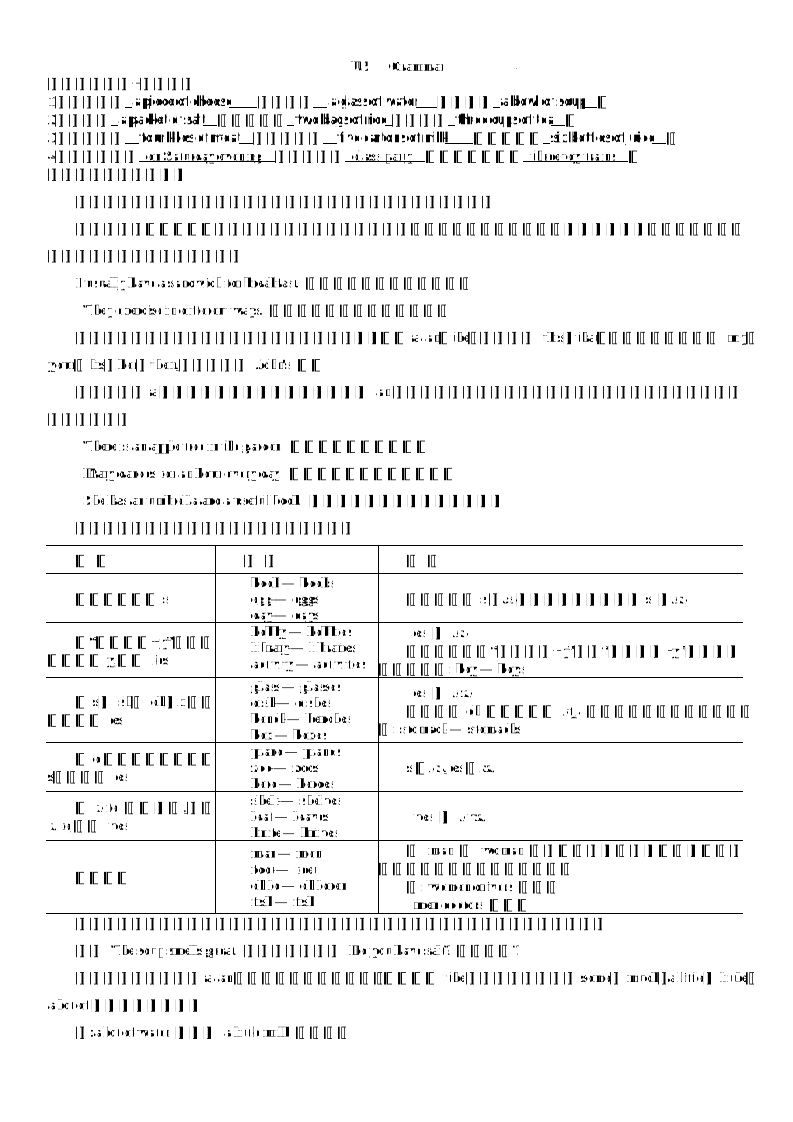
单数可数名词变成复数形式的常见规则如下:
规 则
举 例
备 注
大多数词后加s
book— books
egg— eggs
day— days
清辅音后的s读/s/,浊辅音或元音后的s 读/z/
以“辅音字母+y”结尾的词,去掉y,再加 ies
hobby— hobbies
library— libraries
activity— activities
es 读 /z/
注意:此处是“辅音字母+y”,而“元音字母+y”则不适用此规则。如: boy— boys
以s、 sh、 ch、x结尾的词后加 es
glass— glasses
dish— dishes
bench— benches
box— boxes
es 读 /ɪz/
注意:以ch 结尾但不发 /tʃ/ 的可数名词不适用此规则。如: stomach— stomachs
以o结尾的词后有的加s,有的加 es
piano— pianos
zoo— zoos
hero— heroes
s读/z/, es读/z/
以f/ fe 结尾的词,去掉f/ fe,再加 ves
shelf— shelves
leaf— leaves
knife— knives
ves 读 / vz/
特殊变化
man— men
foot— feet
child— children
fish— fish
由 man 或 woman 与另一可数名词组成的复合名词变为复数时,两部分都发生变化。
如: women drivers 女司机
men doctors 男医生
不可数名词指不可以计数的名词。不可数名词无单、复数之分,前面有无限定词均可。
如: The soup smells great. 汤闻起来很香。 Do you have salt? 你有盐吗?
不可数名词前不能用a/ an或表示具体数量的数词,但可以用 the或表示数量多少的some、 much、a little、 little、a lot of等词或短语修饰。
如:a lot of water 许多水 a little milk 一点牛奶
不可数名词前还可以用表示量的“可数名词+ of”短语来表示数量。
如:a piece of paper 一张纸 three cups of coffee 三杯咖啡 five kilos of beef 五千克牛肉
如果主语是不可数名词,谓语动词常用单数。
如:Coffee is a kind of drink. 咖啡是一种饮品。
英语中常见的不可数名词有 time(时间)、money(钱)、work(工作,劳动)、homework(家庭作业)、news (消息)、luck (运气)等。
一、用括号中所给单词的正确形式填空。
1. Look at the ( pear) in the basket. They taste delicious.
2. Don't play with ( knife), boys.
3. I'd like to buy some ( potato).
4. How many ( tomato) are there in our fridge?
5. How many ( man) teachers are there in your school?
6. Why don't you wash your ( foot) before going to bed?
7. Look! The ( child) are having a good time flying kites in the park.
8. We have to brush our ( tooth) before we go to bed every day.
9. Young people don't use ( radio) now. They use mobile phones.
10. In autumn, ( leaf) turn brown and start falling from the trees.
二、单项选择。
( )1. Uncle Li has a farm, and there are some on the farm.
A. chicken and sheep B. chickens and sheeps C. chickens and sheep D. chicken and sheeps
( )2.— Can I help you, Madam? — Yes. , please.
A. Two pair of socks B. Two pairs of socks C. Two pairs of sock D. Two pair of sock
( )3.— Are you thirsty?— Yes. Please give me .
A. three bottle water B. three bottle of water C. three bottles of water D. three bottles of waters
( )4. There are many teachers in this primary school.
A. woman B. woman's C. women D. women's
( )5. There are some and on the table.
A. potatoes; tea B. chicken; porks C. tomatos; porks D. tomatos; milk
( )6.— How many can you see in the kitchen?— Three.
A. cartons of oranges B. cartons of orange C. carton of oranges D. carton of orange
( )7.— How much do you need?— We need two cups.
A. milk B. egg C. pear D. potato
( )8.—— Susan, would you like something to eat?— Yes, please.
A. some milk B. some tea C. some coffee D. some bread
( )9.— We want to go shopping. Do you want to buy something?— Yes. I'd like two . I like fruit.
A. bowls of rice B. boxes of apples C. cartons of milk D. bottles of water
( )10.— After the PE class, I often feel very thirsty.— Why not buy some to drink?
A. bread B. noodles C. apple juice D. teas
三、选出下列每组单词中画线部分发音不同于其他单词的选项。
( )1. A. there B. father C. think D. together
( )2. A. boys B. always C. books D. nose
( )3. A. geography B. good C. hamburger D. leg
( )4. A. watch B. school C. catch D. cheese
( )5. A. nice B. rice C. piece D. cook
四、从方框中选择恰当的词或短语并用其正确的形式填空(每个词或短语只能用一次)。
1.— What can I do for you, Madam?—I'd like pork.
2. I am hungry and I want to eat cake.
3. I think you should put more into the soup.
4. Don't put these on the table.
5. To , you’ d better exercise every day and eat more fruit and vegetables.
五、词汇运用。
根据短文意思和首字母提示,写出一个完整正确的单词。
Maria is a running star in our school. She 1 very fast and she eats a lot of healthy food. For b 2, she has some bread and milk. She eats meat, vegetables and rice for lunch, but she doesn't like fish. For supper, she likes vegetables, rice and s 3 . She often has some fruit after meals. She likes e 4 apples best. She seldom eats cakes. They are bad for her t 5 .
She is very b 6 every day because she has many things to d 7 . She often goes s 8 in summer. All the teachers love her. They think she is a good student. At home she is a good daughter. She often h 9 her parents with the housework. She would 1 10 to be a dancer in the future.
1. 2. 3. 4. 5. 6. 7. 8. 9. 10.
学科网(北京)股份有限公司
$$U5 Grammar 1、 中英互译+词组用法 1、 一块奶酪 a piece of cheese ;一杯水 a glass of water ;一碗汤 a bowl of soup ; 2、 一袋盐 a packet of salt ;两袋大米 two bags of rice ;三杯茶 three cups of tea ; 3、 四公斤肉 four kilos of meat ;五盒牛奶 five cartons of milk ;六瓶果汁 six bottles of juice ; 4、 在周六晚上 on Saturday evening ;班级聚会 class party ;三个玩具火车 three toy trains ; 可数名词和不可数名词 英语中的名词按其表示的事物的性质可分为可数名词与不可数名词。 可数名词,顾名思义,是可以用数目来计算的人或物。指一个人或一件事物时,用单数形式;指两个及以上的人或事物时,用复数形式。如: I usually have a sandwich for breakfast. 我早餐通常吃一个三明治。 They exercise in different ways. 他们用不同的方式锻炼身体。 单数的可数名词或名词短语前一般有限定词,如:冠词a/ an、the,指示代词 this、that,形容词性物主代词 my、your、his、her、their,名词所有格 John's 等。 注意:冠词a用于辅音音素开头的可数名词前; an用于元音音素开头的可数名词前,而不是元音字母开头的名词前。如: There is an apple tree in the garden. 花园里有一棵苹果树。 Mary dances for an hour every day. 玛丽每天跳一个小时的舞。 She has an umbrella and a useful book. 她有一把雨伞和一本有用的书。 单数可数名词变成复数形式的常见规则如下: 规 则 举 例 备 注 大多数词后加s book— books egg— eggs day— days 清辅音后的s读/s/,浊辅音或元音后的s 读/z/ 以“辅音字母+y”结尾的词,去掉y,再加 ies hobby— hobbies library— libraries activity— activities es 读 /z/ 注意:此处是“辅音字母+y”,而“元音字母+y”则不适用此规则。如: boy— boys 以s、 sh、 ch、x结尾的词后加 es glass— glasses dish— dishes bench— benches box— boxes es 读 / z/ 注意:以ch 结尾但不发 /t / 的可数名词不适用此规则。如: stomach— stomachs 以o结尾的词后有的加s,有的加 es piano— pianos zoo— zoos hero— heroes s读/z/, es读/z/ 以f/ fe 结尾的词,去掉f/ fe,再加 ves shelf— shelves leaf— leaves knife— knives ves 读 / vz/ 特殊变化 man— men foot— feet child— children fish— fish 由 man 或 woman 与另一可数名词组成的复合名词变为复数时,两部分都发生变化。 如: women drivers 女司机 men doctors 男医生 不可数名词指不可以计数的名词。不可数名词无单、复数之分,前面有无限定词均可。 如: The soup smells great. 汤闻起来很香。 Do you have salt? 你有盐吗? 不可数名词前不能用a/ an或表示具体数量的数词,但可以用 the或表示数量多少的some、 much、a little、 little、a lot of等词或短语修饰。 如:a lot of water 许多水 a little milk 一点牛奶 不可数名词前还可以用表示量的“可数名词+ of”短语来表示数量。 如:a piece of paper 一张纸 three cups of coffee 三杯咖啡 five kilos of beef 五千克牛肉 如果主语是不可数名词,谓语动词常用单数。 如:Coffee is a kind of drink. 咖啡是一种饮品。 英语中常见的不可数名词有 time(时间)、money(钱)、work(工作,劳动)、homework(家庭作业)、news (消息)、luck (运气)等。 一、用括号中所给单词的正确形式填空。 1. Look at the pears ( pear) in the basket. They taste delicious. 2. Don't play with knives ( knife), boys. 3. I'd like to buy some potatoes ( potato). 4. How many tomatoes ( tomato) are there in our fridge? 5. How many men ( man) teachers are there in your school? 6. Why don't you wash your feet ( foot) before going to bed? 7. Look! The children ( child) are having a good time flying kites in the park. 8. We have to brush our teeth ( tooth) before we go to bed every day. 9. Young people don't use radios ( radio) now. They use mobile phones. 10. In autumn, leaves ( leaf) turn brown and start falling from the trees. 二、单项选择。 ( C )1. Uncle Li has a farm, and there are some on the farm. A. chicken and sheep B. chickens and sheeps C. chickens and sheep D. chicken and sheeps ( B )2.— Can I help you, Madam? — Yes. , please. A. Two pair of socks B. Two pairs of socks C. Two pairs of sock D. Two pair of sock (C )3.— Are you thirsty?— Yes. Please give me . A. three bottle water B. three bottle of water C. three bottles of water D. three bottles of waters ( C )4. There are many teachers in this primary school. A. woman B. woman's C. women D. women's (A )5. There are some and on the table. A. potatoes; tea B. chicken; porks C. tomatos; porks D. tomatos; milk ( B )6.— How many can you see in the kitchen?— Three. A. cartons of oranges B. cartons of orange C. carton of oranges D. carton of orange ( A )7.— How much do you need?— We need two cups. A. milk B. egg C. pear D. potato ( D )8.—— Susan, would you like something to eat?— Yes, please. A. some milk B. some tea C. some coffee D. some bread ( B )9.— We want to go shopping. Do you want to buy something?— Yes. I'd like two . I like fruit. A. bowls of rice B. boxes of apples C. cartons of milk D. bottles of water ( C )10.— After the PE class, I often feel very thirsty.— Why not buy some to drink? A. bread B. noodles C. apple juice D. teas 三、选出下列每组单词中画线部分发音不同于其他单词的选项。 ( C )1. A. there B. father C. think D. together ( C )2. A. boys B. always C. books D. nose ( A )3. A. geography B. good C. hamburger D. leg ( B )4. A. watch B. school C. catch D. cheese ( D )5. A. nice B. rice C. piece D. cook 四、从方框中选择恰当的词或短语并用其正确的形式填空(每个词或短语只能用一次)。 1.— What can I do for you, Madam?—I'd like two kilos of pork. 2. I am hungry and I want to eat a piece of cake. 3. I think you should put more salt into the soup. 4. Don't put these bottles of water on the table. 5. To keep healthy , you’ d better exercise every day and eat more fruit and vegetables. 五、词汇运用。 根据短文意思和首字母提示,写出一个完整正确的单词。 Maria is a running star in our school. She r 1 very fast and she eats a lot of healthy food. For b 2, she has some bread and milk. She eats meat, vegetables and rice for lunch, but she doesn't like fish. For supper, she likes vegetables, rice and s 3 . She often has some fruit after meals. She likes e 4 apples best. She seldom eats cakes. They are bad for her t 5 . She is very b 6 every day because she has many things to d 7 . She often goes s 8 in summer. All the teachers love her. They think she is a good student. At home she is a good daughter. She often h 9 her parents with the housework. She would 1 10 to be a dancer in the future. 1. runs 2. breakfast 3. soup 4. eating 5. teeth 6. busy 7. do 8. swimming 9. helps 10. like 学科网(北京)股份有限公司 $$
资源预览图
1
相关资源
由于学科网是一个信息分享及获取的平台,不确保部分用户上传资料的 来源及知识产权归属。如您发现相关资料侵犯您的合法权益,请联系学科网,我们核实后将及时进行处理。