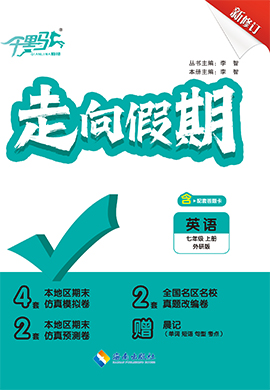
Unit 4 Time to celebrate 晨记-【勤径千里马】2024-2025学年新教材七年级上册英语走向假期(外研版2024)
2024-12-03
|
4页
|
253人阅读
|
17人下载
教辅

内容正文:
走向假期·英语·外研版·七年级上册
Unit 4
Time to celebrate
(一)单元基础知识背记
Understanding ideas
重点单词
单词变形
1.unusual ad.不平常的
1.treat-treatment(n.)
2.treat.请客,款待,招待
2.myselfI(人称代词主格)→me(人称代词宾
3.myself pron.我本人,我亲自,我自己
格)→my(形容词性物主代词)→mine(名词性
4.dumpling m.水饺
物主代词)
5.whole adj全部的,整个的
3.laugh-laughter(n.
6.become.成为,变成
4.knife-→knives(pl.)
7.chef n.厨师
5,taste-→tasty(a.)
8.cucumber n.黄瓜
6.celebrate→celebration(n.)
9.hang.悬挂
7.culture-cultural(adj.
10.balloon n.气球
8.salty→salt(h.)
11.lantern n.提灯:灯笼
9.usually-usual(adj.
12.dish n.(烹制好的)菜肴,一道菜
重点短语
l3.joke.说笑话;开玩笑
1.为某人烹饪食物cook sb sth/cook sth for sb
14.shocked ad.震惊的
2.违法against the law
15.laugh.发出笑声,(大)笑
3.在春节at the Spring Festival
16.pork n.猪肉
4.一条(块,片)a piece of
17.round a.圆形的,环形的
5.把…放在…里pul..inlo.
18.shape n.形,形状,外形
19.reunion n.团圆,团聚
6.…的气昧the smell of.
20.piece n.片:块;段;截
7.发生:举行take place
2l.knife n.刀
8.充满be full of
22.smell n.气味
9.确信be sure
23.laughter n.笑,笑声
重点句型
24.fl.(使)充满:装满
1.It was my first Spring Festival in the UK.
25.meal n.一餐;饭
这是我第一次在英国过春节。
26.miss.思念,想念,怀念(某人):错过
2.Are you joking?你在开玩笑吗?
27.taste n.味道,滋味
3.Because it always takes place on the fifth day of
28.celebrate.庆祝
the fifth lunar month.
29.culture n.文化
因为它总是在农历五月初五发生。
30.usually ad.通常地:惯常地
4.Which taste do you prefer?你更喜欢哪一个口味?
-14
晨记又
Developing ideas
雪重点单词
单词变形
1.Christmas n.圣诞节(期间)》
1.waste-wasteful(adj.
2.waste n.(金钱、技能等的)浪费
2.pollution-pollute(v.
3.pollution n.污染
3.mean→neaning(n.)
4.decision-decide(v.
4.plastic adj.塑料制的
5.medical-medicine(n.
5.duty n.(道德或法律上的)义务,责任
口重点短语
6.shine.发光,发亮
L.大量,许多millions of
7.break n.中断,暂停
2.砍伐eut down
8.emergency m.紧急情况,不测事件
3.在客厅in the living room
9.thirsty adj.渴的,口渴的
4.感激(感谢)…be thankful for.
10.challenge n.挑战,具有挑战性的事物
5.放弃give up
ll.patient n.病人,患者
盟重点句型
12.situation n.形势,情况,状况,局面
1.They can cause pollution,too.
13.regret.后悔(做了某事):对…感到遗憾
它们也能引发污染。
2.She is often much busier during festivals.
14.decision m.决定,抉择
在节日期间她总是更忙。
15.support n.支持
3.She never regrets her decision to be an ER
16.medical adj.医学的;医疗的
doctor.
17.bright adv.光明地:明亮地
她从未后悔过选择成为一名急诊医生。
18.festive adj.欢乐的,欢庆的
19.firework n.烟火,烟花
(二)单元重要考点背记
考点可反身代词
myself我自己
第一人称
ourselves我们自己
yourself你自己
第二人称
yourselves你们自己
反身代词
himself他自己
herself她自己
第三人称
itself它自己
themselves他/她/它们自己
-15
走向假期·英语·外研版·七年级上册
考点2 smell的用法
(1)smell作名词,意为“气味”
I can't stand the smell here.我无法忍受这里的气味。
(2)sm作系动词,意为“闻起来”,其后可以跟形容词作表语:sml还可以作及物动词,意为“闻:嗅”
The flower smells nice..这朵花闻起来很香。
Come here and smell this cake.来这里闻闻这个蛋糕。
【拓展】
sound听起来
look看起来
感官动词
smell闻起来
感官动词小结
taste尝起来
feel摸起来;感觉
后跟形容词作表语
用法
其后可以跟介词ke
考点3fl的用法
(1)ll作动词,意为“填满:充满”。l…wh…意为“用…填满…”,是固定搭配
You can fill the bottle with sand..你可以用沙子把瓶子装满。
My mother filled the glass with fresh orange juice for me.我妈妈给我倒了一杯新鲜的橙汁。
(2)be filled with.意为“装满;充满”,和be full of..是同义表达。其中fll是形容词,意为“满的"
The box is filled with/full of old books.这个箱子装满了旧书。
考点4look、see、watch与read辨析
四个词的含义都和“看”有关,但有所区别。具体如下:
look
强湖“看”的动作,是不及物动词,其后若跟宾语,要用oka
see
强调“看”的结果,意为“看见:看到”
watch
强调“专注地看”,有欣赏的意味,常用于看电视、看球赛等
read
指“阅读”,常用于读书、读报纸等
Please look at those animals..请看那些动物。
Can you see a bird in the tree?你能看到树上有一只鸟吗?
They love to watch TV.他们喜欢看电视。
She loves reading books..她喜欢读书。
-16-
晨记又
考点5 something、anything、nothing与everything辨析
它们是含-hing的复合不定代词。用法和区别如下:
意为“某事,某物”,通常用在肯定句中:还可以用在表示
something
邀请、请求或期待得到肯定回答的疑问句中
意为“任何东西:任何事物”,通常用在否定句或疑问句
anything
中:还可以用在肯定句中,此时表示“随便什么事物”
nothing
意为“没有什么:没有一件东西”,同not.…anything
everything
意为“所有事物:每样东西”
I have something to tell you.我有事情要告诉你
Would you like something to drink?你想喝点什么吗?
I didn't see anything in the room.我在房间里没有看到任何东西。
Did you see anything there?你在那里看到什么东西了吗?
We found nothing in the garden..我们在花园里什么也没有找到。
Everything will be fine.一切都会好起来的。
【拓展】
当形容词修饰something、anything等复合不定代词时,形容词要后置。
Yesterday Linda told me something important.昨天琳达告诉了我一些重要的事情。
考点6频度副词
频度副词用来描述动作的频率。相关知识点有:
(1)常见的频度副词的含义
always一直:总是
usually通常
often经常
频度副词
sometimes有时
seldom很少;不常
never从不:从来没有
My mother is always busy.我的妈妈总是很忙碌。
I usually ask my father for help.我通常向我的爸爸求助。
It often rains here in April.这里四月经常下雨。
Sometimes she writes to me.她有时候给我写信。
The old man seldom eats out..这位老人很少出去吃饭e
My sister never goes swimming.我妹妹从来不去游泳。
(2)频度副词的位置
频度副词通常位于行为动词之前,助动词之后。sometimes的位置比较灵活,可以位于句首、句中
或句尾。
-17-
资源预览图

1

2
所属专辑

相关资源
示范课
由于学科网是一个信息分享及获取的平台,不确保部分用户上传资料的 来源及知识产权归属。如您发现相关资料侵犯您的合法权益,请联系学科网,我们核实后将及时进行处理。