Unit 3 Conservation Lesson 3 The road to destruction 课件-2024-2025学年高中英语北师大版(2019)选择性必修第一册
2024-10-28
|
15页
|
1875人阅读
|
15人下载
普通
资源信息
| 学段 | 高中 |
|---|---|
| 学科 | 英语 |
| 教材版本 | 高中英语北师大版选择性必修第一册 |
| 年级 | 高二 |
| 章节 | Lesson 3 The Road to Destruction |
| 类型 | 课件 |
| 知识点 | - |
| 使用场景 | 同步教学-新授课 |
| 学年 | 2024-2025 |
| 地区(省份) | 全国 |
| 地区(市) | - |
| 地区(区县) | - |
| 文件格式 | PPTX |
| 文件大小 | 28.61 MB |
| 发布时间 | 2024-10-28 |
| 更新时间 | 2024-11-02 |
| 作者 | xkw_071486689 |
| 品牌系列 | - |
| 审核时间 | 2024-10-28 |
| 下载链接 | https://m.zxxk.com/soft/48255841.html |
| 价格 | 0.50储值(1储值=1元) |
| 来源 | 学科网 |
内容正文:
Unit 3 Conservation
Lesson 3 The Road to Destruction
Learning Objectives
★ find out effects of cars on people in Britain;
By the end of this class, we will
★ talk about effective ways to reduce traffic problems;
★ summarize the main idea and structure of the text;
★ develop environmental awareness and choose green travel.
2
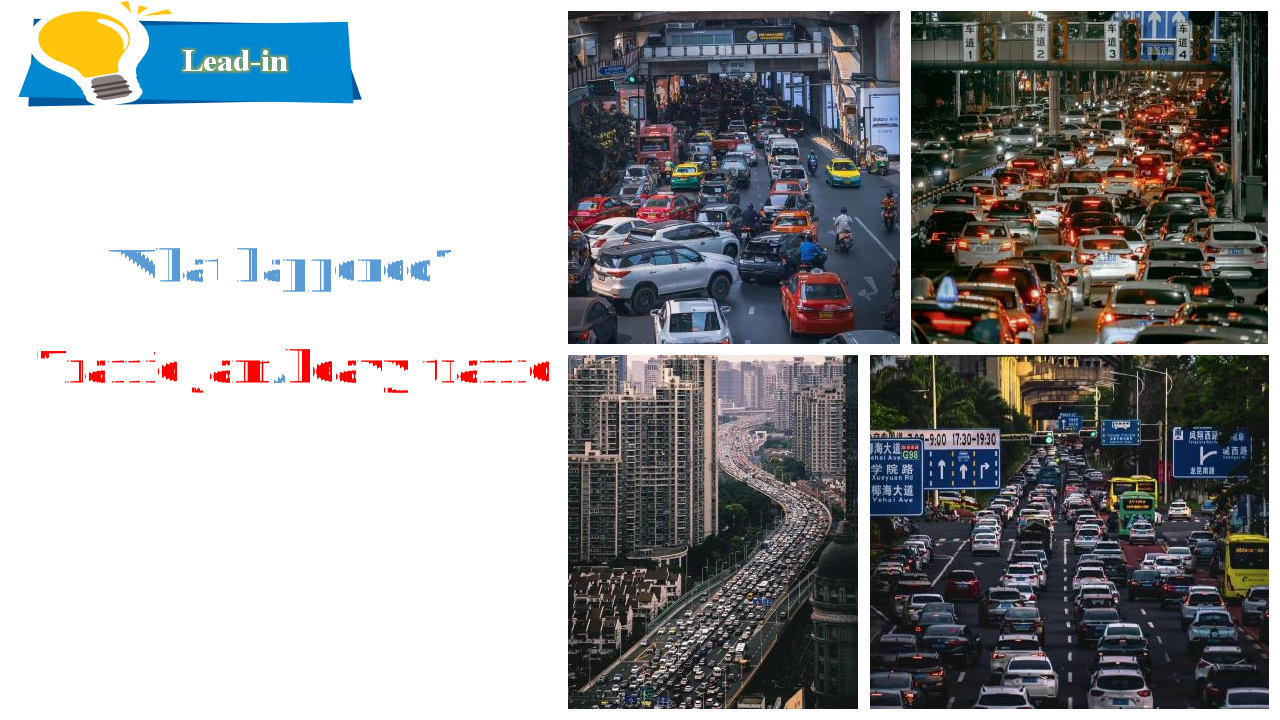
What happened?
Lead-in
Traffic jam/heavy traffic
Lead-in
Do you have a similar experience?
Every Saturday afternoon...
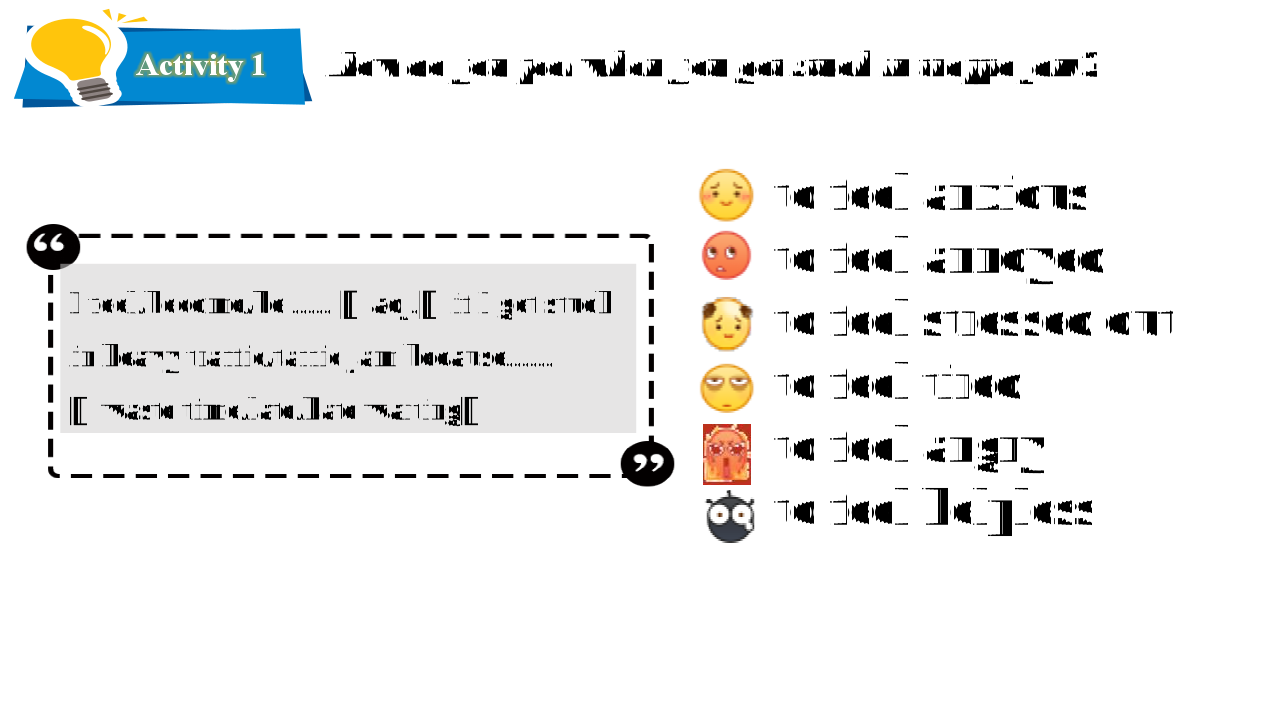
to feel anxious
to feel annoyed
to feel stressed out
to feel tired
to feel angry
to feel helpless
How do you feel when you get stuck in traffic jam?
Activity 1
I feel/become/be ..... (adj.)if I get stuck in heavy traffic/taffic jam because......(waste time/late/hate waiting)
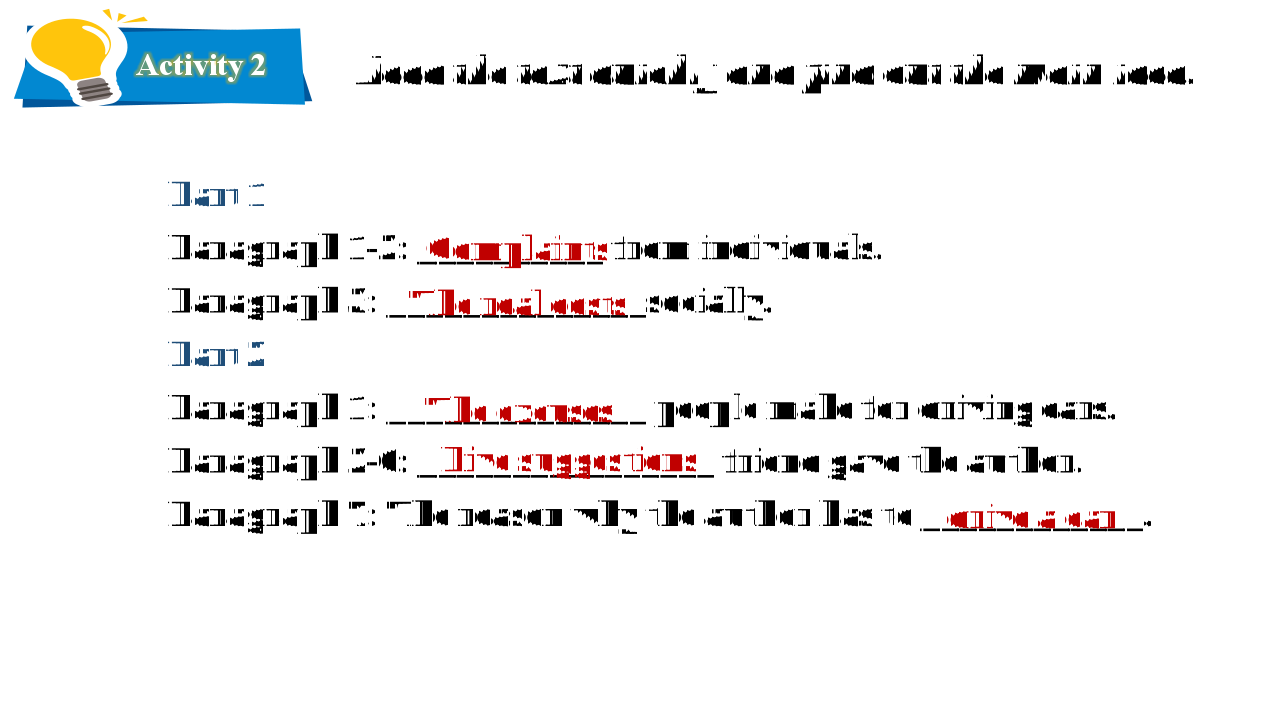
Part 1
Paragraph 1-2: __________ from individuals.
Paragraph 3: ______________socially.
Part 2
Paragraph 1: ______________ people make for driving cars.
Paragraph 2-6: ________________ friend gave the author.
Paragraph 7: The reason why the author has to ____________.
Complaints
The real costs
The excuses
Five suggestions
drive a car
Read the text quickly and find out the main idea.
Activity 2
( ) 1.How many cars are there on the roads?
a.32 million. b.50 million. c. 64 million.
Activity 3
( ) 2.By how much has the number of cars gone up in the last 20 years?
a.10%. b.25%. c. 40%.
( ) 3.How many people die every year in vehicle accidents?
a.1,000. b.2,500. c. 3,000.
a
b
b
( ) 4.How many deaths per year are caused by air pollution?
a.10,000. b.20,000. c. 30,000.
c
Read Part 1 and answer the questions.
Traffic problems
Effects: social
Effects: personal
angry,
Possible solutions:
stressed out, tired
1.vehicle accidents
2. global warming
3.climate change
4. deaths and cancer by air pollution
Activity 4
Read Part 1 again and complete diagram.
Activity 5
Read Part 2 and complete the notes.
Solutions / Advice
Think before you go.
Share cars.
Take action.
Walk / cycle more
Use public transport.
What are the excuses that people make for using cars?
Excuses:
“The buses are terrible.”
“The trains are always late.”
“I haven’t got time to walk.
“People are addicted to cars!”
Advantages
×
Activity 6
Read Part 2 carefully and answer the following questions.
Use your legs
(short journey)
Use public transport
Think before you go
Share cars
Take action
save money, keep fit, live longer, cut the risk of heart disease
relax, read a book, talk to someone
save time
much cheaper, kinder to the environment
talk to your neighbours, write to the papers,
go to the city government, ask for a speed limit...
Advantages
Activity 7
Advantages
Examples
Read again and fill in the blanks.
Technology
2. How do you understand the title The Road to Destruction?
1. What is the writer’s attitude towards cars?
Does she follow the five solutions?
Activity 8
Group work.
She knows that cars have negative effects and she wants to help the environment but she thinks it will be difficult for her to give up her car.
The road to destruction refers to the fact that the cars on the road will eventually lead to the destruction of our planet.
Activity 9
Complete the summary.
make excuses get stuck in a traffic jam be addicted to protect the environment
do a lot of harm pick up sb cause global warming share cars
Many people often 1___________________ when they go to work. How annoyed and stressful they often feel! But the problem is that the number of cars is still going up. Traffic pollution has been found to 2___________________ and climate change to a large degree.Too many cars 3_________________ to the environment and our health. Some advice has been given for people to help 4____________________, for example, using public transport or 5_________________, doing your shopping in the shop just around the corner instead of driving to the other side of town. However, people 6_________________ using cars. They 7_________________ for using their cars, “I need to 8_________________ my daughter. What can I do?”
get stuck in a traffic jam
cause global warming
do a lot of harm
protect the environment
sharing cars
are addicted to
make excuses
pick up
Write a passage about how to solve traffic problems, no less than 50 words.
Homework
$$
资源预览图

1
2
3

4
5
6
相关资源
由于学科网是一个信息分享及获取的平台,不确保部分用户上传资料的 来源及知识产权归属。如您发现相关资料侵犯您的合法权益,请联系学科网,我们核实后将及时进行处理。