Unit 2 Understanding each other-【优化探究】2025年高考英语一轮复习高考总复习配套课件(译林版2020)
2024-10-25
|
170页
|
61人阅读
|
2人下载
教辅

资源信息
| 学段 | 高中 |
|---|---|
| 学科 | 英语 |
| 教材版本 | 高中英语译林版选择性必修第四册 |
| 年级 | 高三 |
| 章节 | Unit 2 Understanding each other |
| 类型 | 课件 |
| 知识点 | 词汇,语法 |
| 使用场景 | 高考复习-一轮复习 |
| 学年 | 2025-2026 |
| 地区(省份) | 全国 |
| 地区(市) | - |
| 地区(区县) | - |
| 文件格式 | PPTX |
| 文件大小 | 2.03 MB |
| 发布时间 | 2024-10-25 |
| 更新时间 | 2024-10-25 |
| 作者 | 山东金太阳教育集团有限公司 |
| 品牌系列 | 优化探究·高考一轮总复习 |
| 审核时间 | 2024-10-25 |
| 下载链接 | https://m.zxxk.com/soft/48176062.html |
| 价格 | 7.00储值(1储值=1元) |
| 来源 | 学科网 |
内容正文:
Unit 2 Understanding each other
选择性必修第四册
课件使用说明
01
本课件使Office 2016制作,请使用相应软件打开并使用
使用软件
02
本课件理科公式均采用微软公式制作,如果您是Office 2007或WPS 2021年4月份以前的版本,会出现包含公式及数字无法编辑的情况,请您升级软件享受更优质体验
软件版本
03
本课件文本框内容可编辑,单击文本框即可进行修改和编辑
便捷操作
04
由于WPS软件原因,少量电脑可能存在理科公式无动画的问题,请您安装Office 2016或以上版本即可解决该问题
软件更新
内容索引
NEIRONGSUOYIN
基础知识 自测落实
核心考点 互动探究
跟踪检测 运用提升
课时作业 巩固提升
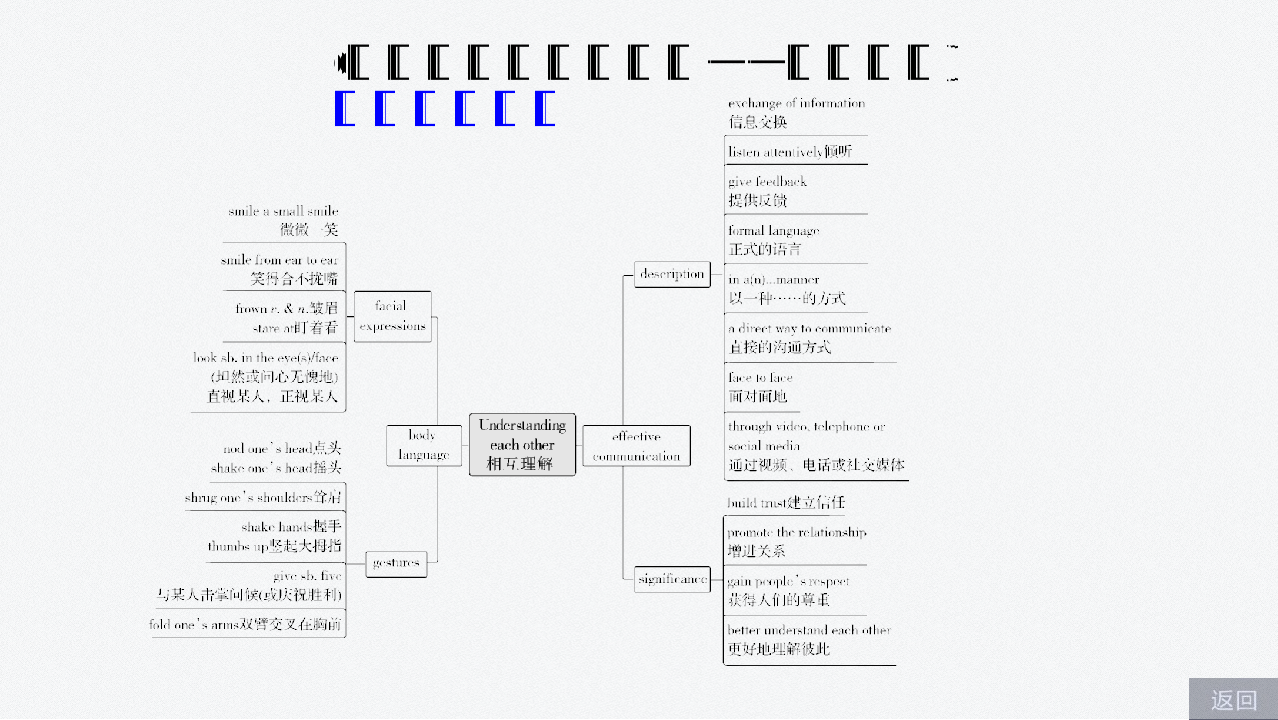
(主题语境:人与社会——相互理解)
【话题词汇】
基础知识 自测落实
单元词句背诵
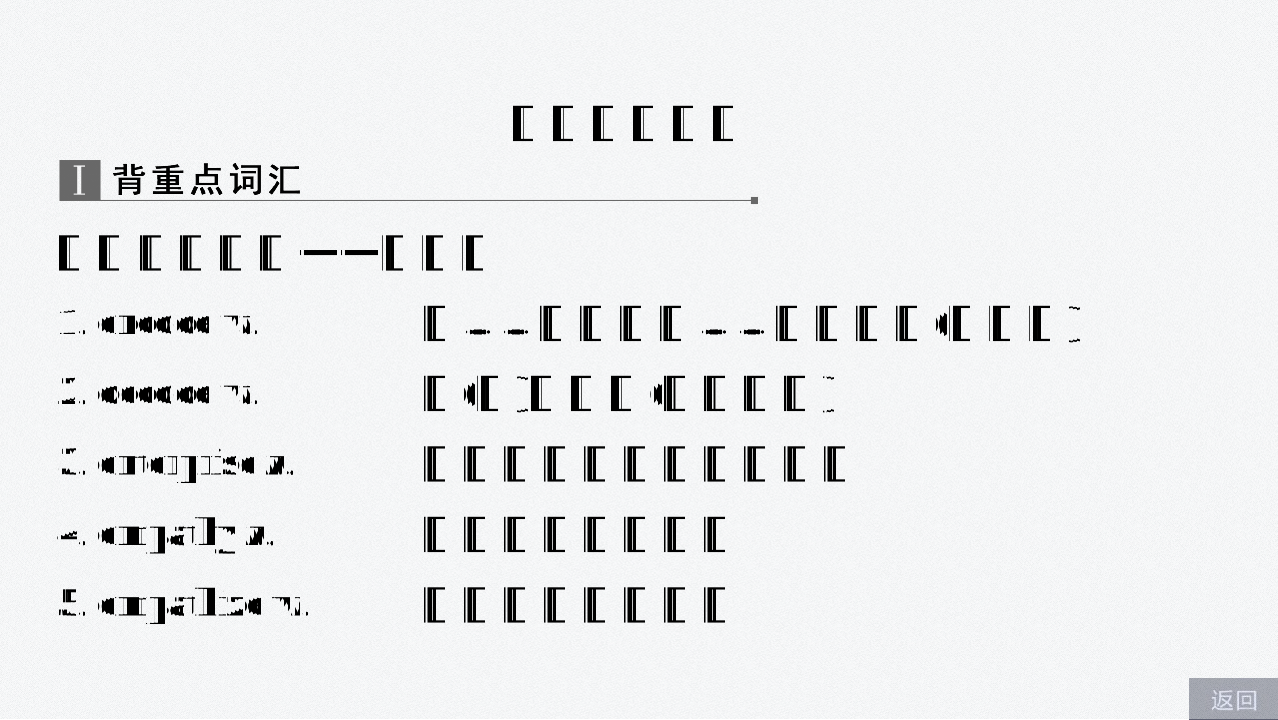
一、阅读词汇——知其意
1. encode vt. 把……编码;把……译成电码(或密码)
2. decode vt. 解(码),破译(尤指密码)
3. enterprise n. 公司,企业;规划,事业
4. empathy n. 同感,共鸣,同情
5. empathize vi. 有同感,产生共鸣
6. kindergarten n. 学前班;幼儿园
7. bacon n. 咸猪肉,熏猪肉
8. tank n. 坦克;(贮放液体或气体的)罐
9. integrate vt.& vi. (使)合并;(使)加入
10. bilingual adj. 会说两种语言的;用两种语言(写)的
11. intervention n. 干涉行为,干预
12. tribe n. 部落
13. Germanic adj. 日耳曼语的;德国的
14. linguist n. 语言学家,通晓数国语言的人
15. canteen n. 食堂,餐厅
二、核心词汇——明其形
1. gentle adj. 温柔的;温和的;柔和的
2. feedback n. 反馈的意见(或信息)
3. obtain vt. 获得,赢得
4. straightforward adj. 坦诚的;简单的
5. friction n. 争执;摩擦;摩擦力
6. clarify vt. 使更清晰易懂,阐明
7. knowledgeable adj. 博学的,有见识的
8. sympathy n. 同情;赞同
9. tone n. 语气,腔调;风格,特色
10. gain vt.& vi. 获得;增进,增长;(从……中)受益
n. 好处,利益
11. gesture n. 手势,姿势;姿态,表示
vt.& vi. 做手势,用手势表示
12. precisely adv. 准确地,恰好地;细心地;正是,确实
13. vocabulary n. 词汇,词汇量
14. somewhat adv. 有点,有几分,稍微
15. correspond vi. 类似于;相一致,符合;通信
16. recite vt. 吟诵;列举
17. accent n. 口音,腔调;重音;着重点,强调
vt. 着重,强调,突出
18. cooperate vi. 合作,协作;协助,配合
19. cite vt. 提及,列举;引用,引述
20. pure adj. 纯净的;完全的
21. sincerely adv. 真诚地,诚实地
22. contest n. 比赛,竞赛;争夺,竞争
vt. 争取赢得;争辩,就……提出异议
三、拓展词汇——通其变
1. react vi.(对……)作出反应;有不良反应,过敏;起化学反应
→reaction n.反应;回应
2. competent adj.足以胜任的,有能力的,称职的→competence n.能
力;胜任;本领
3. suit vt.满足需要;相配,合身 n.套装,西装,西服→suitable adj.
适合的;适宜的
4. negotiate vi.& vt.谈判;商定,达成(协议)→negotiation n.谈
判;磋商
5. fold vt.折叠,对折;包,裹 n.褶,褶层,折叠部分→unfold vt.打
开;呈现
6. approve vt.& vi.赞成;批准,通过(计划、要求等)→approval n.赞
成;认可;批准→disapproval n.不赞成;反对
7. preference n.偏爱;偏爱的事物→prefer vt.更喜欢;选择某事物
(而不选择其他事物)
8. embarrassed adj.窘迫的,尴尬的;拮据的→embarrassing adj.令人
尴尬的→embarrass vt.使窘迫,使尴尬;使困惑;使为难
→embarrassment n.窘迫,难堪;使人为难的人或事物;拮据
9. intention n.计划,意图→intend vt.计划;打算
10. behave vt.& vi.表现得体,有礼貌;表现→behaviour n.行为;举
止;习性
11. tolerate vt.忍受,容忍;容许,允许;能经受→tolerance n.容
忍;忍受→tolerant adj.宽容的;容忍的
12. fluent adj.(尤指外语)流利的,熟练的→fluently adv.流利地;流
畅地→fluency n.流利;流畅
13. oppose vt.反对,抵制;与……对垒→opposed adj.反对的;对立
的→opposition n.反对,反抗
14. reject vt.拒绝接受,不予考虑;不录用;排斥,排异→rejection
n.抛弃;拒绝;被抛弃的东西
15. pessimistic adj.悲观的,悲观主义的→pessimism n.悲观,悲观情
绪;厌世主义
16. tendency n.趋势,趋向;倾向,偏好→tend vi.& vt.趋向;易于;
照顾
17. slip vi.滑倒;滑落;溜;陷入 n.差错;纸条;滑跤→slippery
adj.滑的;狡猾的;不稳定的
1. put yourself in sb.’s shoes处于某人的境地,设身处地
2. account for sth. 是……的说明(或原因);(数量上、
比例上)占
3. approve of 赞成,赞同
4. broaden one’s mind 拓宽视野,开阔眼界
5. function as 起……的作用
6. in response 作为回答,作为反应
7. refer to 参考;指的是
8. be based on 以……为基础
9. share...with... 与……分享……
10. under this circumstance 在这种情况下
11. out of style 过时的
12. for instance 例如
常见结构
1. which引导非限制性定语从句
2. while作并列连词,表示对比
3. no sooner...than...一……就……
4. the+比较级...,the+比较级...
5. 强调句
单元基础默写
Ⅰ.词汇默写
一、核心词汇
1. adj.温柔的;温和的;柔和的
2. n.反馈的意见(或信息)
3. vt.获得,赢得
4. adj.坦诚的;简单的
5. n.争执;摩擦;摩擦力
6. vt.使更清晰易懂,阐明
gentle
feedback
obtain
straightforward
friction
clarify
7. adj.博学的,有见识的
8. n.同情;赞同
9. n.语气,腔调;风格,特色
10. vt.& vi.获得;增进,增长;(从……中)受益 n.好
处,利益
11. n.手势,姿势;姿态,表示 vt.& vi.做手势,用手势
表示
12. adv.准确地,恰好地;细心地;正是,确实
13. n.词汇,词汇量
knowledgeable
sympathy
tone
gain
gesture
precisely
vocabulary
14. adv.有点,有几分,稍微
15. vi.类似于;相一致,符合;通信
16. vt.吟诵;列举
17. n.口音,腔调;重音;着重点,强调
18. vi.合作,协作;协助,配合
19. vt.提及,列举;引用,引述
20. adj.纯净的;完全的
21. adv.真诚地,诚实地
22. n.比赛,竞赛;争夺,竞争 vt.争取赢得;争辩,
就……提出异议
somewhat
correspond
recite
accent
cooperate
cite
pure
sincerely
contest
二、拓展词汇
1. vi.(对……)作出反应;有不良反应,过敏;起化学反应
→ n.反应;回应
2. adj.足以胜任的,有能力的,称职的
→ n.能力;胜任;本领
3. vt.满足需要;相配,合身 n.套装,西装,西服
→ adj.适合的;适宜的
4. vi.& vt.谈判;商定,达成(协议)→ n.
谈判;磋商
react
reaction
competent
competence
suit
suitable
negotiate
negotiation
5. vt.折叠,对折;包,裹 n.褶,褶层,折叠部分
→ vt.打开;呈现
6. vt.& vi.赞成;批准,通过(计划、要求
等)→ n.赞成;认可;批准→ n.不赞
成;反对
7. n.偏爱;偏爱的事物→ vt.更喜欢;选择
某事物(而不选择其他事物)
fold
unfold
approve
approval
disapproval
preference
prefer
8. adj.窘迫的,尴尬的;拮据的→
adj.令人尴尬的→ vt.使窘迫,使尴尬;使困惑;使为
难→ n.窘迫,难堪;使人为难的人或事物;拮据
9. n.计划,意图→ vt.计划;打算
10. vt.& vi.表现得体,有礼貌;表现→ n.
行为;举止;习性
11. vt.忍受,容忍;容许,允许;能经受
→ n.容忍;忍受→ adj.宽容的;容忍的
embarrassed
embarrassing
embarrass
embarrassment
intention
intend
behave
behaviour
tolerate
tolerance
tolerant
12. adj.(尤指外语)流利的,熟练的→ adv.流
利地;流畅地→ n.流利;流畅
13. vt.反对,抵制;与……对垒→ adj.反对
的;对立的→ n.反对,反抗
14. vt.拒绝接受,不予考虑;不录用;排斥,排异
→ n.抛弃;拒绝;被抛弃的东西
15. adj.悲观的,悲观主义的→ n.悲
观,悲观情绪;厌世主义
fluent
fluently
fluency
oppose
opposed
opposition
reject
rejection
pessimistic
pessimism
16. n.趋势,趋向;倾向,偏好→ vi.& vt.趋
向;易于;照顾
17. vi.滑倒;滑落;溜;陷入 n.差错;纸条;滑跤
→ adj.滑的;狡猾的;不稳定的
tendency
tend
slip
slippery
Ⅱ.语块默写
1. 处于某人的境地,设身处地
2. 是……的说明(或原因);(数量上、比例上)占
3. 赞成,赞同
4. 拓宽视野,开阔眼界
5. 起……的作用
6. 作为回答,作为反应
7. 参考;指的是
8. 以……为基础
put yourself in sb.’s shoes
account for sth.
approve of
broaden one’s mind
function as
in response
refer to
be based on
9. 与……分享……
10. 在这种情况下
11. 过时的
12. 例如
share...with...
under this circumstance
out of style
for instance
Ⅲ.课文佳句
1. which引导非限制性定语从句
In response,the receiver sends an encoded message back,
.
作为回应,接收者再发回一条编码信息,这就是所谓的反馈。
which is
referred to as feedback
2. while作并列连词,表示对比
A smile shows you are attentive to the issues being discussed,
with your arms folded can indicate disinterest and create distrust or friction.
微笑表明你对正在讨论的问题很关注,而双臂交叉、目光移开可能
表明你不感兴趣,这样会造成不信任或导致摩擦。
while
looking away
3. no sooner...than...一……就……
it was time to head back home.
我刚开始了解英国人的沟通方式就到要回家的时候了。
No sooner had I begun to understand how British people communicate
than
4. the+比较级...,the+比较级...
,the more it sounds
and even looks like the native language.
一个外来词使用的时间越长,它听起来甚至看起来就越像本土
语言。
The longer a borrowed word has been in use
5. 强调句
novel ideas are spread and
different beliefs are exchanged more conveniently and quickly.
也正是通过那些词,新思想的传播、不同观点的交流得以更加
便捷。
It is also through those words that
基础知识检测
Ⅰ.词性转换
1. (外研B6U5)While Tao’s return to nature was a (react)
to a lifestyle he was opposed to,Thoreau’s was a personal decision to
transform the way he lived.
2. (外研B4U1)With this little joke,Lin was able to make people laugh,while (gentle) telling off the president.
3. (人教B5U2) Studying abroad also helps you to gain a global perspective and improve your general (competent).
reaction
gently
competence
4. (人教B1U1)The school adviser helped me choose the
(suit) ones: maths,English,chemistry,world history,and Chinese.
5. (2023∙浙江1月卷)All speakers are well-known and . (knowledge) in the subject matter.
6. (人教选必一U4) People have a (tend) to lean towards
whatever they are interested in.
suitable
knowledgeable
tendency
7. (外研B4U2)Everyone knows that success rarely happens overnight,
but perhaps not many know that a lot of highly successful writers have
previously faced (reject).
8. (外研B6U4)She always has an immediate answer for any question I
put to her,and even uses my answers to learn more about
my (prefer).
9. (人教B7U1)She felt (embarrass) and quickly told
him to go.
10. (2023∙北京卷)Habit formation is the process by which . (behave) become automatic.
rejection
preferences
embarrassed
behaviours
Ⅱ.短语检测——结合本单元的短语补全句子
1. He could not (解
释离岗之后的时间是如何度过的).
2. (把你自己放在我的位置),and then
perhaps you’ll stop complaining.
3. I don’t (赞成她改变旅
游计划) for the while.
4. If you (拓宽视野,开阔眼界),you will
naturally stop worrying.
account for the time spent away from his post
Put yourself in my shoes
approve of her changing the trip routine
broaden your mind
5. A typical PDA can (充当一个手
机),fax sender,and personal organizer.
6. You can (依靠他) to rise to the occasion,if need
be.
7. The company refused to (与国外
的那家公司谈判).
8. It’s time to (慎重考虑
这件事情).
function as a mobile phone
depend on him
negotiate with the one abroad
give serious consideration to this matter
Ⅲ.句型检测——运用单元句式完成下列句子
1. 有趣的是,音乐越欢快,他们的心率就越快。(the more...,the
more...)
Interestingly, the music was,
their heart rates were.
the more cheerful
the faster
2. 她刚走出屋子,天就开始下雨了。(no sooner...than...)
the house than it began to rain.
No sooner had she stepped out of
3. 当我感到沮丧的时候,我经常选择欣赏小说部分,其中包含了很
多富有想象力的故事。(状语从句的省略)
,I often choose to enjoy the novel part
which includes a lot of imaginative stories.
When feeling depressed
4. 头脑里有了那个想法,普鲁伊特想出了一个计划,并把它发布在
社区网站上。(with复合结构)
,Pruitt came up with a plan and posted
it on the community website.
With that thought in mind
核心考点 互动探究
1. suit n.西装,西服,套装 vt.满足需要;相配,合身
①It is difficult to find a place (suit) for a picnic.
②We need to find someone suitable (replace) Mary.
③It’s difficult to find a time that is suitable everybody.
④首先,因为我擅长英语口语,我认为我适合这份工作。(申请信)
Firstly,because I’m good at spoken English,I think
.
suitable
to replace
for
I am suitable
for this job
(1)suit sb.适合某人
suit one’s needs符合某人的需要
(2)suitable adj.适宜的,合适的
be suitable for适合于……
be suitable to do sth.适合做某事
2. approve vi.& vt.赞成;同意;批准;通过(计划、要求等)(agree
officially to)
①She doesn’t approve of me (leave) school this year.
②I would appreciate it if my application could get your
(approve).
③Several people nodded approval.
④Most people supported the plan,while some others
(approve) of it.
leaving
approval
in
disapproved
→ the party tomorrow.(approve)
→ the party tomorrow.(disapprove)
→ the party tomorrow.(object to)
→ the party tomorrow.(be opposed to)
I don’t approve of his attending
I disapprove of his attending
I object to his attending
I am opposed to his attending
⑤我不同意他参加明天的晚会。
(1)approve sth.批准/通过某事
approve of (sb./sb.’s) doing sth.赞同/同意(某人)做某事
(2)approval n.赞成;批准
give one’s approval to同意;批准
without the approval of未经……许可
in approval同意
(3)disapprove vi.& vt.不赞成;反对
disapproval n.不赞成;反对
3. sympathy n.同情(the feeling of being sorry for sb.);赞同 (approval)
①We looked at the child sympathy and didn’t know what to
do next.
②While I have some sympathy them,I don’t have adequate
money to help them.
③我坚信他会同意你的意见的。(发表观点)
(同位语从句;sympathy)
with
for
I hold the firm belief that he will be in sympathy with your proposal.
(1)feel/have sympathy for sb.同情某人
with sympathy同情地
out of sympathy出于同情
in sympathy with 赞成;支持
(2)sympathetic adj.同情的;有同情心的
4. gain vt.& vi.获得,得到(obtain);增进,增长;到达;(从……
中)受益 n.获利(get benefit from),利益,增加;好处,收获
① (gain) a deeper understanding of politics for his writing,he took a one-year job in the city government.
②She hopes to gain experience working abroad for a year.
③通过这次志愿者活动,我不仅开阔了视野,而且获得了一些宝贵
的经验。(活动介绍)
From this voluntary activity,
.
To gain
by/from
not only did I broaden my horizons but
also I gained valuable experience
(1)gain weight增加体重
gain sth.by/from...从……中获益
gain others’ respect/trust 获得别人的尊敬/信任
(2)No pains,no gains.不劳无获。
5. correspond vi.相一致 (be in agreement);符合;类似于,相当于
(match;be nearly equal to);通信 (exchange letters)
①The marks on the products don’t correspond the goods I
purchased on the Internet.
②When corresponding your foreign friends,you should give
them your detailed address.
③It’s a coincidence that your account of events corresponds with hers.
→It’s a coincidence that your account of events
hers.
to/with
with
is in correspondence
with
(1)correspond to与……相一致
correspond with符合;一致;与……通信
(2)correspondence n.通信;信件;一致;相似;相关
in correspondence with与……一致;与……有通信联系
corresponding adj.与……一致的;相当的
correspondingly adv.相应地;相对地
6. behave vt.& vi.表现 (act,conduct);表现得体,有礼貌
①They behaved badly the guests,which made us
very disappointed.
②Students should be encouraged to develop good habits and better
behave (oneself).
③就我个人而言,我们大家都应该注意在公共场所的举止。
As far as I’m concerned,all of us
.
to/towards
themselves
should mind our behaviour in
public places
(1)behave well/badly to/towards sb.对待某人有礼貌/没礼貌
behave oneself表现得体
(2)behaviour n.行为,举止,态度
well-behaved adj.表现好的
badly-behaved adj.表现差的
7. tolerate vt.忍受 (stand,endure),容忍;包容;容许;允许;能
经受
① If you can’t tolerate (carry) rotten potatoes for one
week,how can you imagine working in such an environment?
② People who have personality traits that are connected with
competitiveness and low upset (tolerate) are much
more likely to get angry.
carrying
tolerance
③ Some online users have praised the map for clearly displaying
whether certain areas are tolerant children’s playful
voices.
④ I would tell my grandmother about all the crazy things I’d been
doing and she would just smile (tolerant).
⑤中国的父母不能容许他们的孩子在就餐时用筷子敲碗。(中国
礼仪)
Chinese parents won’t with
chopsticks when having dinner.
of/towards
tolerantly
tolerate their children knocking bowls
(1)容忍/忍受(某人)做某事
bear sb.doing/to do sth.忍受/容忍某人做某事
(2)tolerance n.宽容;忍耐力
tolerant adj.宽容的;能耐……的
be tolerant of/tourards对……容忍/宽容
(3)put up with忍受;容忍
8. competent adj.足以胜任的;有能力的,称职的
①Most students have good (competent) in English
communication.
②The government performed (competent) in the face
of multiple challenges.
③Most adults do not feel competent (deal) with a medical
emergency involving a child.
competence
competently
to deal
(1)be competent to do sth.有能力做某事
(2)competence n.能力;胜任
competence in (doing) sth.做某事的能力
(3)incompetent adj.不胜任的;不称职的
competently adv.出色地
9. negotiate vt.& vi.谈判;商定,达成(协议)
①The representatives are negotiating the factory managers at
the meeting room.
②The issue is still negotiation.
③Do you take an opening position in a (negotiate)
which differs from the eventual goal you are heading for?
with
under
negotiation
(1)negotiate with sb.与某人谈判
(2)negotiation n.谈判;磋商;协商
under negotiation在协商中
10. embarrassed adj.窘迫的,尴尬的;拮据的
①Her husband was with her,but there was rubbish everywhere and
the woman was (embarrass) and clearly in shock.
② (2022·全国甲卷)Don’t get caught making an
(embarrass) mistake at a restaurant.
③ She felt a bit embarrassed undressing in front of the
doctor.
④Quality counts less than attitude and effort—even a stupid joke can
relieve others of risk and (embarrass).
⑤ 令他十分尴尬的是,他又一次考试没及格。(情绪描写)
,he failed the exam again.
embarrassed
embarrassing
about/at
embarrassment
Much to his embarrassment
(1)be embarrassed to do sth.对做某事感到尴尬
be embarrassed at/about sth.因……尴尬
(2)embarrassment n.窘迫;愧疚;难堪
to one’s embarrassment令某人尴尬的是
(3)embarrass vt.使尴尬,使窘迫
embarrassing adj.使人害羞的,使人难堪的
11. account for sth.是……的说明(或原因);(数量上、比例上)占
①In modern man,the brain accounts about 2%-3% of total
body weight,but it consumes 25% of the body’s energy when the body
is at rest.
②The flight was postponed account of bad weather.
③I sincerely hope that you will consider my suggestions.I’m looking
forward to hearing from you as soon as possible.(建议信)
→I sincerely hope that you will
.I’m looking forward to hearing from you as soon
as possible.
for
on
take my suggestions into account/
consideration
[误区释疑] on no account等“否定意义”的词或短语放在句首时
常用部分倒装,具有类似用法的还有:by no means,in no way,in
no case,on no condition,under no circumstances,at no time等。
on account of (=because of)由于;因为
on no account (=in no way)决不
考虑……
12. [教材原句] No sooner had I begun to understand how British
people communicate than it was time to head back home.我刚开始
了解英国人的沟通方式就到要回家的时候了。
①(2021·全国乙卷)As soon as I saw the crowd of people down there,
my heart beat so fast that I was unable to say a single word.
→
(no sooner...than...
的正常语序)
→
(倒装句)
I had no sooner seen the crowd of people down there than my heart
beat so fast that I was unable to say a single word.
No sooner had I seen the crowd of people down there than my heart
beat so fast that I was unable to say a single word.
②她刚出我家门口,我就收到了来自两个女人的电子邮件,她们的
孩子在我儿子的托儿所上学,她们认出了我的脸。(细节描写)
whose kids go to my son’s nursery and who
recognized my face.
No sooner/Hardly/Scarcely had she left my doorstep than/when I had
emails from two women
no sooner...than...刚……就……
(1)no sooner...than...引导时间状语从句,主句用过去完成时,than后
面的从句用一般过去时。
(2)no sooner置于复合句首时,表示强调,主句要用部分倒装。
(3)与这个短语用法类似的还有 hardly...when...;scarcely...when...。
跟踪检测 运用提升
层级一
核心知识精准练
过基础
维度1 单句语法填空
1. (北师B6U7)To get ahead in the world and lead a happy successful
life requires getting on well with other people and being able to
understand and react situations in the best way possible.
to
2. (外研B7U4)What really matters is a sound business plan,access to
capital,and good management and (negotiate) skills.
3. (2023∙全国乙卷)Many of these species (物种) are not ideally suited
to (grow) outside in the UK,especially in the winter.
negotiating
growing
4. (人教B4U4)In other countries,by contrast,eye contact is not
always approved .
5. (北师B4U2)I’d prefer (have) three or four outstanding
years of winning stuff than having ten years of being average.
of
to have
6. (外研B7U5)Through comparison,he found that the locations of the
117 known Maya cities correspond the positions of the stars.
7. (2023∙新课标Ⅰ卷)For instance,the average obtained from the
estimates of four discussion groups of five was significantly more
accurate than the average obtained 20 independent
individuals.
to
from
8. (2023∙全国甲卷)It was neighbor called Mario,coming to bring us a
box containing some tomatoes and a bottle of wine.It was very
nice gesture for him to make.
9. (2023∙北京卷)While a routine involves repeated . (behave),it’s not necessarily performed in response to a deep-rooted urge,as a habit is.
a
behaviour
10. (人教B2U3)He or she may also post (embarrass)
photos and information about those people.
embarrassing
维度2 熟词生义
1. suit
A. 相符合,相一致 B. 相当;相类似 C. 通信
(1)I was stopped by an old man in a blue suit at the gate of the
factory.
(2)If you want to go to the bookstore next weekend,that suits
me fine.
A
B
2. correspond
A. (一套)衣服 B. 对某人方便;合……的意
(1)The job of a British lecturer corresponds roughly to that of an
American associate professor.
(2)Your account of the events does not correspond with what we have
heard.
(3)Although they parted,the two friends always corresponded with
one another to get comfort.
B
A
C
3. The longer this situation obtains,the more extensive the problems
become.
4. Don’t worry.My watch gains.We still have time.
5. News on new home sales is brighter,showing a gain of nearly 8%
in June.
vt.持续;存在
v.(钟表)走快
n.增加
维度3 完成句子/一句多译/句式升级
1. 在日常生活中,他教育我要表现得体,尤其是在公共场合。(behave)
In daily life,he educates me to
.
behave myself especially in
public
2. 如果您能批准我们的提议,我们将不胜感激。(感谢信)
①We would be grateful .(approve)
②We would be grateful . (approval)
if you could approve our proposal
if you could give approval to our proposal
3. 我刚到公共汽车站,汽车就开了。
① ,the bus started.(as soon as)
② the bus started. (hardly...when...)
③ the bus started.
(no sooner...than...)
As soon as I got to the bus stop
Hardly had I got to the bus stop when
No sooner had I got to the bus stop than
4. Children tend to behave well in the presence of strangers.
→Children in the presence of
strangers.(tendency)
5. He had no sooner arrived in Beijing than he came to visit us,which
accounted for my appreciation.
→ ,
which accounted for my appreciation.(倒装句)
have a tendency to behave well
No sooner had he arrived in Beijing than he came to visit us
层级二
必备素养提升练
提能力
提能1 应用文写作
根据提示,运用本单元的词汇、短语及句式或使用词汇的正确
形式完成下面的语篇。
假定你是李华,你的朋友Peter听说你去参加了志愿者工作,来
信询问相关情况。请你给他写一封回信,要点如下:
1. 写信的目的;2.介绍志愿者工作;3.表达愿望。
根据提示以及要求补全短文(无提示处请填写适当的过渡词
汇:as far as I’m concerned,otherwise)
Dear Peter,
I’m glad to have received your letter,saying you are concerned
about my voluntary work.Now I give you a brief introduction.
① (几天前我去了
一个遥远的村庄) where I participated in a voluntary activity.
② ,I would have gone to your anniversary ceremony.
③
(我用了几天的时间适应了生活在这个山村).
④ ,⑤
(做志愿者工作帮助那些需要
帮助的人很荣幸;it作形式主语).It is the voluntary work that helps
me live my life to the fullest.
The other day,I went to a remote village
Otherwise
It took me several days to adjust (myself) to living in the
mountainous village
As far as I’m concerned
it is a privilege/an honour to do
voluntary work to help those in need
⑥ (我渴望收到你的来信) soon.
Yours,
Li Hua
I am dying to hear from you
提能2 单元读写结合
[教材续写语料]
情
感
描
写 gentle adj.温柔的;温和的;柔和的
competent adj.足以胜任的,有能力的,称职的
knowledgeable adj.博学的,有见识的
sympathy n.同情;赞同
情
感
描
写 embarrassed adj.窘迫的,尴尬的;拮据的
fluent adj.(尤指外语)流利的,熟练的
pessimistic adj.悲观的,悲观主义的
sincerely adv.真诚地,诚实地
动作
描写 obtain vt.获得,赢得
gain vt.& vi.获得;增进,增长;(从……中)受益
gesture vt.& vi.做手势,用手势示意
recite vt.吟诵;列举
slip vi.滑倒;滑落;溜;陷入
环境
描写 kindergarten n.学前班;幼儿园
contest n.比赛,竞赛;争夺,竞争
[续写语料运用]
请从以上语料中选择合适的词汇,完成以下语段。然后核对答
案并背诵该语段。
一天,我们幼儿园举行了一场演讲比赛。参赛者是一些可爱的
小男孩和小女孩。第一个走上舞台的是一个知识渊博、很有能力的
女孩。她背诵了一首诗,清晰流畅,充满了情感,赢得了热烈的掌
声。就在那时,她滑了一下,摔倒了。她感到尴尬和悲观,甚至想
放弃。我向她做了一个手势,鼓励她继续下去。令我松了一口气的
是,她站起来成功地完成了她的表演。
One day a speech contest was held in our kindergarten.The
competitors are some lovely little boys and girls.
.She recited
a poem clearly,fluently and full of emotion,
.Just at that moment,she slipped and fell down.She
,even wanted to give up.I
,encouraging her to go on.To my relief,she stood up and
finished her performance successfully.
The first one to come
onto the stage was a knowledgeable and competent girl
gaining warm
applause
felt
embarrassed and pessimistic
gave her
a gesture
课时作业 巩固提升
Ⅰ.阅读理解
A
(2023·广西贵港统考三模)Think of the last time you disagreed
with another person.Maybe you argued with your brother over what to
watch on TV. Or perhaps you tried to convince grownups that ice cream
makes a better dinner than vegetables.How did your disagreement end?
Were you able to see the issue from the other person’s viewpoint?
In many situations,disagreements are unavoidable.They’re part of
life.In fact,many people look on them as opportunities to learn.They
do so by trying to understand where both sides are coming from.
How can you understand both sides of an issue? Often,it’s best
to start by asking questions.Questions help us learn about the world
around us.The right questions can also help us learn about other people.In a disagreement,asking for more information can help you learn about a person’s viewpoint.Therefore,we might as well see something from the perspective (视角) of others.
When seeking to understand both sides of an issue,it’s important
to know the difference between facts and opinions.Remember,facts are
based on true information.Opinions can change from person to person. Paying attention to facts can stop prejudice from taking over in a
disagreement.This can help everyone involved see both sides of the issue.
Maybe you’re wondering why it’s important to understand both
sides of an issue,anyway.After all,don’t most people just want to
prove that their side is right? Often,that’s true.However,
understanding the whole issue can lead to both sides working together.
Disagreements may be uncomfortable at first.However,when
both sides truly try to understand each other,they often find they have
more in common than they thought.The next time you disagree with
other people,try asking them questions about their viewpoint.You will
surely learn a lot from doing so.
体裁:说明文
主题语境:人与社会——人际关系——分歧
【语篇解读】 本文是一篇说明文。文章主要讲述了生活中分
歧是不可避免的,要学会理解对方,站在对方的角度考虑问题才能
解决分歧。
1. What does the underlined word “so” refer to in paragraph 2?
A. Ignoring chances to learn.
B. Knowing more about themselves.
C. Shaping a right way to see the world.
D. Making the disagreements a chance to learn.
答案:D
1
2
3
4
5
6
7
8
词义猜测题。根据第二段前三句可知,在许多情况下,分歧是
不可避免的。它们是生活的一部分。事实上,许多人将它们视
为学习的机会。由此可知,画线词所在的句意为“他们这样做
事因为试图了解双方的立场”,so指上文提到的“把分歧当做
学习的机会”的做法。
1
2
3
4
5
6
7
8
2. According to the text,how can we solve a disagreement?
A. By changing the other’s opinion.
B. By trying to stand in others’ shoes.
C. By making both sides comfortable.
D. By telling facts and opinions apart.
答案:B
1
2
3
4
5
6
7
8
细节理解题。根据文章第一段最后两句,最后一段前两句可知,分
歧起初可能会让人感到不舒服。然而,当双方真正试图相互理解
时,他们往往会发现他们的共同点比他们想象的要多。由此可知,
想要解决分歧,双方都要真正地去理解对方,站在对方的立场上想
问题。
1
2
3
4
5
6
7
8
3. How does the author support his view?
A. By reasoning.
B. By making comparison.
C. By listing data.
D. By raising questions.
答案:A
1
2
3
4
5
6
7
8
推理判断题。根据第三段第一句可知,你如何理解问题的两面?通
常,最好从提问开始。第四段中第一句可知,在寻求了解问题的双
方时,重要的是要了解事实和观点之间的区别。最后一段中前两句
可知,分歧起初可能会让人感到不舒服。然而,当双方真正试图相
互理解时,他们往往会发现他们的共同点比他们想象的要多。由此
可知,作者认为要想解决分歧,首先从问问题开始,问题具有两面
性,通过一步步的讲解推理,认为解决分歧必须去了解对方,站在
对方的角度考虑问题。因此,作者通过推理来支持他的观点。
1
2
3
4
5
6
7
8
4. What’s the the best title of the text?
A. Disagreements Are Unavoidable.
B. We Should Avoid Disagreements.
C. Let Disagreements Function Well.
D. Disagreements Lead to Bad Result.
答案:C
1
2
3
4
5
6
7
8
标题归纳题。本篇文章主要讲了当人们在处理分歧时,应该如何看
待和处理它们,通过试图了解双方的观点和分辨事实和观点来寻求
解决的方法,因为这可以帮助人们更有效地探索可能的解决方案,
并且更有可能使双方的利益得到满足。因此,“让分歧得到很好的
运用”描述了文章的主题。
1
2
3
4
5
6
7
8
B
(2023·河北保定二模)The English language is constantly evolving
(演变),and there are a great number of words out there that don’t
mean what they used to.We’re talking about common words that you
use every day.We take them for granted,but at some point in history,
their meanings totally changed,and they all originally meant
something much different.
Generally speaking,the word “nice” is one with good
meanings.However,back in the late 12th century,if someone said
you were “nice”,it was far from nice.Way back when,“nice”
was used to mean “foolish” and “stupid”.Later on in the 13th
century,“nice” came to mean “shy”,and during the 14th
century,it even meant “being careful”.But finally in the 18th
century,it changed to the kinder definition we know today,and ever
since then,people have been using it in a popular way.
All of us get sad every now and then.It’s a normal part of life.A loved one passes away,we get overlooked for that big promotion at work,or the grocery store is out of your favorite flavor of Hawaiian Punch.These are all things that can make us very sad.However,once upon a time,“sad” had a very different definition.Back in the 1300s,it was the perfect word if you’d eaten too much food at dinner.Through the years,the definition of “sad” changed to “heavy” and then “tired”,all before evolving into the word we use today.
“Awful” is perhaps the one word on this list that should have
stuck with its original meaning.While today it means “bad” or
“terrible”,“awful” used to mean “awe-inspiring” or “full of
awe”.In other words,if something was “awful”,then it was
worthy of respect or even fear.However,over the years,“awful”
has come to have a completely opposite meaning.
体裁:说明文
主题语境:人与社会——语言学习——英语中有很多单词的意思
和以前不一样
【语篇解读】 本文是一篇说明文,文章主要以三个单词为例
说明英语中有很多单词的意思和以前不一样。
5. How many examples are given to support the topic of this text?
A. 3. B. 4.
C. 5. D. 6.
答案:A
1
2
3
4
5
6
7
8
细节理解题。根据文章内容可知,第二段至第四段分别以单词
“nice”“sad”和“awful”三个单词为例说明单词含义发生了
改变。
1
2
3
4
5
6
7
8
6. What did “nice” mean in the 14th century?
A. Stupid. B. Foolish.
C. Being careful. D. Terrible.
答案:C
1
2
3
4
5
6
7
8
细节理解题。根据第二段中“Later on in the 13th century,‘nice’
came to mean ‘shy’,and during the 14th century,it even meant
‘being careful’”.可知,“nice”在14世纪时表示“小心”。
1
2
3
4
5
6
7
8
7. If you’d eaten too much at dinner,which word did you use in the
14th century?
A. Nice. B. Sad.
C. Awful. D. Heavy.
答案:B
1
2
3
4
5
6
7
8
细节理解题。根据第三段中“Back in the 1300s,it was the perfect
word if you’d eaten too much food at dinner.”可知,在14世纪时,如
果你晚饭吃得太多,可以使用“sad”这个单词。
1
2
3
4
5
6
7
8
8. Which is the most suitable title for the text?
A. Words That Originally Meant Something Different
B. Words with Opposite Meanings
C. Languages Seldom Change in History
D. Don’t Take the Meanings of Words for Granted
答案:A
1
2
3
4
5
6
7
8
标题归纳题。根据文章内容,结合第一段中“The English language
is constantly evolving,and there are a great number of words out there
that don’t mean what they used to.”可知,文章主要以三个单词为例
说明英语中有很多单词的意思和以前不一样,A项“与原来意思不
同的单词”最适合作文章标题。
1
2
3
4
5
6
7
8
Ⅱ.阅读七选五
体裁:说明文
主题语境:人与社会——语言学习——肢体语言
【语篇解读】 本文是一篇说明文。文章主要内容是说:肢体
语言可以改善你的演讲。
(2023·广东清远模拟)
Body Language can Improve Your Presentation
When preparing for an important job interview or presentation,
you might worry about finding the perfect words or the most impressive
graphics for your slides.While it’s important to use words and visuals
effectively,don’t make the mistake of ignoring the messages your
body is sending.
Look me in the eyes
1 Some people think that if others refuse to look them in the
eye,they must be lying.However,in some cultures,young people
are taught that it’s rude to look directly at someone older or in a position
of authority so be careful not to make assumptions.Similarly,those
who are lying might maintain eye contact for an unnaturally long time in
an attempt to convince you that they are being truthful.
1
2
3
4
5
1.
A. No barriers
B. Hide your nerves
C. Eye contact,or lack of it,can be misleading.
D. But what about your audience?
E. Face-to-face communication is conveyed through gestures,facial
expressions and body posture.
F. Smiling sends chemical signals to your brain which help to relax you.
G. This activity involves them in your talk by getting them to participate
and make decisions.
答案:C
1
2
3
4
5
根据第二段的主题句“Look me in the eyes (看着我的眼睛)”可知,
空格处的句子应该和眼神交流有关;根据空格后的句子可知,是否
应该有眼神的交流的选择和其意义在不同的背景和情况下是不一样
的。所以把C项填入空格处,和下文是顺承关系,下文的内容是对
C项一句的解释,所以C项填入空格处符合语境。
1
2
3
4
5
Walking tall
The way you stand can make all the difference to the way people
perceive you.You may not feel especially confident before a presentation or interview so take a few moments to compose yourself both physically and mentally before entering the room. 2 Likewise,straightening your back and shoulders and standing with your feet firmly apart make you appear more self-confident.Good posture also releases hormones into your body which reinforce the impression that you are in control and know what you are talking about.
2.
1
2
3
4
5
A. No barriers
B. Hide your nerves
C. Eye contact,or lack of it,can be misleading.
D. But what about your audience?
E. Face-to-face communication is conveyed through gestures,facial
expressions and body posture.
F. Smiling sends chemical signals to your brain which help to relax you.
G. This activity involves them in your talk by getting them to participate
and make decisions.
答案:F
1
2
3
4
5
根据空格后的句子“Likewise,straightening your back and
shoulders and standing with your feet firmly apart make you
appear more self-confident.”可知,空格处的句子也应该是说
你的肢体语言让你看起来自信和放松,所以F项填入空格处和下
文是顺承关系,符合语境。
1
2
3
4
5
3
3.
1
2
3
4
5
Another common protective gesture is folded arms.They literally form a barrier between people and you might find yourself doing it when you feel nervous or uncomfortable.You should certainly avoid folding your arms when speaking in public. 4 If they are watching you with crossed arms,don’t panic. There could be a number of reasons for this; they might be cold or simply want to comfort themselves because they are feeling anxious or uneasy.One way of removing this “barrier” between you and them is to ask for a show of hands. 5 .
A. No barriers
B. Hide your nerves
C. Eye contact,or lack of it,can be misleading.
D. But what about your audience?
E. Face-to-face communication is conveyed through gestures,facial
expressions and body posture.
F. Smiling sends chemical signals to your brain which help to relax you.
G. This activity involves them in your talk by getting them to participate
and make decisions.
答案:A
1
2
3
4
5
空格处的句子是最后一段的主题句。根据最后一段的前三句和倒数
第二句可知,最后一段主要是告诉人们消除肢体语言中存在的障
碍。所以A项“No barriers(没有障碍)”填入空格处作为主题句符合
语境。
1
2
3
4
5
4.
1
2
3
4
5
3
Another common protective gesture is folded arms.They literally form a barrier between people and you might find yourself doing it when you feel nervous or uncomfortable.You should certainly avoid folding your arms when speaking in public. 4 If they are watching you with crossed arms,don’t panic. There could be a number of reasons for this; they might be cold or simply want to comfort themselves because they are feeling anxious or uneasy.One way of removing this “barrier” between you and them is to ask for a show of hands. 5 .
A. No barriers
B. Hide your nerves
C. Eye contact,or lack of it,can be misleading.
D. But what about your audience?
E. Face-to-face communication is conveyed through gestures,facial
expressions and body posture.
F. Smiling sends chemical signals to your brain which help to relax you.
G. This activity involves them in your talk by getting them to participate
and make decisions.
答案:D
1
2
3
4
5
根据空格前的句子“You should certainly avoid folding your arms
when speaking in public.”和空格后的句子“If they are watching you
with crossed arms,don’t panic.”可知,空格后句中的they应该指的
是“听你讲话的人”,同时,空格处的句子应该提到代词they所代
指的词,所以D项填入空格处符合语境,代词they指的是D项中的
your audience。
1
2
3
4
5
5.
1
2
3
4
5
3
Another common protective gesture is folded arms.They literally form a barrier between people and you might find yourself doing it when you feel nervous or uncomfortable.You should certainly avoid folding your arms when speaking in public. 4 If they are watching you with crossed arms,don’t panic. There could be a number of reasons for this; they might be cold or simply want to comfort themselves because they are feeling anxious or uneasy.One way of removing this “barrier” between you and them is to ask for a show of hands. 5 .
A. No barriers
B. Hide your nerves
C. Eye contact,or lack of it,can be misleading.
D. But what about your audience?
E. Face-to-face communication is conveyed through gestures,facial
expressions and body posture.
F. Smiling sends chemical signals to your brain which help to relax you.
G. This activity involves them in your talk by getting them to participate
and make decisions.
答案:G
1
2
3
4
5
根据空格前的“One way of removing this ‘barrier’ between you and
them is to ask for a show of hands.”可知,G项“This activity
involves them in your talk by getting them to participate and make
decisions.”中的this activity就是指的空格前的a show of hands。
1
2
3
4
5
Ⅲ.完形填空
(2023·辽宁鞍山五校联考) My dad was a serious amateur (业余
的) sailor.He and his friend Chuck 1 the North American
Championship,sailing the beautiful wooden Dragons.One year they
even won the 2 to go to the Olympics.
Dad didn’t become 3 overnight.He had to work at his skill.As
a kid,in that first summer he had his own small sailboat,he 4 in
all the races in the bay and came in last every time.
At the end of the season,when awards were being 5 ,something happened.An elderly lady,who had watched Dad’s slow but steady 6 ,stepped out of her house.She generously
7 a prize made especially for him.“The Hope Cup,”she said.No other award could match the promise of hope—a quality fixed in my dad and 8 us.
As a parent,he was a better sailing 9 .How well I remember
him taking me out in our boat,the wind still 10 ,the water
smooth in the morning hours.“Where do you feel the wind coming
from?”he asked.“Look at the flags and they’ll show the 11 in
which it is blowing.However,every good 12 learns how to feel
it.”
“Now,” he said,“look at the sail.”If the sail 13 back
and forth,I needed to pull it in.If the wind was behind us,I was to let
out the sail.Since then,sailing has been 14 to me.I’ve learned that
we can sail 15 as long as we keep track of the wind.
【语篇解读】 作者的父亲是一个严肃的业余航海者,虽然经
历过失败,但是坚持让他最终获得了成功。
1. A. lost B. gained
C. challenged D. changed
答案:B
根据下文的“One year they...the Olympics.”和语境可知,作者的父
亲和朋友Chuck应该是划船技术好,获得过奖项,才有了参加奥运
会的机会。
1
2
3
4
5
6
7
8
9
10
11
12
13
14
15
2. A. opportunity B. game
C. fame D. trust
答案:A
参见上题解析。
1
2
3
4
5
6
7
8
9
10
11
12
13
14
15
3. A. helpful B. cheerful
C. successful D. wealthy
答案:C
根据下文的“He had to work at his skill.”可知,他必须努力提高自
己的技能水平,说明他不是一下子就变得成功(successful)了。
1
2
3
4
5
6
7
8
9
10
11
12
13
14
15
4. A. existed B. competed
C. majored D. succeeded
答案:B
根据空后的came in last every time可知,每次都是最后一名,说明
他参加了很多比赛。
1
2
3
4
5
6
7
8
9
10
11
12
13
14
15
5. A. given out B. made up
C. sent away D. taken down
答案:A
根据下文的内容和常识可推知,此处是指在赛季结束颁奖的时候,
发生了一些事情。
1
2
3
4
5
6
7
8
9
10
11
12
13
14
15
6. A. behavior B. smile
C. gesture D. progress
答案:D
根据上文的“He had to work at his skill.”和下文老太太给了父亲一
个奖杯可推知,设空处表示一位老太太看到了父亲缓慢但稳定的进
步(progress)。
1
2
3
4
5
6
7
8
9
10
11
12
13
14
15
7. A. reached B. offered
C. handed D. transformed
答案:B
根据下文的The Hope Cup可知,是老太太主动提供了奖杯,因此选
offered。transform“使改变形态”。
1
2
3
4
5
6
7
8
9
10
11
12
13
14
15
8. A. left behind B. kept up with
C. passed on to D. put forward to
答案:C
根据下文中父亲教作者航行可推知,这种品质铭刻在作者父亲身
上,并被传递给了作者他们。
1
2
3
4
5
6
7
8
9
10
11
12
13
14
15
9. A. instructor B. player
C. guard D. lifter
答案:A
根据下文内容可知,作者的父亲会指导作者航行。由此可推知,作
为家长,他是个更好的帆船教练(instructor)。
1
2
3
4
5
6
7
8
9
10
11
12
13
14
15
10. A. quiet B. tight C. soft D. fierce
答案:C
根据空后的the water smooth in the morning hours和语境可知,在早
晨,水面很平静,说明风很柔和。
1
2
3
4
5
6
7
8
9
10
11
12
13
14
15
11. A. time B. way
C. strength D. direction
答案:D
根据上文的“Where do you feel the wind coming from?”和语境可
知,此处是这些旗子会显示风吹的方向(direction)。
1
2
3
4
5
6
7
8
9
10
11
12
13
14
15
12. A. swimmer B. sailor
C. author D. learner
答案:B
根据上文的“My dad was a serious amateur sailor.”中的sailor可知,
这里指的是航海者。
1
2
3
4
5
6
7
8
9
10
11
12
13
14
15
13. A. turned B. floated C. shook D. fell
答案:C
根据常识可知,如果帆前后摇晃,人们需要把它拉下来。
shake“摇晃”。
1
2
3
4
5
6
7
8
9
10
11
12
13
14
15
14. A. impossible B. unbelievable
C. valueless D. effortless
答案:D
根据下文的“I’ve learned...of the wind.”和语境可知,只要了解风
向,航行就会变得顺利。故此处指自那之后,航行对作者来说是很
容易的(effortless)。
1
2
3
4
5
6
7
8
9
10
11
12
13
14
15
15. A. smoothly B. happily
C. wildly D. aimlessly
答案:A
参见上题解析。
1
2
3
4
5
6
7
8
9
10
11
12
13
14
15
Ⅳ.语法填空
体裁: 说明文
主题语境:人与社会——历史文化——寓言
【语篇解读】 本文是一篇说明文。文章主要介绍了寓言的形
式在今天仍然具有价值。
(2023·全国甲卷) For thousands of years,people have told fables
(寓言) 1. (teach) a lesson or to pass on wisdom.Fables
were part of the oral tradition of many early cultures,and the well-
known Aesop’s fables date to the 2. (six) century,B. C.
Yet,the form of the fable still has values today,3. . .
Rachel Carson says in “A Fable for Tomorrow.”
1. 考查非谓语动词。根据句意可知,此处表达“来传授知识和智
慧”,所以用不定式作目的状语。
答案:to teach
2. 考查数词。century“世纪”,前面要用序数词形式。
答案:sixth
3. 考查定语从句。引导非限制性定语从句,且有“正如”之意,用
关系代词as引导。
答案:as
Carson uses a simple,direct style common to fable.In fact,her
style and tone (口吻) are seemingly directed at children.“There was
once a town in the heart of America 4. all life seemed to
enjoy peaceful co-existence with its surroundings,” her fable
begins,5. (borrow) some familiar words from many
age-old fables.Behind the simple style,however,is a serious message 6. (intend) for everyone.
4. 考查定语从句。句中先行词为town,在非限制性定语从句作地点
状语,所以用关系副词where引导。
答案:where
5. 考查非谓语动词。句中已有谓语动词,所以用非谓语动词形
式。逻辑主语her fable与borrow之间为主动关系,所以用现在
分词作状语。
答案:borrowing
6. 考查非谓语动词。be intended for“打算为……所用”,在句中作
定语,所以用过去分词形式。
答案:intended
7. (difference) from traditional fables,Carson’s
story ends with an accusation instead of a moral.She warns of the
environmental dangers facing society,and she teaches that people must take responsibility 8. saving their environment.
7. 考查词性转换。be different from“与……不同”,所以用形容词
作状语。
答案:Different
8. 考查介词。take responsibility for对……负责。
答案:for
The themes of traditional fables often deal with simple truths about everyday life.However,Cason’s theme is a more weighty
9. (warn) about environmental destruction.Carson proves that a simple literary form that has been passed down through the ages can still 10. (employ) today to draw attention to
important truths.
9. 考查词性转换。根据句中不定冠词a可知,此处应用可数名词的
单数形式。
答案:warning
10. 考查动词的语态。从句主语a simple literary form与employ之间
为被动关系,所以用被动语态。情态动词can后接动词原形。
答案:be employed。
$$
资源预览图

1

2

3
4

5
6

相关资源
由于学科网是一个信息分享及获取的平台,不确保部分用户上传资料的 来源及知识产权归属。如您发现相关资料侵犯您的合法权益,请联系学科网,我们核实后将及时进行处理。