Unit 3 Period Two Topic Talk & Lesson 1 Part Ⅱ Grammar The Passive(Word教参)-【状元桥·优质课堂】2024-2025学年高中英语必修第一册(北师大版2019)
2024-11-11
|
7页
|
209人阅读
|
6人下载
教辅

资源信息
| 学段 | 高中 |
|---|---|
| 学科 | 英语 |
| 教材版本 | 高中英语北师大版必修第一册 |
| 年级 | 高一 |
| 章节 | Topic Talk,Lesson 1 Spring Festival |
| 类型 | 教案-讲义 |
| 知识点 | - |
| 使用场景 | 同步教学-新授课 |
| 学年 | 2024-2025 |
| 地区(省份) | 全国 |
| 地区(市) | - |
| 地区(区县) | - |
| 文件格式 | DOCX |
| 文件大小 | 197 KB |
| 发布时间 | 2024-11-11 |
| 更新时间 | 2024-11-11 |
| 作者 | 湖北千里万卷教育科技有限责任公司 |
| 品牌系列 | 状元桥·优质课堂·高中同步 |
| 审核时间 | 2024-09-15 |
| 下载链接 | https://m.zxxk.com/soft/47387971.html |
| 价格 | 2.00储值(1储值=1元) |
| 来源 | 学科网 |
内容正文:
Part Ⅱ Grammar—The Passive
感知以下课文原句,完成方框下的小题
1.Spring Festival is highly valued by every Chinese family.
2.First, the house was cleaned from top to bottom.
3.Next, the Chinese character Fu was attached upside down to our front door.
4.It is believed that when Fu is put upside down, happiness arrives.
5.Fireworks were being let off across the city, suddenly lighting up the night sky.
6.Every year, the moment I get on the train, I am surrounded by Shanxi accents…
7.Throughout history, some of the original customs have changed, but the spirit of the festival—the spirit of family—has largely been kept.
8.Most of the important Spring Festival traditions are still being practised by people across the country.
一般现在时的被动语态的构成是:am/is/are+done,如 句1、句4、句6 ;一般过去时的被动语态的构成是:was/were+done,如 句2、句3 ;现在进行时的被动语态的构成是:am/is/are+being+done,如 句8 ;过去进行时的被动语态的构成是:was/were+being+done如 句5 ;现在完成时的被动语态的构成是:have/has been+done,如 句7 。
一、被动语态的概述
语态是动词的一种形式,它表示句子的主语和谓语动词之间的关系。英语的语态有两种:主动语态和被动语态。主动语态表示主语是动作的执行者,被动语态表示主语是动作的承受者。
二、被动语态的构成
被动语态由“助动词be+及物动词的过去分词”构成。助动词be本身无词义,但有人称、数和时态的变化。
三、在下列情况下使用被动语态
1.不知道或者没有必要指出谁是动作的执行者。
►The bridge was built ten years ago.
这座桥是十年前建造的。
2.强调动作的承受者。
►Your plan is considered to be practical.
你的计划被认为是实用的。
3.动作的执行者是无生命的事物。
►The window was blown open by wind.
窗户被风吹开了。
4.在书面语中,特别是在科技报告和新闻报道中,被动语态比主动语态更正式。
►The International Space Station has been built in the Earth's orbit.
国际空间站已经在地球轨道上建成了。
5.习惯用法的需要。这类词常见的有born, determine, devote, seat, dress, situate等。
►She was born into a musical family.
她生于音乐之家。
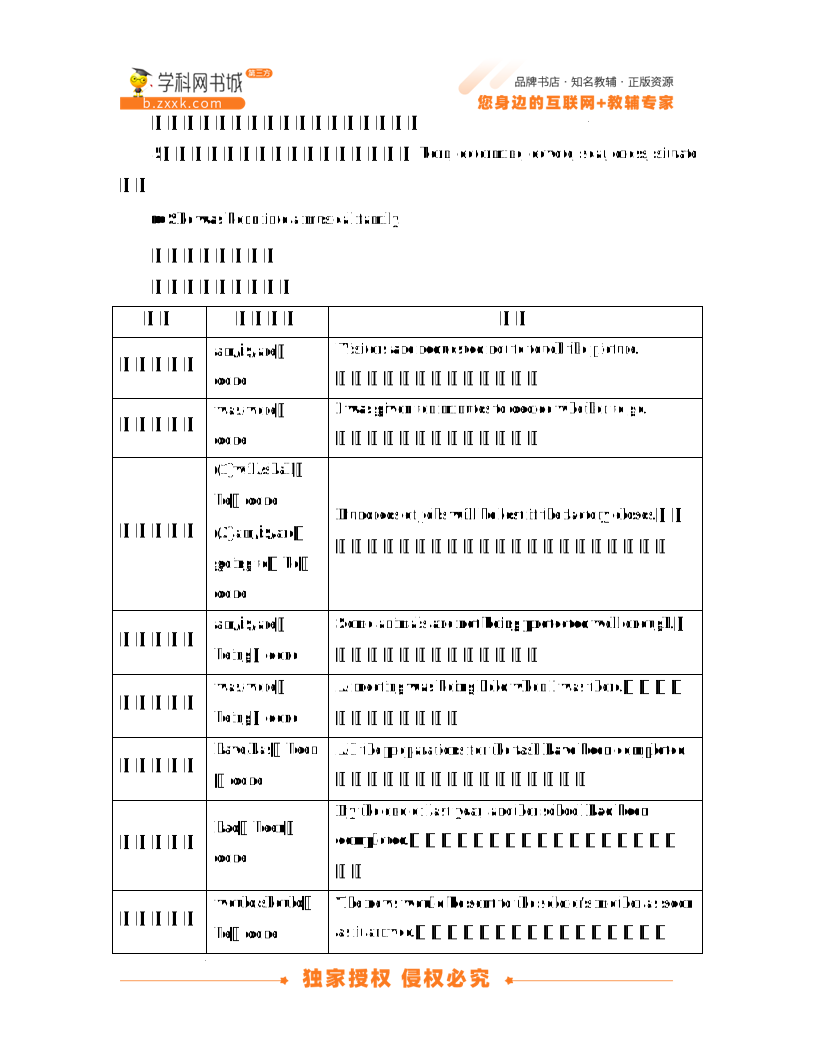
四、被动语态的形式
时态
被动语态
例句
一般现在时
am/is/are+done
Visitors are requested not to touch the picture.
游客被要求不能触摸这幅画。
一般过去时
was/were+done
I was given ten minutes to decide whether to go.
我被给予十分钟决定是否去。
一般将来时
(1)will/shall+be+done
(2)am/is/are+going to+be+done
Hundreds of jobs will be lost if the factory closes.如果工厂关闭的话,数以百计的工作机会将会消失。
现在进行时
am/is/are+being+done
Some animals are not being protected well enough.有些动物没有受到很好的保护。
过去进行时
was/were+being+done
A meeting was being held when I was there.我到那里的时候正在开会。
现在完成时
have/has+been+done
All the preparations for the task have been completed.
这项任务的所有准备工作都完成了。
过去完成时
had+been+done
By the end of last year, another school had been completed.到去年年底为止,另一所学校已经建成了。
过去将来时
would/should+be+done
The news would be sent to the soldier's mother as soon as it arrived.消息一到就会被送达给那位士兵的母亲。
含情态动词
情态动词+be done
Your homework can be handed in tomorrow.
你的作业可以明天上交。
五、以主动形式表示被动意义的情况
1.系动词look, sound, feel, smell, taste, seem, go, prove, turn, stay, become, fall, get, grow, keep等后接形容词或名词构成系表结构。
►The soup smells terrible.
这汤闻起来很糟糕。
2.表示主语的内在特征、性质或状态的动词,如drive, lock, sell, read, wash, dry等,常用主动形式表示被动意义。
►This kind of cloth washes well.
这种布料很好洗。
3.不定式作定语,与前面被修饰的名词或代词构成动宾关系,且不定式的逻辑主语为主句的主语时,不定式用主动形式表示被动含义。
►Attention, please.I have something to say.
请注意,我有事情要说。
4.不定式修饰作表语和宾语补足语的形容词时,如difficult, easy, comfortable, hard, convenient, cheap, expensive等,不定式用主动形式表示被动含义。
►The long sentence is hard to understand.
这个长句子很难理解。
5.动名词的主动形式表示被动意义,相当于不定式的被动式。这类动词有:need, want, require, deserve等。
►The floor needs cleaning.=The floor needs to be cleaned.地板需要打扫了。
6.表示开始、结束、运动的动词,如begin, finish, start, open, close, stop, end, run, move等。
►The shop closes at 7 p.m.every day.
这家商店每天下午七点关门。
六、被动语态与系表结构的区别
当“be+过去分词”作被动语态时表示主语承受的动作;作系表结构时表示主语的特点或所处的状态, be后面的过去分词是表语,相当于形容词。其区分办法如下:
1.如果强调动作或句中有介词by引导出动作的执行者,该句一般为被动语态,否则为系表结构。
►The glass is broken.(系表结构)
►The glass was broken by the boy.(被动语态)
2.如果句中有地点、 频率或时间状语时,一般为被动语态。
►The door is locked.(系表结构)
►The door has already/just been locked.(被动语态)
3.被动语态除用于一般时态和完成时态外,还可以用于其他各种时态,而系表结构中的系动词be只有一般时态和完成时态。
Ⅰ.单句语法填空
1.That company, though small, is pleasant to deal (deal) with.
2.He said that a new school would be built (build) near this village soon.
3.Through a lot of tests, this kind of rope proved (prove) strong at that time.
4.I don't know what is being drawn (draw) by the children in the room now.
5.The fact is that the rules are recited (recite) in the classroom every morning.
6.Oh, I forgot to tell you.The new machine is being tested (test) at the moment.
7.The words will be forgotten (forget) if you don't go over them in several days.
8.The computer's design problem is going to be discussed (discuss) this afternoon.
9.Unfortunately, when I got there, the old house had been pulled (pull) down already.
10.Much useful information about these planets has been collected (collect) since 1971.
Ⅱ.完成句子
1.我们还不知道能否放假。
Whether we can have a holiday remains unknown .
2.据说,现在会议上正在讨论那个问题。
It is said that the question is being discussed at the meeting now.
3.他告诉我,他将被派到那个地方去帮助村民们。
He told me that he would be sent to that place to help the villagers.
4.他将在两天内给儿子做一个飞机模型。
A model plane will be made for his son by him in two days.
5.我不知道到目前为止他受雇于这个工作多久了。
I don't know how long he has been employed at this job so far.
6.当她从美国回来时,她的职位已经被另一个人代替了。
When she returned from the USA, her had been replaced by another person.
学科网(北京)股份有限公司
$$
资源预览图

1

2
3
相关资源
由于学科网是一个信息分享及获取的平台,不确保部分用户上传资料的 来源及知识产权归属。如您发现相关资料侵犯您的合法权益,请联系学科网,我们核实后将及时进行处理。