Unit2 Morals and Virtues 单元词汇+短语+句子+语法知识清单-2024-2025学年高中英语人教版(2019)必修第三册
2024-08-29
|
6页
|
1022人阅读
|
17人下载
普通
资源信息
| 学段 | 高中 |
|---|---|
| 学科 | 英语 |
| 教材版本 | 高中英语人教版必修第三册 |
| 年级 | 高一 |
| 章节 | Unit 2 Morals and Virtues |
| 类型 | 学案-知识清单 |
| 知识点 | - |
| 使用场景 | 同步教学-单元练习 |
| 学年 | 2024-2025 |
| 地区(省份) | 全国 |
| 地区(市) | - |
| 地区(区县) | - |
| 文件格式 | DOCX |
| 文件大小 | 76 KB |
| 发布时间 | 2024-08-29 |
| 更新时间 | 2024-08-29 |
| 作者 | xkw_073682429 |
| 品牌系列 | - |
| 审核时间 | 2024-08-29 |
| 下载链接 | https://m.zxxk.com/soft/47057475.html |
| 价格 | 1.50储值(1储值=1元) |
| 来源 | 学科网 |
内容正文:
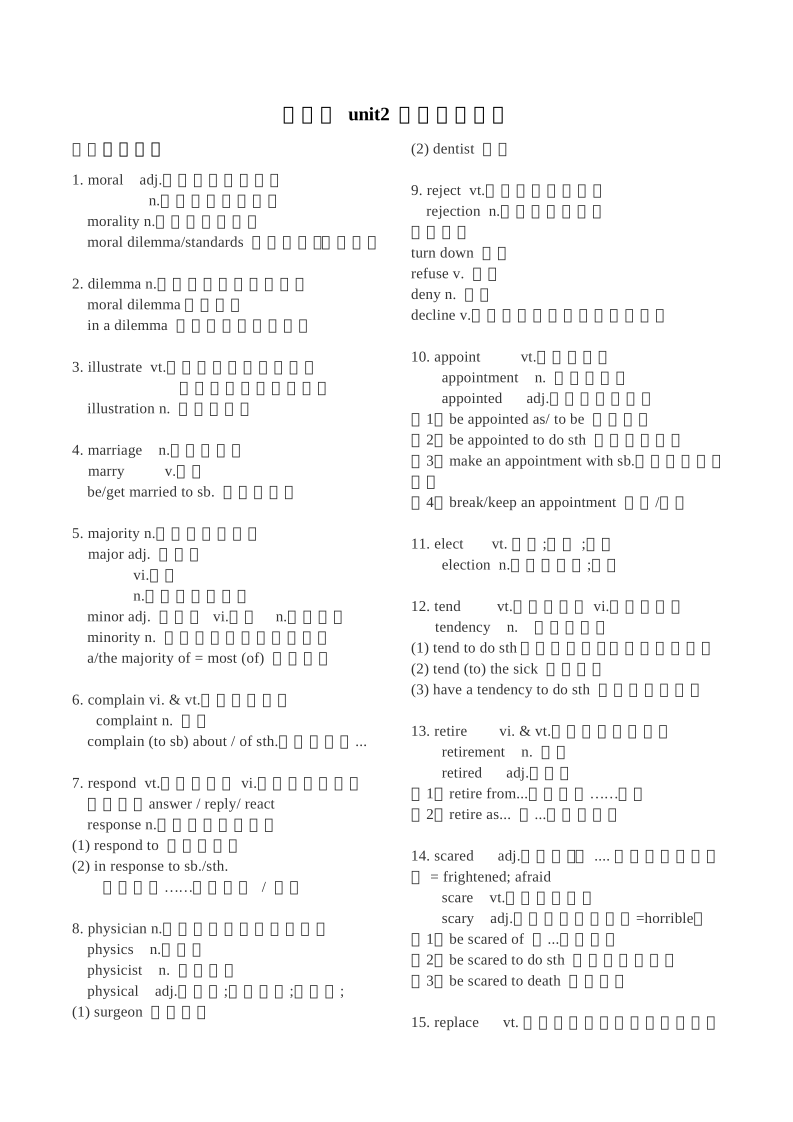
必修三 unit2 重点知识背诵
1、 重点单词
1. moral adj.道德的;道义上的
n.品行;道德;寓意
morality n.道德;道德准则
moral dilemma/standards 道德困境、道德标准
2. dilemma n.进退两难的境地;困境
moral dilemma道德困境
in a dilemma 处于进退两难的境地
3. illustrate vt.(举例)说明;阐明;
给(书或文章)加插图
illustration n. 说明;阐明
4. marriage n.结婚;婚姻
marry v.结婚
be/get married to sb. 和某人结婚
5. majority n.大部分;大多数
major adj. 主要的
vi.主修
n.主修科目;专业
minor adj. 少数的 vi.辅修 n.辅修科目
minority n. 少数民族;少数;少数派
a/the majority of = most (of) 大多数的
6. complain vi. & vt.抱怨;发牢骚
complaint n. 抱怨
complain (to sb) about / of sth.向某人抱怨...
7. respond vt.回答;回复 vi.做出反应;回应
同义词:answer / reply/ react
response n.反应;回答;回复
(1) respond to 对做出回答
(2) in response to sb./sth.
作为(对……的)回答 / 反应
8. physician n.医师;(尤指)内科医生
physics n.物理学
physicist n. 物理学家
physical adj.身体的;物理学的;物质的;
(1) surgeon 外科医生
(2) dentist 牙医
9. reject vt.拒绝接受;不录用
rejection n.拒绝接受;否决
同义词:
turn down 拒绝
refuse v. 拒绝
deny n. 否认
decline v.下降;减少;谢绝;婉言拒绝
10. appoint vt.任命;委派
appointment n. 约会;任命
appointed adj.约定的;指定的
(1) be appointed as/ to be 被任命为
(2) be appointed to do sth 被委派做某事
(3) make an appointment with sb.与某人约会;预约
(4) break/keep an appointment 失约/守约
11. elect vt. 选举;推选 ;选择
election n.选举;推选;当选
12. tend vt.照顾;照料vi.倾向;趋于
tendency n. 倾向;趋势
(1) tend to do sth易于做某事;往往会发生某事
(2) tend (to) the sick 照料病人
(3) have a tendency to do sth 有做某事的趋势
13. retire vi. & vt.退休;退职;退出
retirement n. 退休
retired adj.退休的
(1) retire from...退出;从……退休
(2) retire as... 从...职位上退休
14. scared adj.害怕的;对 .... 感到惊慌或恐惧的 = frightened; afraid
scare vt.惊吓;使害怕
scary adj.恐怖的;吓人的(=horrible)
(1) be scared of 对...感到害怕
(2) be scared to do sth 害怕去做什么事
(3) be scared to death 吓得要死
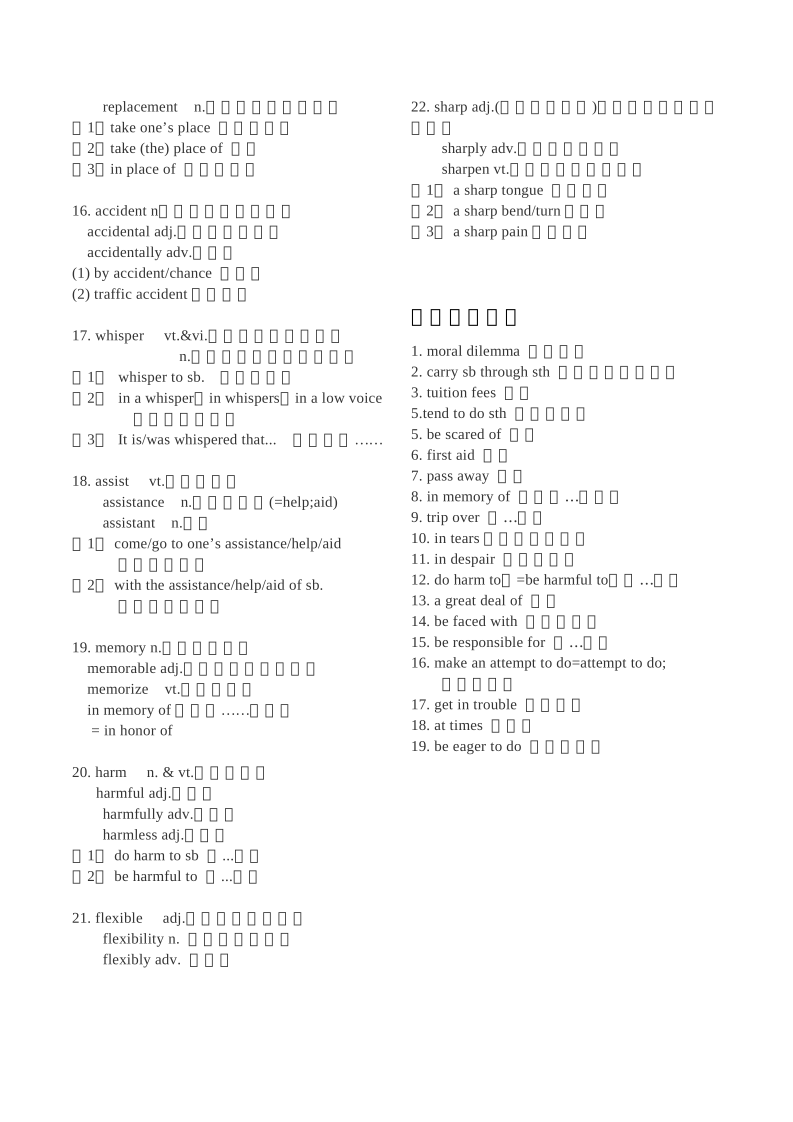
15. replace vt. 接替;取代;更换;放回原处
replacement n.替换;更换;替代品
(1) take one’s place 就坐;取代
(2) take (the) place of 取代
(3) in place of 代替;取代
16. accident n.事故;车祸;失事
accidental adj.意外的;偶然的
accidentally adv.偶然地
(1) by accident/chance 偶然的
(2) traffic accident交通事故
17. whisper vt.&vi.悄声说;耳语;低语
n.耳语(声);传言;谣传
(1) whisper to sb. 与某人耳语
(2) in a whisper=in whispers=in a low voice耳语地,低声地
(3) It is/was whispered that... 有传言说……
18. assist vt.帮助;援助
assistance n.帮助;援助(=help;aid)
assistant n.助手
(1) come/go to one’s assistance/help/aid
来、去帮某人
(2) with the assistance/help/aid of sb.
在某人的帮助下
19. memory n.记忆力;回忆
memorable adj.值得纪念的;难忘的
memorize vt.记忆;记住
in memory of作为对……的纪念
= in honor of
20. harm n. & vt.伤害;损害
harmful adj.有害的
harmfully adv.有害地
harmless adj.无害的
(1) do harm to sb 对...有害
(2) be harmful to 对...有害
21. flexible adj.灵活的;可变通的
flexibility n. 灵活性;柔韧性
flexibly adv. 灵活地
22. sharp adj.(增长、下跌等)急剧的;锋利的;明显的
sharply adv.急剧地;严厉地
sharpen vt.削尖;磨快;使提高
(1) a sharp tongue 一张利嘴
(2) a sharp bend/turn急转弯
(3) a sharp pain一阵剧痛
二、必背短语
1. moral dilemma 道德困境 2. carry sb through sth 帮助某人渡过难关
3. tuition fees 学费 5.tend to do sth 易于做某事
5. be scared of 害怕 6. first aid 急救
7. pass away 去世 8. in memory of 作为对…的纪念
9. trip over 被…绊倒 10. in tears流着泪,含着泪
11. in despair 处于绝望中 12. do harm to(=be harmful to)对…有害
13. a great deal of 大量 14. be faced with 面临,面对
15. be responsible for 对…负责 16. make an attempt to do=attempt to do;
尝试做某事
17. get in trouble 遇到麻烦 18. at times 时不时
19. be eager to do 渴望做某事
4、 必背好句
1. If I were ever in a situation like the girl faced, I think I would choose to… (虚拟语气)
如果我曾经处于像那个女孩那样的境地,我想我会选择……
2. She immediately became the first woman ever to be hired as a resident physician in the OB-GYN department of the PUMC Hospital.
(sb/sth. be the first/second…to do sth.某人/物是做某事的第一/二个人)
她立即成为北京协和医院妇产科首位受聘担任住院医生的女性。
3. Within six months, she was named a chief resident physician, a position that usually took four years to achieve.(that引导定语从句)
六个月后,她被任命为首席住院医师,这一职位通常需要4年时间才能完成。
4. At times she was even seen riding a donkey to faraway villages to provide medical care.
(see sb doing sth转化为被动语态sb be seen doing sth.某人被看见正在做某事)
有时,她甚至骑着驴到遥远的村庄提供医疗服务。
5. Neither she nor her friends thought about moving the stone out of the road.
她和她的朋友们都没有想过把石头搬出马路。
(Neither..nor...既不...也不...;一般现在时种,V遵循就近原则)
6. …her brother complained, thinking of the high tuition fees.
她哥哥抱怨道,想到了高学费。
(thinking非谓语,引导原因状从,其逻辑主语为her brother,与think主动关系)
7. Thinking of all the people still in need of help, Dr Lin opened a private clinic.
考虑到所有仍然需要帮助的人,林医生开了一家私人诊所。
(thinking非谓语,引导原因状从,逻辑主语为Dr Lin,与think主动关系)
8. The new People’s Republic of China saw Dr.Lin Qiaozhi playing a key role.
在新成立的中华人民共和国期间,林乔之博士发挥了关键作用。(拟人)
Discovering Useful Structures——现在分词作宾补和状语
非谓语:1. to do (表目的和将来)
2.doing (v-ing)(表主动和正在进行):现在分词、动名词
3.done(v-ed)(表被动和完成)
动词-ing形式由“动词原形 + ing”构成。动词-ing形式可在句中作主语,宾语,表语,定语,宾语补足语和状语,但是不能单独作谓语。
1、 动词-ing形式作宾语补足语
动词ing形式作宾语补足语常置于宾语后,表示正在进行的主动性的动作,强调某一过程或某种状态。动词ing形式作宾语补足语时,宾语与宾语补足语之间在逻辑上是主谓关系。
When he saw the sun rising from the river and the clouds surrounding the mountain tops, he was reduced to tears. 当他看到太阳从河面升起,白云萦绕着山顶,他泪流满面。
【注意】: 当主句转化为被动语态时,原来做宾语补足语的V-ing形式转化为主语补足语
They find the film very exciting.
= The film is found very exciting. 他们觉得这部电影很精彩
能用动词ing形式作宾语补足语的几种常见情况:
1. 位于感官动词之后:feel, smell, hear, watch, see,notice,observe等。
I hear someone knocking at the door. 我听到有人在敲门。
2. 位于表示“使;让”的使役动词之后:have,keep,get,leave等。
I’m sorry to keep you waiting for a long time. 很抱歉让你等很长时间。
【注意】:
①have+宾语+doing,表示“让....一直做某事”
②have+宾语+done,表示“让别人去做某事”或“(主语)遭受到(意外的损失或不幸)”
③have+宾语+do,表示“让某人去做某事”
3.用于with复合结构中。
I couldn’t concentrate my attention on my homework with the noise going on.
由于噪音,我无法把注意力集中在作业上。
【注意】: 现在分词、过去分词和不定式作宾语补足语的区别:现在分词表示进行,或主动含义(宾语是现在分词所表示动作的执行者);过去分词表示被动或完成意义(宾语是过去分词所表示动作的承受者);不定式表示动作尚未发生。
(1)I heard the folk song sung many times. (song 和sing 是被动关系)
(2) I heard her singing a folk song when I passed by her room yesterday. (her和 sing之间是主动关系,正在进行)
(3)With a lot of homework to do, he refused to go swimming. (表示未发生)
二、动词ing形式作状语
动词ing形式作状语可以表示时间、原因、条件、结果、让步、方式或伴随情况等,其逻辑主语必须是句子的主语。
1.作时间状语,一般可转换成由when或while等引导的时间状语从句。
Walking in the park, she saw an old friend.
=When/While (she was) walking in the park, she saw an old friend.
2.作原因状语,一般可转换成由as或because等引导的原因状语从句。
Being ill, he couldn't go to school.
=As he was ill, he couldn't go to school.
3.作条件状语,一般可转换成if, unless等引导的条件状语从句。
Working hard, you'll make great progress.
=If you work hard, you'll make great progress.
4.作让步状语,一般可转换成though,although等引导的让步状语从句
Being tired, they still went on working.
=Although they were tired, they still went on working.
5.作结果状语
His father died, leaving him a lot of money.
[注意]:动词-ing形式作结果状语时,通常放在句末,中间用逗号隔开,表示一种顺其自然、意料之中的结果。only后接不定式在句中作结果状语,表示意料之外的结果。
eg:I hurried to school, only to find it was Sunday.
6.作方式状语
Please answer my question using another way.
7.作伴随状语,可以转换为一个and并列句
Mary sat by the window of the classroom, reading a book.
=Mary sat by the window of the classroom and was reading a book.
动词-ing形式作状语的注意事项:
(一)动词-ing形式的时态
动词-ing形式作状语时,一般式(doing),完成式(having done)。
(1) 动作与谓语动词的动作同时发生时,用一般式。
Walking in the street,I met an old friend of mine.
我正在大街上行走时,遇到了一位老朋友。(walking和谓语动词met同时发生)
(2) 动作先于谓语动词的动作而发生时,用完成式。
Having finished the letter,he went to post it.
他写完信后就把它寄了出去。(having finished是先发生的,went是后发生的)
(二)动词-ing形式的语态
动词-ing形式作状语时,一般式(doing),完成式(being done)。
使用主动式还是被动式,这主要取决于动作和句子主语之间的关系,遵循的规则“主动进行,被动完成”。
Being talked (talk) to, you should look into the eyes of the person.
被谈话时,你应该看着那个人的眼睛。
(三)动词-ing形式的否定式:not+doing;
Not knowing this, he didn’t come. 他不知道这件事,所以没来。
(四)独立主格结构:
上述-ing和过去分词的用法中,-ing和过去分词在句中均有逻辑主语,但有时它们也能有自己的独立的主语,这种独立的主语,一般为名词或代词,位于其前,和-ing或过去分词构成独立主格。(主语+V-ing/-ed,放在完整的句子前/后)
独立主格在句中一般只作状语用,独立主格中是使用-ing还是-ed,则要根据它们的主语和其所表示的动作的主动被动关系而定:
①The trees are extremely tall, some measuring over 90 metres.
这些树非常高,有些树(独立主格的主语)的长度超过了90米。
②The weather being fine, we went out for a walk.
由于天气(独立主格的主语)很好,我们就出去散散步了。
学科网(北京)股份有限公司
学科网(北京)股份有限公司
学科网(北京)股份有限公司
$$
资源预览图
1
2
3
相关资源
由于学科网是一个信息分享及获取的平台,不确保部分用户上传资料的 来源及知识产权归属。如您发现相关资料侵犯您的合法权益,请联系学科网,我们核实后将及时进行处理。