专题1.7 语法系统课(6)非谓语动词(课件PPT)-【创新方案】2025年高考英语一轮总复习(人教版2019)
2024-12-06
|
94页
|
299人阅读
|
13人下载
教辅

资源信息
| 学段 | 高中 |
|---|---|
| 学科 | 英语 |
| 教材版本 | - |
| 年级 | 高三 |
| 章节 | - |
| 类型 | 课件 |
| 知识点 | 非谓语动词 |
| 使用场景 | 高考复习-一轮复习 |
| 学年 | 2025-2026 |
| 地区(省份) | 全国 |
| 地区(市) | - |
| 地区(区县) | - |
| 文件格式 | PPTX |
| 文件大小 | 397 KB |
| 发布时间 | 2024-12-06 |
| 更新时间 | 2024-12-06 |
| 作者 | 山东一帆融媒教育科技有限公司 |
| 品牌系列 | 创新方案·高三总复习一轮 |
| 审核时间 | 2024-08-13 |
| 下载链接 | https://m.zxxk.com/soft/46764735.html |
| 价格 | 5.00储值(1储值=1元) |
| 来源 | 学科网 |
内容正文:
语法系统课(6)——非谓语动词
写作增分课(6)——表达谢意
第7周
非谓语动词
语法系统课(6)
题点考法与用法规则
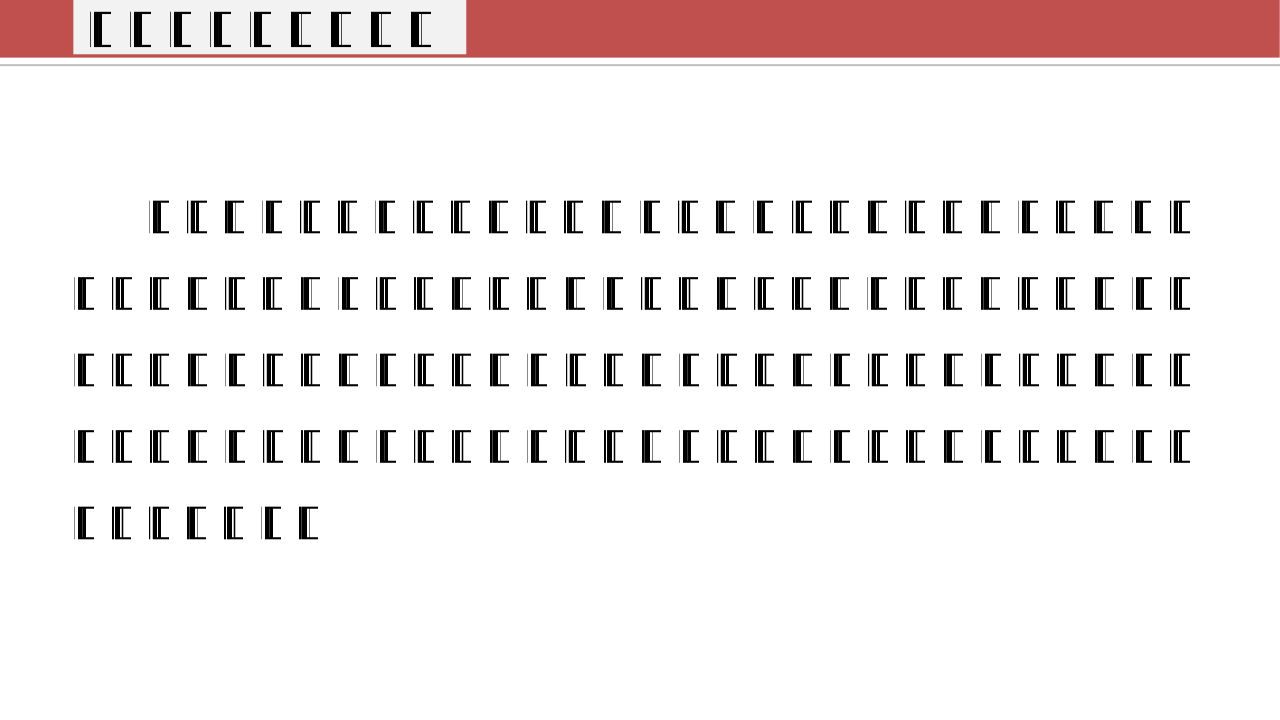
非谓语动词包括动词不定式、动名词、现在分词和过去分词,在句中除了不能独立作谓语外,可以充当其他所有的句子成分。非谓语动词有其自身的时态和语态。时态指的是它所表示的动作与句子谓语的动作存在时间上的先后关系;语态指的是它与逻辑主语之间存在主动或被动关系。
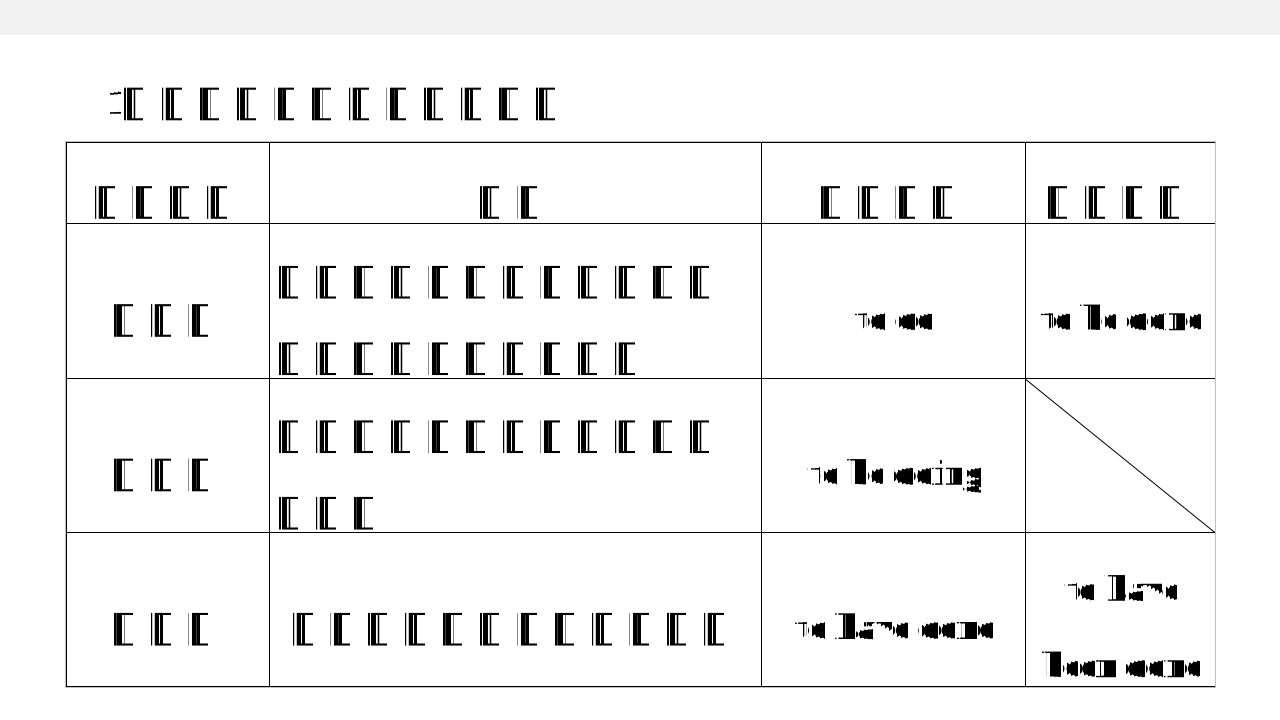
1.动词不定式的时态和语态
时态形式 意义 主动语态 被动语态
一般式 与句子谓语动词的动作同时发生或在动作之后发生 to do to be done
进行式 在谓语动词的动作发生时正在进行 to be doing
完成式 在谓语动词的动作之前发生 to have done to have
been done
完成
进行式 发生在谓语动词的动作之前并且持续到谓语动词的动作发生时仍在进行 to have
been doing
续表
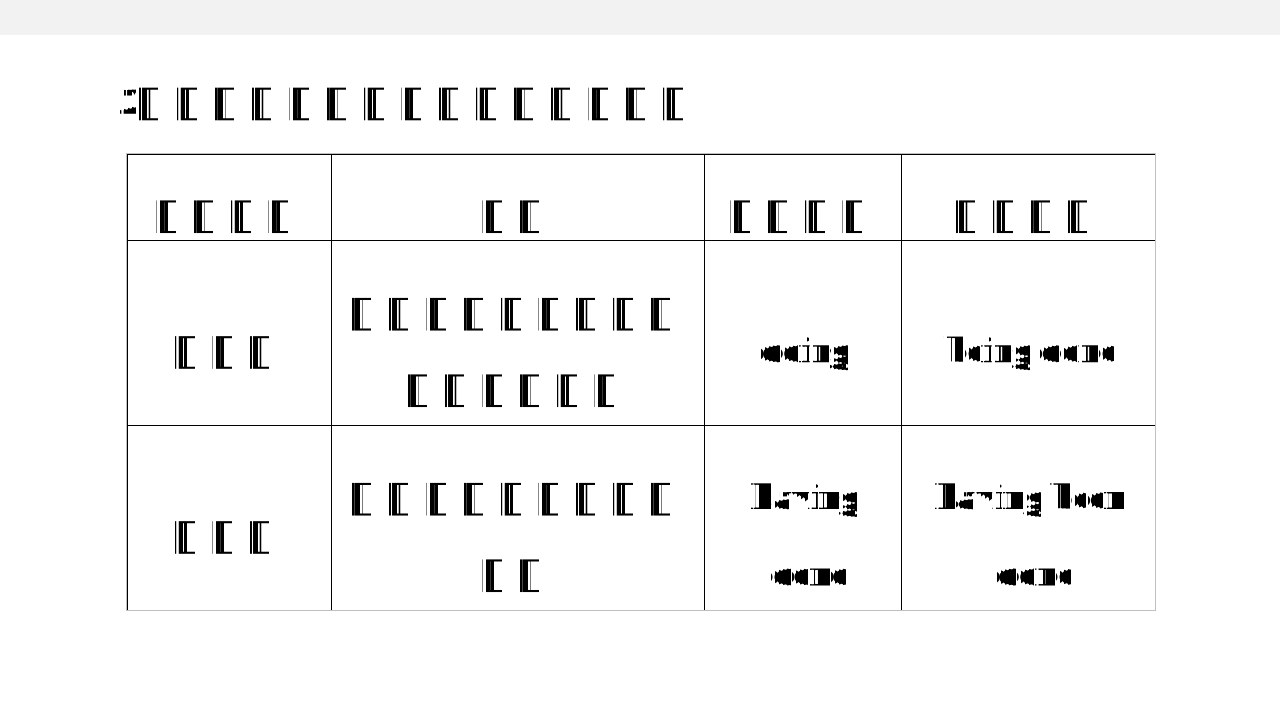
2.动名词和现在分词的时态和语态
时态形式 意义 主动语态 被动语态
一般式 与谓语动词的动作同时或稍后发生 doing being done
完成式 先于谓语动词的动作完成 having
done having been
done
考点1 非谓语动词作状语
[高考体验]
1.(2023·全国乙卷) (visit) several times over the last 10 years, I was amazed by the co-existence of old and new, and how a city was able to keep such a rich heritage (遗产) while constantly growing.
解析:Having visited 结合句意及句中的时间状语“over the last 10 years”可知,visit所表示的动作已经发生多次,且发生在谓语动词所表示的动作之前。故填Having visited。
2.(2023·全国甲卷)“There was once a town in the heart of America where all life seemed to enjoy peaceful co-existence with its surroundings,” her fable begins, (borrow) some familiar words from many age-old fables.
解析:borrowing 分析句子结构可知,begins是句子的谓语动词,空处为非谓语动词,与逻辑主语her fable之间是主谓关系,所以空处填现在分词borrowing。
3.(2023·全国甲卷)For thousands of years, people have told fables (寓言) (teach) a lesson or to pass on wisdom.
解析:to teach 空处与后面的“to pass”是并列关系。此处应用不定式作目的状语,所以空处填to teach。
4.(2022·新高考Ⅰ卷) (cover) an area about three times the size of Yellowstone National Park, the GPNP will be one of the first national parks in the country.
解析:Covering cover在此处表示“占(一片面积)”,和句子主语the GPNP在逻辑上是主谓关系,所以用现在分词。故填Covering。
[系统归纳]
1.不定式作状语
(1)作目的状语,可用so as to/in order to替换,但 so as to一般不可置于句首。
To enjoy the convenience of digital payment, many senior citizens start to use smartphones.
为了享受数字支付的便利,很多老年人开始使用智能手机。
(2)作结果状语,常用于下列结构中:only to do (表示意想不到的结果); enough to do ...(足够做……); too ... to do ...(太……而不能做……); so/such ... as to ...(如此……以至于……)等。
Tom took a taxi to the airport, only to find his plane high up in the sky.
汤姆乘出租车到达机场,却发现他要乘坐的飞机已飞入高空。
(3)作原因状语,常用在“主语+系动词+形容词+不定式”结构中。这类形容词常见的有:comfortable, good, surprised, astonished, delighted, disappointed等。
We were astonished to find the village still in its original condition.
我们吃惊地发现,这个村庄仍保持着它最初的样子。
2.分词作状语
分词作状语时,可以表示时间、原因、结果、条件、让步、伴随状况等。现在分词作状语时,分词所表示的动作与逻辑主语之间构成主动关系。过去分词作状语时,分词所表示的动作与逻辑主语之间构成被动关系。为了强调,分词还可与while, when, once, if, unless等词连用。
①A city is the product of the human hand and mind, reflecting man's intelligence and creativity.
一座城市是人类的手与大脑的产物,反映出了人类的智慧与创造力。
②Ordinary soap, if used correctly, can deal with bacteria effectively.
如果正确使用的话,普通肥皂可以有效地对付细菌。
[易错提醒]
(1)分词作状语时,其逻辑主语必须与句子主语保持一致。
(2)在句中作目的状语时,只能用动词不定式。
(3)作结果状语时,表示意料之外的结果用动词不定式,表示自然而然的结果用现在分词。
3.独立主格结构
当非谓语动词的逻辑主语与句子的主语不同时,应采用独立主格结构,即在非谓语动词前带上其自身的主语,构成“名词/代词(主格)+非谓语动词”的形式。
·独立主格结构的逻辑主语与句子的主语不同,它独立存在。
·独立主格结构中作逻辑主语的名词或代词与后面的分词、不定式是逻辑上的主动或被动关系。
·独立主格结构一般用逗号与句子其他成分隔开。
Weather permitting, we shall play the match tomorrow. (permit的逻辑主语是weather而非句子主语we)
如果天气允许,我们明天就进行比赛。
考点2 非谓语动词作定语
[高考体验]
1.(2023·新高考Ⅰ卷) Shanghai may be the (recognize) home of the soup dumplings, but food historians will actually point you to the neighboring canal town of Nanxiang as xiao long bao's birthplace.
解析:recognized 空处在句中作定语,修饰名词home,且与home之间是逻辑上的动宾关系,故填过去分词recognized。
2.(2023·新高考Ⅱ卷)They talk to the flood of international tourists and to (visit) Chinese zookeepers who often come to check on the pandas, which are on loan from China.
解析:visiting 分析句子结构可知,空处作前置定语,修饰空后的“Chinese zookeepers”, visit与Chinese zookeepers之间为逻辑上的主动关系,此处意为“来访的中国动物园管理员”,所以空处需要填visiting。
3.(2023·全国乙卷)... it is home to more than 3,000 years of glorious history even down to its layout, with the city keeping its carefully (build) system of ring roads.
解析:built build与其所修饰的名词system of ring roads之间是逻辑上的动宾关系,应用过去分词形式作定语。
4.(2023·全国甲卷)Behind the simple style, however, is a serious message (intend) for everyone.
解析:intended 分析句子结构可知,is是句子的谓语动词,空处为非谓语作后置定语。be intended for是固定用法,所以空处填过去分词intended。
5.(2023·浙江1月高考)In the Ming Dynasty, the center was the Forbidden City, (surround) in concentric (同心的) circles by the Inner City and Outer City.
解析:surrounded 句中已有谓语动词was,故空处应为非谓语动词;结合句意“在明朝,中心就是紫禁城,它被内城和外城包围,形成同心圆的样貌”可知,surround与the Forbidden City构成逻辑上的动宾关系,所以空处填surrounded。
[系统归纳]
1.不定式作定语
(1)不定式作定语通常放在所修饰词之后,表示将来的动作。若不定式与其所修饰的词之间是被动关系,且该不定式是不及物动词,其后应有必要的介词。
I was watching the clock all through the meeting, as I had a train to catch.
我在整个会议期间一直看表,因为我要赶火车。
(2)序数词、形容词最高级,the last, the only 等词后或被这些词修饰的名词/代词后,常用不定式作定语,此时该名词或代词是作定语的非谓语动词的执行者。
He was the first guest to arrive.
他是第一个到达的客人。
(3)被修饰词是抽象名词时,常用不定式作定语。常见的这类名词有:ability, chance, wish, way 等。
The best way to strengthen willpower is to make it into a habit.
增强意志力最好的方法就是让它成为一种习惯。
[易错提醒]
不定式用于某些动词(如have, have got, get, want, need等)的宾语后作定语时,如果不定式的逻辑主语就是句子的主语,通常用主动形式表示被动意义。如:I want something to drink.
2.分词作定语
(1)及物动词的分词形式作定语
doing 被修饰的名词与分词之间为主动关系
being done 被修饰的名词与分词之间为被动关系且表示正在进行
done 被修饰的名词与分词之间为被动关系且表示完成
(2)不及物动词的分词形式作定语
现在分词表示动作正在进行;过去分词只表示动作已完成,不表示被动。
falling leaves正在落下的叶子(表示正在进行)
fallen leaves落叶(表示完成)
(3)动名词作定语
只放在名词前,说明该名词的性能或用途,不表示动作,被修饰的名词与动词-ing形式在逻辑上没有主谓关系。
a walking stick = a stick for walking 手杖
a sleeping car = a car for sleeping 卧铺车
考点3 非谓语动词作主语和表语
[高考体验]
1.(2023·全国乙卷改编)Once we found the place, it was stressful ______(get) lights and cameras set up in the limited time.
解析:getting 根据语境和分析句子结构可知,it作形式主语,设空处表示习惯性动作,get ... set up意为“把……安装好”,故用动名词短语作真正的主语。故填getting。
2.(2021·全国甲卷) It is possible (walk) or bike the entire 14 kilometers.
解析:to walk 分析句子结构可知,It为形式主语,不定式短语作真正的主语,表示“步行或骑自行车走全程14公里”这件具体的事。
3.(2021·全国乙卷) It is different from traditional tourism because it allows the traveler to become (educate) about the areas ...
解析:educated 分析句子成分可知,become是系动词,此处应用形容词作表语,educated“受过教育的;有教养的”。become educated about意为“开始接受关于……的教育”。故填educated。
[系统归纳]
1.不定式作主语和表语
(1)不定式作主语时,一般表示具体某一次的动作。若不定式太长,常用it作形式主语而将不定式后置。
It's our duty to take good care of the old.
照顾好老人是我们的责任。
(2)不定式作表语时,多表示一次具体的、特定的或有待实现的动作。
①His wish is to be a doctor in the future.
他的愿望是将来当一名医生。
②What I want to do most in senior high school is (to) improve my English.
我在高中最想做的事就是提高我的英语水平。(不定式作表语时,如果前面有实义动词do的某种形式,作表语的不定式常省略to。)
2.动名词作主语和表语
(1)动名词作主语通常表示抽象的或习惯性的动作,也可用it作形式主语,而将真正的主语放在句末,常见的有It's no use/no good/fun/a waste of time/useless/...+doing ...。
①Traveling along the old Silk Road is an interesting and rewarding experience.
沿着古老的丝绸之路旅行是一次既有趣又有益的经历。
②It's no use just complaining without taking action.
不采取行动而只是抱怨是没用的。
(2)动名词作表语时相当于名词,用于解释主语的内容,表语和主语常常可以互换位置。
My job is cleaning the house three times a week.=Cleaning the house three times a week is my job.
我的工作是每星期打扫三次房子。
3.分词作表语
·以-ed结尾的,如ashamed, delighted, excited等,通常用于修饰人或与人有关的事物,说明主语的状态,表示“感到……”“(人)……的”。
·以-ing结尾的,如delighting, exciting, frightening等,主要用于修饰事物,表示主语的性质或特征,意为“令人……的”。
①He felt embarrassed when he heard the news.
当听到这个消息时,他感觉很尴尬。
②He was disappointed at the disappointing news.
听到这个令人失望的消息,他很失望。
考点4 非谓语动词作宾语
[高考体验]
1.(2023·新高考Ⅰ卷改编)He decided (build) what he would later call an eco-machine.
解析:to build 考查非谓语动词。动词decide后常跟动词不定式作宾语,decide to do sth.“决定做某事”。
2.(2021·全国甲卷) After (spend) some time looking at all the defensive equipment at the wall, we decided it was time for some action and what better than to ride on a piece of history!
解析:spending 分析句子结构可知,此处作介词after的宾语,要用动名词形式,故填spending。
3.(2021·全国乙卷) Minimize the impact of (visit) the place.
解析:visiting 此处作介词of的宾语,要用动名词形式,故填visiting。
[系统归纳]
1.下列动词只能用不定式作宾语
决心学会想希望,
拒绝设法愿假装 decide/determine, learn, want, expect/hope/wish;
refuse, manage, care, pretend
主动答应选计划,
同意请求帮一帮 offer, promise, choose, plan; agree, ask/beg, help
2.下列动词(短语)只能用动名词作宾语
考虑建议盼原谅,
承认推迟没得想 consider, suggest/advise, look forward to, excuse/pardon; admit, delay/put off, fancy
避免错过继续练,
否认完成就欣赏 avoid, miss, keep/keep on, practice; deny, finish, enjoy/appreciate
禁止想象才冒险,
不禁介意准逃亡 forbid, imagine, risk;
can't help (禁不住), mind, allow/permit, escape
[易错提醒] want/need/deserve/require/be worth等后面经常用动词-ing的主动形式表示被动意义。此时,有的也可替换为不定式的被动式。如:The tree needs watering/to be watered.
I remembered locking the door before I left the office, but forgot to turn off the lights.
我离开办公室之前记得锁门了,但却忘记关灯了。
考点5 非谓语动词作宾语补足语
[高考体验]
1.(2023·新高考Ⅰ卷)Nanxiang aside, the best xiao long bao have a fine skin, allowing them (lift) out of the steamer basket without tearing or spilling any of their contents.
解析:to be lifted 空前的them指代上文的xiao long bao,此处表示“小笼包被从蒸笼里拿出来”。them与lift是逻辑上的动宾关系,此处构成allow sth. to be done结构,意为“允许某事被做”,故空处填to be lifted。
2.(2023·新高考Ⅰ卷)No matter where I buy them, though, one steamer basket is rarely enough, yet two seems greedy, and so I am always left (want) more next time.
解析:wanting 分析句子结构可知,此处考查“leave sb. doing sth.”结构,表示“使我想着下次多吃点”。
3.(2020·全国卷Ⅱ) They make great gifts and you see them many times (decorate) with red envelopes and messages of good fortune.
解析:decorated see sth. done“看到某物被做……”,此处表示“你会很多次看到它们被红包和蕴含好运的信息装点着”。them与decorate之间是逻辑上的被动关系,所以用过去分词作宾语补足语。
[系统归纳]
1.不定式作宾语补足语
不定式作宾语补足语时,宾语和不定式之间在逻辑上是主动关系。常用不定式作宾语补足语的动词(短语)有:advise, allow, ask, beg, cause, encourage, expect, forbid, force, intend, invite, order, persuade, prefer, require, remind, tell, want, warn, wish, call on, depend on等。
If we expect people to give up the habit of driving, we must give them an alternative they can rely on.
如果我们期望人们放弃开车的习惯,我们必须给他们一个可以依赖的替代品。
[名师指津]
(1)有些动词,如think, consider, believe, suppose, feel, find, understand等后常用to be作宾语补足语或主语补足语(被动语态中为主语补足语)。
Chinese people are considered to be one of the most hard-working people in the world.
中国人被认为是世界上最勤劳的人民之一。
(2)在sb. be said/believed/known/reported/considered/thought+to do/to have done结构中,不定式作主语补足语。
2.分词作宾语补足语
现在分词作宾语补足语时,宾语与宾语补足语之间在逻辑上是主谓关系;过去分词作宾语补足语时,宾语与宾语补足语之间在逻辑上是动宾关系。常见的跟分词作宾语补足语的动词(短语)有:
(1)感官动词(短语):see, watch, observe, look at, listen to, notice等;
(2)使役动词:have, make, get, keep, leave,find等。
①I saw him entering the bank. (him与enter之间为逻辑上的主谓关系)
我看见他正进入银行。
②I saw him operated on. (him与operate之间为逻辑上的动宾关系)
我看见(有人)给他做了手术。
③They had the fire burning all night. (burn动作一直在进行)
他们让火整夜燃烧着。
④I will have my bike repaired tomorrow.(让别人去修)
明天我要让人修一下我的自行车。
①The old couple often take a walk after supper in the park with their pet dog following them.
这对老夫妇常常在晚饭后到公园里散步,他们的宠物狗则在后面跟着。
②With such a short time left before the deadline, it doesn't seem likely that John will finish the job.
离截止日期不远了,约翰似乎不可能完成这项工作。
解题思维建模
强化训练与运用实践
一、单句语法填空
1.First of all, (become) aware of what causes your worry will help to reduce the stress.
2.They start building their huts late in the summer, but do not get them (finish) before the early frost.
语法题点训练
becoming
finished
3.The company has announced a new vehicle (design)to meet various demands of future transportation and business applications.
4.Its function varies widely (depend) on the culture.
5. (stabilize) economic growth, various measures are being taken to expand domestic demand.
designed
depending
To stabilize
6.But if you do find it difficult (fall) asleep or stay asleep at night, then you should avoid naps and try to develop a healthy sleeping habit in the evening.
7.Past studies have shown a link between sleeping less and weighing more, but scientists have had difficulty ____________(determine) “which came first, the chicken or the egg?”
8.Hangzhou is the third Chinese city (host) the Asian Games.
to fall
determining
to host
二、语篇填空(用非谓语动词知识填空)
The idea of 1. (be) able to walk on the water has long interested humans greatly.Sadly,biological facts prevent us ever 2. ______________ (accomplish) such a thing without artificial aid — we simply weigh too much, and all our mass (质量) pushes down through our relatively small feet, 3. (result) in a lot of pressure that makes us 4. (sink).
being
accomplishing
resulting
sink
However, several types of animals can walk on the water. One of the most 5. (interest) animals is the Common Basilisk, a lizard (蜥蜴) native to Central and South America.It can run across the water for a distance of several meters, avoiding 6. (get) wet by rapidly 7. (hit) the water's surface with its feet. The lizard will take as many as 20 steps per second to keep 8. (move) forward. For humans 9. (do) this, we'd need huge feet 10._______ (create) adequate “hitting”.
interesting
getting
hitting
moving
to do
to create
1.杜绝常见错误,别让微瑕掩了美玉(查错并修改)
①As an outgoing and friendly boy, Peter is easy to make friends.
[纠错] ________________
[点拨] 在 “主语+be+形容词+不定式”结构中,句子的主语和不定式构成逻辑上的动宾关系,不定式中的动词必须是及物动词;若为不及物动词时,则要在其后加上适当的介词,使之构成及物动词短语。
写作语法运用
friends 后加 with
②Combined your knowledge with your experience, you are sure to succeed.
[纠错] _______________________
[点拨] 此处为分词作状语,combine与句子的主语you之间为逻辑上的主动关系。
Combined改为Combining
2.写对更要写美,彰显深厚写作功底(完成句子)
①看到我做的早饭,妈妈看起来很激动。
, my mother looked very excited.
②通过阅读校报Youth,我已加深了对西方文化的了解。
I have enhanced the understanding of Western culture__________
.
When seeing the breakfast cooked by me
by reading
the school newspaper Youth
③我们学校计划举办一场主题为“中国传统文化”的班会。
Our school intends to launch a class meeting__________________
.
④为了更好地体验中国传统文化,我们学校的学生会组织了一次有意义的活动。
, the Students' Union of our school organized a meaningful activity.
themed “Traditional
Chinese Culture”
In order to better experience traditional Chinese culture
3.真金需要打磨,一变效果非凡
① You might have heard of the Music Festival. It will be held in our school.
[升级]___________________________________________________
(非谓语动词作定语)
You might have heard of the Music Festival to be held in
our school.
②It carries articles which were written by foreign friends about the cultures of their home countries.
[升级] It carries articles about the cultures of their home countries. (非谓语动词作定语)
③The dough figurine was finished and I was extremely excited.
[升级]___________________________________________________
, I was extremely excited.(with复合结构/独立主格结构)
written by foreign friends
With the dough figurine finished/The dough figurine
finished
[点拨] 在写作中恰当使用非谓语动词、with复合结构或独立主格结构,不仅可以增加句子的灵活性、多样化,还能令行文结构紧凑,表达言简意赅。
表达谢意[嵌入语法:恰当运用非谓语,让“谢意”更可感]
写作增分课(6)
考场写作时——做到“要点”与“出彩”齐飞
[典题示例]
假定你是李华。最近,你刚结束在英国为期一个月的交流学习。学习期间,你和房东Mr Wilson结下了深厚的友谊。请根据下面的提示,给Mr Wilson写一封电子邮件。内容包括:
1.表示感谢; 2.回顾他对你的照顾和帮助;
3.邀请他来中国游览。
注意:1.写作词数应为80左右;
2.可以适当增加细节,以使行文连贯。
一、“2步骤”找全要点——保基本分
(一)显性要点题干找
1.学习结束回国:
①I've been back home now.
2.感谢对方的照顾:
②I'm writing to express my sincere thanks to you for your kindness.
3.回顾帮助:
③While I was in Britain, you gave me a lot of help.
④Your help made it easier for me to understand British culture better and adapt to the life there.
4.邀请对方来中国:
⑤I want to invite you to come to China to experience Chinese culture.
(二)隐性要点关联好
详述对方给予的照顾和帮助:
⑥You cooked the delicious meals for me every morning. I still miss them.
⑦I really appreciated your patience while you were talking with me.
二、“2层面”注重完善——打造亮点
(一)高级词汇抓住眼(升格②④句中的加蓝词汇)
1.thanks→_________
2.understand British culture better
→_______________________________________
gratitude
have a better understanding of British culture
(二)高级句式点亮篇(按要求升级句子)
1.用分词作状语合并③④句
While I was in Britain, you gave me a lot of help, making it easier for me to have a better understanding of British culture and adapt to the life there.
2.用it作形式主语,非谓语动词作真正的主语改写句⑤
It would be a great honor for me to invite you to come to China to experience Chinese culture.
3.用分词作定语合并句⑥
I still miss the delicious meals cooked by you every morning.
三、“2方面”打造高颜值——“语”顺“形”美
(誊写成文,注意逻辑衔接和行文规范)
Dear Mr Wilson,
How is everything going? I've been back home now. I'm writing to express my sincere gratitude to you for your kindness.
While I was in Britain, you gave me a lot of help, making it easier for me to have a better understanding of British culture and adapt to the life there.I still miss the delicious meals cooked by you every morning. Besides, I really appreciated your patience while you were talking with me.
It would be a great honor for me to invite you to come to China to experience Chinese culture.
Best wishes!
Yours,
Li Hua
[高分评点]
(一)学谋篇布局
本文呈现了感谢信的常规写作模式:
(二)学靓丽表达
1.本文使用了高级词块 “express my sincere gratitude”及“appreciated your patience”表达了作者的感激之情;同时运用了现在分词短语“making it easier for me to ...”作结果状语,描述了对方的帮助给自己带来的益处,言简意赅地完成了感谢信的感谢内容。
2.状语从句、过去分词短语作定语的使用丰富了句式结构, “making it easier for me to ...”及“It would be a great honor for me to ...”中,it充当形式宾语和形式主语的用法,凸显了作者灵活的写作技巧。
平时学习时——做到“仿写”与“背诵”齐抓
一、内化写作范式,确保形体规范
Dear ,
I am writing to convey my gratitude for (感谢的原因).
Guided by you, I had a chance to (对方给予的帮助一). Thanks to your generous help, I do believe that (帮助的效果). What's more, during the week, (对方给予的帮助二及效果).
Thanks again for your generous help. I'm expecting (发出回报式邀请).
Yours,
Li Hua
二、写好开头、结尾,力求吸人眼球
(一)开头部分:表达感谢之情并说明原因
1.I am writing this letter to thank you for ...
2.I would like to convey my heartfelt thanks to you for your selfless help in this letter.
3.On behalf of ..., I'd like to extend my sincere gratitude for ...
4.I'm extremely grateful/thankful to you for your unselfish assistance during ...
5.I'd like to take this opportunity to express my great appreciation for your timely help, patience, and positive support.
(二)结尾部分:再次阐述谢意并提出回报
1.Thanks again for your generous help.
2.My true gratitude is beyond any words/description.
3.I feel deeply indebted (感激的) to you and I really do not know how to thank you enough for your help.
4.Please accept my sincere thanks for your help, which I will never forget.
5.Nothing could ever return the favour you gave me. I will be more than pleased if I have the opportunity to repay your kindness by ...
三、多积鲜活佳句,做到意蕴丰富
1.Besides, the information about career planning you offered is of great help to me.
此外,你提供的关于职业规划的信息对我帮助很大。
2.I was worried because my student's ID card, wallet and some documents were all in it, which were very important to me.
我很担心,因为我的学生证、钱包和一些文件都在里面,这些对我来说非常重要。
3.Guided by you, I had the chance to visit some places of interest in England and experience such unique cultures as well as beautiful scenery.
在您的带领下,我有机会参观了英国的一些名胜古迹,体验了如此独特的文化和美丽的风景。
4.Not only did you correct the mistakes in my pronunciation,but you also recommended wonderful English speech videos for me to imitate.
你不仅纠正了我发音中的错误,还推荐了精彩的英语演讲视频供我模仿。
3.接不定式与动名词作宾语意义不同的动词
3.with/without+宾语(名词/代词)+宾语补足语
$$
资源预览图

1

2
3
4

5
6

相关资源
由于学科网是一个信息分享及获取的平台,不确保部分用户上传资料的 来源及知识产权归属。如您发现相关资料侵犯您的合法权益,请联系学科网,我们核实后将及时进行处理。