Unit 6 课时3 语法-【宝典训练】2023-2024学年七年级下册英语高效课堂课件(沪教牛津版)
2024-07-03
|
24页
|
117人阅读
|
3人下载
教辅
资源信息
| 学段 | 初中 |
|---|---|
| 学科 | 英语 |
| 教材版本 | 初中英语沪教牛津版(广州深圳沈阳通用)(2012)七年级下册 |
| 年级 | 七年级 |
| 章节 | Unit 6 Electricity |
| 类型 | 课件 |
| 知识点 | - |
| 使用场景 | 同步教学-新授课 |
| 学年 | 2024-2025 |
| 地区(省份) | 全国 |
| 地区(市) | - |
| 地区(区县) | - |
| 文件格式 | PPTX |
| 文件大小 | 126 KB |
| 发布时间 | 2024-07-03 |
| 更新时间 | 2024-07-03 |
| 作者 | 深圳天骄文化传播有限公司 |
| 品牌系列 | 宝典训练·高效课堂 |
| 审核时间 | 2024-07-03 |
| 下载链接 | https://m.zxxk.com/soft/46111421.html |
| 价格 | 2.00储值(1储值=1元) |
| 来源 | 学科网 |
内容正文:
Unit 6 Electricity
课时3 语法
目 录
01
课时精讲
02
课时过关
01
课时精讲
情态动词(Modal verbs)
情态动词本身有一定的词义,但要与动词原形一起使用,给谓语动词增添情感色彩,表示说话人对有关行为或事物的态度和看法,认为其可能、应该或必要等。情态动词无人称和数的变化。常见的情态动词有十二个:may, might; can, could; will, would; shall, should; must, need, dare, ought to。在这一单元中,我们主要学习can, may 和must。
第 ‹#› 页
课时3 语法
返回目录
语法点一 can & cannot
can 的基本意思是“能;会”,否定形式是cannot, 缩写为can't,意思是“不能”。
第 ‹#› 页
课时3 语法
返回目录
【解析1】表示能力(如体力和脑力方面),意为“能;会”。如:
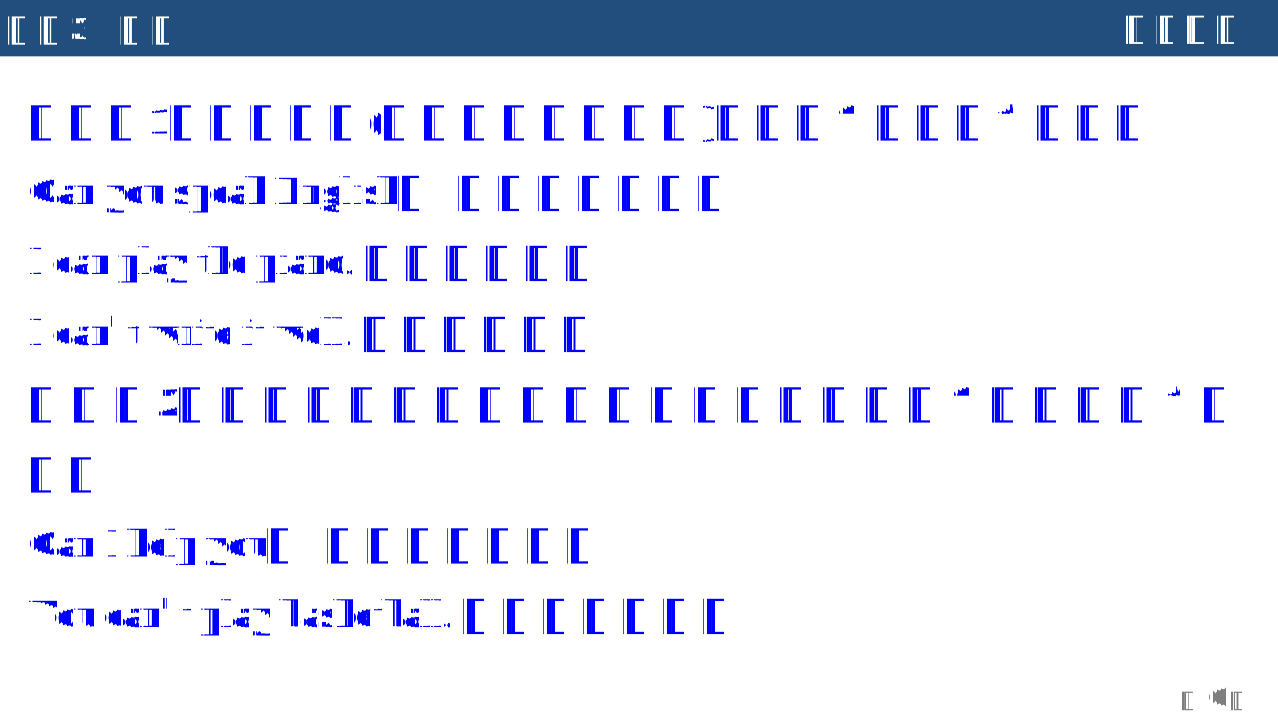
Can you speak English? 你会讲英语吗?
I can play the piano. 我会弹钢琴。
I can't write it well. 我写得不好。
【解析2】表示请求或允许,多用在口语中,意为“可以;能”。如:
Can I help you? 我能帮助你吗?
You can't play basketball. 你不能打篮球。
第 ‹#› 页
课时3 语法
返回目录
【拓展】 Can you…?表示“请你……好吗?” 表示说话人的请求;Can I…?表示“我可以……吗?”用来征求对方是否允许自己做某事。如在句末加上please一词就显得更有礼貌了。如:
Can you help me, please? 请你帮助我好吗?
第 ‹#› 页
课时3 语法
返回目录
【解析3】表示推测,这一用法通常用于否定句或疑问句 如:
What can he possibly mean? 他可能会是什么意思呢?
【拓展】 can与may都可以表示“许可”。在征求对方意见时用may较多,而且may显得更客气委婉一些。
第 ‹#› 页
课时3 语法
返回目录
语法点二 may & may not
may 的基本意思是“可能;也许”,否定形式是may not。
【解析1】表示许可或征求对方的许可,常和can互换, 但 can 较随便,may 更正式。如:
You may go now. 你现在可以走了。
May I use your computer? 我能用一下你的电脑吗?
第 ‹#› 页
课时3 语法
返回目录
【解析2】表示“可能”,常意为“也许;可能”,用于肯定句和否定句。如:
He may not come here tomorrow. 他明天也许不会来这儿。
She may go to Shanghai next week. 下周她可能去上海。
【解析3】may的否定形式may not,也可用must not表达否定。如:
—May I leave the book with you?我可以把这本书交给你吗?
—No, you mustn't. / No, you may not. 不可以。
第 ‹#› 页
课时3 语法
返回目录
语法点三 must & must not
must 的基本意思是“必须”;否定形式是mustn't,表示“禁止”。
【解析1】表示“必须”。如:
You must talk to them about their study. 你必须同他们谈谈关于他们学习的事。
【解析2】在否定结构中表示“禁止;不允许”。如:
You mustn't leave here. 你不能离开这儿。
You mustn't take photos here! 这里禁止拍照!
第 ‹#› 页
课时3 语法
返回目录
【解析3】表推测,意为“一定,准是”,比may更加肯定,用在肯定句;否定句中的推测要用“can't be”。如:
He must be ill. He looks so pale. 他肯定是病了。他的脸色那么苍白。
My mother can't be at home. She is at work. 我的妈妈不可能在家,她在上班。
第 ‹#› 页
课时3 语法
返回目录
【解析4】must用于一般疑问句时,其肯定答语是“Yes, please”. 否定答语是“No, you needn't.” 如:
—Must I finish my homework now? 我现在必须完成作业吗?
—No, you needn't. 不,没必要。
第 ‹#› 页
课时3 语法
返回目录
02
课时过关
一、单项选择
( )1.—Must we hand in our exercises today?
—No, you __________. You can give them to me tomorrow.
A.mustn't B.needn't C.shouldn't
( )2.—Mum, may I go to my friend's birthday party?
—Certainly. But you __________ be back by ten o'clock.
A.must B.can C.may
B
A
第 ‹#› 页
课时3 语法
返回目录
( )3.John, you needn't do your work today. If you're tired now, you __________ do it tomorrow.
A.must B.may C.can
( )4.—Susan has bought a large house with a swimming pool.
—It __________ be very expensive. I have never even dreamt about it.
A.must B.might C.can't
C
A
第 ‹#› 页
课时3 语法
返回目录
( )5.—Is the woman in white our manager?
—It __________ be her. She has just left for Shanghai.
A.must B.may C.can't
( )6.—Shall we go skateboarding after school?
—Sorry, my parents said that I __________ be at home early.
A.can't B.must C.may
C
B
第 ‹#› 页
课时3 语法
返回目录
( )7.—May I watch TV for a while?
—No, you __________. You have to finish your homework first.
A.should B.needn't C.mustn't
( )8.—Can you play the piano?
—Yes, I __________. I often practise it on weekends.
A.needn't B.need C.can
C
C
第 ‹#› 页
课时3 语法
返回目录
( )9.—Excuse me, where are we going to have our class meeting?
—I'm not sure. Ask our monitor, please. He __________ know.
A.can B.may C.need
( )10.— __________ you swim? —Yes, but I'm not a good swimmer.
A.Can B.May C.Need
B
A
第 ‹#› 页
课时3 语法
返回目录
二、用所给单词的适当形式完成句子
1.The TV set couldn't work without ___________(electrical).
2.The set of ________(cook) is made of plastic.
3.—How much are the two packs of ___________(battery)? —Ten yuan, please.
4.You can buy many _______(bulb) in the shop.
5.—How many students passed the exam? —Only three of _____ (they).
electricity
cooker
batteries
bulbs
them
第 ‹#› 页
课时3 语法
返回目录
6.The puzzle game is quite hard. Can you give me some ______(tip)?
7.Be _________(care) of the dog. Don't get too close to it.
8.I _________(can) swim. Dad, can you teach me?
9.The film was so _______(fun) that people in the cinema laughed all the time.
10.I can't __________(identify) who is the real King.
tips
careful
funny
identify
can't
第 ‹#› 页
课时3 语法
返回目录
三、语法填空
阅读下面短文,按照句子结构的语法性和上下文连贯的要求,在空格处填入一个适当的词或使用括号中词语的正确形式填空。
The summer vacation 1.____ (be)the best part of the year for most American children. Before the summer vacation comes, they make a plan to make sure they have 2.___ good trip.
is
a
第 ‹#› 页
课时3 语法
返回目录
Tom, an American boy, enjoys 3.___________ (travel) very much. This summer, he came along with his parents to Beijing 4.__________ (spend) their vacation. They made room reservations (房间预订) before they 5._________ (arrive).After arriving, they spent half a day in the hotel getting used to the time difference(时差).Tom was too 6._______ (exciting) to fall asleep that night. The next day, they began their five-day trip. They visited many places 7.____ interest such as the Ming Tombs and the Great Wall. During the trip, he posted a lot of 8.___________ (postcard) to his American friends. In the postcards he told 9.______ that he was satisfied with the trip. He is looking forward to coming to China again. 10._______ an exciting trip!
traveling
to spend
arrived
excited
of
postcards
them
What
第 ‹#› 页
课时3 语法
返回目录
本节内容到此结束!
logo
$$
资源预览图
1

2

3
4
5
6
相关资源
由于学科网是一个信息分享及获取的平台,不确保部分用户上传资料的 来源及知识产权归属。如您发现相关资料侵犯您的合法权益,请联系学科网,我们核实后将及时进行处理。