Unit 2 Looking into the future Discover Useful Structures 课件-2023-2024学年高二英语人教版(2019)选择性必修第一册
2024-06-27
|
20页
|
2462人阅读
|
10人下载
特供
资源信息
| 学段 | 高中 |
|---|---|
| 学科 | 英语 |
| 教材版本 | 高中英语人教版选择性必修第一册 |
| 年级 | 高二 |
| 章节 | Learning About Language |
| 类型 | 课件 |
| 知识点 | - |
| 使用场景 | 同步教学-新授课 |
| 学年 | 2023-2024 |
| 地区(省份) | 全国 |
| 地区(市) | - |
| 地区(区县) | - |
| 文件格式 | PPTX |
| 文件大小 | 1.06 MB |
| 发布时间 | 2024-06-27 |
| 更新时间 | 2024-06-27 |
| 作者 | 匿名 |
| 品牌系列 | - |
| 审核时间 | 2024-06-27 |
| 下载链接 | https://m.zxxk.com/soft/46000820.html |
| 价格 | 1.00储值(1储值=1元) |
| 来源 | 学科网 |
内容正文:
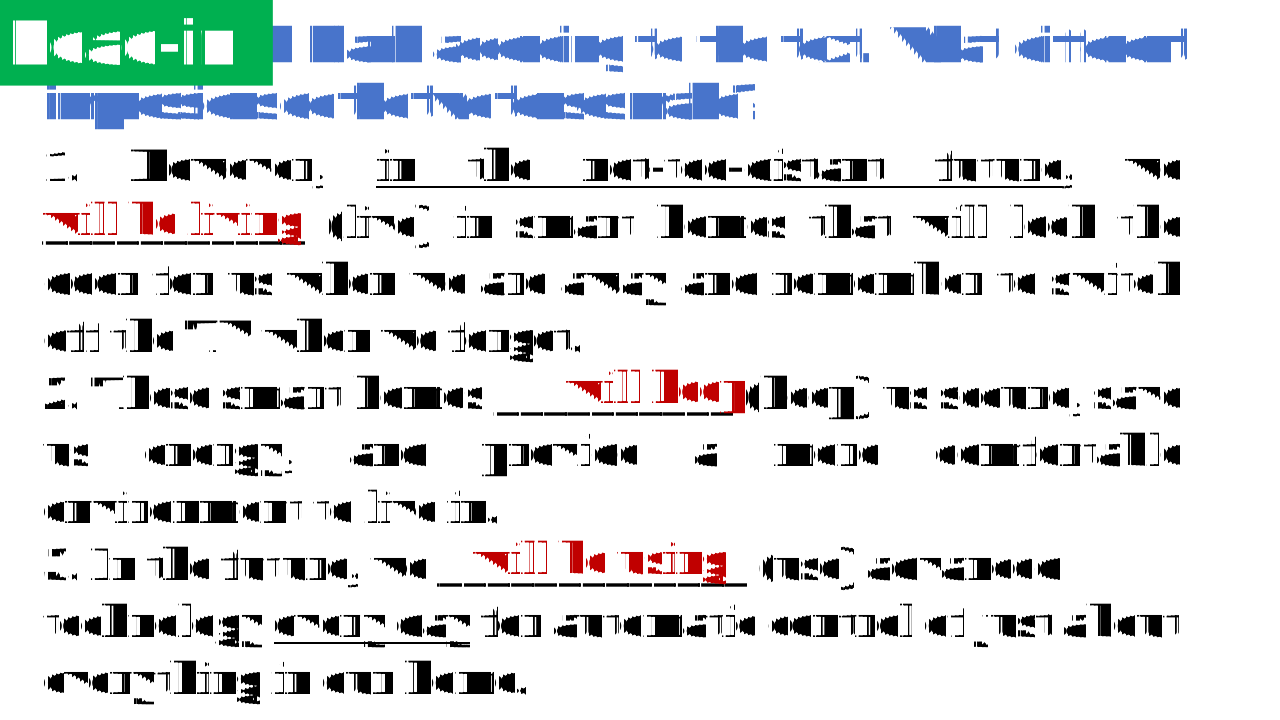
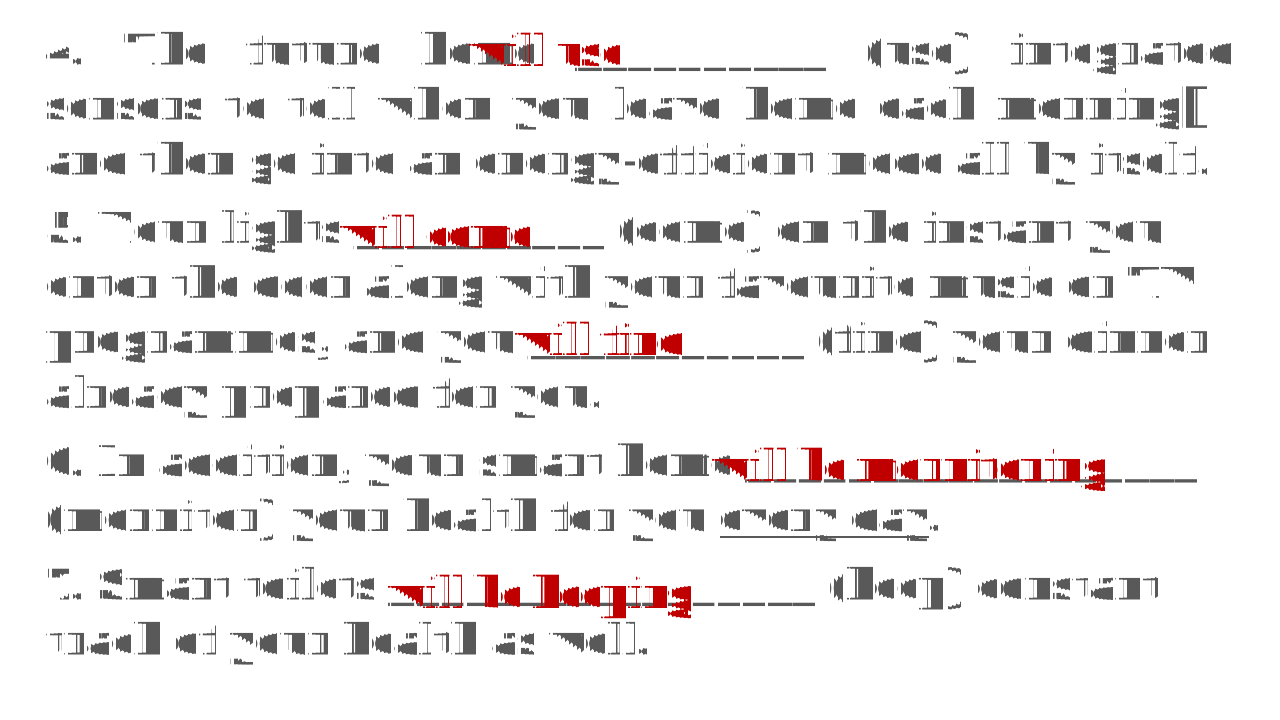
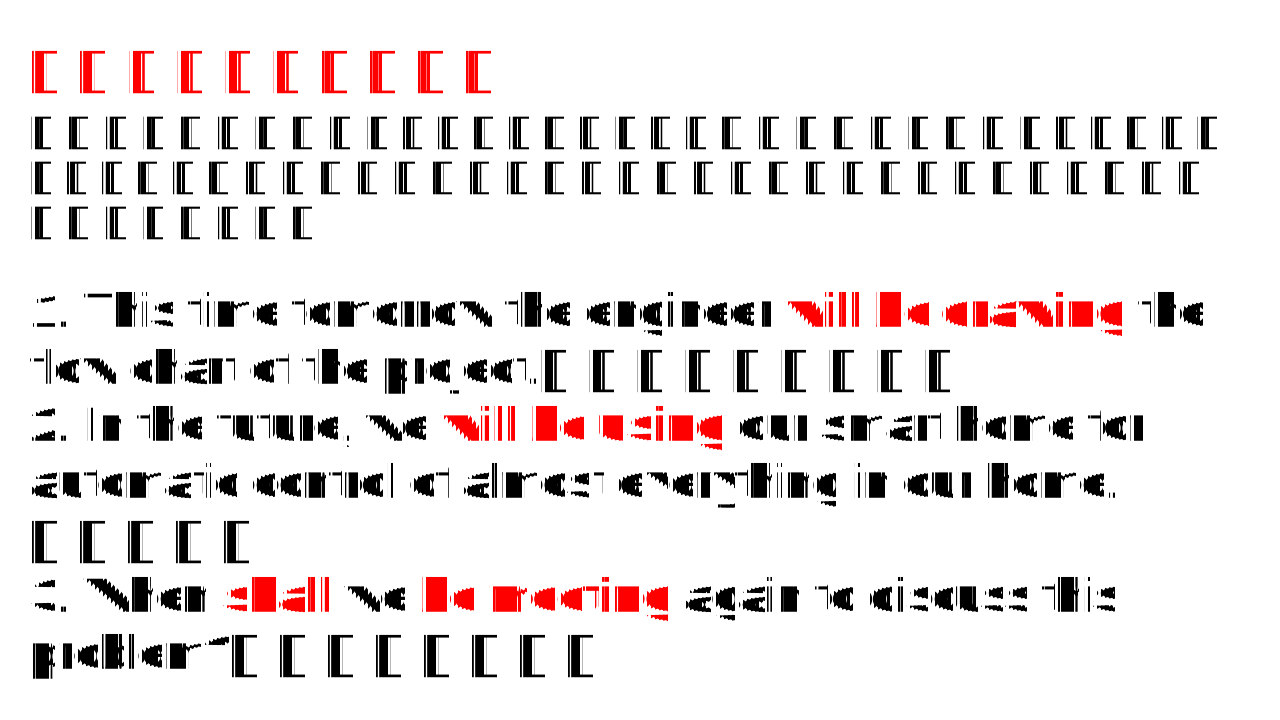
Period 6 Discovering Useful Structures The future progressive tense (将来进行时) will/shall be doing Unit 2 Looking into the Future /01 Structure and Function of Future Progressive Tense In the future, we will be using advanced technology every day for automatic control of just about everything in our home. In the future, we will use advanced technology every day for automatic control of just about everything in our home. Find out the differences will use: the simple future tense 一般将来时 will be using: the future progressive tense 将来进行时 Lead-in Fill in each blank according to the text. What different impressions do the two tenses make? 1. However, in the not-too-distant future, we _ (live) in smart homes that will lock the door for us when we are away and remember to switch off the TV when we forget. 2. These smart homes _ (keep) us secure, save us energy, and provide a more comfortable environment to live in. 3. In the future, we _ (use) advanced technology every day for automatic control of just about everything in our home. will be living will keep will be using Lead-in 4. The future home _ (use) integrated sensors to tell when you leave home each morning,and then go into an energy-efficient mode all by itself. 5. Your lights _ (come) on the instant you enter the door along with your favourite music or TV programmes, and you _ (find) your dinner already prepared for you. 6. In addition, your smart home _ (mornitor) your health for you every day. 7. Smart toilets _ (keep) constant track of your health as well. will use will come will find will be mornitoring will be keeping 一、将来进行时的概念 1. This time tomorrow the engineer will be drawing the flow chart of the project.(表将来正在进行) 2. In the future, we will be using our smart home for automatic control of almost everything in our home. (表预测) 3. When shall we be meeting again to discuss this problem?(表委婉的语气) 将来进行时主要表示将来某一时刻正在进行的动作,或表示在将来某一段时间正在进行的动作;预测将来会发生的事情或将来的某种可能;也常用来表示委婉的语气。 Function 1. 表示将来某一时间段内或某一时刻正在进行的动作或存在的状态。 Tom will be seeing his friend off at the airport tomorrow. 3. 表示预测可能会发生的事。 Don’t call me 9:00 tomorrow morning, I’ll be driving to work then. 2. 表示已经安排好要发生的动作。 If we keep working hard like this, we will be making a wonder. 4. 将来进行时用于疑问句、条件状语从句或I hope/think等的宾语从句中,表示亲切或委婉的语气。 Will you be staying here long? Comparison between Simple Future Tense and Future Progressive Tense /02 1. I will be giving a class at 10:00 tomorrow morning. 明天上午10点我(肯定)正在看书。(将来正在进行的动作) 2. It’s a terribly heavy trunk. Let me help you with it. 这是一个很重的行李箱,让我来帮你拿。(临时决定) 将来进行时表示将来某时正在进行的动作;一般将来时表示将来某时将要发生的动作,事先没有考虑而只是在说话时做出的临时决定或表示事物的倾向性、规律性和习惯等。 What different impressions do they make? Comparisons Be going to do表示计划、打算和安排要发生或有种种迹象表明将来要发生的事情,而将来进行时表示主观臆断和猜想将要发生的事。如: Look at the dark cloud, it’s going to rain. 1.When will you finish these letters? 你什么时候处理完这些信件? (直接询问,如上司对下属) 在现代英语口语中,将来进行时比一般将来时显得语气委婉。 Comparisons 2. Will you be needing anything else? 你还需要什么吗? (委婉说法) 1. Mary won’t pay this bill. 玛丽不肯付这笔钱。 有时一般将来时中的 will 含有“愿意”的意思,而用将来进行时则只是单纯地谈未来情况。 Comparisons 2. Mary won’t be paying this bill. 不会由玛丽来付这笔钱的。 I 一、将来进行时 定义:表示将来某一时间正在进行的动作。 基本结构:will/shall + be + doing ( will 用于各种人称, shall 用于第一人称 ) I 将来进行时 肯定式 疑问式 否定式 第一人称 第二人称 第三人称 二、将来进行时的结构 I 将来进行时 肯定式 疑问式 否定式 第一人称 I/ we will/ shall be doing… Will/ Shall I/ we be doing…? I/ We will/ shall not be doing… 第二人称 You will be doing… Will you be doing…? You will not be doing… 第三人称 He/ She/ They will be doing… Will he/ she/ they be doing…? He/ She/ They will not be doing… 二、将来进行时的结构 I 三、将来进行时的用法 1. 表示最近或较远的将来正在进行的动作,常与将来的时间状语连用。 Don’t phone him between 5pm and 6pm. He’ll be having a meeting then. When I get home, my wife will probably be doing cooking. 4. 我们一年后就要毕业了。 【汉译英】 At this time tomorrow we’ll be flying over the Pacific Ocean. If you plant watermelon seeds in the spring, you will be eating fresh watermelon in the fall. My cousin told me he was leaving for New Zealand the next morning. We are leaving school in one year’s time. 1. 明天这个时间我们会飞过太平洋。 2. 如果你春天种上西瓜种子,秋季你就会吃到新鲜的西瓜了。 3. 我堂弟告诉我,他第二天早晨要去新西兰。 The Greenwood Boys The Greenwood Boys are a group of pop singers. At present, they _ (visit) all parts of the country. They _ (arrive) here tomorrow. They _ (come) by train and most of the young people in the town _ (meet) them at the station. Tomorrow evening they _ (sing) at the Workers’ Club. The Greenwood Boys _ (stay) for five days. During this time, they _ (give) five performances. As usual, the police _ (have) a difficult time. They _ (try) to keep order. It is always the same on these occasions. will be arriving are visiting will be coming will be meeting will be singing will be staying will give will have will be trying I 将来进行时的用法 2. 表示按计划或安排要发生的动作 The train won’t be leaving until one o’clock. We shall be going to London next week. I 将来进行时的用法 3. 常用来表示预计即将发生或势必要发生的动作。 When shall we be meeting next time? Do come tomorrow! We’ll be expecting you. I 将来进行时的用法 4. 用于疑问句、条件状语从句或宾语从句中, 表示亲切或委婉的语气。 Will you be needing anything else? When will you be coming again? $$
资源预览图

1
2

3
4
5
6

相关资源
由于学科网是一个信息分享及获取的平台,不确保部分用户上传资料的 来源及知识产权归属。如您发现相关资料侵犯您的合法权益,请联系学科网,我们核实后将及时进行处理。