Unit 3 Sports and Fitness Discovering Useful Structures 课件 -2023-2024学年高中英语人教版(2019)必修第一册
2024-04-20
|
16页
|
5114人阅读
|
2375人下载
普通
资源信息
| 学段 | 高中 |
|---|---|
| 学科 | 英语 |
| 教材版本 | 高中英语人教版必修第一册 |
| 年级 | 高一 |
| 章节 | Discovering Useful Structures |
| 类型 | 课件 |
| 知识点 | - |
| 使用场景 | 同步教学-新授课 |
| 学年 | 2023-2024 |
| 地区(省份) | 全国 |
| 地区(市) | - |
| 地区(区县) | - |
| 文件格式 | PPTX |
| 文件大小 | 1.61 MB |
| 发布时间 | 2024-04-20 |
| 更新时间 | 2024-04-20 |
| 作者 | 匿名 |
| 品牌系列 | - |
| 审核时间 | 2024-04-20 |
| 下载链接 | https://m.zxxk.com/soft/44631829.html |
| 价格 | 0.00储值(1储值=1元) |
| 来源 | 学科网 |
内容正文:
Unit 3 Sports and Fitness
Period 4
Discovering Useful Structures
All sports for all people.
—Pierre de Coubertin
1
学习目标
本课结束时,你将能够:
1. 感知和注意附加疑问句及其回答,梳理与归纳附加疑问句的功能;
2. 在对话中能够使用恰当的附加疑问句,并能做出正确的回答;
3. 尝试在新语境中借助附加疑问句表达相关信息。
2
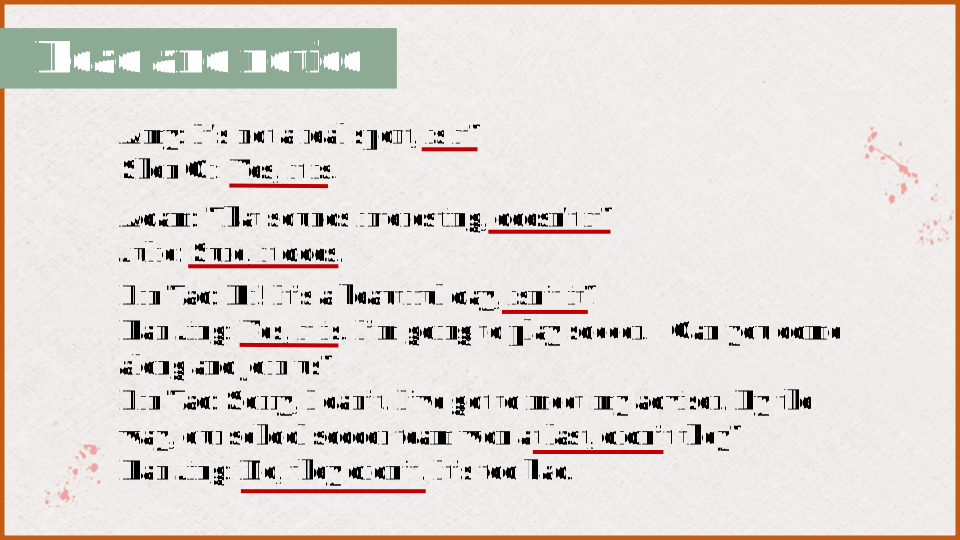
Read and notice
Adam: That sounds interesting, doesn't it?
Julie: Sure, it does.
Lin Tao: Hi! It’s a beautiful day, isn’t it?
Han Jing: Yes, it is. I’m going to play soccer. Can you come along and join us?
Lin Tao: Sorry, I can’t. I’ve got to meet my adviser. By the way, our school soccer team won at last, didn’t they?
Han Jing: No, they didn’t. It’s too bad.
Amy: It's not a real sport, is it?
Shen Qi: Yes, it is.
3
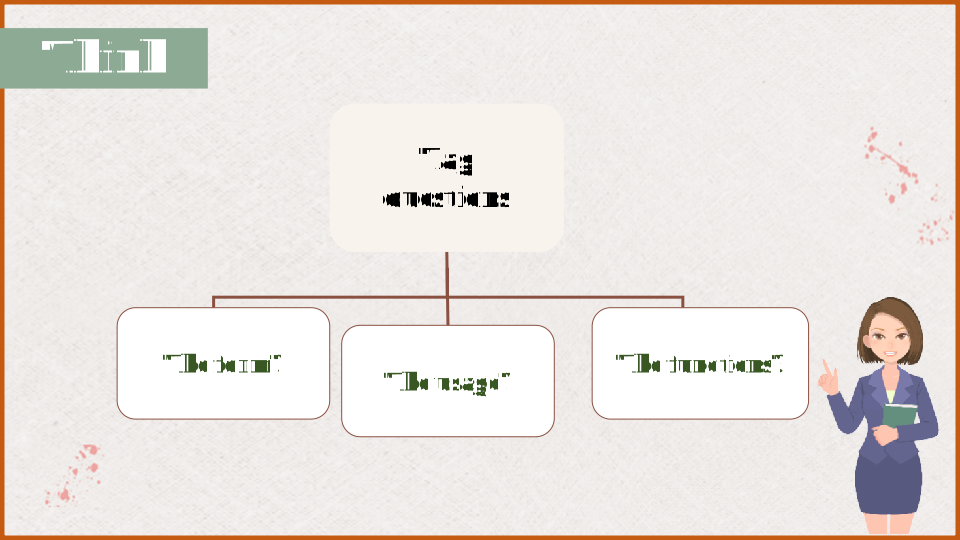
Tag
questions
The form?
The usage?
The functions?
Think
5
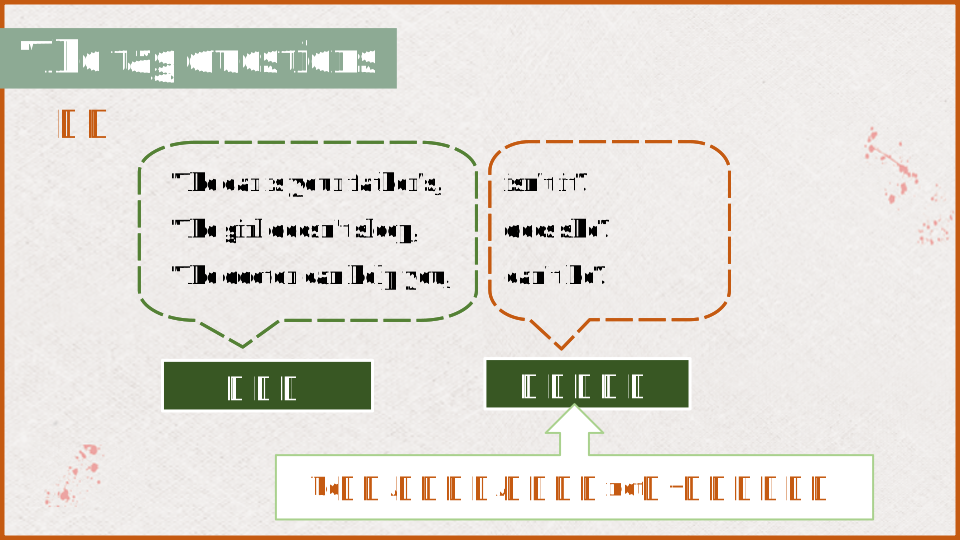
构成
The car is your father's, isn't it?
The girl doesn't sleep, does she?
The doctor can help you, can't he?
陈述句
附加疑问句
be动词/情态动词/助动词(not)+主语(代词)
The tag questions
5
前肯后否
前否后肯
肯定陈述句+否定附加疑问句句
否定陈述句+肯定附加疑问句
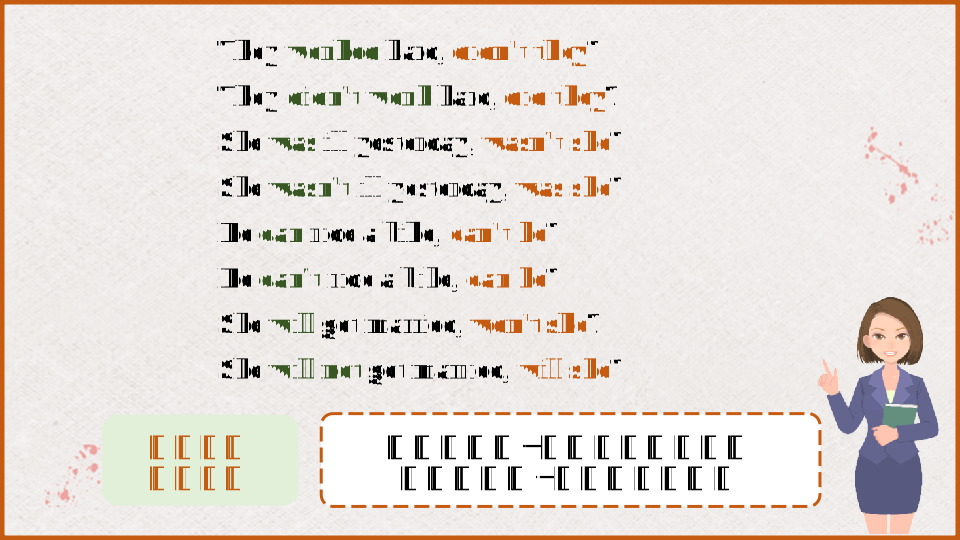
They worked hard, didn't they?
They didn't work hard, did they?
She was ill yesterday, wasn't she?
She wasn't ill yesterday, was she?
He can ride a bike, can't he?
He can't ride a bike, can he?
She will get married, won't she?
She will not get married, will she?
6
7
★ 如果陈述句中出现表示否定意义的词,如not, no, few, little, no one,
nobody, nothing, nowhere, hardly, never, seldom等时,附加疑问句要
用肯定式。
He has little money, does he? No one can answer it, can he?
★ 当陈述句的助动词为had better时,附加疑问句用had或hadn't。
You had better not go out at night, had you?
★ let's引导的祈使句, 其附加疑问句一般用“shall we”;
let us引导的祈使句,其附加疑问句一般用“will you”;
动词原形引导的祈使句,其附加疑问句一般用“will you”。
Let's go home, shall we? Let us go home, will you?
Open the door, will you?
附加疑问句的特殊情况
7
8
★当陈述句中的主语为this, that, something, anything, nothing, everything等时,
附加疑问句中的主语用it。
This is very good, isn't it?
Something is wrong with the machine, doesn't it?
★当陈述句中的主语为somebody、someone、anybody、anyone、everybody、
everyone、nobody、no one、these、those等时,附加疑问句中
资源预览图
1

2
3
4
5
6
相关资源
由于学科网是一个信息分享及获取的平台,不确保部分用户上传资料的 来源及知识产权归属。如您发现相关资料侵犯您的合法权益,请联系学科网,我们核实后将及时进行处理。