Unit3 Sports and Fitness Discovering useful structures 课件-2024-2025学年高中英语人教版(2019)必修第一册
2025-06-19
|
23页
|
230人阅读
|
4人下载
普通
资源信息
| 学段 | 高中 |
|---|---|
| 学科 | 英语 |
| 教材版本 | 高中英语人教版必修第一册 |
| 年级 | 高一 |
| 章节 | Discovering Useful Structures |
| 类型 | 课件 |
| 知识点 | - |
| 使用场景 | 同步教学-新授课 |
| 学年 | 2024-2025 |
| 地区(省份) | 全国 |
| 地区(市) | - |
| 地区(区县) | - |
| 文件格式 | PPTX |
| 文件大小 | 7.28 MB |
| 发布时间 | 2025-06-19 |
| 更新时间 | 2025-06-19 |
| 作者 | 匿名 |
| 品牌系列 | - |
| 审核时间 | 2025-06-19 |
| 下载链接 | https://m.zxxk.com/soft/52654898.html |
| 价格 | 1.50储值(1储值=1元) |
| 来源 | 学科网 |
内容正文:
Tag questions
附加疑问句
1
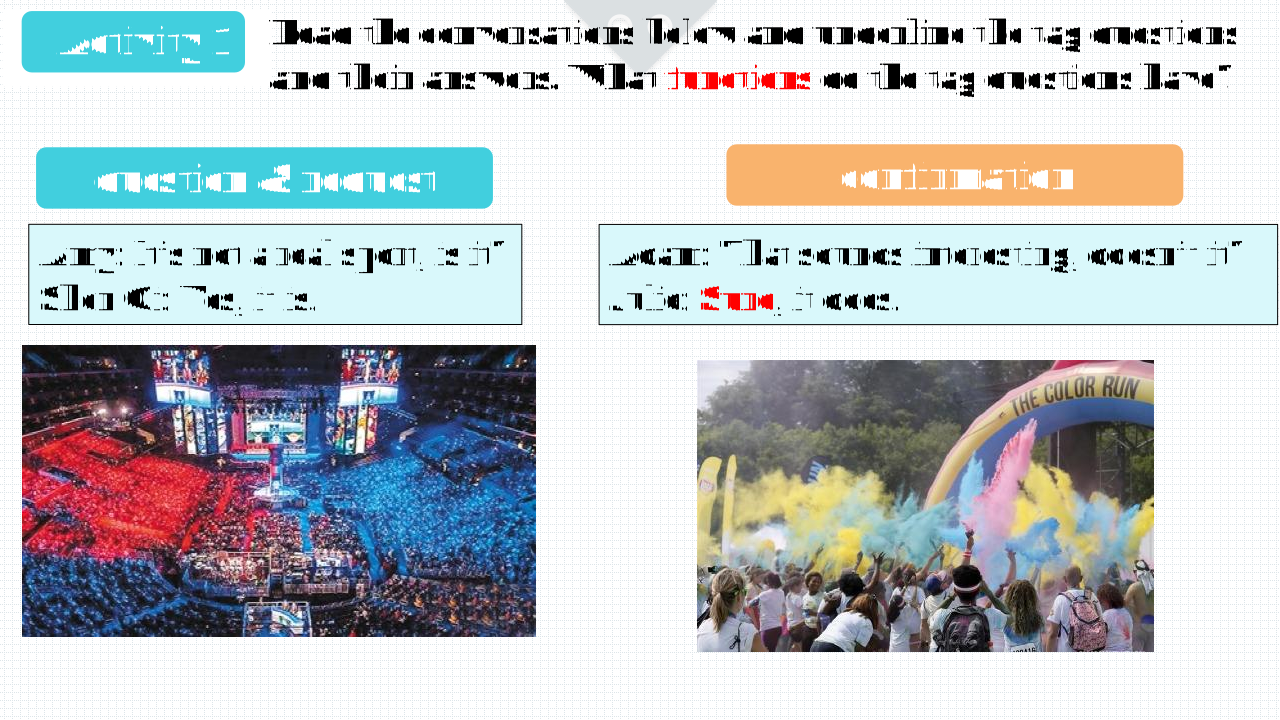
Activity 1
Read the conversations below and underline the tag questions and their answers. What functions do the tag questions have?
Amy: It’s not a real sport, is it?
Shen Qi: Yes, it is.
Adam: That sounds interesting, doesn’t it?
Julie: Sure, it does.
question & request
confirmation
2
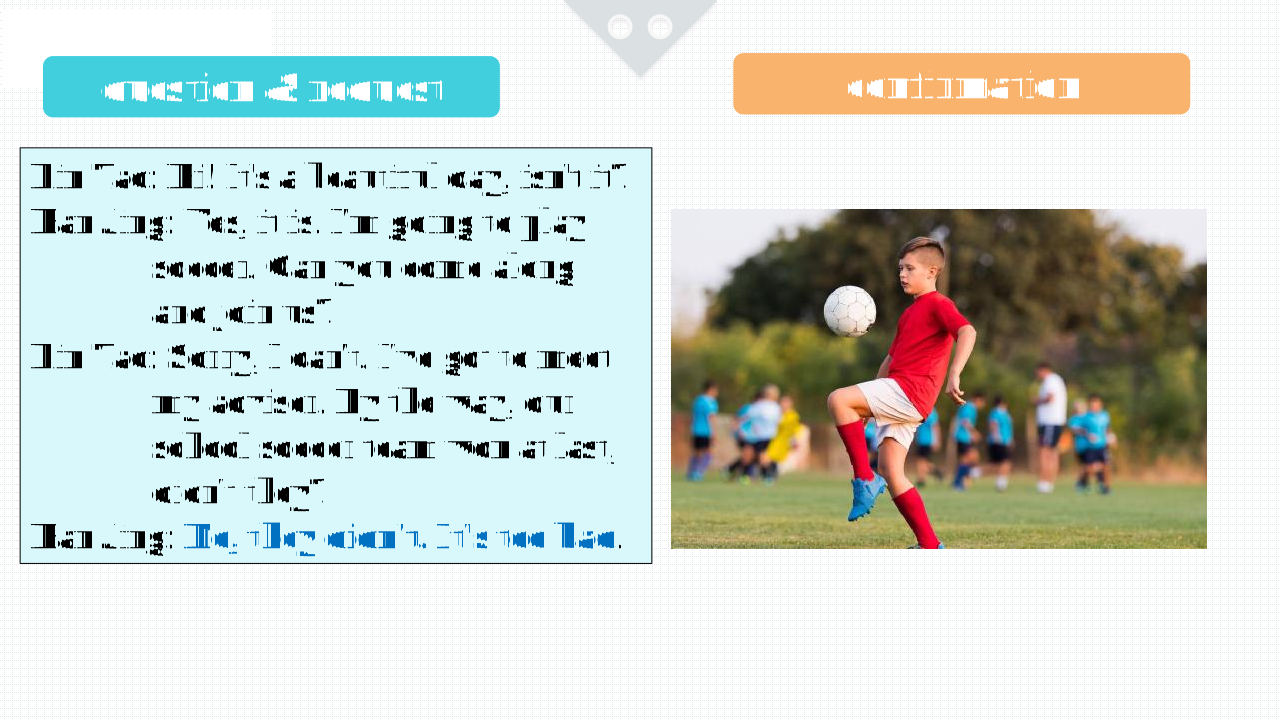
Lin Tao: Hi! It's a beautiful day, isn't it?
Han Jing: Yes, it is. I'm going to play
soccer. Can you come along
and join us?
Lin Tao: Sorry, I can't. I've got to meet
my adviser. By the way, our
school soccer team won at last,
didn't they?
Han Jing: No, they didn't. It's too bad.
question & request
confirmation
3
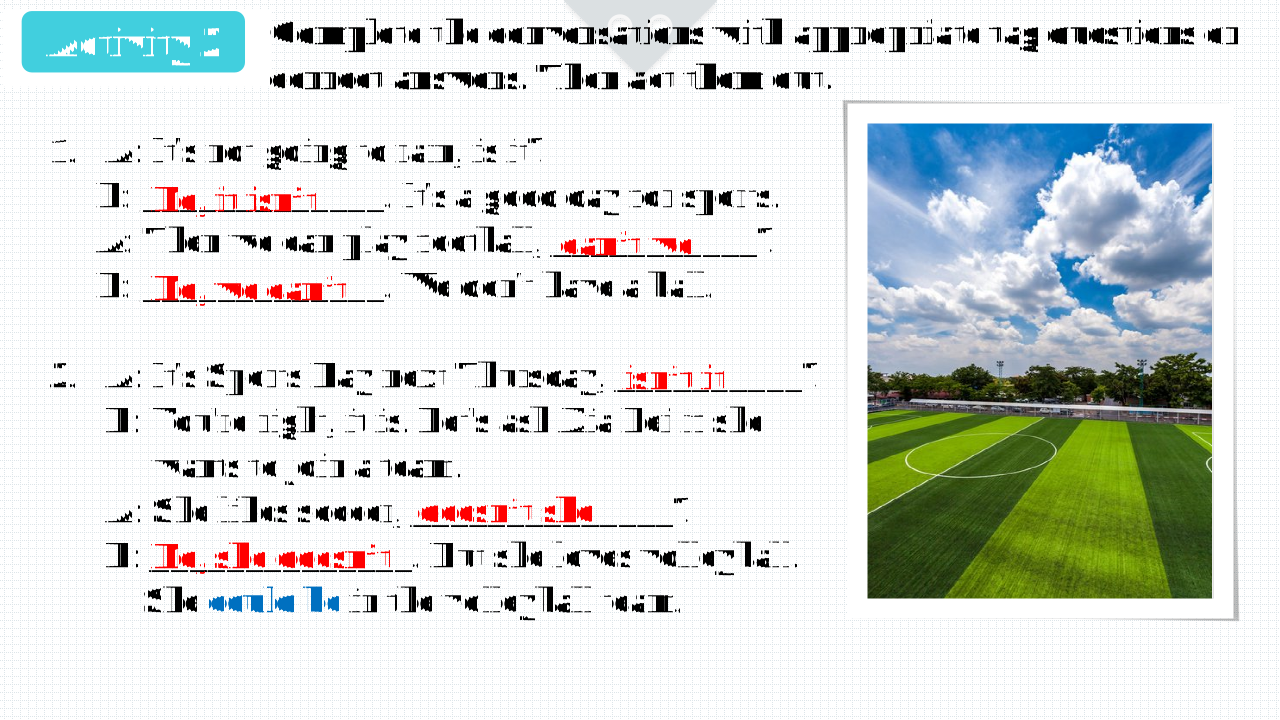
Activity 2
Complete the conversations with appropriate tag questions or correct answers. Then act them out.
1. A: It's not going to rain, is it?
B: _____________. It's a good day for sports.
A: Then we can play football, ___________?
B: _____________. We don't have a ball.
2. A: It's Sports Day next Thursday, __________?
B: You're right, it is. Let's ask Xia Lei if she
wants to join a team.
A: She likes soccer, ______________?
B: ______________. But she loves volleyball.
She could be in the volleyball team.
No, it isn’t
can’t we
No, we can’t
isn’t it
doesn’t she
No, she doesn’t
4
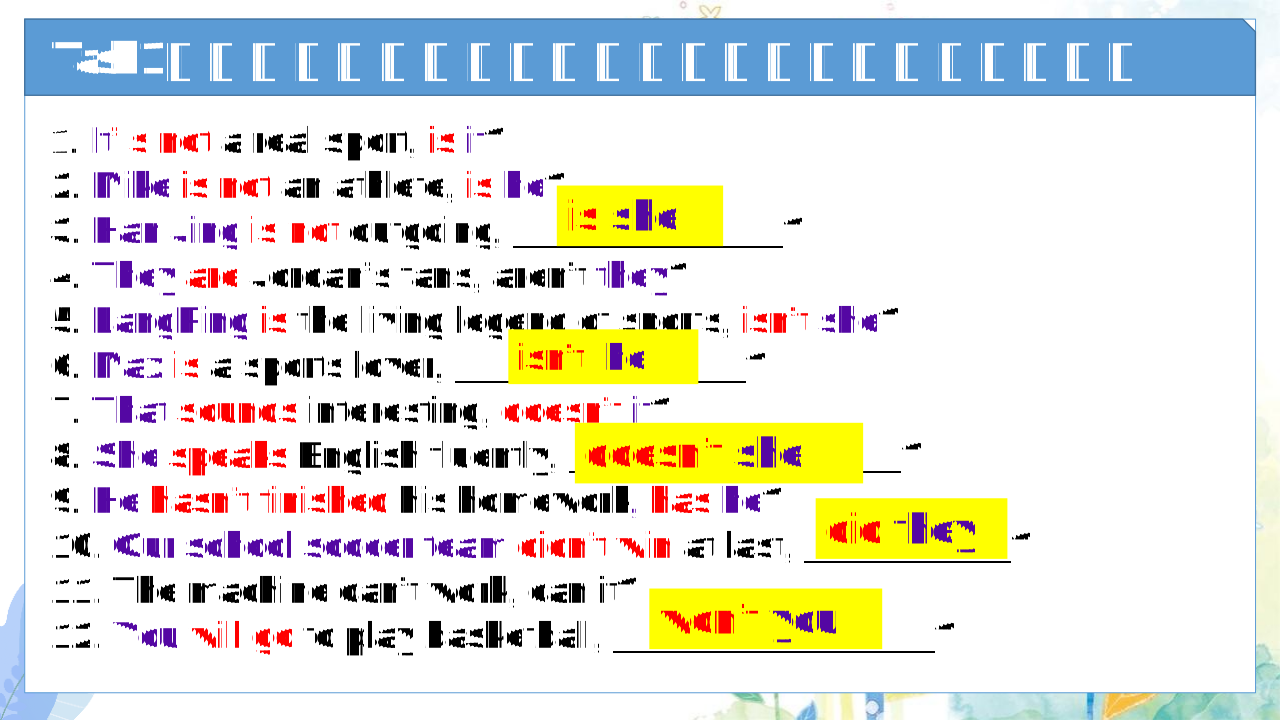
Task 1 观察例句,完成填空,分析归纳附加疑问句的用法。
1. It’ s not a real sport, is it?
2. Mike is not an athlete, is he?
3. Han Jing is not outgoing, ?
4. They are Jordan’s fans, aren’t they?
5. LangPing is the living legend of sports, isn’t she?
6. Max is a sports lover, ?
7. That sounds interesting, doesn’t it?
8. She speaks English fluently, ?
9. He hasn’t finished his homework, has he?
10. Our school soccer team didn’t win at last, ?
11. The machine can’t work, can it?
12. You will go to play basketball, ?
is she
isn’t he
doesn’t she
did they
won’t you
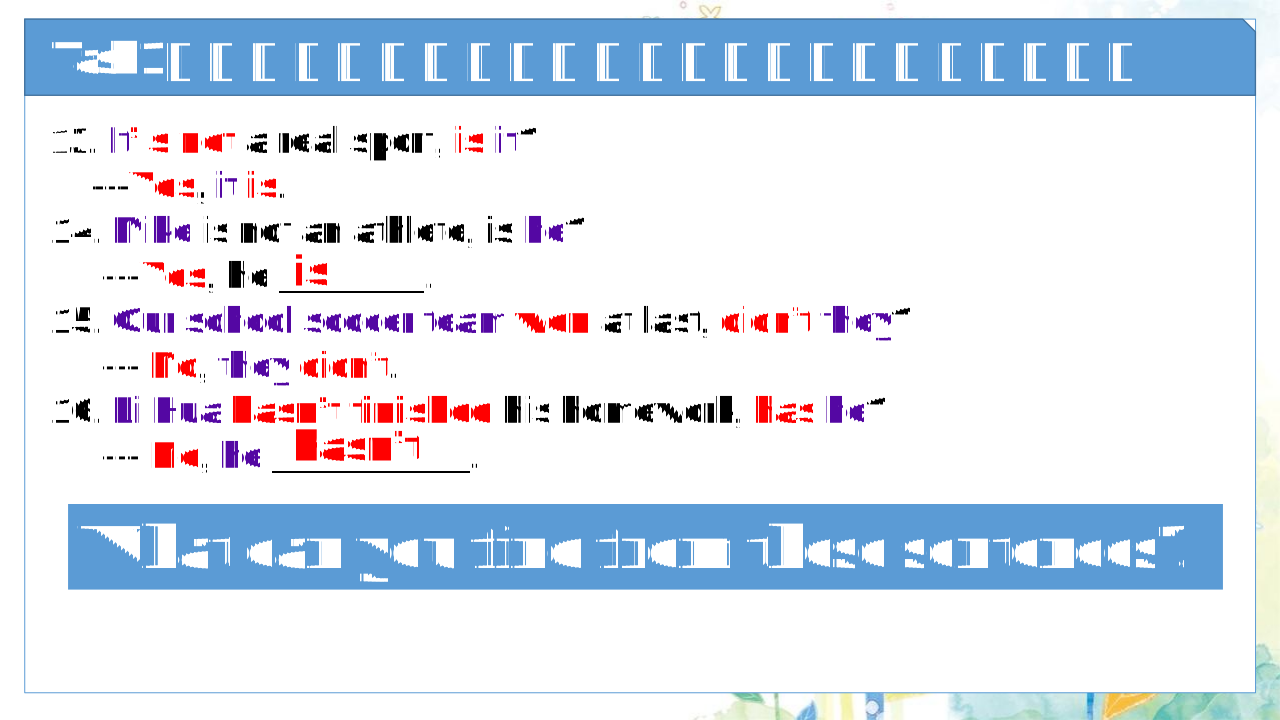
Task 1 观察例句,完成填空,分析归纳附加疑问句的用法。
13. It’ s not a real sport, is it?
---Yes, it is.
14. Mike is not an athlete, is he?
---Yes, he .
15. Our school soccer team won at last, didn’t they?
--- No, they didn’t.
16. Li Hua hasn’t finished his homework, has he?
--- No, he .
is
hasn’t
What can you find from these sentences?
附加疑问句(tag questions):
① 附加疑问句有两部分组成:陈述部分和疑问部分。疑问部分一般由be( , , , , )动词、助动词( , , , , , )或情态动词( , 等)和表示主语的 构成。
② 陈述部分是肯定式,那么疑问部分是 。
陈述部分是否定式,那么疑问部分是 。
③ 如果对事实做肯定回答,用 +肯定结构。
如果对事实做否定回答,用 +否定结构。
Analyzing and summarizing
is
am
are
was
were
do
does
did
have
has
had
can
will
代词
否定式
肯定式
Yes
No
在前否后肯结构中,yes 译为“不”,no 译为“是”。
1.反义义疑问句的陈述部分为I am …时,问句部分习惯上用aren’t I?
I am a very honest man, aren’t I?
I’m as tall as your brother,aren’t I?
2.陈述部分的主语为不定代词somebody (someone), anybody (anyone), nobody (no one), everybody (everyone) none, neither时,问句部分的主语强调全体时用they,强调个体时用he。
Someone has taken the seat, hasn’t he?
Everyone has done their best in the game, haven’t they?
3.陈述部分的主语为不定代词something, anything, nothing, everything时,问句部分的主语用it。
Something is wrong with the computer, isn’t it?
Nothing can stop you learning, can it?
反义疑问句的特殊情况
The structure
1. 肯定式陈述部分+否定附加疑问部分
You often play badminton, don’t you?
2. 否定式陈述部分+肯定附加疑问部分
It’s not a real sport, is it?
3. 含有否定词的陈述部分+肯定附加疑问部分
①Nobody saw him walk into the room, did they?
②You’ve never been to Paris, have you?
4. 祈使句+附加疑问部分
①Come along with me, will you? / can you?
won’t you? / can’t you?
②Don’t make any noise, will you?
9
1. A: The 29th Olympic Games were held in Beijing, weren’t they?
B: Yes, they were. (Yes, that’s right)
2. A: Michael Jordan started to play basketball in college, didn’t he?
B: No, he didn’t. He first played in a team at senior high school.
3. A: David has been to a boxing match, hasn’t he?
B: No, he hasn’t. He always watches boxing on TV.
4.A: You can’t cook, can you? 你不会做饭,是吗?
B: Yes, I can. I’m good at cooking. 不,我会。我做饭很好。
The reply
根据事实来回答
10
一. Concept
Tag questions
附加疑问句又叫反义疑问句,是指当提问的人对前面叙述的事实不敢确定,而需要向对方加以证实时所提出的问句。
附加疑问句:陈述句+简短问句
(1)肯定式陈述部分+ 附加疑问部分
(2)否定式陈述部分+ 附加疑问部分
注:附加疑问句遵循“前肯后否,前否后肯”的原则
疑问部分如果是否定式,not与be, do, will缩写
疑问部分的主语不用名词,应用人称代词
二. Basic structure
否定式
肯定式
e.g. The young and tall man is a teacher, isn't he?
You aren't workers, are you?
The little girl can speak English, ?
She wasn't in the room just now, ?
can't she
was she
Yes+肯定回答/No +否定回答
注意:陈述句为否定形式时,汉语表达习惯不同,yes译成“不”,no译成“是”
He wants to go out, doesn't he?
他想出去,对吧?
Yes, he does.是的,他想。 No, he doesn't. 不,他不想。
You don't want to go out, do you?
你不想出去,对吧?
Yes,I do. 不,我想。 No,I don't. 是的,我不想。
三. 答句
1) 若陈述部分含有hardly, never, few, nothing, little, nobody, seldom等否定词或半否定词,其疑问部分要用肯定式。
He has few friends here, has he?
2) 若陈述部分含有带否定前缀的词,疑问部分仍用否定式。
It is unfair, isn't it?
3) 若陈述部分为there be句型时,疑问部分仍用there作主语。
There was nothing in the room, was there?
四. 特殊用法与结构
Let’s go and work out in the gym, _________?
You don’t take part in a marathon when you’re ill, ________?
Turn off the TV, _______________________?
She’s doing all she can for us in times of stress, so we must back her up, ___________?
Henry thinks you are cheating your friends, ___________?
Andy’s never been anything but a friendly guy, ___________?
Emily had to cut out sugar from her diet as her doctor suggested, _________?
There’s going to be a talk on wellness and fitness next week, __________?
Add tag questions to the statements.
Exercise 1
shall we
do you
will/ won’t /can/ can’t you
mustn’t we
doesn’t he
has he
didn’t she
isn’t there
16
A: Hi Chris! My name is Steve. I’m a trainer
here at the gym. So you’ve just filled out our
questionnaire, ____________?
B: Yes. It’s nice to meet you, Steve.
A: It’s good to meet you, too! OK, let me take a
look at your answers. Hmmm…So you’ve
never worked out in a gym before, _________?
B: No, I haven’t, Steve. Embarrassing, but true.
A: Oh, don’t be embarrassed! It’s never too late to
start. But I have to ask… You think working
out for…hours a week is enough, _________?
Exercise 2
Complete the questionnaire for Chris. Then fill in the blanks below and write an ending to the conversation.
haven’t you
have you
don’t you
17
Task 2 Complete the conversations with appropriate tag questions or correct answers. Then act them out.
1. A: It’ s not going to rain, is it?
B: . It’ s a good day for sports.
A: Then we can play football, ?
B: . We don’t have a ball.
2. A: It’s Sports Day next Thursday, ?
B: You’ re right, it is. Let’ s ask Xia Lei if she wants to join a team.
A: She likes soccer, ?
B: . But she loves volleyball. She could be in the volleyball team.
3. A: It’ s time for badminton class. Where is the coach? He’ s late, ?
B: It’ s been 10 minutes already. He isn’t coming, ?
A: Cool! We can have a good time. That’s great!
B: Shh!
A: Oh no, he’ s right behind me, ?
B: Yes, I am!
No, it isn’t
can’t we
No, we can’t
isn’t it
doesn’t she
No, she doesn’t
isn’t she
is he
isn’t he
Pracitce
练一练
Page 40
Task3 Complete the conversation with appropriate tag questions.
Tom: Mum, I can have one more burger, ?
Mum: No, you can’t. You’ve already had two!
But you can have some yoghurt. Oh, what’s that noise?
Dad: It isn’t a storm coming, ?
Tom: Yes, it is! But it’s on TV!
Dad, come and see, ?
Dad: What movie are you watching?
Tom: The Day after Tomorrow.
Mum: Let’ s watch it together, ?
Family time!
Dad: Good idea!
Page 85
can’t I
is it
will / won’t you
shall we
陈述部分为祈使句的附加疑问句, 疑问部分通常用will you。
当祈使句为Let’s…时,疑问部分总是用 shall we。
祈使句
翻译句子
1. 均衡的饮食对健康很重要,不是吗?(balanced diet )
_______________________________________________________
2. 汤姆不喜欢拳击运动,对吗?
_______________________________________
3. 你哥哥很少在早上锻炼,是吗?(work out)
___________________________________________________________
4. 没人看到他在考试中作弊,是吗?(cheat in the exam)
___________________________________________________
A balanced diet is important to health, isn’t it?
Tom doesn’t like boxing, does he?
Your brother seldom works out in the morning, does he?
Nobody saw him cheating in the exam, did they?
5. 游泳很适合你,不是吗?(be suitable for)
__________________________________________________
6. 现在教室里没有学生了,是吗?(there be)
_________________________________________________________
7. 不要忘了申请签证,好吗?(forget to do)
___________________________________________________
8. ——你父亲还没戒烟,是吗?(cut out smoking)
——是的,他还没戒烟。
__________________________________________
_________________
Swimming is very suitable for you, isn’t it?
There is no students in the classroom now, is there?
Don’t forget to apply for the visa, will you?
—Your father hasn’t cut out smoking, has he?
—No, he hasn’t.
疑问句类型
一般疑问句
e.g. Do you like these animals?
2. 特殊疑问句
e.g. Who runs fastest in your class?
3. 选择疑问句
e.g. Do you like to play football or basketball?
4. 附加疑问句
e.g. I don’t think he will come, will he?
Thanks
23
$$
资源预览图
1
2
3
4
5
6
相关资源
由于学科网是一个信息分享及获取的平台,不确保部分用户上传资料的 来源及知识产权归属。如您发现相关资料侵犯您的合法权益,请联系学科网,我们核实后将及时进行处理。