Unit 2 课时跟踪检测(4) 重点题型强化练(word练习)-【新课程学案】新教材2023-2024学年高中英语选择性必修第四册(人教版2019)
2024-03-05
|
6页
|
119人阅读
|
2人下载

资源信息
| 学段 | 高中 |
|---|---|
| 学科 | 英语 |
| 教材版本 | 高中英语人教版选择性必修第四册 |
| 年级 | 高二 |
| 章节 | Unit 2 Iconic Attractions |
| 类型 | 题集-专项训练 |
| 知识点 | - |
| 使用场景 | 同步教学-新授课 |
| 学年 | 2024-2025 |
| 地区(省份) | 全国 |
| 地区(市) | - |
| 地区(区县) | - |
| 文件格式 | DOCX |
| 文件大小 | 80 KB |
| 发布时间 | 2024-03-05 |
| 更新时间 | 2024-03-05 |
| 作者 | 山东一帆融媒教育科技有限公司 |
| 品牌系列 | 新课程学案·高中同步导学 |
| 审核时间 | 2024-03-05 |
| 下载链接 | https://m.zxxk.com/soft/43685640.html |
| 价格 | 2.00储值(1储值=1元) |
| 来源 | 学科网 |
内容正文:
UNIT 2 课时跟踪检测(四) 重点题型强化练
Ⅰ.阅读理解
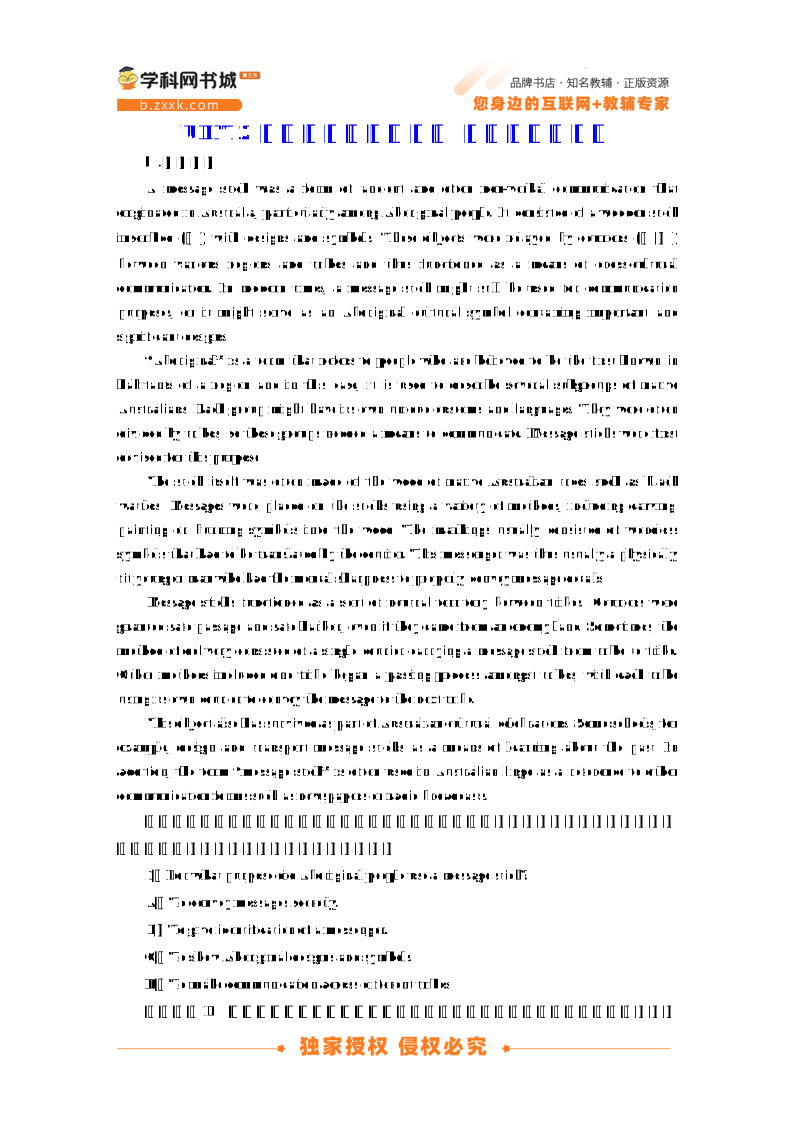
A message stick was a form of ancient and often non-verbal communication that originated in Australia, particularly among Aboriginal people. It consisted of a wooden stick inscribed (刻) with designs and symbols. These objects were relayed by couriers (信使) between various regions and tribes and thus functioned as a means of cross-cultural communication. In modern times, a message stick might still be used for communication purposes, or it might serve as an Aboriginal cultural symbol containing important and significant designs.
“Aboriginal” is a term that refers to people who are believed to be the first known in habitants of a region and in this case, it is used to describe several subgroups of native Australians. Each group might have its own unique customs and languages. They were often divided by tribes, so these groups needed a means to communicate. Message sticks were first devised for this purpose.
The stick itself was often made of the wood of native Australian trees such as black wattles. Messages were placed on the sticks using a variety of methods, including carving, painting or burning symbols into the wood. The markings usually consisted of wordless symbols that had to be translated by the courier. This messenger was thus usually a physically fit younger man who had the mental sharpness to properly convey message details.
Message sticks functioned as a sort of neutral territory between tribes. Couriers were granted safe passage and safe harbor, even if they came from an enemy land. Sometimes, the method of delivery consisted of a single courier carrying a message stick from tribe to tribe. Other methods included one tribe began a passing process amongst tribes, with each tribe using its own courier to convey the message to the next tribe.
This object also has survived as part of Australian cultural celebrations. Some schools, for example, design and transport message sticks as a means of learning about the past. In addit
资源预览图
1
2
3
相关资源
由于学科网是一个信息分享及获取的平台,不确保部分用户上传资料的 来源及知识产权归属。如您发现相关资料侵犯您的合法权益,请联系学科网,我们核实后将及时进行处理。