Unit 1 课时跟踪检测(2) 语言运用综合练(word练习)-【新课程学案】新教材2023-2024学年高中英语选择性必修第四册(人教版2019)
2024-03-05
|
5页
|
116人阅读
|
2人下载

资源信息
| 学段 | 高中 |
|---|---|
| 学科 | 英语 |
| 教材版本 | 高中英语人教版选择性必修第四册 |
| 年级 | 高二 |
| 章节 | Unit 1 Science Fiction |
| 类型 | 题集-专项训练 |
| 知识点 | 语法,语用 |
| 使用场景 | 同步教学-新授课 |
| 学年 | 2024-2025 |
| 地区(省份) | 全国 |
| 地区(市) | - |
| 地区(区县) | - |
| 文件格式 | DOCX |
| 文件大小 | 80 KB |
| 发布时间 | 2024-03-05 |
| 更新时间 | 2024-03-05 |
| 作者 | 山东一帆融媒教育科技有限公司 |
| 品牌系列 | 新课程学案·高中同步导学 |
| 审核时间 | 2024-03-05 |
| 下载链接 | https://m.zxxk.com/soft/43685628.html |
| 价格 | 2.00储值(1储值=1元) |
| 来源 | 学科网 |
内容正文:
UNIT 1 课时跟踪检测(二) 语言运用综合练
Ⅰ.阅读理解
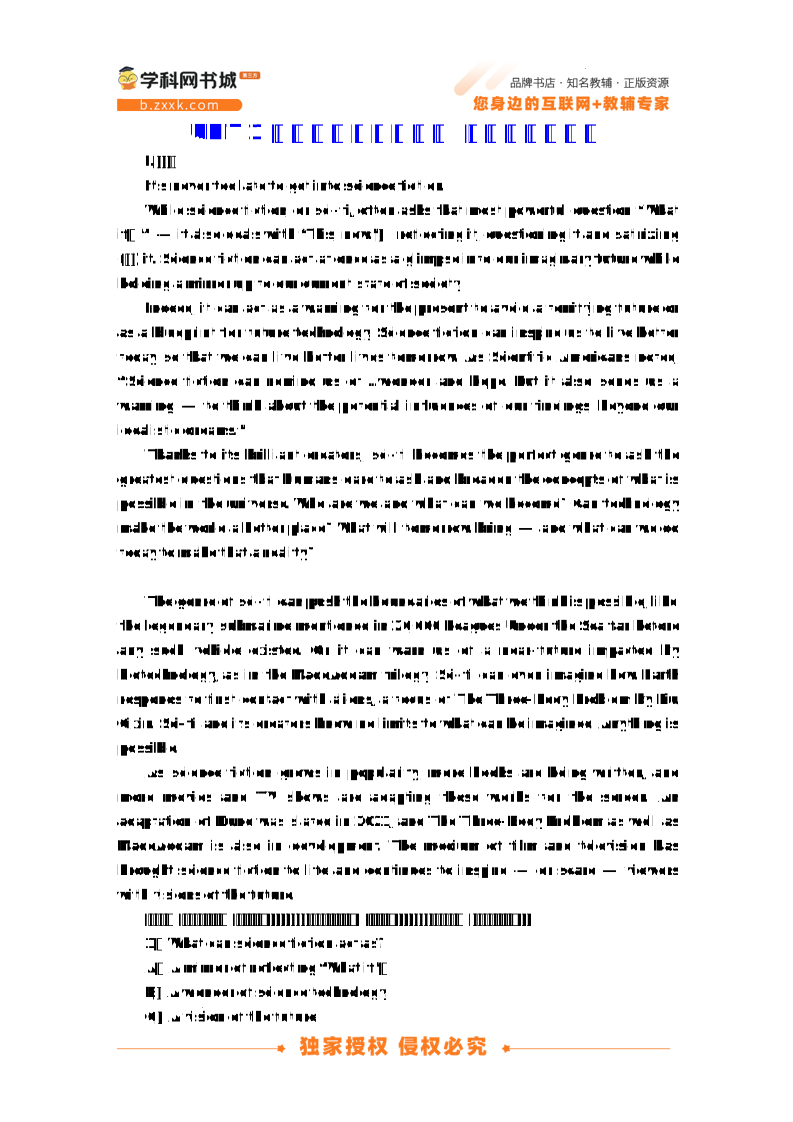
It's never too late to get into science fiction.
While science fiction, or sci-fi, often asks that most powerful question “What if?” — it also deals with “This, now”: reflecting it, questioning it and satirizing (讽刺) it. Science fiction can act at once as a glimpse into our imaginary future while holding a mirror up to our current state of society.
Indeed, it can act as a warning for the present to avoid a terrifying future or as a blueprint for future technology. Science fiction can inspire us to live better today so that we can live better lives tomorrow. As Scientific Americans noted, “Science fiction can remind us of ...wonder and hope. But it also sends us a warning — to think about the potential influences of our findings, beyond our idealistic dreams.”
Thanks to its brilliant creators, sci-fi becomes the perfect genre to ask the greatest questions that humans dare to ask and broaden the concepts of what is possible in the universe. Who are we and what can we become? Can technology make the world a better place? What will tomorrow bring — and what can we do today to make that a reality?
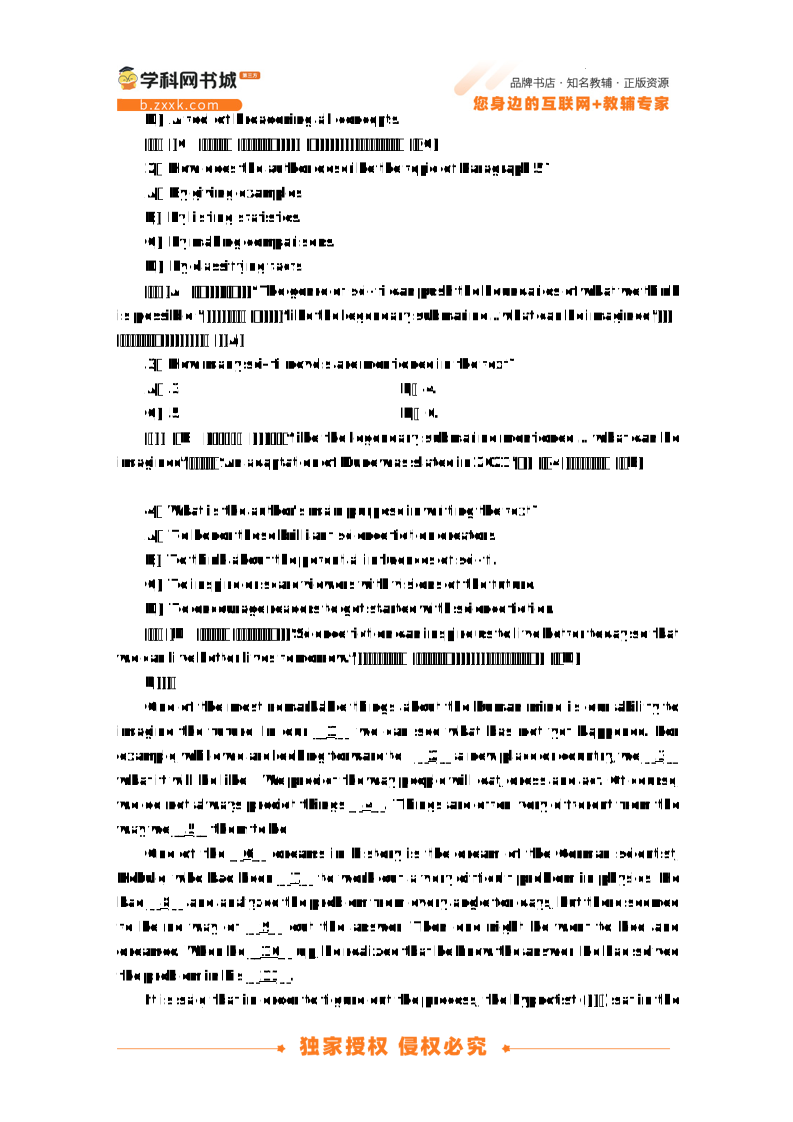
The genre of sci-fi can push the boundaries of what we think is possible, like the legendary submarine mentioned in 20,000 Leagues Under the Sea far before any such vehicle existed. Or it can warn us of a near-future impacted by biotechnology, as in the MaddAddam trilogy. Sci-fi can even imagine how Earth responds to first contact with aliens, a focus of The Three-Body Problem by Liu Cixin. Sci-fi and its creators know no limits to what can be imagined. Anything is possible.
As science fiction grows in popularity, more books are being written, and more movies and TV shows are adapting these works for the screen. An adaptation of Dune was slated in 2021, and The Three-Body Problem as well as MaddAddam is also in development. The medium of film and television has brought science fiction to life and continues to inspire — or scare — viewers with v
资源预览图
1
2

相关资源
由于学科网是一个信息分享及获取的平台,不确保部分用户上传资料的 来源及知识产权归属。如您发现相关资料侵犯您的合法权益,请联系学科网,我们核实后将及时进行处理。