第二单元developing ideas reading - 2023-2024学年新外研版高二英语精美备课课件(选择性必修第一册)
2023-09-27
|
16页
|
617人阅读
|
0人下载
精品
内容正文:
SB1U2 Onwards and upwards
Developing ideas - Three Days to See(page26-28)
1 Are the numbers different from what you expected? In what way?
2 What special assistance can people with disabilities make use of in thier daily lives?
Q & A
1. Are there any people living with a disability around you?
2. Do you know how many people have a disability?
wheelchairs, walkingsticks,handrails(扶手)
special pavements for the blind(盲道) Braille signs(布莱叶盲文)...
Stephen Hawking
Helen Keller
Beethoven
Zhang Haidi
Many people have made great achievements despite disabilities, can you name some inspiring models?
Share the information of the life and achievement of Helen Keller.
Background Information
Writings: ☆The Story of My Life《我生活的故事》
☆Out of the Dark《走出黑暗》
☆Three Days to See《假如给我三天光明》
☆The Practice of Optimism《练习乐观》
☆The Song of the Stone Wall《石墙之歌》
☆The Open Door《打开的门》
Sayings: ☆Keep your face to the sun, so you won't see the shadow.
把脸一直向着阳光,这样就不会看到阴影。
☆To live every day as the last day of life.
把活着的每一天看作生命的最后一天。
☆The greatest tragedy in life is not in the past, but in the future.
人生最大的灾难,不在于过去的创伤,而在于把未来放弃。
a symble of courage 勇气的象征
in the face of overwheliming odds在巨大的逆境面前
handicapped adj./ˈhændikæpt/ 残疾的
be stricken with 患上某种疾病或遭受某种不幸
priviledged adj./ˈprɪvəlɪdʒd/(因非常富有或社会地位高而)享有特权的;荣幸的
well-read adj.博览群书的
with very little success 收效甚微
celebrity n./səˈlebrəti/名声;名人
perception n./pəˈsepʃ(ə)n/看法,认识;感觉,感知
the masses大众
be brilliant at leveraging /ˈliːvərɪdʒ/ 善于利用
on behalf of 代表
prior to 在......之前;先于
stereotype n./ˈsteriətaɪp/陈规老套
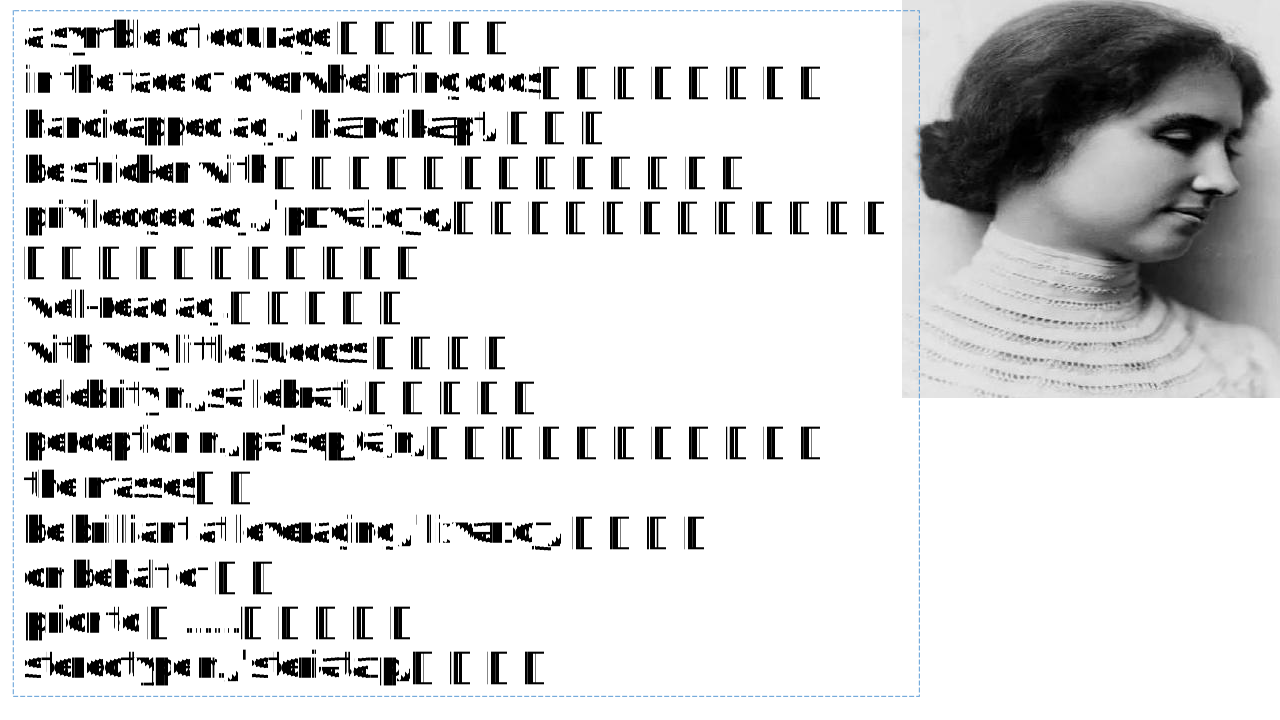
Helen Keller
Let’s learn one of her great works-Three Days to See
Turn to page 26 and read the passage about her.
Task 1: Choose the author’s purpose in writing the passage and give your reasons.
A. To help readers understand what it is like to be blind.
B. To make
资源预览图

1

2

3

4

5
6

相关资源
示范课
由于学科网是一个信息分享及获取的平台,不确保部分用户上传资料的 来源及知识产权归属。如您发现相关资料侵犯您的合法权益,请联系学科网,我们核实后将及时进行处理。