Unit 2 Travelling Around Discovering useful structures 课件-2022-2023学年高中英语人教版(2019)必修第一册
2023-03-23
|
13页
|
5573人阅读
|
2399人下载
普通
资源信息
| 学段 | 高中 |
|---|---|
| 学科 | 英语 |
| 教材版本 | 高中英语人教版必修第一册 |
| 年级 | 高一 |
| 章节 | Discovering Useful Structures |
| 类型 | 课件 |
| 知识点 | - |
| 使用场景 | 同步教学 |
| 学年 | 2022-2023 |
| 地区(省份) | 全国 |
| 地区(市) | - |
| 地区(区县) | - |
| 文件格式 | PPTX |
| 文件大小 | 2.96 MB |
| 发布时间 | 2023-03-23 |
| 更新时间 | 2023-03-23 |
| 作者 | 上班是为了不上班 |
| 品牌系列 | - |
| 审核时间 | 2023-03-23 |
| 下载链接 | https://m.zxxk.com/soft/38256421.html |
| 价格 | 0.00储值(1储值=1元) |
| 来源 | 学科网 |
内容正文:
Unit 2
TRVELLING AROUND
Travel, in the younger sort, is a part of education; in the elder, a part of experience.
旅行,于年轻人而言,是教育的一部分;于年长者而言,则是一种经历。
——Francis Bacon
弗朗西斯·培根
Discovering useful structure
03
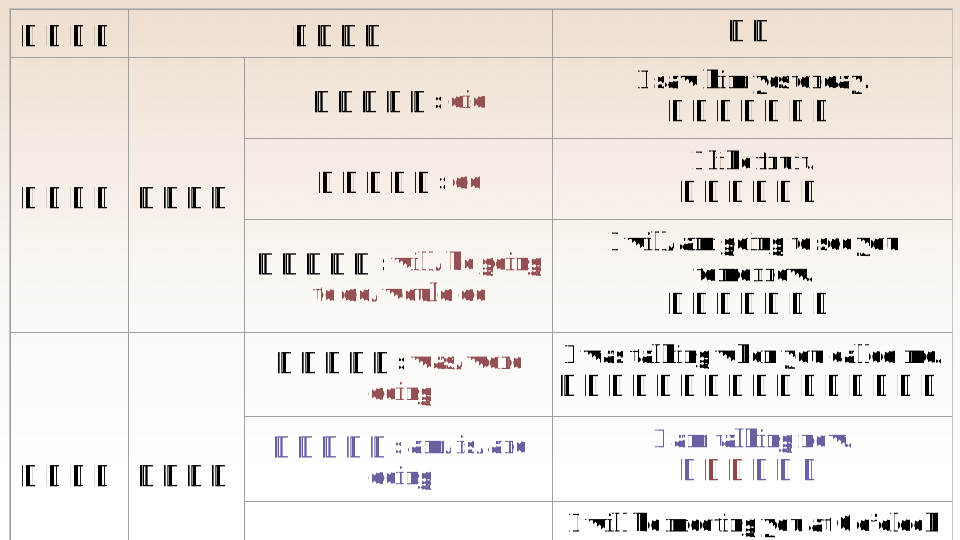
一、时态——点时态
粗糙的时间点:即精确度相对较低的时间点,对应的是一般时态;
精确的时间点:强调“正当……的时候”,对应的是进行时态。
点的类型 对应时态 例句
粗糙的点 一般时态 一般过去时: did I saw him yesterday.
我昨天看过他。
一般现在时: do I like fruit.
我喜欢水果。
一般将来时: will/ be going to do/ would do I will/ am going to see you tomorrow.
明儿我去见你。
精确的点 进行时态 过去进行时: was/ were doing I was talking when you called me.
当你给我打电话的时候我正在说话。
现在进行时: am/ is/ are doing I am talking now.
我正在说话。
将来进行时: will be doing I will be meeting you at 6 o’clock tomorrow morning.
明天六点我正在见你。
进行时的引申义——马上将要
She is dying.
她正在死?
她马上就要死了。
She will die.
她将会死亡。
“她”已经进入或接近死亡的状态了
We are arriving. 我们即将到达。
二、现在进行时(be doing)和一般将来时(will do)表示将来的用法有何区别?
will do表示单纯的将来,是对未来事情发生的“预见性”。will用于各种人称。
She will come back next week. 她将于下周回来。
(2) be doing表示计划好要做的事情,而will没有计划、准备的意思,是在说话时才想到或决定的事,即临时起意。
The plane is arriving in 10 minutes.飞机将在10分钟内到达。
I will drive you to your school right away.
我会马上开车送你去学校。
(3) be doing 比 will do 的语气更加肯定。
I will meet you tomorrow. 明天见。(?)
I’m coming to see you at six o’clock this afternoon.
我今天下午六点来见你。
(4) be doing传达的速度感比will要快很多。
I’m coming. 来啦来啦,我马上就到。
I will come. 我会来的。
二、现在进行时(be doing)和一般将来时(will do)表示将来的用法有何区别?
1. A small leak a great ship. (sink)
小洞不堵沉大船。
【巩固内化】
2. The Browns (go) to North China by train next week. They (stay) in Beijing for a week.
will sink
are going
are staying
三、现在进行时表将来的具体用法 《新课程》P65-P66
1. 多用位移动词,如arrive, come, get (to), leave, return, start, travel, take(带走), take off(起飞), fly, see off(为…送行), set off(出发)等。
We are starting for Shanghai this afternoon.今天下午我们将动身去上海。
2. 用非位移动词,如do, buy, meet, have, play, finish, stay(停留), publish(发表)等,此时句中一般要有表示将来的时间状语。
They are spending their next summer holiday in Guilin.
他们下个暑假要在桂林度过。
(2)I ________________ you after class. (meet)
我下课后见你。
(1)Whe
资源预览图

1
2

3
4

5

6
相关资源
由于学科网是一个信息分享及获取的平台,不确保部分用户上传资料的 来源及知识产权归属。如您发现相关资料侵犯您的合法权益,请联系学科网,我们核实后将及时进行处理。