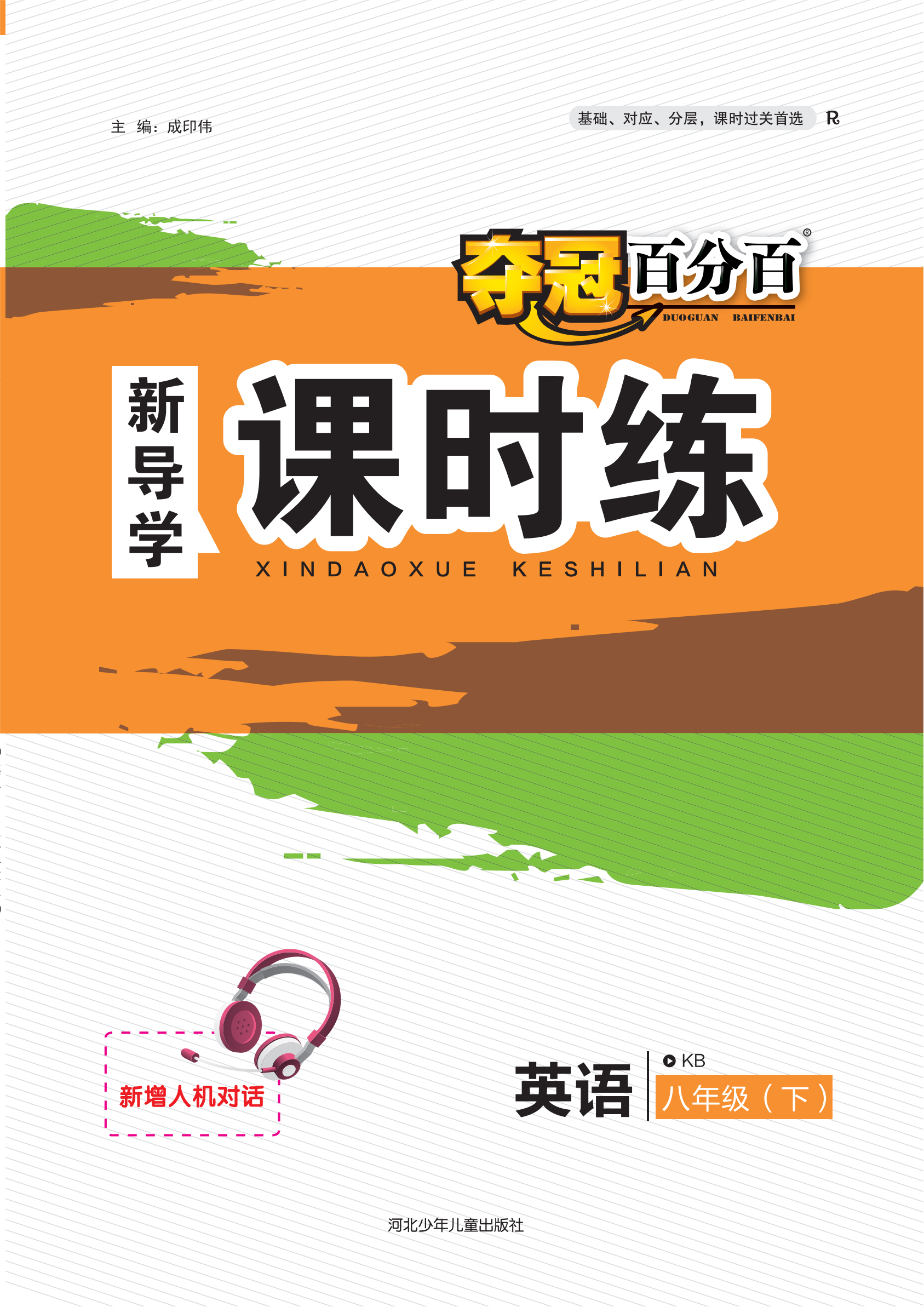
Unit 9 Section A -【夺冠百分百】2022-2023学年八年级英语下册新导学课时练(人教版),云南专用
2023-05-01
|
2份
|
6页
|
141人阅读
|
6人下载
内容正文:
Unit 9
Have you ever been to a museum?
Section A(1a-2d)
、单项填空
知识点一
have/has been to
1.-Maria,what do you think of Mount Fanjing?
意为“曾经到过(某地)”,指现
Very cool.I
there once.I'd like to go there again.
在已不在那里了,可与just,
never,ever等副词或表示次数
A.has been
B.have been C.have gone
D.has gone
的词连用。
2.-I have never been to such an interesting place.
[拓展]l,have/has gone to意
We can go there together next time.
为“已经去(某地)了”,指现在
A.Me too
B.Me neither C.Me either
D.Me also
还没有回来,可能在去的途中,
3.People in the past could hardly eat fresh vegetables in
也可能已在目的地。
winter.
2.have/has been in意为“在
A.could they
B.couldn't they
(某地)”,指在某地待了多长时
C.could people
D.couldn't people
间,常与表示一段时间的状语
4.-Jim,please help me
the tent.
连用。
OK.I'm coming.It's exciting to sleep in it tonight.
知识点二Me neither.
A.get on
B.get off
C.pull down
D.put up
意为“我也没/不…”,用于表
5.-Did you go
last summer holiday?
述前面所陈述的否定情况同样
-Yes.I went to the National Science Museum.
适用于后者。
A.somewhere special
B.anywhere special
[拓展]L.Me too.意为我也一样/
我也如此。”,用于表述前面所陈
C.special somewhere
D.special anywhere
述的肯定情况同样适用于后者。
二、根据句意,用括号中所给单词的适当形式填空
2.若后者与前者否定情况相同
1.We went
in the mountains with our parents last month.
时,也可用“Neither十助动词/情
(camp)
态动词/be动词+主语.”结构。
2.Linda
her grandma yesterday.(visit)
3.若后者与前者肯定情况相同
3.Tommy is not here.He
to Kunming for a meeting.(go)
时,也可用“So十助动词/情态
4.Fax machines(传真机)were a wonderful
at that time.
动词/be动词十主语,”结构。
(invent)
知识点三附加疑问句
5.It's a great way
English by listening to English songs.
附加疑问句是由“陈述句十简
(study)
短的问句”构成,遵循“前肯后
三、将下列句子中汉语部分译成英语,注意使用适当的形式
否,前否后背”的原则。当陈述
1.I'm sure we'll
in the water park.(玩得开心)
句中含有never,hardly.
2.We are going
tomorrow.(某个不一样的地方)
seldom等否定词时,该句子为
3.My uncle often
to work in Beijing.(乘地铁)
否定句,简短的问句部分用肯
定形式。
4.I have ever been to the
(游乐场)
5.All roads
Rome.(通往)
Unit 9 Have you ever been to a museum?
新导学课时练
Section A(3a-3c)
一、单项填空
知识点一progress
1.Cindy's parents encouraged her
to dance when she was
1.作动词,意为“进步:进展”。
very young.
2.作不可数名词,意为“进步”。
A.learn
B.learned
make much/great progress
C.to learn
D.l
资源预览图

1

2
相关资源
示范课
由于学科网是一个信息分享及获取的平台,不确保部分用户上传资料的 来源及知识产权归属。如您发现相关资料侵犯您的合法权益,请联系学科网,我们核实后将及时进行处理。