UNIT 5 Section Ⅳ Reading for Writing(Word教师用书)-【优化指导】2021-2022学年新教材高中英语必修第一册(人教版2019)
2021-09-06
|
12页
|
213人阅读
|
5人下载
教辅

资源信息
| 学段 | 高中 |
|---|---|
| 学科 | 英语 |
| 教材版本 | 高中英语人教版必修第一册 |
| 年级 | 高一 |
| 章节 | Unit 5 Languages Around the World |
| 类型 | 教案 |
| 知识点 | - |
| 使用场景 | 同步教学 |
| 学年 | 2021-2022 |
| 地区(省份) | 全国 |
| 地区(市) | - |
| 地区(区县) | - |
| 文件格式 | DOC |
| 文件大小 | 456 KB |
| 发布时间 | 2021-09-06 |
| 更新时间 | 2023-04-09 |
| 作者 | 山东接力教育集团有限公司 |
| 品牌系列 | 优化指导·高中同步学案导学与测评 |
| 审核时间 | 2021-09-06 |
| 下载链接 | https://m.zxxk.com/soft/30214172.html |
| 价格 | 4.00储值(1储值=1元) |
| 来源 | 学科网 |
内容正文:
Section Ⅳ Reading for Writing
[对应学生用书P94]
1.equal adj.相同的;同样的 n.同等的人;相等物→equality n.平等;相等→equally adv.同样地;相等地;公平地
2.description n.描写(文字);形容→describe vt. 描写
3.demand n.要求;需求vt.强烈要求;需要 vi.查问→demanding adj.高要求的;要求严格的
4.relate vt.联系;讲述→related adj.有关的, 相关的→relation n.[C]家人;亲属;关系
1.relate to 与……相关;涉及;谈到
2.point of view 观点;看法
3.feel like 想要
4.compare... with... 把……与……相比
5.used to 过去常常
6.aside from 除……之外
7.give up 放弃
8.get used to 适应;习惯
9.depend on 依靠;取决于
句型公式:the+比较级..., the+比较级... 越……越……
教材原句:It was exercise for my brain; the more I learnt of a language, the more my brain would grow.
翻译:这是对大脑的锻炼;我对一门语言越了解,我的大脑就会越灵活。
[对应学生用书P95]
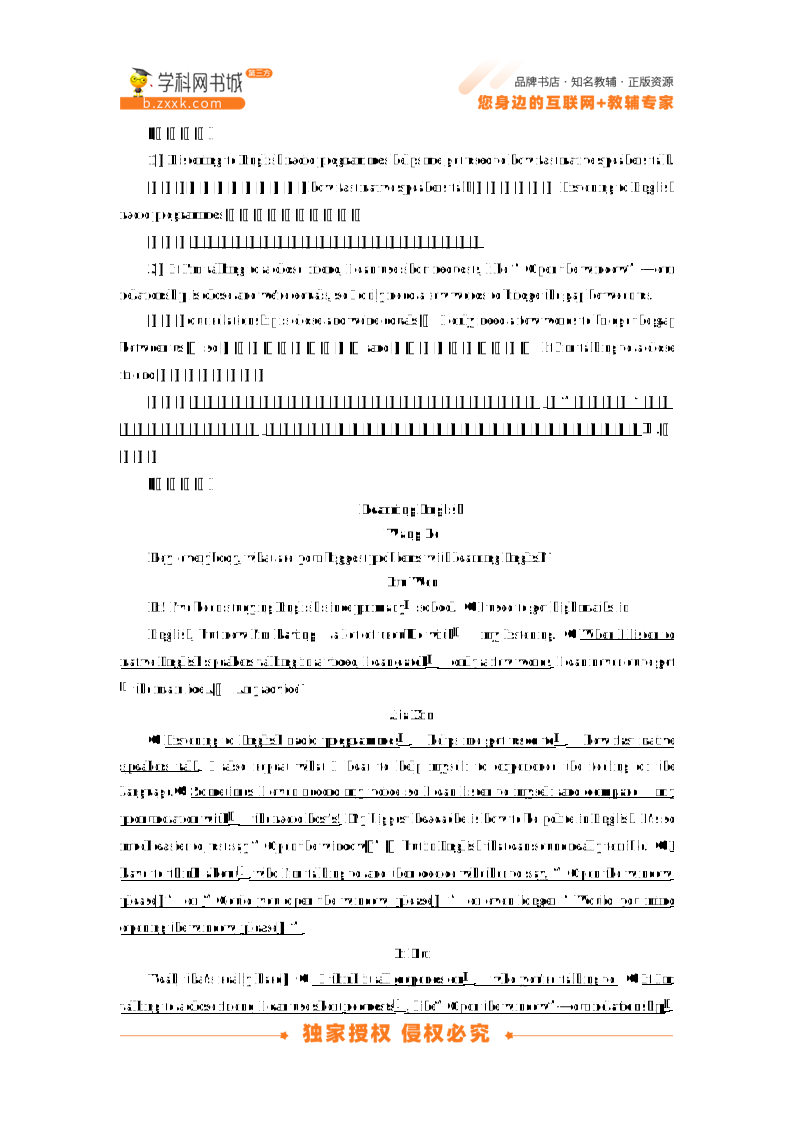
[主旨大意]
What is the main topic about this part?
The_biggest_problems_with_learning_English.
[文章架构]
Name
Problem
Advice
Liu Wen
trouble with 1.listening to native English
speakers
Jia Xin's advice:
listen to English 2.radio programmes, repeat what you hear, 3.record your voice and 4.compare it with the radio host's
Jia Xin
how to be 5.polite in English
Li Rui's advice:
use 6.short requests for colse friends, use 7.longer requests for people who are not so close, use more polite phrases for people senior to you
Li Rui
remembering new 8.vocabulary
Your advice:
Create your own word bank:carry a small notebook with you everywhere,and add new words when you learn them,learn word chunks instead of single word, learn word formation
[细节探究]
1.What's the problem of Liu Wen?( B )
A.He can't get high marks all the time.
B.He can't get the main idea of native speakers.
C.He has been having problems in listening since primary school.
D.He doesn't listen to English radio programmes.
2.What can we learn from the words of Jia Xin?( C )
A.He seldom watches videos with English speakers.
B.He used to get high marks in English.
C.He finds it hard to deal with how to be polite while speaking English.
D.He believes that what words to use while speaking English depends on who you're talking to.
3.Which of the following might Li Rui agree with?( A )
A.We can
资源预览图

1

2
3
所属专辑


相关资源
由于学科网是一个信息分享及获取的平台,不确保部分用户上传资料的 来源及知识产权归属。如您发现相关资料侵犯您的合法权益,请联系学科网,我们核实后将及时进行处理。