Unit 8 The power of love 介词的固定搭配(核心语法精练)英语新教材沪教版九年级上册
|
3份
|
19页
|
34人阅读
|
0人下载

内容正文:
Unit 8 The power of love(介词的固定搭配)
参考答案
一、用恰当的单词填空。
1. with 2. of 3. in; for 4. with; of 5. to
6. on 7. to 8. for 9. with 10. For
二、单项选择。
1. B 2. C 3. A 4. B 5. D
6. A 7. D 8. C 9. A 10. B
三、完成句子。
1. afraid of
2. interested in
3. strict with
4. Congratulations on
5. belong to
6. apologize to
7. laugh at
8. agree on
9. happy with
10. gets tired of
四、句型转换。
1. Were;bored with
2. isn’t interested in
3. Who is;with
4. Does;belong to
5. didn’t agree with
6. should not
7. What do;about
8. Did;agree on
9. isn’t good for
10. never feels tired of
一、语法选择
1.B 2.B 3.A 4.D 5.C 6.D 7.A 8.A 9.D 10.B
二、语法填空
1.because
2.its
3.coldest
4.appeared
5.a
6.for
7.painters
8.to express
9.successfully
10.traditional
1 / 12
学科网(北京)股份有限公司
$
Unit 8 The power of love 核心语法精练
(介词的固定搭配)
目录
二、考点夯基 2
一、用恰当的单词填空 2
二、单项选择 3
三、完成句子 5
四、句型转换 6
一、语法选择 8
二、短文填空 10
形容词+介词
形容词
介词
例句
bored
with
The children were bored with staying at home.
happy
with
They were really happy with the bikes.
afraid
of
I am afraid of the neighbour's big dog.
worried
about
My parents told me not to be worried about it.
interested
in
Della is interested in cooking.
ready
for
She is getting ready for a cooking competition.
strict
with
Miss Li is strict with her students.
tired
of
She never gets tired of teaching.
名词+介词
名词
介词
例句
the answer
to
What's the answer to this question?
the reason
for
Is there a reason for this?
congratulations
on
Congratulations on your winning the award!
respect
for
I have the greatest respect for you.
success
in
We have achieved great success in our work.
advice
on
Here is some advice on safe driving.
动词+介词
动词
介词
例句
belong
to
Does this book belong to you?
think
of
Can you think of another solution?
apologize
for
She apologized for the mistake.
laugh
at
Stop laughing at the little boy.
get
to
There's enough time to get to the hospital.
pass
by
We passed by a shop on our way home.
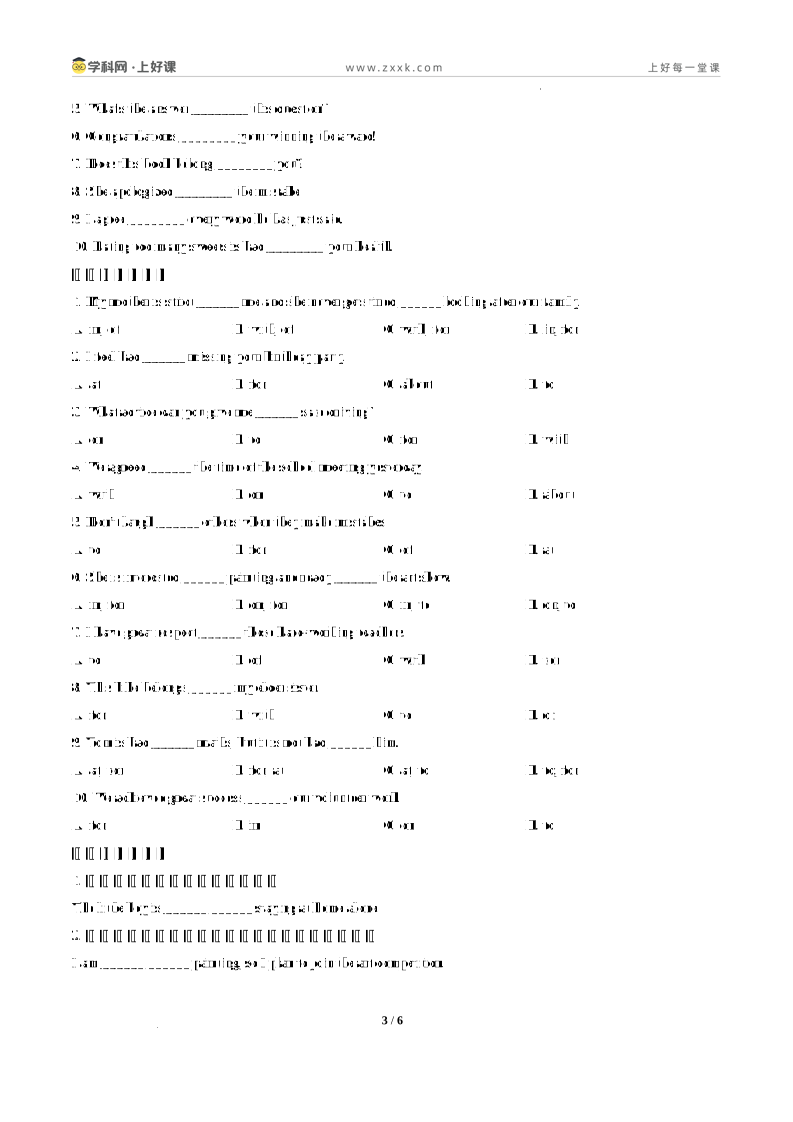
一、用恰当的单词填空。
1. The children were bored ________ staying at home during the holiday.
【答案】with
【解析】be bored with 为固定搭配,意为"对……感到厌烦"。句意为"孩子们假期待在家里感到厌烦",介词用 with。
2. I am afraid ________ the neighbour's big dog.
【答案】of
【解析】be afraid of 为固定搭配,意为"害怕……"。句意为"我害怕邻居家的大狗",介词用 of。
3. Della is interested ________ cooking, and she is getting ready ________ a cooking competition.
【答案】in; for
【解析】be interested in 意为"对……感兴趣",get ready for 意为"为……做好准备"。句意为"Della 对烹饪感兴趣,正在为烹饪比赛做准备"。
4. Miss Li is strict ________ her students, but she never gets tired ________ teaching.
【答案】with; of
【解析】be strict with 意为"对……严格",get tired of 意为"厌倦……"。句意为"李老师对学生严格,但从不厌倦教学"。
5. What's the answer ________ this question?
【答案】to
【解析】the answer to 为固定搭配,意为"……的答案"。句意为"这个问题的答案是什么",介词用 to。
6. Congratulations ________ your winning the award!
【答案】on
【解析】congratulations on 为固定搭配,意为"祝贺……"。句意为"祝贺你获奖",介词用 on。
7. Does this book belong ________ you?
【答案】to
【解析】belong to 为固定搭配,意为"属于"。句意为"这本书是你的吗",介词用 to。
8. She apologized ________ the mistake.
【答案】for
【解析】apologize for 为固定搭配,意为"为……道歉"。句意为"她为这个错误道歉",介词用 for。
9. I agree ________ every word he has just said.
【答案】with
【解析】agree with 意为"同意某人的话"。句意为"我同意他刚才说的每一句话",介词用 with(agree on 后接达成一致的事项)。
10. Eating too many sweets is bad ________ your health.
【答案】for
【解析】be bad for 为固定搭配,意为"对……有害"。句意为"吃太多糖对你的健康有害",介词用 for。
二、单项选择。
1. My mother is strict ______ me and she never gets tired ______ looking after our family.
A. in; of B. with; of C. with; for D. in; for
【答案】B
【解析】be strict with sb. 表示对某人严格;get tired of 是固定搭配,意为厌倦……,故选B。
2. I feel bad ______ missing your birthday party.
A. at B. for C. about D. to
【答案】C
【解析】feel bad about sth. 表示因某事感到愧疚难过;be bad at 不擅长,be bad for 对……有害,本句语境选about,故选C。
3. What advice can you give me ______ safe driving?
A. on B. to C. for D. with
【答案】A
【解析】advice on sth. 为固定搭配,表示关于……的建议,介词用on,故选A。
4. We agreed ______ the time of the school meeting yesterday.
A. with B. on C. to D. about
【答案】B
【解析】agree on 表示就某事达成一致;agree with后接人或话语,本句后面是the time,故选B。
5. Don’t laugh ______ others when they make mistakes.
A. to B. for C. of D. at
【答案】D
【解析】laugh at 是固定短语,意为嘲笑,符合句子语境,故选D。
6. She is interested ______ painting and ready ______ the art show.
A. in; for B. on; for C. in; to D. on; to
【答案】A
【解析】be interested in 对……感兴趣;get/be ready for 为……做准备,两个固定搭配,故选A。
7. I have great respect ______ those hard-working teachers.
A. to B. of C. with D. for
【答案】D
【解析】respect for sb. 固定搭配,表示对某人的尊敬,介词用for,故选D。
8. This bike belongs ______ my elder sister.
A. for B. with C. to D. of
【答案】C
【解析】belong to 属于,固定搭配,没有被动形式,介词只能用to,故选C。
9. Tom is bad ______ maths, but it is not bad ______ him.
A. at; for B. for; at C. at; to D. to; for
【答案】A
【解析】be bad at 不擅长;be bad for 对……有害。句意为Tom不擅长数学,但这件事对他不完全是坏事,故选A。
10. We achieved great success ______ our volunteer work.
A. for B. in C. on D. to
【答案】B
【解析】success in sth. 固定搭配,表示在某方面取得成功,介词用in,故选B。
三、完成句子。
1. 这个小男孩害怕独自待在家里。
The little boy is ______ ______ staying at home alone.
【答案】afraid of
【解析】本题考查形容词固定搭配 be afraid of,意为 “害怕……”。of 是介词,介词后面的动词要使用动名词形式,所以后面接 staying。
2. 我对绘画很感兴趣,所以我打算参加美术比赛。
I am ______ ______ painting, so I plan to join the art competition.
【答案】interested in
【解析】本题考查形容词固定搭配 be interested in,意为 “对…… 感兴趣”。in 为介词,其后接名词或者动名词,本句中后接动名词 painting。
3. 老师对我们要求严格,希望我们取得进步。
The teacher is ______ ______ us and hopes we can make progress.
【答案】strict with
【解析】本题考查形容词固定搭配 be strict with sb.,意为 “对某人严格”。with 后面接人;注意区分 be strict in sth.,表示对某事严格。
4. 祝贺你取得这场比赛的胜利!
______ ______ your winning the game!
【答案】Congratulations on
【解析】本题考查名词固定搭配 congratulations on,意为 “祝贺……”。on 后接祝贺对应的事件,放在句首首字母需要大写。
5. 这本书不属于我,它是 Tom 的。
This book doesn’t ______ ______ me. It’s Tom’s.
【答案】belong to
【解析】本题考查动词固定搭配 belong to,意为 “属于”。助动词 doesn’t 后面使用动词原形;该短语没有被动语态,to 后接人。
6. 你应该为你的粗心向他道歉。
You should ______ ______ him for your carelessness.
【答案】apologize to
【解析】本题考查动词固定搭配 apologize to sb.,意为 “向某人道歉”。情态动词 should 后必须使用动词原形,to 后面接道歉的对象。
7. 不要嘲笑处于困境中的人们。
Don’t ______ ______ people in trouble.
【答案】laugh at
【解析】本题考查动词固定搭配 laugh at,意为 “嘲笑”。本句为否定祈使句,Don’t 后面接动词原形,at 后面接嘲笑的对象。
8. 我们都同意会议的时间。
We all ______ ______ the time of the meeting.
【答案】agree on
【解析】本题考查动词固定搭配 agree on,意为 “就某事达成一致”。on 后面接经过商议确定的事情,注意和 agree with(同意某人 / 某人的话)区分。
9. 我对这个结果不满意。
I am not ______ ______ this result.
【答案】happy with
【解析】本题考查形容词固定搭配 be happy with,意为 “对…… 感到满意”。with 后面接事物,本句使用否定形式 be not happy with 表示对事物不满意。
10. 她从不厌倦帮助身边的人。
She never ______ ______ helping people around her.
【答案】gets tired of
【解析】本题考查形容词固定搭配 get tired of,意为 “厌倦……”。主语 she 是第三人称单数,一般现在时中谓语动词要变形为 gets;of 是介词,后面接动名词 helping。
四、句型转换。
1. The children were bored with staying at home.(改为一般疑问句)
__________ the children __________ __________ staying at home?
【答案】Were;bored with
【解析】原句含 be 动词 were,变一般疑问句直接把 were 提到句首;be bored with 为固定搭配,意为对…… 厌烦,保持短语不变。
2. She is interested in cooking.(改为否定句)
She __________ __________ __________ cooking.
【答案】isn’t interested in
【解析】句中有 be 动词 is,变否定直接在 is 后加 not,缩写为 isn’t;be interested in 是固定短语,结构不能拆分。
3. Miss Li is strict with her students.(对 her students 提问)
__________ __________ Miss Li strict __________?
【答案】Who is;with
【解析】划线部分是人,用 who 提问;原句 be 动词 is 提前,be strict with 为固定搭配,介词 with 保留在句末。
4. This book belongs to you.(改为一般疑问句)
__________ this book __________ __________ you?
【答案】Does;belong to
【解析】belong 是实义动词,主语 this book 为单数,变疑问借助助动词 does,后面动词还原;belong to 属于,短语不变。
5. He agreed with my idea.(改为否定句)
He __________ __________ __________ my idea.
【答案】didn’t agree with
【解析】原句为一般过去时,实义动词 agreed,变否定用 didn’t,动词变回原形;agree with 为固定搭配。
6. Don’t laugh at others.(改为同义句)
You __________ __________ laugh at others.
【答案】should not
【解析】原句是否定祈使句 “不要嘲笑别人”,可转换为 you should not(你不应该),laugh at 固定短语不变。
7. I feel bad about missing your party.(对 missing your party 提问)
__________ __________ you feel bad __________?
【答案】What do;about
【解析】划线部分是事情,用 what 提问;主语 you,借助助动词 do;be/feel bad about 是固定搭配,介词 about 保留。
8. We agreed on the plan.(改为一般疑问句)
__________ you __________ __________ the plan?
【答案】Did;agree on
【解析】原句一般过去时,实义动词 agreed,疑问用助动词 did,动词还原;agree on 就…… 达成一致,短语保留。
9. Eating too many sweets is bad for your health.(改为同义句)
Eating too many sweets __________ __________ __________ your health.
【答案】isn’t good for
【解析】be bad for 意为对…… 有害,同义短语 be not good for;动名词作主语,be 动词用 is。
10. She never gets tired of teaching.(改为肯定句,句意不变)
She __________ __________ __________ __________ teaching.
【答案】never feels tired of
【解析】get tired of 和 feel tired of 同义,意为厌倦;主语 she 是三单,feel 变为 feels,never 保留。
一、语法选择
阅读下面一篇短文,理解大意,从所给的四个选项中选出一个最佳答案,使短文连贯完整。
Keeping traditions alive (继续存在的) is never an easy thing. Chen Zunkai is the owner (所有者) of Baoyuan Dumpling House. She has spent over 7 years 1 one of the most traditional Chinese foods: dumplings.
Her dumplings are not the white ones simply filled with meat, 2 colorful ones using more than 50 kinds of fillings.
“What I try to do is to make dumplings have a taste of 3 ,” says Chen, “I hope every customer — northerners or southerners, vegetarians (素食主义者) or non-vegetarians, Chinese people or foreigners — can 4 something familiar (熟悉的).”
Chinese dumplings are believed to be more than 2,000 years old. 5 , they are made and eaten 6 people in North China at some festivals, such as the Spring Festival.
For Chen, her idea came after she found that there were not 7 choices for those who prefer lighter fillings. Most vegetarian dumplings have a filling of only two kinds of ingredients (原料), and not one restaurant in Beijing has more than 0 kinds of vegetarian fillings.
“I thought 8 could do better,” says Chen.
Baoyuan Dumpling House has 9 done it. Customers not only find basic meat dumplings at this restaurant, they are also 10 quite a lot of other choices with different colors and exciting tastes.
1.A.improve B.improving C.to improve D.improved
2.A.because B.but C.so D.if
3.A.home B.knowledge C.success D.health
4.A.tastes B.tasting C.tasted D.taste
5.A.Tradition B.Traditional C.Traditionally D.Finally
6.A.with B.to C.for D.by
7.A.many B.much C.few D.little
8.A.I B.me C.my D.mine
9.A.again B.also C.hardly D.certainly
10.A.returned B.offered C.taught D.mailed
【答案】
1.B 2.B 3.A 4.D 5.C 6.D 7.A 8.A 9.D 10.B
【导语】本文介绍了陈尊凯,宝源饺子馆的店主,花费了6年时间研究和发展中国最传统的食物之一——饺子。
【详解】1.句意:她花了7年的时间改良中国最传统的食物之一:饺子。
improve动词原形;improving动名词;to improve动词不定式;improved过去式。根据spend some time (in) doing sth.“花费时间做某事”可知,此处要用动名词,故选B。
2.句意:她的饺子不是那种只包了肉的白色饺子,而是用50多种馅料做成的彩色饺子。
because因为;but但是;so因此;if如果。not...but“不是……而是……”,是固定短语。故选B。
3.句意:我想做的是让饺子有家的味道。
home家;knowledge知识;success成功;health健康。根据下文“something familiar (熟悉的)”可知,此处指有家的味道。故选A。
4.句意:我希望每一位顾客——北方人或南方人、素食者或非素食者、中国人或外国人——都能尝到熟悉的东西。
tastes动词第三人称单数;tasting动名词;tasted过去式;taste动词原形。情态动词can之后用动词原形,故选D。
5.句意:传统上,中国北方的人们在一些节日,比如春节,会制作并食用它们。
Tradition传统,名词;Traditional传统的,形容词;Traditionally传统上,副词;Finally最终,副词。据“... , they are made and eaten ... people in North China at some festivals”可知,此处须用副词作状语;结合句意,Traditionally符合。故选C。
6.句意:传统上,中国北方的人们在一些节日,比如春节,会制作并食用它们。
with带有;to到;for为了;by由,被。分析句子可知,此处为被动语态,应用介词by引出动作的执行者。故选D。
7.句意:对于陈来说,她的想法来自于她发现对于那些喜欢较清淡的馅料的人来说没有太多的选择。
many许多;much许多;few很少,不多;little少的,几乎没有。“choice”为可数名词,而much和little通常只能修饰不可数名词,排除选项B和D;few“很少”,可以修饰可数名词,但不符合语境。故选A。
8.句意:我认为我能做得更好。
I我,主格;me我,宾格;my我的,形容词性物主代词;mine我的,名词性物主代词。根据“I thought ... could do better”可知,宾语从句缺少主语,此处应选择人称代词的主格形式。故选A。
9.句意:宝源饺子馆当然做到了。
again再一次;also也;hardly几乎不;certainly无疑,确定。根据下文“Customers not only find basic meat dumplings at this restaurant, they are also ... quite a lot of other choices with different colors and exciting tastes.”可知,这家饺子馆确实做到了;certainly表示“肯定;一定”,符合语境。故选D。
10.句意:他们也提供了相当多的其他选择与不同的颜色和令人兴奋的口味。
returned返回;offered提供;taught教;mailed邮寄。根据“they are also ... quite a lot of other choices with different colors and exciting tastes.”可知,顾客们也有很多其他选择,而此处的选择是饺子馆提供的;offer意为“提供”,符合语境。故选B。
二、语法填空
阅读下面短文,在空白处填入1个适当的单词或括号内单词的正确形式。
In ancient China, people called a man of great virtue (美德) a gentleman. Plum blossoms (梅花), orchids (兰花), bamboo and chrysanthemums are the four gentlemen in China 1 these plants’ natural characters have something in common with human virtues.
The plum tree is famous for 2 (it) flowers opening in the dead of winter. Its fine smell fills the air at one of the 3 (cold) times of a year. It stands for inner beauty and humble display (谦逊表现). According to historical records, plum blossoms 4 (appear) on drawing paper 1,600 years ago.
Grown in deep mountain valleys (山谷), the orchid was named as the fourth of China’s ten famous flowers. With 5 light smell and the elegant (优雅的) shapes, orchids stand for elegance in Chinese people’s eyes.
The bamboo is thin with the inner empty. It stands 6 tolerance (耐力) and open-mindedness. It was admired by many poets and 7 (paint) in ancient times. For example, Su Shi once wrote down “Rather eat without meat than live without bamboo.” in his poem 8 (express) his deep love for bamboo.
Chrysanthemums bloom (开花) in late autumn when most other flowers have fallen. They symbolize the virtue of overcoming difficulties 9 (successful). So the chrysanthemum is a 10 (tradition) flower loved by Chinese people.
1.____________ 2.____________ 3.____________ 4.____________ 5._____________
6.____________ 7.____________ 8.____________ 9.____________ 10.____________
【答案】
1.because 2.its 3.coldest 4.appeared 5.a 6.for 7.painters 8.to express 9.successfully 10.traditional
【导语】本文主要介绍了中国的“花中四君子”——梅花、兰花、竹子和菊花,阐述了它们各自的特性及所象征的人类美德。
【详解】1.句意:梅花、兰花、竹子和菊花是中国的四君子,因为这些植物的自然特性与人类美德有共同之处。此处表因果关系,故填because。
2.句意:梅树因它的花在隆冬开放而闻名。此处修饰名词“flowers”,需用形容词性物主代词,“it”的形容词性物主代词是“its”,故填its。
3.句意:在一年中最冷的时节之一,它的清香弥漫在空气中。“one of+the+形容词最高级+可数名词复数”表示“最……之一”,“cold”的最高级是“coldest”,故填coldest。
4.句意:根据历史记录,梅花在1600年前就出现在画纸上了。根据“1,600 years ago”可知,此处用一般过去时,“appear”的过去式是“appeared”,故填appeared。
5.句意:兰花有着淡淡的香气和优雅的外形,在中国人眼中代表着高雅。“smell”此处表泛指,且“light”以辅音音素开头,故填a。
6.句意:它代表着耐力和豁达。“stand for”是固定短语,意为“代表”,故填for。
7.句意:在古代,它受到许多诗人和画家的推崇。“painter”是可数名词,根据“many”可知,此处用复数形式“painters”,故填painters。
8.句意:例如,苏轼曾在他的诗中写下“宁可食无肉,不可居无竹”,以表达他对竹子的深爱。此处用动词不定式表目的,故填to express。
9.句意:它们象征着成功克服困难的美德。此处修饰动词“overcoming”,需用副词,“successful”的副词形式是“successfully”,故填successfully。
10.句意:因此,菊花是中国人喜爱的一种传统花卉。此处修饰名词“flower”,需用形容词,“tradition”的形容词形式是“traditional”,故填traditional。
2 / 2
学科网(北京)股份有限公司
$
Unit 8 The power of love 核心语法精练
(介词的固定搭配)
目录
二、考点夯基 2
一、用恰当的单词填空 2
二、单项选择 3
三、完成句子 3
四、句型转换 4
一、语法选择 5
二、短文填空 6
形容词+介词
形容词
介词
例句
bored
with
The children were bored with staying at home.
happy
with
They were really happy with the bikes.
afraid
of
I am afraid of the neighbour's big dog.
worried
about
My parents told me not to be worried about it.
interested
in
Della is interested in cooking.
ready
for
She is getting ready for a cooking competition.
strict
with
Miss Li is strict with her students.
tired
of
She never gets tired of teaching.
名词+介词
名词
介词
例句
the answer
to
What's the answer to this question?
the reason
for
Is there a reason for this?
congratulations
on
Congratulations on your winning the award!
respect
for
I have the greatest respect for you.
success
in
We have achieved great success in our work.
advice
on
Here is some advice on safe driving.
动词+介词
动词
介词
例句
belong
to
Does this book belong to you?
think
of
Can you think of another solution?
apologize
for
She apologized for the mistake.
laugh
at
Stop laughing at the little boy.
get
to
There's enough time to get to the hospital.
pass
by
We passed by a shop on our way home.
一、用恰当的单词填空。
1. The children were bored ________ staying at home during the holiday.
2. I am afraid ________ the neighbour's big dog.
3. Della is interested ________ cooking, and she is getting ready ________ a cooking competition.
4. Miss Li is strict ________ her students, but she never gets tired ________ teaching.
5. What's the answer ________ this question?
6. Congratulations ________ your winning the award!
7. Does this book belong ________ you?
8. She apologized ________ the mistake.
9. I agree ________ every word he has just said.
10. Eating too many sweets is bad ________ your health.
二、单项选择。
1. My mother is strict ______ me and she never gets tired ______ looking after our family.
A. in; of B. with; of C. with; for D. in; for
2. I feel bad ______ missing your birthday party.
A. at B. for C. about D. to
3. What advice can you give me ______ safe driving?
A. on B. to C. for D. with
4. We agreed ______ the time of the school meeting yesterday.
A. with B. on C. to D. about
5. Don’t laugh ______ others when they make mistakes.
A. to B. for C. of D. at
6. She is interested ______ painting and ready ______ the art show.
A. in; for B. on; for C. in; to D. on; to
7. I have great respect ______ those hard-working teachers.
A. to B. of C. with D. for
8. This bike belongs ______ my elder sister.
A. for B. with C. to D. of
9. Tom is bad ______ maths, but it is not bad ______ him.
A. at; for B. for; at C. at; to D. to; for
10. We achieved great success ______ our volunteer work.
A. for B. in C. on D. to
三、完成句子。
1. 这个小男孩害怕独自待在家里。
The little boy is ______ ______ staying at home alone.
2. 我对绘画很感兴趣,所以我打算参加美术比赛。
I am ______ ______ painting, so I plan to join the art competition.
3. 老师对我们要求严格,希望我们取得进步。
The teacher is ______ ______ us and hopes we can make progress.
4. 祝贺你取得这场比赛的胜利!
______ ______ your winning the game!
5. 这本书不属于我,它是 Tom 的。
This book doesn’t ______ ______ me. It’s Tom’s.
6. 你应该为你的粗心向他道歉。
You should ______ ______ him for your carelessness.
7. 不要嘲笑处于困境中的人们。
Don’t ______ ______ people in trouble.
8. 我们都同意会议的时间。
We all ______ ______ the time of the meeting.
9. 我对这个结果不满意。
I am not ______ ______ this result.
10. 她从不厌倦帮助身边的人。
She never ______ ______ helping people around her.
四、句型转换。
1. The children were bored with staying at home.(改为一般疑问句)
__________ the children __________ __________ staying at home?
2. She is interested in cooking.(改为否定句)
She __________ __________ __________ cooking.
3. Miss Li is strict with her students.(对 her students 提问)
__________ __________ Miss Li strict __________?
4. This book belongs to you.(改为一般疑问句)
__________ this book __________ __________ you?
5. He agreed with my idea.(改为否定句)
He __________ __________ __________ my idea.
6. Don’t laugh at others.(改为同义句)
You __________ __________ laugh at others.
7. I feel bad about missing your party.(对 missing your party 提问)
__________ __________ you feel bad __________?
8. We agreed on the plan.(改为一般疑问句)
__________ you __________ __________ the plan?
9. Eating too many sweets is bad for your health.(改为同义句)
Eating too many sweets __________ __________ __________ your health.
10. She never gets tired of teaching.(改为肯定句,句意不变)
She __________ __________ __________ __________ teaching.
一、语法选择
阅读下面一篇短文,理解大意,从所给的四个选项中选出一个最佳答案,使短文连贯完整。
Keeping traditions alive (继续存在的) is never an easy thing. Chen Zunkai is the owner (所有者) of Baoyuan Dumpling House. She has spent over 7 years 1 one of the most traditional Chinese foods: dumplings.
Her dumplings are not the white ones simply filled with meat, 2 colorful ones using more than 50 kinds of fillings.
“What I try to do is to make dumplings have a taste of 3 ,” says Chen, “I hope every customer — northerners or southerners, vegetarians (素食主义者) or non-vegetarians, Chinese people or foreigners — can 4 something familiar (熟悉的).”
Chinese dumplings are believed to be more than 2,000 years old. 5 , they are made and eaten 6 people in North China at some festivals, such as the Spring Festival.
For Chen, her idea came after she found that there were not 7 choices for those who prefer lighter fillings. Most vegetarian dumplings have a filling of only two kinds of ingredients (原料), and not one restaurant in Beijing has more than 0 kinds of vegetarian fillings.
“I thought 8 could do better,” says Chen.
Baoyuan Dumpling House has 9 done it. Customers not only find basic meat dumplings at this restaurant, they are also 10 quite a lot of other choices with different colors and exciting tastes.
1.A.improve B.improving C.to improve D.improved
2.A.because B.but C.so D.if
3.A.home B.knowledge C.success D.health
4.A.tastes B.tasting C.tasted D.taste
5.A.Tradition B.Traditional C.Traditionally D.Finally
6.A.with B.to C.for D.by
7.A.many B.much C.few D.little
8.A.I B.me C.my D.mine
9.A.again B.also C.hardly D.certainly
10.A.returned B.offered C.taught D.mailed
二、语法填空
阅读下面短文,在空白处填入1个适当的单词或括号内单词的正确形式。
In ancient China, people called a man of great virtue (美德) a gentleman. Plum blossoms (梅花), orchids (兰花), bamboo and chrysanthemums are the four gentlemen in China 1 these plants’ natural characters have something in common with human virtues.
The plum tree is famous for 2 (it) flowers opening in the dead of winter. Its fine smell fills the air at one of the 3 (cold) times of a year. It stands for inner beauty and humble display (谦逊表现). According to historical records, plum blossoms 4 (appear) on drawing paper 1,600 years ago.
Grown in deep mountain valleys (山谷), the orchid was named as the fourth of China’s ten famous flowers. With 5 light smell and the elegant (优雅的) shapes, orchids stand for elegance in Chinese people’s eyes.
The bamboo is thin with the inner empty. It stands 6 tolerance (耐力) and open-mindedness. It was admired by many poets and 7 (paint) in ancient times. For example, Su Shi once wrote down “Rather eat without meat than live without bamboo.” in his poem 8 (express) his deep love for bamboo.
Chrysanthemums bloom (开花) in late autumn when most other flowers have fallen. They symbolize the virtue of overcoming difficulties 9 (successful). So the chrysanthemum is a 10 (tradition) flower loved by Chinese people.
1.____________ 2.____________ 3.____________ 4.____________ 5._____________
6.____________ 7.____________ 8.____________ 9.____________ 10.____________
2 / 2
学科网(北京)股份有限公司
$
资源预览图