Unit 4 Our Memory 名校单元话题短文填空10篇 2026-2027学年人教版英语九年级上册
|
2份
|
20页
|
100人阅读
|
1人下载
内容正文:
人教版九年上册Unit4 Our Memory名校单元话题短文填空10篇
(原卷版)
(一)
阅读下面短文,根据上下文或括号内单词等提示,在空白处填入适当的单词或括号内单词的正确形式。
I thought I had a very poor memory. Facts and dates for my history class seemed to disappear from my mind as 1 (quick) as they entered. It was truly frustrating. Last month, for example, we had a big test. We needed to remember ten important historical events and their exact years. My friend Tom could list them all easily 2 any notes, while I struggled to remember even the first one. I felt completely hopeless and thought I would never pass.
Then, my history teacher, Mr Chen, noticed my trouble. He 3 (share) a simple but powerful secret after class. “Don’t just try to memorize the cold facts,” he said with a smile. “Turn them into a vivid story. Your brain loves stories.” To show me, he took the first event—the 4 (one) printed book in 1440. “Close your eyes,” he said. “Think of a man in a dark, 5 (noise) room. He is excited and jumping because he just made the first printed book! This funny picture will stick in your head.”
Filled with a little hope, I decided to try this creative method for 6 (my). For the next event, I created a short, funny picture in my mind. It was much more 7 (interest) and enjoyable than just repeating numbers silently. To my great surprise, by connecting all ten events into one long story, I could remember them all in the correct order. The test was no longer scary. The method wasn’t 8 working harder with more repetition; it was about working smarter.
Now, I use this story method for many other subjects, like science and English. I even help some of my classmates by creating fun memory stories together. I finally learned that my memory isn’t bad at all. It just 9 (prefer) lively pictures and stories over boring lists. This experience has changed my study habits and built up my confidence. The greatest lesson I’ve learned is that understanding 10 your own mind works is the best study tool.
(二)
阅读下面短文,根据上下文或括号内单词等提示,在空白处填入适当的单词或括号内单词的正确形式。
I don’t know what’s wrong with my brain. My memory started to become 11 (surprise) complete when I was eight years old. Give me any date, and I can quickly tell you what day it was and what 12 (happen) on that day.
I can 13 (recall) memories freely. But my memory, in fact, is not under my control. What does it feel like? Well, just imagine this: Someone started to make a video of you when you were 14 child. This person has placed all of these onto a single DVD, and you are forced to watch it over and over again. There you are 15 (watch) your favourite TV programme in your living room. Then, suddenly, you’re having a picnic in the park with 16 (you) classmates. I never know 17 I might remember next.
As I grew up, many new memories were being stored in my brain, with more and more of them appearing 18 my mind. My mother would tell me not 19 (care) so much about the past. I’d try to explain, but nobody could understand me.
My greatest hope now is that a 20 (science) will discover something about my brain in the near future. I hope the findings will help people learn more about the human mind.
(三)
阅读下面短文,在空白处填入一个适当的单词或填入括号内单词的正确形式。
Happy memories are precious treasures in our lives.When 21 (recall) them, we feel a sense of warmth and happiness.
At family gatherings, we often share the happy 22 (moment) we remember.We talk 23 the good times we had together, such as holidays, birthdays, and celebrations.These memories connect us 24 our family members and make us feel much closer to them.
We also create new memories during these gatherings.We play games, sing songs, and have fun together. These new memories add to our 25 (collect) of happy memories.
Our 26 (person)experiences also contribute to our happy memories. For example, when we achieve a goal, make a new friend, or have some adventure, these experiences become part of our happy memories.
We should cherish our happy memories and keep them alive.We can do this by 27 (share) them with others, writing them down, or looking at old photos.
Sometimes when I feel lonely or discouraged, I open my memory box 28 (slow). I keep concert tickets and dried flowers from special occasions. Each item tells a story—the first time I rode a bicycle without 29 (train) wheels, or the moment our basketball team won the championship.These memories remind me 30 life is full of beautiful moments worth remembering.
(四)
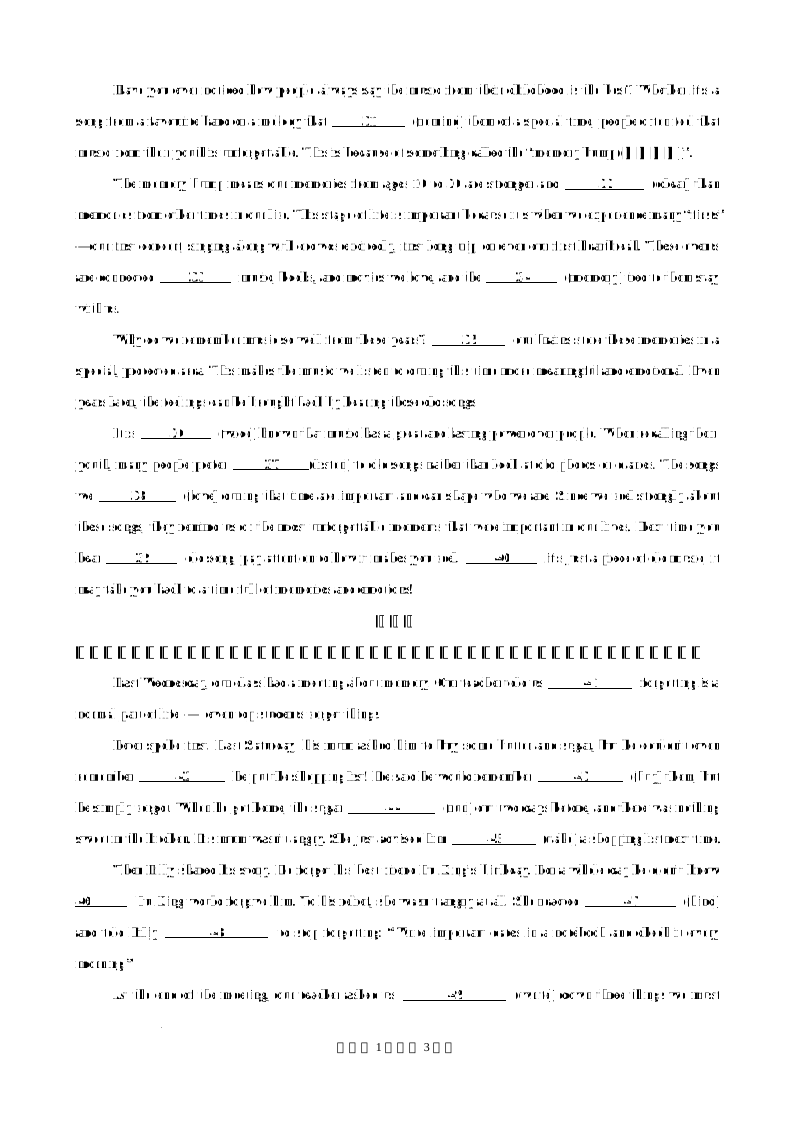
阅读下面短文,在空白处填入一个适当的词,或填入括号中所给单词的正确形式
Have you ever noticed how people always say the music from their childhood is the best? Whether it’s a song from a favourite band or a melody that 31 (remind) them of a special time, people often feel that music from their youth is unforgettable. This is because of something called the “memory bump (记忆隆起)”.
The memory bump means our memories from ages 10 to 30 are stronger and 32 (clear) than memories from other times in our life. This stage of life is important because it’s when we experience many “firsts” —our first concert, singing along with crowds excitedly, first long trip, or even our first heartbreak. These events are connected 33 music, books, and movies we love, and the 34 (memory) tied to them stay with us.
Why do we remember music so well from these years? 35 our brains store these memories in a special, protected area. This makes the music we listen to during this time more meaningful and emotional. Even years later, the feelings can be brought back by hearing those old songs.
It is 36 (wide) known that music has a great and lasting power over people. When recalling their youth, many people prefer 37 (listen) to old songs rather than look at old photos or diaries. The songs we 38 (love) during that time are important and can shape who we are. Since we feel strongly about these songs, they remind us of the most unforgettable moments that were important in our lives. Next time you hear 39 old song, pay attention to how it makes you feel. 40 it’s just a piece of old music, it may take you back to a time full of memories and emotions!
(五)
阅读下面短文,根据上下文或括号内单词等提示,在空白处填入适当的单词或括号内单词的适当形式。
Last Wednesday, our class had a meeting about memory. Our teacher told us 41 forgetting is a normal part of life — even top students forget things.
Peter spoke first. Last Saturday, his mum asked him to buy some butter and sugar, but he couldn’t even remember 42 he put the shopping list! He said he would remember 43 (buy) them, but he simply forgot. When he got home, the sugar 44 (run) out two days before, and there was nothing sweet in the kitchen. His mum wasn’t angry. She just advised him 45 (take) a shopping list next time.
Then Billy shared his story. He forgot his best friend Fu Xing’s birthday. For a whole day he didn’t know 46 Fu Xing would forgive him. To his relief, she wasn’t angry at all. She reacted 47 (kind) and told Billy 48 to stop forgetting: “Write important dates in a notebook and check it every morning.”
At the end of the meeting, our teacher asked us 49 (write) down three things we must remember this week. I wrote, “Mum’s birthday is coming — don’t forget it, or I will never forgive 50 (I).”
(六)
阅读下面短文,根据上下文或括号内单词等提示,在空白处填入适当的单词或括号内单词的适当形式。
Would you like to improve your memory? 51 start with, you need to understand how memory works. There are two main kinds of memory: short-term and long-term. Short-term memory helps you remember things like phone 52 (number) for a short time.
The more you review, the 53 likely you are to remember. However, you should not 54 (wear) out your brain. You can review information by 55 (discuss) it with others or by teaching others. Listening to recorded information can also be 56 effective way.
Last but not least, boost your memory by staying healthy. Your brain needs fuel, just 57 an engine does. While you sleep, your brain 58 (organize) your memories. Bad sleep makes 59 harder for new information to enter your long-term memory. Exercise can also help you reduce 60 (anxious).
(七)
阅读下面短文,根据上下文或括号内单词等提示,在空白处填入适当的单词或括号内单词的正确形式。
In May 2026, Green Middle School in Ohio started 61 special “Memory Jar” project for 7th graders. The teacher asked each student to bring a small jar and put 5 things inside that represented (代表) their most valuable 62 (memory) in junior high school so far.
13-year-old Emma put a concert ticket from her 63 (one) school singing performance, a handwritten friendship card from her deskmate, a broken pencil she used to win the school math competition, a photo of her and her classmates at the spring camp, and a pack of candy the principal gave her 64 Children’s Day. “Every time, I look at these things, I can remember the happy moments 65 (clear), ” Emma said.
The school 66 (hold) an exhibition of the memory jars last week. Students could look at each 67 (other) jars and share their stories. The teacher said the project was to help students learn to record small 68 (beauty) moments in life. “Many students think only big events are worth remembering, 69 actually the little daily things are the most special parts of life, ” the teacher added.
At the end of the semester, all the jars will be kept in the school library. Ten years 70 (late), the students will be invited back to open their jars and relive those junior high memories.
(八)
阅读下面短文,根据上下文或括号内单词等提示,在空白处填入适当的单词或括号内单词的正确形式。
Liu from Shanxi found an old schoolbag while tidying up his room. Though it looked simple, it held 71 warm memory of his mum.
In junior high school, all his classmates had Nike schoolbags. Liu really wanted one, but his family couldn’t afford it. He kept his wish to 72 (he), and he didn’t want to trouble his parents.
His mum noticed his 73 (sad). She was good at sewing (缝纫), so she decided to make a “special” bag for him. She spent days busily making a Nike logo on his old bag and added lovely flower patterns.
When Liu saw the bag, he was filled with excitement. He took it to school 74 (proud), but some classmates laughed at it, calling it a “fake (假货)”. Liu felt sad and put the bag away soon.
Years later, seeing the bag again, Liu wondered 75 his mum had chosen to make him a bag instead of buying one. Then he thought of her love. He shared the story online. To his surprise, the post quickly got over 10 million likes. Nike even left a message 76 (praise) his mum’s skill and offered a gift. Nike’s reply made him 77 (recall) how his mum had used her love to put an old bag to good use. He kept this in mind as a life lesson.
This story tells us: The 78 (good) gifts aren’t always the most expensive. What matters is the patience and love in them. Such a simple bag reminds us how great parents’ love is—it lasts a lifetime. We 79 (remember) the parents’ love forever. It is stable and never runs out. Whenever we go 80 hard times, their love warms our hearts.
(九)
阅读短文,在空白处填入一个适当的单词或括号内单词的正确形式。
One rainy afternoon, I 81 (sit) by the window when Grandma came in. She looked anxious and said, “I can’t find the letter your grandpa wrote to me 50 years ago.” The letter was 82 important gift from her youth. It was one of the 83 (valuable) things in her old box.
We searched the bedroom first. Then I remembered she had put it inside a cookbook. I opened the book and there it was. The paper was yellow, but the words were still clear. Next to it were some black-and-white 84 (photo). Grandma’s eyes filled with tears and she 85 (smile) quietly.
She told me how Grandpa wrote to her before they got married. From that story, I 86 (learn) that memory is not only about dates or names. A person may 87 (forget) what they ate for breakfast, 88 they never forget the love they kept for years.
That is Grandma’s kind of memory—not a perfect machine, 89 a warm room. She puts love, letters and family stories 90 the room, and closes the door only to open it again with us.
(十)
阅读下面短文,根据上下文或括号内单词等提示,在空白处填入适当的单词或括号内单词的正确形式。
Do you want to improve your memory? Here are some simple tips.
First, pay attention in class. If you don’t focus, your brain may fail 91 (remember) important information. Taking notes is also 92 good habit.
Second, review regularly. Try to review what you have learned within the 93 (one) 24 hours. The more you review, the 94 (easy) it will be to recall the information. This is one of the best ways to strengthen your memory.
Third, use your senses. Reading your notes aloud can be very 95 (help). You can also discuss what you learn 96 your classmates. Drawing a small mind map uses sight and touch, so the brain keeps the idea better.
Finally, stay healthy. 97 (get) enough sleep is important for your brain. Bad sleep makes it harder for new information 98 (enter) your long-term memory.
Now you know 99 memory works. Why not try these 100 (technique) today?
试卷第1页(共3页)
试卷第1页(共3页)
学科网(北京)股份有限公司
$
人教版九年上册Unit4 Our Memory名校单元话题短文填空10篇
(解析版)
阅读下面短文,根据上下文或括号内单词等提示,在空白处填入适当的单词或括号内单词的正确形式。
I thought I had a very poor memory. Facts and dates for my history class seemed to disappear from my mind as 1 (quick) as they entered. It was truly frustrating. Last month, for example, we had a big test. We needed to remember ten important historical events and their exact years. My friend Tom could list them all easily 2 any notes, while I struggled to remember even the first one. I felt completely hopeless and thought I would never pass.
Then, my history teacher, Mr Chen, noticed my trouble. He 3 (share) a simple but powerful secret after class. “Don’t just try to memorize the cold facts,” he said with a smile. “Turn them into a vivid story. Your brain loves stories.” To show me, he took the first event—the 4 (one) printed book in 1440. “Close your eyes,” he said. “Think of a man in a dark, 5 (noise) room. He is excited and jumping because he just made the first printed book! This funny picture will stick in your head.”
Filled with a little hope, I decided to try this creative method for 6 (my). For the next event, I created a short, funny picture in my mind. It was much more 7 (interest) and enjoyable than just repeating numbers silently. To my great surprise, by connecting all ten events into one long story, I could remember them all in the correct order. The test was no longer scary. The method wasn’t 8 working harder with more repetition; it was about working smarter.
Now, I use this story method for many other subjects, like science and English. I even help some of my classmates by creating fun memory stories together. I finally learned that my memory isn’t bad at all. It just 9 (prefer) lively pictures and stories over boring lists. This experience has changed my study habits and built up my confidence. The greatest lesson I’ve learned is that understanding 10 your own mind works is the best study tool.
【答案】
1.quickly 2.without 3.shared 4.first 5.noisy 6.myself 7.interesting 8.about 9.prefers 10.how
【导语】本文讲述作者记忆力不好,在历史老师的指导下学会把知识点编成故事来记忆,最终改善了学习、收获自信的经历。
【详解】1.句意:历史课上的史实和日期刚进入我的脑海,似乎就飞快地消失了。此处修饰动词disappear要用副词,quick的副词形式是quickly,as…as意为“和……一样”,用来表示两者程度相同,中间必须用原级,故填quickly。
2.句意:我的朋友汤姆不用任何笔记就能轻松地把它们全部列出来,而我连第一件事都很难记住。 根据上下文“朋友很轻松地记住” 可知,是没有笔记辅助,填介词without“没有”。
3.句意:课后他分享了一个简单但很有用的秘诀。 根据上下文可知,本句时态为一般过去时,讲述过去发生的事,share的过去式为shared。
4.句意:为了给我演示,他举了第一个事件—1440年第一本印刷书籍。 空前有定冠词the,后面用序数词,one的序数词为first。
5.句意:想象一个男人待在一间黑暗、嘈杂的房间里。 此处修饰名词room需要形容词,noise的形容词为noisy“吵闹的”。
6.句意:怀着一丝希望,我决定亲自试一试这个有创意的方法。 固定短语for myself意为“亲自”,此处填my的反身代词myself。
7.句意:这比只是默默地重复数字要有趣和愉快得多。 本句主语是it,并且有be动词was,填形容词作表语,interest的形容词形式为interesting“有趣的”。
8.句意:这个方法不是靠更加努力、更多重复;而是在于更加聪明地学习。 根据后文it was about working smarter可知前后句式对称,be about表示“在于”,填about。
9.句意:它(我的大脑)相比枯燥的清单,更喜欢生动的画面和故事。 本句陈述客观事实,是一般现在时,主语It是第三人称单数,prefer变为第三人称单数形式prefers。
10.句意:我学到最重要的道理是:明白你自己的大脑是如何运转的,就是最好的学习工具。 根据宾语从句句意可知,表达“如何运转”,填连接副词how。
I don’t know what’s wrong with my brain. My memory started to become 11 (surprise) complete when I was eight years old. Give me any date, and I can quickly tell you what day it was and what 12 (happen) on that day.
I can 13 (recall) memories freely. But my memory, in fact, is not under my control. What does it feel like? Well, just imagine this: Someone started to make a video of you when you were 14 child. This person has placed all of these onto a single DVD, and you are forced to watch it over and over again. There you are 15 (watch) your favourite TV programme in your living room. Then, suddenly, you’re having a picnic in the park with 16 (you) classmates. I never know 17 I might remember next.
As I grew up, many new memories were being stored in my brain, with more and more of them appearing 18 my mind. My mother would tell me not 19 (care) so much about the past. I’d try to explain, but nobody could understand me.
My greatest hope now is that a 20 (science) will discover something about my brain in the near future. I hope the findings will help people learn more about the human mind.
【答案】
11.surprisingly 12.happened 13.recall 14.a 15.watching 16.your 17.what 18.in 19.to care 20.scientist
【导语】本文讲述作者拥有超强记忆,八岁起记忆就惊人地完整,可以回忆起大量过往细节,但记忆不受自己控制,他期待科学家未来能研究清楚自己的大脑,帮助人类更多地了解人类的心智。
【详解】11.句意:当我八岁的时候,我的记忆力开始变得惊人地完整。此处需要副词修饰形容词complete,surprise的副词形式surprisingly,意为“惊人地”。
12.句意:随便给我一个日期,我就能快速告诉你那天星期几,以及那天发生了什么。由that day可知是过去发生的事,动词happen使用一般过去式。
13.句意:我可以自由地回想记忆。情态动词can后面接动词原形。
14.句意:想象一下:当你还是一个孩子的时候,就有人开始为你录制视频。child是辅音音素开头的单数可数名词,用不定冠词a表示“一个”。
15.本句为There sb. be + doing句型,表示某人正在某处做某事,其中doing为现在分词作伴随状语,补充说明主语正在进行的动作;watch需变为watching。
16.句意:然后,突然间,你正和你的同学们在公园里野餐。后面有名词classmates,需要形容词性物主代词修饰名词,故填your。
17.句意:我永远不知道接下来我会记起什么。此处宾语从句缺少宾语,指代事物,用连接词what。
18.句意:随着我长大,许多新记忆储存在我的大脑中,越来越多记忆浮现在我的脑海里。固定短语“appear in one’s mind”意为“浮现在某人脑海中”,故填in。
19.句意:妈妈会告诉我不要过多地纠结过去。固定搭配“tell sb. not to do sth.”意为“告诉某人不要做某事”,故填to care。
20.句意:我现在最大的希望就是,在不久的将来一位科学家能发现一些和我大脑相关的情况。冠词a后面接表示人的名词,science变形为scientist,意为“科学家”。
阅读下面短文,在空白处填入一个适当的单词或填入括号内单词的正确形式。
Happy memories are precious treasures in our lives.When 21 (recall) them, we feel a sense of warmth and happiness.
At family gatherings, we often share the happy 22 (moment) we remember.We talk 23 the good times we had together, such as holidays, birthdays, and celebrations.These memories connect us 24 our family members and make us feel much closer to them.
We also create new memories during these gatherings.We play games, sing songs, and have fun together. These new memories add to our 25 (collect) of happy memories.
Our 26 (person)experiences also contribute to our happy memories. For example, when we achieve a goal, make a new friend, or have some adventure, these experiences become part of our happy memories.
We should cherish our happy memories and keep them alive.We can do this by 27 (share) them with others, writing them down, or looking at old photos.
Sometimes when I feel lonely or discouraged, I open my memory box 28 (slow). I keep concert tickets and dried flowers from special occasions. Each item tells a story—the first time I rode a bicycle without 29 (train) wheels, or the moment our basketball team won the championship.These memories remind me 30 life is full of beautiful moments worth remembering.
【答案】
21.recalling 22.moments 23.about 24.with 25.collection 26.personal 27.sharing 28.slowly 29.training 30.that
【导语】本文阐述了快乐记忆在生活中的珍贵价值,描述了家庭聚会中分享和创造美好回忆的场景,并鼓励人们通过多种方式珍藏这些记忆,以在困难时刻获得温暖与力量。
【详解】21.句意:当我们回忆它们时,会感到温暖和快乐。此处为状语从句的省略结构,主语we与recall为主动关系,应用现在分词形式。故填recalling。
22.句意:在家庭聚会上,我们常常分享我们记得的快乐时刻。moment为可数名词,前文提到“聚会上分享”,暗示不止一个时刻,应用复数形式。故填moments。
23.句意:我们谈论我们一起度过的美好时光,如节日、生日和庆祝活动。talk about为固定短语,意为“谈论”,此处需填介词about。
24.句意:这些记忆将我们与家人联系在一起,让我们感觉更亲近。“connect...with...”为固定搭配,意为“将……与……联系起来”。故填with。
25.句意:这些新记忆增添了我们的快乐记忆库。collect为动词,此处作介词to的宾语,应用名词形式collection,意为“收藏;积累”。
26.句意:我们的个人经历也促成了我们的快乐记忆。person为名词,此处修饰名词experiences,应用形容词形式personal,意为“个人的”。
27.句意:我们可以通过与别人分享、写下来或看旧照片来做到这一点。介词by后接动名词作宾语,故填share的动名词形式sharing。
28.句意:有时当我感到孤独或沮丧时,我会慢慢地打开我的记忆盒。修饰动词open应用副词,故填slow的副词形式slowly。
29.句意:每一件物品都讲述着一个故事——我第一次骑没有辅助轮的自行车的那一刻,或者我们篮球队赢得冠军的那一瞬间。空格前为介词without,后接名词或动名词,train为动词,其动名词为training,此处作定语修饰wheels,意为“训练用的/辅助的”。故填training。
30.句意:这些记忆提醒我,生活充满了值得铭记的美好时刻。根据空格前的“remind me”,结合结构“remind sb. that...”意为“提醒某人……”可知,此处为that引导的宾语从句,在从句中不作成分但不可省略。故填that。
阅读下面短文,在空白处填入一个适当的词,或填入括号中所给单词的正确形式
Have you ever noticed how people always say the music from their childhood is the best? Whether it’s a song from a favourite band or a melody that 31 (remind) them of a special time, people often feel that music from their youth is unforgettable. This is because of something called the “memory bump (记忆隆起)”.
The memory bump means our memories from ages 10 to 30 are stronger and 32 (clear) than memories from other times in our life. This stage of life is important because it’s when we experience many “firsts” —our first concert, singing along with crowds excitedly, first long trip, or even our first heartbreak. These events are connected 33 music, books, and movies we love, and the 34 (memory) tied to them stay with us.
Why do we remember music so well from these years? 35 our brains store these memories in a special, protected area. This makes the music we listen to during this time more meaningful and emotional. Even years later, the feelings can be brought back by hearing those old songs.
It is 36 (wide) known that music has a great and lasting power over people. When recalling their youth, many people prefer 37 (listen) to old songs rather than look at old photos or diaries. The songs we 38 (love) during that time are important and can shape who we are. Since we feel strongly about these songs, they remind us of the most unforgettable moments that were important in our lives. Next time you hear 39 old song, pay attention to how it makes you feel. 40 it’s just a piece of old music, it may take you back to a time full of memories and emotions!
【答案】
31.reminds 32.clearer 33.with 34.memories 35.Because 36.widely 37.to listen 38.loved 39.an 40.Although/Though
【导语】本文介绍“记忆隆起”现象,解释为什么人们总觉得童年时期的音乐最好听,阐述音乐长久地影响人们、唤醒过往回忆的力量。
【详解】31.句意:无论是喜爱乐队的一首歌,还是一段让他们想起特殊时光的旋律。时态为一般现在时,先行词a melody为单数,定语从句谓语动词使用第三人称单数形式reminds。
32.句意:“记忆隆起”指我们10至30岁的记忆比人生其他阶段的记忆更加牢固、清晰。连词and并列比较级,clear的比较级为clearer。
33.句意:这些事情和我们喜爱的音乐、书籍、电影联系在一起。固定搭配be connected with,表示“与……相关、和……联系在一起”。
34.句意:和这些事情绑定的记忆会一直伴随着我们。空格后谓语动词stay为原形,主语使用可数名词复数memories。
35.句意:因为我们的大脑把这些记忆储存在一块特殊且受保护的区域。上文用why提问,此处用Because进行回答,句首首字母大写。
36.句意:众所周知,音乐对人们拥有强大且持久的影响力。修饰动词known需用副词,wide的副词是widely;widely known意为“众所周知”。
37.句意:回忆青春时,很多人更喜欢听老歌,而不是翻看旧照片、日记。prefer to do sth. rather than do sth.是固定用法,意为“宁愿做……而不愿做……”,填to listen。
38.句意:那段岁月里我们热爱的歌曲意义重大,能够塑造我们自身。根据“during that time”可知,动作发生在过去,使用过去式loved。
39.句意:下次当你听到一首老歌的时候,留意它带给你的感受。old以元音音素开头,可数名词单数前用不定冠词an。
40.句意:尽管它只是一段老旧乐曲,却可以带你回到充满回忆与情绪的时光。although/though引导让步状语从句,表示“虽然,尽管”,句首首字母大写。
阅读下面短文,根据上下文或括号内单词等提示,在空白处填入适当的单词或括号内单词的适当形式。
Last Wednesday, our class had a meeting about memory. Our teacher told us 41 forgetting is a normal part of life — even top students forget things.
Peter spoke first. Last Saturday, his mum asked him to buy some butter and sugar, but he couldn’t even remember 42 he put the shopping list! He said he would remember 43 (buy) them, but he simply forgot. When he got home, the sugar 44 (run) out two days before, and there was nothing sweet in the kitchen. His mum wasn’t angry. She just advised him 45 (take) a shopping list next time.
Then Billy shared his story. He forgot his best friend Fu Xing’s birthday. For a whole day he didn’t know 46 Fu Xing would forgive him. To his relief, she wasn’t angry at all. She reacted 47 (kind) and told Billy 48 to stop forgetting: “Write important dates in a notebook and check it every morning.”
At the end of the meeting, our teacher asked us 49 (write) down three things we must remember this week. I wrote, “Mum’s birthday is coming — don’t forget it, or I will never forgive 50 (I).”
【答案】
41.that 42.where 43.to buy 44.had run 45.to take 46.whether/if 47.kindly 48.how 49.to write 50.myself
【导语】本文通过记录一次关于记忆的班会,讲述了学生忘记事情的经历及应对建议。
【详解】41.句意:老师告诉我们,遗忘是生活中很正常的一件事 —— 就算是优等生也会忘事。空格后是完整句子,作动词“told”的宾语从句,且从句结构完整,需用从属连词that引导。
42.句意:上周六,妈妈让他买一些黄油和糖,可他甚至记不起把购物清单放在哪里了!空格处引导宾语从句,表示地点,意为“哪里”,需用连接副词where。
43.句意:他说他会记得去买这些东西,可他还是忘了。根据句意,表示“记得去做某事(事情还未做)”,需用“remember to do sth.”,故用to buy。
44.句意:当他到家的时候,糖早在两天前就用完了,厨房里没有甜食。根据上文“When he got home”可知,此处表示在到家之前(即“过去的过去”)糖已经用完,需用过去完成时,run的过去完成时形式为had run。
45.句意:他妈妈没有生气,只是建议他下次带上购物清单。“advise sb. to do sth.”是动词短语,意为“建议某人做某事”,后接动词不定式作宾语补足语,故用to take。
46.句意:整整一天他都不知道傅星是否会原谅他。空格处引导宾语从句,表示“是否”,需用连接词whether或if。
47.句意:她反应很友善还告诉比利如何避免忘事。空格处修饰动词“reacted”,需用副词作状语,表示“友善地”,kind的副词形式是kindly。
48.句意:她反应很友善还告诉比利如何避免忘事。空格处构成“疑问词 + 不定式”结构作宾语,表示方式,意为“如何”,需用疑问副词how。
49.句意:班会结束时,老师让我们写下这周必须记住的三件事。“ask sb. to do sth.”是动词短语,意为“要求某人做某事”,后接动词不定式作宾语补足语,故用to write。
50.句意:我写道:“妈妈的生日快到了 —— 千万别忘记,不然我永远不会原谅自己。”动词“forgive”后需接宾语,指代主语“I”本人,需用反身代词myself。
阅读下面短文,根据上下文或括号内单词等提示,在空白处填入适当的单词或括号内单词的适当形式。
Would you like to improve your memory? 51 start with, you need to understand how memory works. There are two main kinds of memory: short-term and long-term. Short-term memory helps you remember things like phone 52 (number) for a short time.
The more you review, the 53 likely you are to remember. However, you should not 54 (wear) out your brain. You can review information by 55 (discuss) it with others or by teaching others. Listening to recorded information can also be 56 effective way.
Last but not least, boost your memory by staying healthy. Your brain needs fuel, just 57 an engine does. While you sleep, your brain 58 (organize) your memories. Bad sleep makes 59 harder for new information to enter your long-term memory. Exercise can also help you reduce 60 (anxious).
【答案】
51.To 52.numbers 53.more 54.wear 55.discussing 56.an 57.as 58.organizes 59.it 60.anxiety
【导语】本文主要介绍记忆的分类及提升记忆力的实用有效方法。
【详解】51.句意:首先,你需要了解记忆是如何运作的。固定搭配to start with意为“首先”,是常用的开篇过渡短语,用于引出建议的第一步,句首单词首字母要大写。故填To。
52.句意:短期记忆帮你在短时间内记住诸如电话号码这类内容。此处表示泛指各类电话号码,括号内名词number为可数名词,需要变为复数形式表示一类事物。故填numbers。
53.句意:你复习得越多,你记住内容的可能性就越大。此处是固定结构“The+比较级..., the+比较级...”,意为“越……,就越……”,likely的比较级形式为more likely。故填more。
54.句意:然而,你不应该让你的大脑过度劳累。空前有情态动词should的否定形式should not,情态动词后必须接动词原形。故填wear。
55.句意:你可以通过和他人讨论或者教别人的方式来复习信息。空前有介词by,介词后接动名词形式。故填discussing。
56.句意:听录制的信息也会是一种有效的方法。此处泛指“一种有效的方式”,effective是以元音音素开头的单词,要使用不定冠词an修饰。故填an。
57.句意:你的大脑需要燃料,就像发动机需要燃料一样。此处是固定比较结构“just as + 从句”,含义为“正如/就像……一样”,用来将“大脑需要燃料”和“引擎(需要燃料)”的情况进行类比,as在这里引导方式状语从句,契合语境逻辑。
58.句意:你睡觉的时候,你的大脑会整理你的记忆。此处描述的是客观常识,主句要用一般现在时,主语your brain是单数第三人称,谓语动词要变为对应的第三人称单数形式。故填organizes。
59.句意:睡眠不好会让新信息更难进入你的长期记忆。此处是固定结构“主语 + make/makes it + 形容词 + for sth. to do sth.”,it作形式宾语,真正的宾语是不定式结构to enter your long-term memory。故填it。
60.句意:锻炼也可以帮你减轻焦虑。空前是及物动词reduce,后面需要接名词作宾语,括号内形容词anxious要变为名词形式anxiety,意为“焦虑”。故填anxiety。
In May 2026, Green Middle School in Ohio started 61 special “Memory Jar” project for 7th graders. The teacher asked each student to bring a small jar and put 5 things inside that represented (代表) their most valuable 62 (memory) in junior high school so far.
13-year-old Emma put a concert ticket from her 63 (one) school singing performance, a handwritten friendship card from her deskmate, a broken pencil she used to win the school math competition, a photo of her and her classmates at the spring camp, and a pack of candy the principal gave her 64 Children’s Day. “Every time, I look at these things, I can remember the happy moments 65 (clear), ” Emma said.
The school 66 (hold) an exhibition of the memory jars last week. Students could look at each 67 (other) jars and share their stories. The teacher said the project was to help students learn to record small 68 (beauty) moments in life. “Many students think only big events are worth remembering, 69 actually the little daily things are the most special parts of life, ” the teacher added.
At the end of the semester, all the jars will be kept in the school library. Ten years 70 (late), the students will be invited back to open their jars and relive those junior high memories.
【答案】
61. a 62.memories 63.first 64.on 65.clearly 66.held 67.other’s
68.beautiful 69.but 70.later
【导语】本文讲述俄亥俄州格林中学启动“记忆罐子”项目,学生在罐子里放入代表初中珍贵回忆的小物件,学校举办展览,告诉大家日常小事才是生活最特别的部分。
【详解】61.句意:2026年5月,俄亥俄州格林中学为七年级学生启动了一个特别的“记忆罐子”项目。project是可数名词单数,special以辅音音素开头,因此填不定冠词a。
62.句意:老师要求每位学生带一个小罐子,在里面放5件物品,代表到目前为止他们初中最珍贵的回忆。memory是可数名词,前面有5件物品对应多个回忆,要用复数形式memories。
63.句意:13岁的艾玛放入了一张她第一次校园歌唱表演的音乐会门票。one是基数词,这里表达“第一次”,要用序数词first。
64.句意:还有一包校长在儿童节送给她的糖果。在具体节日“Children’s Day”前面,介词用on。
65.句意:每当我看着这些东西,就能清晰地记起这些快乐的瞬间。clear是形容词,此处修饰动词remember,需要用副词clearly。
66.句意:上周学校举办了记忆罐子展览。时间标志词last week,是一般过去时,hold的过去式为held。
67.句意:学生们可以互相观看彼此的罐子并分享他们的故事。固定搭配each other“互相”,后面有名词jars,要用名词所有格other’s,each other’s jars彼此的罐子。
68.句意:老师说这个项目旨在帮助学生学会记录生活中微小美好的瞬间。beauty是名词,此处修饰名词moments,要用形容词beautiful。
69.句意:很多学生认为只有大事才值得铭记,但实际上日常小事才是生活里最特别的部分。前后两句是转折关系,连词but符合语境。
70.句意:十年后,学生们会被邀请回来打开罐子,重温初中回忆。late是形容词,固定表达一段时间+later,表示“……之后”,later符合语境。
Liu from Shanxi found an old schoolbag while tidying up his room. Though it looked simple, it held 71 warm memory of his mum.
In junior high school, all his classmates had Nike schoolbags. Liu really wanted one, but his family couldn’t afford it. He kept his wish to 72 (he), and he didn’t want to trouble his parents.
His mum noticed his 73 (sad). She was good at sewing (缝纫), so she decided to make a “special” bag for him. She spent days busily making a Nike logo on his old bag and added lovely flower patterns.
When Liu saw the bag, he was filled with excitement. He took it to school 74 (proud), but some classmates laughed at it, calling it a “fake (假货)”. Liu felt sad and put the bag away soon.
Years later, seeing the bag again, Liu wondered 75 his mum had chosen to make him a bag instead of buying one. Then he thought of her love. He shared the story online. To his surprise, the post quickly got over 10 million likes. Nike even left a message 76 (praise) his mum’s skill and offered a gift. Nike’s reply made him 77 (recall) how his mum had used her love to put an old bag to good use. He kept this in mind as a life lesson.
This story tells us: The 78 (good) gifts aren’t always the most expensive. What matters is the patience and love in them. Such a simple bag reminds us how great parents’ love is—it lasts a lifetime. We 79 (remember) the parents’ love forever. It is stable and never runs out. Whenever we go 80 hard times, their love warms our hearts.
【答案】
71.a 72.himself 73.sadness 74.proudly 75.why 76.to praise/praising 77.recall 78.best 79.will remember/remember 80.through
【导语】本文是一篇记叙文,讲述来自山西的刘整理房间时发现旧书包,书包藏着妈妈亲手缝制的爱,这个故事告诉我们最好的礼物不在于昂贵,礼物里面承载的耐心与爱才最珍贵。
【详解】71.句意:虽然它看起来朴素,里面却承载着一段关于妈妈温暖的回忆。该处考查不定冠词,warm是以辅音音素开头的单词,a意为“一段,一个”,因此填a。
72.句意:他把愿望藏在心里,不想麻烦父母。该处考查反身代词,固定搭配keep sth. to oneself意为“保守秘密”,he对应的反身代词是himself,himself意为“他自己”,因此填himself。
73.句意:妈妈注意到了他的难过。该处考查名词,形容词性物主代词his后面接名词,sad的名词形式是sadness,sadness意为“难过,悲伤”,因此填sadness。
74.句意:他自豪地把书包带到学校,但是一些同学嘲笑它,称它为假货。该处考查副词,用来修饰动词took,proud的副词形式是proudly,proudly意为“自豪地”,因此填proudly。
75.句意:多年以后,再次看见这个书包,刘想知道为什么妈妈选择亲手给他做书包而不是买一个。该处考查宾语从句引导词,why意为“为什么”,在从句中表原因,因此填why。
76.句意:耐克公司甚至留言赞扬妈妈的手艺,并送上礼物。该处考查非谓语动词,to praise作目的状语,表留言的目的;praising作后置定语,修饰message,表留言的内容,to praise/praising意为“赞扬,称赞”,因此填to praise/praising。
77.句意:耐克的回复让他回想起妈妈如何用爱把旧书包充分利用。该处考查固定搭配make sb. do sth.,recall意为“回忆,回想”,因此填recall。
78.句意:这个故事告诉我们:最好的礼物并不总是最贵的。该处考查形容词最高级,good的最高级是best,best意为“最好的”,因此填best。
79.句意:我们将会永远记住父母的爱。该处考查动词时态,一般现在时remember表达客观真理;一般将来时will remember表达将来持续的动作,remember/will remember意为“记住,将会记住”,因此填remember/will remember。
80.句意:每当我们经历艰难时刻,他们的爱温暖我们的心灵。该处考查固定搭配go through,through意为“经历”,因此填through。
阅读短文,在空白处填入一个适当的单词或括号内单词的正确形式。
One rainy afternoon, I 81 (sit) by the window when Grandma came in. She looked anxious and said, “I can’t find the letter your grandpa wrote to me 50 years ago.” The letter was 82 important gift from her youth. It was one of the 83 (valuable) things in her old box.
We searched the bedroom first. Then I remembered she had put it inside a cookbook. I opened the book and there it was. The paper was yellow, but the words were still clear. Next to it were some black-and-white 84 (photo). Grandma’s eyes filled with tears and she 85 (smile) quietly.
She told me how Grandpa wrote to her before they got married. From that story, I 86 (learn) that memory is not only about dates or names. A person may 87 (forget) what they ate for breakfast, 88 they never forget the love they kept for years.
That is Grandma’s kind of memory—not a perfect machine, 89 a warm room. She puts love, letters and family stories 90 the room, and closes the door only to open it again with us.
【答案】
81.was sitting 82.an 83.most valuable 84.photos 85.smiled 86.learned/learnt 87.forget 88.but 89.but 90.in
【导语】本文讲述了一个雨天下午,我陪奶奶找到爷爷50年前写给她的旧信的故事,感悟记忆不是完美的机器,而是珍藏爱意与往事的温暖空间。
【详解】81.句意:一个下雨的下午,奶奶进来的时候,我正坐在窗边。结合原文“when Grandma came in”,从句描述过去瞬间发生的动作,主句表达该时刻正在进行的动作,要用过去进行时。故填was sitting。
82.句意:这封信是她青年时期的一件重要的礼物。gift是可数名词单数,important以元音音素开头,表示泛指的一件物品,要用不定冠词an。
83.句意:它是她旧盒子里最珍贵的物品之一。“one of the+形容词最高级+可数名词复数”表示“最……之一”,valuable的最高级为most valuable。
84.句意:它旁边是一些黑白照片。some后面要接可数名词复数,photo的复数形式是photos。
85.句意:奶奶眼里噙满泪水,静静地笑了。通读全文,文章讲述过去发生的事,and连接并列的谓语,时态需要保持一致,smile的过去式是smiled。
86.句意:从那个故事里,我明白了记忆不仅仅关乎日期或名字。故事发生在过去,要用一般过去时,learn的过去式有learned和learnt两种形式。
87.句意:一个人或许会忘记早餐吃了什么,但永远不会忘记珍藏多年的爱。may属于情态动词,情态动词后面接动词原形forget。
88.句意:一个人或许会忘记早餐吃了什么,但永远不会忘记珍藏多年的爱。前后两句存在转折含义,表示“但是”,用并列连词but。
89.句意:这就是奶奶的记忆——不是一台完美的机器,而是一间温暖的小屋。文中使用“not...but...”结构,表示“不是……而是……”。故填but。
90.句意:她把爱、信件和家族故事放进这个小屋,关上门,只为和我们一起再次开启。固定搭配put...in...,表示“把……放在……里面”。故填in。
Do you want to improve your memory? Here are some simple tips.
First, pay attention in class. If you don’t focus, your brain may fail 91 (remember) important information. Taking notes is also 92 good habit.
Second, review regularly. Try to review what you have learned within the 93 (one) 24 hours. The more you review, the 94 (easy) it will be to recall the information. This is one of the best ways to strengthen your memory.
Third, use your senses. Reading your notes aloud can be very 95 (help). You can also discuss what you learn 96 your classmates. Drawing a small mind map uses sight and touch, so the brain keeps the idea better.
Finally, stay healthy. 97 (get) enough sleep is important for your brain. Bad sleep makes it harder for new information 98 (enter) your long-term memory.
Now you know 99 memory works. Why not try these 100 (technique) today?
【答案】
91.to remember 92.a 93.first 94.easier 95.helpful 96.with 97.Getting 98.to enter 99.how 100.techniques
【导语】本文主要讲述了提高记忆的一些方法。
【详解】91.句意:如果你不集中注意力,你的大脑可能无法记住重要信息。fail to do sth.意为“未能做某事、无法做某事”,用动词不定式作fail的宾语,因此填to remember。
92.句意:记笔记也是一个好习惯。habit是可数名词单数,此处表示泛指“一个好习惯”,good以辅音音素开头,填不定冠词a。
93.句意:尽量在最初的24小时内复习你学过的内容。定冠词the后需要搭配序数词,the first 24 hours表示“最初的24小时”,符合语境,因此将基数词one变为序数词first。
94.句意:你复习得越多,回忆起这些信息就越容易。the+比较级,the+比较级,意为“越……,就越……”,be动词后接形容词作表语,形容词easy变为其比较级形式easier。
95.句意:大声朗读你的笔记会非常有帮助。系动词be后需要接形容词作表语,动词help变为形容词helpful“有帮助的”。
96.句意:你也可以和你的同学讨论你学到的内容。discuss sth. with sb.意为“和某人讨论某事”,填介词with。
97.句意:充足的睡眠对你的大脑很重要。句子需要名词性成分作主语,动词get变为动名词形式getting,注意位于句首首字母需要大写。故填Getting。
98.句意:睡眠不好会让新信息更难进入你的长期记忆。make it+形容词+for sth. to do sth.,其中it是形式宾语,真正的宾语是后面的动词不定式to enter。
99.句意:现在你知道记忆是如何运作的了。此处缺少宾语从句的引导词,结合前文介绍提升记忆的技巧,此处是说明记忆的运作方式,用引导词how表示“如何、怎样”,符合语境。
100.句意:为什么不今天就试试这些技巧呢?指示代词these后接可数名词的复数形式,可数名词technique变为复数techniques。
试卷第1页(共3页)
试卷第1页(共3页)
学科网(北京)股份有限公司
$
资源预览图