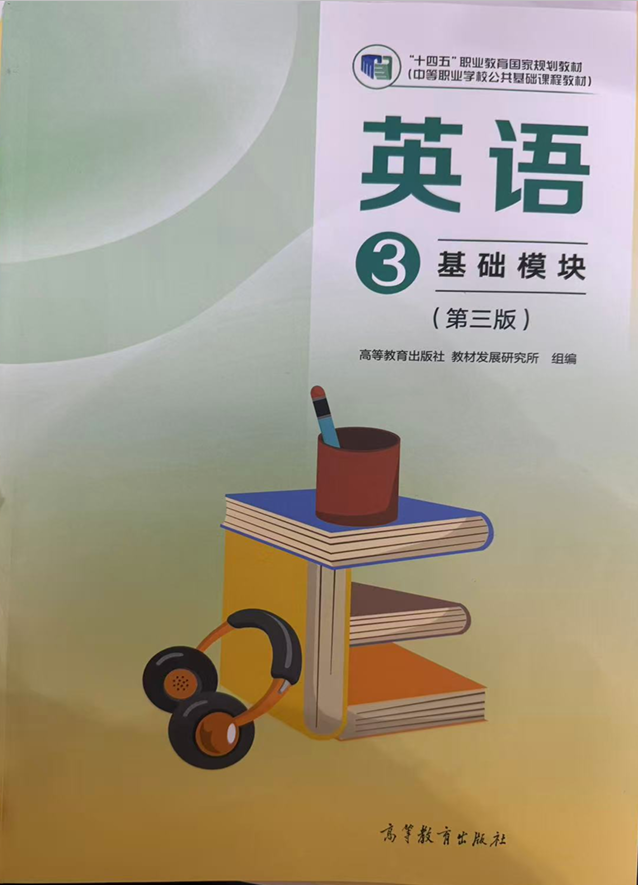
Unit 5-8 综合测试卷(1)-《英语 基础模块3》(高教版第三版)单元过关卷(原卷版+解析版)
2026-10-13
|
2份
|
26页
|
10人阅读
|
0人下载
内容正文:
编写说明:本套试卷紧扣《英语 基础模块3》(高教版第三版)教材,以教材单元为基准精准覆盖核心考点。
每个单元设置AB卷,A卷为基础巩固卷,侧重基础考点训练,帮助学生扎实掌握知识要点;B卷为能力提升卷,注重知识整合与全面检测,引导学生构建知识网络。全书设计4份综合测试卷,模拟实战情境,聚焦解题能力突破,全面提升应试能力与知识应用水平。
《英语 基础模块3》(高教版第三版)《单元过关卷》
Unit 5 -- Unit 8综合测试卷(1)
考试时间:60分钟 满分:80分
班级 姓名 学号 成绩
第一部分:语言知识运用(共25小题,每小题1分,共25分)
1. —I failed the speech competition about role models yesterday.
—______. You can practise more and try next time.
A. What a pity B. Congratulations C. Good idea D. Never mind
【答案】A
【详解】考察内容:交际用语(遗憾惋惜,春考高频)
详解:句意:— 昨天我关于时代楷模的演讲比赛失利了。— 真可惜,你可以多加练习下次再尝试。What a pity 用于听到坏消息表达惋惜。故选A。
2. Many students hope ______ more about cultural heritage in their spare time.
A. learn B. learning C. to learn D. learned
【答案】C
【详解】考察内容:非谓语动词作宾语(hope to do)
详解:hope to do sth. 希望做某事,不定式作 hope 宾语。句意:许多学生希望在课余时间了解更多文化遗产相关知识。故选C。
3. We ______ keep calm when we face sudden natural disasters. It is a basic self‑protection rule.
A. can B. must C. may D. could
【答案】B
【详解】考察内容:Unit7 情态动词 must
详解:must 表示 “必须”,防灾自我保护的硬性要求。句意:遭遇突发自然灾害,我们必须保持冷静。故选B。
4. The documentary ______ we watched last week shows amazing natural wonders in China.
A. what B. that C. who D. whom
【答案】B
【详解】考察内容:定语从句(先行词 documentary 指物,that 作 watched 的宾语)
详解:先行词是纪录片(事物),关系代词 that 在从句充当宾语。句意:上周我们看的纪录片展示中国壮丽的自然奇观。故选B。
5. She enjoys ______ about life stories of ordinary role models in her free time.
A. read B. reading C. to read D. readed
【答案】B
【详解】考察内容:非谓语动词作宾语(enjoy doing)
详解:enjoy 后面接动名词作宾语。句意:空闲时她喜欢阅读平凡时代楷模的人生故事。故选B。
6. —Could you please tell me some safety tips for earthquakes?
—______. I have learned lots of knowledge from safety classes.
A. With pleasure B. My pleasure C. That’s all right D. You’re welcome
【答案】A
【详解】考察内容:交际用语(答应请求,春考高频)
详解:句意:— 你可以告诉我一些地震安全小贴士吗?— 乐意效劳,我从安全课学到很多知识。With pleasure 用于答应他人求助。故选A。
7. The cultural show held in our city is ______ than the one held last year.
A. wonderful B. more wonderful C. most wonderful D. the most wonderful
【答案】B
【详解】考察内容:Unit6 形容词比较级
详解:than 提示比较级,more wonderful 更加精彩。故选B。
8. Lots of teenagers choose ______ public speeches about local folk culture on weekends.
A. give B. giving C. to give D. given
【答案】C
【详解】考察内容:非谓语动词作宾语(choose to do)
详解:choose to do sth. 选择做某事。句意:很多青少年选择周末做关于民俗文化的公开演讲。故选C。
9. ______ you meet an unexpected natural disaster, try to protect yourself first.(时间状语从句)
A. Though B. When C. Unless D. Until
【答案】B
【详解】考察内容:状语从句‑时间状语从句 when
详解:when 当…… 时候。句意:当你遇到突发自然灾害,首先努力保护自己。故选B。
10. The young volunteer ______ devotes his time to cultural protection is respected by local people.
A. which B. whom C. who D. whose
【答案】C
【详解】考察内容:定语从句(先行词 the young volunteer 指人,who 作主语)
详解:先行词是人,who 在从句充当主语。句意:致力于文化保护的青年志愿者受到当地人尊敬。故选C。
11. —Why not visit the local folk‑culture museum this Sunday?
—______. I am free this weekend.
A. Sounds great B. Bad luck C. I’m sorry D. See you
【答案】A
【详解】考察内容:交际用语(赞同提议,春考高频)
详解:句意:— 这周日我们去本地民俗博物馆好吗?— 听起来很棒,周末我有空。Sounds great 赞同对方提议。故选A。
12. The photos ______ by the students show different kinds of world natural wonders.
A. take B. taken C. taking D. to take
【答案】B
【详解】考察内容:非谓语动词作定语(过去分词 taken 表被动)
详解:photos 和 take 是被动关系。句意:学生们拍摄的照片展示世界各地不同自然奇观。故选B。
13. We should learn from those ______ who make great contributions to our society.
A. role models B. strangers C. patients D. guests
【答案】A
【详解】考察内容:Unit8 单元词汇 role models 时代楷模。故选A。
14. You won’t know much about folk heritage ______ you read more related books.
A. if B. though C. unless D. because
【答案】C
【详解】考察内容:状语从句‑条件状语从句 unless
详解:unless 除非。句意:除非你读更多相关书籍,否则你不会了解很多民俗遗产。故选C。
15. Most of us expect ______ our horizons by visiting places of interest.
A. broaden B. broadening C. to broaden D. broadened
【答案】C
【详解】考察内容:非谓语动词作宾语(expect to do)
详解:expect to do sth. 期待做某事。句意:我们大多数人希望通过游览名胜开阔眼界。故选C。
16. Respect is the key ______ understanding different kinds of traditional culture.
A. to B. of C. for D. with
【答案】A
【详解】考察内容:Unit4 固定短语 the key to …… 的关键。故选A。
17. —I think we should spread the stories of ordinary role models around us.
—______. They set good examples for young people.
A. I agree with you B. No problem C. That’s too bad D. You’re welcome
【答案】A
【详解】考察内容:交际用语(赞同观点,春考高频)
详解:句意:— 我认为我们应当传播身边平凡楷模的故事。— 我同意你的看法,他们为年轻人树立好榜样。I agree with you 赞同观点。故选A。
18. The report ______ introduces self‑rescue knowledge for floods is popular among teenagers.
A. who B. what C. which D. whose
【答案】C
【详解】考察内容:定语从句(先行词 the report 指物,which 作主语)
详解:先行词 report 为事物,which 在从句作主语。句意:介绍洪水自救知识的报告很受青少年欢迎。故选C。
19. ______ natural disasters are terrible, human beings can take steps to reduce the harm.
A. Though B. If C. Because D. Since
【答案】A
【详解】考察内容:状语从句‑让步状语从句 though
详解:though 虽然,引导让步状语从句。句意:虽然自然灾害很可怕,但是人类可以采取措施降低伤害。故选A。
20. Many teenagers practise ______ short articles about cultural treasures for the school newspaper.
A. write B. writing C. to write D. written
【答案】B
【详解】考察内容:非谓语动词作宾语(practise doing)
详解:practise doing sth 练习做某事。句意:很多青少年练习为校报写关于文化瑰宝的短文。故选B。
21. The scientist ______ we interviewed last month devotes himself to disaster‑reduction research.
A. whose B. whom C. which D. what
【答案】B
【详解】考察内容:定语从句(先行词 the scientist 指人,whom 作 interviewed 宾语)
详解:先行词是人,whom 充当从句宾语。句意:我们上个月采访的科学家致力于减灾研究。
故选B。
22. ______ faced with huge difficulties, those role models never give up their goals.
A. When B. While C. Although D. /
【答案】D
【详解】考察内容:非谓语动词作状语(过去分词 faced with 作让步伴随状语)
详解:Faced with 直接作状语。句意:面对巨大困难,那些时代楷模永不放弃目标。故选D。
23. We should learn ______ the spirits of people who make contributions to cultural protection.
A. from B. to C. with D. for
【答案】A
【详解】考察内容:Unit8 短语 learn from 向…… 学习。故选A。
24. The leaflets ______ by our class tell students basic knowledge about natural disasters.
A. print B. printing C. printed D. to print
【答案】C
【详解】考察内容:非谓语动词作定语(过去分词 printed 表被动)
详解:leaflets 与 print 被动。句意:我们班印制的宣传单告诉学生自然灾害基础常识。故选C。
25. ______ we keep learning self‑rescue skills, we can protect ourselves better in danger.
A. If B. Though C. Unless D. Since
【答案】A
【详解】考察内容:状语从句‑条件状语从句 if
详解:if 引导条件状语从句,主将从现。句意:如果我们持续学习新技能,我们将会变得更有竞争力。故选A。
第二部分:阅读理解(共15小题,每小题2分,共30分)
第五节 在本节中,你将读到三则阅读材料,从短文后各题所给的A、B、C、D四个选项中选出可以填入空白处的最佳选项,并将答题卡上对应选项的方框涂满、涂黑。
A
Nowadays, online shopping becomes more and more popular, so online customer service plays a key role in every e-shop. Unlike offline shops, customers cannot talk with salesmen face to face, so online workers need to be more patient and warm-hearted.
When customers send complaints about broken goods, delayed delivery or wrong sizes, service staff should reply quickly. First, they must say sorry sincerely for the inconvenience. Then they offer two solutions: free replacement or full refund. If buyers ask for compensation for their loss, shops need to give reasonable answers according to store rules.
Good online service brings lots of regular customers. If the workers ignore customers’ messages or speak impolitely, the shop will get bad reviews. Bad comments will stop new buyers from placing orders. Therefore, all online shops train their workers on service rules regularly to keep good business.
26. What is very important for online shops?
A. Cheap prices
B. Online customer service
C. Many kinds of clothes
D. Fast packaging machines
27. Why online workers need more patience?
A. They have too much work every day
B. Customers can’t communicate face to face
C. They work late at night
D. They need to take photos of goods
28. What is the first step to deal with complaints?
A. Ask customers to wait long
B. Say sincere apologies
C. Refuse all compensation
D. Send new goods at once
29. Which solution is NOT mentioned in the passage?
A. Free replacement
B. Full refund
C. Extra small gifts
D. No service at all
30. What will happen if service workers are rude?
A. More customers come to buy things
B. The shop gets bad reviews
C. Delivery becomes faster
D. Goods become cheaper
【答案】26. B 27. B 28. B 29. D 30. B
【导语】文章大意:短文围绕线上电商客服展开,讲解线上客服的重要性、处理客诉标准流程以及恶劣服务带来的负面影响。
文章释义:如今网购愈发流行,线上客服对每一家网店都至关重要。和实体店不同,顾客无法与销售人员面对面沟通,因此线上客服人员需要更有耐心、态度更温和。
当顾客因商品破损、发货延迟、尺码错误发起投诉时,客服要快速回复。首先必须为带来的不便真诚致歉,随后提供两种方案:免费换货或全额退款。若顾客要求损失补偿,店铺需根据店内规则给出合理答复。
优质线上服务能积累大量回头客。如果客服无视顾客消息、言语粗鲁,店铺会收获差评,负面评价会劝退新买家。因此所有网店都会定期培训员工服务规范,维持良好经营。
【逐题详解】
26.B 细节题,第一段第一句 online customer service plays a key role。
27.B 细节题,第一段第二句 customers cannot talk with salesmen face to face。
28.B 细节题,第二段第二句 First, they must say sorry sincerely。
29.D 细节题,文中提到换货、退款、补偿小礼品,未提及完全不提供服务。
30.B 细节题,第三段第二句 the shop will get bad reviews。
B
Natural wonders attract millions of tourists every year all over the world. Every country has its special amazing landscapes, from huge waterfalls to high snow mountains.
Most visitors prefer to travel in spring or autumn. In these two seasons, the temperature is comfortable and the scenery looks more beautiful. Summer is usually too hot, while winter may bring heavy snow and make traveling hard.
When visiting natural sights, tourists should follow some rules. Don’t pick wild flowers or carve words on rocks. Rubbish must be taken away. These rules can protect natural environment and keep wonders beautiful for a long time.
Many local villages near scenic spots develop tourism. Local people sell handmade goods and provide simple hotels. Tourism helps them make a living and introduces local culture to foreign visitors.
31. What draws lots of visitors every year?
A. Big cities B. Natural wonders C. Modern shops D. Large factories
32. Which seasons are better for visiting natural sights?
A. Spring & autumn B. Summer & winter
C. Spring & summer D. Autumn & winter
33. Which action is allowed when traveling?
A. Carving rocks B. Taking rubbish away
C. Picking wild flowers D. Leaving waste everywhere
34. What can local people get from tourism?
A. More polluted rivers B. Better living income
C. Fewer visitors D. Worse environment
35. What is the main idea of the text?
A. The best time and rules to visit natural wonders
B. Different seasons in different countries
C. How local people build villages
D. Famous waterfalls around the world
【答案】31. B 32. A 33. B 34. B 35. A
【导语】文章大意:本文围绕世界自然奇观展开,介绍游览自然景观的最佳时节、游客需要遵守的环保规定,以及旅游业对当地村民带来的积极影响。
文章释义:世界各地的自然奇观每年吸引数百万游客。每个国家都拥有独特壮丽的风景,既有宏伟瀑布,也有巍峨雪山。
大多数游客偏爱春季或秋季出行,这两个季节气温舒适,景色也更加秀美。夏季通常酷热难耐,冬季大雪纷飞,出行十分不便。
游览自然景区时,游客必须遵守相关规定:禁止采摘野花、禁止在岩石上刻字,垃圾必须随身带走。这些规定能够保护自然环境,让美景长久留存。
景区周边许多村镇依托旅游业发展。当地人售卖手工艺品、经营简易民宿。旅游业既改善了当地人的收入,也把本土文化展示给外国游客。
【详解】 31. 答案 B
解析:细节理解题。原文第一句 “Natural wonders attract millions of tourists every year all over the world” 直接说明是自然奇观吸引大量游客,A 大城市、C 现代化商店、D 工厂均文中未提及。
32. 答案 A
解析:细节理解题。第二段第二句 “Most visitors prefer to travel in spring or autumn” 点明春秋是出游最佳时节,夏季炎热、冬季多雪出行不便,排除其余选项。
33. 答案 B
解析:细节理解题。文中明确禁止采摘野花、石刻、乱扔垃圾,只有 “带走垃圾 Rubbish must be taken away” 是允许的行为。
34. 答案 B
解析:细节理解题。最后一段 “Tourism helps them make a living” 说明旅游业帮助当地人谋生,带来稳定收入;A 更多污染、C 游客变少、D 环境变差均和原文表达相反。
35. 答案 A
解析:主旨大意题。文章分段分别讲游览自然景观的合适季节、游览环保规则,顺带提及旅游带动乡村,核心主旨对应 A 选项;B 各国不同季节、C 村民建房、D 世界瀑布都只是文中局部细节,不能概括全文。
C
Victoria Falls is one of the world’s most amazing natural wonders. It lies on the border of Zambia and Zimbabwe in Southern Africa. Local people call it “Mosi-oa-Tunya”, which means “the smoke that thunders”.
The waterfall is about 1,708 meters wide and the water drops from 90 to 107 meters. When the water rushes down, thick mist rises high into the air. People can see and hear the fall from over 40 kilometers away.
The best time to visit Victoria Falls is from May to October. During these months, the water flow is steady and visitors can enjoy full views of the falls. In rainy seasons from November to April, the river carries too much water, and thick fog may block most sights.
Tourists should follow local rules to protect the wonder. Do not stand too close to the edge without safety guards, and never leave rubbish around the viewing areas. Many local people make a living by running small souvenir shops and guide services near the falls.
36.Where is Victoria Falls located?
A. In Southeast Asia
B. Between two African countries
C. In South America
D. In Australia
37. What does “the smoke that thunders” refer to?
A. Heavy fog on mountains
B. Smoke from local factories
C. Mist and loud noise of the falls
D. Clouds above the river
38. Why May to October is the best visiting time?
A. There is little fog and clear views
B. The river has the largest water volume
C. There are fewer visitors every day
D. Ticket prices are much cheaper
39. Which rule is correct for visitors?
A. Stand right at the water edge
B. Throw rubbish into the river
C. Keep away from unsafe cliffs
D. Buy all souvenirs from guides
40. What can we infer from the passage?
A. Victoria Falls is a man-made site
B. Tourism brings income to nearby villagers
C. People can only visit it in summer
D. The mist disappears in dry seasons
【答案】36. B 37. C 38. A 39. C 40. B
【导语】文章大意:本文介绍非洲维多利亚大瀑布的地理位置、景观特点、最佳游览时节、游览规范以及当地旅游产业发展。
文章释义:维多利亚瀑布是全球最震撼的自然奇观之一,地处非洲赞比亚与津巴布韦两国交界处。当地人称它为 “莫西奥图尼亚”,意为 “雷霆之烟”。
瀑布宽约 1708 米,水流从 90 至 107 米高空倾泻而下。大水奔涌时会升腾厚重水雾,四十公里外就能看见水雾、听见轰鸣。
5 至 10 月是游览维多利亚瀑布的最佳时段,这段时间水流平稳,游客能完整观赏瀑布全景。11 月至 4 月为雨季,河流水量过大,浓雾会遮挡大部分景观。
游客需遵守当地规定保护奇观:无防护设施时不要靠近悬崖边缘,观景区域禁止乱扔垃圾。不少当地人依靠瀑布周边纪念品小店、导游服务维持生计。
【详解】 36.答案 B
解析:细节理解题。原文第一段 “It lies on the border of Zambia and Zimbabwe in Southern Africa”,说明瀑布位于非洲两个国家交界处,A 东南亚、C 南美、D 澳洲均不符合原文信息。
37.答案 C
解析:词义理解题。瀑布水流冲击产生厚重水雾,同时伴有巨大轰鸣声,因此得名 “雷霆之烟”,其余选项工厂烟雾、山间浓雾均与文意不符。
38.答案 A
解析:细节理解题。文中说明 5-10 月水流稳定,无厚重浓雾遮挡,游客视野清晰;雨季水量大、雾气重观赏效果差,因此选 A。
39.答案 C
解析:细节理解题。原文提醒不要无防护靠近悬崖,对应选项 “远离危险崖边”;A 紧贴水边、B 乱扔垃圾都是禁止行为,D 强制购买纪念品文中未提及。
40.答案 B
解析:推理判断题。文末提到当地人依靠旅游相关生意谋生,说明旅游业为附近居民带来收入;A 人工景观错误,C 仅夏季可游览、D 旱季无雾气与原文内容相反。
第三部分 补全对话(共5题,每题1分,共5分)
A: Excuse me, could you spare a minute? I’m a travel blogger.
B: Sure, go ahead.
A: Where do you come 41.______?
B: I’m from Canada.
A: 42. ______you ever visited the Yellow Mountain?
B: Certainly. It’s famous 43.________ its sea of clouds and strange rocks.
A: What do you think 44.________ the natural views here?
B: They are amazing and really impressive.
A: Wish you a wonderful trip 45.________ China.
B: Thank you very much.
41.___________42.___________43.___________44.___________45.___________
【答案】41.from 42.Have 43.for 44.of 45.in
【详解】考查旅游交际情景用语
41. 题意:你来自哪里?
解析:固定搭配 come from 来自,填 from。
42. 题意:你曾经游览过黄山吗?
解析:现在完成时一般疑问句,主语 you,开头用 Have。
43. 题意:它因云海奇石闻名。
解析:固定短语 be famous for 因…… 出名,填 for。
44. 题意:你觉得这里的自然风光怎么样?
解析:固定句型 think of 认为、评价,填 of。
45. 题意:祝你在中国旅途愉快。
解析:大地点前用介词 in,in China 在中国。
第四部分 短文填空(共10题,每题1分,共10分)
The Yellow Mountain is well-known worldwide. It 46.______(see) as one of China’s top natural wonders. Thousands of tourists 47.______(attract) here every year.
When climbing mountains, you need to breathe 48.______(deep) and keep relaxed. The strange stones leave visitors 49._______(impress).
It’s necessary 50.______(learn) some traveling rules before going out. We must avoid 51.______(carve) words on rocks.
Many local villagers make a living 52.______ tourism. They provide food and hotels 53.______ travelers.
I hope I 54.______(travel) to more world-famous natural wonders in the future and record their beauty 55. _______my camera.
46.___________47.___________48.___________49.___________50.___________
51.___________52.___________53.___________54.___________55.___________
【答案】46. is seen 47. are attracted 48. deeply 49. impressed 50. to learn
51. carving 52. by 53. for 54. will travel 55. with
【导语】短文以黄山为话题,综合考查被动语态、副词、非谓语、介词、一般将来时等单元核心语法。
文章释义:黄山享誉全球,被视作中国顶级自然奇观之一,每年吸引成千上万游客前来。
登山时要深呼吸、保持放松。奇特的山石给游客留下深刻印象。
出行前有必要学习游览规范,禁止在岩石上刻字。
当地村民依靠旅游业谋生,为游客提供食宿。
我希望未来能游览更多世界级自然奇观,用相机记录美景。
【详解】
46. 题意:黄山被看作中国顶级自然奇观之一。
解析:固定搭配 be seen as,主语 it 单数,一般现在时被动语态用 is seen。
47. 题意:每年成千上万游客被吸引到此观光。
解析:游客是动作承受者,主语复数,一般现在时被动 are attracted。
48. 题意:登山过程中要深呼吸。
解析:副词 deeply 修饰动词 breathe。
49. 题意:奇石让所有游客印象深刻。
解析:固定搭配 leave sb impressed 令某人印象深刻。
50. 题意:出门旅游前学习相关规定很有必要。
解析:固定句型 It’s necessary to do sth。
51. 题意:我们必须避免在岩石上刻字。
解析:avoid 后只能接动名词,填 carving。
52. 题意:许多当地村民依靠旅游业谋生。
解析:by 表示凭借某种途径、方式。
53. 题意:他们为游客提供食宿。
解析:固定搭配 provide sth for sb。
54. 题意:我希望未来游览更多自然奇观。
解析:in the future 表将来,使用 will + 动词原形。
55. 题意:用相机记录自然风光。
解析:with 搭配工具,表示 “使用……”。
第五部分 书面表达(10分)
假定你是李华,上周你跟随研学团前往苏州园林参观,请以 A Trip to Suzhou Gardens 为题写一篇英语短文,要点如下:
1. 地理位置与历史价值;
2. 园内特色景观(假山、流水、古典亭台);
3. 游览感受,呼吁保护传统文化遗产。
词数 80–120 词。________________________________________________________________________________________________________________________________________________________________________________________________________________________________________________________________________________________________________________________________________________________________________________________________________________________________________________________________________________________________________________________________________________________________________________________________________________________________________________________
【答案】
A Trip to Suzhou Gardens
Last week, I visited Suzhou Gardens with a study tour group. They lie in Jiangsu Province and are famous ancient cultural heritage with hundreds of years of history.
Inside the gardens, we saw strange rock hills, clear streams and old pavilions. Every view looks like a beautiful Chinese painting.
This trip made me fall in love with traditional Chinese culture. We should protect such valuable cultural relics and pass them down to later generations.
【详解】翻译:
苏州园林之旅
上周,我跟随研学团游览了苏州园林。园林坐落于江苏省,是拥有数百年历史、闻名遐迩的古老文化遗产。
园内我们见到奇特假山、清澈溪流与古朴亭台,每一景都宛如一幅优美的中国画。
这次旅行让我爱上中华传统文化。我们应当守护这些珍贵文物,将它们代代传承。
学科网(北京)股份有限公司 (
1
)原创精品资源学科网独家享有版权,侵权必究!
学科网(北京)股份有限公司
$
编写说明:本套试卷紧扣《英语 基础模块3》(高教版第三版)教材,以教材单元为基准精准覆盖核心考点。
每个单元设置AB卷,A卷为基础巩固卷,侧重基础考点训练,帮助学生扎实掌握知识要点;B卷为能力提升卷,注重知识整合与全面检测,引导学生构建知识网络。全书设计4份综合测试卷,模拟实战情境,聚焦解题能力突破,全面提升应试能力与知识应用水平。
《英语 基础模块3》(高教版第三版)《单元过关卷》
Unit 5 -- Unit 8综合测试卷(1)
考试时间:60分钟 满分:80分
班级 姓名 学号 成绩
第一部分:语言知识运用(共25小题,每小题1分,共25分)
1. —I failed the speech competition about role models yesterday.
—______. You can practise more and try next time.
A. What a pity B. Congratulations C. Good idea D. Never mind
2. Many students hope ______ more about cultural heritage in their spare time.
A. learn B. learning C. to learn D. learned
3. We ______ keep calm when we face sudden natural disasters. It is a basic self‑protection rule.
A. can B. must C. may D. could
4. The documentary ______ we watched last week shows amazing natural wonders in China.
A. what B. that C. who D. whom
5. She enjoys ______ about life stories of ordinary role models in her free time.
A. read B. reading C. to read D. readed
6. —Could you please tell me some safety tips for earthquakes?
—______. I have learned lots of knowledge from safety classes.
A. With pleasure B. My pleasure C. That’s all right D. You’re welcome
7. The cultural show held in our city is ______ than the one held last year.
A. wonderful B. more wonderful C. most wonderful D. the most wonderful
8. Lots of teenagers choose ______ public speeches about local folk culture on weekends.
A. give B. giving C. to give D. given
9. ______ you meet an unexpected natural disaster, try to protect yourself first.(时间状语从句)
A. Though B. When C. Unless D. Until
10. The young volunteer ______ devotes his time to cultural protection is respected by local people.
A. which B. whom C. who D. whose
11. —Why not visit the local folk‑culture museum this Sunday?
—______. I am free this weekend.
A. Sounds great B. Bad luck C. I’m sorry D. See you
12. The photos ______ by the students show different kinds of world natural wonders.
A. take B. taken C. taking D. to take
13. We should learn from those ______ who make great contributions to our society.
A. role models B. strangers C. patients D. guests
14. You won’t know much about folk heritage ______ you read more related books.
A. if B. though C. unless D. because
15. Most of us expect ______ our horizons by visiting places of interest.
A. broaden B. broadening C. to broaden D. broadened
16. Respect is the key ______ understanding different kinds of traditional culture.
A. to B. of C. for D. with
17. —I think we should spread the stories of ordinary role models around us.
—______. They set good examples for young people.
A. I agree with you B. No problem C. That’s too bad D. You’re welcome
18. The report ______ introduces self‑rescue knowledge for floods is popular among teenagers.
A. who B. what C. which D. whose
19. ______ natural disasters are terrible, human beings can take steps to reduce the harm.
A. Though B. If C. Because D. Since
20. Many teenagers practise ______ short articles about cultural treasures for the school newspaper.
A. write B. writing C. to write D. written
21. The scientist ______ we interviewed last month devotes himself to disaster‑reduction research.
A. whose B. whom C. which D. what
22. ______ faced with huge difficulties, those role models never give up their goals.
A. When B. While C. Although D. /
23. We should learn ______ the spirits of people who make contributions to cultural protection.
A. from B. to C. with D. for
24. The leaflets ______ by our class tell students basic knowledge about natural disasters.
A. print B. printing C. printed D. to print
25. ______ we keep learning self‑rescue skills, we can protect ourselves better in danger.
A. If B. Though C. Unless D. Since
第二部分:阅读理解(共15小题,每小题2分,共30分)
第五节 在本节中,你将读到三则阅读材料,从短文后各题所给的A、B、C、D四个选项中选出可以填入空白处的最佳选项,并将答题卡上对应选项的方框涂满、涂黑。
A
Nowadays, online shopping becomes more and more popular, so online customer service plays a key role in every e-shop. Unlike offline shops, customers cannot talk with salesmen face to face, so online workers need to be more patient and warm-hearted.
When customers send complaints about broken goods, delayed delivery or wrong sizes, service staff should reply quickly. First, they must say sorry sincerely for the inconvenience. Then they offer two solutions: free replacement or full refund. If buyers ask for compensation for their loss, shops need to give reasonable answers according to store rules.
Good online service brings lots of regular customers. If the workers ignore customers’ messages or speak impolitely, the shop will get bad reviews. Bad comments will stop new buyers from placing orders. Therefore, all online shops train their workers on service rules regularly to keep good business.
26. What is very important for online shops?
A. Cheap prices
B. Online customer service
C. Many kinds of clothes
D. Fast packaging machines
27. Why online workers need more patience?
A. They have too much work every day
B. Customers can’t communicate face to face
C. They work late at night
D. They need to take photos of goods
28. What is the first step to deal with complaints?
A. Ask customers to wait long
B. Say sincere apologies
C. Refuse all compensation
D. Send new goods at once
29. Which solution is NOT mentioned in the passage?
A. Free replacement
B. Full refund
C. Extra small gifts
D. No service at all
30. What will happen if service workers are rude?
A. More customers come to buy things
B. The shop gets bad reviews
C. Delivery becomes faster
D. Goods become cheaper
B
Natural wonders attract millions of tourists every year all over the world. Every country has its special amazing landscapes, from huge waterfalls to high snow mountains.
Most visitors prefer to travel in spring or autumn. In these two seasons, the temperature is comfortable and the scenery looks more beautiful. Summer is usually too hot, while winter may bring heavy snow and make traveling hard.
When visiting natural sights, tourists should follow some rules. Don’t pick wild flowers or carve words on rocks. Rubbish must be taken away. These rules can protect natural environment and keep wonders beautiful for a long time.
Many local villages near scenic spots develop tourism. Local people sell handmade goods and provide simple hotels. Tourism helps them make a living and introduces local culture to foreign visitors.
31. What draws lots of visitors every year?
A. Big cities B. Natural wonders C. Modern shops D. Large factories
32. Which seasons are better for visiting natural sights?
A. Spring & autumn B. Summer & winter
C. Spring & summer D. Autumn & winter
33. Which action is allowed when traveling?
A. Carving rocks B. Taking rubbish away
C. Picking wild flowers D. Leaving waste everywhere
34. What can local people get from tourism?
A. More polluted rivers B. Better living income
C. Fewer visitors D. Worse environment
35. What is the main idea of the text?
A. The best time and rules to visit natural wonders
B. Different seasons in different countries
C. How local people build villages
D. Famous waterfalls around the world
C
Victoria Falls is one of the world’s most amazing natural wonders. It lies on the border of Zambia and Zimbabwe in Southern Africa. Local people call it “Mosi-oa-Tunya”, which means “the smoke that thunders”.
The waterfall is about 1,708 meters wide and the water drops from 90 to 107 meters. When the water rushes down, thick mist rises high into the air. People can see and hear the fall from over 40 kilometers away.
The best time to visit Victoria Falls is from May to October. During these months, the water flow is steady and visitors can enjoy full views of the falls. In rainy seasons from November to April, the river carries too much water, and thick fog may block most sights.
Tourists should follow local rules to protect the wonder. Do not stand too close to the edge without safety guards, and never leave rubbish around the viewing areas. Many local people make a living by running small souvenir shops and guide services near the falls.
36.Where is Victoria Falls located?
A. In Southeast Asia
B. Between two African countries
C. In South America
D. In Australia
37. What does “the smoke that thunders” refer to?
A. Heavy fog on mountains
B. Smoke from local factories
C. Mist and loud noise of the falls
D. Clouds above the river
38. Why May to October is the best visiting time?
A. There is little fog and clear views
B. The river has the largest water volume
C. There are fewer visitors every day
D. Ticket prices are much cheaper
39. Which rule is correct for visitors?
A. Stand right at the water edge
B. Throw rubbish into the river
C. Keep away from unsafe cliffs
D. Buy all souvenirs from guides
40. What can we infer from the passage?
A. Victoria Falls is a man-made site
B. Tourism brings income to nearby villagers
C. People can only visit it in summer
D. The mist disappears in dry seasons
第三部分 补全对话(共5题,每题1分,共5分)
A: Excuse me, could you spare a minute? I’m a travel blogger.
B: Sure, go ahead.
A: Where do you come 41.______?
B: I’m from Canada.
A: 42. ______you ever visited the Yellow Mountain?
B: Certainly. It’s famous 43.________ its sea of clouds and strange rocks.
A: What do you think 44.________ the natural views here?
B: They are amazing and really impressive.
A: Wish you a wonderful trip 45.________ China.
B: Thank you very much.
41.___________42.___________43.___________44.___________45.___________
第四部分 短文填空(共10题,每题1分,共10分)
The Yellow Mountain is well-known worldwide. It 46.______(see) as one of China’s top natural wonders. Thousands of tourists 47.______(attract) here every year.
When climbing mountains, you need to breathe 48.______(deep) and keep relaxed. The strange stones leave visitors 49._______(impress).
It’s necessary 50.______(learn) some traveling rules before going out. We must avoid 51.______(carve) words on rocks.
Many local villagers make a living 52.______ tourism. They provide food and hotels 53.______ travelers.
I hope I 54.______(travel) to more world-famous natural wonders in the future and record their beauty 55. _______my camera.
46.___________47.___________48.___________49.___________50.___________
51.___________52.___________53.___________54.___________55.___________
第五部分 书面表达(10分)
假定你是李华,上周你跟随研学团前往苏州园林参观,请以 A Trip to Suzhou Gardens 为题写一篇英语短文,要点如下:
1. 地理位置与历史价值;
2. 园内特色景观(假山、流水、古典亭台);
3. 游览感受,呼吁保护传统文化遗产。
词数 80–120 词。_________________________________________________________________________________________________________________________________________________________________________________________________________________________________________________________________________________________________________________________________________________________________________________________________________________________________________________________________________________________________________________________________________________________________________
学科网(北京)股份有限公司 (
1
)原创精品资源学科网独家享有版权,侵权必究!
学科网(北京)股份有限公司
$
资源预览图

1

2

3
由于学科网是一个信息分享及获取的平台,不确保部分用户上传资料的 来源及知识产权归属。如您发现相关资料侵犯您的合法权益,请联系学科网,我们核实后将及时进行处理。