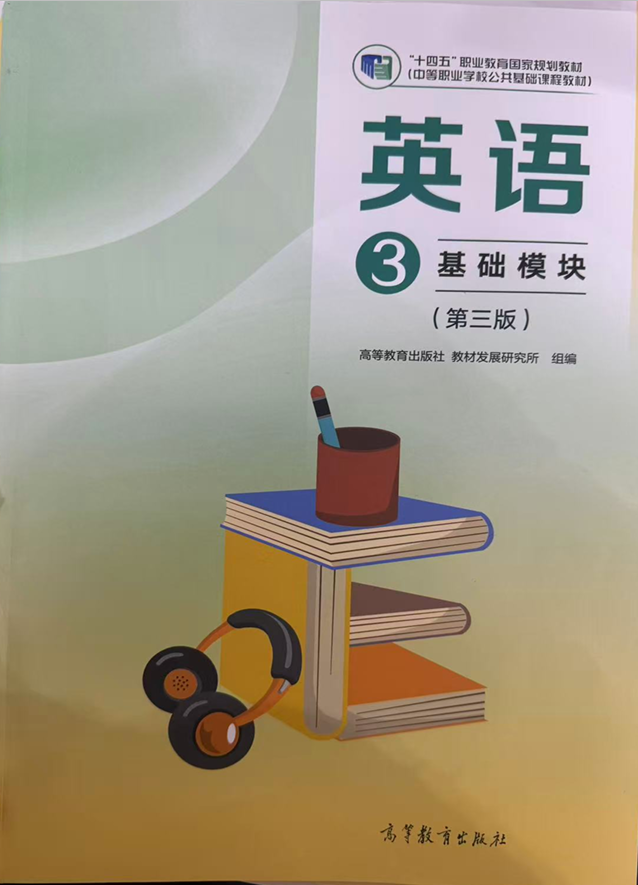
1.3(练习)-Language Practice-Grammar 非谓语动词作宾语-《英语 基础模块3》(高教版第三版)【上好课】(原卷版+解析版)
2026-09-29
|
2份
|
19页
|
146人阅读
|
1人下载
内容正文:
《英语 基础模块3》(高教版第三版)
Unit1 Festivals Around the World
Language Practice同步练习
一、英语知识运用
1. The students decided ______ a cultural activity after the exam.
A. join B. joining C. to join D. joined
2. Amy enjoys ______ traditional songs at festivals.
A. sing B. singing C. to sing D. sang
3. We hope ______ more about festivals around the world.
A. learn B. learning C. to learn D. learned
4. Please pay attention to ______ the instructions carefully.
A. read B. reading C. reads D. to read
5. Tom refused ______ the invitation because he was busy.
A. accept B. accepting C. to accept D. accepted
6. They finished ______ the classroom before the celebration.
A. decorate B. decorating C. to decorate D. decorated
7. She looks forward to ______ her grandparents during the holiday.
A. visit B. visiting C. visited D. visits
8. The children practiced ______ English before the performance.
A. speak B. speaking C. to speak D. spoke
9. I remember ______ this festival when I was young.
A. celebrate B. celebrating C. to celebrate D. celebrated
10. He stopped ______ when the teacher entered the room.
A. talk B. talking C. to talk D. talked
11. My parents plan ______ a trip during the vacation.
A. take B. taking C. to take D. took
12. She suggested ______ a museum after the festival.
A. visit B. visiting C. to visit D. visited
13. We tried ______ a new way to make lanterns.
A. use B. using C. to use D. used
14. Don't forget ______ the lights before leaving.
A. turn off B. turning off C. to turn off D. turned off
15. He began ______ Chinese culture at an early age.
A. study B. studying C. to study D. B and C
二、词汇拼写与完成句子
16. Many people enjoy ________ (share) their festival experiences.
17. We decided ________ (learn) more about local traditions.
18. The students finished ________ (make) the decorations.
19. She is interested in different ________ (culture).
20. They look forward to ________ (join) the festival.
21. The festival is an important ________ (tradition) event.
22. He promised ________ (help) his classmates.
23. People celebrate festivals in many different ________ (way).
24. 我们计划参加一个文化交流活动。
We ________ ________ ________ a cultural exchange activity.
25. 她喜欢观看传统表演。
She enjoys ________ traditional performances.
26. 我期待着见到我的朋友。
I look forward to ________ my friends.
27. 人们通过分享食物来庆祝节日。
People celebrate festivals by ________ food.
28. 他决定学习更多关于春节的知识。
He decided ________ more about the Spring Festival.
29. 我最喜欢的是和家人一起庆祝节日。
________ I love most is ________ festivals with my family.
30. 谢谢你帮助我。
Thank you for ________ me.
三、汉译英
31. 我计划回家和家人一起庆祝春节。
____________________________________________________________
32. 人们通过制作灯笼庆祝元宵节。
____________________________________________________________
33. 她建议我们参观当地博物馆。
____________________________________________________________
34. 学生们期待参加文化活动。
____________________________________________________________
35. 我记得小时候参加过一次节日活动。
____________________________________________________________
四、阅读理解
India Lights Up for Diwali
On Monday, people across India began to celebrate Diwali, the festival of lights. People lit oil lamps in their homes, and set off fireworks to celebrate. Across the country, marketplaces, cities, and towns were decorated with colorful displays.
The Hindu celebration of Diwali is a time for people to get together with others. Lighting lamps and setting off fireworks are important parts of the holiday, as a sign of light winning out over darkness.
This is the first year since the start of the coronavirus pandemic that India has returned to a fairly normal celebration of Diwali. During the pandemic, people were encouraged to avoid getting together in large numbers. Many temples held ceremonies online, to keep crowds of people from coming together and spreading the virus.
But this year, large celebrations are back. On Sunday evening, around 100,000 people, including Prime Minister Narendra Modi, were gathered for a celebration at Ram ki Paidi.
Diwali isn’t just celebrated in India, but around the world. Even in Western countries, the holiday is being celebrated more and more by people of Indian background.
In the US, the White House held its largest Diwali celebration ever, with President Joe Biden and Vice President Kamala Harris taking part. Ms. Harris’s mother is from India.
In the United Kingdom, there were many large Diwali celebrations. Many people felt that it was special to have Rishi Sunak, who’s Hindu, chosen as the UK’s new prime minister on Diwali.
41. What did people do to celebrate Diwali in India?
A. They planted trees and cleaned streets. B. They lit oil lamps and set off fireworks.
C. They held online meetings at home. D. They traveled to other countries.
42. Why did many temples hold ceremonies online during the pandemic?
A. Because people disliked traditional festivals.
B. Because there were not enough places in temples.
C. Because they wanted to prevent the spread of the virus.
D. Because people preferred celebrating online.
43. What can we infer from the passage?
A. Diwali is becoming popular in many countries around the world.
B. Only people in India are interested in Diwali.
C. Diwali celebrations are smaller than before.
D. People no longer celebrate Diwali during the pandemic.
44. What does the phrase “returned to a fairly normal celebration” in Paragraph 3 mean?
A. People celebrated Diwali in a traditional way again.
B. People stopped celebrating Diwali completely.
C. People celebrated Diwali only online.
D. People changed Diwali into another festival.
45. What is the passage mainly about?
A. The history of Diwali in India.
B. Different festivals around the world.
C. The celebration of Diwali in India and other countries.
D. The influence of the coronavirus pandemic on festivals.
Young Chinese People Are “Remaking” Spring Festival
As the Spring Festival approaches, a growing number of young Chinese are reshaping how the holiday is celebrated, turning tradition into something more personal, creative, and about having an experience.
A widely shared social media post about a college student born in 2004 has resonated with many users after the college student described saving scholarship money and part-time income to take her parents on their first-ever trip to Beijing.
The student, who is from Sichuan province, wrote that her parents have supported her education through years of farm work and migrant labor, and that the journey was her way of "holding the hands that once lifted me up".
On lifestyle social media platforms, posts tagged with "traveling with parents" number close to 50,000, showing a broader trend of young people designing holiday experiences to share with their families.
Some are also adding creative projects to their celebrations. One user spending the festival in Hainan province used a social platform post to recruit strangers and formed a small photography team that produced New Year portrait sets for nursing home residents.
At the same time, more young adults are taking on practical hosting roles, from independently preparing New Year's Eve dinners to redesigning family gatherings and arranging surprise activities for their parents.
A youth survey conducted on Feb 13 found that more than 80 percent of respondents prefer New Year products that include traditional cultural elements, with most also paying attention to the cultural meaning behind what they buy. The survey also found that almost 68 percent also enjoy sharing such purchases online.
Researchers say the changes show how traditional festivals stay alive through adaptation. By simplifying rituals and blending them with modern interests, young people are not abandoning Spring Festival — they are updating how it is practiced.
46. What did the college student use to buy three tickets to Beijing for her parents?
___________________________________________________________________________
47. Why did the college student say the trip was her way of “holding the hands that once lifted me up”?
___________________________________________________________________________
48. What creative activities do young people do to celebrate the Spring Festival according to the passage?
___________________________________________________________________________
49. What do the survey results show about young people’s attitudes toward New Year products?
___________________________________________________________________________
50. What is your opinion about young people’s new ways of celebrating the Spring Festival? Please give your reasons.
___________________________________________________________________________
五、短文填空
The Spring Festival is coming. Jack, an exchange student, 51. ________ (receive) an invitation from his Chinese friend yesterday. He plans 52. ________ (visit) his friend's family. They begin 53. ________ (prepare) food before the festival.
Jack enjoys 54. ________ (learn) Chinese traditions and practices 55. ________ (write) Chinese characters. He hopes 56. ________ (understand) Chinese culture better.
During the celebration, Jack remembers 57. ________ (watch) lantern shows last year. He looks forward to 58. ________ (experience) more festivals. His friend suggests 59. ________ (take) photos and promises 60. ________ (share) them with others.
原创精品资源学科网独家享有版权,侵权必究!
学科网(北京)股份有限公司
学科网(北京)股份有限公司
$
《英语 基础模块3》(高教版第三版)
Unit1 Festivals Around the World
Language Practice同步练习
一、英语知识运用
1. The students decided ______ a cultural activity after the exam.
A. join B. joining C. to join D. joined
【答案】C
【详解】考查非谓语动词。句意:考试结束后,学生们决定参加一项文化活动。decide to do sth.意为“决定做某事”,其后接动词不定式作宾语,因此用to join。故选C。
2. Amy enjoys ______ traditional songs at festivals.
A. sing B. singing C. to sing D. sang
【答案】B
【详解】考查非谓语动词。句意:Amy喜欢在节日期间唱传统歌曲。enjoy doing sth.意为“喜欢做某事”,enjoy后接动名词作宾语,因此用singing。故选B。
3. We hope ______ more about festivals around the world.
A. learn B. learning C. to learn D. learned
【答案】C
【详解】考查非谓语动词。句意:我们希望更多地了解世界各地的节日。hope to do sth.意为“希望做某事”,hope后接动词不定式作宾语,因此用to learn。故选C。
4. Please pay attention to ______ the instructions carefully.
A. read B. reading C. reads D. to read
【答案】B
【详解】考查非谓语动词。句意:请注意认真阅读说明。pay attention to意为“注意”,其中to为介词,后接名词、代词或动名词,因此用reading。故选B。
5. Tom refused ______ the invitation because he was busy.
A. accept B. accepting C. to accept D. accepted
【答案】C
【详解】考查非谓语动词。句意:Tom因为很忙而拒绝接受邀请。refuse to do sth.意为“拒绝做某事”,其后接动词不定式,因此用to accept。故选C。
6. They finished ______ the classroom before the celebration.
A. decorate B. decorating C. to decorate D. decorated
【答案】B
【详解】考查非谓语动词。句意:他们在庆祝活动开始前完成了教室的布置。finish doing sth.意为“完成做某事”,finish后接动名词作宾语,因此用decorating。故选B。
7. She looks forward to ______ her grandparents during the holiday.
A. visit B. visiting C. visited D. visits
【答案】B
【详解】考查非谓语动词。句意:她期待假期去看望祖父母。look forward to doing sth.意为“期待做某事”,其中to为介词,后接动名词,因此用visiting。故选B。
8. The children practiced ______ English before the performance.
A. speak B. speaking C. to speak D. spoke
【答案】B
【详解】考查非谓语动词。句意:孩子们在演出前练习说英语。practice doing sth.意为“练习做某事”,practice后接动名词作宾语,因此用speaking。故选B。
9. I remember ______ this festival when I was young.
A. celebrate B. celebrating C. to celebrate D. celebrated
【答案】B
【详解】考查非谓语动词。句意:我记得小时候庆祝过这个节日。remember doing sth.表示“记得做过某事”,强调对已经发生事情的记忆;remember to do sth.表示“记得去做某事”。根据“when I was young”可知,此处指记得过去发生过的事情,因此用celebrating。故选B。
10. He stopped ______ when the teacher entered the room.
A. talk B. talking C. to talk D. talked
【答案】B
【详解】考查非谓语动词。句意:老师走进教室时,他停止了说话。stop doing sth.表示“停止正在做的事情”;stop to do sth.表示“停下正在做的事情去做另一件事”。根据语境可知,老师进来后他不再讲话,因此用talking。故选B。
11. My parents plan ______ a trip during the vacation.
A. take B. taking C. to take D. took
【答案】C
【详解】考查非谓语动词。句意:我的父母计划假期去旅行。plan to do sth.意为“计划做某事”,其后接动词不定式作宾语,因此用to take。故选C。
12. She suggested ______ a museum after the festival.
A. visit B. visiting C. to visit D. visited
【答案】B
【详解】考查非谓语动词。句意:节日结束后,她建议参观一家博物馆。suggest doing sth.意为“建议做某事”,suggest后接动名词作宾语,因此用visiting。故选B。
13. We tried ______ a new way to make lanterns.
A. use B. using C. to use D. used
【答案】B
【详解】考查非谓语动词。句意:我们尝试用一种新方法制作灯笼。try doing sth.表示“尝试做某事”,强调试用某种方法,看是否有效;结合“a new way”可知,此处强调尝试一种新的制作方法,因此用using。故选B。
14. Don't forget ______ the lights before leaving.
A. turn off B. turning off C. to turn off D. turned off
【答案】C
【详解】考查非谓语动词。句意:离开前别忘了关灯。forget to do sth.表示“忘记去做某事”,指事情尚未做;forget doing sth.表示“忘记做过某事”。此处关灯是离开前需要完成的动作,因此用to turn off。故选C。
15. He began ______ Chinese culture at an early age.
A. study B. studying C. to study D. B and C
【答案】D
【详解】考查非谓语动词。句意:他很小的时候就开始学习中国文化。begin doing sth.和begin to do sth.均可表示“开始做某事”,因此studying和to study均符合题意。故选D。
二、词汇拼写与完成句子
16. Many people enjoy ________ (share) their festival experiences.
【答案】sharing
【详解】考查非谓语动词。enjoy doing sth.意为“喜欢做某事”,enjoy后接动名词,因此share变为sharing。故填sharing。
17. We decided ________ (learn) more about local traditions.
【答案】to learn
【详解】考查非谓语动词。decide to do sth.意为“决定做某事”,其后接动词不定式,因此填to learn。
18. The students finished ________ (make) the decorations.
【答案】making
【详解】考查非谓语动词。finish doing sth.意为“完成做某事”,finish后接动名词,因此make变为making。故填making。
19. She is interested in different ________ (culture).
【答案】cultures
【详解】考查名词复数。culture作“文化”讲时,在表示不同种类的文化时可作可数名词。空前有different修饰,表示“不同的文化”,应用复数形式cultures。故填cultures。
20. They look forward to ________ (join) the festival.
【答案】joining
【详解】考查非谓语动词。look forward to doing sth.意为“期待做某事”,其中to为介词,后接动名词,因此join变为joining。故填joining。
21. The festival is an important ________ (tradition) event.
【答案】traditional
【详解】考查形容词。空格后event为名词,应用形容词修饰。tradition为名词,意为“传统”;其形容词形式traditional意为“传统的”。故填traditional。
22. He promised ________ (help) his classmates.
【答案】to help
【详解】考查非谓语动词。promise to do sth.意为“答应做某事”,promise后接动词不定式作宾语,因此填to help。
23. People celebrate festivals in many different ________ (way).
【答案】ways
【详解】考查名词复数。many different后应接可数名词复数,way意为“方式”,其复数形式为ways。故填ways。
24. 我们计划参加一个文化交流活动。
We ________ ________ ________ a cultural exchange activity.
【答案】plan to join
【详解】考查固定搭配。plan to do sth.意为“计划做某事”;join意为“参加、加入”。主语为We,句子描述一般计划,因此用plan to join。故填plan to join。
25. 她喜欢观看传统表演。
She enjoys ________ traditional performances.
【答案】watching
【详解】考查非谓语动词。enjoy doing sth.意为“喜欢做某事”,因此watch应用动名词形式watching。故填watching。
26. 我期待着见到我的朋友。
I look forward to ________ my friends.
【答案】seeing
【详解】考查非谓语动词。look forward to doing sth.意为“期待做某事”,其中to为介词,因此see应用动名词形式seeing。故填seeing。
27. 人们通过分享食物来庆祝节日。
People celebrate festivals by ________ food.
【答案】sharing
【详解】考查非谓语动词。介词by意为“通过”,表示方式,其后接名词、代词或动名词。share的动名词形式为sharing。故填sharing。
28. 他决定学习更多关于春节的知识。
He decided ________ more about the Spring Festival.
【答案】to learn
【详解】考查非谓语动词。decide to do sth.意为“决定做某事”,因此learn前应用不定式符号to。故填to learn。
29. 我最喜欢的是和家人一起庆祝节日。
________ I love most is ________ festivals with my family.
【答案】What;celebrating
【详解】考查主语从句和非谓语动词。What I love most意为“我最喜欢的事情”,What在从句中作love的宾语;第二空位于系动词is后,用动名词短语作表语,表示“和家人一起庆祝节日这件事”,因此用celebrating。故填What;celebrating。
30. 谢谢你帮助我。
Thank you for ________ me.
【答案】helping
【详解】考查非谓语动词。thank sb. for doing sth.意为“因做某事而感谢某人”,for为介词,其后接动名词,因此help变为helping。故填helping。
三、汉译英
31. 我计划回家和家人一起庆祝春节。
____________________________________________________________
【答案】I plan to go home and celebrate the Spring Festival with my family.
【详解】考查plan to do sth.及并列结构。plan to do sth.意为“计划做某事”;go home意为“回家”;celebrate the Spring Festival意为“庆祝春节”;with my family意为“和我的家人一起”。go和celebrate由and连接,共同承接plan to。故答案为I plan to go home and celebrate the Spring Festival with my family.
32. 人们通过制作灯笼庆祝元宵节。
____________________________________________________________
【答案】People celebrate the Lantern Festival by making lanterns.
【详解】考查介词by的用法。celebrate the Lantern Festival意为“庆祝元宵节”;by doing sth.表示“通过做某事”,因此“通过制作灯笼”表达为by making lanterns。故答案为People celebrate the Lantern Festival by making lanterns.
33. 她建议我们参观当地博物馆。
____________________________________________________________
【答案】She suggested visiting the local museum.
【详解】考查非谓语动词。suggest doing sth.意为“建议做某事”,suggest后通常接动名词作宾语;the local museum意为“当地博物馆”。故答案为She suggested visiting the local museum.
34. 学生们期待参加文化活动。
____________________________________________________________
【答案】The students look forward to taking part in cultural activities.
【详解】考查固定搭配。look forward to doing sth.意为“期待做某事”,其中to为介词;take part in意为“参加”;cultural activities意为“文化活动”。因此take应用动名词形式taking。故答案为The students look forward to taking part in cultural activities.
35. 我记得小时候参加过一次节日活动。
____________________________________________________________
【答案】I remember taking part in a festival activity when I was young.
【详解】考查remember doing sth.。remember doing sth.表示“记得做过某事”,强调已经发生的事情;take part in意为“参加”;when I was young意为“当我小时候”。故答案为I remember taking part in a festival activity when I was young.
四、阅读理解
India Lights Up for Diwali
On Monday, people across India began to celebrate Diwali, the festival of lights. People lit oil lamps in their homes, and set off fireworks to celebrate. Across the country, marketplaces, cities, and towns were decorated with colorful displays.
The Hindu celebration of Diwali is a time for people to get together with others. Lighting lamps and setting off fireworks are important parts of the holiday, as a sign of light winning out over darkness.
This is the first year since the start of the coronavirus pandemic that India has returned to a fairly normal celebration of Diwali. During the pandemic, people were encouraged to avoid getting together in large numbers. Many temples held ceremonies online, to keep crowds of people from coming together and spreading the virus.
But this year, large celebrations are back. On Sunday evening, around 100,000 people, including Prime Minister Narendra Modi, were gathered for a celebration at Ram ki Paidi.
Diwali isn’t just celebrated in India, but around the world. Even in Western countries, the holiday is being celebrated more and more by people of Indian background.
In the US, the White House held its largest Diwali celebration ever, with President Joe Biden and Vice President Kamala Harris taking part. Ms. Harris’s mother is from India.
In the United Kingdom, there were many large Diwali celebrations. Many people felt that it was special to have Rishi Sunak, who’s Hindu, chosen as the UK’s new prime minister on Diwali.
36. What did people do to celebrate Diwali in India?
A. They planted trees and cleaned streets. B. They lit oil lamps and set off fireworks.
C. They held online meetings at home. D. They traveled to other countries.
37. Why did many temples hold ceremonies online during the pandemic?
A. Because people disliked traditional festivals.
B. Because there were not enough places in temples.
C. Because they wanted to prevent the spread of the virus.
D. Because people preferred celebrating online.
38. What can we infer from the passage?
A. Diwali is becoming popular in many countries around the world.
B. Only people in India are interested in Diwali.
C. Diwali celebrations are smaller than before.
D. People no longer celebrate Diwali during the pandemic.
39. What does the phrase “returned to a fairly normal celebration” in Paragraph 3 mean?
A. People celebrated Diwali in a traditional way again.
B. People stopped celebrating Diwali completely.
C. People celebrated Diwali only online.
D. People changed Diwali into another festival.
40. What is the passage mainly about?
A. The history of Diwali in India.
B. Different festivals around the world.
C. The celebration of Diwali in India and other countries.
D. The influence of the coronavirus pandemic on festivals.
【答案】36. B 37. C 38. A 39. A 40. C
【导语】本文为一篇说明文。文章介绍了印度排灯节的主要庆祝方式、疫情期间庆祝活动的变化,以及排灯节在美国、英国等其他国家的庆祝情况,体现了这一传统节日在世界范围内的传播。
【详解】
36. 细节理解题。根据第1段的“People lit oil lamps in their homes, and set off fireworks to celebrate.”可知,人们通过点燃油灯和燃放烟花庆祝排灯节。故选B。
37. 细节理解题。根据第3段的“Many temples held ceremonies online, to keep crowds of people from coming together and spreading the virus.”可知,许多寺庙举行线上仪式是为了避免人群聚集,从而防止病毒传播。故选C。
38. 推理判断题。根据第5段的“Diwali isn’t just celebrated in India, but around the world.”以及下文对美国和英国庆祝活动的介绍可推知,排灯节正在世界许多国家得到庆祝。故选A。
39. 词句猜测题。根据第3段疫情期间人们避免大规模聚集,以及第4段“But this year, large celebrations are back.”可知,“returned to a fairly normal celebration”表示人们重新恢复了较为正常、传统的庆祝方式。故选A。
40. 主旨大意题。文章先介绍印度国内的排灯节庆祝活动,随后介绍美国和英国等国家的庆祝情况,因此主要讲述排灯节在印度及其他国家的庆祝情况。故选C。
Young Chinese People Are “Remaking” Spring Festival
As the Spring Festival approaches, a growing number of young Chinese are reshaping how the holiday is celebrated, turning tradition into something more personal, creative, and about having an experience.
A widely shared social media post about a college student born in 2004 has resonated with many users after the college student described saving scholarship money and part-time income to take her parents on their first-ever trip to Beijing.
The student, who is from Sichuan province, wrote that her parents have supported her education through years of farm work and migrant labor, and that the journey was her way of "holding the hands that once lifted me up".
On lifestyle social media platforms, posts tagged with "traveling with parents" number close to 50,000, showing a broader trend of young people designing holiday experiences to share with their families.
Some are also adding creative projects to their celebrations. One user spending the festival in Hainan province used a social platform post to recruit strangers and formed a small photography team that produced New Year portrait sets for nursing home residents.
At the same time, more young adults are taking on practical hosting roles, from independently preparing New Year's Eve dinners to redesigning family gatherings and arranging surprise activities for their parents.
A youth survey conducted on Feb 13 found that more than 80 percent of respondents prefer New Year products that include traditional cultural elements, with most also paying attention to the cultural meaning behind what they buy. The survey also found that almost 68 percent also enjoy sharing such purchases online.
Researchers say the changes show how traditional festivals stay alive through adaptation. By simplifying rituals and blending them with modern interests, young people are not abandoning Spring Festival — they are updating how it is practiced.
41. What did the college student use to buy three tickets to Beijing for her parents?
___________________________________________________________________________
42. Why did the college student say the trip was her way of “holding the hands that once lifted me up”?
___________________________________________________________________________
43. What creative activities do young people do to celebrate the Spring Festival according to the passage?
___________________________________________________________________________
44. What do the survey results show about young people’s attitudes toward New Year products?
___________________________________________________________________________
45. What is your opinion about young people’s new ways of celebrating the Spring Festival? Please give your reasons.
___________________________________________________________________________
【答案】
41. She used her scholarship money and part-time income.
42. Because her parents had supported her education through years of farm work and migrant labor, and she wanted to show her love and gratitude to them.
43. They travel with their parents, organize photography projects, prepare New Year’s Eve dinners, redesign family gatherings and arrange surprise activities.
44. They prefer New Year products with traditional cultural elements, care about their cultural meaning and also enjoy sharing them online.
45. I think these new ways are meaningful because they combine tradition with modern interests and make the Spring Festival more personal and enjoyable.(答案合理即可)
【导语】本文为一篇说明文。文章介绍了当代中国年轻人以旅游、摄影、筹备年夜饭、重新设计家庭聚会等新方式庆祝春节,同时仍重视传统文化元素,说明传统节日可以通过不断适应时代而保持生命力。
【详解】
41. 细节理解题。根据第2段的“saving scholarship money and part-time income to take her parents on their first-ever trip to Beijing”可知,这名大学生用奖学金和兼职收入带父母去北京。故答案为She used her scholarship money and part-time income.
42. 细节理解题。根据第3段可知,她的父母多年来通过务农和外出务工支持她接受教育,因此这次旅行是她表达对父母感激和关爱的方式。故可回答Because her parents had supported her education through years of farm work and migrant labor, and she wanted to show her love and gratitude to them.
43. 细节理解题。根据第4—6段可知,年轻人的新庆祝方式包括陪父母旅行、组织摄影项目为养老院老人拍新年照片、独立准备年夜饭、重新设计家庭聚会以及为父母安排惊喜活动等。列举其中相关活动即可。
44. 细节理解题。根据第7段可知,超过80%的受访者喜欢带有传统文化元素的年货,大多数人关注商品背后的文化意义,同时近68%的受访者喜欢在网上分享这些商品。由此可知,年轻人既重视传统文化元素,也乐于以现代方式分享春节文化。
45. 开放性试题。根据题意表达个人观点并说明理由即可。可从“传承传统文化”“融入现代生活”“增强家庭联系”“丰富节日体验”等角度作答,语言正确、理由合理即可。
五、短文填空
The Spring Festival is coming. Jack, an exchange student, 46. ________ (receive) an invitation from his Chinese friend yesterday. He plans 47. ________ (visit) his friend's family. They begin 48. ________ (prepare) food before the festival.
Jack enjoys 49. ________ (learn) Chinese traditions and practices 50. ________ (write) Chinese characters. He hopes 51. ________ (understand) Chinese culture better.
During the celebration, Jack remembers 52. ________ (watch) lantern shows last year. He looks forward to 53. ________ (experience) more festivals. His friend suggests 54. ________ (take) photos and promises 55. ________ (share) them with others.
【答案】46. received 47. to visit 48. preparing / to prepare 49. learning 50. writing 51. to understand 52. watching 53. experiencing 54. taking 55. to share
【导语】本文讲述交换生Jack收到中国朋友的邀请,准备体验春节活动的故事。短文集中考查一般过去时以及动词后接不定式或动名词作宾语的不同搭配,如plan to do、enjoy doing、practice doing、hope to do、remember doing、look forward to doing、suggest doing和promise to do等。
【详解】
46. 考查一般过去时。句意:Jack昨天收到了中国朋友的邀请。根据时间状语“yesterday”可知,句子应用一般过去时,receive的过去式为received。故填received。
47. 考查非谓语动词。句意:他计划去拜访朋友的家人。plan to do sth.意为“计划做某事”,因此visit前加to。故填to visit。
48. 考查非谓语动词。句意:他们在节日前开始准备食物。begin doing sth.和begin to do sth.均可表示“开始做某事”,因此preparing和to prepare均符合语法。本题若按本单元动名词训练,可填preparing。
49. 考查非谓语动词。句意:Jack喜欢学习中国传统。enjoy doing sth.意为“喜欢做某事”,因此learn变为learning。故填learning。
50. 考查非谓语动词。句意:他练习写汉字。practice doing sth.意为“练习做某事”,因此write变为writing。故填writing。
51. 考查非谓语动词。句意:他希望更好地了解中国文化。hope to do sth.意为“希望做某事”,因此填to understand。
52. 考查非谓语动词。句意:庆祝活动期间,Jack想起了去年看灯展的经历。remember doing sth.表示“记得做过某事”,根据“last year”可知动作已经发生,因此watch变为watching。故填watching。
53. 考查非谓语动词。句意:他期待体验更多节日。look forward to doing sth.意为“期待做某事”,其中to为介词,因此experience变为experiencing。故填experiencing。
54. 考查非谓语动词。句意:他的朋友建议拍照。suggest doing sth.意为“建议做某事”,因此take变为taking。故填taking。
55. 考查非谓语动词。句意:他的朋友答应把照片分享给其他人。promise to do sth.意为“答应做某事”,因此share前加to。故填to share。
原创精品资源学科网独家享有版权,侵权必究!
学科网(北京)股份有限公司
学科网(北京)股份有限公司
$
资源预览图

1

2

3
由于学科网是一个信息分享及获取的平台,不确保部分用户上传资料的 来源及知识产权归属。如您发现相关资料侵犯您的合法权益,请联系学科网,我们核实后将及时进行处理。